Leduc 0.22

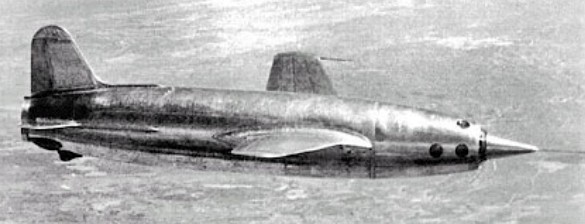
Development of the Leduc 0.10 continued with the larger Leduc 0.21, then the Leduc 0.22 Mach 2 interceptor which incorporated a SNECMA Atar D3 turbojet within the athodyd to allow the aircraft to take off under its own power and then accelerate it to a speed at which the ramjet would ignite.

Leduc 0.22 Article

This was not achieved with the 0.22, for although flown on turbojet power for the first time on 26 December 1956, and later making more than 30 test flights with the turbine engine, the ramjet was not tested. This resulted from withdrawal of government financial support, because of economic stringencies, and the project was abandoned in 1957.
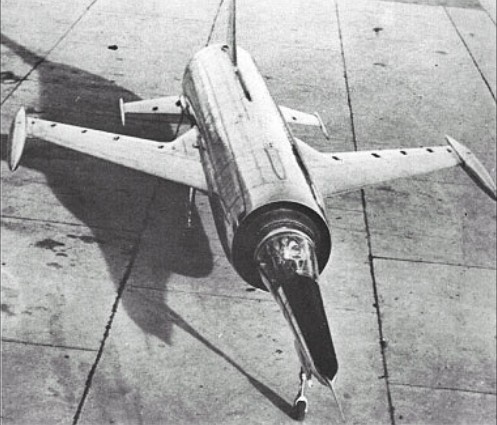
Leduc 0.21

Development of a aero-thermo-dynamic-duct or athodyd ramjet engine continued with two examples of the larger Leduc 0.21 of improved design (L.021 -01 and –02), the first making its initial flight on 16 May 1953.

These proved to be successful, demonstrating a maximum speed of Mach 0.87 and attaining an altitude of 20,000m. Development then began of the Leduc 0.22 Mach 2 interceptor.

The Leduc 0.21 was larger than the 0.10, and with a ramjet delivering 14,330-1b (6500kg) thrust at a speed of 621 mph (1000 km/h).

Gallery

Leduc 0.16

Two more examples of the Leduc 0.10 were built, the first an identical 0.10, the other differing only by having two wingtip-mounted turbojet engines to accelerate the aircraft to the ignition speed of the ramjets. This last aircraft, designated 0.16, was first flown on 8 February 1951, but the turbojet engines were later removed.

The Leduc 016 was developed with wingtip mounted Marbore I.

Leduc 0.10

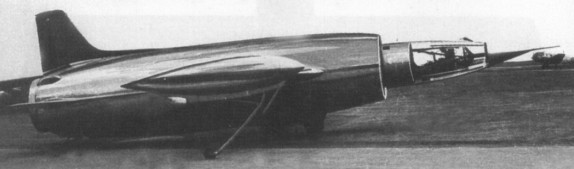
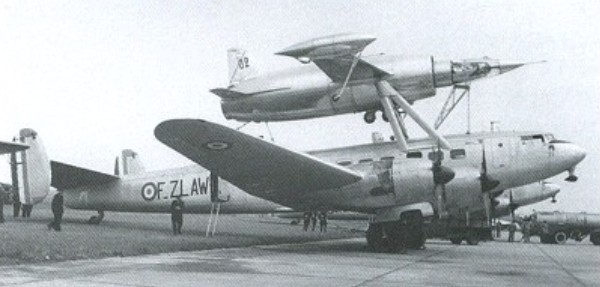
Rene Leduc in France had worked for many years on the development of a ramjet engine for aircraft propulsion. Known technically as an aero-thermo-dynamic-duct or athodyd, which has no major rotating components, a ramjet relies upon air being forced into an intake which is designed to ensure that the air loses kinetic energy but gains pressure energy as it passes through a diverging duct en route to a combustion chamber. There, burning fuel increases the total energy, causing the expanding gases to accelerate to atmosphere via an outlet venturi. Leduc’s first success had come in 1935 with a small but practical engine developing 4kg of thrust. It was not until after the end of World War II that Leduc was able to continue his experiments, building first the Leduc 0.10 with a tubular double-skinned fuselage in which the inner shell contained the pilot’s cockpit, surrounded by an outer shell which formed the inlet duct to the ramjet engine at the rear of the pilot’s position. First tested as a glider in October 1947, the Leduc 0.10 was carried on struts above a Sud-Est SE.161 Languedoc ‘motherplane’ which released it at appropriate altitude. The first powered flight was made on 21 April 1949, the SE.161 accelerating the Leduc 0.10 to a speed of approximately 322km/h to achieve the right pressure conditions for the ramjet to ignite and sustain power. During the first flight, of 12 minutes duration, a speed of 680km/h was attained on half power. The aircraft was flown subsequently on half power at a speed of 805km/h. The ramjet delivering 4409-lb (2000-kg) thrust, reached Mach 0.84.
Two more examples were built, the first an identical 0.10, the other differing only by having two wingtip-mounted turbojet engines to accelerate the aircraft to the ignition speed of the ramjets. This last aircraft was designated 0.16.

Leduc Fils

France
Leduc began designing athodyds (ramjets) in 1929 at Argenteuil, as well as experimental aircraft in which to test them. The L.010-1, started 1937 and completed 1945, was first purely athodyd-powered manned aircraft to fly. Followed by L.010-2 and similar L.016-1 in 1951. All air launched from Languedoc mother plane. In 1953-1954 appeared the L.021 -01 and -02, and plans existed for a swept-wing aircraft with Atar 101 turbojet engine for independent take-off and an 0.22 supersonic fighter.

Leduc RL-16

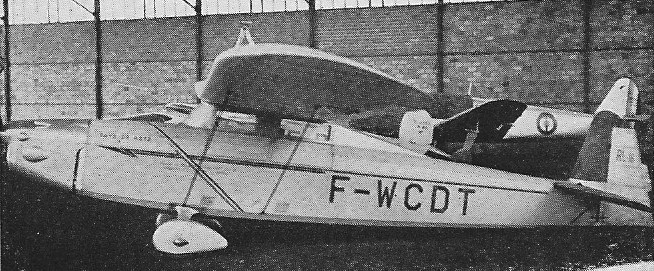
The RL-16 two-seat monoplane, designed by R. Leduc for high altitude flight, gained the light plane altitude record on 13 June 1949 at 25,551 ft.

For long distance, the RL-16 can supplement its fou wing fuel tanks with four fuselage tanks, raising the total the 132 Imp.Gal.

Engine: Zundapp, 50 hp
Wingspan: 41 ft 11.75 in
Wing area: 172.223 sq.ft
Length: 42 ft
Empty weight: 562 lb
Loaded weight: 1764 lb
Max speed: 110 mph
Cruise: 90 mph
Max range: 4163 mi
Endurance: 47 hr 30 min
Ceiling: 28,871 ft

Lear Inc

USA
Founded as an electrical company at Santa Monica, California, in 1930. An aircraft engineering division produced the Learstar, a high-speed, long-range transport based on the Lockheed Lodestar, in 1953. First delivered in 1955; production taken over by PacAero Engineering Corporation in 1957.

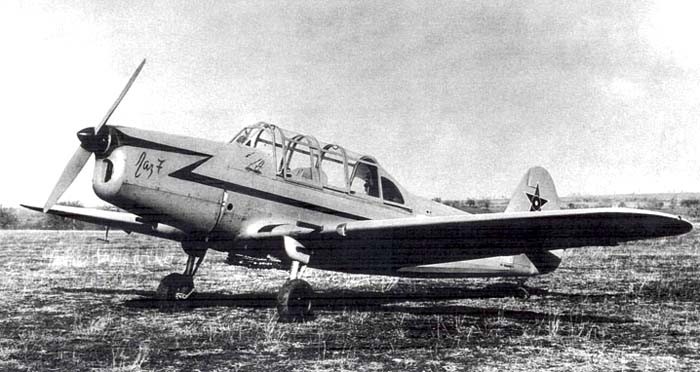
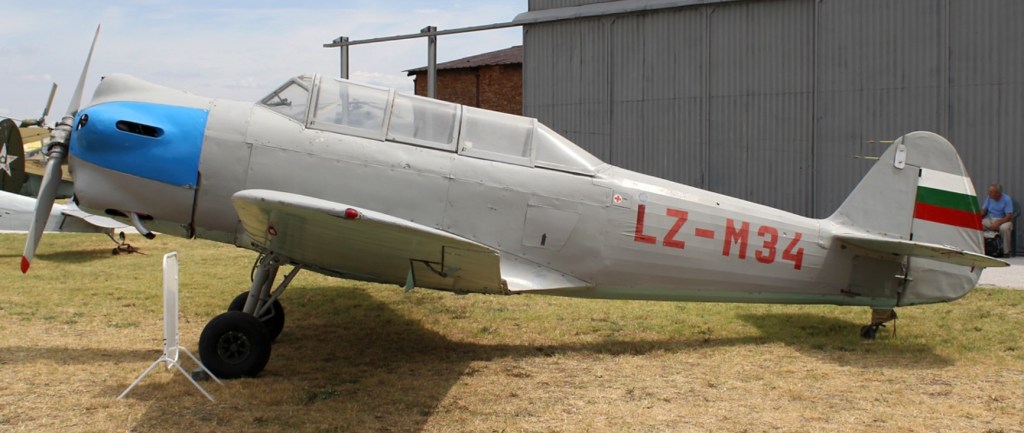
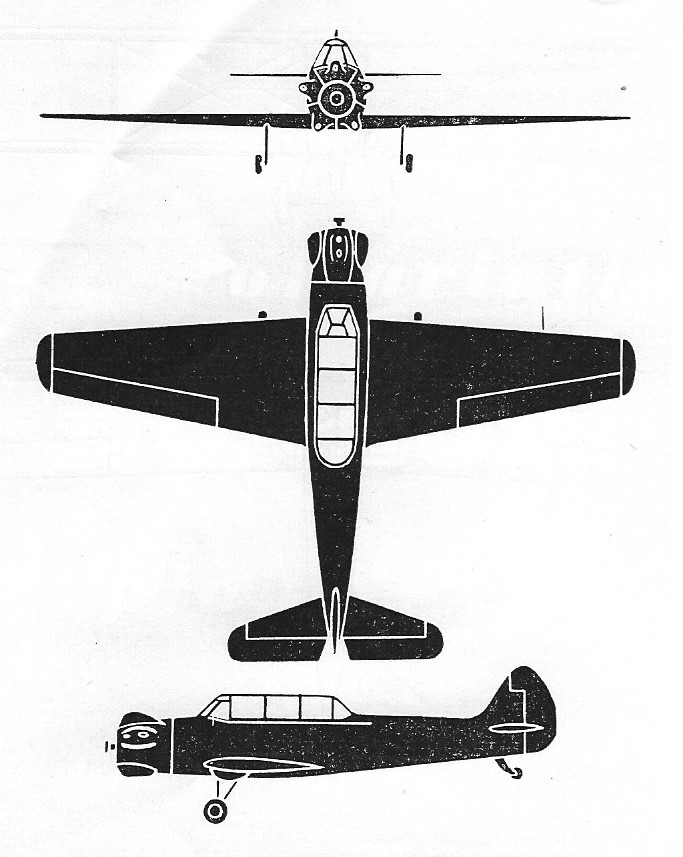
Lazarow LAZ-7 / LAZ-7M

The prototype of the Bulgarian LAZ-7 two-seat primary trainer of 1946 was the first post-war design to be built in Bulgaria. The LAZ-7 was matched against the Yugoslavian Aero 2.

Both the LAZ-7 and Aero 2S were powered by the Czech 160 hp Walter Minor 6-III and in the eliminating trials the LAZ-7 was successful. The decision was taken to build the LAZ-7 in series production at the Bulgarian State Aircraft Works, and to replace the Walter engine with a Russian-designed M-11FR radial driving a controllable pitch, two blade Visch V-501 prop.

The LAZ-7M production type fuselage construction is of welded steel tube and wood, and covered with fabric. Both the wing and tailplane are fully cantilever, of mixed wood and metal construction, and fabric covered. No flaps are fitted. Both the main undercarriage and tailwheel are fixed.

LAZ-7
Engine: 160 hp Walter Minor 6-III

LAZ-7M
Engine: M-11FR
Prop: controllable pitch, two blade Visch V-501
Max speed: 149 mph
Cruise: 133 mph
AUW: 2039 lb
Landing speed: 53 mph
Service ceiling: 17,220 ft
Range: 525 mi
Endurance: 3 hr 56 min
Time to 3280 ft: 4 mn 47 sec