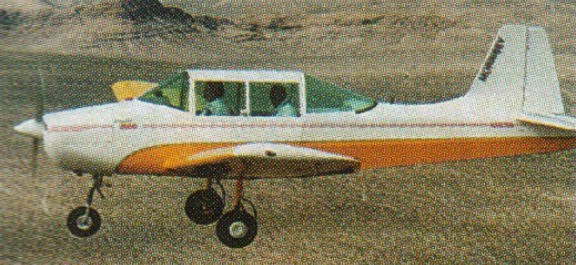
Bill Morrisey adapted the design to aluminum, installed a 150 hp engine and built 10 Morriseys.
Shinn Engineering acquired full manufacturing rights, tooling and spares, and turned out 35 Shinn 2150 airplanes.
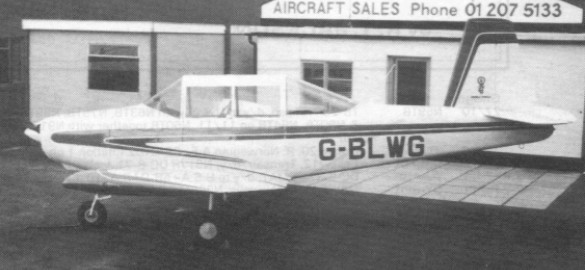
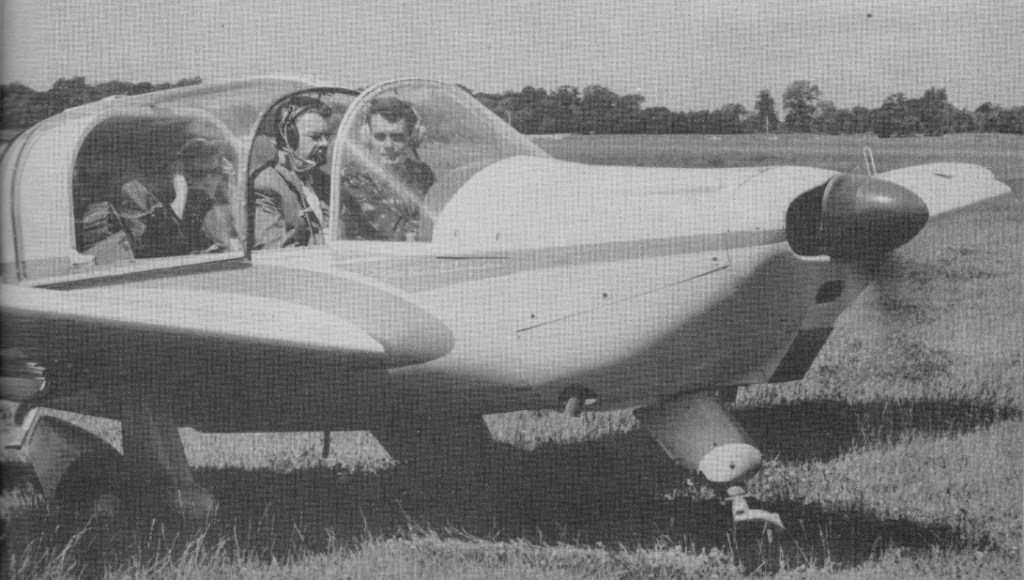
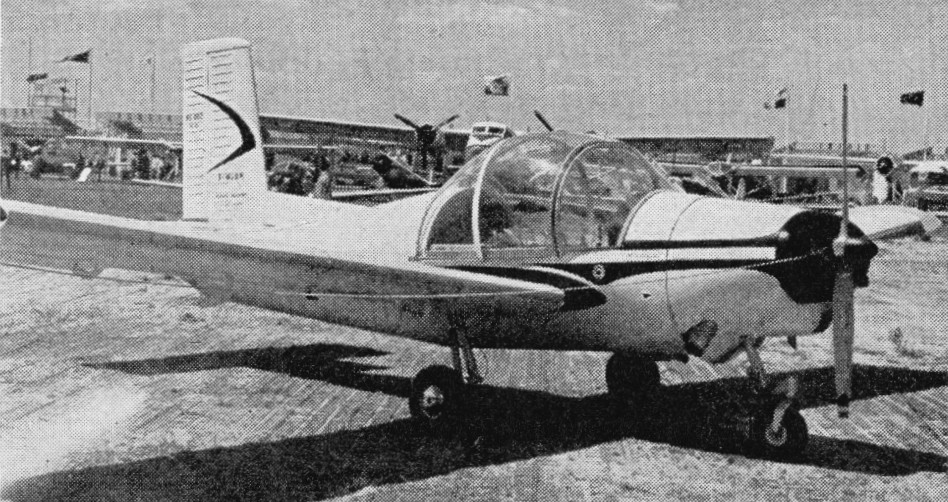
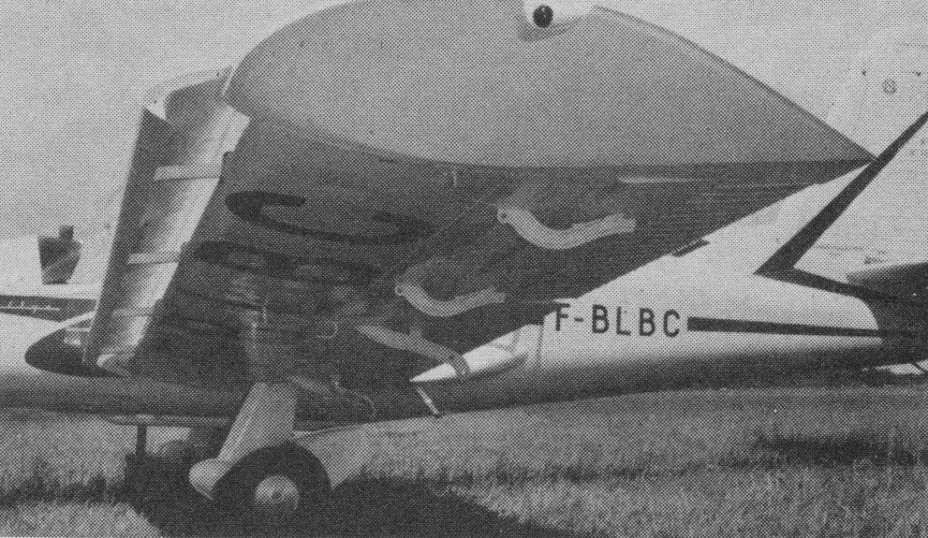
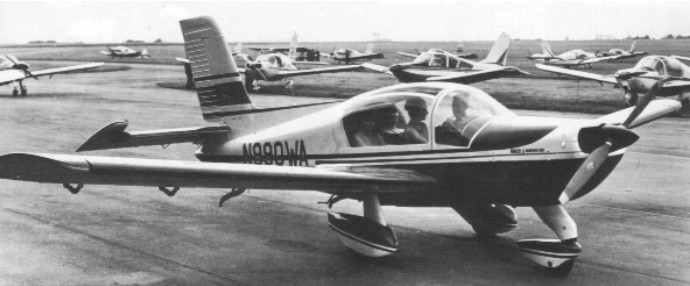
Varga Aircraft Corp 2150A Kachina
Varga Aircraft Corp, an airplane parts dealer, acquired from Shinn Engineering Inc full manufacturing rights, tooling and spares for Shinn Model 2150A in 1967. Vega moved the tooling twice and started setting up a plant in 1971. Put into production by Varga in 1977 as Model 2150A Kachina. It was available with 180 hp.
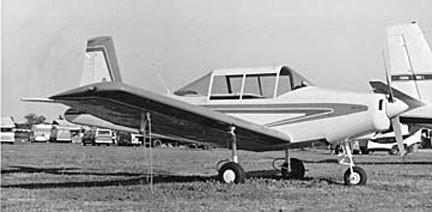
Varga Kachina
The 1973 Kachina sold for $13,500. 121 of the 1978 2150A (ATC 4A19) were built, and 18 of the 1981 2180 (4A19).
The 1982 2180TG were three conventional-gear configuration by Hibbard Aviation Co, Oakland CA.
Over 200 were built by the three manufacturers. As the Morrisey 2000, was offered as a kit, with planed production still under the FAA type certificate 4A14.
Morrisey Aircraft was founded in 1949 by former Douglas test pilot William J. Morrisey at Long Beach, California, to market the Model 1000 Nifty tandem two-seater first flown 1948. Initially flown with Continental A65 and later with Continental C90. Reorganized as Morrisey Aviation Inc. at Santa Ana, California, and in 1958 began delivery of series production aircraft as Morrisey 2150 with 150 hp Lycoming engine. Rights in the 2150 acquired by Shinn Engineering and later Varga Aircraft, which produced its Kachina version. Morrisey Aircraft Company reestablished in Las Vegas, producing single-seat Bravo in 1981 for construction from plans, and more recently has offered Morrisey 2000 two-seater in certificated and kit forms as modern development of Nifty.
Zlinska Letecka Akciova Spolecnost formed 1934 as subsidiary of Bata Shoe Company. First aircraft produced was Zlin XII two-seat, low-wing cabin monoplane, followed by Zlin 381, a licence-built Bucker Bu 181 Bestmann. The Zlin 22 appeared in 1947 as a two-seat trainer and was produced also in three-seat Zlin 22M version. Company name changed to Moravan Narodni Podnik in 1949, then Moravan Inc, although products continued to be known as Zlins. The Zlin 26 all-wood two-seat tandem trainer was superseded by the metal Zlin 126 Trener, which went into production in 1953. The basic design was developed subsequently through Z 226, Z 326, Z 526, and Z 726 models in both Trener (two-seat) and Akrobat (single-seat competition aircraft) variants with retractable landing gear and a variety of engines. As one of the world’s foremost aerobatic aircraft, the Zlin was also widely exported outside the Eastern bloc. Production thereafter included Zlin 42 M two-seat light training and touring aircraft, Z 50 L and later Z 50 LS aerobatic aircraft (first flown 1975 in original Z 50 L version) and Z 726 trainer. An agricultural and firefighting monoplane was the Z137 T (first flown 1981). Later produced were the Z 142 two-seat basic and advanced civil/military piston-engined trainer (first flown December 1978), Z 242 variant of Z142 with a U.S. Textron Lycoming engine in place of the L0M Prague type, and Z143 L four-seat lightplane with Textron Lycoming engine (first flown April 1992).
The LG-130 Kmotr (or Z-130) was a product of Moravan Otrokovice (aka Zlin).
Basically a three-seat development of the MS.560, the prototype MS.570 flew for the first time on 19 December 1945, powered by a 140 hp Renault Pei.
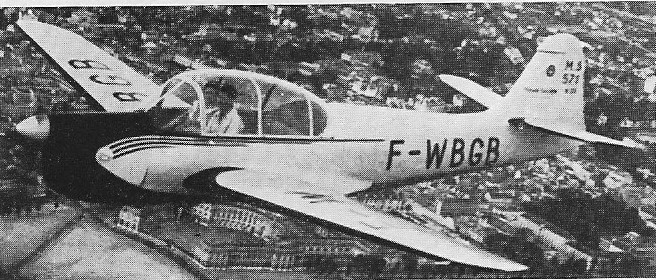
The MS.571 differed from the MS.570 in providing accommodation for three persons. The first MS.571 flying on 13 October 1946.
MS.572
The M.S.572 was similar to the basic design, but had four seats and a 104kW Potez 4D engine.
MS.570 Engine: 140 hp Renault Pei Maximum speed: 265km/h Seats: 2
MS.571 Engine: 140 hp Renault Pei Wingspan: 34 ft 2.5 in Length: 27 ft 11 in Height: 9 ft 1 in Empty weight: 1478 lb Loaded weight: 2312 lb Max speed: 152 mph at 1640 ft Cruise 70%: 137 mph ROC: 748 fpm Range: 620 mi Seats: 3
Flown for the first time on 12 May 1958, the prototype Morane-Saulnier M.S.1500.01 Epervier (sparrow-hawk) was a two-seat cantilever low-wing monoplane, with a high glazed canopy for its two-man crew. The Epervier was initially powered with a 400 shp Turbomeca Marcadau turboprop with which it logged 29 hr in 46 flights.
It was subsequently re-powered with an 800 shp / 522kW Turbomeca Bastan IV turboprop which first flew on 7 October 1958. Its fixed conventional landing gear had cantilever main legs.
Bastan power
By the end of February 1959 it had flown a further 37 hr in 58 flights.
The M.S.1500 was intended to meet an official Armee de I’Air requirement for a tactical reconnaissance and counter-insurgency aircraft for service in Algeria against the nationalist forces. A second prototype was built and tested, but no production orders were received.
Engine: 1 x 522kW Turbomeca Bastan IV turboprop Max take-off weight: 2850 kg / 6283 lb Wingspan: 13.06 m / 42 ft 10 in Max. speed: 315 km/h / 196 mph
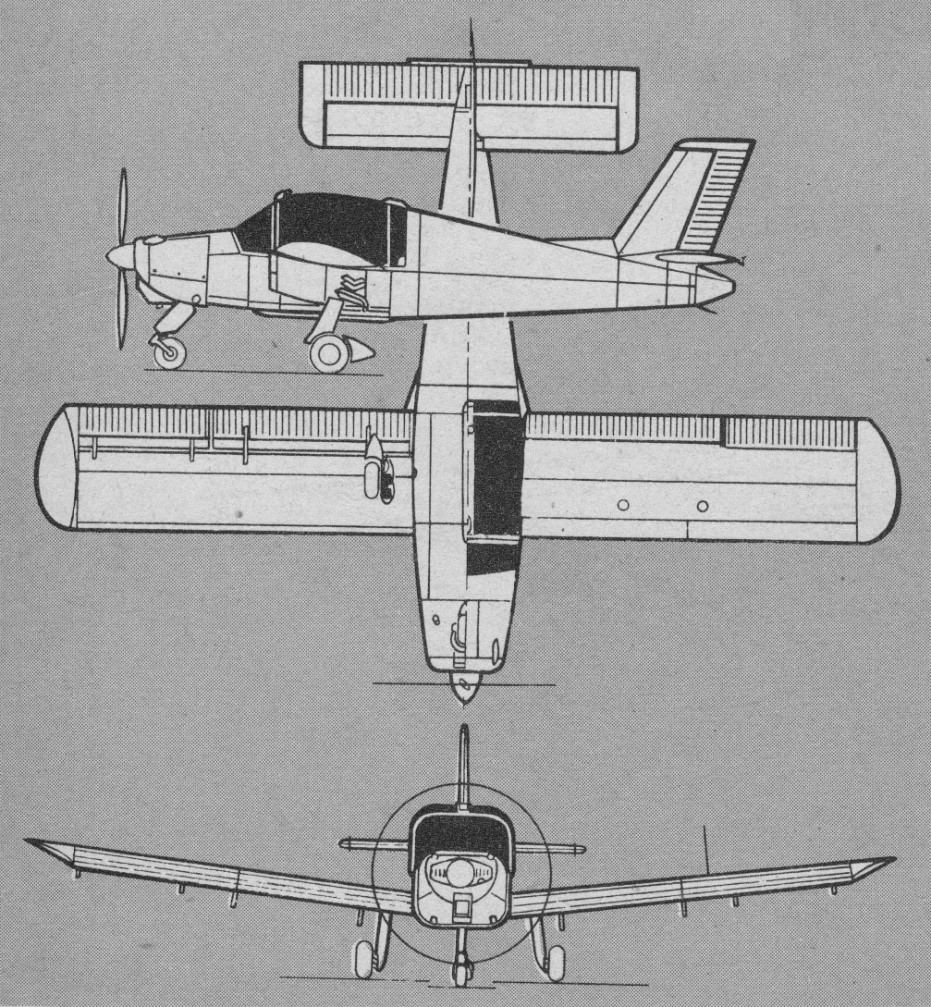
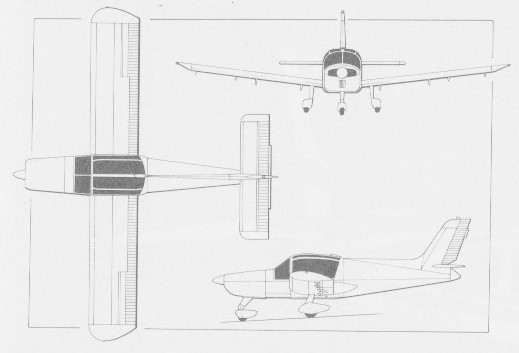
The Morane-Saulnier M.S.880, an all-metal low-wing monoplane with retractable landing gear, designed for a French Government competition seeking a popular everyman’s aircraft. It was first called the Ral¬lye 800, powered by a 90 horse Continental, at a price of US$5,750. It first flew on 10 June 1959 and was then produced in a number of variants.
The first French mass-produced all-metal light touring aircraft. The landing gear is a fixed tricycle, the cockpit has a large sliding canopy. Rectangular wings use a laminar flow airfoil. The entire leading edge is fitted with an automatically operating slats, each wing interconnected to prevent dissymmetry of lift. These open at slow speed and close at high speed. Wing flaps are manually controlled. Ailerons are fitted with automatic tabs. The Super Rallye and Rallye Commodore four seats and the Rallye Club two-three seats,
MS.890M
Engines have included: Continental O-200-A, 100 hp Continental O-300-A or -B, 145 hp Potez 4 E 20, 105 hp Potez 4 E 30, 115 hp
In 1965 the company became a subsidiary of Sud-Aviation, which in 1966 created its SOCATA lightplane subsidiary that became part of Aérospatiale. In 1979 the SOCATA product line was redesignated, and the Rallye series was renamed. Thus, the Rallye 110ST two-seat trainer with the 82-kW (110-hp) O-235-L2A engine, became the Galopin; the Rallye 180T glider tug with the 134-kW (180-hp) O-360-A3A became the Galerien, and the Rallye 235GT high-performance STOL four-seater with the O-540 became the Gabier with options of tricycle or tailwheel landing gear. These major models were complemented by other variants with Franklin or Rolls-Royce/Continental engines.
All models share basically the same airframe: corrosion-proofed monocoque fuselage, slotted Fowler flaps and automatic full-span leading edge slats.
MS.890M
The Rallye 235 was equipped with a non-steerable nose¬wheel. The automatic full span leading edge slats are a key to Rallye performance. They are out at takeoff; later on, they stow themselves. The slats promote smooth flow over the wing at low speeds and help maintain lateral con¬trol by giving the ailerons some breeze with which to work. They are not effective in lower¬ing stall speed, but they do increase the stall¬ing angle of attack, which combines with more effective lateral control to make operat¬ing the airplane with minimum margins more comfortable.
Almost 30 civil-standard Rallyes of various models were delivered for military use as trainers and liaison aircraft. R.235 Guerrier Based on the successful Rallye touring aircraft, the armed Guerrier can carry up to 340kg of stores on four underwing Alkan 663 pylons. Weapons options include machine-gun pods, rocket pods, light bombs, and flares. Also available is a surveillance pack containing a TV camera and transmitter for relaying images direct to ground units. Side-by-side seating and dual controls allow the aircraft to be used as a trainer, and a stretcher can be carried for casevac missions.
Customers (1987): Guerrier El Salvador 6, Rwanda 2, Senegal 4.
In France SOCATA flew the pro¬totype of an agricultural version of the Rallye on 16 May 1977. Designated Rallye 235 CA Agricole, it was avail¬able with a variety of dusting/ spraying equipment that could be removed easily for the aircraft to fly as a two seat lightplane when the spraying season was over.
Certification of the MS 880B and MS 885 came under Direction Generale L’Aviation Civile France 13, and the MS 893E and Rallye 235E under Direction Generale L’Aviation Civile France 22.
All the Rallyes were built, flown and certificated by French au¬thorities in Tarbes, France. Those destined for the U.S. are disassembled, their engines are pick¬led, and the airplanes are packaged, two to a ship container, and floated to Wilmington, North Carolina or Norfolk, Virginia. Rallye Air¬craft Corporation, an Aerospatiale subsidiary reassemble, finish and paint the airplanes. Each must then be cer¬tificated by the FAA.
Rallye Aircraft has taken a tricycle gear airplane and moved the third wheel from front to back. The new taildragger is the Rallye 235C, which, except for its landing gear and stick control, is a copy of the Rallye 235GT, a four place, canopy top touring machine pulled by 235 hp Lycoming. But the need for short landings usually comes in conjunction with rough, unpaved landing sites. The older Rallye, with its nose gear and small diameter mains, is only marginally suitable off pavement, whereas the 235C, with conventional wheel placement and large 8.00 x 6 main tires is more suitable. Control sticks are centered before each front seat, and the 235C has two throttles.
Waco Aircraft [2] was founded in 1966 to build SF.260 (as Waco Meteor), and Socata Rallye Commodore (as Waco Minerva).
Waco Minerva 220
French production of the Rallye series stopped in the 1970s and PZL took it over (as the PZL-110), along with all production licences.
180GT Engine: Lycoming O-360-A2A, 180 hp Wingspan: 31 ft 6.25 in / 9.61 m Length: 23 ft 9 in / 7.24 m Empty wt: 1257 lb / 570 kg MTOW: 2315 lb / 1050 kg Fuel cap: 48 Imp. Gal Max ldg wt: 2305 lb Max cruise 75% 5000ft/1525m: 139 mph / 121 kt / 224 kph T/O roll: 445 ft Ldg roll: 410 ft Stall: 57 mph/ 50 kt ROC: 787 fpm / 240 m/min Service ceiling: 11,150 ft / 3400 m Range: 512 nm / 590 mi / 950 km Max X-wind: 20 kt Cabin length: 7 ft 4 in / 2.25 m Cabin width: 3 ft 8.5 in / 1.13 m Seats: 4
Rallye 125 1972 Engine: Lycoming O-235-F2A, 125 hp Seats: 4
Rallye 220 GT Engine: Franklin 6A-350-C1, 220 hp
Rallye 235C Engine: Lycoming O 540 B4B5, 235 hp TBO: 2,000 hrs Prop: 2 blade, constant speed Length: 24 ft Wingspan: 32 ft Wing area: 132 sq.ft Height: 7 ft 7 in Max takeoff weight: 2,645 lbs Standard empty weight: 1,466 lbs Max useful load: 1,179 lbs Wing loading: 20 lb/sq.ft Power loading: 11.3 lb/hp Max usable fuel: 65 USG/390 lb Max rate of climb, sea level: 970 fpm Max rate of climb, 8,000 feet: 4155 fpm Max operating attitude: 14,800 ft Max speed (sea level): 148 kts Cruise, 65 % power at 8,000 ft: 125 kts Fuel flow at 65 % power: 12.9USG/hr Endurance at 65% power, no res: 5 hrs Stalling speed, clean: 59 kts Stalling speed, flaps down: 54 kts Max ramp weight: 2645 lbs Turbulent air penetration speed: 113 kts
R.235 Guerrier
R.235GT Gabier Engine: Lycoming O 540 B4B5, 235 hp TBO: 2,000 hrs Prop: 2 blade, constant speed, 80 in. dia. Length: 23 ft. 9 in Height: 9 ft. 2 in Wingspan: 31 ft. 11 in Wing area: 132 sq. ft Wing loading: 20 lb/sq.ft Power loading: 11.2 lb/hp Seats: 4 Empty wt: 1,568 lb Useful load: 1,072 lbs Payload with full fuel: 622 lbs Gross wt: 2,640 lbs Usable fuel cap: 71 USG/426 lbs Maximum rate of climb: 970 fpm Service ceiling: 14,800 ft Maximum speed: 148 kts Max cruise, 75 % pwr at 6,000 ft: 131 kts Econ cruise 65 % pwr at 10,000 ft: 127 kts Duration at max cruise: 5.4 hrs Duration at econ cruise: 6.2 hrs Stalling speed, clean: 59 kts Stalling speed, full flaps: 56 kts T/O roll: 490 ft Ldg roll: 425 ft Max X-wind: 25 kt
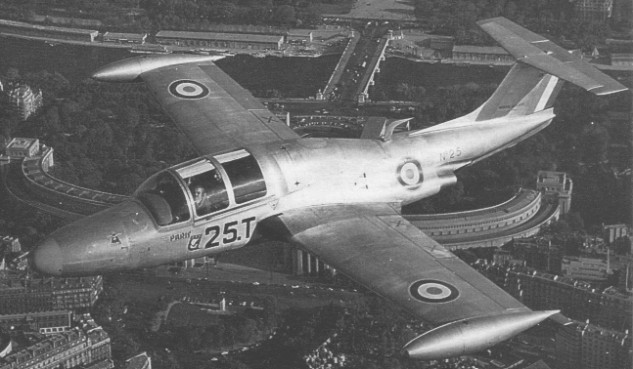
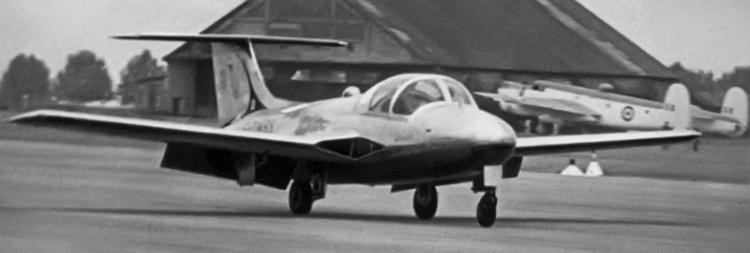
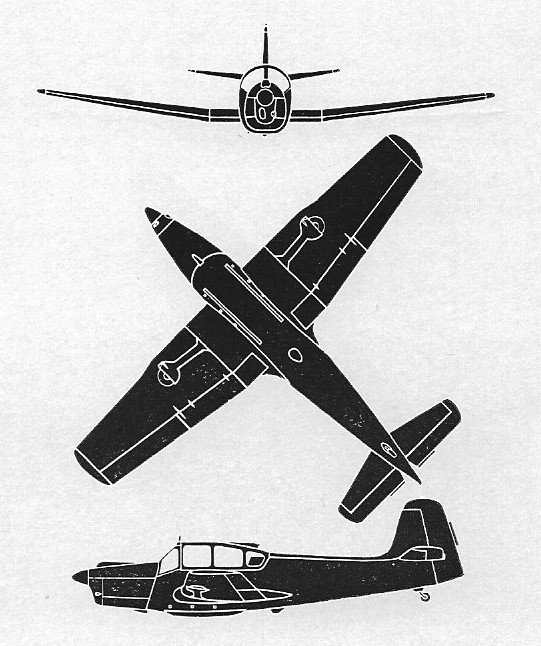
In January 1953 Morane-Saulnier flew the prototype M.S.755 Fleuret, a two-seat jet trainer which competed with the Fouga Magister for an air force order. The Fleuret lost the competition, but its design formed the basis of the Morane-Saulnier M.S.760 Paris which, designed primarily as a high-speed liaison aircraft, can be considered as a forerunner of the executive jet. Morane-Saulnier developed the Fleuret into a four seat light communications aircraft by enlarging the cabin, increasing the internal fuel capacity and strengthening the airframe.
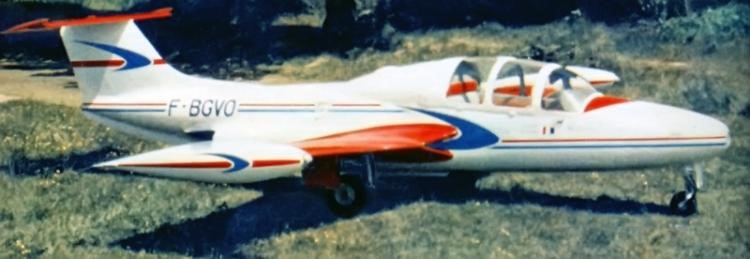
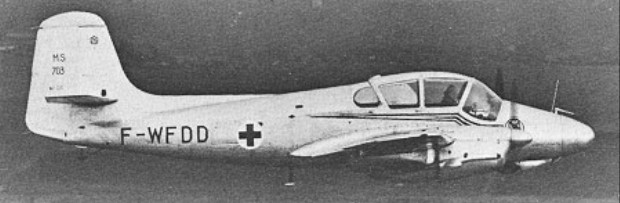
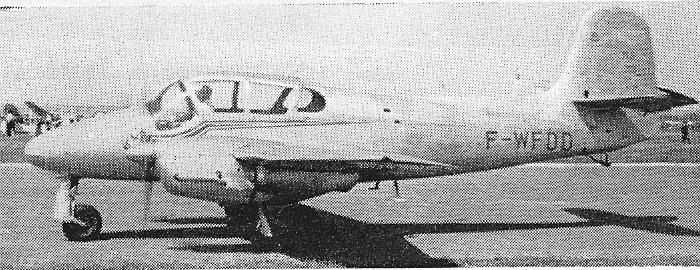
The Turboméca Mabore II powered first prototype, MS.760-01 F WGVO (then F-BGVO), was flown on 29 July 1954, and interest shown by the French military authorities resulted in orders for 50 for the air force and navy on 18 July 1956, the initial production example designated M.S.760A, flying on 27 February 1958. Fitted with tip tanks, this type was delivered as the Paris IR to the Armée de l’Air and the Aeronavale.
Two basic models will be manufactured in series. The MS 760A Paris I (one hundred and fifty built), and MS 760B Paris II (sixty-three built). The dates of the first flight respectively, February 27, 1958 and December 12, 1960.
Orders were received for 109 civil and military use, 12 MS.760A sets of components were supplied to Argentina for assembly at the Fabrica Militar de Aviones (FMA) factory in Cordoba, followed by production of 36 more. The 760 MS was purchased by Argentina in May 1957. Forty-eight Paris were operated by the Fabrica Militar de Aviones Cordoba. The first shipped to Argentina was Paris I No. 3, on 1 May 1958. By February 1959, twenty-six complete aircraft had crossed the Atlantic in separate shipments.
MS 760 of Argentina
Brazil acquired 30 for liaison, photographic survey and training. A first order of eight Paris II for Brazil was signed February 19, 1960 with twenty other options. In total, Brazil assembled forty-eight Paris II, mainly for the Air Force.
The first Paris was delivered to the Air Force as a training and liaison aircraft on 27 February 1958. The Naval Aviation were to receive a small number for the same missions as the Air Force. On a training mission, it can be armed with two 7.5mm machine guns plus four rockets or two bombs of 50 kg fixed under the wing.
At the end of 1958 the College of Aeronautics, Cranfield, received an MS.760 (No. 8) for practical demonstrations. Two were sold in the U.S., and one in Iran (delivered on 15 July.1958).
The initial production version was superseded in 1961 by the M.S.760B Paris II with 10581bst / 480kg thrust Marbore VI turbojets and various systems improvements and integral fuel tanks in wing leading edges.
When production ended in 1964 a total of 156 aircraft of the two series had been built, including 48 assembled in Argentina.
In 1969, four MS 760A were registered in France and many 760B, one registered in Italy and seven in Holland. Seven Paris II were purchased to train airline pilots at the Eelde school in Holland, the first being delivered September 14, 1962.
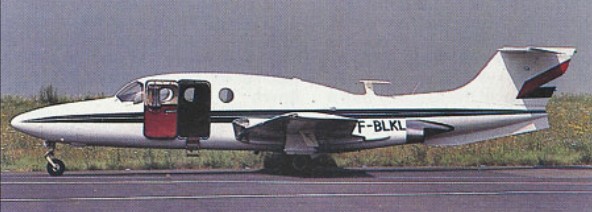
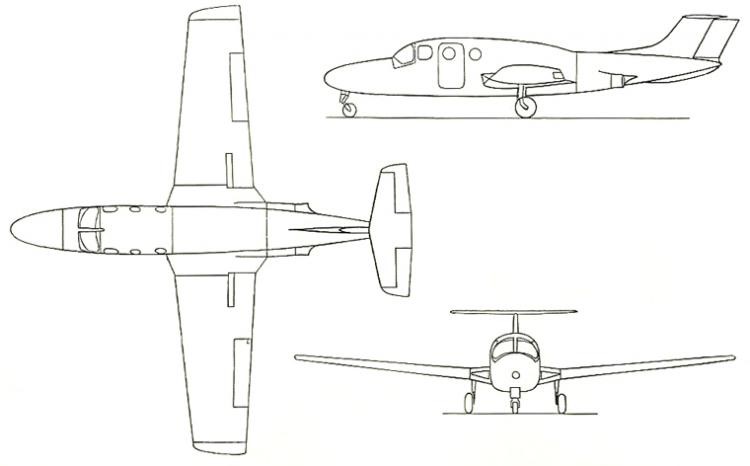
The final version was the 1963 Marbore VI-powered M.S.760C Paris III, with an enlarged wing but without tip tanks, plus increased fuel in a redesigned fully integral cabin fuselage accommodating five or six passengers, and a car-type door on port side instead of a sliding canopy. It was also fitted with an air system for cabin and pressurisation bled from the turbojet (SEMCA automatic air-conditionning system). The sole prototype, F WLKL, flew for the first time on 28 February 1964 but the variant did not find favour as a business jet and proceeded no further. Only one aircraft built, F-BLKL.
Paris III F-BLKL / 366 (cn 01)
A total of 109 MS.760A Paris I, 10 MS.760B Paris II and 1 MS.760C Paris III were built. For replacement, Argentina selected the FMA Pampa jet trainer, while France chose the TBM700 turboprop.
Two French companies, Fouga and Morane Saulnier, saw a market for such a basic jet trainer and realised the potential of the Turbomeca engines for this application. Fouga presented a proposal for a tandem two seat trainer to the French Air Ministry, the CM.130R, which was powered by two 353 lbst (160kgst) Palas engines. The design was refined and a contract for three of the resulting twin Marbore II powered CM.170R aircraft was placed with Fouga in December 1950. The Morane Saulnier company were working along similar lines at this time, and their drawing boards brought the MS.755 Fleuret. It was designed under the direction of engineer Paul-René Gauthier, who was then director of Morane-Saulnier engineering department.
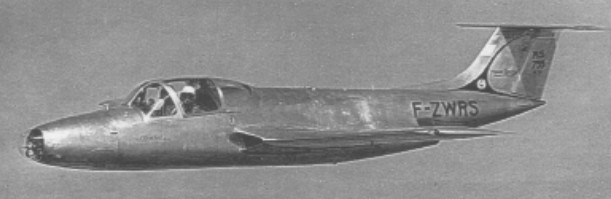
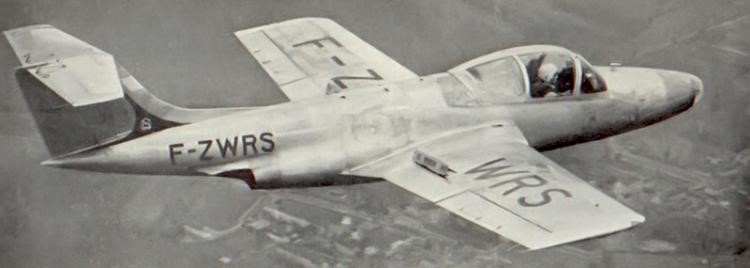
It was an all-metal mid-wing cantilever monoplane with a T-type tail. The MS.755 Fleuret featured side by side seating, the wing was set slightly lower on the fuselage and had a lower aspect ratio, the tail surfaces were conventional and the two Turbomeca Marbore II turbojet engines were faired more into the fuselage than the semi podded arrangement evident on the Magister. Air intakes were located in the wing roots. The two pilots seats were attached to an aerodynamically balanced trap in the fuselage, which operated following jettison of a hatch in the underbelly in an emergency and ejected the two occupants through the floor of the cockpit.
The construction of two prototypes was launched at the same time. Cn 01 (F-ZWRS) began its taxi tests in January 1953 (while its competitor, the Fouga Magister, made its first flight on July 23, 1952). The MS-755 made its maiden flight on 26 January 1953, with Morane-Saulnier chief test pilot Jean Cliquet at the controls, accompanied by flight engineer Ferdinand Naudy. Jean Cliquet took off from Melun-Villaroche for a 15 minute flight. The aircraft did not exceed the altitude of 800-900 m considered a limited ceiling. Two other flights were made the next day. On January 31, a flight was performed with the commander Grigaut (Head of Bretigny AB. *Flight Test Center (CEAM)). February 12 was the official flight presentation of the aircraft to President Robert Morane and the executive committee.
On 30 April 1953, the aircraft is delivred to Bretigny Flight Test Center for official qualifying tests. At that time 57 flights and almost 35 hours of flights have been made.
After stopping the program, Cn 02 was converted into four-seater as the MS-760 01.
After evaluating the merits of both aircraft, the French Air Force expressed a preference for tandem seating, and in 1953 placed an initial order for ten pre production and 95 production CM.170R Magister aircraft.
The initial success of the Magister was not lost on Morane¬Saulnier, who decided not to compete head on and thus developed the Fleuret into a four seat light communications aircraft by enlarging the cabin, increasing the internal fuel capacity and strengthening the airframe. This became the MS.760 Paris.
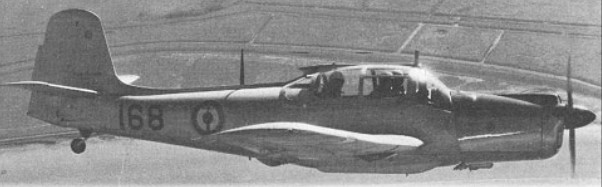
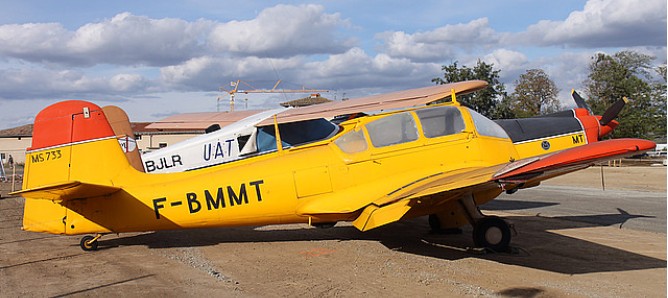
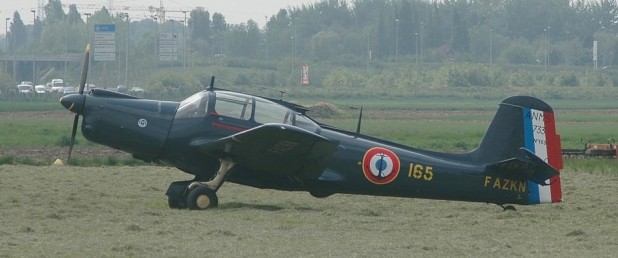
Development of the Morane-Saulnier M.S.733 Alcyon (Kingfisher) basic trainer began with the M.S.730.01 prototype, which flew for the first time on 11 August 1949. With the original 134kW Mathis 8G.20 inverted V-8 engine replaced by a 179kW Argus As 10, the prototype flew again in November that year as the M.S.731.
Two M.S.732 prototypes were flight tested in early 1951, each of them powered by a Potez 6D.30 engine and having the previous cantilever fixed landing gear replaced by a new design in which the main units retracted. The first example of the definitive version flew on 16 April 1951 as the M.S.733.01; five pre-production aircraft followed and series aircraft totalled 200; 40 for the French navy, 15 for Cambodia, and the balance for service with the Armee de I’Air as the Alcyon, 70 of them being fitted with machine-gun armament for use as gunnery trainers. In 1956 some of the gunnery trainers were converted for counter-insurgency duties, with machine-gun and anti-personnel bomb armament, for use against the nationalist rebels in Algeria. These aircraft were redesignated M.S.733A, of which a number were sold later to Morocco.
MS.733 Engine: 1 x Potez 6D.30 inverted inline, 179kW/ 237 hp Max take-off weight: 1670 kg / 3682 lb Empty weight: 1260 kg / 2778 lb Wingspan: 11.28 m / 37 ft 0 in Length: 9.32 m / 30 ft 7 in Height: 2.42 m / 7 ft 11 in Wing area: 21.90 sq.m / 235.73 sq ft Max. speed: 260 km/h / 162 mph Ceiling: 4800 m / 15750 ft Range: 497 nm / 920 km / 572 miles Wing loading: 15.58 lb/sq.ft / 76.00 kg/sq.m Crew: 2 Payload: 1-2 Pax
First twin-engine design by this company since World War I, the Morane-Saulnier M.S.700 of 1948 was a cantilever low-wing monoplane with retractable tricycle landing gear, the cabin accommodating five in either an executive transport or air taxi role.
Powered by two Potez 4D-33 inline engines, each of 119kW, the M.S.700 had a maximum speed of 290km/h. It was followed by the M.S.701 with two 134kW Mathis 8G-20s, the larger, six-seat M.S.703 with two 179kW Argus As 10Cs, and the M.S.704, similar to the M.S.703 but with two 164kW Potez 4D-31s. The M.S.703 had a maximum speed of 300km/h, being flown for the first time in 1951. None of the variants was built in quantity, only four being entered on the French civil register.


 All Aero