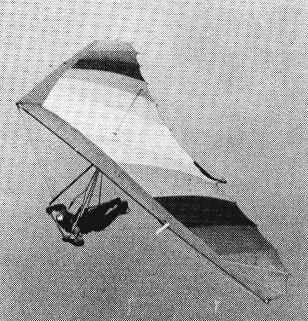
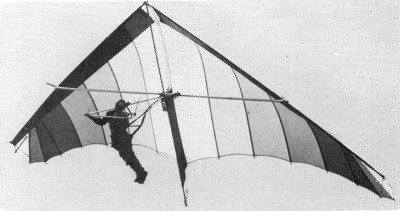
At the age of 23, Steve Moyes competed in the first World Championships at Kossen (Austria) in 1976. He flew the Moyes Maxi and placed 3rd overall.
The Maxi 3 appeared in 1979.
Maxi 3
Maxi 2 Wing area: 18.35 m² Wing span: 10.36 m Aspect ratio: 5.8 Hang glider weight: 29 kg Minimum pilot weight: 65 kg Maximum pilot weight: 90 kg Packed length: 6 m Number of battens: 16 Nose angle: 117°
Started in 1967, Moyes Delta Gliders was a Company solely dedicated to hang gliding. 1995: 2-4 Taylor St, Waverly, 2024 NSW, Australia.
1998: 1144 Bottany Road, NSW 2019 Botany, AUSTRALIA
2001: 200 Hillcrest Dr, Auburn, CA 95603, USA. LiteFlite is owned and operated by Bill Moyes. Bill is based in Sydney at the Liteflite factory and frequently travels the world to sell and support his products. Bill has been flying and manufacturing aircraft since 1966 and has a long list of accolades to show for his efforts.
Bill Bennett and his partner Bill Moyes worked improvents into the Rogallo tow kites and Moyes towed to 1000 feet in 1967. After the towboat ran into a sand bar one day and the kite gently glided down, they began to deliberatelycut loose and experiment with untethered flight. This led the skiers up mountain sides where they made ski launches, sometimes gliding as far as five miles.
Bennett went to the USA in 1969 and began a tou of exhabitions which included flying over the Golden Gate Bridge to land on Alkatraz, and, on July 4th, circling the Statue of Liberty. American fliers were still using the Lilienthal-type parallel bars and hanging by their armpits but Bennett brought with him a trapeze style control bar and swinging seat.
After the success of his tour he settled down in LA and began to manufacture and promote hang gliders to the growing market in Southern California.
LiteFlite is a manufacturer of ultra light aircraft and hang gliding accessories. The main product from the LiteFlite stable is the Dragonfly, an ultra light aircraft most commonly used for towing hang gliders into the air. The Dragonfly has been in production since 1990 with approximately 100 aircraft being made, and is internationally recognised for its slow flying speed and great manoeuvrability.
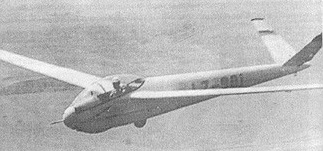
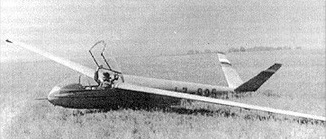
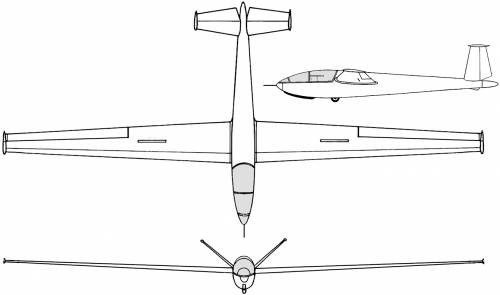
The second postwar Bulgarian sailplane designed by Eng L. Panov and D. Panchovsky, the Kometa-Standard (or Comet Standard) fully aerobatic Standard Class single-seater flew for the first time in prototype form on 5 August 1960; the type later went into small-scale production for the Bulgarian gliding clubs.
The Kometa-Standard is a cantilever midwing monoplane of conventional wooden construction with a butterfly-type V-tail with an included angle between the tailplanes of 110°. The wings, straight tapered in plan and set at mid-wing position, are single-spar wooden structures with a leading edge plywood torsion box and wing tip ‘salmon’-type fairings; the slotted ailerons are fabric-covered and there are spoilers on the wing upper and lower surfaces. They had 4° of dihedral. The Kometa-Standard had mass-balanced, slotted ailerons and spoilers at 60% chord which opened above and below the wing.
The plywood monocoque fuselage has a metal nose-cap and the landing gear consists of a non-retractable wheel with brake and a rubber mounted skid under the forward fuselage. The tail unit is of wooden construction with plywood and fabric covering, and the pilot is seated under a hinged Perspex canopy, proud of the rear fuselage line, but this was lowered and reshaped on the production Kometa-Standard II, merging into the rear fuselage from which it was hinged.
Kometa – Standard II
The cockpit was changed again in the Kometa-Standard III which had a sliding canopy over a reclining seat, making this variant 30 km/h (19 mph) faster than the Kometa-Standard II. Overall, the fuselage tapered uniformly from the cockpit to the tail. The Kometa-Standard had a 110° butterfly tail, its plywood and fabric covered surfaces terminating, like the wings, in little salmon fairings. Its undercarriage was a fixed monowheel, fitted with a brake and assisted by a forward, rubber sprung skid.
The prototype was flown for the first time on 5 August 1960 and an initial batch of 10 Kometa-Standard IIs was built, followed by two batches, each of 10, of Kometa-Standard IIIs. Flown by Bulgarian clubs, they were fully aerobatic, though not cleared for cloud flying.
Kometa-Standard II Production variant with lowered, rear hinged canopy. 10 built.
Kometa-Standard III Further revision to nose/canopy lines with reclining seat and sliding canopy. 20 built.
Specifications:
Kometa-Standard Year: 1960 Span: 49 ft 0.5 in / 14.95 m Length: 22 ft 9.5 in / 6.95 m Wing area: 136.7 sq.ft / 12.90 sq. m Aspect ratio: 17.6 Empty weight: 573 lb / 240 kg Max weight: 750 lb / 340 kg Max speed: 130 mph (in smooth air) Max aero-tow speed: 93 mph Min sinking speed: 2.69 ft/sec at 48.5 mph Best glide ratio: 28:1 at 51 mph
Kometa-Standard II Length: 6.95 m (22 ft 10 in) Wingspan: 14.95 m (49 ft 1 in) Wing area: 12.70 m2 (136.7 sq ft) Aspect ratio: 17.6 Airfoil: NACA 43012A Empty weight: 240 kg (529 lb) Gross weight: 340 kg (750 lb) Never exceed speed: 210 km/h (130 mph; 113 kn) Rough air speed max: 150 km/h (93.2 mph; 81.0 kn) Aerotow speed: 150 km/h (93.2 mph; 81.0 kn) Winch launch speed: 100 km/h (62.1 mph; 54.0 kn) Terminal velocity: with full airbrakes 220 km/h (137 mph; 119 kn) g limits: +6.25 -3.3 at 220 km/h (136.7 mph; 118.8 kn) Maximum glide ratio: 28:1 at 82 km/h (51.0 mph; 44.3 kn) Rate of sink: 0.78 m/s (154 ft/min) at 78 km/h (48.5 mph; 42.1 kn) Wing loading: 26.70 kg/m2 (5.47 lb/sq ft) Crew: One
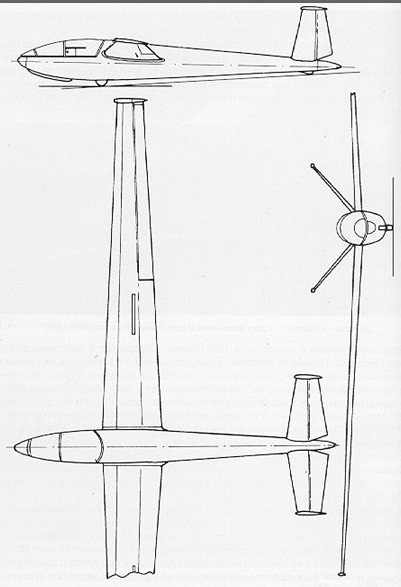
The Jastreb (or Hawk) two-seater fully aerobatic trainer was, with the Kometa-Standard single seater, one of the two indigenous Bulgarian designs that went into production in that country after the war.
The Jastreb was designed by Eng L.Panov and D. Panchovsky, the prototype making its first fight on 6 February 1948; the type was put into small-scale production for the Bulgarian clubs.
Of conventional wood and fabric construction, the Jastreb is a braced high wing monoplane with the centre section swept forward 5° at the quarter-chord line to improve the view from the rear seat, the absence of sweep on the outer panels enabling the spar to be uncranked. The wing is a single-spar wooden structure with leading edge plywood torsion box and is 30% fabric-covered; the wooden ailerons are plywood and fabric covered and there are spoilers in the wing upper and lower surfaces. The plywood-covered wooden fuselage has a metal nose-cap and the two pilots are seated in tandem under a sideways-opening Perspex canopy. The cantilever wooden tail unit is covered with plywood and fabric, and the landing gear consists of a fixed unsprung monowheel with no brake and a rubber mounted skid under the forward fuselage.
Span: 49 ft 2.5 in Length: 26 ft 3 in Wing area: 209.9 sq ft Aspect ratio: 11.55 Empty weight: 529 lb Max weight: 850 lb Max speed: 124 mph (in smooth air) Max aero-tow speed: 75 mph Min sinking speed: 2.95 ft/sec at 37 mph Best glide ratio: 20.5:1 mph
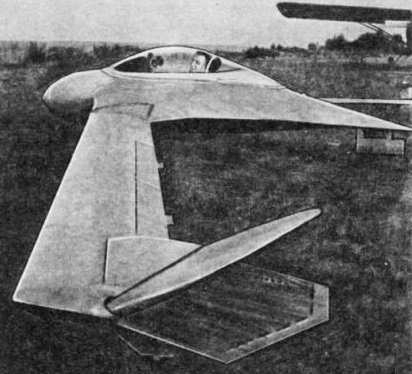
In 1970, following studies carried out by Alexei Ivanovich Pietsuj’s group in relation to tailless gliders, student VP Pushkin carried out a project of a new model with this configuration. It was a development of the concept outlined with the previous MAI-63. Named MAI-68 it was nicknamed “Pushinka” (Russian: МАИ-68 «Пушинка») in honour of its designer.
Professors GS Sadiekov, LA Matvieyev and VI Figurovski participated in the process of creating the new model. The general direction was in charge of AI Pitsuj.
The glider was designed as a single-seater basic training device in order to be able to compare its performance to those of similar models with the classic scheme. It was decided to apply an integral construction in which the fuselage, wings and tail were fused into a single structure.
The construction was metallic with fabric covering. The structure of the glider was built with aluminum profiles.
The aircraft featured a fluted wing with variable thickness and variable line of lights along the wingspan as well as the long arm of the steering and rudders.
The selected wing profile was the R-Sh with a constant thickness of 15.5 throughout the wingspan. The force structure is composed of two spars of similar thickness between which the wing ribs were located. The wing leading edge was coated with 0.5 mm thick duralumin sheets.
The wing shape, in conjunction with the K-shaped structure of the short wing-end stabilizers, ensured the necessary longitudinal and lateral stability as well as good manoeuvrability. The location of the wing-end stabilizers had a positive influence on wing flow, significantly reducing the creation of vortices in this area.
Single-spar ailerons were attached to the wing structure at three points.
The alligator-type wing-end rudders ensured longitudinal control if operated integrally. When operating the pedals, these surfaces were opened independently, acting as aerodynamic brakes. By operating a single pedal, the resistance at this wing end allowed control of the rotation of the apparatus.
The control system was operated by cables.
The landing gear consisted of a main wheel with a front ski and stabilization straps on the wing.
The cabin, for a single crew member, had a well-equipped instrument panel with an airspeed indicator, altimeter, artificial horizon and variometer. The transparent cover had an opening to the right. To improve downward visibility, the lower nose region and forward fuselage were coated with clear acrylic.
The MAI-68 experimental glider was built by V. Pushkin between 1968 and 1970. Ground tests began in July 1970, which were followed by flight tests at the MAI aeroclub aerodrome.
The test flights were developed by club director IG Yermakov. The “Hercules III” series tensioner was used for the launch.
During the ground tests it was possible to verify the effectiveness of the rudders, as well as the good stability and ease of control of the glider. The first short flights showed an acceptable longitudinal and transverse stability, as well as a marked delay in the reaction of the rudders. To eliminate this phenomenon, the opening surface of the elevator shafts was increased, achieving an increase in the effectiveness of these structures and allowing the development of the first flights at heights of 250 – 300 meters.
Tests of the glider at the MAI continued until 1972. In total they comprised 12 jumps at heights of 1 – 2 meters from the ground, 26 flights at 40 – 70 meters and four flights at 250 – 300 meters. A towed flight was made by a Yakovlev Yak-12.
The tests were continued at the TsAGI between 1973 and 1974. The flights, carried out by VN Vladimirov, were carried out at the Glider Station airfield. At this stage it was possible to measure the benefits and develop a series of mathematical models that verified the coincidence with the project calculations.
It was possible to establish a minimum glide speed of 45 km / h and an aerodynamic quality of 21. The effectiveness of the large lower surface of the center plane during takeoffs and landings was highly valued.
After testing the MAI-68, its designer VP Pushkin worked in the aeronautical industry and in this period he designed and built two other devices with this scheme, which showed excellent indicators and performance.
MAI-68 Pushinka Wingspan: 10.00 m Wing area: 10.2 m² Aspect ratio: 8.54 Length: 5.00 m Empty weight: 86 kg Normal weight: 170 kg Wing loading: 16.7 kg / m² Minimum speed: 45 km / h Maximum glide ratio: 21 Accommodation: 1
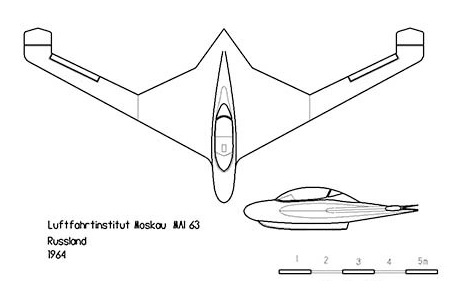
In 1958 a group of students from the faculty of aeronautical construction of the Moscow Aviation Institute (MAI) came together to create a construction bureau to build aircraft in a flying wing configuration. In this group the students A. Krivomlin, M. Alexandrov, Yu stood out. Belov, A. Bielosviet, V. Irinarjov, S. Kurilienko, Ye. Mizinov and V. Novikov among others.
The research carried out and the technical solutions of the LK-MAI would be used as the basis for the development of a new flying wing glider, which was called MAI-63 (Russian: МАИ-63).
The work began in the autumn of 1962 with the participation of members of the MAI sports aviation club under the direction of the head of the scientific-research sector AI Pitsuj. All the construction work was done by the students themselves.
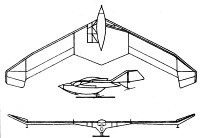
The glider design featured a low elongation centroplane with a rhomboid shape in the plane to which consoles were attached with 30º inflection on their leading edge. The sagging of the centerplane and the consoles was the same. Aerodynamic blades were located where the fuselage was attached to the consoles.
The large swelling of the wings made it possible to locate double-surface elevator rudders (“crocodile” type) on the trailing edge of its extremities. This location guaranteed an adequate balance of the apparatus even with the flaps extended. The ailerons, located on the trailing edge, were of the conventional type.
The glider lacked a horizontal empennage. Longitudinal control was performed by a combination of the elevator rudders. When the left pedal was depressed, the surfaces on the left side opened up, increasing the resistance at that end, and the aircraft turned to the left. By keeping the pedals in a neutral position, both surfaces joined to form a single rudder.
The cockpit was designed to accommodate a semi-reclining pilot and was covered with a bubble-type lantern. The entire construction was made of metal. The wing design had a laminar profile. The covering of the centroplane and the wing up to the middle of the chord was made of duralumin and from there on in fabric.
The landing gear was unicycle type with the wheel located on the axis of the device and conveniently fairing. In the rear area there was a amortized skate. Stabilization supports with small wheels were placed under the wing tips.
In 1963 the project for the new glider was ready and in that same year construction began in the workshops of the laboratories of the MAI aircraft construction and projection chair. The prototype was ready for 1964. In the construction of the model stood out V. Rytsariev, G. Bespalov, O. Tischenko, Ye. Volkov, A. Turik, S. Turchkov, V. Fatyanov, V. Vasiliev, and V. Pushkin.
All the turning and milling jobs were developed by students. Many of them had the necessary qualifications and were masters of the sport in model aircraft. This made the job easier.
The 5th year student Yu. Shirokov, who designed the centroplane and the cockpit, was still in his school years champion of Moscow in model aircraft; V. Pushkin had attended various professions.
Structural strength calculations were developed by M. Stolyar, O. Derzhavin, V. Voronin, and V. Kuznietsov. As a consultant, Ye acted. S. Voit.
The MAI-63 tests were developed in Alferiev in 1964 and were in charge of AI Pietsuj. Several towed flights were made approaching take-off speed, piloted by AI Pietsukh. Structural strength problems led to the decision no flights were done.
After the first tests, several corrections were made to the apparatus: the wing structure was reinforced and modifications were made to the landing gear.
In 1965, MAI-63 was modified to a motor-glider installing on a pole erected over the central part of the glider an air-cooled EP-760 23 HP, five-cylinder, two-stroke radial engine. The engine was designed by Polyakov specifically for motor-gliders and light aircraft. The modified glider got the designation MAI-63M. Tests were conducted at the flying club’s airport. The engine during the trial taxi runs was unstable so the powered version of the glider was never flown.
MAI-63 Wingspan: 12.60 m Wing area: 9.00 m² Aspect ratio: 17.5 Wing profile: Laminar Empty weight: 126 kg Normal weight: 200 kg Wing loading: 22.2 kg / m² Best glide ratio: 35 Descent speed: 0.61 m / s Accommodation: 1
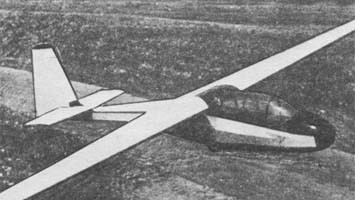
The glider was designed in response to a request from the DOSAAF Central Committee as a development of the PAI-6 glider, but project manager Alexei Ivanovich Pietsuj proposed an entirely new construction.
The MAI-56 (Russian: МАИ-56) was designed in 1956 as a two-seater training glider and was developed by the collective of the aircraft construction and projection chair at the Moscow Aviation Institute (MAI). The group of designers was made up of IV Kachanov, Ye. S. Voit, AA Liebiedinski and VA Manucharov under the direction of AI Pietsuj. An important group of students also joined this work.
The engineer AA Liebiedinski was assigned to the construction and all the calculations and plans were developed by students.
The MAI-56 featured a high cantilever wing structure and two-seater capacity, but unlike previous models, the fuselage was designed around a skeletal structure built with welded steel tubes with little lateral section covered with fabric.
The landing was made on a central wheel in the lower fuselage, which had a wooden skid at the front. Stabilization straps were located under the wings.
The wing and tail were constructed entirely of wood with the use of steel fasteners. The wing was equipped with airbrakes.
The wing structure was designed with a single spar: the wings had a trapezoidal shape in the plane with some negative sagging. The wingtips were covered with plywood and worked by twisting. The louvered three-point ailerons featured aerodynamic and weight compensation.
The stabilizer and keel were covered with plywood. All surfaces had cable control.
The cockpit with two-seater capacity in tandem was closed by means of a transparent cover in line with the fuselage, with lateral opening towards the right. The bow fairing was attached to the cockpit deck, facilitating access to the cockpit for the pilot. The second crew member was located above the center of gravity of the model. In order to improve visibility from this second position, the wing leading edge, at the junction point with the fuselage, was made of transparent acrylic.
To improve the operation of the MAI-56, a trailer truck for transport was designed, which could be installed on a light car. The MAI-56 was generally superior to gliders of its Czechoslovakian “Pioner” type or its national “Primoriets” version, which was mass produced in the USSR. The Czechoslovakian glider had an aerodynamic quality of 17.5 against the 21 of the MAI-56, obtained thanks to the absence of wing braces and cleaner aerodynamic shapes.
The construction of the prototype was carried out in the UPM workshops of the MAI.
The first flight of the MAI-56 took place in August 1958 with the main constructor AI Pietsuj at the controls. The test program was carried out between May and September 12, starting the manufacturing tests, which took place at the airfield of the airfield the DOSAAF of Yegorievk having as pilot Pietsuj.
The pilots who participated in the tests gave a very positive evaluation of the model and recommended its series production. The test report was approved by the chairman and aeronautical constructor AS Yakovlev.
In addition to the drag tests from a Yakovlev Yak-52, four flights were made during the tests using drag from a motorcycle and six from a car. The MAI-56 glider passed the tests without difficulty. The piloting technique was considered simple and suitable for athletes of all categories, but the expected series production would never come to fruition.
Many MAI students completed their course and diploma work on topics related to the projection and development of the MAI-56. The consultations with the students were made by Professors Ye. S. Voit, IV Kachanov and AA Liebiadinski.
MAI-56 Wingspan: 15.60 m Wing area: 18.10 m² Aspect ratio: 13.1 Length: 7.61 m Empty weight: 237 kg Maximum weight: 273 kg Wing loading: 21.9 kg / m² Glide ratio: 21 Accommodation: 2
A flying wing, the MAI ASK was displayed publicly in 1964, developed by the Moscow Aviation Institute, powered by an 80-hp piston engine with a pusher prop mounted above the wing. It weighed 970 lb, cruises at 137 mph, has a 5 hour range, lands at 68 mph, spans 16.4 ft, is 17 ft long. Has a tricycle undercarriage and bubble canopy.
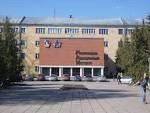
The Moscow Aviation Institute (MAI) was founded in 1930 on the basis of the aeromechanical faculty of the Moscow National Technical University “Bauman” (MGTU), becoming independent from it due to the wide importance that, since then, the aviation in the Soviet Union. It began with two faculties, aircraft construction and engine construction, since then it has been the most important aeronautical academic institution in the entire region, becoming a leader both in the scientific field, being the first to offer science chairs. aeronautics and training its own teachers and doctors who would make up the university boom, as well as technical-industrial, this is confirmed by the fact that it is the only university in the world that has launched its own aircraft on the market, built by its professors and students since 1932, when the MAI set up its own aircraft construction office.
After the Second World War the MAI expanded its academic and scientific interests, a new teaching system was developed, faculties were added in all aeronautical fields, as well as in physical-mathematical sciences, electronics and robotics. The student campus was built with more than 35 buildings, aeronautical infrastructure, workshops and laboratories were acquired, as well as the aerospace faculty, and in this way the MAI obtained the category of technical university. In 1979, artificial satellites ” Radio ” and ” Cosmos ” were launched into space, built with the participation of a large delegation from the MAI.
Although it is true in Soviet times the MAI as a national university maintained a margin of military defense, together with the state and the armed forces, always collaborating with the country, the university has also specialized its engineering in the commercial and experimental field.
The Moscow Aviation Institute (Russian: Московский авиационный институт (МАИ)) is a Russian university located in Moscow dedicated to the study of everything related to the aeronautical and aerospace industry. However, education is currently multidisciplinary and teaching and research programs are offered in multiple scientific and technological fields.
Over the years, the university grew to become the largest aerospace engineering teaching center in Russia, and one of the most prestigious universities in the world. More than 130,000 students, including 1,000 international students from 40 countries, have graduated from MAI after its founding in 1930.
In 1982 by the order of Ministry of Aircraft Industry the Design Bureau was transformed into a branch-wise experimental students aircraft construction design bureau of the MAI. The work was carried out by professional engineers. If necessary the co-workers from among the MAI students and teachers and also from among the workers of the industry were invited. The production facility of the MAI aircraft development plant (EOZ) in the experimental development shop (shop № 3) are manned by qualified technicians. The OSKBES work on the experimental aircraft engineering constantly received high estimations of the industry. Their technical novelty and utility are confirmed by nine Introduction Certificates and more than twenty Invention Certificates. By the end of 1980s six experimental aircraft of different types were designed and built: Kvant, Elf-D UAV, PS-01 small-sized UAV, Elf, Photon and Yunior aircraft.
The basic structure, address and the industrial areas occupied by it in the OSKBES MAI have remained the same. The EOZ MAI (shop № 3) and the MAPO (Moscow aircraft building plant) were used as an industrial base. On July 27, 1992 the application on realization the inspection work in the OKB MA for reception the certificate for the right to develop the civil aircraft engineering was sent to the Aviaregister of the MAK and the Air Industry Department of the Ministry of Industry of Russian Federation. It was made on behalf of the “Aviatika” joint-stock company. According to the inspection results the Aviaregister of the MAK issued Certificate № R-9 to the “Aviatika” joint-stock company with the right to develop light civil aircraft. It was on February 17, 1993.
Aircraft designed and developed at OSKBES include: A single-seater Aviatika-MAI-890 aircraft — passed certification, had a temporary Certificate of a type of 31 March 1994 № 52В-890, valid till 1 April 1995, is series produced by the RAC “MiG”; A two-seater Aviatika-MAI-890U aircraft is serially produced by the RAC “MiG”; An agricultural Aviatika-MAI-890SKh aircraft is serially produced by the RAC “MiG”; A single-seater Aviatika-MAI-900 aerobatics (“Akrobat”)’ A two-seater Aviatika-MAI-910 with wings, folding on the ground; An Aviatika-MAI-920 glider; A single-seater Aviatika-MAI-890A autogyro, a pre-production model at the stage of flying test. The basis for the “Aviatika” aircraft manufacture at the MAPO plant is the License Agreement concluded by this plant with the “Aviatika” joint-stock company on 10 April 1995 (contract № 4276).
In 1997 Aviatika withdrew from the Design Bureau of Moscow Aviation Institute (Aviatikas) program, after which the manufacturer of Aviatika lightplanes became known as KB MAI.
The personnel of the OSKBES have continued to work in the field of light civil aircraft together with the MAPO MIG. In April 27, 1998 the Aviaregister of Interstate Aviation Committee issued a Design Organization Certificate R-52 of the developer of light civil aircraft.
29 September 1999 eight members of our design bureau, Moscow Aviation Institute and RAC “MIG” were rewarded by “State Prize of the Russian Federation in science and technology” for designing and development of light multipurpose airplanes in a serial production. They are: OSKBES MAI Chief Designer K. Zhidovetskiy (posthumously); OSKBES MAI Deputy Chief Designer (after the death of K. Zhidovetskiy — Chief Designer) N. Goryunov; OSKBES MAI Deputy Chief Designer V. Demin; OSKBES MAI Deputy Chief Designer V. Feigenbaum; Rector of MAI A. Matveyenko; Manager of MAI Experimental Plant P. Ogadzhanov; General Manager of RAC “MIG” plant G. Nemov; Deputy Manager of RAC “MIG” O. Chukantsev. Autogyro MAI-205 made the first flight in 2001, chief designer Andrey Zorin. In 2002 OSKBES MAI has started designing a new plane MAI-223. This plane made the first flight in 2004. In 2003 OSKBES MAI started to work on different aircraft, airships and autogyros. It designed and produced gondolas, nacelles, fly-by-wire power plant controls and empennages of NPO “RosAeroSystems” airships Au-30 and Au-12M. The design and development of Autogyro MAI-208 was started in 2006. The first MAI-208 is undergoing testing. OSKBES MAI presented MAI-208 at the 2nd International exhibition of the helicopter industry “HeliRussia-2009” (21…23 May 2009, Moscow). The new autogyro has caused the big interest of visitors and the press.
July 1, 2008 Vadim Demin was appointed Chief Designer of OSKBES MAI. The same year the design office has started working on a new multi-purpose four-seat twin engine aircraft MAI-407.
In 2009 OSKBES MAI started designing a new training glider MAI-227.
Moscow Aviation Institute (MAI) Volokolamskoe Shassé, Building 4, Moscow, Russia, 125993
Faculties and Departments of MAI: High school. Faculty № 1. Aeronautical Engineering. Faculty №2. Aircraft Engines Faculty №3. Computer Science and Navigation System Faculty №4. Radio and Electronics Institute of Economic Engineering Faculty №6. Aerospace Faculty №7. Robotics and Intellectual Systems Faculty №8. Applied Physical-Mathematical Sciences Faculty №9. Applied Mechanics Faculty №10. Humanities (Social Engineering) Military Institute





 All Aero