Nord / SNCAN

Societe Nationale De Constructions Aeronautiques Du Nord
Nord-Aviation

In France, the Socialist Government of the so called Popular Front brought all the companies building military aircraft, aero engines and ar¬mament under its control in 1936. The im¬mediate result was the socialized oblivion of such established companies as Marcel Bloch, Bleriot, Nieuport, Potez, Dewoitine, Hanriot and Farman within half a dozen nationalized groups or Societies Nationales, named ac¬cording to their geographical location (Nord, Ouest, Centre, Midi and so on). Les Mureaux, CAMS, and part of Breguet, Amoit and Potez formed SNCAN in 1938.

Dominant concern was production of Potez 630 series of twin-engined multipurpose aircraft. Peak output reached in May 1940. Development of basic type (e.g. Potez 671 specialized fighter with elliptical wing) was also SNCAN concern.

After World War II, although four of the nationalized groups continued operating un¬der state control, private companies were al¬lowed to resume the design and manufacture of both civil and military aircraft. Some of the pioneering names of French aviation, such as Breguet and Morane Saulnier, returned to prominence, and by 1950 a new one had been added Avions Marcel Dassault.

Caudron joined SNCAN in 1947.

Aerocentre / SNCAC went into liquidation during 1949, its plants and work being shared by SNCAN (Nord), SNCASO (Sud-Ouest) and engine form SNECMA.

In 1954, when company flew prototypes of trainers later built in quantity, amalgamated with Societe Frangaise d’Etudes et de Constructions de Materiels Aeronautiques Speciaux (SFECMAS, formerly Arsenal de I’Aeronautique).

From January 1958 called Nord-Aviation. Under new name continued development of Nord/SFECMAS Gerfaut delta-wing fighter; also Griffon, with fuselage forming outer casing of very large ramjet with turbojet in center for take-off and to ignite ramjet. Noratlas twin-boom transport, though first flown September 1949, continued in production and development under new name, achieving wide success. Nord name was emphasized in Noroit flying-boat and Noreclair shipboard aircraft.

Max Holste joined Nord in 1961.

On January 1st, 1970 three French nationalised aircraft companies – Sud-Aviation, Nord Aviation and the missile manufacturing company, SEREB – were merged into Aérospatiale.

Nord-Aviation produced a version of the Messerschmitt Bf 108 Taifun, known as the Nord 1002 Pingouin, for the French military service immediately after the Second World War. A tricycle landing gear variant, the Nord 1101 Noralpha, and a redesigned civilian four-seat derivative, the Nord 1203 Norecrin, were also produced in quantity, together with Nord NC-853/856 Norvigie liaison/trainer aircraft delivered to the French army and to aero clubs in the mid-1950s. A batch of N.1402 Noroit twin-engined amphibians were built for the French navy; and the N.2501 Noratlas twin-boom, twin-engined transport, first flown 1952, was subsequently produced in France and Germany. Nord took over the Max Holste Super Broussard twin-engined transport design and developed it as the Nord 262 airliner, delivered to European and U.S. airlines and to the French navy by Aerospatiale.
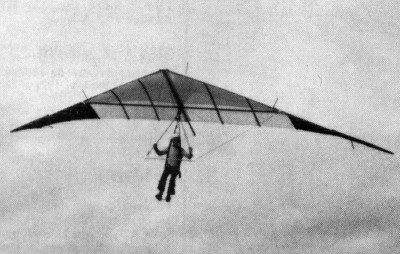
Nipper Aircraft Ltd / Nipper Kits & Components

UK
In 1966 Nipper Aircraft acquired world marketing rights for the Fairey/Tipsy Nipper ultralight aeroplane, which it supplied in completed or kit form. After liquidation in May 1971 Nipper Kits and Components Ltd. was formed to support existing aircraft, and continued to market the aircraft in Mk III form as plans and some components.

1998:
Foxley Blackness Lane
BR2 6HL Kester
Keny
UK

Nippi NP-100A Albatross / Nihon NP-100A Albatross

Nippi NP-100A Albatross

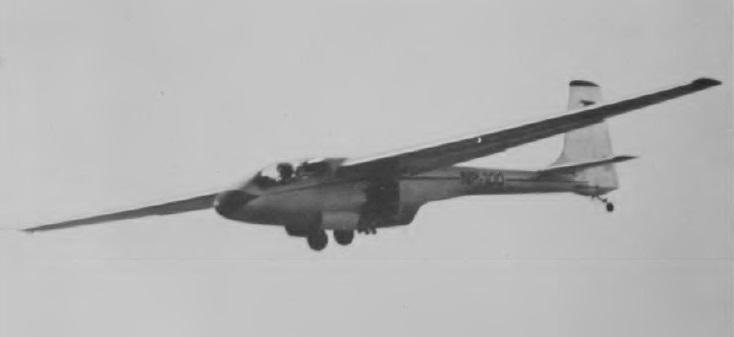
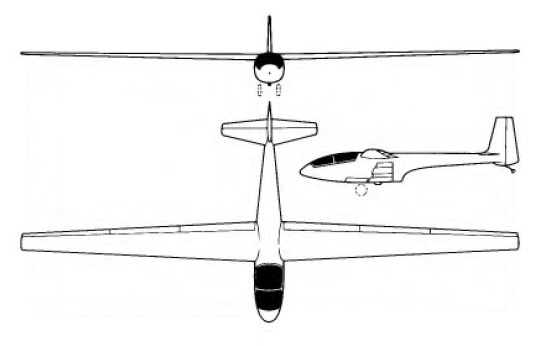
This Japanese side-by-side two-seater motor glider, designed and built by the Nihon Hikoki Kabushiki Kaisha (Japan Aircraft Manufacturing Co Ltd). Of all-metal construction, Nippi began the design of the Albatross late in 1973. The Albatross has cantilever shoulder wings with a single spar and two-section metal skinned flaps on each side that move upwards or downwards; the inner ones can be lowered to 80° for use as air brakes, and there are no spoilers. The fuselage is a semi-monocoque structure, with the forward-retracting twin-wheel main landing gear operated mechanically with spring assistance, and positioned just ahead of the ‘Venetian blind’ air intake doors. There is also a steerable fixed tailwheel linked to the rudder movement. The two pilots are provided with dual controls and sit under a rearward-hinged flush-fitting framed cockpit canopy. The unswept tail unit has conventional elevators and rudder. Powered by a motorcycle engine ‘buried’ in the centre of the fuselage aft of the main landing gear and driving a ducted fan.

The prototype NP-100 made its first flight on 25 December 1975; several modifications were made as a result of the first flight test programme, and a second such programme was to take place during January-March 1978 so as to finalise details of the production version.

The prototype’s powerplant is a modified 60hp Kawasaki H2 three-cylinder two stroke air-cooled in-line motorcycle engine of 748cc driving a four-bladed wooden ducted fan of 23.5in diameter, the fan duct being under the tail boom. There are triple ‘Venetian blind’-type air intake doors on each side of the fuselage, which are interconnected with the engine starting circuit so as to prevent the engine running when the doors are closed. There is a single fuel tank in the fuselage of 8.8 Imp gallons capacity. It was expected that production aircraft would have a 68hp Nippi ‘flat four’ engine. Planned production is now awaiting the final choice of a type-certificated powerplant.

Prototype
Engine: Kawasaki HZI 748 cc, 44.7 kW (60 hp)
Span: 18.0 m / 59 ft 0.25 in
Wing area: 18.0 sq.m / 193.75 sq.ft
Aspect ratio: 18.0
Wing section: Wortmann FX-67-K-170
Length: 8.0 m / 26 ft 3 in
Height: 2.23 m / 6 ft 7.5 in
Empty weight: 420 kg / 926 lb
Max weight: 600 kg / 1,322 lb
Fuel capacity: 40 litre / 8.8 Imp gall.
Water ballast: None
Max wing loading: 33.3 kg/sq.m / 6.82 /b/sq.ft
Max level speed at sea level: 99 mph / 86 kt / 160 km/h
Max cruising speed: 74 mph
Stalling speed: 35 kt / 65 km/h
Min sinking speed: 0.8 m/sec / 2.62 ft/sec at 51.5 mph / 44.5 kt / 83 km/h
Best glide ratio: 30:1 at 56 mph / 48.5 kt / 90 km/h
ROC: 120m/min / 394 ft/min
Take-off run: 365 m / 1,200 ft
Range with max fuel: 124 miles / 200 km / 108 nm

Nihon University Stork

The opening up of the Kremer competition to the world brought forth Professor Hidemasa Kimura and students from the Nihon University in Tokyo and a series of man powered aircraft, one of which achieved a straight line flight of 2095 m (2290 yards) in January 1977.

Professor Kimura’s balsa wood and rice paper Stork had by 1977 doubled John Potter’s record in Japan and was in the running for the Kremer prize.

Nihon University N-58 Cygnet

The students of Nihon University, under the leadership of Dr Hidemasa Kimura, have designed and built two light aircraft. The second is a high-wing four-seat light-plane known as the N-58 Cygnet.

Although the Cygnet bears a close resemblance to the Piper Tri-Pacer, it is a new design utilizing existing Tri-Pacer components only in its undercarriage, engine mounting and control systems. Construction is all-metal, with fabric covering, and it is powered by a 140 hp Lycoming O-290-D2 engine.

Span: 35 ft 2 in
Length: 22 ft 11 in
Height: 8 ft 9 in
Wing area: 185 sq.ft
Gross weight: l,950 lb
Empty weight: l,256 lb
Max speed: 117 mph
Econ cruising speed: 93 mph at 6,600 ft
Stalling speed: 42 mph
Service ceiling: 14,800 ft
TO to 50ft: 1,250 ft
Landing from 50ft: 1,440 ft
Max range 10% res: 445 miles