Formed originally as a holding company in 1928, North American did not manufacture any airplanes; it was a holding company division of General Motors which had absorbed Atlantic Fokker as General Aviation.
In 1933, North American Aviation Co., Inc., took over the assets of Berliner/Joyce, changing its corporate name to the B/J Co.
In 1935 General Aviation became North American Aviation.
The manufacturing facilities were moved from Dundalk, Maryland, to the West Coast in 1936 and a new modern production plant was erected on the Los Angeles Municipal Airport where the firm has a site of approximately 24 acres. Originally the plant covered an area of 172,000 sq. ft. but it has since been increased to approximately 500,000 sq. ft. The firm maintains one of the most complete laboratories for aircraft production tests and for research in materials.
North American’s first product was the O-47 Army observation aircraft of 1937. The NA-16 Yale two-seat military trainer followed, being developed through fixed- and retractable-landing-gear variants into the T-6 Texan/Harvard trainer which continued in production in Canada until 1954 and served with virtually every non-Communist air arm in the world.
North American’s best known aircraft was the P-51 Mustang fighter, and significant aircraft evolved by North American include the B-25 Mitchell twin-engined medium bomber; the B-45 Tornado, the first American four-jet bomber; the F-86 Sabre, the USAF’s first swept-wing fighter; the F-100 Super Sabre, the world’s first operational fighter capable of supersonic speed in level flight; the T-28 Trojan/Fennec trainer and light ground-attack aircraft which succeeded the T-6; the A-5 Vigilante carrier-based jet bomber/reconnaissance aircraft; the XB-70 Valkyrie supersonic bomber with Mach 3 speed capability; and the X-15 rocket research craft, which attained an altitude of 107,960m in 1963 and was flown at a speed of 7,298km/h in 1967. In the same year
Around 1960 Fokker was looking for and American partner. Lockheed turned down the proposal because they thought it could not be profitable, but Northrop agreed to by a twenty-one percent share. North American and Rockwell merged in 1967, to form the Rockwell Corporation in 1972.
The Aero Commander company was taken over by North American Rockwell.
Norway Formed in 1947 to produce the Finnmark 5A amphibian designed by Birger Honningstad, which did not progress beyond the prototype stage. Norsk also manufactured metal floats for a variety of aircraft.
With the help of bush operators, Noorduyn set about studying the peculiar needs of the people who flew into the mining areas. Noorduyn built the airplane to be convertible from wheels to skis and floats without penalties in handling. He designed it with generous fuel capacity for the extended endurance that bush flying demanded. He built in a simple, gravity fed fuel system, and he developed an arrangement whereby fuel could be injected into the lubricating oil in the crankcase to dilute it. That meant the airplane would not have to be warmed with stoves in order to be started in the frozen North.
In addition, the pitot static system could be blown out by a clever pressure system to clear it of moisture that might freeze and render it useless. The passenger/cargo compartment was austere but comparatively cavernous for an airplane in its weight class. As a tribute to Noorduyn’s design, it can be said that no AD notes have ever been written on the land-plane version of the Norseman.
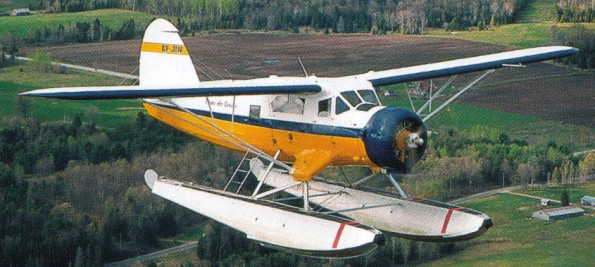
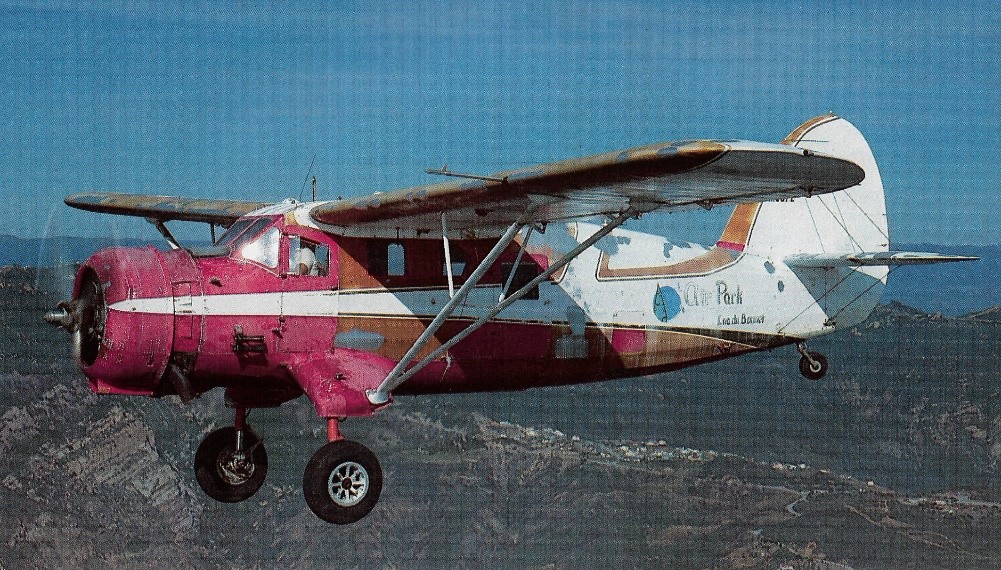
The plane was well proportioned, especially on floats and with the Wright engine, the cowl of which continued the gentle, slightly swollen curve of the fuselage all the way through to the nose. The more powerful Pratt & Whitney engine imposed upon the nose a squared cowl. On wheels, the Norseman lost the counterpoint that the floats provided to the shape of the fuselage. The bandy legged struts for the mains only looked funny once the floats had been removed and the vertical members for the wheels bolted on; on floats, the two short stubs at the bottom of the fuselage were scarcely noticeable, seeming a part of the fuselage or a fairing around a float strut. In 1935, Noorduyn Aircraft rolled out the prototype, which was a product of Canada, financed completely by Canadian money. The company had inherited the old Curtiss-Reid Aircraft factory, built in 1929 on Cartierville Airport, about eight miles northwest of Montreal. The Norseman first flew on 14 November 1935 as the Norseman 1. The Norseman was the only one of his aircraft to be built in quantity.
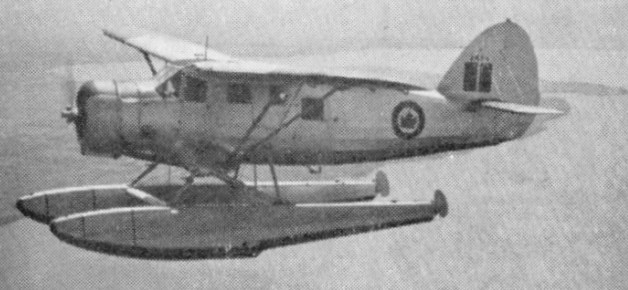
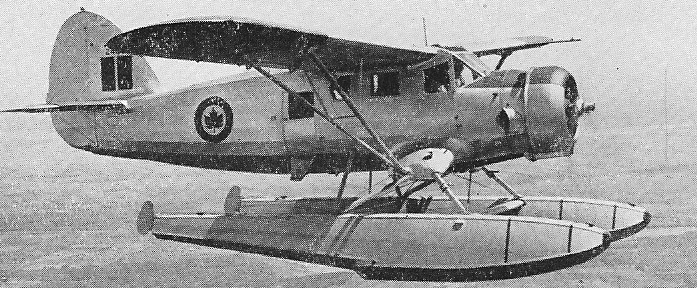
By the time the Mark III arrived, the Norseman was powered by a 450-hp Pratt & Whitney. It was the first true Canadian bushplane, with a large, eight-seat cabin, and could be equipped with wheels, skies or floats. In 1937 the Norseman IV was flown, now fitted with a 600-hp Pratt & Whitney R¬1340. In common with aircraft of the day, the fuselage was built of tube and covered with fabric. At just over 10 feet high it was a big aircraft. The Royal Canadian Air Force ordered thirty Norseman IV for radio and navigational training. The crew sat at desks in the passenger compartment, where seats had once been bolted down in proper rows.
Following the entry of the United States into World War Two, the USAAF trialed a ten-seat Norseman and seven were purchased for further evaluation trials as the YC-64. This was followed by 749 UC-64A utility aircraft delivered between 1942 and 1945.
Noorduyn UC-64A Norseman OO-AAR c/n 612, ex USAF 44-70347
At 1:45pm on Friday 15 December 1944, a Noorduyn C-64 took off from the US base at Twinwood Farms near the English city of Bedford. With a two-man crew and eight passengers it set course for Paris. Shortly after the C-64 flew over Newhaven and began to cross the English Channel, radio contact with it was lost. On board was Major Glenn Miller, world-famous jazz musician, trombonist and leader of the Moonlight Serenade US Air Force band. He was never seen again.
Manufacturing rights were purchased by the Canadian Car Foundry who produced the improved Norseman V and the metal wing and lengthened fuselage Norseman VII. At the end of hostilities, production continued with the Norseman V. The Mark V and VI carried on where the IV had left off, offering improvements learned by experiences in the war years, plus some new ones of their own. The Mark VI also saw service with the RCAF as a communication and rescue aircraft. Production finally stopped in 1959 after 928 airplanes had been turned out. The Noorduyn company and Robert Noorduyn himself never built another airplane. The company still existed in 1976 repairing Norsemans for resale.
The Norseman V 8-seat transport was still used by the RCAF in 1955 on both wheels and floats.
Norseman V
In Quebec particularly, Can Car closed down and eventually sold most of its facilities, but it was in Quebec also that it showed its interest in continuing in the aviation field. In 1946, it bought the production rights to the Noorduyn Norseman, an aircraft which since its introduction in 1936 had become almost legendary as a bushplane on wheels, floats and skis in the Canadian north. Some 800 Norsemen were built, mostly during the war years, for the RCAF and the USAAF (where they were designated C 64A).
In the years between 1946 and 1953, when CCF held the rights, only 33 aircraft were constructed. Although it was still suitable for the utility transport role for which it had been designed, sales were limited immediately after the war by the general availability of surplus Norseman VIs or C 64As and later, into the 1950s, by competition from the new generation of bushplanes such as the DHC Beaver.
All Norseman aircraft can be fitted with interchangeable wheel, ski of float landing gear.
The construction of the Norseman was conventional. Sitka spruce was routed to make the spar, which mated with ribs of the same wood, Walnut was used for certain packing pieces in the wings, and more spruce appeared in the aft fuselage stringers. Chrome moly tubing made up the fuselage cage, which was covered by aluminium in the front portion and in the belly as far back as the rear of the cabin; the rest was fabric and aluminium dope. Noorduyn took pains to maintain a clearance between the fabric and the structure in order to minimize the opportunities for corrosion. It also made for easier inspection and maintenance. The rear of the fuselage was proudly advertised as “snowtight.” Flaps and ailerons were interconnected to provide 15 degrees of aileron droop with the flaps at 40 degrees, while retaining the full angle of movement of the ailerons. The aileron hinges and cable pulleys used sealed ball bearings, and despite the aileron’s weight (fabric covered surfaces could be heavy if there were enough steel inside them), it doesn’t take any great effort to move the wheel from lock to lock laterally.
Norseman V
Vee struts ran from a point at about two¬-thirds span to the short stubs that also sup¬ported the main gear. On the ground, the weight of the wing and the upward force of the gear on those stubs tended to cancel each other; in the air, the reverse was the case, as the gear acted against the lift force imposed by the Vee strut. The arrangement made the most of the available structure and was particularly important in view of the plane’s convertibility to floats.
Inside, the cabin measured 15 feet long, including the cockpit, which made it large for a single. The plywood floor was solid. There was a section in the doorframe that could be removed for a 46¬inch wide opening for extra wide cargo. The space between the outer skin and the inner panelling of the cabin was filled with an insulating material to retain as much of the warmth from the cabin heater as possible.
Standard fuel capacity was 125 USG, but an auxiliary fuselage tank was available to boost that to 178.5 USG. With the less powerful Wright R 975 E3 engine, which pro¬duced only 450 hp at takeoff and 420 hp at maximum cruise, that much fuel could keep a Norseman going for 7.6 hours and cover 1,060 miles. With all that fuel, the airplane was capable of hauling 1,420 pounds. 148 knots was the absolute quickest the 550 hp landplane version could muster. Noorduyn advertised its cruise speeds at two thirds of rated power, and the company claimed 130 knots with the Wasp powered version at 31 USG/hr; the less powerful but more economical Wright pulled 121 knots on a lit¬tle over 23 USG/hr. Noorduyn guar¬anteed his speeds within three percent and his climb and ceiling figures within five per¬cent, so chances are the advertised perform¬ance figures were fairly reasonable.
Climb and altitude performance were good. and Noorduyn made a special effort to draw attention to the airplane’s merits as a high altitude camera plane. At a reduced gross weight of 5,200 pounds and with a controllable pitch prop and a mixture meter telling you the exhaust gas temperature, it could be coaxed up to 25,000 feet.
The unusual landing gear was built under license at the factory, and the reason for its odd appearance was strictly functional. Loos¬ening and removing two bolts on each side caused the wheels simply to drop off the fu¬selage, stubs to allow either skis or floats to slip into place. Noorduyn was particularly proud of the easy convertibility of his air¬plane. “With reference to the feature of convertibility from wheels to skis and floats, it should be emphasized that the Norseman is not a landplane equipped with floats as an afterthought, but that the seaplane and ski requirements were studied as part of the original design. On floats, the balance and the relative angles are so perfect that the takeoff is made easily with full load, without touching the controls and with a strong sense of reserve power.”
Cleveland Aerol gear legs on the Norse¬man had a nine inch shock absorber stroke, and the brakes were all hydraulic. Noorduyn even went to the trouble of designing his own tailwheel unit around a principle his catalogue described as “oil damped spring action.” The skis were built by the Elliott Brothers Company, and the floats were Edo Ys, each with more than 6.000 pounds of flotation, so that the plane could stay up even with the equivalent of one float gone.
When the conversion of the aircraft to military specifications was made, floats took second place to wheels and skis. In terms of performance, the float version and the ski version were quite similar except for useful loads the skis were lighter. An air¬speed penalty of 13 knots could be expected along with a decrease in range, and service ceilings were reduced with wheels off and ei¬ther skis or floats on.
As happens, the engine option with the greater horsepower did not offer the greatest useful loads. The Wasp powered Norseman grossed out at 6,450 pounds, but it offered a useful load of 2,775 pounds. The 420 hp Wright version had a gross weight of 6,235 pounds, and yet its useful load was 10 pounds higher.
Norseman 1 Length: 32 ft 4 in Wingspan: 51 ft 8 in Wing area: 325 sq.ft
Norseman III Engine: Pratt & Whitney, 450-hp Length: 32 ft 4 in Wingspan: 51 ft 8 in Wing area: 325 sq.ft
Norseman III Engine: Pratt & Whitney R-1340, 600-hp Cruise: 119 mph Length: 32 ft 4 in Wingspan: 51 ft 8 in Wing area: 325 sq.ft
Norseman V Engine: One Pratt & Whitney R 1340 S3H1 Wasp, 600 hp Prop: 2-blade Wing span: 51 ft 8 in (15.75 m) Wing area: 325 sq ft (30.2 sq.m) Length: 31 ft 9 in (9.68 m) Height: 10 ft 1 in Empty wt: 4250 lbs Gross weight: 7400 lb (3357 kg) Max. Speed: 155 m.p.h. Max cruising speed: 148 mph (237 kph) at 5,000 ft (1525m) Max range: 1,150 miles (1840 km) Service ceiling: 17,000 ft Range MAUW: 464 miles at 141 mph Accommodation: Crew of 1 and up to 9 passengers and 595 lb (270 kg) of baggage and freight.
In 1935 R.B.C.Noorduyn, experienced from the US Fokker company, went to Canada and organised the Noorduyn Aviation Company at Longue Pointe, Quebec.
Noorduyn designed and manufactured the Norseman eight/ten-seat cargo-transport aircraft, which first flew in 1935 and was delivered to the RCAF and the USAF; with the latter service it was designated C-64A. Norsemans were especially popular as bushplanes in the northern regions of Canada and with civilian operators in northern Europe.
The infant company’s elation over the initial acceptance of its new airplane was soon eclipsed by the emergencies of war. The Noorduyn factory became a natural for con¬version to production of North American Har¬vard (AT 6) trainers the Norseman and the Harvard both used the Pratt & Whitney R 1340. Although Norsemans converted into military airplanes continued in production, the emphasis was on the Harvards. From a staff of 150 employees, World War II changed the company almost traumati¬cally.
The Canadian Car & Foundry Company acquired Noorduyn’s assets in 1946 and produced an improved Norseman Mark V until 1950.
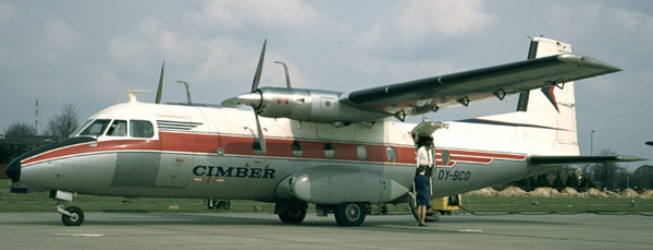
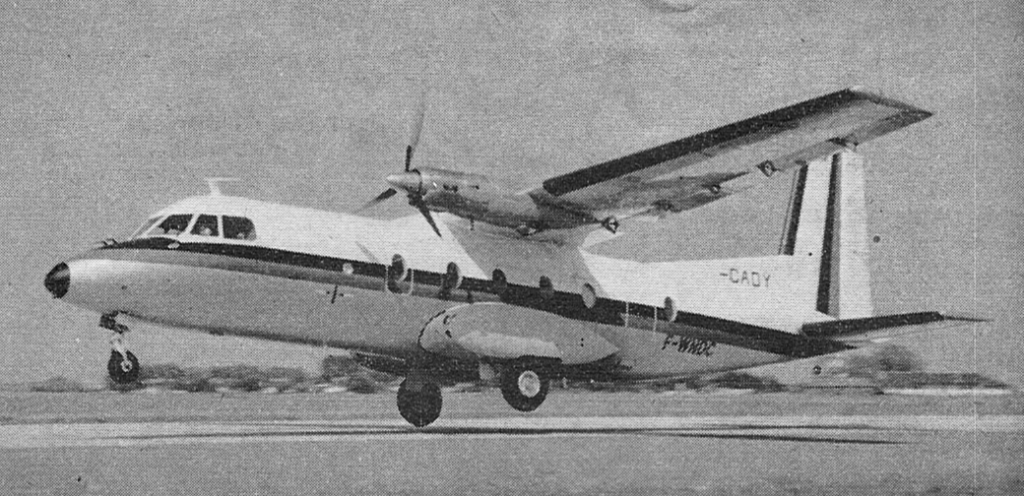
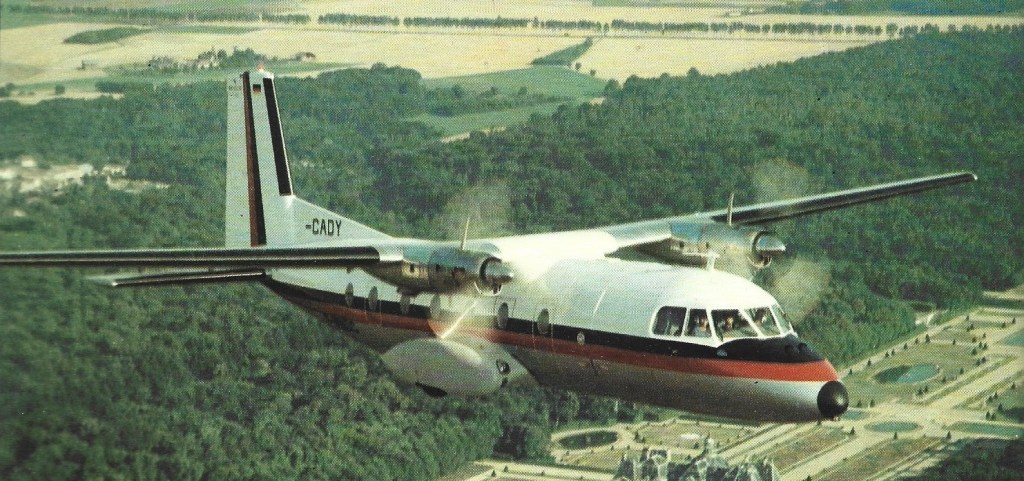
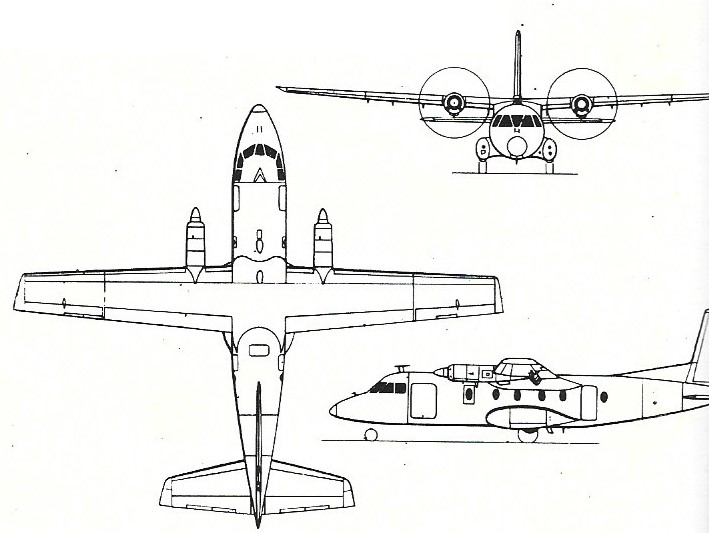
Ten MH260 with its rectangular section fuselage were built by Nord Aviation as the Nord 260. In 1961 started a significant redesign of the Nord 260. This resulted in the Nord 262 that had a redesigned fuselage with a circular cross section, pressurisation and more powerful powerplants. On 24 December 1962, this pressurised Nord 262 made its first flight.
The first production aircraft, F WKVA, flew in time to be exhibited at the Paris Aero Show in June 1963.
Air Inter, the French domestic airline, was expected to be the first operator of the Nord 262 pressurized version of the Nord 260.
The first Nord 262 for Climber Air – 1967
On 1 January 1970, the main three French nationalised aircraft companies – Sud-Aviation, Nord Aviation and the missile manufacturing company, SEREB – were merged into Aérospatiale. As a result of this merger the Nord 262 became a product of Aérospatiale. The Nord 262 became the Aerospatiale Fregate turboprop.
The 262A was powered by two Turbomeca Bastan VIC. The 262B designation was for the first four production aircraft. Aerospatiale developed the improved 262C Fregate, with more powerful Bastan VII engines and new wingtips that increased wingspan by 2 ft 3.5 in (0.70m). The generally similar military 262D Fregate or Frigate D was produced.
In 1964 Lake Central Airlines was buying eight Nord 262 to replace DC-3s in its fleet, with an option of eight additional.
When production ended in 1976, a total of 110 Nord 262 were built.
Mohawk Air Services, a subsidiary of Allegheny Airlines Inc., Washington D.C., was formed to control a conversion program for the Mohawk 298, UACL PT-6A-45-powered Nord 262 airliner, being undertaken by Frakes Aviation Inc. The first example flew on January 7,1975.
N.262A Engines: 2 x Turbomeca Bastan VIC, 1080 shp / 805 ekW Wingspan: 71 ft 10.25 in / 21.90 m Wing area: 592.03 sq.ft / 55.00 sq.m Length: 63 ft 3 in / 19.28 m Height: 20 ft 4 in / 6.20 m Empty operating weight: 15,498 lb / 7030 kg MTOW: 23,369 lb / 16,600 kg Max speed: 239 mph / 385 kph Cruise: 233 mph / 375 kph Service ceiling: 23.500 ft / 7165 m Range no res: 864 mi / 1390 km Crew: 2 Passenger capacity: 29
Nord N 262 D Frégate Engine: 2 x Turboméca Bastan VIII A, 1341 shp Length: 63.255 ft / 19.28 m Height: 20.374 ft / 6.21 m Wingspan: 71.85 ft / 21.9 m Max take off weight: 23373.0 lb / 10600.0 kg Max. speed: 226 kts / 418 km/h Service ceiling: 26247 ft / 8000 m Range: 567 nm / 1050 km Crew: 2 Payload: 29 pax
Fregate Engines: 1045shp Max cruise: 225 mph Econ cruise: 192mph Stall: 80mph Fuel cap: 3530lb Service ceiling: 25,750 ft SE service ceiling: 13,500ft ROC: 1160fpm SE ROC: 500fpm Min field length: 2575ft Payload with full fuel: 4209 lb Max range: 965sm Max payload: 5867 lb Pressurisation diff: 4.2psi Seats: 29 Gross wt: 22,100 lb Equipped empty wt: 14,555 lb Useful load: 7545 lb
Development of a 17-seat light commuter airliner, known as the M.H.250 Super Broussard started in 1957. The prototype of the MH250, powered by two Pratt & Whitney Wasp-1830 piston engines, flew first on 20 May 1959. It was soon realised that turboprops should be employed and further development resulted in the MH260 with enlarged fuselage and powered by Turboméca Bastan turboprops. In October 1959, Avions Max Holste entered into a co-production arrangement with Nord Aviation so that the new aircraft could be manufactured. The prototype of the M.H.260, the F-WJDV, flew on 29 July 1960. Ten MH260 with its rectangular section fuselage were built by Nord Aviation as the Nord 260. In 1961 started a significant redesign of the Nord 260. This resulted in the Nord 262.
Air Inter, the French domestic airline, was expected to be the first operator of the Nord 262 pressurized version of the Nord 260, formerly known as the Super Broussard. Four Nord 262s were ordered by Air Inter.
Production of the Nord 260 was virtually complete in 1963, having totalled ten in addition to the prototype F WJDV. The first eight of the production batch were registered as follows: No. 1 F-WJSN trials aircraft No. 2 F BKRB Nord demonstrator No. 3 F BKRH Air Inter trials, 1963 No. 4 F BKSS Air Inter trials, 1963 No. 5 LN LMB Leased to Wideroe No. 6 F BLGP No. 7 F BLHN No. 8 LN LME Leased to Wideroe
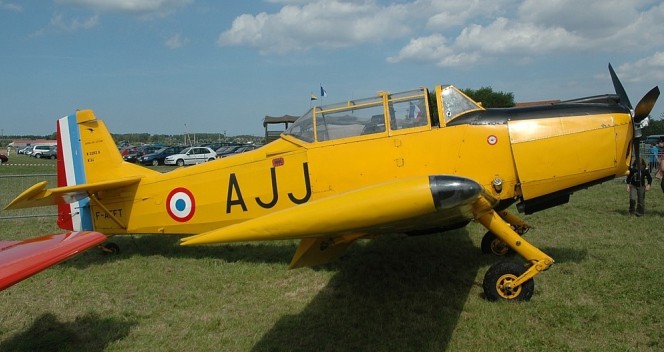
Engine: Potez 4D.32, 240 hp Span, 31 ft 2 in (9.5 m) Length, 26 ft 8 in (8.12 m) Wing area, 175 sq.ft (16.26 sq.m)
Engine: Potez 4D 34B, 260 hp Max speed, 161 mph (260 kph) Cruise, 146 mph (235 kph) at 7,545 ft (2425 m) Initial climb, 1,180 fpm. (6 m/sec) Normal range, 620 mls (998 km) at 7,545 ft (2 425 m) Empty weight, 1,896 lb (860 kg) Loaded weight, 2,690 lb (1220 kg) Span, 31 ft 2 in (9.5 m) Length, 26 ft 8 in (8.12 m) Wing area, 175 sq.ft (16.26 sq.m)
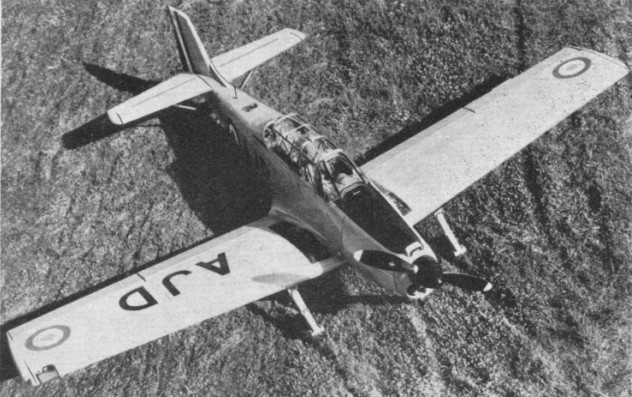
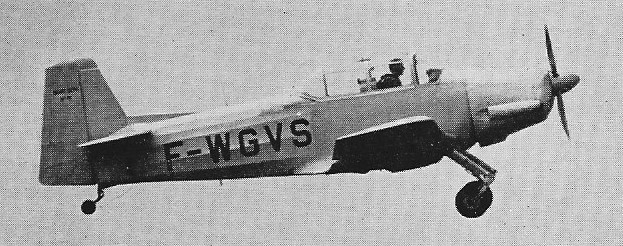
The N.3201 was designed for an official competition for a tandem two-seat primary trainer for the government-sponsored flying schools.
The N.3201 first flew on 22 June 1954, powered by a 170 hp SNECMA-Regnier engine.
The N.3200 prototype first flew on 10 September 1954, powered by a 260 hp Salmson-Argus 8AS-03 engine.
Apart from the engine installed, both models are identical,
N.3200 Engine: Salmson-Argus 8AS-03, 260 hp Wingspan: 32 ft 1.5 in Length: 26 ft 2.5 in Height: 10 ft 2.75 in
N.3201 Engine: SNECMA-Regnier, 170 hp Wingspan: 32 ft 1.5 in Length: 26 ft 2.5 in Height: 10 ft 2.75 in Empty weight: 1742 lb Loaded weight: 2405 lb Max speed: 150 mph at SL Cruise: 124 mph ROC: 984 fpm Endurance: 2 hr
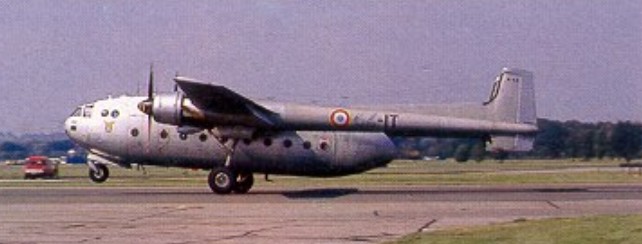
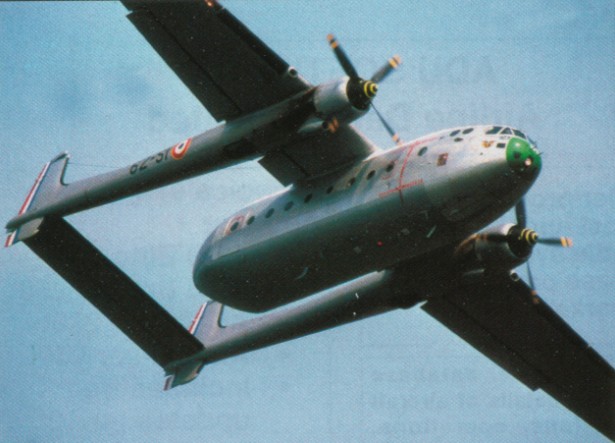
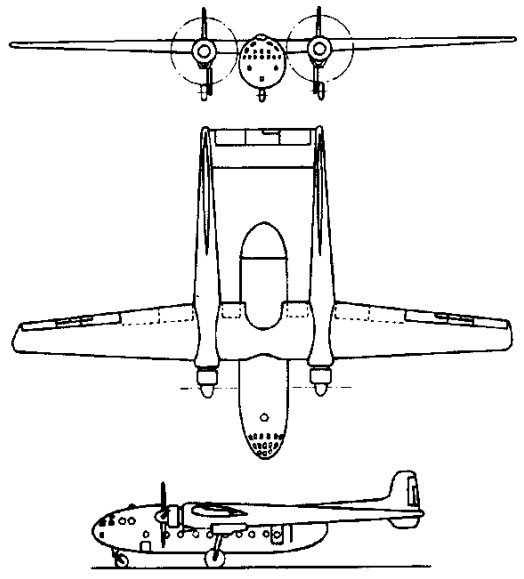
Designed as a military transport for service with the French air force, the Nord 2500 Noratlas prototype (F-WFKL) was flown for the first time on 10 September 1949. Of similar twin-boom configuration to the Fairchild C-82 and C-119 Flying Boxcar, the prototype was powered by two 1212kW SNECMA-built Gnome-Rhone 14R radial engines. This was followed by two N 2501 prototypes which introduced the powerplant intended for production aircraft, comprising two 1521kW SNECMA-built Bristol Hercules 739 radial engines, and the first of these (F- WFRG) was flown on 28 November 1950.
Satisfactory testing led to the initiation of production, and the Noratlas became standard equipment in the air forces of France, West Germany and Israel, providing valuable long-term service. Operated normally by a crew of four or five, the Noratlas has the capacity for 7.5 tons of cargo, or can accommodate 45 troops (or passengers in civil use), 36 fully-equipped paratroopers, or 18 stretchers and medical attendants when used for casualty evacuation. The German Luftwaffe received a total of 186 of these transports, 25 built by Nord and the balance produced under licence in Germany by the Flugzeugbau Nord. When production ended in October 1961, French and German sources had built a total of 425 Noratlas aircraft in several versions, and the type remained in service until the late 1980s.
Nord 2501 Engines: 2 x SNECMA Hercules 730, 1521kW / 2012 hp Max take-off weight: 21000 kg / 46297 lb Empty weight: 13075 kg / 28826 lb Wingspan: 32.5 m / 106 ft 8 in Length: 21.95 m / 72 ft 0 in Height: 6.0 m / 19 ft 8 in Wing area: 101.2 sq.m / 1089.31 sq ft Max. speed: 238 kts / 440 km/h / 273 mph Service ceiling: 7500 m / 24600 ft Range: 3000 km / 1864 miles Crew: 4-5 Passengers: 45 Payload: 8458kg
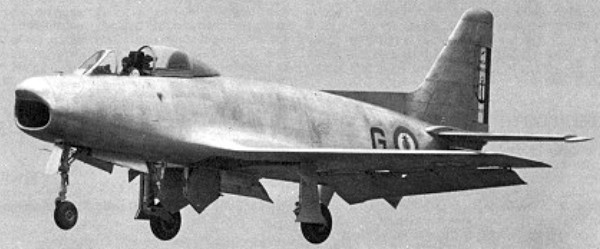
In June 1946, the Service Technique Aeronautique issued a preliminary requirement for a shipboard fighter armed with three 20mm or 30mm cannon and capable of carrying two 500kg bombs or eight 90mm rockets. Responding to this requirement, the SNCA du Nord tendered the Nord 2200, designed by a team led by Messrs Coroller, Dupin and Buret, in competition with the Aerocentre NC 1080 and the Arsenal VG 90.
Powered by a 2268kg Hispano- Suiza Nene 102 turbojet and featuring a 24 degree sweptback laminar-flow wing with large Fowler-type flaps, the Nord 2200 was first flown on 16 December 1949, and was fitted with neither wing folding nor armament. On 24 June 1950, the sole prototype was damaged and the opportunity was taken to fit a servo control system, introduce redesigned and larger vertical tail surfaces, and make provision for an AI radar scanner over the engine air intake. Flight testing was resumed on 24 May 1951, but in 1952 the decision was taken by the Aeronavale to adopt the de Havilland Sea Venom to meet its shipboard fighter requirement. Nevertheless, flight testing of the Nord 2200 continued until June 1954.
Max take-off weight: 7890 kg / 17395 lb Empty weight: 4830 kg / 10648 lb Wingspan: 12.00 m / 39 ft 4 in Length: 13.90 m / 46 ft 7 in Height: 4.80 m / 16 ft 9 in Wing area: 31.60 sq.m / 340.14 sq ft Max. speed: 936 km/h / 582 mph