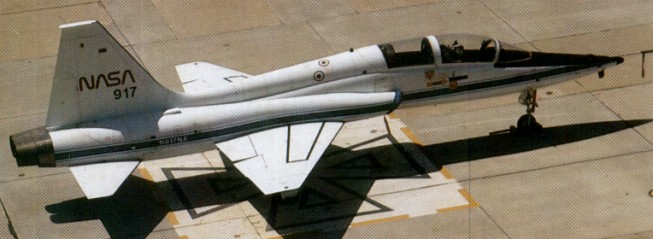
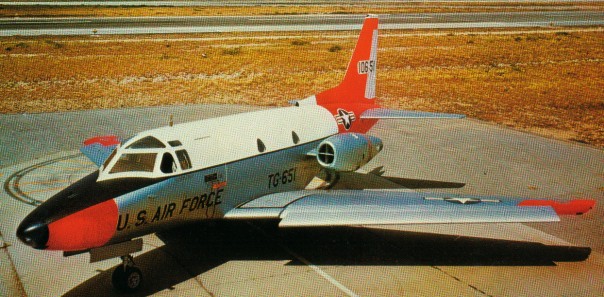
To meet a US government requirement for a high-performance lightweight fighter that would be suitable for supply to and operation by friendly nations via the Military Assistance Program, Northrop began the private-venture design of such an aircraft in the mid-1950s, identifying it as the Northrop N-156.
This initial design concept was to form the basis of a family of aircraft, including a supersonic trainer which had the company designation N-156T. Three YT-38 prototypes were ordered in December 1956, this number being increased to six in June 1958, and the first of them was flown on 10 April 1959.
Cantilever low wing monoplanes with slender area ruled fuselages, the first two prototypes were each powered by two 953kg thrust non-afterburning General Electric YJ85-GE-1 turbojets, but the remainder of this first batch had YJ85-GE-5 engines with an afterburning thrust of 1633kg. The first to receive the T 38, in 1962, was the 3560th UPT Wing at Webb AFB, Texas. Testing with these latter engines resulted in an initial contract for the T-38A Talon, the first of them entering service with the USAF’s 3510th Flying Training Wing, at Randolph AFB, on 17 March 1961, powered by two 3,850 lb thrust General Electric J85 GE 5 turbojet engines. The aircraft boasts a 720° per second roll rate.
The Talon, which seats instructor and pupil in tandem on ejection seats and has a fully powered control system, has gained one of the best safety records of any supersonic aircraft in USAF service. As a result, when production ended in early 1972 a total of 1,187 T-38s had been built for the USAF. The US Navy acquired five from the USAF, and three of these remained in service with the Test Pilots School at Patuxent River.
Also supplied through the USAF and operated by the German Luftwaffe were 46 used for pilot training in the US. Only export customer was Portugal who received two batches of six Sidewinder-equipped ex-USAF aircraft in 1977 and 1981 to replace F-86 Sabres used in the dedicated air defence role but doubling as advanced pilot trainers.
NASA also acquired a number from Northrop, using them as flight-readiness trainers for astronauts. Reported in 1965, fifteen were acquired, replacing Convair F-102 Delta Daggers.
The designations AT-38A and NT-38A were allocated to two T-38As following their conversion for evaluation as an attack trainer and research/ development aircraft respectively. Four of the US Navy’s T-38s converted to serve as drone directors were redesignated DT-38A.
The AT 38B is a lightly armed version serving in the Lead-in Fighter Training role at Holloman AFB, New Mexico. The T-38B has a gunsight and a centerline pylon which can be fitted with a gun pod or bombs. Some 700 of these aircraft remained in service in 1992.
The T-38 Talon were modernised to T-38C standard for redelivery from 1999 by Northrop Grumman. The T-38C employed new, electronic instrumentation.
Several T-38s have made their way back into the U.S. in private hands.
T-38A Talon Engines: 2 x General Electric J85 GE 5 turbojets, 2,500 lbs.t. (1134 kgp) and 3,850 lb (1746 kg) with afterburn Span, 25 ft 3 in (7.7 m) Length, 44 ft 2 in (13.46 m) Height: 3.92 m / 12 ft 10 in Wing area, 170 sq.ft (15.8 sq.m) Empty weight, 7,340 lb (3329 kg) Loaded weight, 11,700 lb (5307 kg) Max speed, 838 mph (710 kt / 1348 kph) at 36,000 ft (10 973 m) Cruise, 590 mph (949 kph) Initial climb, 30,000 fpm (152.4 m/sec) Service ceiling, 56,800 ft (17 312 m) Range, 1,267 mls (2039 m) Seats: 2 U/C & flap limit: 240 kt Loading: +6.4 / -2.6G
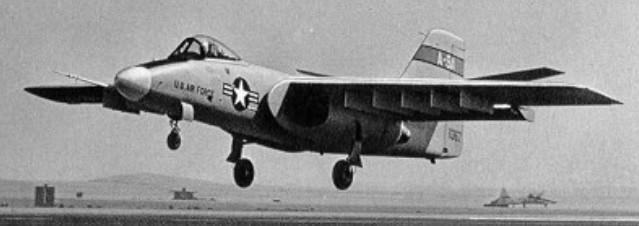
Under the designation Northrop YA-9A, the company built two prototypes (71-1367 and 71-1368) of a single-seat close-support aircraft as the company’s submission for the competitive development phase of the USAF’s A-X close-support aircraft competition in late 1972. Designed by Robert Bratt, Walt Fellers, Don Heinze, and Jerry Huben, the A-9 was a cantilever high-wing monoplane, powered by two 2722kg thrust Avco Lycoming ALF 502 turbofan engines, the first of the prototypes made its maiden flight on 30 May 1972 piloted by Lew Nelson. In competitive evaluation the YA-9A lost out to the YA-10A by Fairchild Republic.
Northrop A-9A 71-1367
Both of the A 9s built were passed on to NASA for further tests and were later retired to museums.
The first YA 9A built, 71 1367, first flew on May 30, 1972 and at the end of its military career was put on display at the Castle Air Force Base Museum, until its move back to Edwards.
In the storage yard at Edwards AFB on April 7, 2006. Previously on display at Castle AFB
Engines: 2 x Lycoming F-102-LD-100, 33.4kN / 7500 lb Max take-off weight: 18160 kg / 40036 lb Empty weight: 10318 kg / 22747 lb Wingspan: 17.7 m / 58 ft 1 in Length: 16.3 m / 53 ft 6 in Height: 5.2 m / 17 ft 1 in Wing area: 54.9 sq.m / 590.94 sq ft Max. speed: 740 km/h / 460 mph Cruise speed: 322 mph Ceiling: 40,000 ft Range w/max.fuel: 4800 km / 2983 miles Armament: 1 x 30mm machine-guns, 7264kg of bombs and missiles Crew: 1
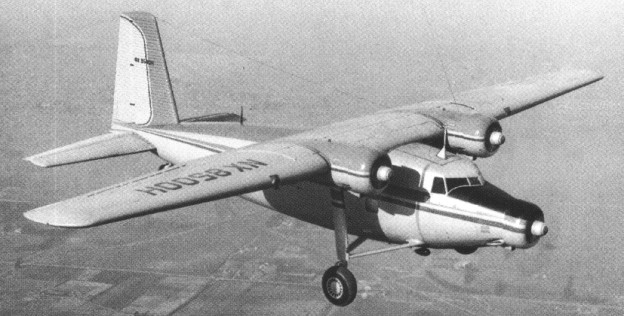
Northrop’s postwar model was intended for the less developed parts of the world where airline operations frequently involved short, unprepared runways. The Pioneer was a 36-passenger (or a combination of fewer passengers but more cargo) design with three 800hp (600kW) Wright R-957 C7BA Cyclone engines and a fixed, conventional landing gear. The prototype made its first flight from Hawthorne, California, on December 21, 1946.
Full-span flaps and retractable ailerons, which had been successfully tested on the P-61 Black Widow, enabled the Pioneer to takeoff at its maximum weight of 25,000lb (11,340kg) in less than 400ft (120m) and to land in 600ft (180m). Dual main landing gear wheels could be installed for operation from soft fields. The cruising speed was only 150mph (240km/h), but that was considered sufficient for the short stages on which the Pioneer would operate. After about a year of test flying, the Pioneer was lost when a make-shift dorsal fin failed during yaw tests. By that time, the Pioneer could not compete with the inexpensive military-surplus transports, even with its outstanding short-field performance. Although the Pioneer program was terminated, the basic design evolved into the larger Northrop C-125 Raider for the USAF. 23 were built with 894kW Wright R-1820-99 engines: 13 as C-125A assault transports and ten as C-125B Arctic rescue aircraft.
C-125 Raider
N-23 Pioneer Engines: three 800hp (600kW) Wright R-957 C7BA Cyclone Maximum take-off weight: 25,000lb (11,340kg) TO dist: 400ft (120m) Landing dist: 600ft (180m) Cruising speed: 150mph (240km/h) Capacity: 36-passenger
C-125A Raider Engines: 3 x 894kW Wright R-1820-99 engines
C-125B Raider Engines: 3 x 894kW Wright R-1820-99 engines
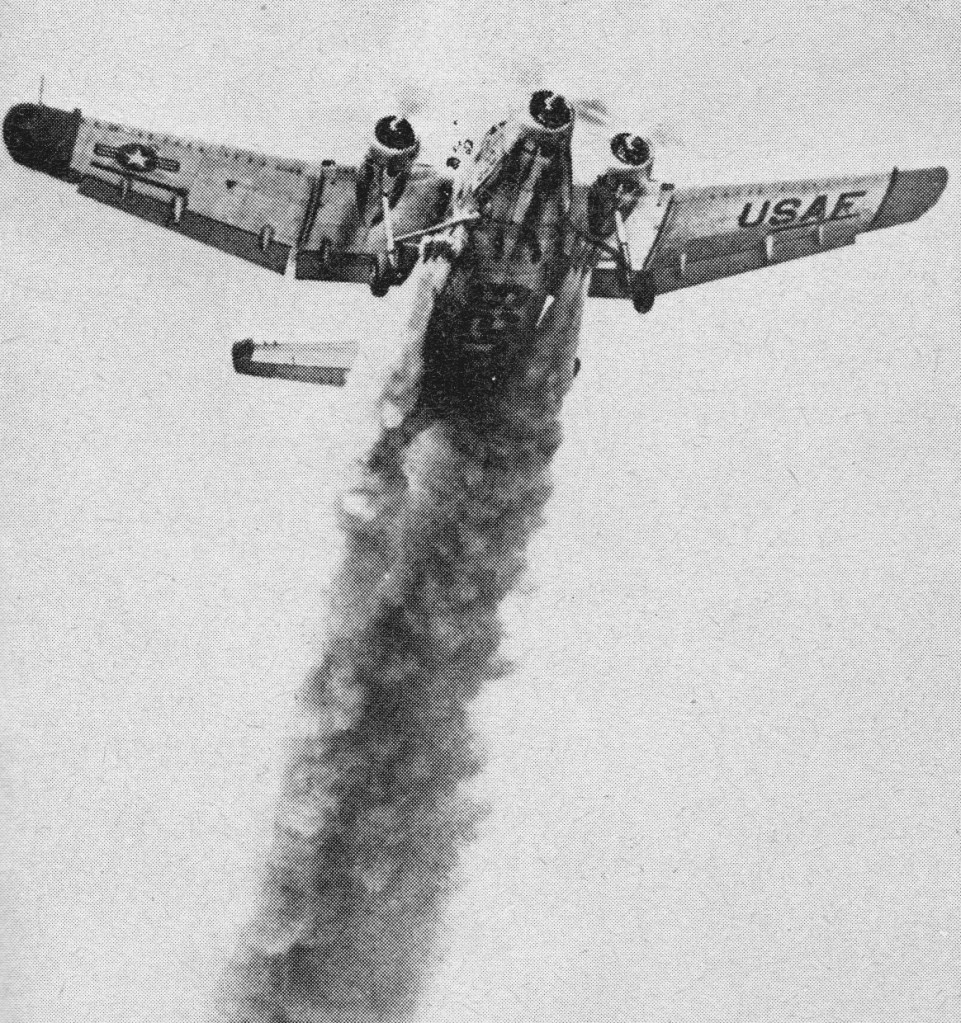
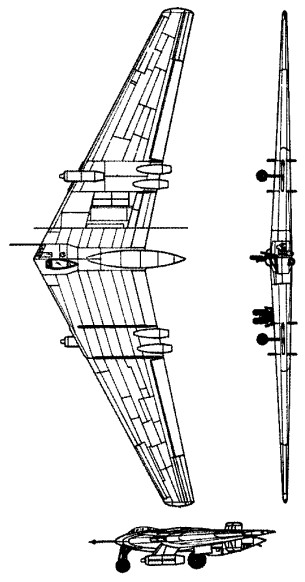
The second and third YB-35 pre-production prototypes were converted into YB-35B aircraft. Their four 3250-hp (242 3-kW) Pratt & Whitney R4360 piston engines were replaced by eight 4000-lb (1814-kg) thrust Allison J35-A-5 turbojets, four jets being grouped in each trailing edge and aspirated through the same arrangement of leading-edge inlets used to supply carburation and cooling air for the piston engines of the original aircraft.
The YB-35B was redesignated YB-49 while it was being rebuilt, and the first aeroplane flew on 21 October 1947. The second had six 2540kg thrust Allison engines, four buried in the wings and two in underslung pods to increase the volume available for fuel.
Speed was increased dramatically from 393 to 520 mph (632 to 837 kph), but such was the thirst of the turbojets that range was halved. There were also several control problems that made the type unsuitable for use as a free-fall bomber, and it was decided to transform the type into a strategic reconnaissance aeroplane.
In June 1948 the second YB-49 was destroyed with the loss of its five man crew in a crash attributed to structural failure.
Confi¬dence ran high, and the USAF ordered 30 YRB 49s for the long-range reconnaissance role, one of which was to be built by Northrop and, because of that company’s other commitments, 29 by Consolidated Vultee. Even the fatal in flight breakup of the second prototype in March 1950 failed to dampen spirits. The RB-49 offered no real advantages over the B-47 and the new B-52, production was cancelled before the single YRB-49 flew on May 4, 1950.
The YB-35 programme continued for a while with various test airframes, but in October 1949 the whole programme was cancelled and the aircraft were scrapped. The YB 49 made a flag waving trip from Edwards Air Force Base in California to Washington, D.C. at 823 kph (511.2 mph), 160 kph (100 mph) faster than the favoured B 36, but it was too late.
Sole survivor was the six-jet YB-49A, but just four years later this was broken up.
YB-49 Engines: 8 x Allison J35-A-2, 1814 kg (4000 lb) thrust. Engines: 8 x Allison J35-A-15, 1800kg Max take-off weight: 96800 kg / 213409 lb Wingspan: 52.4 m / 171 ft 11 in Length: 16.2 m / 53 ft 2 in Wing area: 372 sq.m / 4004.17 sq ft Max. speed: 930 km/h / 578 mph Range: 8700 km / 5406 miles Range: 2800 mi / 4506 km wit 10,000 lb / 4536 kg bombload Max bombload: 37,400 lb / 16,965 kg Crew: 6
YRB-49 Engines: 6 x Allison J35 turbojets, 1870kg Wingspan: 52.4 m / 171 ft 11 in Length: 16.2 m / 53 ft 2 in Wing area: 372 sq.m / 4004.17 sq ft
In 1916, while working for the Loughead Aircraft Company (later Lockheed), he co-invented a process for making monoplane fuselages and helped design the F-1 flying boat. He became chief engineer at Lockheed in 1927 and built the Vega monoplane. With the help of designer Jack Northrop, Lockheed built the F1, but it was turned down by the Navy. In 1923 Northrop left to take a job with Donald Douglas, and later founded his own corporation.
Jack Northrop (1895-1981) was employed by United Aircraft and Transport Corporation. All went well until United decided Northrop should leave Burbank and join another United division. He remained in California to form a new company. In July 1929 Jack Northrop formed Northrop Aircraft Corp, as a division of United Aircraft and Transport Corporation and built the Alpha (first flown 1930), first all-metal stressed skin airplane, followed by the Beta 300 hp aircraft of 1931, first to exceed 200mph (322kmh).
New Northrop Corporation founded after split with United Aircraft and Transport Corporation, with Douglas Aircraft holding a majority shareholding.
Producing the Gamma high-speed mailplane in 1933 and other types. Northrop Corporation absorbed into Douglas 1937, and new independent Northrop Aircraft Inc established 1939 to concentrate on military projects, including the A-17 attack-bomber and P-61 Black Widow three-seat, twin-boom night fighter, first aircraft in this category to be ordered by USAAF. Northrop experiments with the tailless XP-56 interceptor led to a number of postwar flying-wing projects, culminating in eight jet engined YB-49 flying-wing bomber of 1947. The F-89 Scorpion all-weather fighter entered production two years later, serving USAF and Air National Guard Units until 1963.
Extending its activities into other fields, the company changed its name to Northrop Corporation in the year 1959. In May 1994 Grumman and Northrop merged to form Northrop Grumman Corporation. Northrop’s final pre-merger production aircraft included the F-5E/F Tiger II lightweight tactical jet fighter/fighter trainer, developed with U.S. Government funding mainly for export as International Fighter Aircraft (first F-5E flown August 1972), derived from the 1959 N-156 prototype and early production F-5A/B Freedom Fighters built for supply under Military Assistance Programs. The T-38 Talon two-seat advanced trainer variant of N-156 for the USAF (first flown April 1959) went out of production in 1972 after 1,187 had been built, but these are being modernized to T-38C standard for redelivery from 1999 by Northrop Grumman. Northrop developed the YF-17 Cobra for competition against the Lockheed YF-16 for the USAF’s Lightweight Fighter Program, but lost and became principal subcontractor to McDonnell Douglas on a proposed carrier borne naval fighter derivative. This eventually entered production as the carrier- and land-based F/A-18 Hornet. Finally developed the B-2 Spirit subsonic strategic stealth bomber (first flown July 1989) for the USAF. Two of the five main divisions of Northrop Grumman Corporation were Commercial Aircraft, to construct aerostructures and components for the commercial aircraft of other companies and engines, and Military Aircraft Systems, working on B-2 and all other Northrop Grumman aircraft production and modernization programs, and principal subcontractor to Boeing on Hornet. Delivered 21 B-2A Spirit stealth bombers, achieving initial operational capability with the USAF in April 1997 and full capability with the 715th Bomb Squadron in 1999. Undertakes F-5/T-38 modernization, F-14 work, EA-6B Prowler remanufacturing, production of E-2C Hawkeye in latest Hawkeye 2000 form (first flown April 1998; see Grumman entry for earlier development and production of E-2), and production of E-8C Joint STARS as joint USAF and U.S. Army co-operation program for an airborne surveillance and target acquisition system (first flown August 1995 for first production E-8C).
In 2000, Northrop Grumman is to sell its commercial aerostructures arm to the Carlyle Group for $1.2bn. NG was planning to specialise in the defence electronics and IT industries and its aerostructures business, which manufactures subassemblies for Boeing commercial aircraft, the C-17 and Gulfstream V, no longer fits the bill. Carlyle will rename the Dallas, Texas-based company Vought Aircraft and NG will reorganise its Integrated Systems and Aerostructures sector into the Integrated Systems Sector. NG, which recently acquired Comptek Reseach, has also cited expected decline in Boeing production schedules as one of the reasons for the sale. The Carlyle Group, however, has been active in the aero-manufacturing sector having purchased Textron’s aerostructures unit four years previous and buying out Gemini Air Cargo in 1999.
USA Northern Aircraft Inc purchased from Bellanca all rights, jigs and tooling for the Bellanca 14-19 Cruisemaster four-seat lightplane. The Bellanca Model 14 was one of the classic lightplane designs, since built by several manufacturers. First production of the Northern Cruisemaster started in October 1956. Northern also supplied spares, support and modification kits for Republic Seabee amphibians after a merger with the American Aviation Corporation. Became Downer Aircraft Industries Inc.
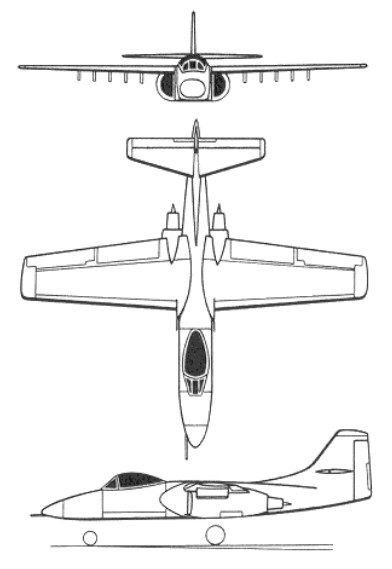
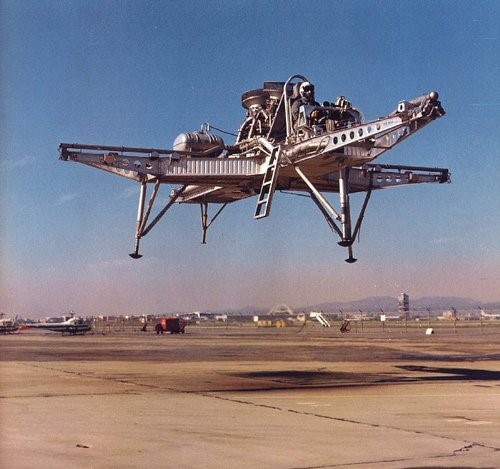
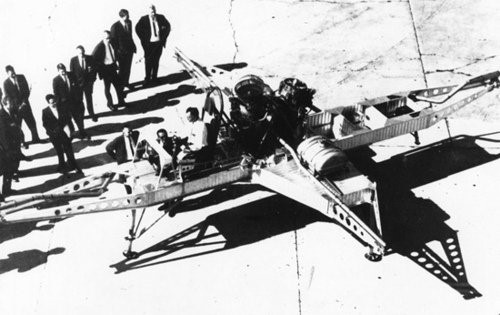
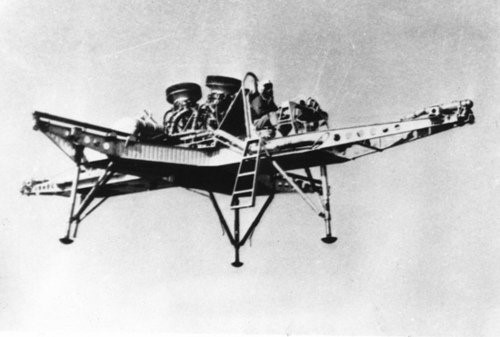
The North American FS-1 (Flight Simulator Number 1) Hoverbuggy was a 1965 open framework VTOL research vehicle with two 2200 lb GE YJ85 turbojets for lift, and four engine bleed-air nozzles on outriggers for control.
The craft had made 15 tethered and 185 free flights at altitudes up to 100ft when the program was shut down in 1967.
Engines: two x GE YJ85, 2200 lb Span: 23’0″ Length: 36’0″ Useful load: 1550 lb Max speed: 58 mph Range 10 mi
The North American XSN2J-1, also known by the company designation NA-142, was developed for the United States Navy by North American Aviation as a replacement for the SNJ Texan as an advanced scout-trainer.
Designed in competition with the Fairchild XNQ, the XSN2J-1 first flew on 15 February 1947, two aircraft being evaluated by the Navy (121449 and 121450) as XSN2J-1. Neither aircraft were considered satisfactory in evaluations; in addition, restrictions on the Navy’s budget meant that the aircraft could not be ordered at the time, and the program was cancelled in 1948.
The similar T-28 Trojan would later be ordered to fill the Navy’s requirement for a new trainer.
Clambered over an SN2J in the junk pile behind Service Test at NAS Patuxent, MD in late ’49. Nice looking bird. John W. Bradford, Jr.
Engine: 1 × Wright R-1820-78 Cyclone, 1,100 hp (820 kW) Propeller: 3-bladed Wingspan: 41 ft (12 m) Wing area: 236 sq ft (21.9 sq.m) Length: 32 ft (9.8 m) Empty weight: 5,500 lb (2,495 kg) Gross weight: 7,500 lb (3,402 kg) Maximum speed: 270 mph (435 km/h; 235 kn) Cruise speed: 190 mph (306 km/h; 165 kn) Range: 1,600 mi (1,390 nmi; 2,575 km) Service ceiling: 30,000 ft (9,100 m) service Crew: Two (student and instructor)
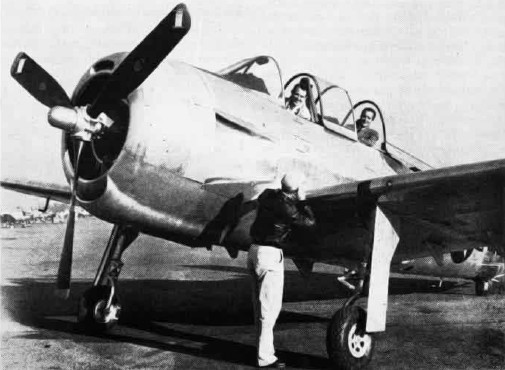
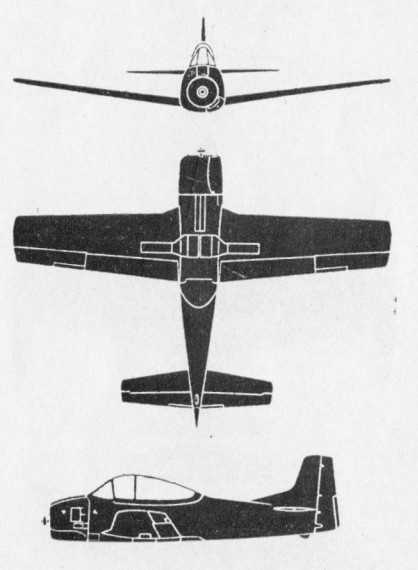
During and immediately following WWII, NAA developed the next generation, high performance, advanced trainer to serve as a successor to the NAA T-6/SNJ Texan. The result was the T-28 Trojan series.
First flown on 26 September 1949 as the XT 28A, the Trojan was put into production as the T-28A two-seat basic trainer for the USAF. Power was provided by a 596kW Wright R-1300-1 radial engine. 1,194 “A” models were built with the Aero Product 2-blade propeller. The Air Force used these aircraft for training and various other roles from 1950 to 1956. The “A” model also replaced the Mustang fighters in the reserve units until 1959.
Ordered into production by the USAF in 1950 as the T-28A, the US Navy evaluated the T 28A in 1952 and decided that the Wright Cyclone R1300, with 800 hp and a two bladed propellor left the aircraft under-powered for carrier operations.
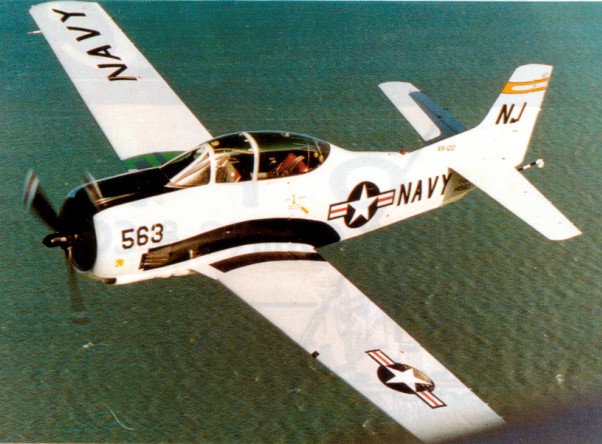
In 1952, the Navy contracted with NAA to build 489 T 28Bs, an improved version. The T-28B was the initial US Navy version fitted with a 1425 hp / 1,062kW Wright R-1820-86 engine, Hamilton Standard 3-blade propeller, belly mounted speed brake, and a two-piece sliding canopy (as fitted to late production T-28A). 489 “B” models were built and used from the middle 50’s to the middle 80’s.
T-28B
The T-28C was built for the Navy starting in 1955. The T-28C is equipped with a tail hook, a smaller diameter propeller, and other minor changes to allow aircraft carrier landings. 299 “C” models were manufactured with production ending in 1957.
In 1958 many T-28As were declared surplus and North American designed a modification scheme to convert the into two-seat utility aircraft, under the name Nomad. The main change involved replacing the original 800 hp Wright R-1300 engine with the more powerful R-1820. Supplementary modifications were drawn up to convert the Nomad into a military light strike-reconnaissance aircraft.
In 1959, several hundred surplus “A” models were shipped to France and were modified with the 1,062kW R-1820-56S engine, structural improvements, and armament for combat use, by Sud Aviation for the French Air Force. Sud-Aviation were given a contract for 135 conversions of ex-USAF T-28As under licence to PacAero, who had taken over the Nomad conversion programme from North American. These aircraft are commonly referred as Fennec, T-28S (Sud), or T-28F. After success in combat in Algeria in the early sixties, they continued to serve France and several other countries for many years.
Sud-Aviation Fennec
Similar to the FENNEC but converted by various contractors in the U.S., the T-28D-5 also started as a surplus “A” model. Almost 250 “D” models were supplied to U.S. and other forces fighting in Southeast Asia. Additionally, “B” & “C” models, known as the T-28D-10, were also modified and used in combat.
During the early 1960s the United States Tactical Air Command (TAC) was directed to develop a counter-insurgency (COIN) force tailored to train friendly air forces to fight in limited wars against guerrilla forces. As a result of this directive TAC began evaluating existing aircraft types to find an available and inexpensive aircraft that could be modified for use as a COIN aircraft.
This decision resulted in the T-28D which was basically a rebuilt T-28A with a more powerful engine, six underwing hardpoints, and strengthened wings. The T-28D was powered by a 1425hp Wright Cyclone R-1820-56S nine cylinder air cooled radial engine, driving a three blade Hamilton Standard propeller. To allow the T-28D to perform in its intended role of tactical fighter-bomber, the wings were strengthened to enable the aircraft to carry a variety of under wing stores up to 4,000 pounds.
Between early 1961 to late 1969, North America received a total of thirteen production contracts covering conversion of a total of 321 T-28As to the AT-28D configuration.
By December 1963 the USAF had converted 700 T-28B’s to counter-insurgency roles.
The first T-28Ds to see action were assigned to the 4400 Combat Crew Training Squadron (CCTS). In October 1961 President Kennedy authorised deployment of a detachment from the 4400 CCTS to Vietnam under the code name Farm Gate. The detachment was to train South Vietnamese pilots in the T-28 and was authorised to fly combat missions, providing there was a South Vietnamese national in the rear cockpit.
The South Vietnamese Air Force (VNAF) found the T-28D to be well suited to their needs. The short field performance and ease of maintenance made the Trojan ideally suited for forward basing in small detachments, allowing a rapid response to enemy activities. The T-28D served with the VNAF until the increasing anti-aircraft capabilities of the Viet Cong made it necessary to replace the Trojan with a more powerful and faster fighter bomber.
Despite modifications to strengthen wings to carry up to 4000 lb bombload, at least three T-28 crashes in strikes against Viet Cong may have resulted from structural failure. This contributed to T-28 withdrawals from Vietnam.
After its withdrawal from combat in Vietnam during 1964, T-28Ds continued to serve with the USAF in Thailand until 1972. T-28Ds were assigned to the 60th Special Operations Squadron (SOS), 56th Special Operations Wing in the fighter-bomber role flying missions over Laos and Cambodia. T-28Ds were also supplied to the air forces of Thailand, Cambodia and Laos.
The T-28D proved itself in combat to be an excellent gun and bomb platform, and was able to withstand a surprising amount of battle damage. The Trojan was well liked equally by its pilots and hard working ground crews. As in all previous T-28s, maintenance crews appreciated the fact that the T-28 was rugged, easy to maintain and required very few maintenance hours per flight hour.
In 1964 William Driver of Piqua, O., claimed an altitude jump record for spot parachutists by leaving a T-28 at 33,400 ft, landing 18 ft from his target on Boulder Airport.
Many T 28Ds were operated in the Congo and Vietnam, and have equipped the Thai Air Force, with the French as the Fennec as well as with the Argentine Navy. T 28Ds served with the air forces of Bolivia, Ethiopia, Kampuchea, South Korea, Laos, Taiwan, Thailand, the United States and Zaire.
In civilian use, the T-28 continues to gain in popularity. It looks, sounds, and performs comparable to a WWII fighter at a fraction of the cost. With its two roomy cockpits, tricycle landing gear, huge flaps, and superb flying characteristics, general aviation pilots can learn how to operate this aircraft. In addition, maintenance and parts availability remains reasonable with plenty of technical support available.
With 2,450 hp Lycoming T55 turboprop, underwing attachments for 4,000 lb. of weapons, and a long range fuel tank in place of the rear crew member’s position, the YAT 28E was a conversion of the T 28 piston engined basic trainer.
In 1958 North American modified one T-28, as NA-260 Nomad, to a general-purpose prototype plane. Pacific Airmotive Corp converted surplus North American T-28 to the general-purpose Nomad in 1958.
NAA T-28A Engine: Wright R-1300-1, 7-cylinder radial, 800 hp Propeller: Aero Products 10′ 2-blade, constant speed Wing Span: 40′ 1″ (12.23 m) Length: 32 ft (9.76 m) Height: 12′ 8″ Wing area: 269.1 sq.ft / 25.0 sq.m Empty, 5,111 lb (2318 kg) Loaded weight, 7,463 lb (3642 kg) Fuel capacity: 125 USgallon G Loading: +4.5, -2 Normal cruise: 180 mph at 35 USgph Max speed, 285 mph (458 kph) at 5,800 ft (1768 m) Service ceiling: 36089 ft / 11000 m Initial climb, 2,030 fpm (10.3 m/sec) Range: 1,055 mls (1698 km) Controls: Dual
T-28B Engine: Wright Cyclone R-1820-¬86, 9-cylinder radial, 1425 hp / 1063kW Propeller: Hamilton Standard Hydromatic 3-blade, constant speed Wing Span: 40 ft 8 in (12.4m) Length: 32′ 9″ Height: 12′ 7″ Wing area: 24.90 sq.m / 268.02 sq ft Empty weight: 2914 kg / 6424 lb Normal Gross Weight: 8600 lbs. G Loading: +4.5, -2 Controls: Dual Max. speed: 552 km/h / 343 mph Ceiling: 10820 m / 35500 ft Range: 1706 km / 1060 miles Normal cruise: 235 mph at 50 Usgph Fuel capacity: 177 USgallon Endurance: 3 hr w/res Rate of climb: 3000+ fpm Crew: 2
T 28C Engine: Wright Cyclone R-1820, 9-cylinder radial, 1425 hp Propeller: Hamilton Standard Hydromatic 3-blade, constant speed Wing Span: 40 ft 8 in (12.4m) Length: 32′ 9″ Height: 12′ 7″ Normal Gross Weight: 8600 lbs. Empty weight: 6400 lb G Loading: +4.5, -2 Controls: Dual Normal cruise: 235 mph at 50 Usgph Fuel capacity: 177 USgallon Endurance: 3 hr w/res Rate of climb: 4,200 fpm Ceiling: 35,000 ft Maximum speed: 343 mph Range: 1060 miles Stall speed: 67 kts Hard points: 6
T-28D Trojan Engine: Wright R-1820-86A Cyclone 1,425hp Propeller: Hamilton Standard Hydromatic three blade constant speed Fuel: Aviation Gasoline 100 Octane Wingspan: 40′ 1″ / 12.19 m Length: 32′ 10″ / 10.0 m Wing Area: 271.2 sq. ft / 25.19 sq. m Height: 12′ 8″ / 3.86 m Empty weight: 6,251 lbs / 2.811 kg Normal Gross Weight: 8600 lbs. Armament: Up to 4,000lb (1,813kg) of external stores including gun pods Maximum Speed: 340 knots / 391 mph / 629 km/h Cruise Speed: 200 knots / 230 mph / 370 km/h BAS G Loading: +4.5, -2 Controls: Dual Normal cruise: 235 mph at 50 Usgph Fuel capacity: 177 USgallon Endurance: 3 hr w/res Rate of climb: 3000+ fpm Armament: 2 x 0.5in mg Hardpoints, wing: 6
Fennec Engine: Wright Cyclone R-1820, 9-cylinder radial, 1425 hp Propeller: Hamilton Standard Hydromatic 3-blade, constant speed Wing Span: 40 ft 8 in (12.4m) Length: 32′ 9″ Height: 12′ 7″ Wing area: 271 sq.ft Empty weight: 6615 lb Normal Gross Weight: 8600 lb MTOW: 9370 lb Fuel capacity: 177 USgallon Max speed: 340 mph at 18,000 ft Normal cruise: 235 mph at 50 USgph at 15,000 ft Endurance: 3 hr w/res Service ceiling: 36,480 ft Rate of climb: 3000+ fpmI Max range: 1180 mi Hardpoints: 2 Bombload: 4 x 300 lb G Loading: +4.5, -2 Controls: Dual
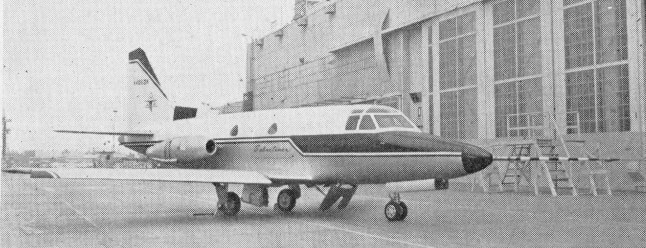
The NA-246 Sabreliner started its life as a private venture in the mid 1950s to meet the USAF’s UTX requirements for a combat readiness trainer and utility aircraft. Announced on 27 August 1956, It was laid out with a six-seat interior and to be flown by a two-man crew, the civil-registered prototype was completed in May 1958, although the lack of suitable engines delayed the first flight, which took place at Los Angeles, until 16 September, under the designation T 39. The initial powerplant comprised two 1134kg thrust General Electric YJ85 turbojets and, thus powered, the prototype completed its military evaluation programme at Edwards Air Force Base in December 1958.
In October 1958 the Sabreliner won its first order, for seven NA-265 or T-39A aircraft with 1361kg thrust Pratt & Whitney J60 engines. Production of the highly successful T 39 series commenced in 1958, and 213 were purchased by the Air Force and the Navy. All military models of the T-39 series were certificated to civil airworthiness standards, beginning with the T-39A on 23 March 1962.
The commercial version of the T 39, known as the NA-265-40 Sabreliner / Sabre 40, was type certificated on 17 April 1963 and was one of the first jets available to business aviation. It is larger and more rugged and powerful than jets that have been designed solely for civilian use. Its speed by jet standards is modest with a cruise of 489 knots. The aircraft maintained its popularity throughout the 1960s and 1970s as improvements were made to the airframe and powerplants.
In 1965 North American increased the Sabreliner’s gross weight by beefing up landing gear and re-qualifying wheels. The modification allows the twin-jet to carry full fuel with nine people and baggage aboard totalling 18,650 lb. The previous max was 17,760 lb. Changes were offered free to Sabreliner owners.
One of the unusual features that the Sabreliner was automatic leading edge slats. The slats added impressive low speed handling qualities to the bizjet.
Gone are the slats, however, from a Sabreliner 60. The stretched Sabre 60, introduced in 1969, is powered by two 3,300 pound thrust P&W JT12A 8 turbojets, the same engine that was used in the Dash 8 JetStar.
The Rockwell Sabreliner 65 is essentially a fanjet, supercritical wing version of the Sabre 60. Its engines are Garrett AiResearch TFE 731-3s, which the factory may also retrofit to Model 60s and the even earlier Sabre 40s. Its IFR range was just under 2,500 nautical miles. The first production lot of Sabre 65s was sold at an average equipped price of $3,250,000.
Both the 74 and 60 models were fitted with thrust reversers to aid in shorter landings and assist in braking on icy or wet runways.
75A
The Sabre 75A, with its expanded cabin height and higher gross weight, uses two General Elec¬tric CF700 2D2 turbofans identical to the 4,315 pound thrust powerplants employed on the Falcon 20. The 75A model features square windows, a ‘stand-up’ cabin and a long span tailplane.
In 1978 Rockwell International’s Sabreliner 80A made a first flight from St. Louis. The new business jet is a modified version of the Model 75A, with a supercritical wing.
Civil production of all models, including the final model, the Sabreliner 65A, totalled well over 600 aircraft when the last aircraft came off the line in 1981.
Rockewell International’s Sabreliner Division was acquired in 1983 by the specially formed Sabreliner Corporation of St Louis, Missouri to continue product support. Type Certificate A2WE was reissued to Saberliner Corp in 1983 to cover active Model 265s. At the end of 1990 the company completed the design of a new version of the Sabreliner designated the Model 85. This has a supercritical wing incorporating winglets, a fuselage stretch of 1.5m, and more powerful TFE731-5 turbofan engines, but further development would require a risk-sharing partner.
NA-246 Sabreliner / T-39 Engines: 2 x General Electric YJ85 turbojets 1134kg thrust
T-39 Engines: 2 x P&W Wing span: 44 ft 5 in (13.54 m) Length: 43 ft 9 in (13.34 m) Height: 16 ft 0 in (4.88 m) Max TO wt: 17,760 lb (8055 kg) Max level speed: 595 mph (958 kph)
NA 265-65 Sabreliner 65 Engines: 2 x Garrett TFE 731-3R-1D, 3700 lbs / 1678kg thrust Seats: 10 Length: 14.30 m / 46 ft 11 in Height: 4.88 m / 16 ft Wingspan: 15.37 m / 50.5 ft Wing area: 380 sq.ft Wing aspect ratio: 6.7 Maximum ramp weight: 24,000 lbs Maximum takeoff weight: 10886 kg / 24,000 lbs Standard empty weight: 13,350 lbs Maximum useful load: 10,650 lbs Zero-fuel weight: 16,250 lbs Maximum landing weight: 21,755 lbs Wing loading: 63.2 lbs/sq.ft Power loading: 3.2 lbs/lb Maximum usable fuel: 8644 lbs Best rate of climb: 3540 fpm Certificated ceiling: 13715 m / 45,000 ft Max pressurisation differential: 8.8 psi 8000 ft cabin alt @: 45,000 ft Maximum single-engine rate of climb: 950 fpm @ 127 kts Single-engine climb gradient: 452 ft/nm Single-engine ceiling: 25,000 ft Maximum speed: 513 kts Normal cruise @ 43,000ft: 430 kts Fuel flow @ normal cruise: 1090 pph Stalling speed clean: 117 kts Stalling speed gear/flaps down: 81 kts Turbulent-air penetration speed: 225 kts
Sabreliner 65A
Sabreliner 75A Engines: 2 x General Elec¬tric CF700-2D2, 4315 lb Seats: 8/10 Wing loading: 68.11 lb/sq.ft Pwr loading: 2.53 lb/lb Max TO wt: 22,800 lb Operating wt: 13,600 lb Equipped useful load: 9200 lb Payload max fuel: 1820 lb Zero fuel wt: 15,620 lb Range max fuel/cruise: 1985 nm/4.0 hr Range max fuel / range: 1897 nm/ 4.6 hr Service ceiling: 45,000 ft Max cruise: 489 kt Max range cruise: 417 kt Vmc: 92 kt Stall: 105-113 kt 1.3 Vso: 137 kt ROC: 4500 fpm SE ROC: 1050 fpm @ 190 kt SE Service ceiling: 24,000 ft Cabin press: 8.8 psi Fuel cap: 7380 lb Takeoff run (balanced) 4,420 ft Landing roll 2,525 ft