Phoenix Aircraft PM-3 Duet / Luton Minor III

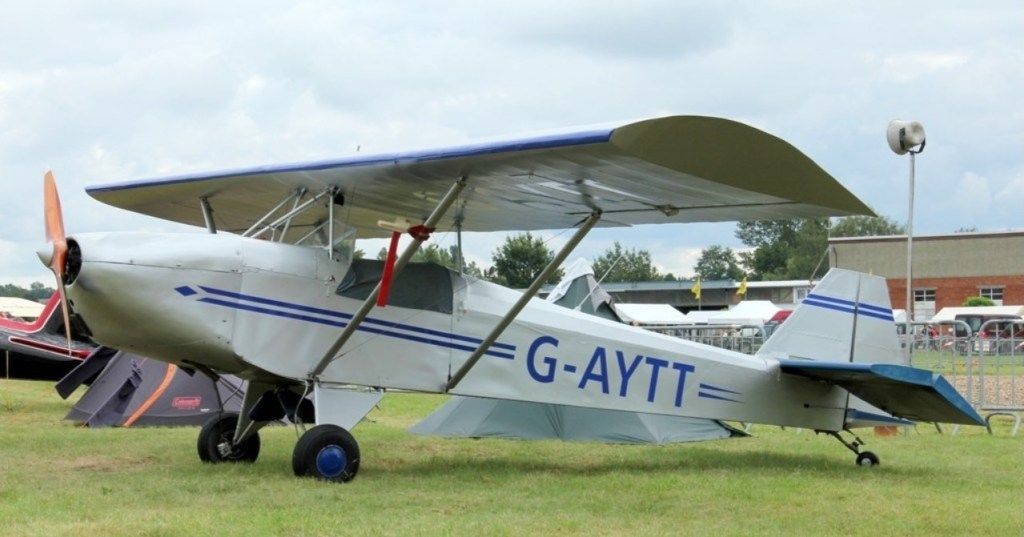
The PM-3 Duet is basically an enlarged Minor airframe. The Minor fuselage is fattened to take two people side-by-side and restressed to take a larger engine. Some modification to the wing and tail surfaces is also involved.

The design was originally designated Luton Minor III but was re-designated the Phoenix PM-3 Duet.
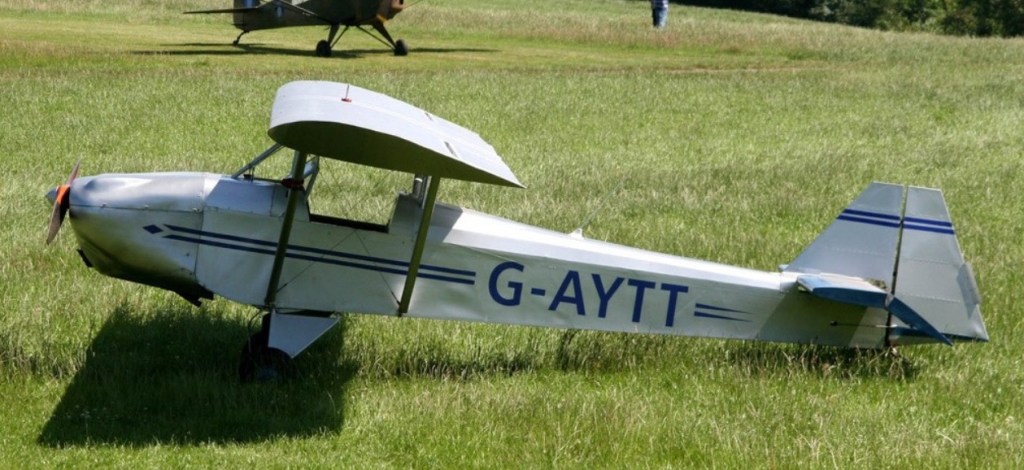
The prototype, G-AYTT PFA.841 was built by A.S. Knowles, who was involved in the type’s development. It first flew, at Fairoaks, on 22 June 1973 with a Continental C90 engine in a Condor cowling.

Gallery

Engine: Continental C90, 90 hp
Cruise: 100 mph
Stall: 35-40 mph
Phoenix Aircraft Ltd

A hangar fire at the Phoenix Works in 1943 destroyed the single example of the LA5 Major, a two-seat cabin type first flown on 4 March 1939, and also spelt the end for the company. C. H. Latimer-Needham (chief designer of Luton Aircraft) founded a new company at Cranleigh, Surrey, in March 1958, appropriately named Phoenix Aircraft Ltd, which acquired the rights for the Minor and Major. Both designs were improved, the first as the LA4A Minor, and built in the UK and in several countries across the world.

In its time the company has dealt with the Luton LA.4/A Minor and LA.5/a Major, the Currie Wot, Luton Group Beta and Jodel D.11.

Phoenix (D&H) Ltd was also involved in research work and built the mock-up of the Syinton-Warren S-31-2 in 1971.

It ceased trading in 1973-4.

Phillips & Gerakiteys Phillicopter

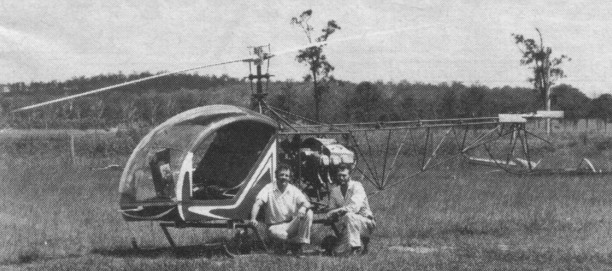
Ten years’ of design and four years’ construction by Mr P. Gerakiteys and Mr D. Phillips went into the Australian two seat ‘Phillicopter” prototype beginning certification trials in 1972. The aircraft is expected to have a cruise speed of 70kt and a range of 200 miles. Powered by a 145 h.p. Continental A 300, it has a 5001b useful load. Eight firm orders had been received by 1972.

Philippine Air Force XT-001 Marko 1

The PAF XT-001 Marko 1 was a basic trainer aircraft developed by the Philippine Air Force Self-Reliance Development Wing (PAFSRDW). It was designed and built by the Self-Reliance Development Wing of the Philippine Air Force in 1975 from locally designed jigs and fixtures.

It closely resembles the SIAI-Marchetti SF.260MP trainer, but with modified wingtips and cockpit. The prototype was initially thought to be a modified SF.260MP. Comparison of data with those for the SF.260MP indicates a slight increase in wingspan (though not in gross wing area), a lower empty weight, and (despite a similar powerplant and identical maximum takeoff weight) a slightly reduced performance.

The first test flight was on May 21, 1975.

XT-001 Marko
Engine: 1 × Lycoming O-540-E4A5, 194 kW (260 hp)
Propeller: 2-bladed
Wingspan: 8.4 m (27 ft 7 in)
Height: 2.4 m (7 ft 10 in)
Wing area: 10.10 m2 (108.7 sq ft)
Length: 7.1 m (23 ft 4 in)
Empty weight: 720 kg (1,587 lb)
Max takeoff weight: 1,200 kg (2,646 lb)
Maximum speed: 260 km/h (160 mph, 140 kn)
Stall speed: 120 km/h (75 mph, 65 kn)
Seats: 3

Pfenninger Elfe

The Elfe series started from a 9 m sailplane designed by W.Pfenninger before World War II. A new design was introduced by him in 1947 to become the Elfe 2, probably the first sailplane with a laminar flow airfoil. Subsequently the series was further developed by Markwalder to become the Elfe PM-3 (brought to the US in the sixties), then by Albert Neukom the Elfe M, Elfe MN and AN66 before the Standard Elfe S-1