Markets plans and some components to construct a wide range of light aircraft, including P.50 Bouvreuil single-seat monoplane (first flown 1979), P.60 Minacro single-seat aerobatic biplane, P.70S single-seat monoplane, P.80S single-seat monoplane, P.100TS two/three-seat monoplane (first flown 1980), P.110TS three-seat monoplane, P.170S tandem two-seat monoplane, P.180S side-by-side two-seat monoplane, P.190S Castor side-by-side two-seat monoplane as wooden version of metal P.180S, P.210S Coati single-seat monoplane, P.220S Koala side-by-side two-seat version of Coati, P.230S Panda three-seat monoplane, P.240S Saiga four-seat version of Panda, and P.300 Ara three-seat monoplane (kits anticipated).
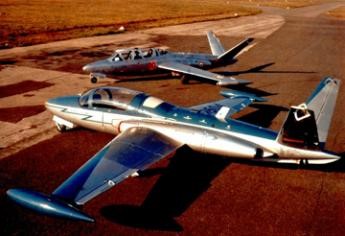
A new Heinkel company (mid of fifties) began by forming the Flugzeug Union-Süd Group, in collaboration with Messerchmitt AG., to produce 210 Fouga Magister for the new German air force. In cooperation with Potez, it developped from the Magister a new four seat executive, training and liaison aircraft known as the Potez-Heinkel CM-191. Heinkel was entirely responsible of the production.
The prototype of the four-seat Potez-Heinkel CM191 was flown for the first time at Toulouse on 19 March 1962. Jacques Grangette, Potez’s chief pilot was at the controls, with P.Caneill. The CM 191 first flight lasted forty minutes and a second flight of one hour and ten minutes duration was made on the same day.
Two prototypes were built. They were for many years as experimental aircraft to test various equipment or as liaison aircraft
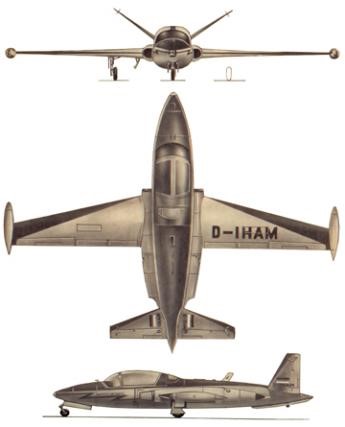
Potez – Heinkel CM191 # 1 received a double registration from the beginning as D- 9504 and D- IHAM. It made its first flight in Toulouse March 19, 1962 and after 109 hr of manufacturer flight testing it was issued to the CEV Istres for testing .
It was subsequently delivered to Germany where it finished its career with 61 Erprobungsstelle Manching. This aircraft was registered in the United States, where it has changed ownership in 2008, to be based in Elk Grove, Illinois.
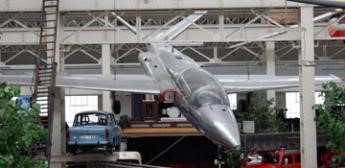
Potez – Heinkel CM191 # 2 received the registration D- 9532 and completed its career with 61 Erprobungsstelle Manching. This aircraft is now preserved and exhibited at the Am Technik Museum, Speyer, Germany.
Potez – Heinkel CM- 191 # 2 D- 9532
Variants:
CM.191 – 1956 4-seat corporate jet deriv. of CM.170, 2 x Marboré IV, 2 built CM.191: aka Potez-Heinkel C.M.191, aka Heinkel P.191, first flown 1962
CM.192 – Messier project nos. 48046/48007 and 27457/48008 CM.192: Flight 1 June 1961 ident. Potez-Heinkel C.M.192 as per C.M.191
Engines: 2 x Marboré IV Span, without tip-tanks: 12,02 m (39 ft. 5 in) Span, with tip-tanks: 12,70 m (41 ft. 8 in) Length: 9,93 m (32 ft. 7 in.) Height: 3,20 m (10 ft. 6 in.) Weigth empty: 2 391 Kg (5,271 lb.) Max Payload: 380 kg (838 lb.) Max TO weight: 4 350 Kg (9,590 lb.) Max 0 fuel weight: 3 005 Kg (6,625 lb.) Max wing loading: 231 Kg/m² (47.3 lb/sq ft) Max. Speed: 710 kmh (441 mph) Max. Permissible speed: 740 kmh (460 mph) Max. Crusing speed: 605 kmh (376 mph) Stalling speed: 148 kmh (92 mph) Max rate of climb: 906 m/mn (2970 ft/mn) Service ceiling: 12 000 m (39,370 ft) TO. Run: 900 m (3,250 ft) TO. Run dist. to 15m: 1 180 m (3,870 ft) Range with max fuel: 1860 km (1,150 miles)
The first prototype of the Potez 840 executive transport made its initial flight on 29 April 1961. An all-metal low-wing cantilever monoplane, it was powered by four 328kW Turbomeca Astazou II turboprops, had fully retractable tricycle landing gear, and carried a crew of three with cabin accommodation for up to 18 passengers. A second prototype, F-WJSU, was flown in June 1962, had Astazou XII engines of 447kW each.
F-WJSU was ferried to the USA as N840HP for use by the Ameriican distributors Turbo-Flight. In 1964 N840HP returned to Frane and became F-BMCY.
After a sales tour in North America by the P-840.02, plans were made for a production batch of 25 Potez 840s, but in fact only two more prototypes were built, one of these being reserved for static testing. Two Potez 841 aircraft followed, powered by 417kW Pratt & Whitney Aircraft of Canada PT6A-6 turboprops. Finally, the modified Potez 842 appeared in 1965, a second aircraft, also powerd by Astazou XIIs following two years later.
These eight light transports were the last aircraft of the Potez marque to be built; one is now exhibited at the Musee de I’Air, Paris, and a second has been restored and is flown under the auspices of the French Association Aeromedicale.
Engines: 4 x Turbomeca Astazou turboprop Max take-off weight: 7800 kg / 17196 lb Wingspan: 19.33 m / 63 ft 5 in Max. speed: 540 km/h / 336 mph Pax cap: 16
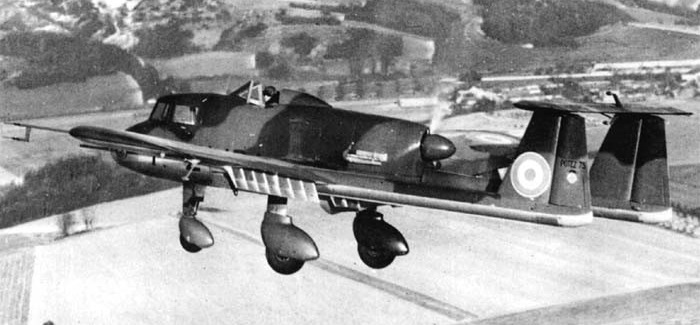
In 1953 Potez produced the Potez 75 single-engine twin-boom ground-attack aircraft, built by SNCAN. A contract for 500 for the French Army was awarded in 1956, but was cancelled later because of military cutbacks.
Founded in 1916 as Societe d’Etudes Aeronautiques at Aubevillers. Made series of two-seat biplanes, notably SEA 4 reconnaissance aircraft and SEA 7, the latter a “limousine” first flown December 1919. Built a two-seat tractor biplane, the Type 4C.2.
Post-war the company became known as Henry Potez and established itself as a major French aircraft manufacturer with a long series of civil and military aircraft.
Starting in 1920 and starting with a small 50 hp engine derived from the automobile, the Potez company manufactured a range of engines of various powers from 60 hp to 410 hp, including a series based on the Anzani radial engine, whose company Potez bought, based in Courbevoie.
In France, the Socialist Government of the so called Popular Front brought all the companies building military aircraft, aero engines and ar¬mament under its control in 1936. The im¬mediate result was the socialized oblivion of such established companies as Marcel Bloch, Bleriot, Nieuport, Potez, Dewoitine, Hanriot and Farman within half a dozen nationalized groups or Societies Nationales, named ac¬cording to their geographical location (Nord, Ouest, Centre, Midi and so on).
In 1937 Potez, with Liore-et-Olivier, and Romano, became part of the nationalized French aircraft industry in the SNCAN group.
At that time it was producing the 56 twin-engine light transport, the 63 fighter-bomber and the Potez-CAMS 141 four-engine reconnaissance flying-boat, together with prototypes of the 661 12-passenger four-engine monoplane and the Potez-CAMS 160 six-engine flying-boat, a scale model of the proposed Type 161 transatlantic flying-boat. For 16 years the company was not involved in aviation, but in 1953 produced the Potez 75 single-engine twin-boom ground-attack aircraft, built by SNCAN. A contract for 500 for the French Army was awarded in 1956, but was canceled later because of military cutbacks.
Took over Air-Fouga in 1958, and continued production of that company’s Magister jet trainer. Built two prototype turboprop transports, Potez 840, flying first in 1961. Proposed versions were 841 with PT6A engines and 842 with Astazou Xs, but production did not proceed beyond six aircraft. Also built Paris III twin-jet executive aircraft developed by Morane-Saulnier. Potez was absorbed by Sud Aviation in 1967, which in turn became part of Aerospatiale in 1970.
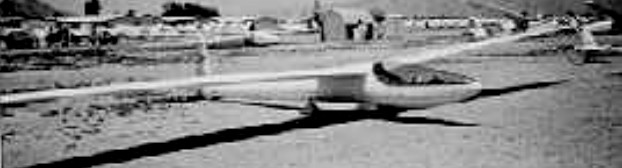
The White Knight was designed in 1963 while Posnansky was a student in Switzerland, but later has been substantially modified. It has a faired fixed landing gear and speed limiting dive brakes on both upper and lower surfaces, a center of gravity tow hook and a side-mounted control stick. The ship’s similarity in looks to the Swiss FFA Diamant is evident: it was designed during the same period when the predecessor to the Diamant was under development in Switzerland, and while that aircraft first flew with Schleicher Ka-6 wings, the White Knight used Schleicher Ka-8 wings.
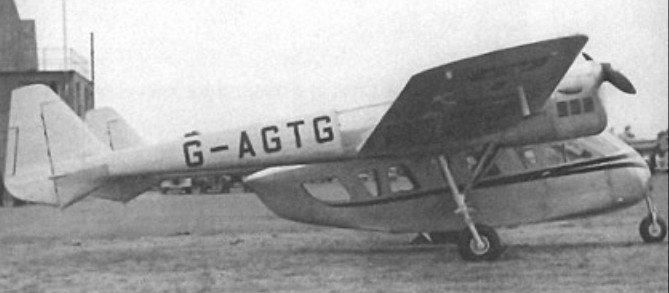
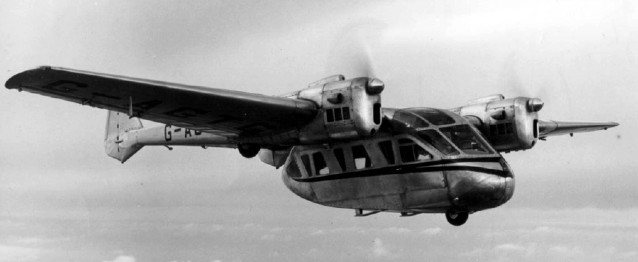
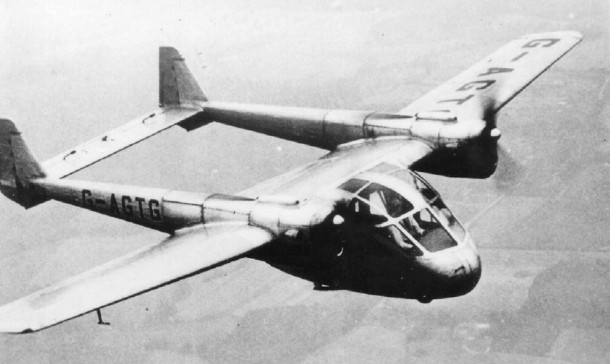
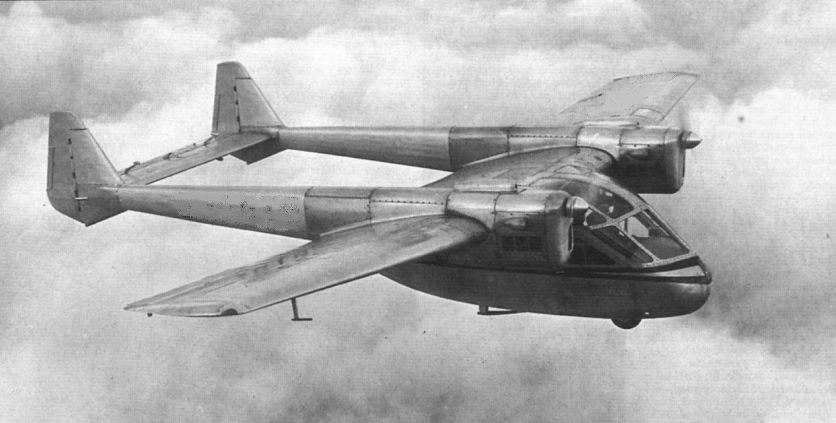
The prototype Portsmouth Aerocar Major G-AGTG was flown on June 18, 1947 when it was exhibited at the1947 SBAC Show held at Radlett, UK.
It was powered by two Blackburn Cirrus Major Series III engines of 155hp each. The retractable undrcarriage was pneumatically operated, and the manufacturer envisioned both ski and float versions as well. The pod and boom layout and its multi-role capability attracted much interest, despite the fact that the prototype was somewhat under powered or over weight. But after a promising start, financial backing for full development and production was not forthcoming, and by the latter part of 1948 the Aerocar project was abandoned following re-structuring of the Portsmouth Aviation Company. It was scrapped in 1950.
J. Samuel White & Co, boatbuilding company at Cowes, Isle of Wight, which in 1914 constructed to the design of Harris Booth, of the Air Department, the largest aeroplane then built in Britain, the AD 1000 three-engined torpedo-bomber. Also built Short 184s under subcontract and designed and built aircraft under name of Wight Aviation.
Founded in 1932 as Wight Aviation Ltd to operate an air services to the Isle of Wight. Repaired military aircraft during Second World War. Built prototype of Aerocar twin-boom high-wing six-seat aircraft, flown in 1947; not put into production.
In the 1950s, European light aircraft builders began adapting the air-cooled automobile engines from the Porsche 356 and Volkswagen Beetle into aircraft engines with a series of limited modifications. Porsche cooperated with some of these builders and produced a series of factory-built engines for about six years between 1957 and 1963, the Porsche 678 series. These relatively small engines displaced about 1.6 litres (97 cubic inches) and produced between 55 and 70 horsepower, depending on the version.
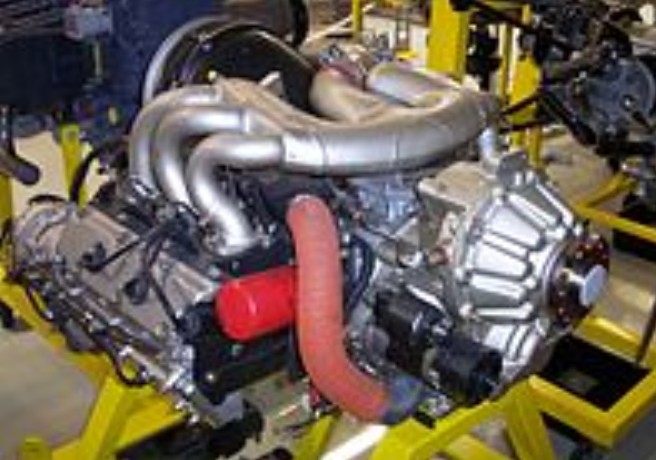
First run circa 1981, Porsche’s PFM 3200 was a six-cylinder horizontally opposed air-cooled aircraft engine developed from their air-cooled line of automobile engines from the Porsche 911 sports car. The PFM designation was derived from the name of the division that designed the engines, Porsche-Flugmotoren (~ Porsche Flight Engines).
Porsche decided to re-enter the aviation market with much larger engines derived from the Porsche 911, starting development in 1981. As the engines ran at higher speed than most aircraft engine designs, the propeller drive used a 0.442:1 reduction gearing so it could drive common propellers. The high operating speed meant the engine ran more smoothly than older designs, and the use of a muffler meant it was quieter as well. With about 3.2 litres (195 cubic inches) displacement, the normally aspirated N-series models produced about 210 hp, while the turbocharged T-series produced about 240 hp. This was roughly twice the horsepower of a conventional lower-rpm design of the same size. With single-lever operation, fully aerobatic fuel and oil supplies, direct fuel injection with automatic altitude compensation and optional turbocharging, the PFM 3200 series were some of the most advanced engines on the market.
After being introduced in late 1985 and starting to generate increasing interest in the general aviation (GA) market, Porsche exited the field during the massive downturn in the market in the late 1980s, closing the lines in 1991. It is suggested that the program cost them US$75 million to develop and produce the small number of engines delivered (about 80). Although marketed for only a short period, the PFM was found on a variety of aircraft as the primary powerplant, or as one-off modifications. These included the Extra 330, Mooney M20L, Socata TB-16, Robin DR400, Ruschmeyer MF-85 and others. Only the M20L went into production, with 40 produced in 1988, and one more in 1989.
Porsche abandoned development of the PFM3200 in 1992.
In a letter dated September 17, 2007, Porsche informed the FAA that they were surrendering their type certificate for the PFM 3200 engine and that they would no longer support the engine. In March 2009, the FAA issued a special airworthiness information bulletin stating that type certificates for existing aircraft with the PFM 3200 engine were still valid and would remain so as long as the aircraft meet FAR part 43 maintenance requirements and FAR part 91 operation requirements. However, the bulletin also said that Porsche is not exporting new or replacement parts for the engine and there is no guidance as to how compliance would be possible once existing OEM parts are exhausted.
Versions: N00: de-rated for automotive fuel
N01: 212 hp at 5300 rpm
N03: type-certified N01 for the Mooney M20L, 217 hp at 5300 rpm
T03: similar to the N03 but with a Garrett turbocharger, 241 hp at 5300 rpm, critical altitude 18,000 ft
In post war Germany, General Aviation flight was not permitted until 1956. At the time of this rejuvenation, the Porsche 678 aircraft engine was being developed. This was based on the 4 cylinder Porsche 356 car engine. This air cooled engine was modified for the aviation environment.
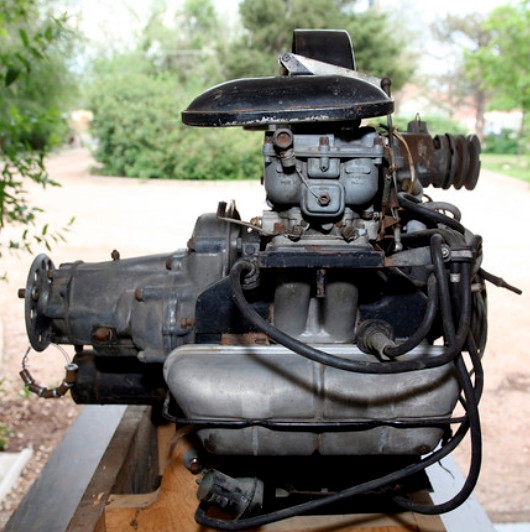
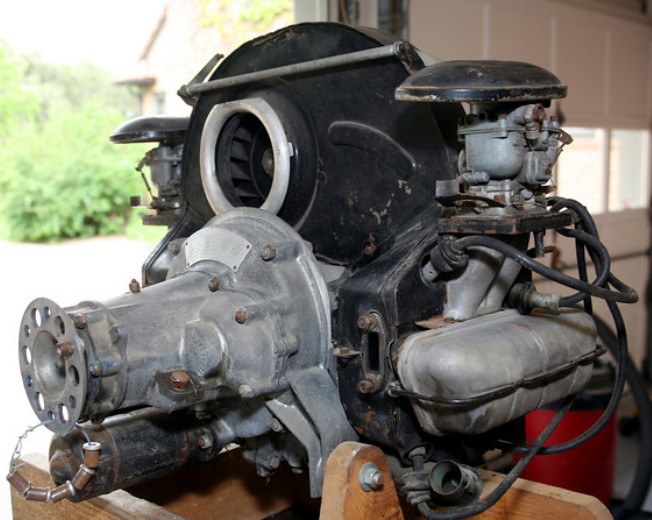
In the 1950s, European light aircraft builders began adapting the air-cooled automobile engines from the Porsche 356 and Volkswagen Beetle into aircraft engines with a series of limited modifications. Porsche cooperated with some of these builders and produced a series of factory-built engines for about six years between 1957 and 1963, the Porsche 678 series, beginning with the 1,580-cc 678/0. These relatively small engines produced between 55 and 70 horsepower, depending on the version. The 678/4, is the last and most powerful of the four-cylinder Porsche aircraft engines, all of which were based on the 356 automotive engines. These received type certificate No. 7E2 issued on November 15, 1960 as Model 678/4 Type 4H0A.
At this time Alfons Pützer was also developing the Elster A airframe, powered by the 52HP 678/3 Porsche engine. This was followed by the Elster B version powered by the 75 HP Porsche 678/4 engine and the Rolls Royce Continental C-12F and C-14F engines.
The engine differs from the car engine in many small ways, but its major departures are dry-sump lubrication, dual distributors (or magnetos, as an option) with dual spark plugs, different engine mounts, and a reduction gearbox to reduce propeller rpm to an effective range; gears could be specified as 1.46:1, 1.70:1, 1.98:1, or 2.12:1. A 12-volt electric starter and similar generator are fitted, the latter run off a dual v-belt. The external oil cooler uses a pair of 356 engine oil coolers on a special casting, and the dry-sump oil tank is connected to the pump by flexible lines. A rudimentary exhaust system piped gasses out of the fuselage.
The 678/4’s German airworthiness certificate was granted in May 1959, and FAA approval came in October 1960. Porsche’s 1959 list price for the engine (and gearbox) was $1,379. Production reportedly ended in 1962; production numbers are unknown, but it seems likely that only about 100 were made.
Earlier versions of the 678 used a low-profile cooling shroud thus could be installed in the aircraft’s nose and cooled by free air blast. The 678/4’s larger-shrouded fan air-cooling system, similar to that of the car engine, was only for enclosed rear-fuselage installation, using a pusher-type propellor, but such applications were rare.
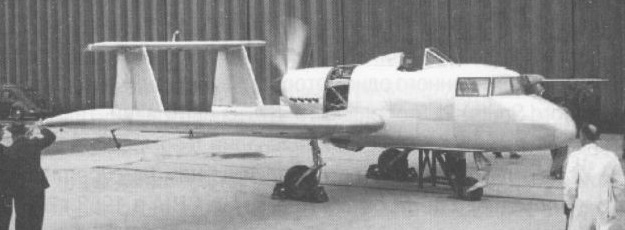
The 678/4 was fitted to the Rhein-Flugzeugbau RW-3, a pusher-type motorized glider with retractable tricycle landing gear, seating for two, and optional wing extension. Its propellor was in the vertical tail just ahead of the rudder, with the engine set just behind the cockpit. The type was first built in 1958, and apparently only 22 aircraft were completed.
Using a Porsche engine to make an aircraft go is not a brand-new idea witness the RW3 motorglider built in Germany by Rhein-Flugzeugbau GmbH. It is powered with a Porsche 678/4 aircraft powerplant, a flat-four opposed piston engine with a reduction gearing of 1.981, a takeoff-power rating of 75 hp at 4600 rpm (propeller 2320 rpm), and max continuous power rating of 65 hp at 4500 rpm (propeller 2070 rpm). Leaned out, it delivers 55 hp at 4100 rpm (propeller 2070 rpm), with fuel consumption in economy flight mode 3.7 US gph.
Model 678/4 Type 4H0A Displacement: 96.4 cu. in. Bore and stroke: 3.248 x 2.913 in. Compression ratio: 9.0:1 Reduction gearing: 1.98:1 Weight (dry): 250lb. Max. continuous, 70hp., 4500 r.p.m. at S.L. Takeoff (5 minute): 75 hp., 4600 r.p.m., at full throttle Fuel (Min. grade aviation gasoline): 80 Lubricating oil : Oil Grade HD-Oil Ambient air temperature: SAE 30: Above 32°F: SAE 20: 32°F to 5°F: SAE 10: