Germany
Formed in 1959; took over the Italian plant of Colonel Mario de Bemardi, with plans to build his Aeroscooter ultralight aircraft in Germany. Raab Flugzeugbau also acquired rights to license-produce Ambrosini Rondone four-seat monoplane.
Post WW2
Raab Krähe
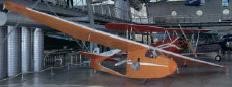
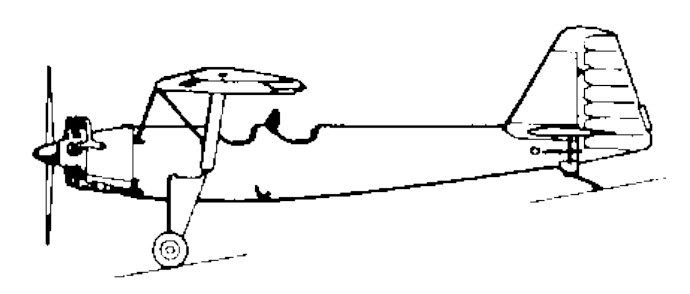
The Raab Krähe (English: crow) is a West German high-wing, single-seat, pusher configuration motor glider that was designed by Fritz Raab for amateur construction. The Krähe first flew in 1957, shortly after powered flight was again permitted in the Federal Republic of Germany. The most widespread problem was that engines proved unreliable when restarted in flight after being switched off for lengthy periods. Inevitably, there was a great deal of trial and error, and the Krähe was fitted with engines from various manufacturers. The aircraft was never commercially manufactured.
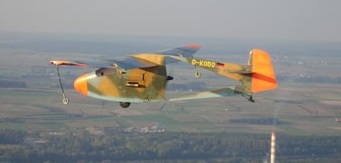
The Krähe is constructed from wood, with the fuselage made from a wooden structure covered in doped aircraft fabric. The 12.0 m (39.4 ft) span wings are built with a wooden structure and covered in plywood and fabric. The wings feature spoilers and a custom Raab-designed airfoil. The tailplane is braced with four cables to the wing trailing edge. The landing gear is a fixed monowheel.
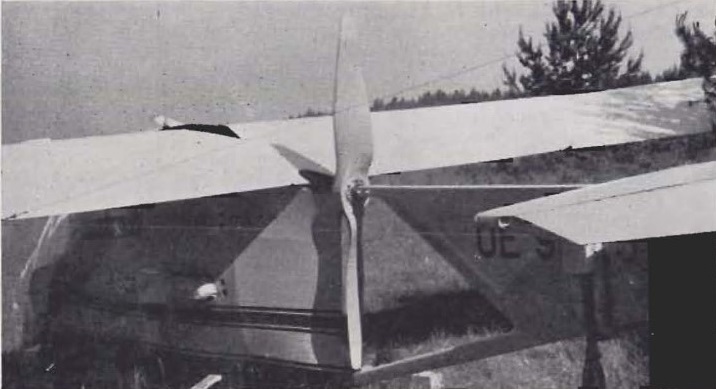
The engine is mounted in the rear of the cabin area, with the propeller in between the top and bottom tail boom tubes. Motors used are usually of an output of about 30 hp (22 kW).
Raab designed the Krähe specifically for homebuilders. About 30 examples were reported completed by 1974.
Variants:
Krähe
Initial model with monowheel landing gear and propeller in between top and bottom tail boom tubes.
Austria Krähe
Later model with tricycle landing gear and propeller rotating around the upper tail boom tube.
Krähe
Engine: 1 × Steyr , 20 kW (27 hp)
Propeller: 2-bladed wooden fixed pitch
Wingspan: 12 m (39 ft 4 in)
Wing area: 14.3 m2 (154 sq ft)
Aspect ratio: 10:1
Airfoil: Raab
Empty weight: 238 kg (525 lb)
Gross weight: 333 kg (735 lb)
Fuel capacity: 8 U.S. gallons (30 L; 6.7 imp gal)
Fuel burn: 1.2 U.S. gallons (4.5 L; 1.00 imp gal) per hour
Wing loading: 23.3 kg/m2 (4.77 lb/sq ft)
Cruise speed: 121 km/h (75 mph, 65 kn)
Endurance: 10 hours loiter
Maximum glide ratio: 18-20:1 at 77 km/h (48 mph)
Rate of sink: 1.2 m/s (240 ft/min) at 68 km/h (42 mph)
Crew: one
Krähe IV
Engine: Hirth F 10, 19 kW
Wingspan: 12.0 m
Take-off weight: 340 kg
Best glide ratio: 20 : 1 at 78 km/h
Minimum sink rate: 1 m/s at 65 km/h
Maximum rate of climb: 1.7 m/s
PZL Warszawa-Okecie PZL-106 Kruk
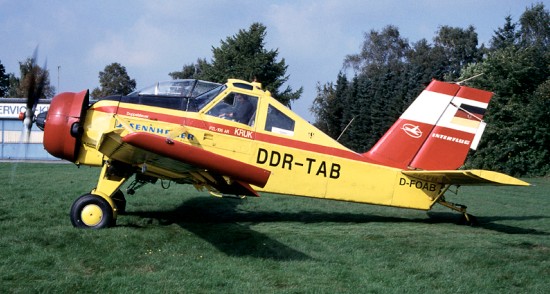
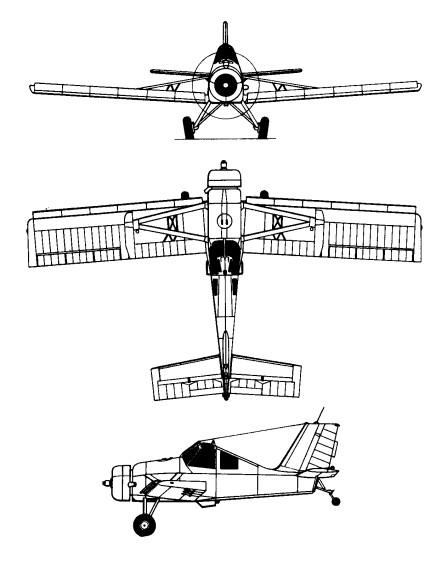
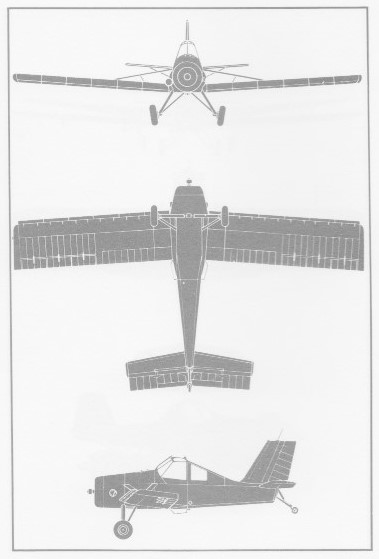
In early 1972 design was initiated for a new agricultural aircraft to replaceme the Z-37 Cmelak. Of braced low-wing monoplane configuration with fixed tailwheel landing gear, a T-tail, and enclosed accommodation for the pilot. First flown in P.Z.L. 106 prototype form on 17 April 1973, then powered by a 298kW Avco Lycoming IO-720 engine, it was followed by five more prototypes, one of which was similarly powered, but four each had a P.Z.L. 3S radial that was the chosen powerplant for production aircraft, the first version being the P.Z.L. 106A Kruk (raven) of which series construction began in 1976. Generally similar to the prototypes, it differed primarily by adopting a conventional tail unit and a larger-capacity chemical hopper, features adopted as standard on all production aircraft.
Subsequent P.Z.L. 106A variants have included the P.Z.L. 106AR which introduced a geared P.Z.L. 3SR engine and a larger-diameter propeller; the P.Z.L. 106AS prototype with a 746kW P.Z.L-built Shvetsov ASz-62IR radial engine and, following satisfactory tests, 60 P.Z.L. 106A aircraft operated overseas by Pezetel were converted to this powerplant; and the initial version of the Turbo-Kruk, the P.Z.L. 106AT, which, powered by a 567kW Pratt & Whitney of Canada PT6A-34AG turboprop engine, flew for the first time on 22 June 1981.
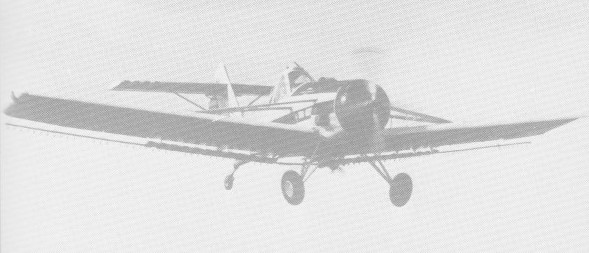
The prototype of an improved version of the P.Z.L. 106A was flown on 15 May 1981. Designated P.Z.L. 106B, this introduced a redesigned wing of increased span and area, and the 106B, 106BR and 106BS production variants superseded the corresponding A-series aircraft during 1982. These were followed by the P.Z.L. 106BT Turbo-Kruk which first flew on 18 September 1985. Powered by a 538kW Czech-built Motorlet M601D turboprop engine, improvements included increased sweep back on the wing, a taller fin and improved chemical payload. Production of all versions of the Kruk had totalled some 250 aircraft by 1990, including 54 exported to East Germany, and 60 plus Kruks used by the Pezetel agricultural air service organisation operating in Egypt. By 1992, however, production was reported to be at a standstill.
Interflug ordered 53 PZL-106A of which c/n 48040 was converted to a dual-control trainer. After the end of the DDR and elimination of Interflug all Kruks were put out of service.
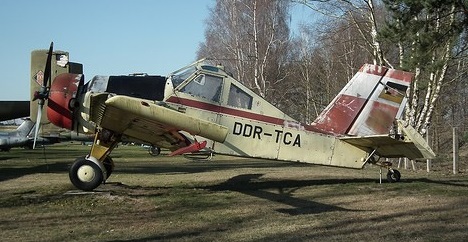
PZL 106 Kruk
Engine: 584 hp
Length: 29.856 ft / 9.1 m
Height: 10.892 ft / 3.32 m
Wingspan: 48.556 ft / 14.8 m
Max. speed: 76 kts / 140 kph
Service ceiling: 15092 ft / 4600 m
Crew: 1
PZL 106B
Engine: 1 x PZL 3S radial, 441kW / 600 hp
Max take-off weight: 3000 kg / 6614 lb
Loaded weight: 1670 kg / 3682 lb
Max. speed: 137 km/h / 85 mph
Ceiling: 4600 m / 15100 ft
Range: 1100 km / 684 miles
PZL 106 BT Turbo Kruk
Engine: M 601 D, 537 shp
Length: 33.465 ft / 10.2 m
Height: 12.467 ft / 3.8 m
Wingspan: 49.213 ft / 15.0 m
Wing area: 341.219 sq.ft / 31.7 sq.m
Max take off weight: 7717.5 lb / 3500.0 kg
Weight empty: 3704.4 lb / 1680.0 kg
Max. weight carried: 4013.1 lb / 1820.0 kg
Max. speed: 135 kt / 250 km/h
Landing speed: 49 kt / 90 km/h
Cruising speed: 92 kt / 170 km/h
Initial climb rate: 1181.1 ft/min / 6.0 m/s
Wing loading: 22.55 lb/sq.ft / 110.0 kg/sq.m
Range: 486 nm / 900 km
Crew: 1
PZL Warszawa-Okecie PZL-105 Flaming
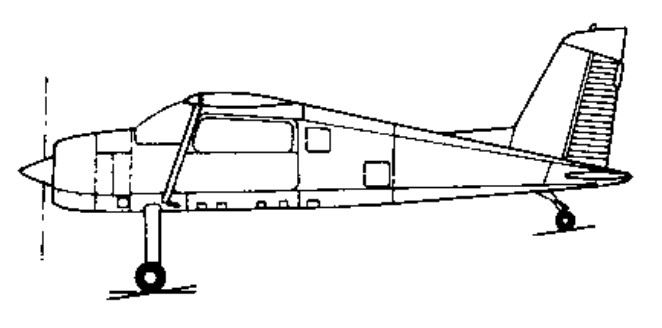
Poland, 1989
Engine: M 14 P, 261 hp
Length: 28.215 ft / 8.6 m
Height: 9.186 ft / 2.8 m
Wingspan: 41.667 ft / 12.7 m
Wing area: 181.912 sq.ft / 16.9 sq.m
Max take off weight: 3682.4 lb / 1670.0 kg
Weight empty: 2105.8 lb / 955.0 kg
Max. weight carried: 1576.6 lb / 715.0 kg
Max. speed: 135 kts / 250 km/h
Landing speed: 51 kts / 95 km/h
Cruising speed: 127 kts / 235 km/h
Initial climb rate: 1043.31 ft/min / 5.30 m/s
Service ceiling: 18045 ft / 5500 m
Wing loading: 20.3 lb/sq.ft / 99.0 kg/sq.m
Range: 540 nm / 1000 km
Crew: 1+5
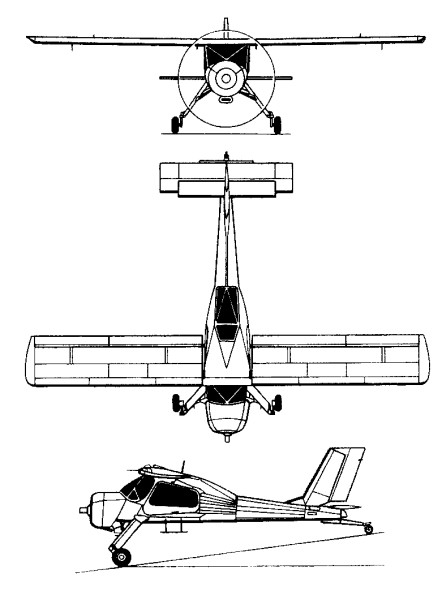
PZL Warszawa-Okecie PZL-104 Wilga
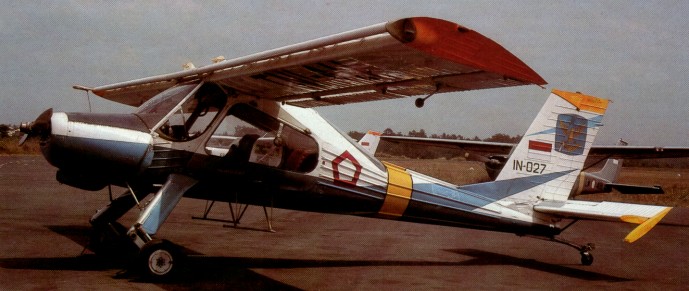
Designed as a successor to the Polish-built Yak-12 and the P.Z.L. 101 developed from it, the original P.Z.L. 104 Wilga 1 (Thrush) prototype, powered by a 134kW Narkiewicz WN-6 flat-six engine, was flown for the first time on 24 April 1962.
PZL Warszawa-Okecie PZL-104 Wilga Article
A cantilever high-wing monoplane with fixed tailwheel landing gear and an enclosed cabin, it was followed by prototypes of the Wilga 2P and Wilga CP, powered by the 138kW Narkiewicz WN-6RB2 and 168kW Continental O-470-13A or O-470-L flat-six engines respectively. Intended as a general-purpose aircraft, the P.Z.L. 104 was offered initially in versions equipped for use as a four-seat passenger-carrying or liaison aircraft; for club flying, glider towing or parachuting; for agricultural use with a 500-litre hopper for dust or liquid application; and as an air ambulance carrying pilot, doctor, two stretcher patients and medical equipment.
Following construction of a number of prototypes, the type entered production initially as the Wilga 3A club aircraft and the Wilga 3S air ambulance. In 1967 the design was revised to give better cabin accommodation and with improved landing gear, production beginning in 1968 of the Wilga 35 which, powered by a 194kW Ivchenko AI-14R engine, had flown for the first time on 28 July 1967, and of the Wilga 32 with a 172kW Continental O-470-K flown on 12 September 1967. This last version was built under licence in Indonesia as the Lipnur Gelatik 32 (rice bird) with a Continental O-470-R engine of similar output. The Wilga 35 first flew on 28 July 1967.
The later versions have automatic wing leading edge slats, an all moving tailplane and a detachable under-¬fuselage cargo container.
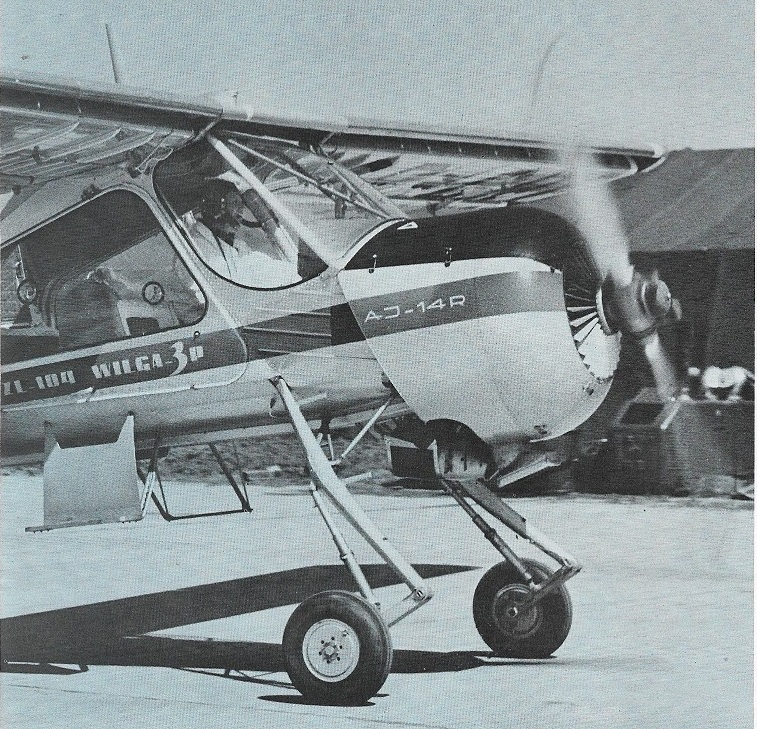
The Wilga’s design incorporates an air powered starting system for one. It looks complex, but it has one advantage in that batteries are almost worthless in extreme cold. The landing gear incorporates a short trailing beam at the end of each main gear strut so that its wheels recoil up and rearward, enhancing its ability to handle rough, off airport landings. Engine cooling is designed to cope with wide air temperature extremes, long climbs and rapid descents. The cowl shutters, manually operated by a knob in the cockpit open fully to cool the 620 cubic inch radial on a climb, then close tightly so the airplane can perform its patented 4,000fpm descents without warping the cylinder heads. The airplane is not only adapted very nicely to hauling sailplanes aloft but also to winter operations without fancy cold weather kits. The engine will run on anything from 70 octane fuel up. A gear driven supercharger provides a constant boost of about three inches, and it has a two blade constant speed prop.
The wing is strutless, fully cantilevered; the ailerons droop with full flaps for landing, and there’s a fixed, full span leading edge slot. The tailcone carries its structural members outside the skin, giving the impression of widely spaced corrugations; Four low bucket seats occupy the cabin, with an aft cargo compartment under glass. It has dual flight controls except for trim, and both rudder pedals carry toe brakes. The throttle and prop controls are designed to be operated with one hand; their rates are nicely matched so that for a go around, you grab both handles and push.
The Wilga demonstrates excellent STOL performance, accelerating crisply and lifting off at a radical climb angle. At sea level, the airplane is said to produce a climb of 1,240 feet per minute at its gross weight of 2,711 pounds, which is lighter than a Cessna 180 but with more horsepower to heft it. This airplane’s empty weight is 1,874 pounds, and it carries 252 pounds of fuel; its payload, after allowing for oil and incidentals, is probably around 550 pounds. The Wilga is slow, producing only 104 knots at maximum cruise on about 15 gallons per hour.
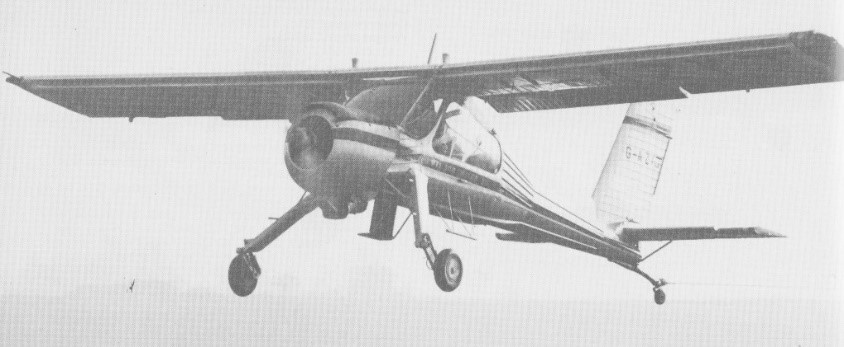
Developments of the Wilga 35 have included the Wilga 35A intended for aero-club use; the Wilga 35H floatplane fitted with Airtech (Canada) LAP-3000 floats; the multi-purpose Wilga 35M fitted with a 260kW M-14P radial engine, flown in prototype form in 1990; the Wilga 35P tourer or air-taxi version; and the Wilga 35R agricultural variant. A version generally similar to the Wilga 35, but meeting US FAR Part 23 requirements, is designated the Wilga 80. The first of these flew on 30 May 1979, and is available in three versions, the 80A, for aero-club use, the 80H floatplane, and as the 80R for agricultural use. A more radical redesign, originally identified as the Wilga 88, has become the P.Z.L. 105 Flamingo. The Wilga 35 and 80 remain in production in 1993, by which time P.Z.L. had sold around 900 variants to countries around the world.
Certification of the PZL-104 Wilga 35A is under European Aviation Safety Agency EASA A.061.
Some 800 PZL 104 have been manufactured, but was no longer in production in 1991.
Wilga 1
Prototype
Wilga 2
Engine: 185 hp Narkiewicz WN-6RB2
Wingspan: 36 ft 5 in
Length: 26 ft 3 in
Height: 8 ft 10 in
Wing area: 166.84 sq.ft
Empty weight: 1543 lb
Loaded weight: 2535 lb
Max speed: 124 mph
Cruise: 106 mph
ROC: 886 fpm
Service ceiling: 13,125 ft
Normal range: 4235 mi
Max range: 625 mi
Wilga 2P
Seats: 4
Wilga 2R
Agricultural version
Wilga C
Export version prototype
Wilga 3P
Initial production
Seats: 4
Wilga CP / Gelatik
As 3P, with engine change
Wilga 3A
Parachuting, glider towing
Wilga CA
As 3A, with engine change
Wilga 3C
As CP, new tailplane, tailwheel and forward inclined gear legs
Wilga 3D
Dual control version of 3P
Wilga CD
As 3D with engine change
Wilga 3R
Ag version of 3P
Wilga CR
As 3R with engine change
Wilga 3S
Ambulance version of 3P
Wilga CS
As 3s with engine change
Wilga 32 / Gelatik 32
1967 improved version
Wilga 32A
Aeroclub version
Wilga 32P
Passenger version
Wilga 32S
Ambulance version
Wilga 35
As 32
Engine: Ivchenko AL-14R, 260 hp
Wingspan: 36 ft 5 in / 11.13 m
Length: 25 ft 6.75 in / 8.10 m
Empty weight equip: 1874 lb / 850 kg
MTOW: 2755 lb / 1250 kg
Max cruise: 104 kt / 120 mph / 193 kph
ROC SL: 1245 fpm / 380 m/min
Service ceiling: 15,025 ft / 4580 m
Range max fuel, 30min res: 366 nm / 422 mi / 680 km
Seats: 4
Glider tow weight: 1433 lb / 650 kg
Multi-glider max combined tow weight: 2480 lb // 1125 kg
Cabin length: 7 ft 2.5 in / 2.20 m
Cabin width: 3 ft 10 in / 1.20 m
Cabin height: 4 ft 11 in / 1.50 m
Wilga 35
Engine: 260 hp PZL built Ivchenko IA 14RA radial
Prop: 8 ft 8 in (2,65 m) dia two blade wood
Wing span: 36 ft 4.75 in (11.14 m)
Length: 26 ft 6.75 in (8.10m)
Wing area: 166.8 sq.ft. (15.50 sq.m)
Gross weight: 2,711 lb (1,230 kg)
Max cruising speed: 120 mph (193 km/h)
Max range: 410 miles (660 km)
Seats: 4
Wilga 35A
Engine: 1 x Ivchenko AI-14RA radial, 194kW / 256 hp
Max take-off weight: 1300 kg / 2866 lb
Loaded weight: 900 kg / 1984 lb
Weight empty: 1830.2 lb / 830.0 kg
Wingspan: 11.12 m / 37 ft 6 in
Length: 8.1 m / 27 ft 7 in
Height: 2.96 m / 10 ft 9 in
Wing area: 15.5 sq.m / 166.84 sq ft
Max. speed: 195 km/h / 121 mph
Cruising speed: 104 kts / 193 km/h
Ceiling: 4040 m / 13250 ft
Range: 670 km / 416 miles
Crew: 1
Payload: 3 Pax
Wilga 35P
Wilga 35S
Wilga 40
1969 experimental
Automatic leading-edge slats, all-moving tailplane,
detachable cargo or fuel pack
Wilga 43
Experimental, similar to 40 with engine change
Wilga 80
Engine: AI-14R, 260 hp
First flew 30 May 1979
Seats: 4
Payload: 400 kg
PZL-104M
PZL-104 MA WILGA 2000
Base price: $211,595
Horsepower on takeoff: 300
TBO: 2000 hr
Fuel type: 100LL
Propeller type: 3-blade Hartzell
Landing gear type: Tailwheel/Fixed
Max ramp weight: 3306 lb
Gross weight: 3306 lb
Empty weight, std: 1980 lb
Useful load, std: 1326 lb
Useful fuel, std: 100 USG
Payload, full std. fuel: 726 USG
Oil capacity: 12 qt
Wingspan: 37 ft
Overall length: 28 ft. 4 in
Height: 8 ft. 6 in
Wing area: 167 sq. ft
Seating capacity: 4
Cabin doors: 2
Cabin width: 3 ft. 7 in
Cabin height: 3 ft. 10 in
Baggage capacity: 66 lbs
Cruise speed 75% power: 114 kt
Max range 75% power: 1000 nm
Fuel consumption 75% power: 14.4 USG
Vs: 60 kt
Vso: 50 kt
Best rate of climb, SL: 925 fpm
Service ceiling: 11,500 ft
Takeoff ground roll: 676 ft
Takeoff over 50-ft obstacle: 1145 ft
Landing ground roll: 282 ft
Landing over 50-ft. obstacle: 764 ft

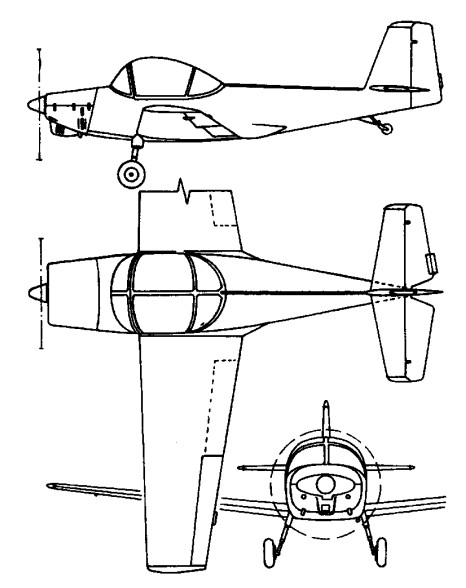
PZL Warszawa-Okecie PZL-102
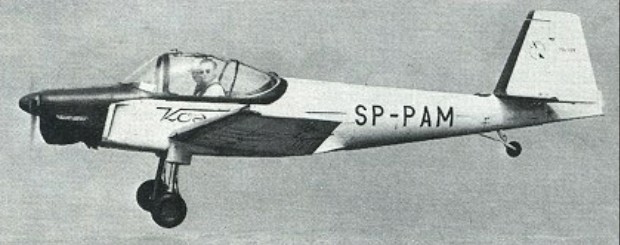
On 23 May 1958 P.Z.L. flew the prototype of a two-seat semi-aerobatic light monoplane to which it allocated the designation P.Z.L. 102, later giving it the name Kos (Blackbird). Of all-metal construction, except for fabric-covered tail control surfaces, this had fixed tailwheel landing gear, seated two side-by-side in an enclosed cockpit and, as first flown, was powered by a 48kW (65-hp) Nar-kiewicz WN-1 flat-four engine. Further prototypes preceded the production P.Z.L. 102B flown first in October 1959, which was powered by a Continental C90-12F engine, and the type was built in moderate numbers before production ended in 1964.
PZL 102B
Engine: 1 x Continental C90-12F, 71kW
Wingspan: 8.5 m / 28 ft 11 in
Length: 6.95 m / 23 ft 10 in
Height: 1.9 m / 6 ft 3 in
Wing area: 11.0 sq.m / 118.40 sq ft
Max take-off weight: 655 kg / 1444 lb
Empty weight: 418 kg / 922 lb
Max. speed: 190 km/h / 118 mph
Ceiling: 4600 m / 15100 ft
Range: 640 km / 398 miles
PZL Warszawa-Okecie PZL-101 Gawron
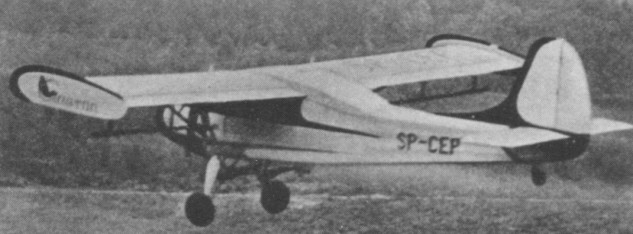
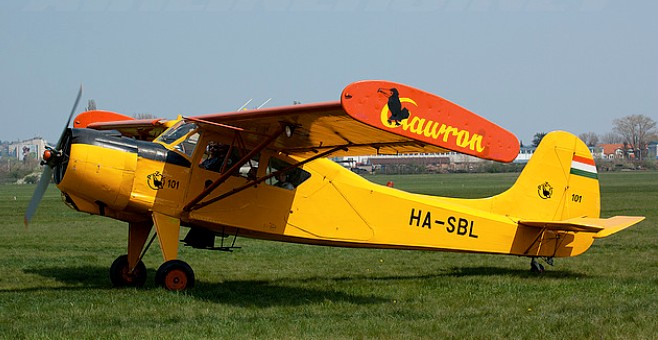
The PZL 101 was developed from the Yak-12M, which was licence-produced in Poland. The first prototype flew on 15 April 1958. Series production started in 1960.
Three basic versions were built; agricultural, ambulance and utility, with equipment according to role. Initially manufactured in two versions, the PZL 101G2 could accommodate four people.
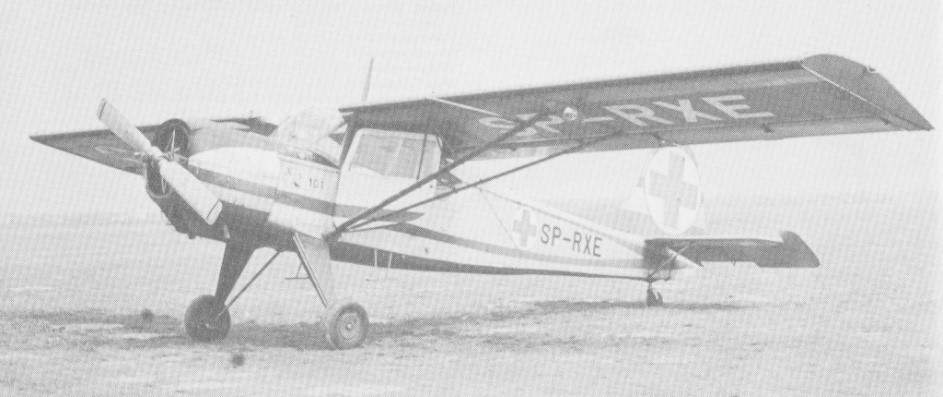
Late production aircraft have laminar-flow wingtips instead of the original type fitted with endplates.
By 1968 a total of 325 Gawrons were built including 143 for export.
Production ceased in 1973 after more than 330 had been built.
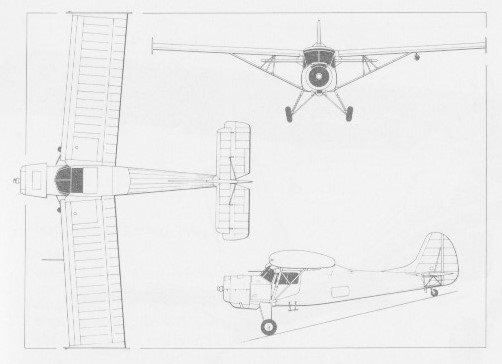
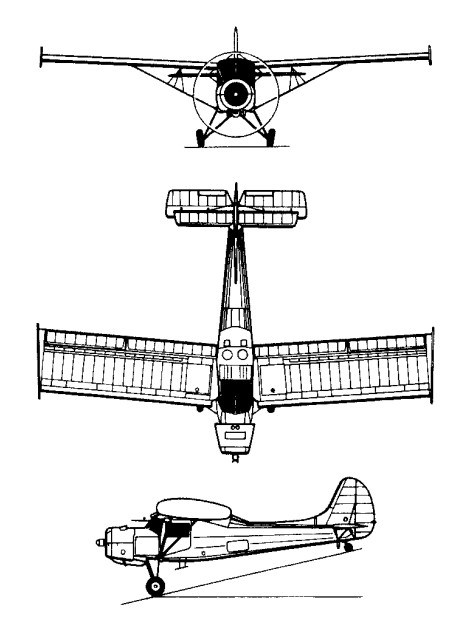
Engine: 1 x Ivchenko AI-14R radial, 260hp
Wingspan endplate tips: 12.68 m / 41 ft 7.5 in
Wingspan laminar tips: 13.03 m / 42 ft 9 in
Length: 9.0 m / 30 ft 6 in
Height: 3.12 m / 10 ft 3 in
Max take-off weight: 1660 kg / 3660 lb
Empty weight ag: 1025 kg / 2260 lb
Empty weight ambulance: 1068 kg / 2354 ln
Max. speed: 180 km/h / 112 mph
Cruise speed ag: 130 km/h / 81 mph / 70 kt
ROC ag: 162 m/min / 530 fpm
Service ceiling ag: 3280 m / 11,100 ft
Range int/fuel ag: 660 km / 410 miles / 356 nm
Range ext/fuel ag: 1140 km / 708 miles / 614 nm
Cabin volume: 2.55 cu.m / 90 cu.ft
Capacity: 4 seats / 500 kg / 1100 lb / 175 Imp.G / 800 lt / 660 lb / 300 kg
PZL Warszawa-Okecie S-4 Kania
Light and training aircraft of 1949
PZL Warszawa-Okecie PZL-110 Koliber
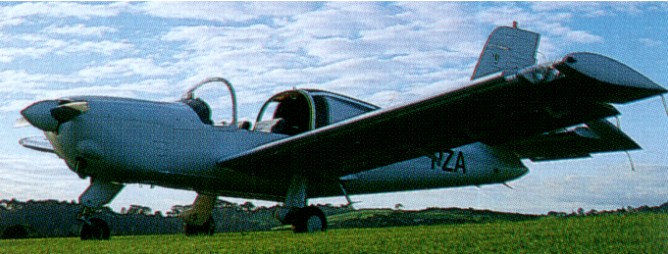
French production of the Rallye series stopped in the 1970s and PZL took it over, along with all production licences. Derived from the SOCATA MS884 Rallye, PZL did development of its own, with a softer trailing-arm undercarriage, some geometric changes on the flaps and more work on those distinctive leading edge slats, which now move in and out more gently and tend to stay there. Engineering changes also include better alloys and corrosion treatment. PZL made 500 or so Franklin-powered Koliber Is, then set about certifying the Koliber II under FAR Part 23 amendment 29. A four place, all metal factory built nose wheel aircraft.
Certification of the Koliber 150 is under European Aviation Safety Agency EASA A.091, and the PZL-Koliber 150A under FAA A69EU.
PZL-110
Engine: Franklin, 125 hp
Koliber 150A
Engine: Lycoming O-320E2A, 150 hp
Cruise: 107 kt
Stall: 37 kt
PZL Swidnik JK-1 Trzmiel

Single-seat open frame ultra-light helicopter with two rotor-tip mounted Wojcicki pulse-jets.
A jet-powered helicopter, the JK-1 Trzmiel, designed by J. Kotlinski, a former member of Zurakowski’s design team, was completed at the I.L. (Aircraft Institute) in the spring of 1957.
A light pulse-jet-powered helicopter with a two-bladed main rotor with small two-blade servo-rotor above main rotor and two-blade tail rotor. Main rotor blades, with a steel spar in the leading edge, are filled with plastic and have sheet duralumin skin. Servo-rotor of two circular planform blades mounted on short streamline stubs. Two-blade small diameter directional control rotor at the rear end of fuselage frame. Total main disc area 38 sq.m.
The fuselage is an uncovered steel-tube structure. Power is from two 11-kg Wojcicki pulse-jets mounted at tips of main rotor blades.
First flown on 28 June 1957, the JK-1 was flight-tested hat year. Two were built.

JK-1
Engine: 2 x Wojcicki turbojet, 12.5kg
Main rotor diameter: 7m
Height: 2.35m
Max take-off weight: 340kg
Max speed: 131km/h
Endurance: 15min


