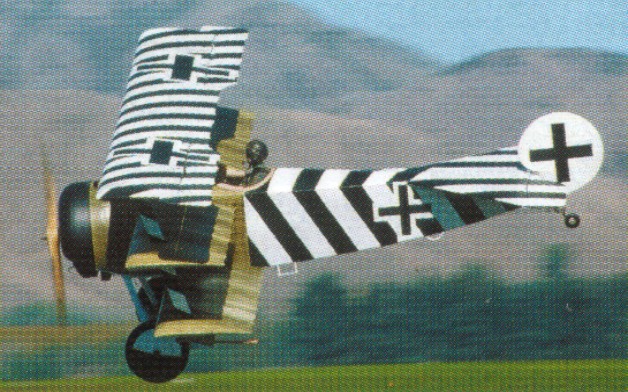
Redfern Fokker Dr.1

The replicas are built to the original 1917 pattern with small differences in the size of tubing used, and a few safety modifications like brakes and a steerable tailwheel. The aircraft has all the vices of the original poor ground visibility, and poor rudder control.
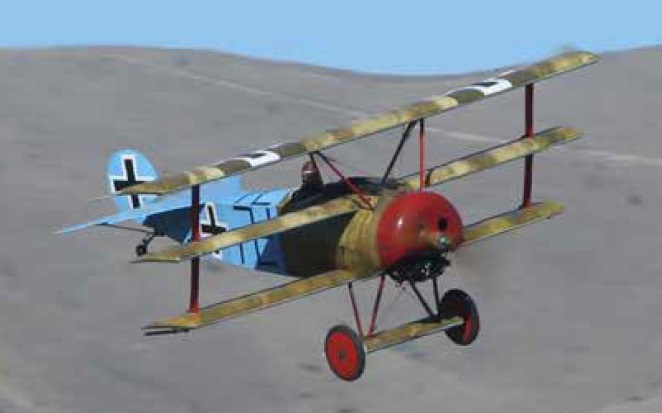
Redfern Fokker Dr.1 Article

This replica of the Red Barons famed fighter is not one of the easier-to-build homebuilts. The fuselage is built from steel tube and plywood, then fabric covered. The wings are all wood and fabric covered. The engine usually recommended is a 145-hp Warner Radial.
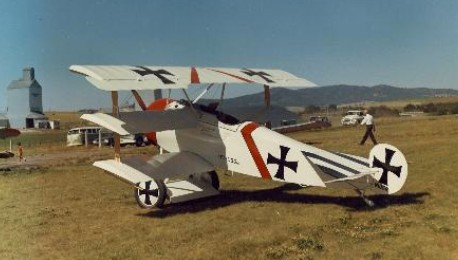
Gallery

Engine: Warner, 145 hp
HP range: 145-220
Height: 9.7 ft
Length: 19 ft
Wing span: 23.7 ft
Wing area: 202 sq.ft
Fuel cap: 30 USG
Weight empty: 1112 lb
Gross: 1455 lb
Speed max: 120 mph
Cruise: 100 mph
Range: 300 sm
Stall: 40 mph
ROC: 2000 fpm
Take-off dist: 100 ft
Landing dist: 250 ft
Service ceiling: 20,000 ft
Seats: 1
Landing gear: tail wheel

Engine: 220hp Continental W670 16 radial
Span: 7.19m (23ft 6in)
Length: 5.77m (19ft 11in)
Max wt: 807kg (1,775 lb)
Speed 165km/h (105mph)
Range: 287km (180sm)
Wing area: 202 sq.ft
Seats: 1
Landing gear: tail wheel
Redfern

Walt Redfern

Walt built his first airplane in 1949, a Knight Twister from Vernon W. Payne’s plans. It was one of only ten at that time. Walt built 15 aircraft before his death in 1996. Five of these were the Fokker DR1, a favourite with many and still one of the most requested set of plans sold. His first triplane (white) can be found in the EAA museum in Oshkosh, Wisconsin donated by Robert Fergus. Walt was able to build and test fly all his aircraft except for the last one, a Fokker DVI. Walt’s good friend, Steve Wolf, flew this aircraft for the family in September, 1996. This aircraft will be displayed in a museum in the Pittsburgh area.

His great love was WWI aircraft but he had many problems locating plans. His greatest find was Reinhold Platz, who would go on to be his most valued mentor. Reinhold’s knowledge of the DRI, as one of the original designers, was a wealth of information that Walt relied on until his death. Plus he sent the original DRI plans, in German, to Walt to ensure his dream of building the DRI would come true. They continued to correspond with the help of a local high school teacher who spoke German until Reinhold’s death.

During Walt’s life he was able to build 13 additional aircraft and founded Redfern & Son’s Custom Aircraft, Inc. He constructed four additional DRI’s, two Great Lakes (for family fun), a French Nieuport 24 BIS, Starduster 2, de Havilland DH2, Sopwith Camel, Bucher Jungmeister, Albatros DVa, and a Fokker DVI (only aircraft that Walt was not able to test fly).

Per Walt’s request, the family continues to provide two sets of blueprints to the public. Walt also was a great supporter of the EAA. His membership number was 143, showing his early interest in the organization.

1980: Redfern & Sons, Inc., Route 1, Athol, ID 83801, USA.
1995: S-211 Spencer, Post Falls, ID 83854, USA.

Rearwin

Rearwin Airplanes was founded by Raymond Andrew (“Rae”) Rearwin in 1928, at Salina, KS.

Following Charles Lindbergh’s historic transatlantic flight in 1927, the world’s fascination with aviation grew significantly. Moreover, the Air Commerce Act of 1926 established the government certification program of pilots and aircraft that gave the fledgling industry safety and legitimacy.

Rearwin produced Junior two-seat light monoplane in 1931, followed by Speedster with American Cirrus engine.

Employing his two sons, Royce and Ken, the small company designed and built over 400 airplanes, including instrument trainers and gliders, despite the effects of the Great Depression.

Taken over in 1935 by partnership called Rearwin Airplanes. In 1937 bought assets of Le Blond Aircraft Corporation renamed as Ken-Royce motors. 1939: Renamed Rearwin Aircraft & Engines Inc.

Rae Rearwin sold the company to the Empire Ordinance Company in 1942. The company built about 275 more Skyrangers under the Commonwealth name before they closed their doors in 1946.

Rawdon T-1

Rawdon Brothers, a flying school operator, designed and built a Lycoming engined two-seat monoplane, the T-1, first produced in 1938. At least five were produced pe-war.

Rawdon T-1SD Article

The design was resurrected in 1953, powered by a 135 hp Lycoming engine.

The T-1S is an agricultural version equipped with spray tanks and spray bars.

Engine: Lycoming O-290
Max speed: 138 mph
Cruise: 120 mph
ROC: 900 fpm
Service ceiling: 18,000 ft
Range: 500 mi
Empty weight: 1300 lb
Loaded weight: 1900 lb
Wingspan: 33 ft 4 in
Length: 24 ft 2 in
Height: 7 ft 3 in

Raven S60

Classic Custom S60A
Persons: 4
Diameter: 60 ft
Height: 69 ft
Volume: 105,400 cu.ft
Weight: 580 lb
Payload: 1500 lb
Burner: 7.5 Million BTU/hr
Fuel capacity: 30 USG
Cost: (1972): US$ 9100
FAI AX-8

Classic Limited S60A
Persons: 4
Diameter: 60 ft
Height: 69 ft
Volume: 105,400 cu.ft
Weight: 660 lb
Payload: 1500 lb
Burner: 15 Million BTU/hr
Fuel capacity: 40 USG
Cost: (1972): US$ 9900
FAI AX-8

Raven S55

Custom Classic S55A
Persons: 4
Diameter: 55 ft
Height: 63 ft
Volume: 77,500 cu.ft
Weight: 530 lb
Payload: 1450 lb
Burner: 7.5 Million BTU/hr
Fuel capacity: 30 USG
Cost: (1972): US$ 8195
FAI AX-7

Classic Limited S55A
Persons: 4
Diameter: 55 ft
Height: 63 ft
Volume: 77,500 cu.ft
Weight: 610 lb
Payload: 1450 lb
Burner: 15 Million BTU/hr
Fuel capacity: 40 USG
Cost: (1972): US$ 8995
FAI AX-7