The Ever KFT R-07a Tücsöl (Cricket), open-frame single seat basic instruction glider appeared in 1938. The R-07a Tücsök was a reduced-scale Vöcsök to replace the Zögling.
The Ever KFT R-07b Vöcsök (Grebe) appeared in 1940, a productionized version of the R-05/R-06 Vöcsök.
The Rubik R-07d was a postwar Vöcsök with modified ailerons, 30 built 1955/56.
As a production series of the R-06, 361 were built.
Rubik Aero Ever KFT R-07b Vöcsök Length : 20.669 ft / 6.3 m Wingspan : 38.058 ft / 11.6 m Wing area : 161.46 sq.ft / 15.0 sq.m Max take off weight : 430.0 lb / 195.0 kg Weight empty : 242.6 lb / 110.0 kg Max. weight carried : 187.4 lb / 85.0 kg Glide ratio : 15.0 Minimum sink rate : 177.17 ft/min / 0.9 m/s
Hungary Ernő Rubik (Rubik Ernő in Hungarian usage) designed 28 gliders and 5 powered aircraft before his death in 1997. Only a few remained unbuilt projects. The most dramatic was the Rubik R-21 1.5-tonne military assault glider project.
Royal Thai Air Force office of aeronautical engineering founded 1975. Produced RTAF-5 twin-boom and turboprop- powered forward-air-control aircraft (first flown 1984). Later undertook life extension program for Airtrainers and assembled Fantrainers for RTAF.
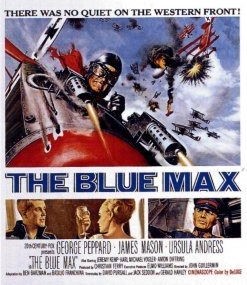
20th Century Fox purchased the film rights of Jack D Hunter’s “The Blue Max” and the film was to be a multi-million dollar production, and the stars were to be the full sized reproductions of World War I fighters constructed for the film- two Pfalz D.III biplanes, two Fokker Dr.I triplanes, two S.E.5a scouts and three Fokker D.VII biplanes.
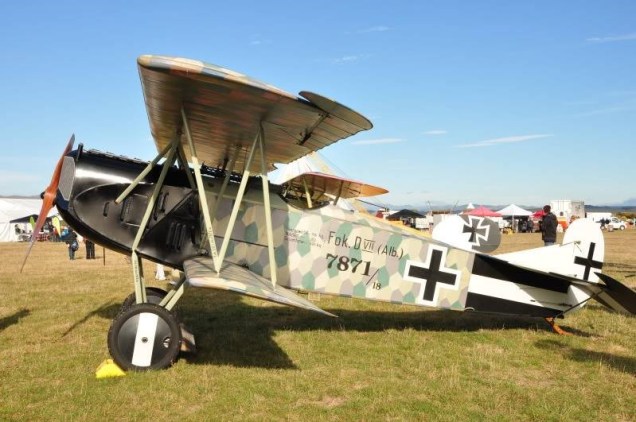
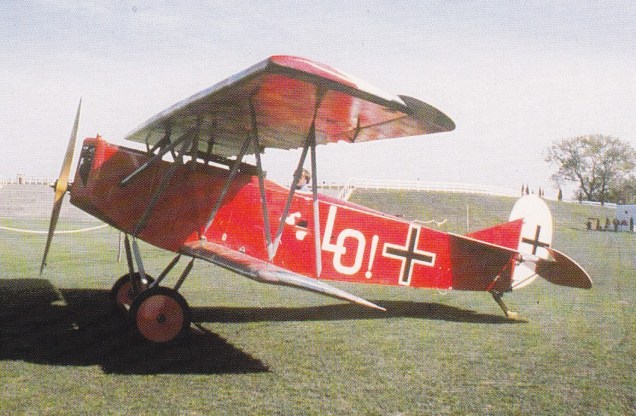
The reproductions had to be built in a hurry to meet the time frame for shooting and were constructed in different locations. At Dinard airport in France, Claude Rousseau constructed three Fokker D.VII fighters (F-BNDF to F-BNDH) in six months. At the time it was stated that the machines were constructed to original plans and dimensions. The two former Federated Fruit Dragon Rapides, G-AKJS and G-ANZP, left Liverpool destined to become part donors for the three Fokker D.VII. The limited choice of engines led to the Gypsy Queen being also installed in the D.VII reproductions. The Gypsy Queen is a six cylinder in-line inverted air-cooled direct-drive engine, as a result the prop emerges through what would be the radiator shell of a true D.VII. Since the Fokkers’ original Mercedes weighed almost twice as much, they required some 200 pounds of nose-ballast for balance. Rousseau Aviation named the reproduction the D.VII-65. They were painted in lozenze camouflage pattern colours.
Rousseau delivered its D.VIIs by actually flying them from France to the set in Exeter-Dublin, Ireland, during August 1965, their German crosses and lozenge camouflage no doubt raising eyebrows below.
The replicas were: F-BNDF, EI-APT painted as 6796/18
Became N902AC / ZK-FOD With The Vintage Aviator, New Zealand
F-BNDG, EI-APU painted as 8520/18
Became N903AC Rendered un-airworthy in a landing accident At Stampe & Vertongen Museum, Antwerp International Airport, Belgium
F-BNDH, EI-APV
Later N904AC On display at Southern Museum of Flight, Birmingham, Alabama, USA
They later appeared in “Darling Lili”.
One Fokker D.VII now belong to New Zealand film director Peter Jackson’s 1914–18 Trust, kept in fully airworthy condition.
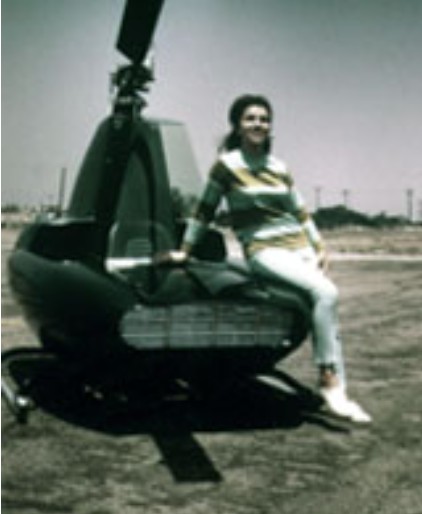
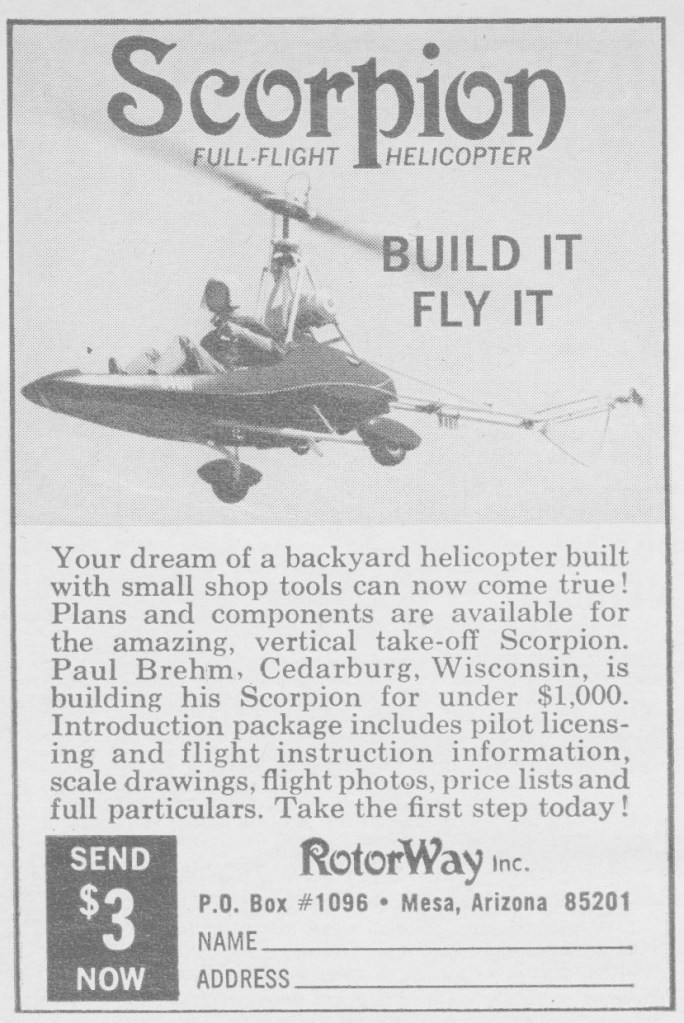
In 1958, B.J.Schramm set up a company to market a single-seat amateur-built helicopter known as the Schramm “Javelin”. This machine had a tubular steel structure with a formed aluminium body shell and was powered by a 75kW Mercury powerboat engine. It first flew in August 1965.
Named the Javelin (in several different forms), this first attempt by RotorWay Aircraft founder, designer and builder, B.J. Schramm, turned into a learning process that led to the eventual success of the Scorpion, the company’s first production helicopter, offered in 1967.
B J Schramm’s association with flying began in 1958 when he founded Schramm Aircraft Company, and built and flew a Bensen Gyrocopter.
He studied at California Polytechnic State University and eventually was drafted into the military where he worked on missiles as an electronics technician at the White Sands Proving Ground. There he did design and drawings and began to formulate a plan for building a helicopter that the average pilot could afford. After his discharge in 1967, he immediately entered helicopter manufacturing and started his own company, Rotorway, with the goal of producing his own designs.
Schramm began building a horizontally opposed engine based on the VW design. Ultimately it was water cooled and used cylinders and crankshaft of his own design. After years of development it was a 180 lb engine that put out 150 hp. The engine had a 600 hour TBO, primarily due to valve wear.
First established in 1961 in Chandler, Arizona, as RotorWay Aircraft, the company premiered its first kit helicopter model, the Scorpion, at the 1967 Oshkosh Fly-In.
November 1969
RotorWay Aircraft Inc founded 1970 to market in plans and kit forms the Scorpion single-seat helicopter, developed from the Schramm Javelin. Followed by the two-seat Scorpion Too, subsequently known as Scorpion 133 and using a RotorWay RW-145 piston engine.
1977-80: Rotorway Aircraft Inc. 14805 S. Interstate 10/Tempe, Arizona 85284, USA.
Exec two-seat helicopter appeared 1980 to supplement and eventually replace Scorpion 133, offered in its kit-built Exec 162F form (available since 1994) using a 150 hp RotorWay Rl 162F engine; over 500 Exec 90 and latest Exec 162F kits delivered since 1990, in which year company became RotorWay International.
The Executive model was soon born in 1980 and continued to be the company’s premier model until the assets of the company were sold in 1990.
In 1987 Schramm’s health began to fail and he went to the Mayo clinic for treatment. He made some poor business decisions and failed to put the right people in charge of operations during his absence. This resulted in the company declaring bankruptcy in 1990.
1998: 4141 West Chandler Blvd AZ 85226 Chandler USA
A group of British investors, led by John Netherwood, purchased the company. Then, he set about getting the newly christened RotorWay International on its feet with the help of many of the previous RotorWay Aircraft staff and their expertise. John Neatherwood, a British distributor, took over the business, paid off the creditors, and built a plant in Chandler, Arizona. Rotorway was selling approximately 60 units a year.
By late September of 1990, the company introduced a greatly improved helicopter, derived from the original Executive, and called it the Exec 90.
In 1994, RotorWay International moved to a new 37,000 sq. ft. facility, which would house the entire company versus the multiple locations they were previously distributed amongst. Along with the modern, streamlined factory, the company also introduced a new and improved helicopter, the model Exec 162F.
In 1996, when John Netherwood decided to sell the company, the employees negotiated an ESOP (Employee Stock Ownership Plan) arrangement to purchase RotorWay International. Rotorway remained employee owned until February of 2007 when the company was acquired by an ownership group led by Grant Norwitz, who first became acquainted with the company when he purchased one of its helicopters. He joined Rotorway in 2006 as CEO.
2009: RotorWay International 4140 W. Mercury Way Chandler, AZ 85226
RotorWay International was bought February 14, 2007 by a small group of investors comprising the company’s upper level management — Grant Norwitz, CEO, Bill Adams, COO, and Judy Craven, CFO. Of these, only Norwitz is still with the company as of mid-2008.
In February 2009, RotorWay purchased PMC Machining and Manufacturing, a Phoenix-based builder of helicopter parts. The CEO of PMC, Mark Porter, became president and COO of RotorWay as part of the acquisition. The company also announced plans to certify a two-seat turbine helicopter using the Rolls-Royce RR300 engine and said that acquiring PMC will make that possible.
Although it is the third largest helicopter manufacturer in the United States, RotorWay has established a factory in South Africa that manufactures ready-made helicopters in addition to kits. RotorWay has also begun the process of expanding into the certified helicopter market.
Awards and recognition 2005 Exec 162F is named Oshkosh AirVenture grand champion. 2004 Exec 162F is named Oshkosh AirVenture gold lindy grand champion, silver lindy reserve grand champion, and a model wins for outstanding workmanship. 2003 Exec 162F wins Oshkosh AirVenture grand champion and reserve grand champion. 2002 Exec 162F wins Oshkosh AirVenture reserve grand champion and for outstanding workmanship. 2001 Exec 162F wins Oshkosh AirVenture reserve grand champion, champion, and outstanding workmanship. 2000 HAI Aviation Repair Specialist Award for work done on the FADEC system. 1999 Finalist for the Flight International’s Aerospace Industry Awards, in the category of Corporate and General Aviation. RotorWay Exc 162 was featured on Discovery Channel show “A Chopper is Born”.
The Grasshopper 1 flew on March 11, 1962, but was considered to be underpowered. Only six months later the Grasshopper II emerged with two Walter Minor engines, and made its first hover on November 26 of that year. Its chief sponsor, F. G. Mitchell, died the same year and his heirs were unable to continue the financial support of the Grasshopper on their own.
In 1951 J. S. Shapiro, formed a company, Servotec Ltd, to undertake R&D and contract design work for the aviation and light engineering industries. Shapiro had previously been with Sir Frank Whittle at Power Jets Ltd, where he came into contact with James Weir’s enthusiasm for personal helicopters. Aided by a loan from the Kemsley Flying Trust, Servotec began serious studies of small, foolproof helicopters and designed an experi¬mental model of the twin engined coaxial Grasshopper. These researches came to the notice of F. G. Mitchell, head of the Mitchell Engineering Group, who became fired with Weir’s and Shapiro’s enthusiasm.
Mitchell Engineering and Shapiro founded a new company in 1960, Rotorcraft Ltd, specifically to undertake the development of a helicopter which would embody the principles which had crystallised over the years. The construction was contracted to Servotec and two years later the company completed its first coaxial rotor helicopter, the Grasshopper 1.
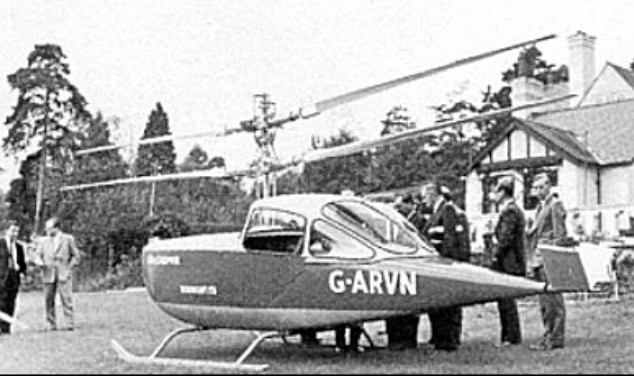
The “Grasshopper” in its definitive form had an enclosed fuselage sports car with a small v-tail and a skid undercarriage. It was powered by a pair of 65hp Walter Mikron piston engines mounted forward of the two seat cabin. These drove a pair of two-blade coaxial rotors mounted on a pylon which emerged just ahead of the cockpit windshield.
G-ARVN, the prototype, flew on 11 March 1962, but was withdrawn from use the following spring when funding was withdrawn following the death of the owner of Mitchell Engineering, and the project was abandoned. It was considered to be underpowered.