Short & Harland Ltd / Short Brothers Ltd

Founded by brothers Horace, Eustace and Oswald Short in November 1908 as Short Brothers Ltd., though Eustace and Oswald had made balloons since 1898. The capital was £600, equally shared between the brothers Horace Leonard, Albert Eustace, and Hugh Oswald.

Short Brothers Article

At Leysdown, Isle of Sheppey, completed first biplane glider, construction of which had begun at Battersea, London, in 1909. It was designed by Horace Short from photographs of the Wright Flyer.

Received order for six Wright biplanes, in one of which Hon. C. S. Rolls made first return crossing of English Channel.

The Short Brothers moved their factory from Battersea to Leysdown in 1909 and completed a tailess biplane of their own design.

In February 1909, Eustace Short and Wilber Wright signed a licence agreement for six of the Wright biplanes. The deal was worth £8400 to the Wright Brothers. The Short brothers already had cash buyers for the aircraft.

Company pioneered multi-engine and multi propeller types, and tractor biplanes with folding wings for naval use. Did more to aid development of early naval flying than any other British firm. New works at Rochester, Kent, started 1914. Most famous type was 184 torpedo-bomber, which was used at Battle of Jutland and was also the first to sink a ship at sea. During First World War established airship works at Cardington, Bedfordshire.

After First World War developed Cromarty flying-boat but diversified in other fields. Gave special attention to all-metal aircraft (Silver Streak of 1920 and derivatives) and concentrated later on large civil and military flying-boats (Singapore biplane series for RAF from 1926; Calcutta and Kent for Imperial Airways). Six-engined Sarafand of 1936 was then largest British flying-boat. Wing form developed for Scion and Scion Senior monoplanes used for famous fleet of Empire flying-boats in 1936, for equally-famous Sunderland military development; also on Short-Mayo composite aircraft and Stirling four-engined monoplane bomber.

Jointly established Short and Harland Ltd. in 1936 with shipbuilder Harland & Wolff; became British Government run 1943, leading to integration of Short Brothers (Rochester & Bedford) Ltd. and Short and Harland into Short Brothers and Harland Ltd. in 1947.

In Second World War built and had built under subcontract Short Stirling four-engined bombers and Sunderland flying-boats; also Handley Page Herefords. In 1947 Short & Harland joined Short Brothers (Rochester & Bedford) Ltd. and altered name to Short Brothers and Harland Ltd., concentrating activities at Belfast, Northern Ireland. Sealand twin-engined amphibian flying-boat of 1948 was produced in small numbers. Sandringham and Solent flying-boats used by BOAC stemmed from the Sunderland. Of great technical significance was the SC.1 VTOL (jet-lift) research program, which followed exploratory research by Rolls-Royce. First free vertical take-off made October 25,1958. Company became heavily involved in production of English Electric Canberra and Bristol Britannia. From 1963 built Belfast heavy transports (four turboprops) and many Skyvan light piston-engined transports (first flown January 1963). Twin-turboprop Shorts 330 30-passenger regional airliner flown August 1974, with Sherpa offered as freighter derivative. Much important manufacture and modification work carried out for leading international constructors and operators under subcontract.

Name Short Brothers Ltd. readopted June 1977, but named Short Brothers PLC, as part of Bombardier Aerospace Group since Bombardier acquired, in October 1989, Short Brothers of Northern Ireland.

Operating three principal business units, as Aerospace producing aircraft components and engine nacelles, Missile Systems, and Belfast City Airport. Shorts 360 36- passenger transport (first flown June 1981) followed Shorts 330/Sherpa, with final complete aircraft built by Shorts becoming the Tucano for the RAF, a variant of the EMBRAER turboprop trainer.
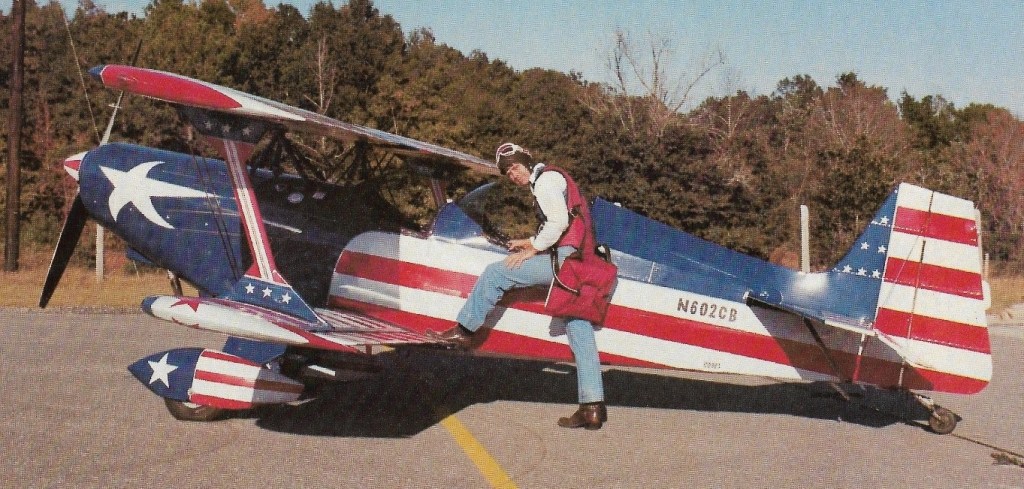
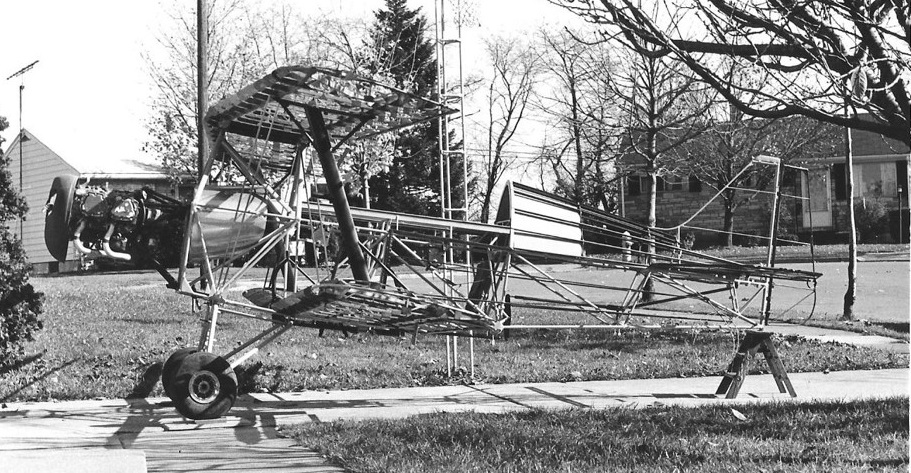
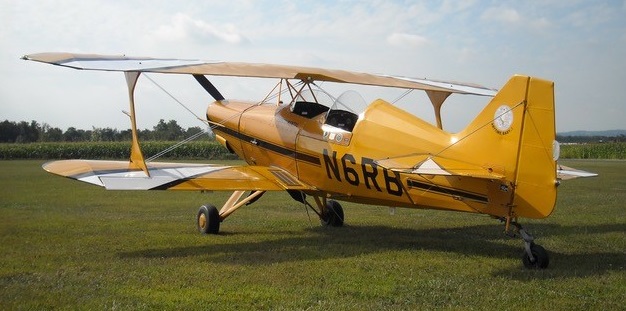
Shober Willie II

Marshall Collins N602CB, Lycoming O-320 150 hp

The Shober Willie II is an American two-seat sporting or aerobatic aircraft designed and built by Shober Aircraft Enterprises.

The Willie II is a braced single-bay biplane with a fabric covered welded steel fuselage. The two-spar wooden wings are fabric covered with wide-span ailerons on the lower wing and a fabric covered wired-braced welded steel tail unit. The prototype is powered by a 180 hp (134 kW) Lycoming O-360-A3A engine. It has two open cockpits in tandem and a fixed conventional landing gear with a tailwheel.

First flying in 1971, the aircraft was designed to be sold as plans for amateur construction.

Suited for engines in the 150 to 200 hp range, at least four further aircraft were completed. Further development was halted in 1976 when the type was withdrawn from the market.

The Willie II has the M-6 airfoil and two ailerons. The Skybolt Biplane with symmetrical airfoils and four ailerons came out shortly after the Willie II, possibly that is why the Willie II plans were withdrawn from the market.

There appears to have been five Willie II biplanes built;

N7919 – the prototype built by William Shober

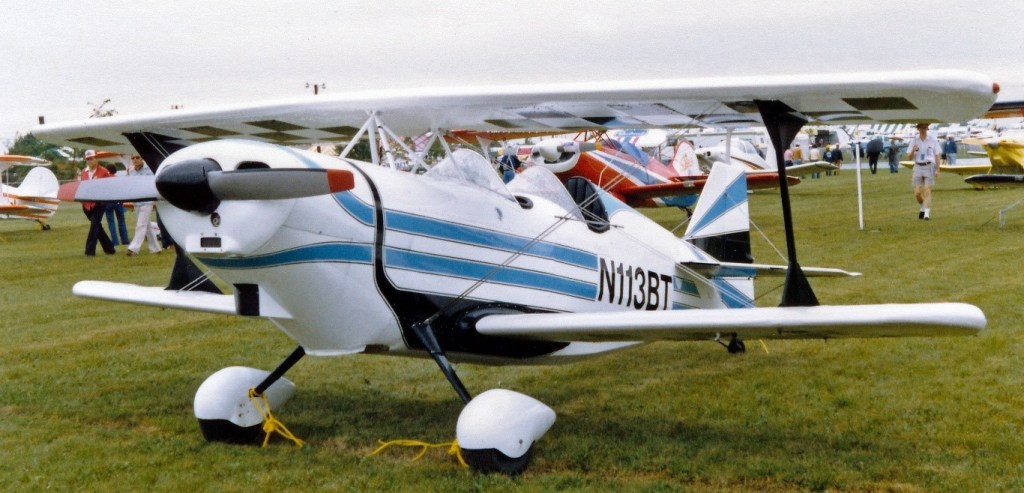
N113BT

N113BT Lycoming O-360 engine

N—- built by Richard Fox in Frederick Maryland.

N602CB

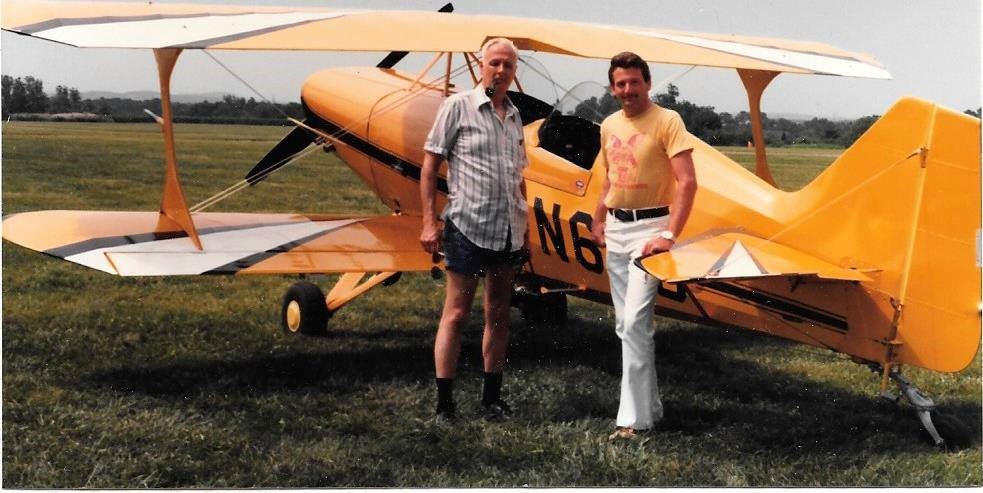
N6RB

N5RB

Willie II Prototype N7919
Engine: 1 × Lycoming O-360-A3A, 180 hp (134 kW)
Wingspan: 6.10 m (20 ft 0 in)
Wing area: 13.75 sq.m (148 sq ft)
Length: 5.79 m (19 ft 0 in)
Empty weight: 388 kg (856 lb)
Gross weight: 612 kg (1,350 lb)
Cruise speed: 241 km/h (150 mph, 130 kn)
Stall speed: 96 km/h (60 mph, 52 kn)
Range: 603 km (375 mi, 326 nmi)
Service ceiling: 4,570 m (15,000 ft)
g limits: +9 -9g
Rate of climb: 15 m/s (3,000 ft/min)
Seats: 2

Willie II N602CB
Engine: 1 × Lycoming O-320 150 hp
Wingspan: 6.10 m (20 ft 0 in)
Wing area: 13.75 sq.m (148 sq ft)
Gross weight: 1276 lb
Empty weight: 907 lb
g limits: +6 -5g

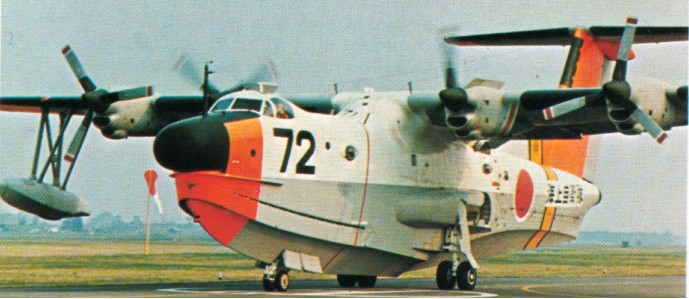
Shinn Meiwa PS-1 / US-1

After January 1966, directed attention was put into a new marine aircraft. A Grumman Albatross was rebuilt as a dynamically similar flying model for a projected very large STOL ASW flying-boat for the Japanese Maritime Self Defense Force. The type was developed as the four-turboprop PS-1, but later as the US-1 amphibious search-and-rescue aircraft.

The Shinn Meiwa PS 1, a four turboprop STOL amphibian with an auxiliary engine driving a boundary -layer control pump, has a speed range from 295 knots maximum to a 40 knot stall. PS 1s carry search radar, sonobuoys, MAD and ECM equipment to aid in the search for submarines, and against which they can deploy anti submarine bombs, homing torpedoes, and rockets for surface attack.

Shinn Meiwa PS-1 / US-1 Article

Designed for long-range ASW, the four-turboprop PS-1 flying boat first flew in October 1967, entered service in 1973, and was followed by the US-1 amphibious variant in October 1974.

The first prototype PS-1 was converted later as waterbombing test vehicle.

Production of the PS-¬1 was completed with the 23rd aircraft in 1979. The seventh and subsequent US-1s are fitted with uprated T-64 IHI-10J turboprops and are designated US-lAs. Earlier aircraft are being progressively retrofitted with these engines.

The JMSDF intended to purchase one US-1A SAR amphibian every two years, the next funding was being sought in FY1988.

PS-1
Engines: 4 x T64-IHI-10 turboprop, 3060 shp
Wing span: 108 ft 8.75 in (33.14 m)
Max speed 340 mph (547 km/h)
Crew: 10

Shield Xyla

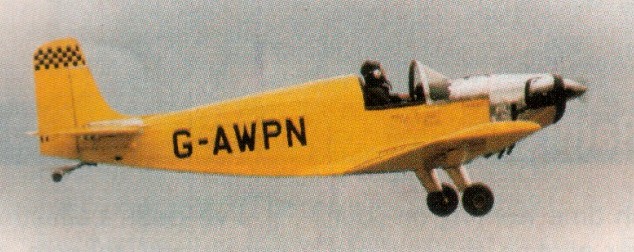
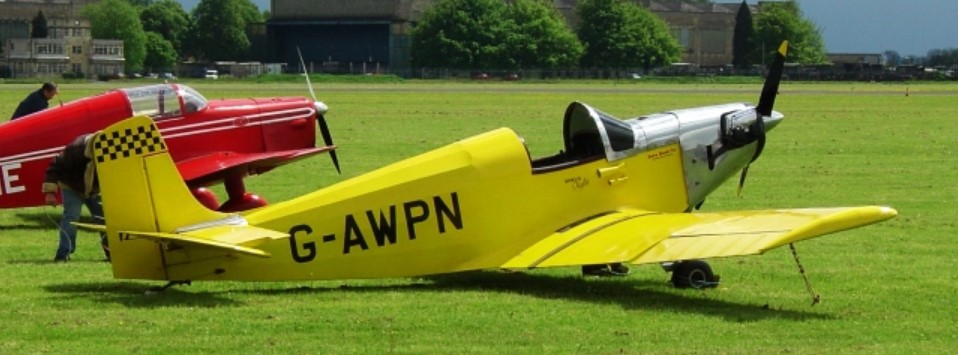
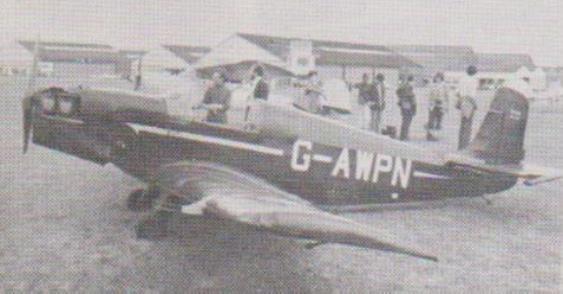
George William Shield of Conisbrough, Yorkshire, UK, was Headmaster of the Grammar School at nearby Mexborough, where this large wooden single-seater was built as a school project. The Xyla (Greek for wood) was registered as G-AWPN c/n 2 PFA.1320 on September 13, 1968 whereafter construction was started.

Wings: Cantilever low-wing monoplane. Wing section NACA 4418 at root with a chord of 6 ft 3 in (1.91 m), NACA 4416 at junction of center section and outer panels (3 ft, 0.91 m from aircraft center line) and NACA 4412 at tip with a chord of 3 ft 9 in (1.14 m). Dihedral 4° 30′ on outer panels. Incidence 3°. All-wood structure of spruce, with birch plywood covering. Wooden Frise-type ailerons. No flaps or tabs.
Fuselage: All-wood structure, of Warren-girder construction; plywood-covered to rear of cockpit.
Tail unit: Cantilever type, of similar construction to wings. Tail plane incidence adjustable on ground. No tabs. Tail plane span 9 ft 0 in (2.74 m).
Landing gear: Non-retractable tail wheel type. Cantilever main legs attached to wing front spar. Steel coil-spring shock-absorption. Spitfire tail wheels, of 1 ft (0.305 m) diameter, are used as main wheels. Tire pressure 30 lb/sq in (2’11 kg/crri’). Wheel track 6 ft 0 in (1.83 m), No brakes.
Power plant: One 92 hp Continental converted PC60 GPU engine, driving initially a Shield two-blade wooden propeller with diameter of 6 ft 0 in (1.83 m) propeller, subsequently a 5 ft 3 in (1.60 m) diameter three-blade wooden propeller, in 1999 refitted with two-blade type. Fuel in two wing tanks, total capacity 13.21 gal (50 l), and one gravity-feed fuselage tank forward of cockpit. Refueling points in fuselage top and each wing. Oil capacity 1 gal (4.5 l).
Accommodation: Single seat in initially open cockpit behind one-piece windshield, later cockpit was covered with canopy.
Equipment: Provision to fit generator and radio.

Powered by a converted GPU (ground power unit) engine the aircraft made its first flight at Helmswell on October 30, 1971.

Early test flights indicated that the aircraft performed satisfactorily at low levels, but that some modification to the areas of the vertical and horizontal tail surfaces might improve overall handling and performance. Hence, to prevent leakage of air, the tail-surface hinge lines were sealed with fabric; the fin was relocated at an angle of 4° to port; and a three-blade wooden propeller replaced the original two-blade one.

Shield sold the aircraft seven years after the first flight and it was seven times reregistered:
October 13, 1978, to Terry Girvon of Roterham, Yorkshire
February 19, 1986, to Alan Price of Aylesbury, Buckinghamshire
January 29, 1991, to Michael Herlihy of Haywards Heath, West Sussex
December 9, 1997, to Kenneth Snell of Uckfield, East Sussex
April 28, 2006, to Paul Stacey of Ventnor, Isle of Wight
September 3, 2009, to Stacey Aviation of Ventnor, Isle of Wight
October 15, 2010, to Peter Gasson of Reading, Berkshire

In 1980 the Xyla was damaged when it ground-looped at Finmere, Buckinghamshire, it was grounded and sold in 1986. The new owner did not manage to repair the aircraft and it was stored at the attic of a paint shop. When Schnell bought the aircraft in 1997, he started a restoration to airworthiness that took 1,500 hours. Finished in a new yellow livery with polished metal cowlings, and fitted again with a two-blade propeller the Xyla participated in the PFA Rally in 1999.

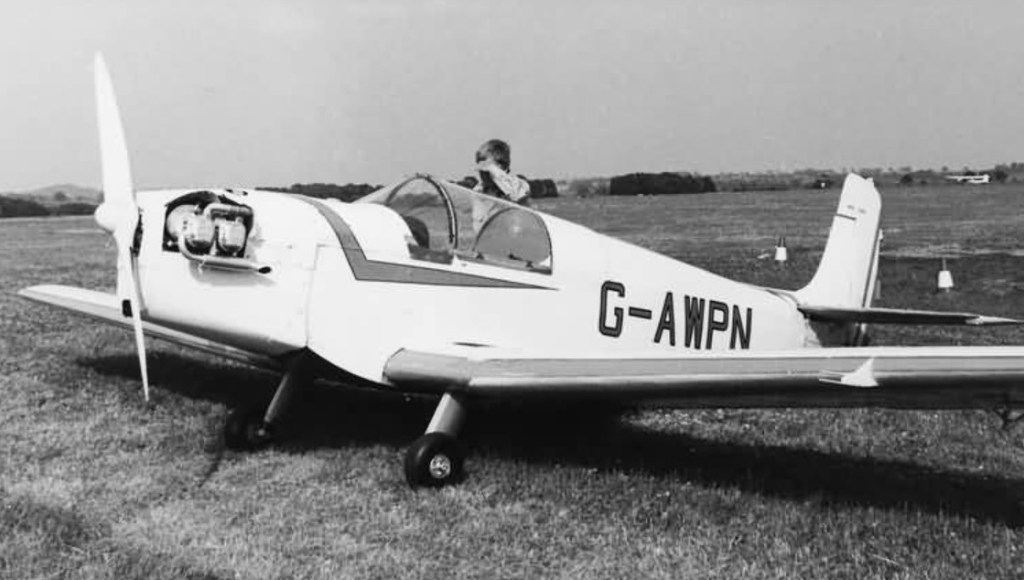
The aircraft is pictured at the PFA Rally at Leicester in an overall white paint scheme which was apparently worn only briefly before its 1980 mishap.

Span: 27 ft 3 in (8.31 m)
Length: 19 ft 3 in (5.87 m)
Height: 5 ft 4 in (1.63 m)
Wing area: 126 sq.ft (11.7 sq.m)
Max weight: 1,000 lb (454 kg)
Max never-exceed speed: 200 mph (322 kmh)
Max cruise speed: 110 mph (177 kmh)
Econ. cruise speed at sea level: 98 mph (157 kmh)
Stall speed: 47 mph (76 kmh)
Climb: 400 ft (122 m)/min
Take off run: 150 ft (46 m)
Seats: 1

Shenyang F-9

By 1975 preliminary reports had reached the West of a considerably modified version of the F 6, the MiG-19SF and PF built under licence in China. (Unlike the MiG 21, built in as small numbers as the Shenyang F 8, the earlier F 6 continued in production and proved useful by China and various export customers.)

The Shenyang complex of the Chinese aerospace industry has long been known for painstaking quality and attention to detail, but also for a lack of original design experience. It cannot have been easy to derive a largely new twin engined fighter from the F-6, differing in such respects as generally increased size, a large nose radar and lateral engine inlets.

First announced in the West by US Defense Secretary Rumsfeld in 1976, when it was described as the Fantan A fighter-bomber, the F 9 was originally powered by Tumansky RD 913 engines, each rated at 3250 kg (7164 1b) thrust with maximum afterburner.