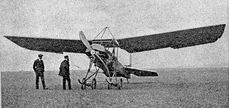
Circa 1910
Circa 1910
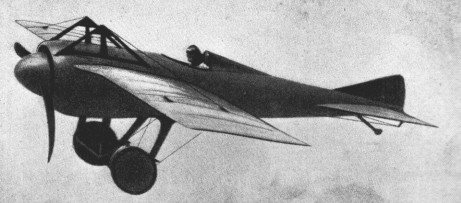
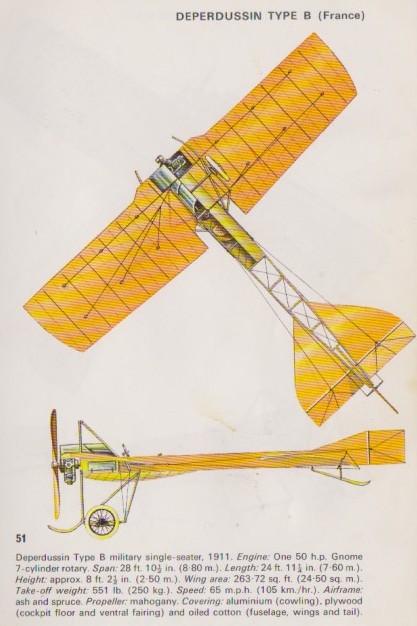
The 1912 Deperdussin Type B Racer was a high-wing monoplane with tapered wings, possibly to increase the effect of the wing-warping used for lateral control. The fuselage consisted of a wooden box-girder entirely skinned with plywood, with the rounded top and bottom built up from laminations of wood. This type of stressed skin construction, pioneered by the Swiss engineer Eugene Ruchonnet, was extremely advanced for its time, and was followed to its logical conclusion in the Deperdussin Monocoque which appeared later in the year.
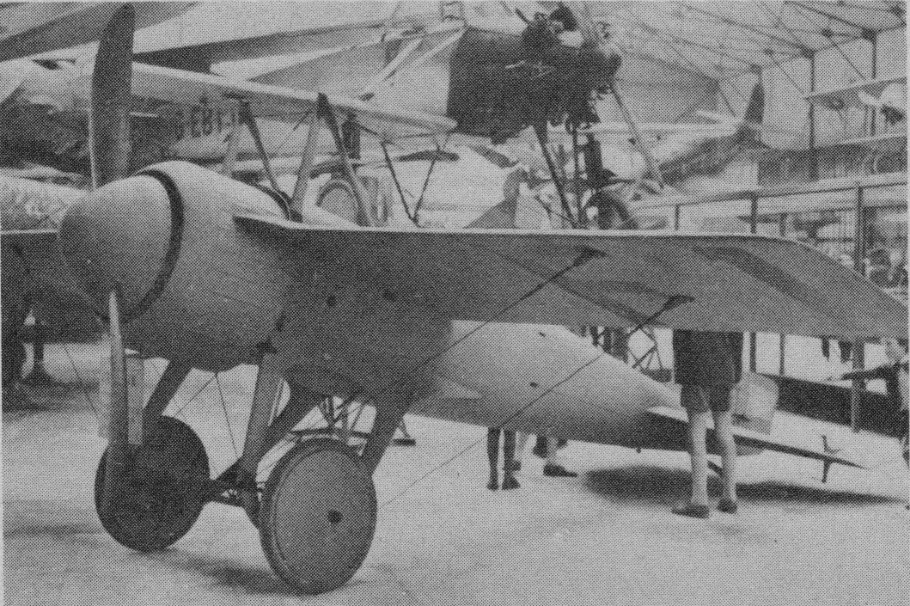
Great attention was paid to producing an aerodynamically clean design: the tailskid was arranged so that its bungee cord springing was inside the fuselage, the wheels had disks covering the spokes to reduce drag, and the wing-warping control wires were carried inside the inverted-v cabane struts.
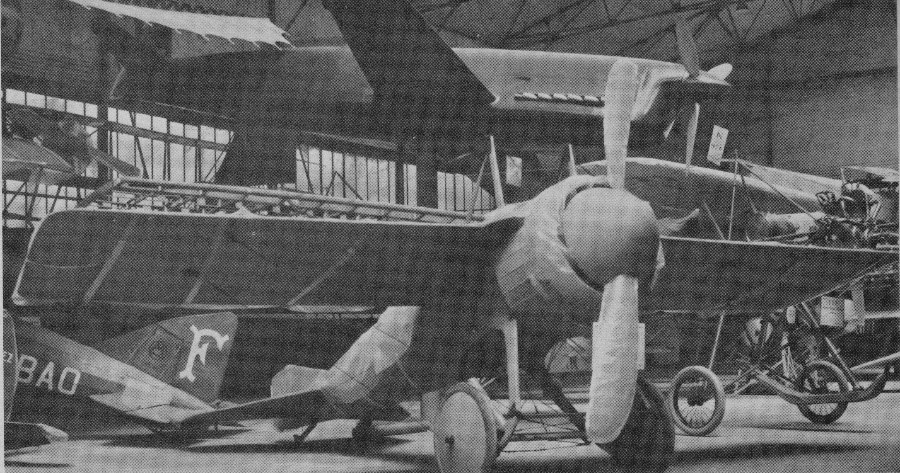
It was initially powered by a 100 hp (75 kW) Gnome double Omega 14-cylinder twin-row rotary engine and had an undercarriage with twin skids as well as a pair of wheels, similar to earlier Deperdussin aircraft, and a triangular tailplane mounted on top of the fuselage, together with a triangular fin with an unbalanced rectangular rudder hinged to its trailing edge.
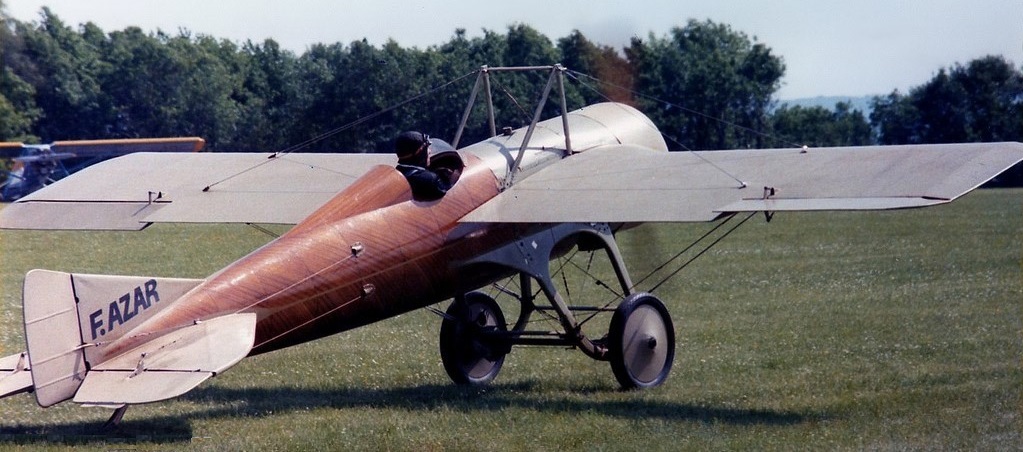
It was first flown late in 1911 or early in 1912; Jules Védrines is recorded as making “fast flights” in the aircraft on 2 January 1912. A number of record-breaking flights followed, and on 22 February Védrines succeeded in flying it at over 100 mph (160 km/h), flying a distance of 200 km (120 mi) in 1 h 15 min 20.8 s, an average speed of 169 km/h (105 mph). By this time the engine had been replaced by the more powerful 140 hp (100 kW) Gnome double Lambda engine.
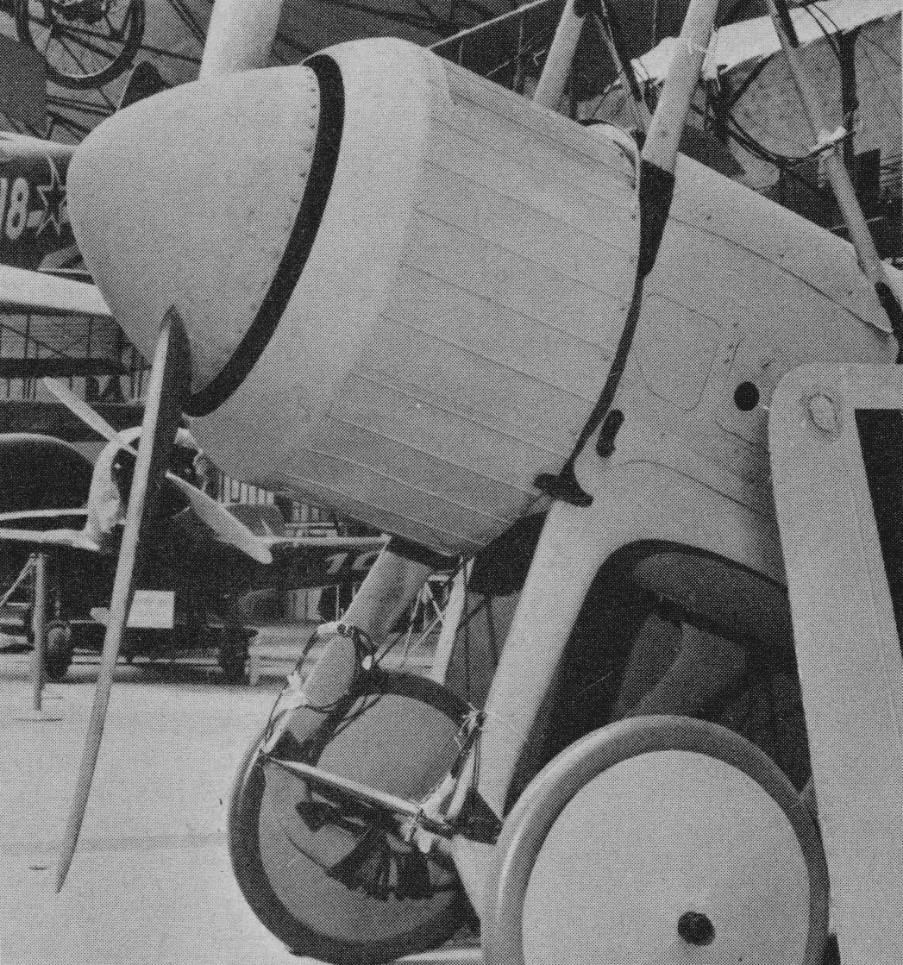
Flown by Maurice Provost it won the 1913 Gordon-Bennet Cup breaking world speed records.
It is probable that this aircraft was the aircraft being flown by Vedrines when he crashed at Épinay on 29 April during an attempt to fly from Brussels to Madrid in a single day.
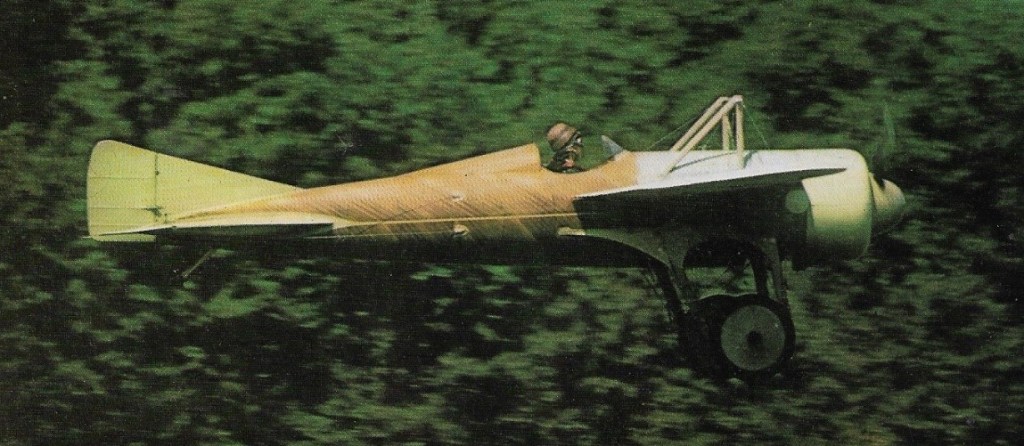
The aircraft was presented to the French Musee de L’Air by SPAD.
Powerplant: 1 × Gnome Lambda Lambda, 140 kW (190 hp)
Propeller: 2-bladed Chauvière
Wingspan: 6.25 m (20 ft 6 in)
Wing area: 9.3 sq.m (100 sq ft)
Length: 7.0 m (23 ft)
Max T/O Weight: 2,860 lb.
Maximum speed: 169 km/h (105 mph, 91 kn)
Crew: 1
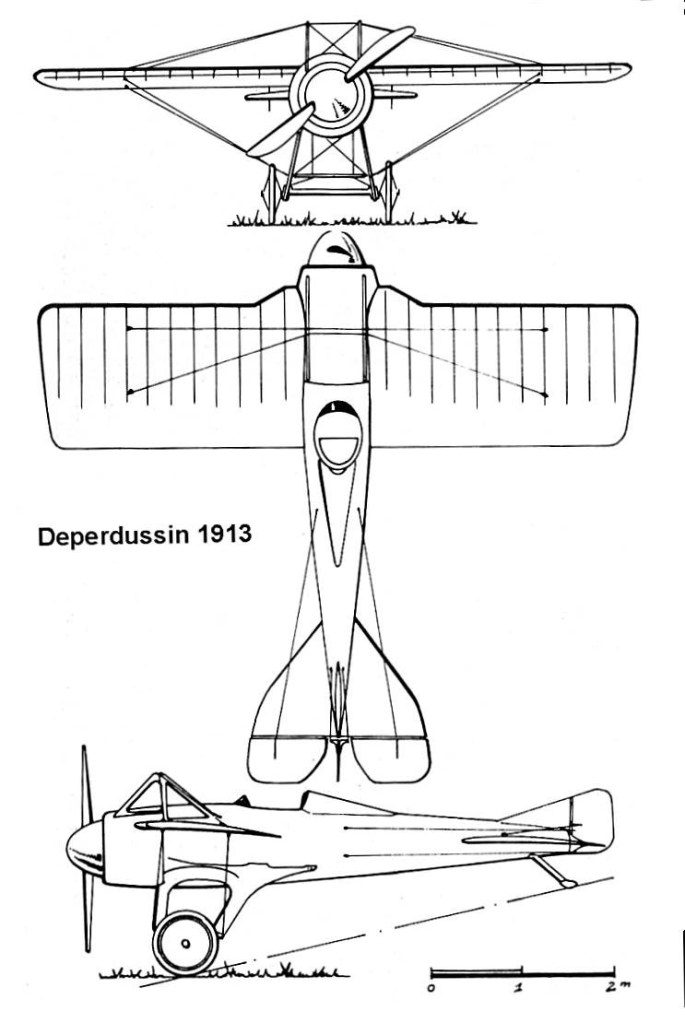
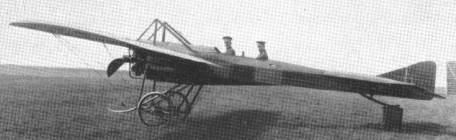
Of similar configuration to the contemporary Bleriot, the Deperdussin Monoplane was a popular training school aircraft prior to WW1.
Three were entered in the 1912 War Office military trials at Salisbury Plain, two of them built in England. One, piloted by Prevost, won the second prize of £2,000. The type formed the first equipment of the Royal Flying Corp and the Naval Wing.
Constructor number 43 was built in 1910 and flies with the Shuttleworth collection in 2017.
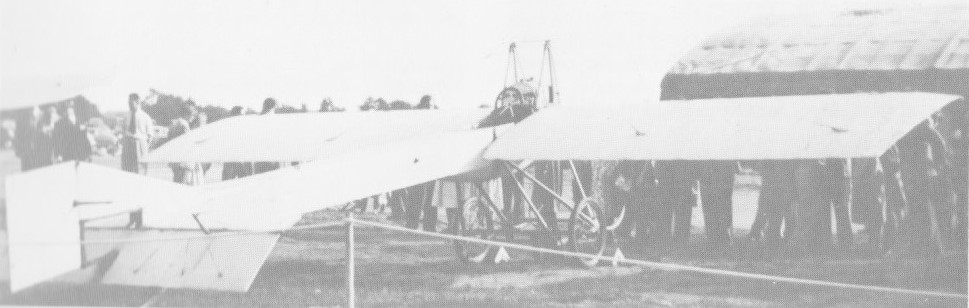
Cole Palen scratch-built a Type A Deperdussin on display at Old Rhinebeck Aerodrome.
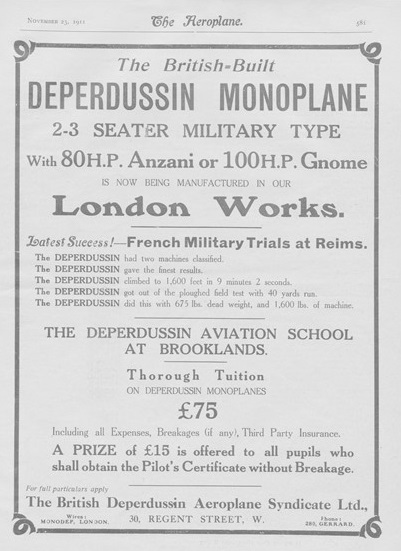
In 1911 Rene Vidart placed 3rd in the European Circuit with a Type A after winning two of the longest laps.
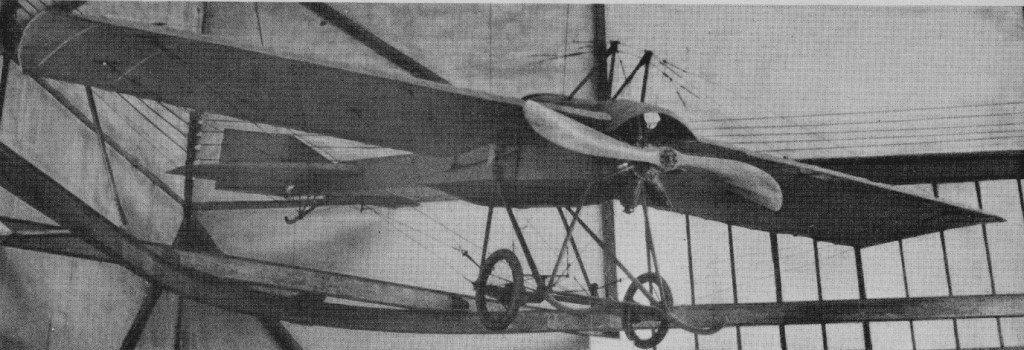
Engine: Anzani, 50 hp
Wingspan: 27.88 ft
Length: 21.32 ft
Max speed: 56 mph
Engine: Anzani, 80 hp
Wingspan: 28 ft 10.5 in
Length: 24 ft 11 in
AUW: 550 lb
Max speed: 65 km
Silk merchant Armand Deperdussin (1867-1924) established Societe Provisoire des Aeroplanes Deperdussin in 1910. Built precursor in 1909 for show in a Paris store. Built during 1912-1913 a series of very advanced monoplane racers with tulip-wood monocoque fuselages. In 1912 a “Dep” was the first aircraft to exceed 160km/h, and Prevost flew one to win the 1913 Schneider Trophy race at Monaco. By 1914 monoplanes bearing Deperdussin name were used not only privately but by several military authorities. Designed by Louis Bechereau, these aircraft were especially noted for speed performances in 1912-1913, and in some instances for monocoque construction.
Deperdussin, a great promoter, became involved in financial difficulties and in 1913 Deperdussin was arrested for embezzlement and the company was taken over by Louis Bleriot. In 1915 the company was declared bankrupt. The Deperdussin name had links with several companies, including the British Deperdussin Company with which John Porte was connected. Bleriot retained the same initials, but now stood for Societe Pour Aviation et ses Derivees (SPAD).
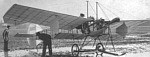
Designed and built by Prince de Nissole in France in 1911.
Length: 29’6″
Weight: 770 lb
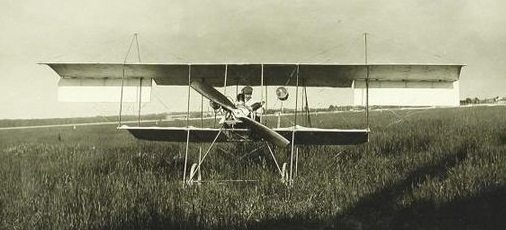
Georgiy Konstantinovich Demkin’s [Георгий Константинович Демкин] second design, it is stated that he held a shed at the Gatchina airfield near St. Petersburg. Only a few “short, straight flights” were achieved with this sesquiplane fitted with a 3-cylinder 25 hp Anzani.
The upper wing carried ailerons. Struts had oval cross section. Despite low engine power, short straight flights were performed during summer 1911.
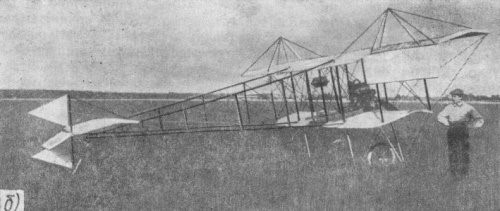
Engine: 1 x Anzani, 25hp
Wing span upper: 8.0 m / 26’3″
Wing span lower: 4.6 m / 15’1″
Wing area: 17.0 sq m (11.2 upper, 5.8 lower)
Power loading: 13 kgs/hp
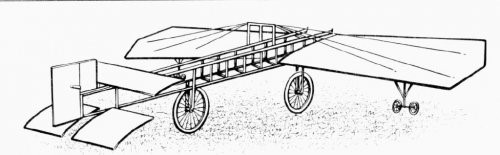
The Demkin Monoplane was the first Russian aircraft with bicycle landing gear. This was supplemented by twin outrigger wheels beneath the wing. Monoplane with uncovered fuselage. Rudder had aerodynamically compensation.
Aircraft was tested in 1910 at St.Petersburg by Georgy Konstantinovich Demkin himself (who was a law student). The aircraft only achieved short hop flights.
Engine: 1 x Anzani, 25hp
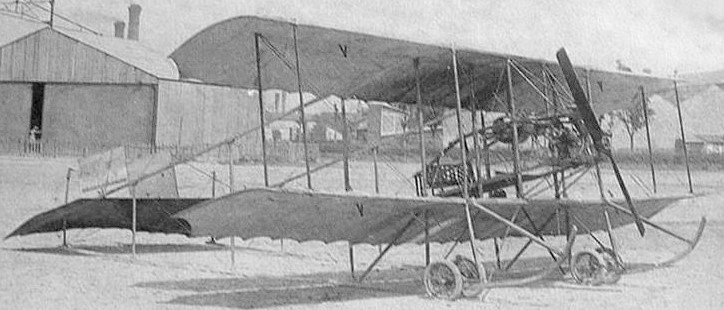
Lucien and Paul Demazel (son and father) ran a flying school at Issy-les-Moulineaux, in Paris, France, and built at least two different types of flying machines two Caudron copies built in 1912.
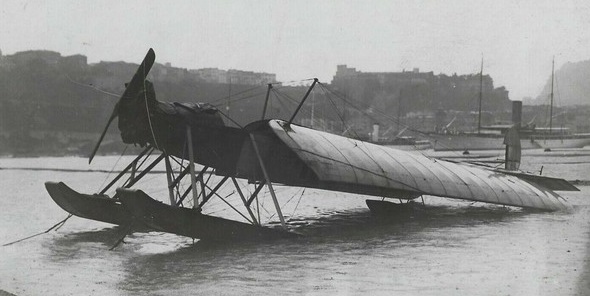
Designed and built by Baron Edmond de Marcay in 1911, it was referred to as the De Marcay-Moonen folding-wing monoplane.
Span: 42’8″
Length: 39’4″
Weight gross: 600 lbs
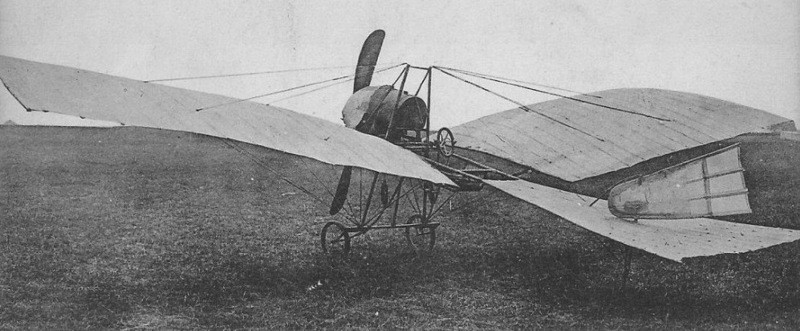
At the Concours de Sécurité of 1914, a Gnôme-powered monoplane designed by Balassian de Mana was a project to improve stability, especially in the case of engine failure, with the wings attached to the fuselage with springs so as to vary the position of the centre of lift: the wings could move fore and aft automatically or under pilot control.
The fuselage consisted only of two spars with a fabric seat slung between them. A large fuel tank mounted on the same spars provided minimal wind protection but completely blocked forward vision. The spring undercarriage was unique. Each wheel was set into a horizontal frame pivoting on the steel tube axle, the wheels forward and below the axle, with a long horn extending backwards from each frame, the end hung from two heavy shock cords attached to the underside of the fuselage.
Damaged during the qualification tests, the machine did not participate in the contest.
 All Aero