France
Based in Boulogne-sur-Mer. Produced a gullwing monoplane racer at the 1919-1920 Paris Salon and an ultralight single-seat triplane.
Era
Louchet Le Pyrale
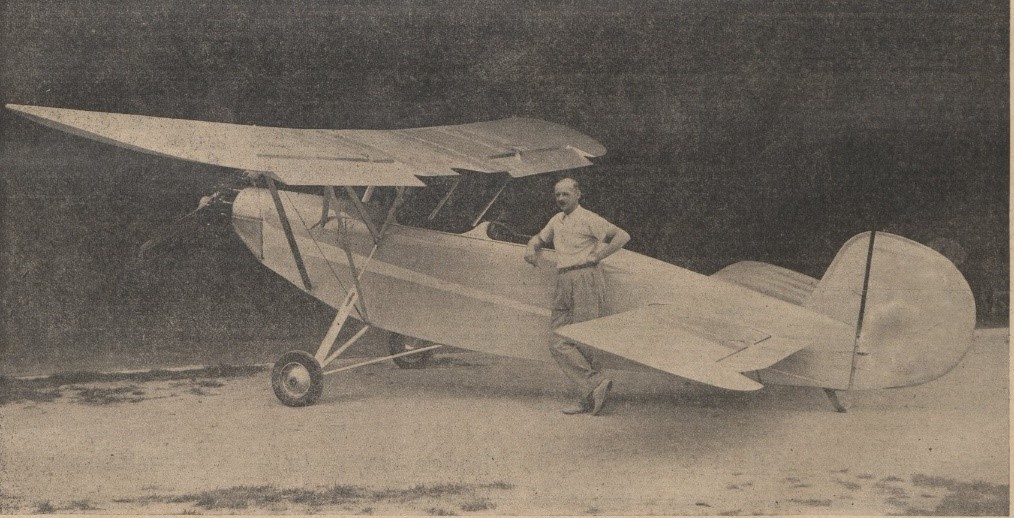
M. Louchet’s ‘Le Pyrale’, which was presented to the world on the eve of WWII – and, in consequence, was not heard of thereafter.
Loubery 1911 biplane
The 1911 Loubery biplane designed and built by Loubery in France had twin engines and three propellers.
Lotus Prototype
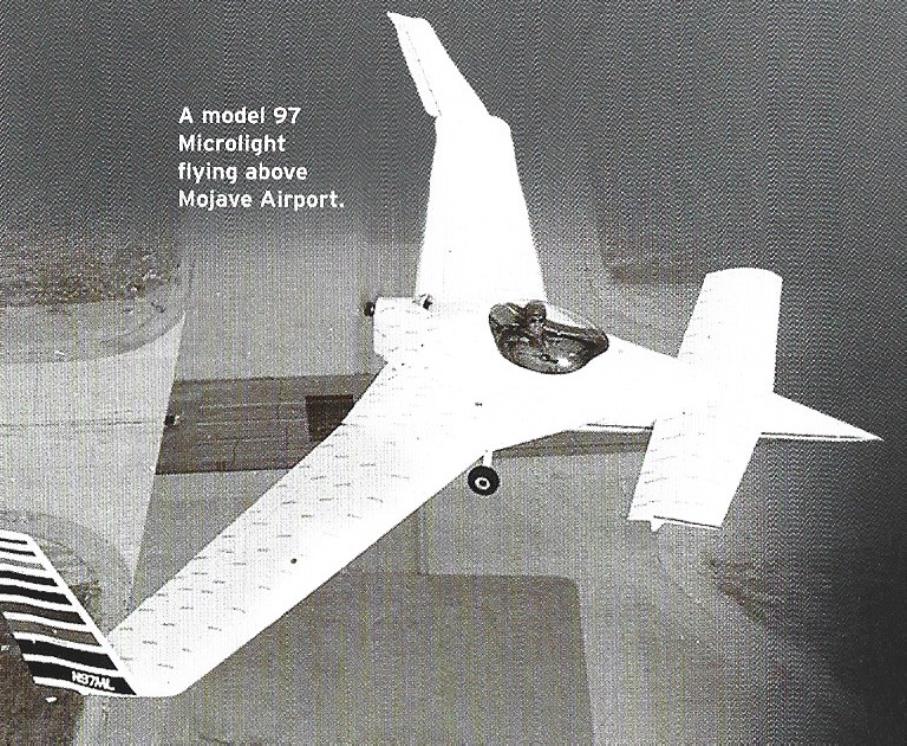
Lotus has long been known for sophisticated yet affordable sports cars, but founder Colin Chapman also aimed to build aircraft. Colin Chap¬man, founder and head of the Lotus Car company, discussed a microlight project with Alain-¬Yves Berger, who had met Colin on the motor racing circuits many years before and had remained in touch with him. Colin envisaged making a very high performance composite construction tandem two seater using a canard wing, and a four stroke engine of his own design, and had set himself some tough performance targets a design top speed of 125 mph (200 kph), fuel consumption per hour of 1. 3 US gal (1.1 Imp gal, 5.0 litre), and a selling price around £5500 for a production run of 500 aircraft.
Chapman believed that Lotus composites technology could be applied to build an aircraft that still met ultralight rules, would be cheap and easy to fly, and very attractive to buyers. After reading up on German glider technology, Chapman approached the Rutan brothers in 1982 to study the feasibility of the project and commissioned Burt to design a new type of microlight based on Rutan’s love of composites, efficiency, and the use of the “canard” wing layout for which Rutan is famous. Several designs were envisaged, one being the Rutan Model 91 ML (for MicroLight), a one-person 300 lb. ultralight aircraft, powered by two 25 hp jet engines. Despite Burt Rutan’s dismissing the idea as complicated, Chapman insisted that the new plane should be a two-seater.
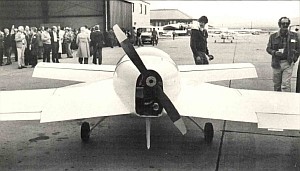
By June 1982, the final configuration was chosen out of nine different studied designs, and in December, the prototype Lotus MicroLight (Rutan Model 97M), built by Scaled Composites Inc. and appropriately registered N97ML, arrived at the Group Lotus airfield at Hethel in Norfolk, England. It was a side-by-side two-seater with a pointy nose, an enclosed cockpit, a retractable front wheel, and is of a unique design with a canard foreplane and a swept back wing, and a pusher propeller behind the cockpit. Pitch control by elevator on canard; yaw control by tip rudders; roll control by spoilerons; control inputs through stick for pitch/roll and pedals for yaw. Undercarriage has three wheels in tricycle formation; glass fibre carbon fibre suspension on main wheels. Push right go-¬right nosewheel steering. Brakes on main wheels. Composite fuselage, totally enclosed. Engine mounted below wing driving pusher propeller.
Tragically Colin Chapman, the visionary who championed the Lotus MicroLight, died December 16, 1982 at the age of 54, the day before the prototype’s first flight.
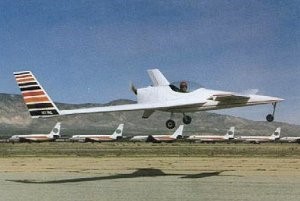
It is often said that the program was shelved by Lotus due to the death of Mr. Chapman. This was not so. Prototype trials continued with a little Italian KFM 109 ER two-stroke 23 hp engine, up to the end of the proof-of-concept phase. Specs for the Lotus MicroLight are lacking, but a 25 hp engine was originally planned for it. A Lotus engine that was being developed by Tony Rudd (a senior officer at Lotus), the 50 hp Magnum 4.5, was to have been installed in the production aircraft. The plane was assembled and flown for the first time in public in August 1983. It arrived in a crate at Hethel in August 1983, two days before the Lotus Open Day. It was assembled on Friday and Saturday, and was taxied in daylight on Saturday afternoon, and “accidentally” hopped in the dusk. Its first proper flight was Sunday morning, and the demo flight was in the afternoon for the crowds. It was now registered as G-MMLC.
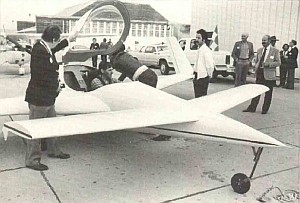
The Lotus MicroLight was apparently a technical success, but a marketing failure. Despite both Lotus’s and Rutan’s credentials, the business arrangements didn’t work out. Lotus wanted to build a business for the MicroLight, and sought backing to continue alone. When that wasn’t approved, Lotus went looking for partners and teamed up with the Eipper company to distribute it in the USA, while Malcolm Lawrence’s Aviation Composites of Thatcham in Berkshire, was to distribute it in the UK and Europe.
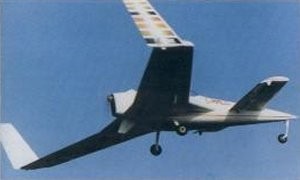
Lotus originally planned to build the basic structure themselves, with Aircraft Composites finishing and distributing it. It was then decided that the materials (epoxy glass) and the quality control techniques were not part of the Lotus core business, and Aircraft Composites agreed to take over the development and build, with the help of Peter Jackson’s Specialised Mouldings (a firm in motorsport). Since Lotus was struggling to cope with the aftermath of Colin Chapman’s death, the Aircraft Composites move into taking over the whole project was heaven sent. Instead, Aviation Composites used the design’s features as a basis for a different aircraft. The company employed VariEze builder Ivan Shaw, and built a similar but much heavier version, the Mercury prototype (G-INAV), which incorporated various modifications from the Rutan design and had several problems with it.
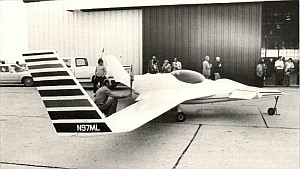
The MicroLight was de-registered and returned to the USA in 1988, but it was lost in an accident in which both the owner and test pilot of the aircraft were killed
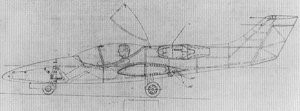
Lotus Cars Ltd
1983: Lotus Cars Ltd, Norwich, Norfolk, Great Britain.
Built the Lotus Prototype UL
LMFP Freedom Machine / Skycycle
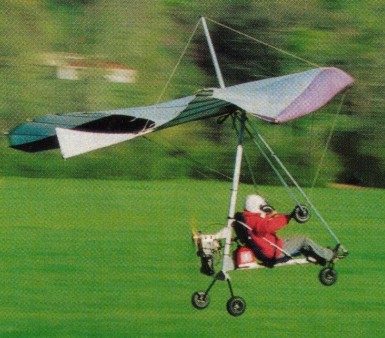
Renamed SkyCycle (formerly Freedom Machinr) in 1999, These aircraft meet the FAA’s Pt.103 ultralight regulation. Most hang gliders will fit the trike.
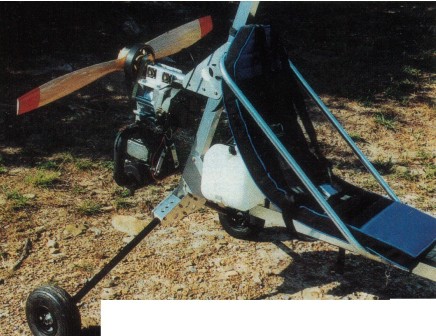
Minus its wing, Skycycle weighs 90-95 lb empty, depending on equipment. With fuel (2.5 USG tank) and wing, it may come to 200 lb.
Equiped with a 4-point harnesss and trailing link nosewheel suspension, the wheel trails rather than leads.
The fuel tank is easily removed, and is sufficient for operation of the Zenoah G-25B engine.
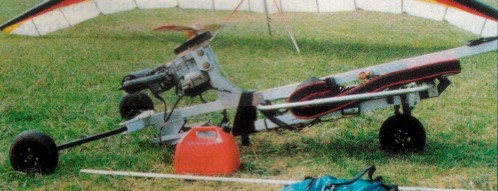
Able to be folded for travel, the SkyCycle can lift off in 75 feet and climb out at 600 fpm.
In 1999 LMFP sold the SkyCycle (without wing) for US$5500, ready to fly.
Lookout Mountain Flight Park (LMFP)
1999: Matt Tabor.
1999-2009: Lookout Mountain Flight Park, 7201 Scenic Hwy, Rising Fawn, GA 30738, USA
Trike unit builder
Lorraine-Hanriot
Aeroplanes Hanriot et Cie
Compagnie des Avions Hanriot
Operated at Argenteuil as Aeroplanes Hanriot et Cie to 1930, when it became Lorraine-Hanriot, a division of Societe Generate Aeronautique. When this organization broke up in 1933 the company became known as Compagnie des Avions Hanriot.
Lorraine 12H Pétrel
The Lorraine 12H Pétrel was a French V-12 supercharged, geared piston aeroengine initially rated at 370 kW (500 hp), but later developed to give 640 kW (860 hp). First run in 1932, it powered a variety of mostly French aircraft in the mid-1930s, several on an experimental basis.
During the 1930s Société Lorraine, which in 1937 was nationalised into the Société Nationale de Construction de Moteurs (SNCM), continued its tradition of building large water-coooled aeroengines. These later engines were named after birds: Eider, Courlis (en:curlew), Pétrel and Sterna. The last two remained in production in 1938.
The Pétrel was an upright V-12 engine with two banks of six cylinders, arranged at 60° to each other, driving a common crankshaft. The cylinder blocks were bolted onto the crankcase, all light alloy parts. The crankcase came in two pieces, with seven crankshaft bearings in the upper section. Roller bearings were used at the crankshaft ends; the remaining five were plain. The upper crankcase section also had integrally cast water channels as part of the cooling system.
Steel cylinder liners were screwed into the heads, with their lower parts projecting into the crankcase. Steel seats for valves and sparking plugs were shrunk into the heads. The pistons were forged from alugir, with three compression and one scraper ring and floating bronze bushes for the gudgeon pins. The twelve pistons were connected to the six crankpins in pairs, each with a master and an auxiliary connecting rod. The master rods had forked big ends with white metal bearings; the auxiliary rod ends ran between the forks on bronze bushes.
The Pétrel had four overhead valves per cylinder, two exhaust and two inlet, in bronze valve guides. Each bank had its own overhead camshaft and each cam operated a pair of valves through T-shaped tappets, the stem of the T moving in a guide to avoid sideways force on the valve stems. There were two sparking plugs per cylinder and twin magnetos. A carburettor fed the mixture into the intake of the supercharger, at the rear of the engine. The Pétrel’s output could be left or right handed; a Lorraine patent planet gearset, with six satellite gears, provided an 11:17 reduction of propeller shaft speed.
Engine lubrication was by forcing pressurized oil through the crankshaft, with sump scavenging. The supercharger had its own lubrication system.
First run in 1932, the early Pétrels produced only 370 kW (500 hp) but by 1938 the engine had been developed into the 12Hars model which gave 640 kW (860 hp). This variant was used by the Koolhoven F.K.55 fighter, where it drove a pair of counter-rotating, twin-bladed propellers.
Like the Koolhoven F.K.55, many of the aircraft types to use the Pétrel were one-offs, testing the Lorraine against better known engines from Hispano-Suiza and Rolls-Royce but the Potez 542 version of the Potez 540 family were built in numbers, with 74 of these twin-engined, multi-role (bomber, reconnaissance and transport) aircraft supplied to the French and Spanish air forces.
Variants:
12H Pétrel
Initial power 370 kW (500 hp).
12Hars
640 kW (860 hp).
12Hdrs
12Hfrs Normale
536 kW (720 hp).
12Hfrs Chasse
Designed for fighter aircraft produced higher powers, 567 kW (760 hp) at 2,800 rpm and 4,000 m (13,120 ft).
Applications:
Breguet Br.19.10
Fokker D.XVII
Hawker Fury
Hawker Hart
Koolhoven F.K.55
Nieuport-Delage NiD 82
Potez 39
Potez 542
P.Z.L. P.8/II
Renard R-31
Société Aérienne Bordelaise AB-21
Specifications:
12Hfrs Normale
Type: Supercharged upright water-cooled 60° V-12 piston engine
Bore: 145 mm (5.71 in)
Stroke: 145 mm (5.71 in)
Displacement: 28.73 L (1,753 cu in)
Length: 1,858 mm (73.15 in)
Width: 707 mm (27.83 in)
Height: 795 mm (31.30 in)
Dry weight: with accessories 475 kg (1,047 lb)
Valvetrain: 4 spring-loaded valves per cylinder, driven in pairs via T-shaped tappets by cams on overhead camshafts, one per block
Supercharger: centrifugal, driven at 8.8 crankshaft speed via epicyclic gears; independent lubrication with dedicated pressure and scavenge pumps
Fuel system: single or double barrelled Lorraine carburettor at supercharger inlet, supplied by 2 A.M. fuel pumps
Ignition system: 2 plugs per cylinder; 2 magnetos
Fuel type: petrol
Oil system: 1 pressure pump supplies oil via crankshaft, removed from sump by 2 scavenge pumps. Operating pressure 0.49 Mpa (71 psi)
Cooling system: water
Reduction gear: 17:11
Power output: 536 kW (720 hp) rated at 2,650 rpm and 4,000 m (13,123 ft)
Compression ratio: 6:1
Specific fuel consumption: 315 g/(kW.h) (8.0 oz/(hp.h))
Oil consumption: cruise 12±1 g/(kW.h) (0.33± 0.05 oz/(hp.h))
Lorraine 12E Courli / CNIAR IAR LD450
The 450hp Lorraine-Dietrich 12Eb W-12 engine was built by IAR as the IAR LD450.

