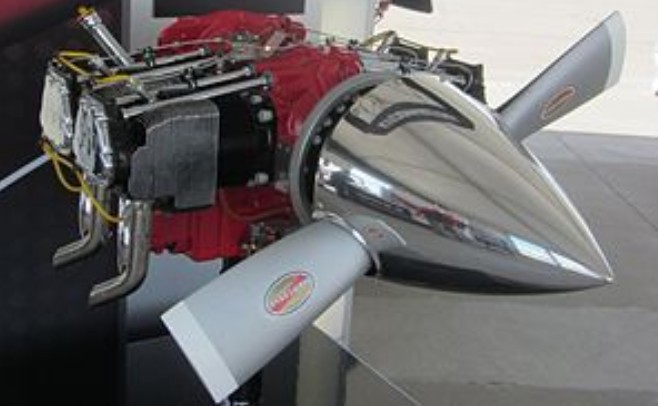
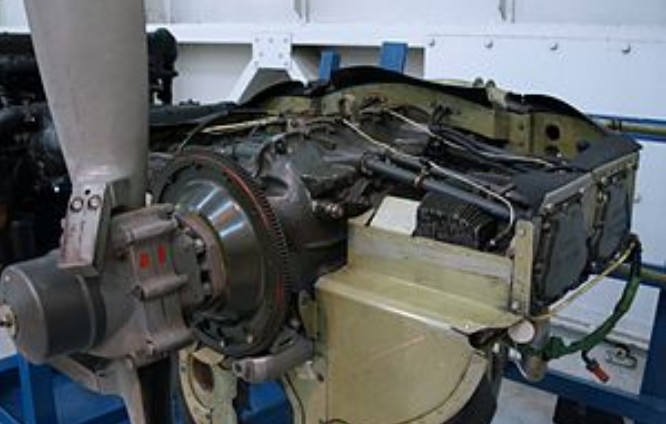
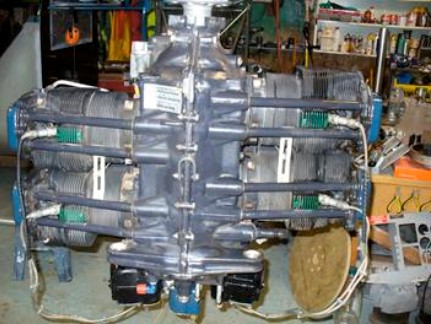
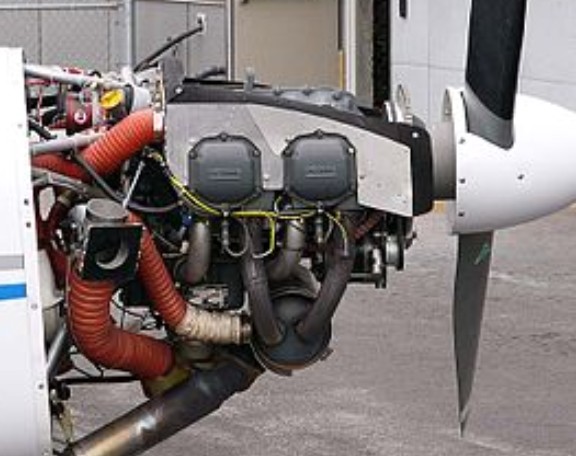
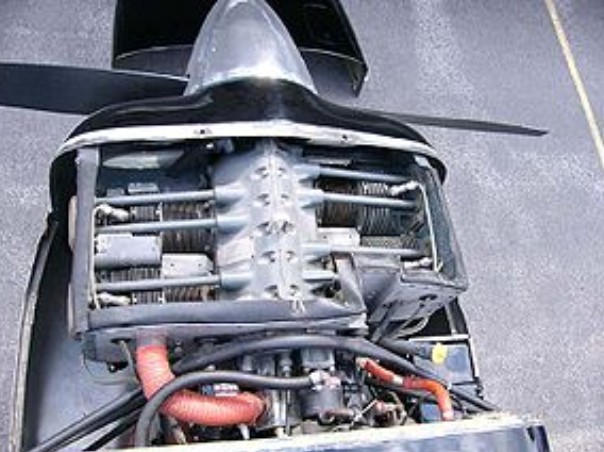
The Lycoming IO-390 engine is a horizontally opposed, four-cylinder aircraft engine, manufactured by Lycoming Engines. There is no carburetted version of the engine, which would have been designated O-390 and therefore the base model is the IO-390.
The engine was originally conceived in the 1970s as the IO-400-X, but the project was never pursued. First run in 2002, the IO-390 family of engines, which Lycoming refers to as the IO-390-X, produce 200 hp (149 kW) to 210 hp (157 kW). The IO-390 was developed from the similar IO-360 engine, by using cylinders from the IO-580 to increase the O-360’s cylinder bore. It features a tuned induction system, roller tappets and Slick Start ignition. The engine has a fuel injection system which meters fuel in proportion to the induction airflow with fuel vaporization taking place at the intake ports. The engine has a displacement of 390 cubic inches (6.39 litres). The cylinders have air-cooled heads.
The IO-390 was first introduced at AirVenture 2002. It has a factory recommended TBO of 2000 hours and requires a dynafocal engine mount. The IO-390 was initially marketed through Lycoming’s custom engine subsidiary, Thunderbolt Engines, prior to the engine’s certification and was at that time only available for installation on non-certified aircraft. The IO-390 was certified on 30 March 2009 to FAR 33 effective February 1, 1965, as amended by 33-1 through 33-24.
In January 2009 the base price of the IO-390-EXP version was USD$$32,650.00.
In November 2009 Lycoming announced that they had obtained an FAA Supplemental Type Certificate to replace the originally fitted Lycoming O-360 engines in the Mooney M20E, M20F and M20J with a new or remanufactured IO-390-A3A6 engine.
Variants:
IO-390-X Four-cylinder, fuel-injected, horizontally opposed, air-cooled direct drive, 390 cubic inches (6.39 litres), 210 hp (157 kW) at 2700 rpm, dry weight 308 lb (140 kg), The “X” designation is a generic indicator for all engines in the family.
IO-390-EXP Four-cylinder, fuel-injected, horizontally opposed, air-cooled direct drive, 390 cubic inches (6.39 litres), 210 hp (157 kW) at 2700 rpm, dry weight 308 lb (140 kg), non-certified engine for experimental aircraft assembled by Lycoming’s Thunderbolt division.
IO-390-A1A6 The initial certified version: four-cylinder, fuel-injected, horizontally opposed, air-cooled direct drive, 390 cubic inches (6.39 litres), 210 hp (157 kW) at 2700 rpm. This model includes provisions for a single-action controllable pitch propeller. Certified 30 March 2009.
IO-390-A3A6 Certified version: four-cylinder, fuel-injected, horizontally opposed, air-cooled direct drive, 390 cubic inches (6.39 litres), 210 hp (157 kW) at 2700 rpm. This model includes provisions for a single-action controllable pitch propeller. This model is similar to the A1A6 but has its propeller flange bushings reindexed. Certified 27 August 2009.
Certified aircraft Cessna 177RG – available in July 2009 under an STC Mooney M20 E, F & J – available in November 2009 under an STC Piper PA-28R Arrow – proposed under STC Symphony SA-160 – proposed as a factory installed 200 hp (149 kW) version, but aircraft no longer in production
Military Aircraft Lancair Synergy T-90 Colombian Air Force
Specifications: IO-390-X Type: 4-cylinder fuel-injected horizontally opposed aircraft engine Bore: 5.319″ (135 mm) Stroke: 4.375″ (111 mm) Displacement: 389 in³ (6.37 litres) Length: 30.70 in (78.0 cm) Width: 34.25 in (87.00 cm) Height: 19.35 in (49.1 cm) Dry weight: 308 lb (140.1 kg) dry Fuel system: fuel-injection Fuel type: 100LL avgas Cooling system: air-cooled Power output: 210 hp (157 kW) at 2700 rpm Specific power: 0.54 hp/in³ (26.0 kW/L) Compression ratio: 8.70:1 Fuel consumption: 11.1 gallons per hour (42 litres per hour) at 65 percent power Power-to-weight ratio: 0.68 hp/lb (1.11 kW/kg)
The Lycoming O-360 is a family of four-cylinder, direct-drive, horizontally opposed, air-cooled, piston aircraft engines. Engines in the O-360 series produce between 145 and 225 horsepower (109 to 168 kW), with the basic O-360 producing 180.
The engine family been installed in thousands of aircraft, including the Cessna 172, Piper Cherokee/Archer, Grumman Tiger, and many home-built craft. It has a factory rated time between overhaul (TBO) of 2000 hours or twelve years.
The first O-360 certified was the A1A model, certified on 20 July 1955 to United States CAR 13 effective March 5, 1952 as amended by 13-1 and 13-2. The Lycoming IO-390 is an O-360 which has had its cylinder bore increased by 3⁄16 inches, developing 210 hp (157 kW).
The O-360 family of engines comprise 167 different models with 12 different prefixes. All have a 361 cubic inch (5.9 liters) displacement and 5.125″ and 4.375″ (130 and 111 mm) bore and stroke.
O-360 carbureted series HO-360 vertically mounted series for helicopter installation LO-360 same as O-360, but with left-hand rotating crankshaft, for use in pairs on twin-engined aircraft TO-360 turbocharged series LTO-360 turbocharged left-hand rotation series IO-360 fuel-injected series LIO-360 same as IO-360, but with left-hand rotating crankshaft AIO-360 inverted mount fuel-injected series AEIO-360 aerobatic fuel-injected series HIO-360 vertically mounted fuel-injected series for helicopters LHIO-360 left-hand rotation, fuel-injected, vertically-mounted for helicopters TIO-360 turbocharged and fuel-injected series
Applications: O-360 Aer Lualdi L.55 Aero Boero AB-180 Aero Commander Lark Commander Aero Concepts Discovery American Aviation AA-2 Patriot Australian Lightwing SP-4000 Speed Aviamilano Nibbio Aviat Husky A-1C-180 Backcountry Super Cubs Mackey SQ2 Backcountry Super Cubs Supercruiser Backcountry Super Cubs Super Cub Barrows Bearhawk Barrows Bearhawk Patrol Beagle Airedale Beechcraft Duchess Beechcraft Musketeer Beechcraft Travel Air Bölkow Bo 207 Bushcaddy L-162 Max Bushcaddy L-164 Canadian Home Rotors Safari Cessna 172 Cessna 177 CubCrafters Carbon Cub EX Dakota Cub Super 18 Diamond DA40 Dyn’Aéro MCR R180 Falconar F12A Cruiser Glasair GlaStar Grinvalds Orion Grob G 115 Grumman American AA-5 Guimbal Cabri G2 Lambert Mission 212 Lancair 360 Lucas L8 Maule M-5 Mooney M20 Moynet 360-4 Jupiter MSW One Murphy Elite Mustang Aeronautics Mustang II Norman Dube Aerocruiser Plus PAC MFI-17 Mushshak Peña Bilouis Peña Dahu Peña Joker Piper PA-18 Super Cub Piper Cherokee 180 Piper PA-24-180 Comanche Piper PA-44-180 Seminole Robin Aiglon Robinson R22 Saab 91 Safir Schweizer SGM 2-37 Slepcev Storch Stoddard-Hamilton Glasair II Van’s Aircraft RV-6 Van’s Aircraft RV-7 Van’s Aircraft RV-8 VTOL Aircraft Phillicopter Wassmer WA-54 Atlantic Zenair CH 640 Zenith STOL CH 801
First run in 1954, the Lycoming O-340 is a family of four-cylinder horizontally opposed, carburetor-equipped aircraft engines, that was manufactured by Lycoming Engines in the mid-1950s.
The O-340 was designed by Lycoming specifically for the TEMCO-Riley D-16A Twin Navion project. Jack Riley, the designer of that aircraft was interested in an upgraded version of the Lycoming O-320 that would produce more power to give the Twin Navion a better single-engine service ceiling. The Lycoming O-360 was still years away in development and so a modification of the O-320 was undertaken by Lycoming. The O-320 received cylinder longer barrels and a crankshaft with longer stroke to increase displacement and different piston connecting rods. This increased the compression to 8.5:1 and boosted power output to 170 hp (127 kW) over the O-320’s 150 hp (112 kW). The engine was later used in a number of airplanes and helicopters and also in amateur-built aircraft designs.
The O-340 family of engines covers a range from 160 hp (119 kW) to 170 hp (127 kW). All have a displacement of 340.4 cubic inches (5.58 litres) and the cylinders have air-cooled heads.
The O-340 series was certified under Type Certificate E-277 and first approved on 20 July 1954. The engines are approved for both tractor and pusher applications.
Variants: O-340-A1A Four-cylinder, horizontally opposed, 340.4 cubic inches (5.58 litres), 170 hp (127 kW) at 2700, dry weight 250 lb (113 kg), Marvel-Schebler MA-4-5 carburetor, Scintilla S4LN-20 and S4LN-21 magneto. Minimum fuel grade 91/96 avgas. Certified on 13 January 1955.
O-340-A2A Four-cylinder, horizontally opposed, 340.4 cubic inches (5.58 litres), 170 hp (127 kW) at 2700, dry weight 250 lb (113 kg), Marvel-Schebler MA-4-5 carburetor, Scintilla S4LN-20 and S4LN-21 magneto. Minimum fuel grade 91/96 avgas. Identical to the A1A but with no provision for a hydraulic propeller control. Certified on 16 November 1956.
O-340-B1A Four-cylinder, horizontally opposed, 340.4 cubic inches (5.58 litres), 160 hp (119 kW) at 2700, dry weight 247 lb (112 kg), Marvel-Schebler MA-4-5 carburetor, Scintilla S4LN-20 and S4LN-21 magneto. Minimum fuel grade 80/87 avgas. Identical to the A1A except with a reduced 7.15:1 compression ratio and 160 hp to run on 80/87 fuel. Certified on 20 July 1954. The O-340-B1A was originally certified as just the “O-340”, but the designation was changed to “O-340-B1A” on 27 September 1956.
Applications: Brantly B-2 and B-2A helicopter Cessna 170 (modified under STC) Oakland Super V Piper Apache (modified under STC) TEMCO-Riley D-16A Twin Navion
Specifications: O-340-A1A Type: 4-cylinder horizontally opposed, aircraft engine Bore: 5.125 in (130 mm) Stroke: 4.125 (105 mm) Displacement: 340.4 cu.in (5.58 litres) Dry weight: 250 lb (113 kg) dry Fuel type: 91/96 avgas minimum Cooling system: air-cooled Power output: 170 hp (127 kW) at 2700 rpm Specific power: 0.50 hp/cu.in (22.7 kW/L) Compression ratio: 8.5:1 Power-to-weight ratio: 0.68hp/lb (1.11 kW/kg)
The Lycoming O-320 is a large family of 92 different normally aspirated, air-cooled, four-cylinder, direct-drive engines commonly used on light aircraft such as the Cessna 172 and Piper Cherokee. Different variants are rated for 150 or 160 horsepower (112 or 119 kilowatts). As implied by the engine’s name, its cylinders are arranged in horizontally opposed configuration and a displacement of 320 cubic inches (5.24 L).
The O-320 family of engines includes the carbureted O-320, the fuel-injected IO-320, the inverted mount, fuel-injected AIO-320 and the aerobatic, fuel-injected AEIO-320 series. The LIO-320 is a series of two models identical to the same model IO-320, but with the crankshaft rotating in the opposite direction for use on twin-engined aircraft to eliminate the critical engine.
First run in 1953, the first O-320 (with no suffix) was FAA certified on 28 July 1953 to CAR 13 effective 5 March 1952; this same engine was later re-designated, without change, as the O-320-A1A. The first IO-320 was certified on 10 April 1961, with the AIO-320 following on 23 June 1969 and the first aerobatic AEIO-320 on 12 April 1974. The LIO-320s were both certified on 28 August 1969.
The O-320 family of engines externally resembles the Lycoming O-235 and O-290 family from which they were derived. The O-320 shares the same 3.875 in (98 mm) stroke as the smaller engines, but produces more power with the bore increased to 5.125 in (130 mm). The design uses hydraulic tappets and incorporates the provisions for a hydraulically controlled propeller installation as well. The controllable pitch propeller models use a different crankshaft from those intended for fixed pitch propellers.
The O-320 uses a conventional wet sump system for lubrication. The main bearings, connecting rods, camshaft bearings, tappets and pushrods are all pressure lubricated, while the piston pins, cylinder walls and gears are all lubricated by spray. The oil system is pressurized by an accessory-drive mounted oil pump. A remotely mounted oil cooler is used, connected to the engine by flexible hoses.
The -A, -C and -E variants of carbureted O-320, but none of the high compression or fuel-injected versions, have available STCs that allow the use of automotive fuel as a replacement for more expensive avgas.
Lycoming O-320-D2A
The factory retail price of the O-320 varies by model. In 2010 the retail price of an O-320-B1A purchased outright was USD$47,076.
Variants: O-320 series
O-320 (No suffix) later redesignated O-320-A1A 150 hp (112 kW) at 2700 rpm, Minimum fuel grade 80/87 avgas, compression ratio 7.00:1. Provisions for a controllable pitch propeller and 25-degree spark advance.
O-320-A1B 150 hp (112 kW) at 2700 rpm, Minimum fuel grade 80/87 avgas, compression ratio 7.00:1. Same as A1A but with straight riser in oil sump and -32 carburetor.
O-320-A2A 150 hp (112 kW) at 2700 rpm, Minimum fuel grade 80/87 avgas, compression ratio 7.00:1. Same as A1A but with fixed pitch propeller.
O-320-A2B 150 hp (112 kW) at 2700 rpm, Minimum fuel grade 80/87 avgas, compression ratio 7.00:1. Same as A2A but with straight riser in oil sump and -32 carburetor.
O-320-A2C 150 hp (112 kW) at 2700 rpm, Minimum fuel grade 80/87 avgas, compression ratio 7.00:1. Same as A2B but with retard breaker magnetos.
O-320-A2D 150 hp (112 kW) at 2700 rpm, Minimum fuel grade 80/87 avgas, compression ratio 7.00:1. Same as E3D but with conical mounts.
O-320-A3A 150 hp (112 kW) at 2700 rpm, Minimum fuel grade 80/87 avgas, compression ratio 7.00:1. Same as A1A but with 7/16″ prop bolts.
O-320-A3B 150 hp (112 kW) at 2700 rpm, Minimum fuel grade 80/87 avgas, compression ratio 7.00:1. Same as A3A but with straight riser in oil sump and -32 carburetor.
O-320-A3C 150 hp (112 kW) at 2700 rpm, Minimum fuel grade 80/87 avgas, compression ratio 7.00:1. Same as A3B but with retard breaker magnetos.
O-320-B1A 160 hp (119 kW) at 2700 rpm, Minimum fuel grade 100/130 or 91/96 avgas, compression ratio 8.50:1. Same as A1A but with high compression pistons.
O-320-B1B 160 hp (119 kW) at 2700 rpm, Minimum fuel grade 100/130 or 91/96 avgas, compression ratio 8.50:1. Same as B1A but with straight riser in oil sump and -32 carburetor.
O-320-B2A 160 hp (119 kW) at 2700 rpm, Minimum fuel grade 100/130 or 91/96 avgas, compression ratio 8.50:1. Same as B1A but with fixed pitch propeller provisions.
O-320-B2B 160 hp (119 kW) at 2700 rpm, Minimum fuel grade 100/130 or 91/96 avgas, compression ratio 8.50:1. Same as B2A but with straight riser in oil sump and -32 carburetor.
O-320-B2C 160 hp (119 kW) at 2700 rpm, Minimum fuel grade 100/130 or 91/96 avgas, compression ratio 8.50:1. Same as B2B but with retard breaker magnetos.
O-320-B2D 160 hp (119 kW) at 2700 rpm, Minimum fuel grade 91/96 avgas, compression ratio 8.50:1. Same as D1D but with conical engine mounts and no propeller governor.
O-320-B2E 160 hp (119 kW) at 2700 rpm, Minimum fuel grade 91/96 avgas, compression ratio 8.50:1. Same as B2B except the carburetor is in the same location as the O-320-D models.
O-320-B3A 160 hp (119 kW) at 2700 rpm, Minimum fuel grade 100/130 or 91/96 avgas, compression ratio 8.50:1. Same as B1A but with 7/16 inch propeller bolts.
O-320-B3B 160 hp (119 kW) at 2700 rpm, Minimum fuel grade 100/130 or 91/96 avgas, compression ratio 8.50:1. Same as B1A but with 7/16 inch propellor bolts, a straight riser in oil sump, and -32 carburetor.
O-320-B3C 160 hp (119 kW) at 2700 rpm, Minimum fuel grade 100/130 or 91/96 avgas, compression ratio 8.50:1. Same as B3B but with retard breaker magnetos.
O-320-C1A 150 hp (112 kW) at 2700 rpm, Minimum fuel grade 80/87 avgas, compression ratio 7.00:1. Low compression version converted through field conversion of B1A.
O-320-C1B 150 hp (112 kW) at 2700 rpm, Minimum fuel grade 80/87 avgas, compression ratio 7.00:1. Low compression version converted through field conversion of B1B.
O-320-C2A 150 hp (112 kW) at 2700 rpm, Minimum fuel grade 80/87 avgas, compression ratio 7.00:1. Low compression version converted through field conversion of B2A.
O-320-C2B 150 hp (112 kW) at 2700 rpm, Minimum fuel grade 80/87 avgas, compression ratio 7.00:1. Low compression version converted through field conversion of B2B.
O-320-C2C 150 hp (112 kW) at 2700 rpm, Minimum fuel grade 80/87 avgas, compression ratio 7.00:1. Low compression version converted through field conversion of B2C.
O-320-C3A 150 hp (112 kW) at 2700 rpm, Minimum fuel grade 80/87 avgas, compression ratio 7.00:1. Low compression version converted through field conversion of B3A.
O-320-C3B 150 hp (112 kW) at 2700 rpm, Minimum fuel grade 80/87 avgas, compression ratio 7.00:1. Low compression version converted through field conversion of B3B.
O-320-C3C 150 hp (112 kW) at 2700 rpm, Minimum fuel grade 80/87 avgas, compression ratio 7.00:1. Low compression version converted through field conversion of B3C.
O-320-D1A 160 hp (119 kW) at 2700 rpm, Minimum fuel grade 100/130 or 91/96 avgas, compression ratio 8.50:1. Same as B3B but with Type 1 dynafocal mounts.
O-320-D1B 160 hp (119 kW) at 2700 rpm, Minimum fuel grade 100/130 or 91/96 avgas, compression ratio 8.50:1. Same as D1A but with retard breaker magnetos.
O-320-D1C 160 hp (119 kW) at 2700 rpm, Minimum fuel grade 100/130 or 91/96 avgas, compression ratio 8.50:1. Same as D2C but with provisions for a controllable propeller,
O-320-D1D 160 hp (119 kW) at 2700 rpm, Minimum fuel grade 91/96 avgas, compression ratio 8.50:1. Same as the D1A but with Slick instead of Bendix magnetos and a horizontal carburetor and induction housing. This model was used in the Gulfstream American GA-7 Cougar twin.
O-320-D1F 160 hp (119 kW) at 2700 rpm, Minimum fuel grade 80/87 avgas, compression ratio 7.00:1. Same as E1F except with high compression pistons.
O-320-D2A 160 hp (119 kW) at 2700 rpm, Minimum fuel grade 100/130 or 91/96 avgas, compression ratio 8.50:1. Same as D1A but with fixed pitch propeller provisions and 3/8 inch attaching bolts. Used in the Symphony SA-160.
O-320-D2B 160 hp (119 kW) at 2700 rpm, Minimum fuel grade 100/130 or 91/96 avgas, compression ratio 8.50:1. Same as D2A but retard breaker magnetos.
O-320-D2C 160 hp (119 kW) at 2700 rpm, Minimum fuel grade 100/130 or 91/96 avgas, compression ratio 8.50:1. Same as D2A except -1200 series magnetos.
O-320-D2F 160 hp (119 kW) at 2700 rpm, Minimum fuel grade 80/87 avgas, compression ratio 7.00:1. Same as E2F except with high compression pistons.
O-320-D2G 160 hp (119 kW) at 2700 rpm, Minimum fuel grade 91/96 avgas, compression ratio 8.50:1. Same as the D2A except with Slick instead of Bendix magnetos and 7/16 inch instead of 3/8 inch propeller flange bolts.
O-320-D2H 160 hp (119 kW) at 2700 rpm, Minimum fuel grade 91/96 avgas, compression ratio 8.50:1. Same as the D2G except with a O-320-B sump and intake pipes and with provisions for AC type fuel pump.
O-320-D2J 160 hp (119 kW) at 2700 rpm, Minimum fuel grade 91/96 avgas, compression ratio 8.50:1.Similar to the D2G but with two Slick impulse coupling magnetos and the propeller governor pad, fuel pump and governor pads on the accessory housing all not machined. Used in the Cessna 172P.
O-320-D3G 160 hp (119 kW) at 2700 rpm, Minimum fuel grade 91/96 avgas, compression ratio 8.50:1. Same as the D2G but with 3/8 inch propeller attaching bolts.
O-320-E1A 150 hp (112 kW) at 2700 rpm, Minimum fuel grade 80/87 avgas, compression ratio 7.00:1. Same as A3B but with Type 1 dynafocal mounts.
O-320-E1B 150 hp (112 kW) at 2700 rpm, Minimum fuel grade 80/87 avgas, compression ratio 7.00:1. Same as E1A but with retard breaker magnetos.
O-320-E1C 150 hp (112 kW) at 2700 rpm, Minimum fuel grade 80/87 avgas, compression ratio 7.00:1. Same as E1B.
O-320-E1F 150 hp (112 kW) at 2700 rpm, Minimum fuel grade 80/87 avgas, compression ratio 7.00:1. Same as E1C but with propeller governor drive on the left front of the crankcase.
O-320-E1J 150 hp (112 kW) at 2700 rpm, Minimum fuel grade 80/87 avgas, compression ratio 7.00:1. Same as the E1F but with Slick magnetos.
O-320-E2A 150 hp (112 kW) at 2700 rpm, or 140 hp (104 kW) at 2450 rpm Minimum fuel grade 80/87 avgas, compression ratio 7.00:1. Same as E1A but with fixed pitch propeller, 3/8 inch attaching bolts and an alternate power rating of 140 hp (104 kW).
O-320-E2B 150 hp (112 kW) at 2700 rpm, Minimum fuel grade 80/87 avgas, compression ratio 7.00:1. Same as E2A but with retard breaker magnetos.
O-320-E2C 150 hp (112 kW) at 2700 rpm, or 140 hp (104 kW) at 2450 rpm Minimum fuel grade 80/87 avgas, compression ratio 7.00:1. Same as E2A but -1200 series mags and an alternate power rating of 140 hp (104 kW).
O-320-E2D 150 hp (112 kW) at 2700 rpm, Minimum fuel grade 80/87 avgas, compression ratio 7.00:1. Similar to E2A but with Slick magnetos and 0-235 front. Used in the Cessna 172 I to M models.
O-320-E2F 150 hp (112 kW) at 2700 rpm, Minimum fuel grade 80/87 avgas, compression ratio 7.00:1. Same as E1F but with fixed pitch prop provisions.
O-320-E2G 150 hp (112 kW) at 2700 rpm, Minimum fuel grade 80/87 avgas, compression ratio 7.00:1. Same as E2D but with 0-320-A sump and intake pipes.
O-320-E2H 150 hp (112 kW) at 2700 rpm, Minimum fuel grade 80/87 avgas, compression ratio 7.00:1. Same as E2D but with S4LN-20 and -21 magnetos.
O-320-E3D 150 hp (112 kW) at 2700 rpm, Minimum fuel grade 80/87 avgas, compression ratio 7.00:1. Same as E2D but with 3/8 inch propeller flange bolts.
O-320-E3H 150 hp (112 kW) at 2700 rpm, Minimum fuel grade 80/87 avgas, compression ratio 7.00:1. Same as E3D but with S4LN-20 and -21 magnetos.
O-320-H1AD 160 hp (119 kW) at 2700 rpm, Minimum fuel grade 100LL avgas, compression ratio 9.00:1. Integral accessory section crankcase, front-mounted fuel pump external mounted oil pump and D4RN-2O21 impulse coupling dual magneto.
O-320-H1BD 160 hp (119 kW) at 2700 rpm, Minimum fuel grade 100LL avgas, compression ratio 9.00:1. Same as H1AD but with a D4RN-2200 retard breaker dual magneto.
O-320-H2AD 160 hp (119 kW) at 2700 rpm, Minimum fuel grade 100LL avgas, compression ratio 9.00:1. Same as H1AD but with provisions for a fixed pitch propeller. This was the troublesome engine that was installed on the Cessna 172N.
O-320-H2BD 160 hp (119 kW) at 2700 rpm, Minimum fuel grade 100LL avgas, compression ratio 9.00:1. Same as the H2AD but with a D4RN-2200 retard breaker dual magneto.
O-320-H3AD 160 hp (119 kW) at 2700 rpm, Minimum fuel grade 100LL avgas, compression ratio 9.00:1. Same as the H2AD but with 3/8 inch propeller flange bolts, in place of instead of 7/16 inch.
O-320-H3BD 160 hp (119 kW) at 2700 rpm, Minimum fuel grade 100LL avgas, compression ratio 9.00:1. Same as H3AD but with a D4RN-2200 retard breaker dual magneto.
IO-320 series
IO-320-A1A 150 hp (112 kW) at 2700 rpm, Minimum fuel grade 80/87 avgas, compression ratio 7.00:1. Base model with a Bendix RSA -5AD1 fuel injection system.
IO-320-A2A 150 hp (112 kW) at 2700 rpm, Minimum fuel grade 80/87 avgas, compression ratio 7.00:1. Same as A1A but with provisions for fixed pitch propeller.
IO-320-B1A 160 hp (119 kW) at 2700 rpm, Minimum fuel grade 91/96 or 100LL avgas, compression ratio 8.50:1. Same as the A1A but with the fuel injector offset toward the engine’s fore and aft centerline.
IO-320-B1B 160 hp (119 kW) at 2700 rpm, Minimum fuel grade 91/96 or 100LL avgas, compression ratio 8.50:1. Same as the A1A but with an AN fuel pump drive.
IO-320-B1C 160 hp (119 kW) at 2700 rpm, Minimum fuel grade 91/96 or 100LL avgas, compression ratio 8.50:1. Same as the B1A but with an adapter for mounting the fuel injector straight to the rear.
IO-320-B1D 160 hp (119 kW) at 2700 rpm, Minimum fuel grade 91/96 or 100LL avgas, compression ratio 8.50:1. Same as the B1C but with S-1200 series high altitude magnetos.
IO-320-B1E 160 hp (119 kW) at 2700 rpm, Minimum fuel grade 91/96 or 100LL avgas, compression ratio 8.50:1. Same as the D1C except with a horizontal fuel injector.
IO-320-B2A 160 hp (119 kW) at 2700 rpm, Minimum fuel grade 91/96 or 100LL avgas, compression ratio 8.50:1. Same as the BIA but with provision for a fixed pitch propeller.
IO-320-C1A 160 hp (119 kW) at 2700 rpm, Minimum fuel grade 91/96 or 100LL avgas, compression ratio 8.50:1. Same as the B1B except it has features making it suitable for adding a turbo-supercharger via a Supplemental Type Certificate This engine has internal piston cooling oil nozzles.
IO-320-C1B 160 hp (119 kW) at 2700 rpm, Minimum fuel grade 91/96 or 100LL avgas, compression ratio 8.50:1. Same as the C1A but with a horizontal rear-mounted fuel injector.
IO-320-D1A 160 hp (119 kW) at 2700 rpm, Minimum fuel grade 91/96 or 100LL avgas, compression ratio 8.50:1. Same as the B1D but with Type 1 dynafocal mounts, S4LN-1227 and S4LN-1209 magnetos and the fuel injector mounted vertically under the oil sump.
IO-320-D1B 160 hp (119 kW) at 2700 rpm, Minimum fuel grade 91/96 or 100LL avgas, compression ratio 8.50:1. Same as the D1A but with the propeller governor drive on the left front of crankcase instead of on the accessory housing.
IO-320-D1C 160 hp (119 kW) at 2700 rpm, Minimum fuel grade 91/96 or 100LL avgas, compression ratio 8.50:1. Same as the D1B but with Slick Magnetos.
IO-320-E1A 150 hp (112 kW) at 2700 rpm, Minimum fuel grade 80/87 avgas, compression ratio 7.00:1. Same as E2A but with provision for a controllable pitch propeller.
IO-320-E1B 150 hp (112 kW) at 2700 rpm, Minimum fuel grade 80/87 avgas, compression ratio 7.00:1. Same as E1A but with Slick 4050 and 4051 magnetos.
IO-320-E2A 150 hp (112 kW) at 2700 rpm, Minimum fuel grade 80/87 avgas, compression ratio 7.00:1. Same as A2A but with Scintilla S4LN-20 and S4LN-21 magnetos, straight conical mounts, and the fuel injector mounted under the oil sump.
IO-320-E2B 150 hp (112 kW) at 2700 rpm, Minimum fuel grade 80/87 avgas, compression ratio 7.00:1. Same as E2A but with Slick 4050 and 4051 magnetos.
IO-320-F1A 160 hp (119 kW) at 2700 rpm, Minimum fuel grade 91/96 or 100LL avgas, compression ratio 8.50:1. Same as the C1A except with a Type 1 (30 deg) dynafocal mount attachment instead of Type 2 (18 deg) mount attachment.
LIO-320 series
LIO-320-B1A 160 hp (119 kW) at 2700 rpm, Minimum fuel grade 91/96 or 100LL avgas, compression ratio 8.50:1. Same as B1A except with counter-clockwise engine rotation and reverse rotation of accessories. It uses a modified starter ring gear, crankshaft, cam shaft, accessory housing and oil pump body. This engine is usually paired with an IO-320-B1A on a twin-engined aircraft.
LIO-320-C1A 160 hp (119 kW) at 2700 rpm, Minimum fuel grade 91/96 or 100LL avgas, compression ratio 8.50:1. Same as C1A except with the same changes as the LIO-320-B1A. It has provisions for adding a turbo-supercharger. This engine is usually paired with an IO-320-C1A on a twin-engined aircraft.
AIO-320 series
AIO-320-A1A 160 hp (119 kW) at 2700 rpm, Minimum fuel grade 91/96 or 100LL avgas, compression ratio 8.50:1. Same as the IO-320-B1D but this model permits installation and operation of the engine in the inverted position. The differences include a front-mounted propeller governor, two dry oil sumps, dual external oil scavenge pumps, an oil tank, three options for the position of the fuel injector and a Type 1 dynafocal mount.
AIO-320-A1B 160 hp (119 kW) at 2700 rpm, Minimum fuel grade 91/96 or 100LL avgas, compression ratio 8.50:1. Same as the A1A but with one impulse coupling magneto.
AIO-320-A2A 160 hp (119 kW) at 2700 rpm, Minimum fuel grade 91/96 or 100LL avgas, compression ratio 8.50:1. Same as the A1A but with provision for a fixed pitch propeller.
AIO-320-A2B 160 hp (119 kW) at 2700 rpm, Minimum fuel grade 91/96 or 100LL avgas, compression ratio 8.50:1. Same as the A1A but has one impulse coupling magneto and a fixed pitch propeller.
AIO-320-B1B 160 hp (119 kW) at 2700 rpm, Minimum fuel grade 91/96 or 100LL avgas, compression ratio 8.50:1. Same as the A1B but with a front-mounted fuel injector
AIO-320-C1B 160 hp (119 kW) at 2700 rpm, Minimum fuel grade 91/96 or 100LL avgas, compression ratio 8.50:1. Same as the B1B but with the fuel injector vertically mounted on bottom of the oil sump in the front position.
AEIO-320 series
AEIO-320-D1B 160 hp (119 kW) at 2700 rpm, Minimum fuel grade 91/96 or 100LL avgas, compression ratio 8.50:1. Same as the IO-320-D1B but with an inverted oil system kit to allow aerobatic flight.
AEIO-320-D2B 160 hp (119 kW) at 2700 rpm, Minimum fuel grade 91/96 or 100LL avgas, compression ratio 8.50:1. Same as the AEIO-320-D1A but without provisions for a propeller governor.
AEIO-320-E1A 150 hp (112 kW) at 2700 rpm, Minimum fuel grade 80/87 avgas, compression ratio 7.00:1. Same as the IO-320-E1A but with an inverted oil system kit to allow aerobatic flight.
AEIO-320-E1B 150 hp (112 kW) at 2700 rpm, Minimum fuel grade 80/87 avgas, compression ratio 7.00:1. Same as the IO-320-E1B but with an inverted oil system kit to allow aerobatic flight.
AEIO-320-E2A 150 hp (112 kW) at 2700 rpm, Minimum fuel grade 80/87 avgas, compression ratio 7.00:1. Same as the IO-320-E2A but with an inverted oil system kit to allow aerobatic flight.
AEIO-320-E2B 150 hp (112 kW) at 2700 rpm, Minimum fuel grade 80/87 avgas, compression ratio 7.00:1. Same as the IO-320-E2B but with an inverted oil system kit to allow aerobatic flight.
Major Applications: Aviat Husky A-1B-160 Aero Commander 100 Alpha 160A American Champion Citabria Beechcraft Musketeer Bellanca Decathlon Canadian Home Rotors Safari Cessna 172 Grumman American AA-5 Gulfstream American GA-7 Cougar Hatz CB-1 Hollmann HA-2M MBB Bo 209 Mooney M20 Partenavia P66B Oscar 150 Piper Aztec Piper Apache Piper Twin Comanche Piper Cherokee Piper Tripacer PZL-110 Koliber Robin DR400 Robinson R22 Rutan Long-EZ SGP M-222 Flamingo Socata TB9 Tampico Symphony SA-160 Tapanee Levitation 2 Thorp T-18 Piper PA-18-150 Super Cub Van’s Aircraft RV-3 Van’s Aircraft RV-4 Van’s Aircraft RV-6 Van’s Aircraft RV-8 Van’s Aircraft RV-9 Varga Kachina Velocity V-Twin Vulcanair P-68C Wassmer WA 52 Wickham B Wittman Tailwind
Specifications: O-320-A1A Type: Four-cylinder air-cooled horizontally opposed engine Bore: 5.125 in (130.18 mm) Stroke: 3.875 in (98.43 mm) Displacement: 319.8 cu in (5.24 l) Dry weight: 244 lb (111 kg) ComponentsValvetrain: Two overhead valves per cylinder Fuel system: Updraft carburetor Fuel type: minimum grade of 80/87 avgas Oil system: Wet sump Cooling system: Air-cooled PerformancePower output: 150 hp (112 kW) Compression ratio: 7:1 Power-to-weight ratio: 1.63 lb/hp (0.99 kW/kg)
The Lycoming O-290 is a dual ignition, four-cylinder, air-cooled, horizontally opposed aircraft engine. It was first run in 1939, and entered production three years later.
A common variant of the type is the O-290-G, a single ignition model which was designed to drive a generator as part of a ground power unit.
Variants:
Civil models
O-290 Base model engine certified 27 July 1942. 125 hp (93 kW) at 2450 rpm, 6.25:1 compression ratio, dry weight 244 lb (111 kg)
O-290-A Certified 27 July 1942. 125 hp (93 kW) at 2600 rpm continuous, 130 hp (97 kW) at 2800 rpm for 5 minutes, 6.5:1 compression ratio, dry weight 251 lb (114 kg) with SR4L-8 or N-8 magnetos, 245 lb (111 kg) with N-20 or N-21 magnetos.
O-290-AP Certified 21 July 1944. 125 hp (93 kW) at 2600 rpm continuous, 130 hp (97 kW) at 2800 rpm for 5 minutes, 6.5:1 compression ratio, dry weight 251 lb (114 kg) with SR4L-8 or N-8 magnetos, 245 lb (111 kg) with N-20 or N-21 magnetos.
O-290-B Certified 22 January 1943. 125 hp (93 kW) at 2600 rpm continuous, 130 hp (97 kW) at 2800 rpm for 5 minutes, 6.5:1 compression ratio, dry weight 247 lb (112 kg).
O-290-C Certified 22 January 1943. 125 hp (93 kW) at 2600 rpm continuous, 130 hp (97 kW) at 2800 rpm for 5 minutes, 6.5:1 compression ratio, dry weight 238 lb (108 kg).
O-290-CP Certified 21 July 1944. 125 hp (93 kW) at 2600 rpm continuous, 130 hp (97 kW) at 2800 rpm for 5 minutes, 6.5:1 compression ratio, dry weight 238 lb (108 kg).
O-290-D Certified 13 December 1949. 125 hp (93 kW) at 2600 rpm continuous, 130 hp (97 kW) at 2800 rpm for 5 minutes, 6.5:1 compression ratio, dry weight 230 lb (104 kg).
O-290-D2 Certified 1 May 1952. 135 hp (101 kW) at 2600 rpm continuous, 140 hp (104 kW) at 2800 rpm for 5 minutes, 7.5:1 compression ratio, dry weight 233 lb (106 kg).
O-290-D2A Certified 20 April 1953. 135 hp (101 kW) at 2600 rpm continuous, 140 hp (104 kW) at 2800 rpm for 5 minutes, 7.5:1 compression ratio, dry weight 236 lb (107 kg).
O-290-D2B Certified 30 September 1954. 135 hp (101 kW) at 2600 rpm continuous, 140 hp (104 kW) at 2800 rpm for 5 minutes, 7.0:1 compression ratio, dry weight 236 lb (107 kg).
O-290-D2C Certified 8 May 1961. 135 hp (101 kW) at 2600 rpm continuous, 140 hp (104 kW) at 2800 rpm for 5 minutes, 7.0:1 compression ratio, dry weight 235 lb (107 kg).
O-290-G Non-certified, single ignition model intended for use driving a generator in a ground power unit, 125 hp (93 kW). Has been widely used in homebuilt aircraft, including the prototype Van’s Aircraft RV-3.
Military models
O-290-1 Identical to the O-290-B
O-290-3 Identical to the O-290-C
O-290-11 Identical to the O-290-D
Applications: Adkisson SJ-1 Head Skinner Aerocar Aero Commander 100 Aquaflight Aqua I Aydlett A-1 Chrislea Super Ace Falconar F11 Sporty Flying K Sky Raider Isaacs Fury Mk 1 Mustang Aeronautics Midget Mustang Pazmany PL-1 Pazmany PL-2 Piper PA-18 Super Cub Piper PA-20 Pacer Piper PA-22 TriPacer Rogers Sportaire Seibel S-4 Stolp Starduster Thorp T-18 Toyo T-T.10 VanGrunsven RV-1 Van Lith VI Van’s Aircraft RV-3 Warner Sportster
Specifications: O-290-D2A Type: 4-cylinder air-cooled horizontally opposed piston aircraft engine Bore: 4.875 in (124 mm) Stroke: 3.875 in (98 mm) Displacement: 289 cu in (4.74 L) Dry weight: 264 lbs (119.7 kg) Valvetrain: Pushrod-actuated valves Fuel system: Carburetor Cooling system: Air-cooled Power output: 140 hp (105 kW) at 2,800 rpm Specific power: 0.48 hp/cu.in (22.2 kW/L) Compression ratio: 7.5:1
The Lycoming O-235 is a family of four-cylinder, air-cooled, horizontally opposed piston aircraft engines that produce 100 to 135 hp (75 to 101 kW), derived from the earlier O-233 engine.
The engines are all carburetor-equipped, feature dual magneto ignition and have a displacement of 233 cubic inches (3.82 L). The first O-235 model was certified on 11 February 1942.
The O-235 was developed into the lighter-weight Lycoming IO-233 engine for light sport aircraft.
Variants: O-235-C1 Power 115 hp (86 kW) at 2800 rpm, dry weight 246 lb (112 kg) Provision for dual pump drives, tractor and pusher installation.
O-235-C1A Power 100 hp (75 kW) at 2450 rpm, dry weight 236 lb (107 kg) Similar to O-235-C1 except ignition timing, lower rpm and power. Optional 2 position or automatic propeller governor drive.
O-235-C1B Power 115 hp (86 kW) at 2800 rpm, dry weight 245 lb (111 kg) Similar to O-235-C1 except with retarded breaker magnetos.
O-235-C1C Power 108 hp (81 kW) at 2600 rpm, dry weight 243 lb (110 kg) Similar to O-235-C1 except with Slick magnetos.
O-235-C2A Power 115 hp (86 kW) at 2800 rpm, dry weight 246 lb (112 kg) Similar to O-235-C1 except with a type 1 propeller flange.
O-235-C2B Power 115 hp (86 kW) at 2800 rpm, dry weight 247 lb (112 kg) Similar to O-235-C2A but with two S-1200 series magnetos.
O-235-C2C Power 108 hp (81 kW) at 2600 rpm, alternate rated maximum continuous power rating of 100 hp at 2400 rpm, dry weight 244 lb (111 kg) Similar to O-235-C2B except with Slick magnetos and shielded ignition harness.
O-235-E1 Power 115 hp (86 kW) at 2800 rpm, dry weight 250 lb (113 kg) Similar to O-235-C1 except crankcase and crankshaft supply pressurized oil to a constant speed propeller. Accessory case changed to accommodate a standard propeller governor drive.
O-235-E1B Power 115 hp (86 kW) at 2800 rpm, dry weight 249 lb (113 kg) Similar to O-235-E1 except for S4LN-200 series retarded breaker magnetos.
O-235-E2A Power 115 hp (86 kW) at 2800 rpm, dry weight 250 lb (113 kg) Similar to O-235-E1 except Type 1 propeller flange.
O-235-E2B Power 115 hp (86 kW) at 2800 rpm, dry weight 251 lb (114 kg) Similar to O-235-E2A except incorporates S-1200 series magnetos.
O-235-F1 Power 125 hp (93 kW) at 2800 rpm, dry weight 250 lb (113 kg) Similar to O-235-C1 except compression ratio, fuel grade and rating.
O-235-F1B Power 125 hp (93 kW) at 2800 rpm, dry weight 249 lb (113 kg) Similar to O-235-F1 except retarded breaker magnetos.
O-235-F2A Power 125 hp (93 kW) at 2800 rpm, dry weight 250 lb (113 kg) Similar to O-235-F1 except a Type 1 propeller flange.
O-235-F2B Power 125 hp (93 kW) at 2800 rpm, dry weight 251 lb (114 kg) Similar to O-235-F2A but with S-1200 series magnetos.
O-235-G1 Power 125 hp (93 kW) at 2800 rpm, dry weight 253 lb (115 kg) Similar to O-235-F1 except provisions for using constant speed propeller.
O-235-G1B Power 125 hp (93 kW) at 2800 rpm, dry weight 252 lb (114 kg) Similar to O-235-G1 except has retarded breaker magnetos.
O-235-G2A Power 125 hp (93 kW) at 2800 rpm, dry weight 253 lb (115 kg) Similar to O-235-G1 except a Type 1 propeller flange.
O-235-G2B Power 125 hp (93 kW) at 2800 rpm, dry weight 254 lb (115 kg) Similar to O-235-G2A except S-1200 series magnetos.
O-235-H2C Power 108 hp (81 kW) at 2600 rpm, alternate rated maximum continuous power rating of 100 hp at 2400 rpm, dry weight 243 lb (110 kg) Similar to O-235-C2C except Type 1 dynafocal mounting.
O-235-J2A Power 125 hp (93 kW) at 2800 rpm, dry weight 252 lb (114 kg) Similar to O-235-J2B except magnetos.
O-235-J2B Power 125 hp (93 kW) at 2800 rpm, dry weight 253 lb (115 kg) Similar to O-235-F2B except Type 1 dynafocal mounting.
O-235-K2A Power 118 hp (88 kW) at 2800 rpm, dry weight 252 lb (114 kg) Similar to O-235-F2A except ignition timing, lower power and reduced compression ratio.
O-235-K2B Power 118 hp (88 kW) at 2800 rpm, dry weight 253 lb (115 kg) Similar to O-235-F2B except ignition timing, lower power and reduced compression ratio.
O-235-K2C Power 115 hp (86 kW) at 2700 rpm, dry weight 248 lb (112 kg) Similar to O-235-K2A except Slick magnetos.
O-235-L2A Power 118 hp (88 kW) at 2800 rpm, alternate ratings of 115 hp (86 kW) at 2700 rpm, 112 hp (84 kW) at 2600 rpm, 110 hp (82 kW) at 2550 rpm and 105 hp (78 kW) at 2400 rpm, dry weight 252 lb (114 kg) Similar to O-235-J2A except ignition timing, lower power and reduced compression ratio.
O-235-L2C Power 115 hp (86 kW) at 2700 rpm, alternate ratings of 115 hp (86 kW) at 2700 rpm, 112 hp (84 kW) at 2600 rpm, 110 hp (82 kW) at 2550 rpm and 105 hp (78 kW) at 2400 rpm, dry weight 249 lb (113 kg) Similar to O-235-L2A except Slick magnetos and lower maximum continuous rating.
O-235-M1 Power 118 hp (88 kW) at 2800 rpm, alternate ratings of 115 hp (86 kW) at 2700 rpm, 112 hp (84 kW) at 2600 rpm, 110 hp (82 kW) at 2550 rpm and 105 hp (78 kW) at 2400 rpm, dry weight 255 lb (116 kg) Similar to -L2A except provision for controllable propeller and has AS-127 Type 2 propeller flange.
O-235-M2C Power 118 hp (88 kW) at 2800 rpm, alternate ratings of 115 hp (86 kW) at 2700 rpm, 112 hp (84 kW) at 2600 rpm, 110 hp (82 kW) at 2550 rpm and 105 hp (78 kW) at 2400 rpm, dry weight 252 lb (114 kg) Similar to O-235-M1 except Slick 4200 series magnetos and Type 1 propeller flange.
O-235-M3C Power 118 hp (88 kW) at 2800 rpm, alternate ratings of 115 hp (86 kW) at 2700 rpm, 112 hp (84 kW) at 2600 rpm, 110 hp (82 kW) at 2550 rpm and 105 hp (78 kW) at 2400 rpm, dry weight 252 lb (114 kg) Similar to O-235-M1 except Slick 4200 series magnetos.
O-235-N2A Power 116 hp (87 kW) at 2800 rpm, alternate ratings of 113 hp (84 kW) at 2700 rpm, 110 hp (82 kW) at 2600 rpm, 108 hp (81 kW) at 2550 rpm and 103 hp (77 kW) at 2400 rpm, dry weight 252 lb (114 kg) Similar to O-235-L2A except reduced compression ratio and reduced power ratings.
O-235-N2C Power 116 hp (87 kW) at 2800 rpm, alternate ratings of 113 hp (84 kW) at 2700 rpm, 110 hp (82 kW) at 2600 rpm, 108 hp (81 kW) at 2550 rpm and 103 hp (77 kW) at 2400 rpm, dry weight 249 lb (113 kg) Similar to O-235-L2C except reduced compression ratio and reduced power ratings.
O-235-P1 Power 116 hp (87 kW) at 2800 rpm, alternate ratings of 113 hp (84 kW) at 2700 rpm, 110 hp (82 kW) at 2600 rpm, 108 hp (81 kW) at 2550 rpm and 103 hp (77 kW) at 2400 rpm, dry weight 255 lb (116 kg) Similar to O-235-M1 except reduced compression ratio and reduced power ratings.
O-235-P2A Power 116 hp (87 kW) at 2800 rpm, alternate ratings of 113 hp (84 kW) at 2700 rpm, 110 hp (82 kW) at 2600 rpm, 108 hp (81 kW) at 2550 rpm and 103 hp (77 kW) at 2400 rpm, dry weight 255 lb (116 kg) Similar to O-235-P1 except a Type 1 propeller flange.
O-235-P2C Power 116 hp (87 kW) at 2800 rpm, alternate ratings of 113 hp (84 kW) at 2700 rpm, 110 hp (82 kW) at 2600 rpm, 108 hp (81 kW) at 2550 rpm and 103 hp (77 kW) at 2400 rpm, dry weight 252 lb (114 kg) Similar to O-235-M2 except reduced compression ratio and reduced power ratings.
O-235-P3C Power 116 hp (87 kW) at 2800 rpm, alternate ratings of 113 hp (84 kW) at 2700 rpm, 110 hp (82 kW) at 2600 rpm, 108 hp (81 kW) at 2550 rpm and 103 hp (77 kW) at 2400 rpm, dry weight 252 lb (114 kg) Similar to O-235-M3C except reduced compression ratio and reduced power ratings.
Applications: Aero Boero AB-115 AMD Alarus Beechcraft Model 77 Skipper Bushcaddy R-120 CEA DR-221 Cessna 152 Criquet Storch Falconar F11 Sporty Fisher Celebrity Grumman American AA-1 Lucas L-6A Lucas L7 Murphy Elite Murphy Rebel Nexaer LS1 Peña Joker Piper PA-16 Clipper Piper PA-22-108 Colt Piper PA-29 Papoose Piper PA-38 Tomahawk Preceptor STOL King Smith Miniplane Van’s Aircraft RV-9
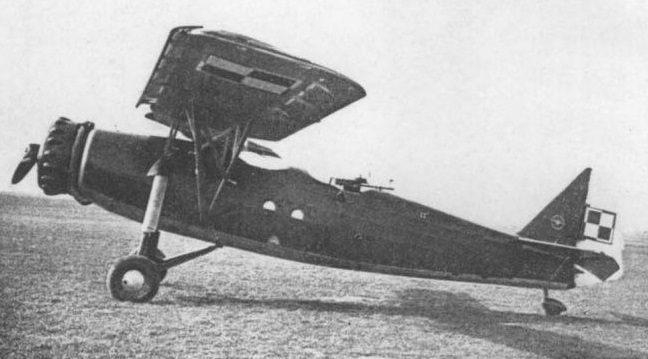
The RWD-14 Czapla was a Polish observation, close reconnaissance and liaison aircraft, designed in the mid-1930s by the RWD team, and produced in the LWS factory from 1938. The aircraft was designed in response to a Polish Air Force requirement of 1933 for a new army cooperation plane, a successor of the Lublin R-XIII. The RWD team of the DWL workshops (Doświadczalne Warsztaty Lotnicze) initially proposed the RWD-12 project, based on the RWD-8 trainer. It was however considered as not as good as the R-XIII, and another aircraft, the RWD-14 was designed by Stanislaw Rogalski and Jerzy Drzewiecki. Designer Tadeusz Chyliński prepared its technical documentation.
The aircraft was a mixed construction monoplane with a braced parasol high-wing. The fuselage was a metal and wooden frame, covered with canvas. Wooden two-spar wings were covered with canvas and plywood and fitted with slats and the stabilizers were also of wooden construction. The wings folded rearwards. The fixed landing gear was of conventional design with a rear tailwheel. The Crew of two sat in tandem open cockpits, with twin controls and individual windshields. The observer had a 7.7 mm Vickers K machine gun, the pilot had a fixed 7.92 mm wz.33 machine gun with interrupter gear. 9 cylinder air-cooled radial engine PZL G-1620B Mors-II with 430 hp (320 kW) nominal power and 470 hp (350 kW) take-off power and a two-blade wooden propeller. Two fuel tanks with total capacity of 315 litres (265 liter in the fuselage, 50 liter in the central wing). The aircraft could be fitted with a radio and camera.
The first prototype was flown in late 1935. It won the contest over the Lublin R-XXI project and the Podlaska Wytwórnia Samolotów factory project, but factory trials showed that its performance was still not satisfactory. Between 1936 and 1937 two modified prototypes were built, designated RWD-14a, but both crashed during trials due to steering mechanism faults (the pilots survived). Finally, in early 1938 the fourth prototype, designated RWD-14b, was built.
It was ordered by the Polish Air Force, receiving the name Czapla (Heron), but due to the long development process, it was regarded as only an interim model, to replace the R-XIII until the advent of the more modern LWS-3 Mewa. In return for refunding the development costs, DWL gave the rights to produce the RWD-14b to the state factory LWS (Lubelska Wytwórnia Samolotów – Lublin Aircraft Works, a successor of the Plage i Laśkiewicz).
The fourth prototype was tested by the Ilmavoimat evaluation team but the only feature that rated highly was the short take-off (140 m) and landing (120 m) distances which enabled it to operate from fields and meadows.
LWS built a series of 65 RWD-14b Czapla’s by February 28, 1939, out of 125 ordered by the Polish Army, 120, and Polish Navy. The Czaplas entered service in the Polish Air Force in the spring of 1939, equipping a number of observation squadrons (eskadra obserwacyjna). Due to its long development, it was not a modern aircraft, only a little better than the Lublin R-XIII. Its advantage was its short take-off (140 m) and landing (120 m), enabling it to operate from fields and meadows. Its modern successor, the LWS-3 Mewa, did not manage to enter operational units due to the war. In the invasion of Poland in 1939, the Polish Air Force had 35 Czaplas in five observation squadrons (out of 12): No.’s 13, 23, 33, 53 and 63. Each squadron had seven aircraft. Squadrons were distributed among the field Armies.
The remaining 30 Czaplas were in reserve (probably only four supplemented combat units during the campaign). Like the R-XIII, the Czapla was no match for any Luftwaffe fighter, bomber, or even reconnaissance aircraft encountered, being much slower, and armed with only two machine guns. In spite of this, they were actively used for close reconnaissance and liaison tasks. Most RWD-14b’s were destroyed during the campaign. About ten were withdrawn to Romania (there are quoted numbers from 10 to 16) and one probably to Hungary. They were taken over by the Romanian Air Force and used for auxiliary duties. No RWD-14b has survived.
Ten Polish Air Force Czaplas escaped from Poland to Sweden as the Polish resistance to the German and Soviet invasions collapsed. On arrival in Sweden after flying across German-held territory and then a wavetop flight across the Baltic, they were quickly refueled and flew on to Finland, eventually landing at Turku. These aircraft were incorporated into the Ilmavoimat.
RWD-14 Czapla Crew: two (Pilot and Observer) Engine: 1 x PZL G-1620B Mors-II air-cooled 9-cylinder radial, 470 hp Maximum speed: 153 mph Range: 421 miles Service ceiling: 16,728 ft Defensive armament: 1 × fixed, forward-firing 7.92 mm wz.33 machine gun / 1 × flexible, rearward-firing 7.7 mm Vickers K machine gun for observer.
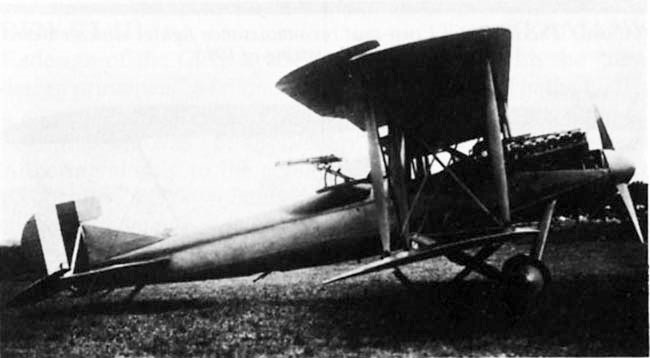
One of the first developments of LWF Engineering was a dual reconnaissance aircraft Model G, built in late 1917. During the tests the plane was destroyed and on its base in 1918 a new airplane was built- G-2, which could be used as a heavy fighter or as a scout-bomber. Equipped with a liquid-cooled engine Liberty 12 rated at 435 hp. The aircraft carried seven 7.62-mm machine guns (four of them were installed in front and synchronized for firing through the screw, two – in the rear cabin on a mobile turret-type Scarff and one at the bottom of the fuselage).
For the first time, the G-2 took off in the spring of 1918. The aircraft successfully passed the tests and the question of its serial production was considered, when on November 18, 1918 the prototype was lost as a result of the accident that occurred during the flight in the fog. This led to a complete halt of the project.
The third copy of the aircraft (G-3) was completed in 1919 as a racing aircraft for the New York-Toronto air race.
G-2 Engine: Liberty 12, 435 hp Wing span: 12.69 m Wing area: 47.94 sq.m Length: 8.88 m Height: 2.86 m Empty weight: 1213 kg Normal take-off weight: 1825 kg Maximum speed: 222 km / h Cruising speed: 196 km / h Endurance: 4 hr ROC: 328 m / min Crew: 2 Armament: seven 7.62-mm machine guns
In 1919 built ultralight Butterfly and a three-engined triplane, Model H Owl, based on Caproni design. This was offered to the Army but was not accepted.