Maybach HS / Mb.IV

The Maybach Mb.IV, originally designated Maybach HS, (only related to the Mb IVa by layout and size), was a six cylinder in-line, water cooled, piston engine, originally developed for use in airships, it was also used for large aircraft such as the Dornier Rs.I giant seaplane. Variants of the original HS engine included the Maybach HS D and Maybach HS Lu

MbIVa’s featured six over-sized cylinders, a compression ratio of 6.7/1 and a dry weight of about 860lb. (in the 1918 version with aluminum pistons.) There was a floatless carburetor at each end of the engine (working with a ball-and-sump setup) and the engine was hand-cranked, with compression reliefs on the cylinders magneto starting and hand-powered suction primer. Designed for high-altitude flying, they could not be run a full throttle below 6000 feet. Rugged, reliable power plants, they could run out about 2000 hours between overhaul.

Variants:
Maybach HS
Company designation

Maybach HS D
A variant of the HS

Maybach HS Lu
A high compression high altitude rated variant.
Power: 240-hp

Mb.IV
The Idflieg designation for production HS engines.

Applications:
Dornier Rs.I
LVG G.III
Siemens-Schuckert L.I

Max Schüler Aeroplan

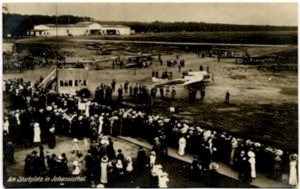
Max Schüler had built a monoplane in Chemnitz, Germany, and designed a motor. He began the construction of a double-decker here but failed. Max Schüler came to Johannisthal in 1909, set up an aircraft construction workshop.

After this failure, he wanted to try again with a monoplane, but had no more money. He sought support and found it with Wolfgang Harlan. This funded with a repayment date and agreed to surrender the aircraft in the event of non-regular repayment instead of money. Whatever happened Schiller’s workshop was the first in Johannisthal which had to give up because of lack of money.

In 1910 the ‘Aeroplan’ monoplane was built by chemist Max Schuler.

Maxim 1894 Biplane

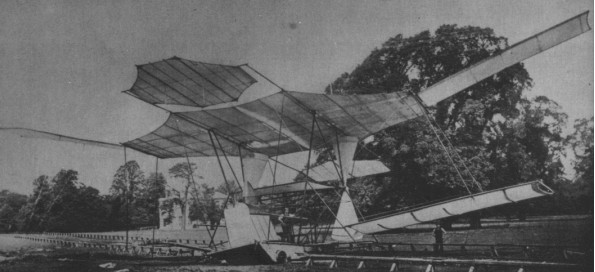
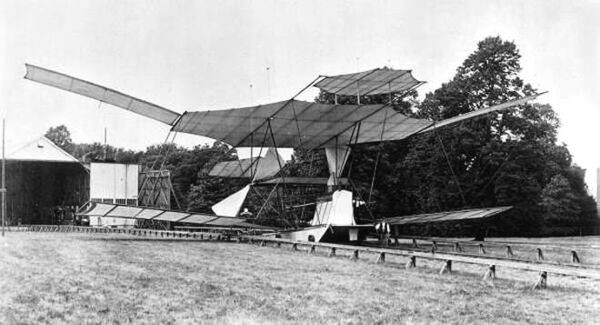
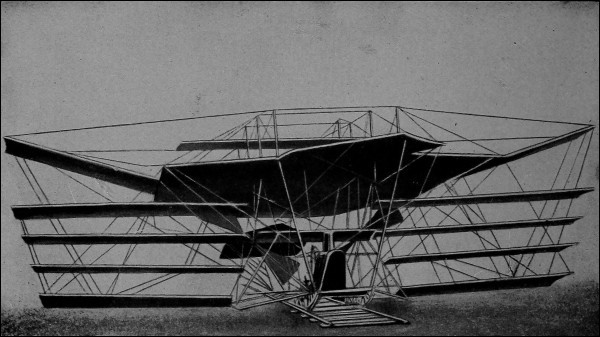
Sir Hiram Stevens Maxim (1840 1916) began building this huge aeroplane in 1891, describing it as ‘a flying machine that would lift itself from the ground’; he did not intend it to fly in the true sense. When tested in 1894, it ran along a railway track until, at a speed slightly above 42 mph (68 km/h), the wheels lifted clear of the track, fouled the guard rails placed to prevent a complete take off, and the machine had to be brought to a halt. Maxim did not pursue its development further.

Powered: Two 180 hp Maxim steam engines
Props: 2 x 17 ft 10 in (5.44 m) diameter two blade pusher
Wing span: 104 ft 0 in (31.70 m)
Wing/elevator area (total): 4,000 sq ft (371.6 sq.m)
Length: approx 95 ft 0 in (28.96 m)
Gross weight: 8,000 lb (3,629 kg)
Accommodation: Crew of 4

Max Holste M.H.1521 Broussard

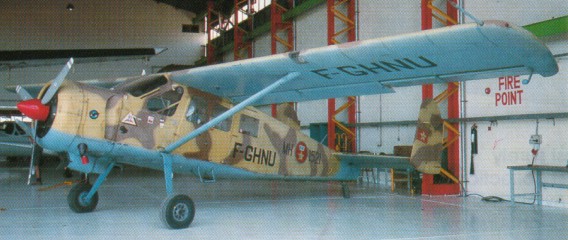
First flown on November 17, 1952, and originally intended as a liaison and ambulance plane, the Broussard saw service in the French attempt to suppress the rebellion in Algeria.

Max Holste M.H.1521 Broussard Article

F-GHGB Max Holste MH.1521 M Broussard 256

The French Holste M.H.1521M Broussard (Bushman) was primarily used by all the French armed services. Two hundred and thirty were built from 1953 until 1961, with many eventually serving with the air wings of former French colonies. It carried five passengers, two stretchers, or about a tonne of cargo at its military overload weight of 2,714 kg. Powered by the 450-bhp Pratt & Whitney R985, its economical cruise speed was 120 knots.

Argentina purchased ten.

Gallery

Max Holste M.H.250

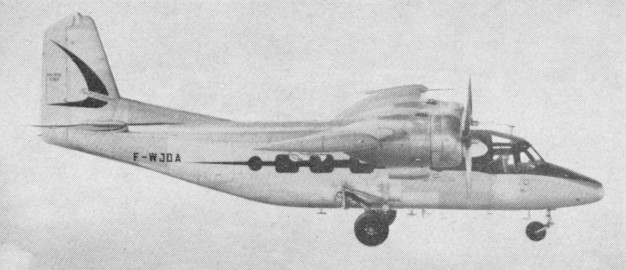
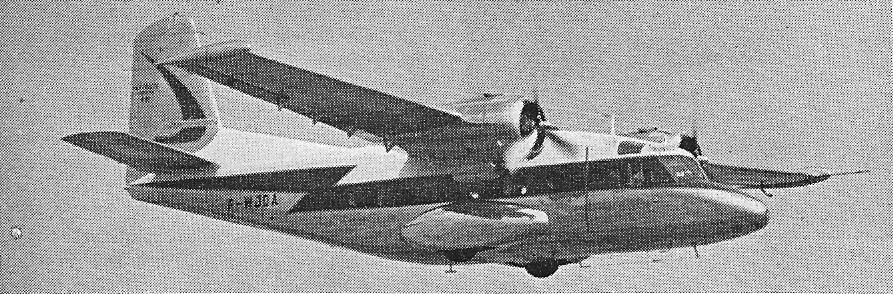
A 17-seat light commuter airliner, known as the M.H.250 Super Broussard started in 1957. The prototype of the MH250, powered by two Pratt & Whitney Wasp-1830 piston engines, flew first on 20 May 1959. It was soon realised that turboprops should be employed and further development resulted in the MH260 (Nord 260) with enlarged fuselage and powered by Turboméca Bastan turboprops.

Max Holste

Société des Avions Max Holste
Société Nouvelle des Avions Max Holste
Reims Aviation S.A

France
Max Holste’s first designs were the MH.52 two-seat lightweight sporting aircraft with tricycle landing gear and the MH.53 Cadet trainer variant, characterized by a twin-fin tail which reappeared on the MH.1521M Broussard utility transport and liaison aircraft, produced in quantity for the French Air Force and Army. A twin-engined development, the MH.260 Super Broussard, was redesignated Nord 262 when Max Holste became incorporated with Nord Aviation in 1961.

On 16 February 1960, Cessna Aircraft acquired a 49% shareholding in la Société des Avions Max Holste, which was named the Société Nouvelle des Avions Max Holste. This name was afterwards changed into Reims Aviation S.A., which built Cessna aircraft under license.

Reims acquired license-manufacturing rights for several Cessna types such as the Model 150,172,177,182, and 337, for sale in European and African markets. Manufacturers and customises the twin-turboprop F 406 Caravan II (first flown 1983) unpressurized utility transport, with a range of Vigilant derivatives offered for maritime surveillance, calibration, electronic warfare, border surveillance, survey, pollution control, and other roles, and can be lightly armed. Plans to reintroduce the F172 and F182 versions of Cessna lightplanes was halted in 1998. Subcontract activities include work on Airbus, ATR, and various Dassault Aviation programmes.