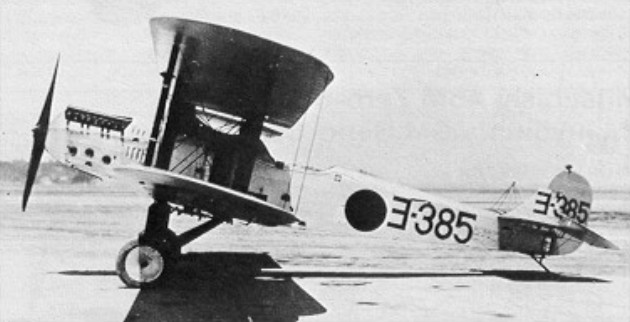
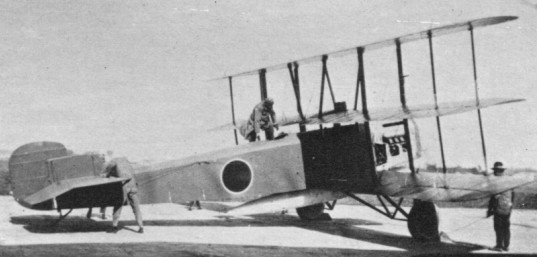
Still with the Mitsubishi company, Herbert Smith designed the 2MT1 two-seat biplane torpedo bomber which flew for the first time in January 1923. It went into Japanese Navy service as the Type 12 carrier-borne attack aircraft and was followed by the 2MT2 and 2MT3 variants.
The redesigned Type 13-2 was designated B1M2. The final version, the Type 13-3 or B1M3, had the firm’s designation 3MT2 and was a three-seater.
Total production was 354 and the type served into the 1930s, 32 flying from the aircraft carriers Kaga and Hosho during the Shanghai Incident in 1932. An aircraft from Kaga was lost during the famous air encounter when American volunteer pilot Robert Short lost his life while flying for the Chinese. The B1M was powered by a 335kW Napier Lion or Hispano-Suiza engine according to version.
2MT2 Engine: 1 x Napier Lion, 373kW Max take-off weight: 2697 kg / 5946 lb Empty weight: 1442 kg / 3179 lb Wingspan: 14.77 m / 48 ft 5 in Length: 9.77 m / 32 ft 1 in Height: 3.5 m / 11 ft 6 in Wing area: 59 sq.m / 635.07 sq ft Max. speed: 210 km/h / 130 mph Ceiling: 4500 m / 14750 ft Armament: 4 x 7.7mm machine-guns, one torpedo or 2 x 240-kg bombs Crew: 2
The first two designs by Herbert Smith for Mitsubishi were for a single seat fighter and a two seat reconnaissance machine, known as types No. 1 and No. 2 respectively. These both went into production for the I.J.N.A.S.
The first two designs by Herbert Smith for Mitsubishi were for a single seat fighter and a two seat reconnaissance machine, known as types No. 1 and No. 2 respectively. These both went into production for the I.J.N.A.S.
Mitsubishi Jukogyo Kabushiki Kaisha Mitsubishi Heavy Industries Ltd
After World War 1 several members of the former Sopwith Aviation Company’s technical staff had joined Mitsubishi and produced designs to meet the specifications of the Air Supply Section of the I.J.N. In this way, Herbert Smith became chief designer for Mitsubishi. W. L. Jordan, D.S.C., D.F.C., an ex RNAS and RAF fighter pilot, was appointed their chief test pilot.
Mitsubishi Heavy Industries Ltd. formed April 11,1934, through the merger of Mitsubishi Shipbuilding and Engineering Co Ltd. and Mitsubishi Aircraft Co Ltd. Long association with Japanese Navy, commencing with Type 10, operational 1922. Most notable aircraft were 1937 A5M4 “Claude”; 1942 J2M3 ‘Jack’; 1939 A6M3 ‘Zeke’ (Zero), which were all fighters; 1941 Ki-46 ‘Dinah’ reconnaissance aircraft; 1940 G3M1 “Nell” and 1941 G4M1 “Betty” medium bombers; 1940 Ki-21 “Sally” heavy bomber; and its replacement, 1944 Ki-67″Peggy.”
Mitsubishi built 80,000 aircraft between 1920 and 1945. After the pre¬dominant role Mitsubishi played in Japa¬nese aviation during the 25 years that preceded the termination of World War II, MHI was prohibited from engaging in aircraft manufacture until 1955.
Post-war built North American F-86F Sabres, Sikorsky S-55s, S-62As, and S-61s, and 177 Lockheed F-104J and 19 two-seat F-104D-Js Starfighters with Kawasaki, with which company it also manufactured McDonnell Douglas F-4EJ Phantoms. They will be fitted with arrester gear
Mitsubishi completed the assembly of 300 F-86F Sabres for the JASDF, but modifed 18 of these aircraft into RF-86F reconnaissance-fighters, each carrying two K-22 cameras in the forward fuselage and one K-17 camera under the centre fuselage.
Licence production of Sikorsky S-55 helicopters began in 1958, and was to be followed by manufacture of the HSS-2 Seadragon anti-submarine helicopter, of which Mitsubishi were to build 10 for the JMSDF by November 1966.
Shin Mitsubishi Jukogyo Kabushiki Kaisha 1962: Shin Mitsubishi Building, No 10, 2-Chome, Marunouchi, Chiyoda-ku, Tokyo
Produced 90 T-2 supersonic jet trainers, the first Japanesedeveloped supersonic aircraft (first flown 1971 and all delivered by 1988) and 77 F-1 single-seat close-air-support derivatives (all delivered by 1987). Developed MU-2 turboprop executive aircraft (first flown 1963), built in Japan and assembled and marketed in U.S.A. by subsidiary Mitsubishi Aircraft International, followed by the MU-300 Diamond (first flown 1978), which later became the Beech Model 400 Beechjet.
Produced 213 McDonnell Douglas F- 15J/DJ fighters for JASDF by 1998, and in October 1995 first flew new Japanese-developed F-2 fighter support aircraft, intended to replace F-1 and based on F-16 but incorporating new technologies. Currently modernizing F-4EJ fleet, is a partner in the Bombardier Global Express program, has a 20% share in the Kawasaki OH-1 helicopter program, constructs Sikorsky S-70B-3 helicopters for the JMSDF as SH-60JS (the first flew 1991) plus UH-60Js for SAR with JMSDF and JASDF and UH-60JAS for JGSDF, has developed the new MH2000 twin-turbine multipurpose helicopter (first flown July 1996), and constructs components forthe Dash 8, various Boeing airliners and Sikorsky S-92. Also has engine and space activities.
Its overhaul and repair organization handles all types of aircraft and aero-engines. In particular, it is responsible for component manufacture and repair of Pratt & Whitney engines in Japan.
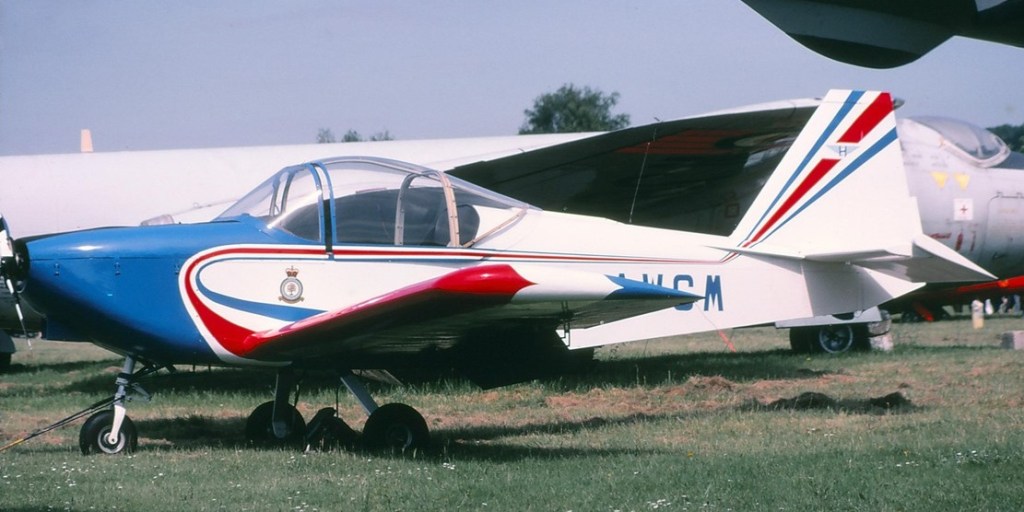
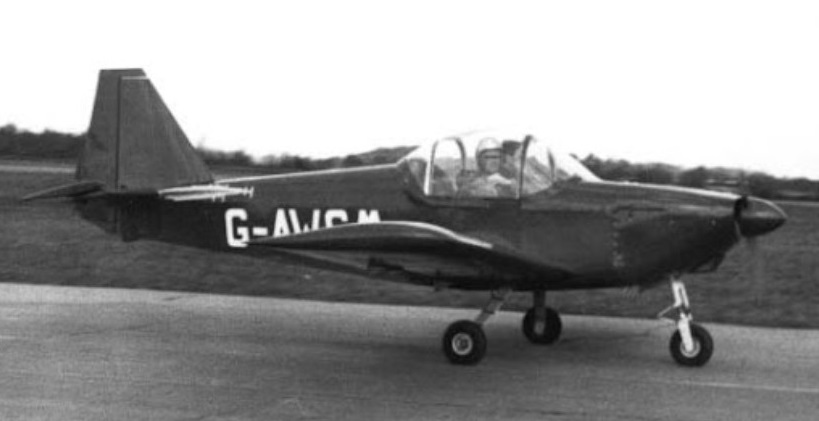
Mitchell concentrated on the design of a two-seat development of the Proctor Kittiwake I, the Mitchell Kittiwake II.
The Kittiwake II differs chiefly in having two side-by-side seating and a more powerful 130 hp (97 kW) Continental O-240. It is longer, heavier and has an increased span which increases the wing area by about 8%. The fuselage is wider and the small dorsal fillet of the Kittiwake I gone; the rudder gained a trim tab and the elevators full width tabs.
Robinson Aircraft built the prototype at Blackbushe, which first flew on 19 March 1972, powered by a Rolls-Royce/Continental O-240-A.
Arkle (R&D) Ltd was formed by A. Ronald Kellett to undertake the development of the improved Mitchell-Procter Kittiwake II, Known as the Arkle Kittiwake II, it was first flown in this form on 29 April 1975.
A second Procter Kittiwake II was started in 1974 at Barrow-in-Furness, by R.Bull. It was registered G-BBUL c/n RB-1.
In 1977 a Mitchell-Procter Kittiwake II was registered as belonging to Arkle Research & Development.
I seem to remember Wing Commander Ronald Kellett was funding work on a Mitchell Proctor Kittiwake. The CFI was doing some of the test flying out of Lydd. I worked at Benenden for Arkle Reserch and Development during 75/76 maintaining the Beagle Pup 150’s and assisting on modifications with Kittywake 2. We actually installed a Pup 100 control column and linkages in Kittywake 2 which was a vast improvement on the original unit. I accompanied Julian Soddy who was CFI at Lydd on the test flights as flight observer. Julian was an ex RAF Black Arrows pilot hence his aerobatics were somewhat interesting. Mike Buck
As he worked on the Dragonfly, Mitchell set out on his own to build a new flying wing glider, which he called the Osprey, a single seat machine fitted with stabilators. Mitchell tested his flying wing several times near Oakland, in 1950. Unfortunately, the building in which the glider was stored burned to the ground and the flying wing was destroyed.
During WW II, Don Mitchell became responsible for the construction of the wings of the CG-4A. In 1943 he had responsibility for the building of the XCG-16 prototype. At the same time he was working on his own flying wing, model 278.
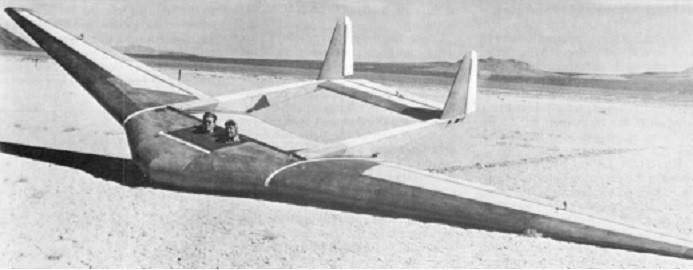
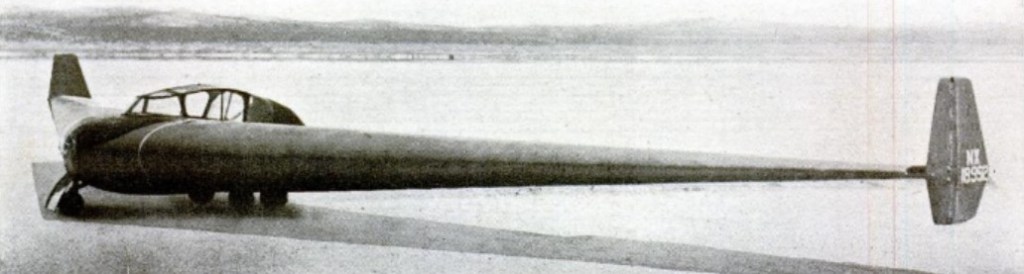
One of Don Mitchells projects was the conversion of a 1/2 scale XCG-16 which he converted into a flying wing using external stabilators for control and stability. He, along with Hawley Bowlus and Paul Tuntland, flew the wing many times at the various dry lakes. They towed with both auto and airplane with no major problems.
Later it had an engine attached.
Side-by-side two seater. Wingspan: 50 ft Glide ratio: 38-1
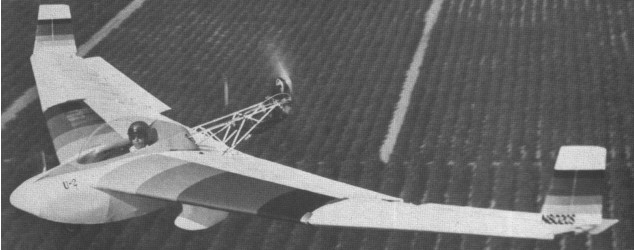
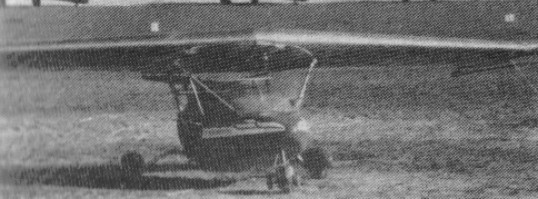
With the Zenoah engine and a considerable evolution in the wing itself Mitchell produced the self-launching U-2 with a fuselage of welded steel tube, and wing of composite structure. The spar is wood, with foam nose ribs and a plywood skin forming a D- tube. Tip rudders provide yaw control. Single seat single engined mid wing monoplane with conventional three axis control. Wing has swept back leading and trailing edges, and tapering chord; no tail. Pitch/roll control by stabilators; yaw control by tip rudders; control inputs through stick for pitch/roll and pedals for yaw. Cantilever wing; wing profile modified Worthmann; double ¬surface. Undercarriage has three wheels in tricycle formation; suspension on main wheels. Push right go right nosewheel steering connected to yaw control. Brake on nosewheel. Wood/steel tube fuselage totally enclosed. Engine mounted above wing driving pusher propeller.
The Super U-2 is a flying wing with three-axis controls featuring winglet-type hinged rudders for yaw control and stabilators for pitch and roll control. Control surfaces are operated separately, and rudders can be simultaneously deflected. Construction is of chromomoly tubing with Douglas fir and birch plywood. Foam is used for the leading edge ribs and nose cone. Wings are covered with 1 mm birch plywood and ceconite. Tail surfaces and fuselage are covered with ceconite. POWERPLANT: Zenoah G25B-1 in a pusher position above the wing. A 2.25:1 reduction unit turns a two blade wooden propeller made by Woody’s Prop Shop. Fuel is carried in a polypropylene tank installed in the wing. LANDING GEAR: Solid tricycle gear with a steerable nosewheel and a nosewheel friction brake. Main and nose wheels are 10½-inch. OPTIONS: Cuyuna 430R Power Pack, Blueprint plans.
The prototype of the U 2 Super Wing made its first flight in the Spring of 1980 and was presented more as a powered glider with soaring capability than as an ultralight. Initially this flying wing was even envisaged as having a retractable tricycle undercarriage, although this was dropped in favour of having com¬pletely faired in main gear.
With a glide angle of 20/1 at 45 mph (72 kph) the U 2 is perfectly happy with a low powered engine like the single cylinder McCulloch Mc101 derated to 10hp, however, the aircraft was designed to be powered by engines up to 30 hp and Mitchell Aircraft have offered a kit since 1981 with, as an option, either Zenoah G25B 20hp or Cuyuna 430R 30 hp engines. The design philosophy remains very close to that of the B 10 Mitchell Wing but is applied to a more complex machine, so the amount of time for assembly is considerably more, around 250 h for the major fabrication and 100 h for finishing off. It is classified as an experimental home¬built and not an ultralight in the USA, requiring the pilot to have at least a private pilot’s licence.
Prototype Engine: McCulloch 125cc, 10 hp Gross wt: 450 lbs Empty wt: 225 lbs Max pilot wt: 250 lbs First year built: 1979
Super U-2 Engine: Zenoah G25B, 20 hp at 6300rpm Propeller diameter and pitch 52 x 27 inch, 1.32×0.69m Belt reduction, ratio 10/1 Power per unit area 0.14hp/sq.ft, 1.6 hp/sq.m Fuel capacity 3.0 US gal, 2.5 Imp gal, 11.4 litre Length overall 9.0ft, 2.74m Height overall 3.0ft, 0.91m Wing span 34.0ft, 10.36m Chord at root 6.2ft, 1.87m Chord at tip 2.0ft, 0.61m Dihedral 6 deg Sweepback 12 deg Total wing area 136 sq.ft, 12.6 sq.m Wing aspect ratio 8.5/1 Nosewheel diameter overall 10 inch, 25 cm Main wheels diameter overall 10 inch, 25 cm Empty weight 240 lb, 109 kg Max take off weight 550 lb, 249 kg Payload 310 lb, 141 kg Max wing loading 4.04 lb/sq.ft, 19.7 kg/sq.m Max power loading 27.5 lb/hp, 12.5 kg/hp Max cruising speed 60 mph, 97 kph Stalling speed 26 mph, 42 kph Max climb rate at sea level 400 ft/min, 2.0 m/s Take off distance 200ft, 61m Landing distance 200ft, 61m Range at average cruising speed 180 mile, 290 km
Super U-2 Engine: Cuyuna 430R, 30 hp Belt reduction Power per unit area 0.22hp/sq.ft, 2.4 hp/sq.m Fuel capacity 3.0 US gal, 2.5 Imp gal, 11.4 litre Length overall 9.0ft, 2.74m Height overall 3.0ft, 0.91m Wing span 34.0ft, 10.36m Chord at root 6.2ft, 1.87m Chord at tip 2.0ft, 0.61m Dihedral 6 deg Sweepback 12 deg Total wing area 136 sq.ft, 12.6 sq.m Wing aspect ratio 8.5/1 Nosewheel diameter overall 10 inch, 25 cm Main wheels diameter overall 10 inch, 25 cm Empty weight 300 lb, 136 kg Max take off weight 550 lb, 249 kg Payload 250 lb, 113 kg Max wing loading 4.04 lb/sq.ft, 19.7 kg/sq.m Max power loading 18.3 lb/hp, 8.3 kg/hp Load factors; +7.8, 7.8 ultimate Max level speed 100mph, 161kph Max cruising speed 70 mph, 113 kph Stalling speed 37 mph, 60 kph Max climb rate at sea level 750 ft/min, 3.8 m/s Min sink rate 180ft/min at 45mph, 0.9 m/s at 72 kph Best glide ratio with power off 23/1 at 49mph, 79kph Take off distance 210ft, 64m Landing distance 250ft, 76m Service ceiling 12,000ft, 3660 m Range at average cruising speed 80 mile, 129 km