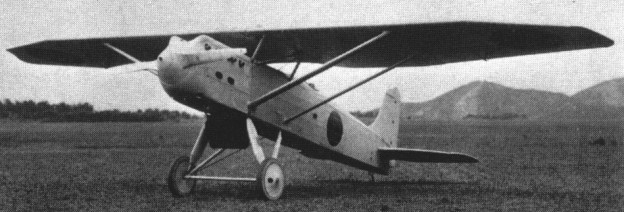
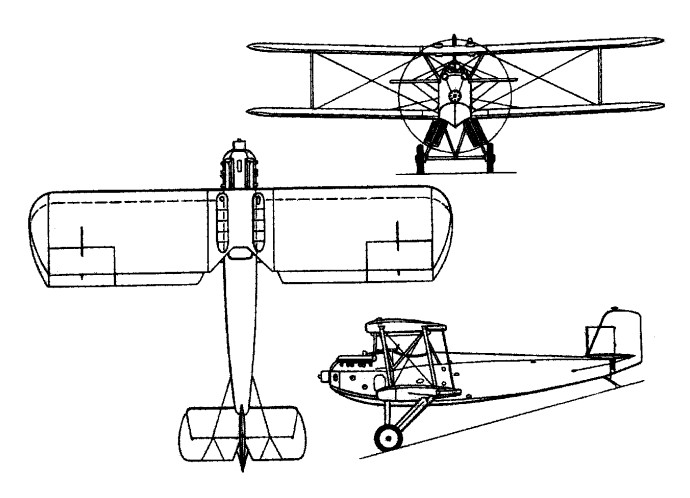
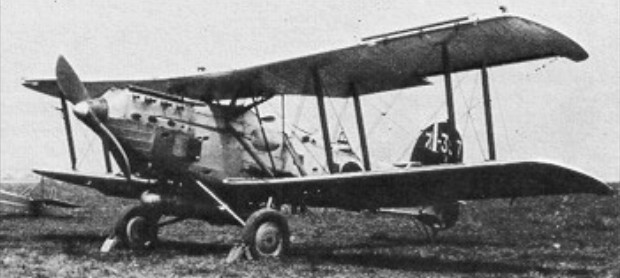
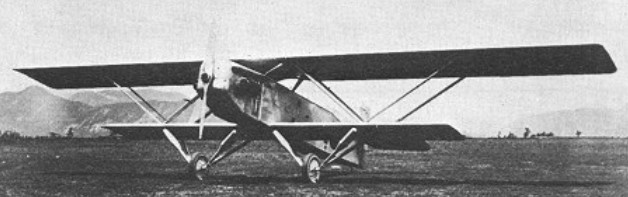
Mitsubishi 2MR8 / Type 92

In 1927 Mitubishi enlisted the help of German designer Baumann to meet an Imperial Japanese Army requirement for a new reconnaissance aircraft. The results were the unsuccessful Mitsubishi 2MR1 Tobi, the 1MF2 Hayabusa and the 2MR7 short-range reconnaissance biplane of 1928.
In 1930, three 2MR8 parasol-wing reconnaissance monoplanes were built and tested successfully. Of mixed construction, they had fixed wide-track divided landing gear and were powered by a 354kW Mitsubishi Type 92 radial engine.

Accepted by the army, the 2MR8 went into service in 1932 as the Type 92 Reconnaissance Aircraft. Production terminated in 1933 with the 230th machine.

The Type 92 was normally armed with a fixed forward-firing 7.7mm machine-gun mounted above the wing centre-section, with single or twin guns of the same calibre on a ring mounting over the observer’s cockpit.

The Type 92 saw active service in Manchuria with the air battalions (later air wings) of the army’s Kanto Command Air Corps between 1933 and 1936. A civil version of the Type 92 was used as a survey aircraft by Japanese National Railways. Powered by a 298kW Mitsubishi A-5 engine, it was registered J-AARA and differed externally from the military aircraft in having a glazed canopy over the crew cockpits and spat-type main wheel fairings.

Engine: 354kW Mitsubishi Type 92 radial
Maximum speed: 220km/h
Wing span: 12.75m
Maximum take-off weight: 1770kg
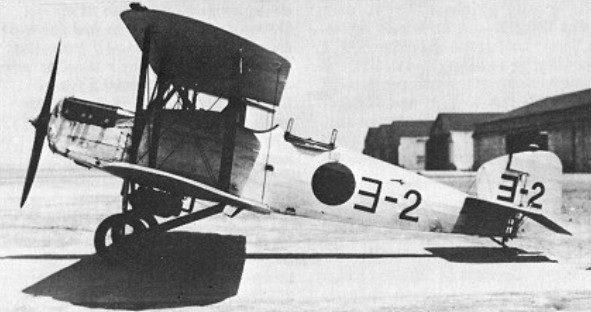
Mitsubishi 2MR7

In 1927 Mitubishi enlisted the help of German designer Baumann to meet an Imperial Japanese Army requirement for a new reconnaissance aircraft. The results were the Mitsubishi 2MR1 Tobi, the 1MF2 Hayabusa, and the unsuccessful 2MR7 short-range reconnaissance biplane of 1928.

Mitsubishi 2MR / Type 10 / 2MRT / R-2.2 / R-4

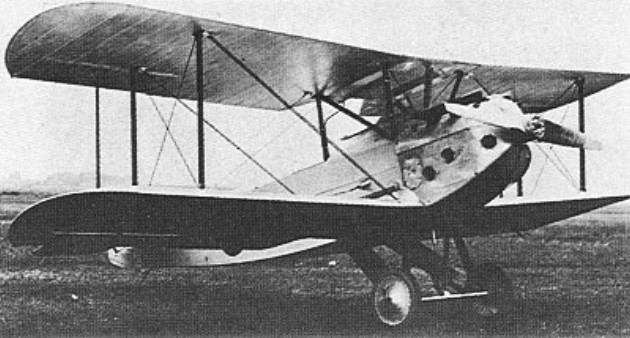
Designed by Herbert Smith, the first Mitsubishi 2MR two-seat carried-based reconnaissance biplane flew in January 1922. The type entered service as the Type 10 Carrier Reconnaissance Biplane and was built in a number of versions.

The 2MR1 had a 224kW Hispano-Suiza 8 engine with a frontal radiator, while the 2MR2 had twin underslung Lamblin radiators and redesigned tail surfaces. The 2MR4, which was the main production version, had some further revisions of the wing and tail unit, and other variants with minor changes were the 2MRT1, 2MRT2, 2MRT2A, 2MRT3 and 2MRT3A. Total production of all versions was 159, the last completed in 1930. After long carrier service, the 2MR was used as a trainer in the late 1930s.

The 2MR4 version spanned 12.04m, had a maximum take-off weight of 1320kg, and was armed with two fixed forward-firing 7.7mm machine-guns, with twin guns of the same calibre mounted over the observer’s cockpit, and could carry three 30kg bombs.

The R-2.2 and R-4 civil conversions had an enclosed cabin for two passengers replacing the rear cockpit, and a number of ex-army surplus 2MRs were sold on the civil market in the 1930s.

2MR4
Wingspan: 12.04 m / 39 ft 6 in
Max take-off weight: 1320 kg / 2910 lb

Mitsubishi 1MF10

1MF10

To meet a 7-Shi (1932) requirement for an advanced single-seat shipboard fighter to succeed the Nakajima A1N (Type 90), a Mitsubishi design team led by Jiro Horikoshi and assisted by Eitaro Sano, Konosuke Nakamura and Tomio Kubo initiated work on the first cantilever low-wing mono¬plane to be designed in Japan, the 1MF1O.

Featuring a duralumin monocoque fuselage and a fabric-skinned dur¬alumin wing, the 1MF10 was powered by a 710 hp Mitsubishi A-4 14-cylinder two-row radial and carried an armament of two 7,7-mm machine guns. The first of two prototypes was flown in March 1933, but was lost during the following July when the vertical tail surfaces disintegrated during a dive. The second prototype, which was completed shortly afterwards, differed essentially in having a new undercarriage, the three struts of each unit being replaced by single legs enclosed by trouser-type fairings. The 1MF10’s max speed proved to be 30 mph (48 km/h) less than that required by the Imperial Navy at 9,840 ft (3 000 m) and climbing performance was considered inadequate, and the fighter was rejected for series production, the second prototype being lost from a flat spin in June 1934.

Engine: Mitsubishi A-4 14-cylinder two-row radial, 710 hp
Max speed, 199 mph (320 kph) at 9,840 ft (3 000 m)
Time to 10,000 ft (3 050 m), 42 min
Endurance, 3.0 hrs
Empty weight, 2,700 lb (1225 kg)
Loaded weight, 3,479 lb (1578 kg)
Span, 32 ft 9 2/3 in (10,00 m)
Length, 22 ft 8 2/3 in (6,92 m)
Height, 10 ft 10 1/3 in (3,31 m)
Wing area, 190.53 sq ft (17,70 sq.m)
Armament: two 7,7-mm machine guns

Mitsubishi 1MF10

Mitsubishi 1MF2 Hayabusa

1MF2

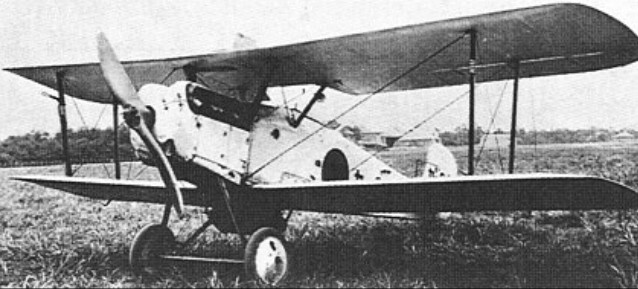
In March 1927, the Imperial Army ordered Kawasaki, Nak¬ajima and Mitsubishi to investigate design of a fighter on a competitive basis to replace the ageing Ko-4 (Nieuport-Delage NiD 29). Designed by Shinshiro Nakata assisted by Jiro Horikoshi and Jiro Tanaka, the Mitsubishi contender in the contest, the 1MF2 Hayabusa (Falcon), was a parasol monoplane without wire bracing, emphasis being placed on ease of assembly and disassembly.

Powered by a 600 hp Mitsubishi Hispano-Suiza water-cooled V-12 engine, the first prototype Hayabusa was completed in May 1928. After manufacturer’s flight testing at Kaga¬migahara, both first and second prototypes were transferred to the Tokorozawa Army test centre where the Hayabusa recorded a maximum speed of 168 mph (270 km/h) at 9,840 ft (3 000 m), but during a diving test the Mitsubishi fighter broke up in the air after exceeding 248 mph (400 km/h). The Army suspended evaluation of the contending types, cancelling the programme and testing the prototypes to destruction. The Hayabusa was of mixed construction with wooden wing and metal fuselage, its armament being two 7.7mm guns.

Engine: Mitsubishi Hispano-Suiza water-cooled V-12, 600 hp
Max speed, 168 mph (270 km/h) at 9,840 ft (3 000 in)
Time to 16,405 ft (5 000 m), 11.3 min
Empty weight, 2,789 lb (1 265 kg)
Loaded weight, 3,968 lb (1 800 kg)
Span, 41 ft 4 7/8 in (12,62 m)
Length, 26 ft 10 7/8 in (8,20 m)
Height, 10 ft 11 7/8 in (3,35 m)
Wing area, 247.58 sq ft (23,00 sq.m)
Armament: two 7,7-mm machine guns

Mitsubishi 1MF2 Hayabusa

Mitsubishi 1MF / Type 10

The Mitsubishi 1MF was among the first designs produced for the Mitsubishi Internal Combustion Engine Co. Ltd, set up by the Mitsubishi industrial concern in 1920. The 1MF was one of three types designed by Herbert Smith, formerly of the British Sopwith company to meet requirements issued by the Imperial Japanese Navy for aircraft to equip its first aircraft-carrier (the Hosho). The 1MF1 initial version was an unequal-span single-seat carrier-based fighter biplane, powered by a 223kW Hispano-Suiza 8 engine, which entered production in 1921 as the Navy Type 10-1 Carrier Fighter.

It was followed by the 1MF2, an experimental variant with modified upper-wing ailerons. The series Type 10-2 or 1MF3 had twin Lamblin radiators fitted between the landing gear legs, the Type 10-3 (1MF4) had the pilot’s cockpit relocated farther forward and a redesigned tailplane, while the 1MF5A was a version of the 1MF4 with experimental flotation gear. Production of the 1MF series ended in 1928 with the 138th example. The Type 10 proved a tough, reliable fighter and remained in service for a number of years, latterly as an advanced trainer.

1MF5
Engine: 223kW Hispano-Suiza 8
Max take-off weight: 1279 kg / 2820 lb
Empty weight: 936 kg / 2064 lb
Wingspan: 8.84 m / 29 ft 0 in
Length: 6.93 m / 22 ft 9 in
Height: 3.13 m / 10 ft 3 in
Max. speed: 213 km/h / 132 mph
Armament: 2 x 7.7mm machine-guns

Mitsubishi 1MF / Type 9 Taka

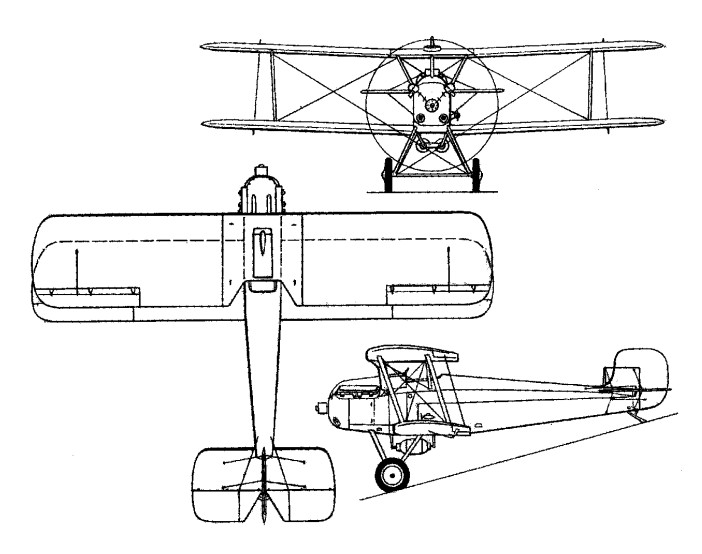
Seeking a second-generation fighter as a successor to the Type 10, in April 1926, the Imperial Navy solicited proposals from Aichi, Mitsubishi and Nakajima for an aircraft embodying a watertight fuselage, watertight wing leading edge and jettisonable undercarriage for emergency alighting on water.

In 1928, to meet the requirement, a team led by Joji Hattori developed the 1MF9 Taka (Hawk) equi-span biplane of wooden construction which featured a Vee-shaped fuselage planing bottom. Powered by a 600hp 12-cylinder water-cooled Hispano-Suiza engine and carrying an armament of two 7.7mm guns, with provision for two 30kg bombs.

The first prototype Taka was delivered in July 1927, and was the first aircraft of Japanese design to feature wing flaps, these being discarded by the second prototype delivered in the following September. The water-proofing demanded by the Navy resulted in some weight penalty, and the competition was won by the Nakajima-submitted Gloster Gambet (Nakajima A1N1), the 1MF9 Taka being abandoned.

Engine: 600hp 12-cylinder Hispano-Suiza
Wingspan: 10.80 m / 35 ft 5 in
Length: 8.44 m / 27 ft 8 in
Height: 3.40 m / 11 ft 2 in
Wing area: 41.50 sq.m / 446.70 sq ft
Max take-off weight: 1855 kg / 4090 lb
Empty weight: 1272 kg / 2804 lb
Max. speed: 245 km/h / 152 mph
Armament: two 7.7mm guns, two 30kg bombs

Mitsubishi 3MR4 / B2M1 / Type 89-1 / B2M2 / Type 89-2

In 1928 Mitsubishi presented to the Imperial Japanese Navy three new types: the Mitsubishi 1MF9 Taka carrier fighter biplane, which featured a French-type avion marin keel; the Type R experimental twin-engine monoplane flying-boat, built also in a civil transport version, both of them based on Rohrbach designs; and the 3MR4 carrier reconnaissance biplane. This last was in reality designed by G. E. Petty, chief designer of the British Blackburn Aeroplane Company, and had been built in the UK. Three development prototypes were constructed subsequently by Mitsubishi, and it was decided that the aircraft would be used primarily as a carrier-based torpedo-bomber. Prolonged difficulties prevented naval adoption of the 3MR4 until March 1932, when it went into service as the Navy Type 89-1 Carrier Attacker or Mitsubishi B2M1.

Powered by a 485kW Hispano-Suiza 12Lb engine, the B2M1 had a maximum speed of 213km/h, and was an equal-span biplane with wide-track landing gear, its crew of three carried in tandem cockpits. Defensive armament comprised one fixed and one movably-mounted 7.7mm machine-gun; and for offensive purposes an 800kg torpedo carried between the main landing gear legs could be supplemented by six light bombs on underwing racks. An improved B2M2 or Type 89-2 appeared in 1934, this having a wing span of 14.98m and a maximum take-off weight of 3600kg, but its overall performance showed little advantage over the B2M1. Production of both versions totalled 204, and they were used extensively for medium- and low-level bombing attacks against Chinese troops during the Shanghai Incident.

B2M1 / Type 89-1
Crew: 3
Engine: 1 x Hispano-Suiza 12Lb, 485kW
Max. speed: 213 km/h / 132 mph
Armament: 2 x 7.7mm machine-guns, 800-kg torpedo, 6 bombs

B2M2 / Type 89-2
Wing span: 14.98m
Maximum take-off weight: 3600kg

Mitsubishi 2MB1 / Type 87

Mitsubishi submitted the experimental 2MB2 Washi two-seat light bomber biplane designed by Alexander Baumann in 1925. This was rejected for production, the Imperial Army preferring Herbert Smith’s more conventional 2MB1, a large two-seat biplane with wide-track divided landing gear.

This entered service in 1927 as the Army Type 87 Light Bomber, 48 being built, and each was powered by a 336kW Hispano-Suiza engine. Armament comprised one fixed forward-firing 7.7mm machine-gun, twin guns of the same calibre on a ring mounting for the observer, and provision for a fourth gun firing through a ventral trap; maximum bomb load was 500kg.

2MB1 / Army Type 87
Engine: 336kW Hispano-Suiza
Wing span: 14.80m / 48 ft 7 in
Maximum take-off weight: 3300kg / 7275 lb
Maximum speed: 185km/h / 115 mph
Armament: 3-4 x 7.7mm machine-gun
Maximum bomb load: 500kg