The origins of M. L. Aviation began during the mid 1930s with two separate companies, mainely Wrightson Aircraft Sales (formed May 34). The name was changed to Malcolm and Farquharson (formed May 36) and again changed to R. Malcolm Company (founded in Dec 36). Malcolm & Farquharson became a holding company in December 1939 with aircraft product work carried out by R. Malcolm. About this time, Marcel Lobelle, who had been Chief Designer of Fairey Aviation joined the company. He had designed many Fairey aircraft including the Swordfish.
At the beginning of WW2, both Malcolm & Farquharson and R. Malcolm suffered financial problems and turned to the Mobbs family for assistance. During 1940, control of both companies was taken over by the Mobbs through United Motor Finance Corporation.
Under Marcel Lobelle, a drawing office was opened on the Slough Trading Estate (owned by the Mobbs family) with rapidly expanding work for the Ministry of Aircraft Production. To allow for expansion the drawing office and experimental work was moved to White Waltham, leaving production on the Slough Trading Estate and still under the name of R. Malcolm. An additional firing site was also established on the airfield perimeter for development work.
In 1943, Malcolm & Farquharson’s services were dispensed with and control was taken over by Eric Mobbs as Managing Director and Marcel Lobelle as Chief Designer. The company continued to trade under the name of R. Malcolm. Finally in October 1946 the name was changed to M. L. Aviation for the White Waltham site and M. L. Engineering at Slough, the initials presumably being taken from the leading figure heads.
Spurred on by the advent of the Cold War the company expanded rapidly from the 1950s with a considerable work force of Design Engineers designing and manufacturing a large range of aviation products.
Expansion required further finance and in 1958 M. L. went public through the creation on M. L. Holdings. Subsequently the Holding Company diversified with non-aerospace business introducing further finance and therefore gradually reducing the influence of the Mobbs family
The 1980s saw the reducing aerospace industry having considerable impact on MLA with an ever diminishing workforce until in 1990 the Holdings Board, having recently brought Wallop Industries based in Andover, deciding to merge and sell the White Waltham site. The move was completed by early 1991, leaving the Airfield test site still operating. The White Waltham site was eventually sold in 1996.
In mid 1996, the Holding Board acquired the remains of arch rivals Fraser Nash and merged it with MLA producing a formidable aircraft equipment company which should have augured well for the future.
M. L. (Engineering) in Slough finally moved to Andover in early 1997 enabling design and production to join under one roof, thereby almost severing links with Berkshire.
Finally Cobham plc acquired M. L. Aviation & Marine for £37 million.
MK Helicopter produced the Mk.II two-seat helicopter in ultralight form, first flown 1996, and offered it ready assembled. Ultralight since withdrawn, giving way to new and improved certificated version.
Produced the Mk.II two-seat helicopter in ultralight form, first flown 1996 and offered ready assembled. Ultralight since withdrawn, giving way to new and improved certificated version.
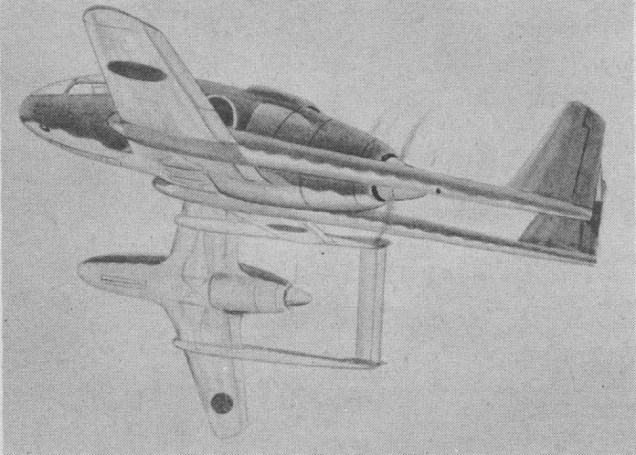
The Mitsubishi J4M1 was discovered in a captured document, receiving the allied code name ‘Luke’. Although featuring in a December 1944 recognition manual, the prototype was never completed.
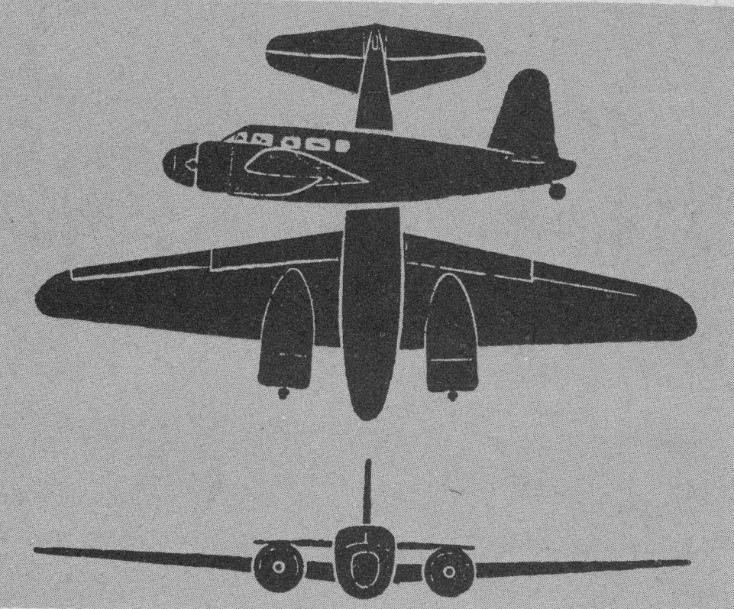
Widely described early in the war, and included in the first allied code list, the Darai medium bomber, or anything like it, was never produced or imported by Japan. It does look like the American Bennet BTC-1 described in a 1940 Japanese magazine.
JA21MJ Mitsubishi MRJ-90 at Nagoya Komaki on 15th September 2016
In 2003 the Japanese government started a five-year, ¥50 billion ($420 million) research program to study an indigenous regional jet for 30 to 90 passengers, led by Mitsubishi Heavy Industries (MHI). In 2004 MHI was focused on a 2m high by 2.8m-wide, four-seat abreast cabin, seating 30 to 50 passengers, and was hoping to fly a prototype in 2007 and deliver the first aircraft in 2010. In 2005 it switched to a larger 70-90 seat category. The Mitsubishi Regional Jet (Japanese: 三菱リージョナルジェット), or MRJ for short, is a twin-engine regional jet aircraft seating 70–90 passengers manufactured by Mitsubishi Aircraft Corporation, a partnership between majority owner Mitsubishi Heavy Industries and minority owner Toyota Motor Corporation with design assistance from Toyota affiliate Subaru Corporation, itself already an aerospace manufacturer.
MHI launched its concept at the 47th Paris Air Show in June 2007, showing a full-scale cabin mock-up and aiming to be the first regional jet all-composite airframe, with certification targeted for 2012. Mitsubishi formally offered the MRJ to airlines in October 2007 after being the first airframer to select the Pratt & Whitney PW1000G geared turbofan offering a 12% reduction in thrust specific fuel consumption, rated at 15,000 lbf (67 kN) thrust on the 70- to 80-seat MRJ70 and 17,000 lb thrust (75.7 kN) on the 86- to 96-seat MRJ90, projecting a ¥150 billion ($1275 million) development cost.
MHI officially launched the Mitsubishi Regional Jet Program on March 28, 2008 with an order for 25 aircraft (15 firm, 10 optional) from All Nippon Airways, targeting a 2013 introduction. Flight testing was scheduled for late 2011 and the $1.9-billion programme necessitates 300-400 sales to recoup its cost.
In September 2009 Mitsubishi unveiled extensive design changes, using aluminium instead of carbon fibre composites for the aircraft’s wings and wingbox; the remaining composite parts will make up 10-15% of the airframe: the empennage, horizontal tail and vertical tail. The cabin height is increased by 1.5 in (4 cm) to 80.5 in (204 cm) and the fuselage height is increased to 116.5 in (296 cm), giving a rounder cabin, wider and higher than its competition. The program was delayed six months with final design frozen in mid-2010, first flight delayed to the second quarter of 2012 and deliveries to early 2014.
As the MRJ90 MTOW of 39.6 t is above the US regional carriers scope clause of 39 t, SkyWest and Trans States Holdings could convert their MRJ90 orders for 100 and 50, respectively, to the 1.4 m shorter MRJ70: 67% of the 223 firm MRJ90 orders. But the MRJ70 seats only 69 in two classes and attain the 76 seats scope close limit only in all-economy: Mitsubishi wants to increase seating within its fuselage to compete with the currently compliant Embraer E-175 and Bombardier CRJ900.
On 15 September 2010, the Mitsubishi Aircraft Corporation announced that it had entered the production drawing phase and was proceeding with the manufacturing process. Assembly of the first aircraft began in April 2011 with construction of the emergency escape for the cockpit.
In early 2013, Pratt & Whitney delayed the PW1200G certification to the “latter half” of 2014, after the MRJ first flight scheduled for late 2013. On 22 August 2013, Mitsubishi announced a third delay to the program, and that the first flight would take place in the second quarter of 2015 instead of end-2013, while the first delivery to launch customer ANA would take place in the second quarter of 2017 instead of 2015, due to parts delivery problems including Pratt & Whitney engines. On 7 September 2013 were exhibited a prototype of the left wing and four aluminium sections: forward fuselage, front mid fuselage, aft mid fuselage and aft fuselage, to be assembled in October 2013. Mitsubishi has hired foreign experts to help with relations with suppliers, ground tests, flight tests, and certification.
Pictures of the first fully assembled MRJ90 were available on 26 June 2014. An official rollout occurred on 18 October 2014.
The maiden flight of the MRJ90 took place on 11 November 2015. On 24 December 2015, Mitsubishi announced a one-year delay for the first delivery of the MRJ, to mid-2018. The delay was attributed to insufficient wing strength and the redesign of the landing gear for better safety. Much of the flight testing for the MRJ90 will take place in Moses Lake, Washington, due to the crowded airspace in Japan causing scheduling difficulties. Static strength test were completed on November 1, 2016 and confirmed that the airframe could withstand 1.5 times the maximum load.
In January 2017, a further two-year delay was announced, pushing the expected first delivery to mid-2020. This resulted from moving the avionics bay and wiring looms and in March 2017 the flight certification program was extended from 2500 to 3000 flying hours. The development cost ballooned to 350 billion yen (US$3.17 billion) and the project might never able to fully recover its costs. Mitsubishi originally planned to use five flight test aircraft and two ground test aircraft.
In June 2017, 940 hours of flight tests have been done and the four prototypes have an above 98% availability. On 21 August, FTA-2 experienced a flameout 170 km (92 nmi) west of Portland International where it landed, partial damage was confirmed in the PW1200G and the test fleet was grounded until the cause is known. Flight testing resumed on 6 September.
By December 2017, the MRJ test campaign was half done with 1,500 flight hours and less than 1% cancelled due to technical issues.
In January 2018, the avionics bay rearrangement and rerouted wiring were almost complete to be adequate for extreme events such as bomb explosions or water ingress underfloor. Upgrades and ground tests were performed on four flight test aircraft from February to March 2018 at Moses Lake, preceding flight testing for natural icing, avionics and autopilot, performance, stability and control.
In April 2018, the test fleet had logged 1,900 flight hours as Mitsubishi plans displaying it at the July 2018 Farnborough air show. In May 2018, the flight-test fleet is attaining 2,000 hours and as most of the flight envelope is explored.
On 26 April 2017, the fifth MRJ was complete in ANA livery, lacking only engines and nose cone, aircraft number six and seven had their fuselage and wings joined without the tails and the eighth, the first MRJ70, was at the assembly line start; Mitsubishi could manufacture 12 aircraft concurrently: in station one are joined fuselage sections, in station two the landing gear, wings and horizontal stabilisers are attached, in section three the major components are assembled, in outfitting takes place in section four and ground tests in station five, then the completed aircraft moves to painting.
All Nippon Airways was the first customer, with an order for 15 MRJ 90s and an option for 10 more. In March 2008, and again in October 2008, Sankei Shimbun and Fuji Sankei Business I reported that the government of Japan would buy ten MRJs to serve as short-haul and small-field VIP transports, supplementing the existing Japanese Air Force One Boeing 747 aircraft.
At the July 2012 Farnborough Airshow, SkyWest agreed to buy 100 MRJ90s, to be delivered between 2017 and 2020. The deal is worth $4.2bn at list prices. During the 2013 Regional Airlines Association conference, held in Montreal, Quebec, Canada, Mitsubishi announced that ANI Group Holdings, which firmed a MoU for 5 MRJ aircraft in June 2011, cancelled the deal, without giving further details.
The MRJ future was fragile after six years of delays, with 70% of the backlog shared by two US regional carriers bounded by scope clauses: the MRJ90 is too heavy and the smaller MRJ70 accommodates seven seats less than the 76 permitted.
MRJ70 Engines: 2 x Pratt & Whitney PW1215G, 69.3 kN (15,600 lbf) Fan diameter: 56 in (142 cm) Wing span: 29.2m / 95 ft 10in Length: 33.4m / 109 ft 8in Tail height: 10.4m / 34 ft 2in Max takeoff weight: 40,200 kg (88,626 lb) Max landing weight: 36,200 kg (79,807 lb) Max zero fuel weight: 34,000 kg (74,957 lb) Typical cruise speed: Mach 0.78 (447 kn; 829 km/h) Range: 3,740 km (2,020 nmi) Operating ceiling: 11,900 m (39,000 ft) Takeoff field length (MTOW, SL, ISA): 1,720 m (5,650 ft) Landing field length (MLW, Dry): 1,430 m (4,700 ft) Passengers: 69 to 80 Seat pitch: 74–79 cm (29–31 in) – 91 cm (36 in) Cabin Height: 2.03 m / 6 ft 8in Cabin Width: 2.76 m / 9 ft 1in Cabin length: 33.4m / 109 ft 8in
MRJ90 Engines: 2 x Pratt & Whitney PW1217G, 78.2 kN (17,600 lbf) Fan diameter: 56 in (142 cm) Wing span: 29.2m / 95 ft 10in Length: 35.8m / 117 ft 5in Tail height: 10.4m / 34 ft 2in Max takeoff weight: 42,800 kg (94,358 lb) Max landing weight: 38,000 kg (83,776 lb) Max zero fuel weight: 36,150 kg (79,697 lb) Operating empty weight: 26,000 kg (57,320 lb) Fuel Capacity: 12,100 L (3,200 US gal) Typical cruise speed: Mach 0.78 (447 kn; 829 km/h) Range: 3,770 km (2,040 nmi) Operating ceiling: 11,900 m (39,000 ft) Takeoff field length (MTOW, SL, ISA): 1,740 m (5,710 ft) Landing field length (MLW, Dry): 1,480 m (4,860 ft) Passengers: 81 to 92 Seat pitch: 74–79 cm (29–31 in) – 91 cm (36 in) Cabin Height: 2.03 m / 6 ft 8in Cabin Width: 2.76 m / 9 ft 1in
The Mitsubishi Kinsei (金星, Venus) was a 14-cylinder, air-cooled, twin-row radial aircraft engine developed by Mitsubishi Heavy Industries in Japan in 1934 for the Imperial Japanese Navy. The Mitsubishi model designation for this engine was A8 while it was an experimental project, in service it was known as the MK8 “Kinsei” by the Navy. In the middle of the war the engine was adopted by Army so it got designation Ha-112. Unified designation code was Ha-33. Its basic design was based on the single-row, 9-cylinder air-cooled Pratt and Whitney R-1689 Hornet, but underwent numerous modifications and improvements.
First run in 1934, a total of 12,228 were built.
Variants -3 – 910 hp -41 – 1,075 hp -42 – 1,075 hp -43 – 1,000 hp, 1,080 hp -44 – 1,000 hp, 1,075 hp -45 – 1,075 hp -46 – 1,070 hp -48 – 1,080 hp -51 – 1,300 hp -53 – 1,300 hp -54 – 1,200 hp, 1,300 hp -62 – 1,560 hp
The Mitsubishi Zuisei (瑞星, Holy Star) was a 14-cylinder, supercharged, air-cooled, two-row radial engine. It was one of the smallest 14-cyl. engines in the world and the smallest diameter Japanese engine. The Mitsubishi model designation for this engine was A14 while it was an experimental project, in service it was known as the MK2, followed by the revision code letter, and known as the Ha-26 & Ha-102 by the Army and “Zuisei” by the Navy. Unified designation code was HA-31.
First run in 1931, the MK2A Zuisei engine had a 140 mm (5.5 in) bore and 130 mm (5.12 in) stroke for a displacement of 28L (1,710ci) and a nominal power rating of 805 kW (1080 hp) for takeoff and 787 kW (1055 hp) at 2800 meters (9185 feet).
Mitsubishi used the standard designation system to identify this engine while it was under development. The MK2 designation starts with the Manufacturer’s assigned identification letter, in this case, “M” for Mitsubishi, followed by a letter that identifies the engine arrangement, in this case “K” for air-cooled, and then the sequentially assigned design number, in this case “2” for the second design. Revisions to the engine are identified by the letter following the preceding designation, with letter “A” being the original, or first, version.
Mitsubishi also had a custom to name its engines with a short two syllable name that references objects found in the sky. The naming sequence started with this engine, the MK2 Zuisei “Holy star”, and was followed in order by the MK4 Kinsei “Venus” and the MK8 Kasei “Mars”.
The Mitsubishi Shinten (震天) was a two-row, 14-cylinder air-cooled radial engine built by the Mitsubishi Aircraft Company for the Imperial Japanese Army Air Service (IJAAS) and the Imperial Japanese Navy Air Service (IJNAS). The company model designation was A6(7) while it was an experimental engine project. Once accepted, it was known as the “Shinten” MK1 by IJNAS, and Ha-6 by the IJAAS.
A development of the Mitsubishi Kinsei engine, the stroke of the Kinsei was increased from 150 mm (5.91 in) to 160 mm (6.30 in) on the Shinten model 11 and to 170 mm (6.69 in) on the Shinten model 21 and 21Kai designs.
Lengthening the stroke increased the displacement from the Kinsei’s 32.3 L (1,970 cu in) to 36.1 L (2,200 cu in) for the Shintin model 11. The increased displacement raised the horsepower from 1,070 hp (1,080 PS) to 1,200 hp (1,200 PS) at take-off power.
Initially Ha-6 Shintens were to be installed on Mitsubishi Ki-21 bomber aircraft, but it was decided to use a competing engine, the Nakajima Ha-5 instead. Furthermore Mitsubishi was ordered to produce Nakajima’s engine at its factory under license. So only 113 Shinten engines were made and they were installed on only few types of aircraft.
In order to beat the rival and also to develop a more powerful engine for the new Navy Attack Bomber that became famous Mitsubishi G6M Betty, Mitsubishi Shinten was developed into the Mitsubishi Kasei by increasing the bore from 140 mm (5.51 in) to 150 mm (5.91 in) which in turn brought the displacement to 42 L (2,600 cu in) and increased power to 1,500 hp (1,500 PS).
Variants: Shinten 11 A7 920 hp at 2300 rpm (take-off), 700 hp at 2100 rpm (normal). 1934 4 made
Shinten 21 A6 950 hp at 2320 rpm (take-off), 800 hp at 2150 rpm (normal).
Shinten 21kai A6 1200 hp at 2360 rpm (take-off), 1020 hp at 2250 rpm (normal). 1934-1939 109 made
Applications: Mitsubishi Ki-21 Yokosuka H5Y
Specifications: Shinten (Ha-6) Type: 14-cylinder, supercharged, air-cooled, two-row radial piston engine Bore: 140 mm Stroke: 170 mm Displacement: 36.7 lt Diameter: 1,309 mm Dry weight: 603 kg Valvetrain: push rod operated overhead-valve system with 2 valves per cylinder Supercharger: Centrifugal one-speed single stage Cooling system: Air-cooled Reduction gear: 0.625 Compression ratio: 6.0