New Standard D-24

The 1929 New Standard D-24 (ATC 107) was designed by Charles H Day as a five-place open biplane. Selling for $4,600 with a 180hp Wright-Hisso E or $4,250 with a 150hp Hisso A, four were built, NC442, NC9102, NC9756, and NC9794, and two were converted from Standard GD-24, NC193 and NX7286.

D-24
Engine: 180hp Wright-Hisso E
Wingspan: 45’0″
Length: 26’6″
Useful load: 1334 lb
Max speed: 100 mph
Cruise speed: 95 mph
Stall: 37
Range: 550 mi
Seats: 5

New Piper Aircraft Inc.

USA
Established July 1997 as subsidiary of Newco Pac Inc., taking over assets of Piper Aircraft Corporation. Production of PA18-150 Super Cub ended 1995, and production ended of PA28-236 Dakota. Marketed were 160 hp PA28-161 Warrior III four-seat lightplane (first flown 1976, as development of original 1972 Warrior), 180 hp PA28-181 Archer III four-seat lightplane, 200 hp PA28-201 Arrow four-seat lightplane (first flown 1975), 300 hp PA32R-301 Saratoga five/six-seat lightplane, PA34-220T Seneca V five/six-seat twin 220hp-engined lightplane (unveiled 1997), PA44-180 Seminole four-seat twin 180 hp-engined lightplane (first flown 1976), and 350 hp PA46-350P Malibu Mirage (first flown 1983) and turboprop-powered Malibu Meridian (first flown 1998) six seat and single-engined business aircraft.

New Pacer Aircraft New Pacer

Designed by Frank R Seesock circa 1925, the New Pace had two side-by-side cockpits. An open cockpit high wing monoplane. It s known one carried 1491 lb in one test with a 1000-fpm rate of climb.

Known examples:
1929
Engine: 150hp Hisso A
Wingspan: 36’6″
Length: 22’9″
Useful load: 1200 lb
Max speed: 138 mph
Cruise speed: 110 mph
Stall speed: 42 mph
Range: 750 mi
Incl: NX1928

1930
Engine: 200hp Wright J-5
Max speed: 147 mph
Cruise speed: 120 mph
Stall speed: 42 mph
one NR786Y c/n 2

1932
Engine: 300hp Wright
one NX749Y c/n 101

Newman Australia II

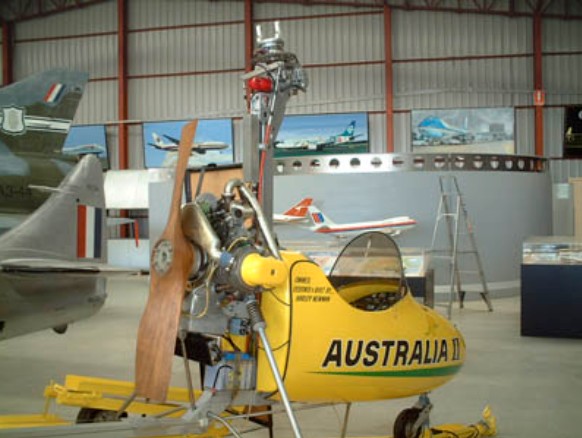
The Australia II was owned, designed and built by Sydney Engineer Mr. Harley Newman. The advantages of Australia II over the original gyrocopter, named Australia, include a more streamlined overall design, lighter weight and a single rudder to reduce the air drag created by the twin rudders on the original machine.

The engine is a turbo charged 900cc BMW motor bike engine. Features of the aircraft include a Streamlined Cabin, Hydraulic Pre-Spin Wind Up for the Rotor Blades, Full Instrumentation, Hydraulic Disc Brakes, Self Starter, Radio Communication, Cabin Controlled Adjustments for Advance and Retarding the engine, altering the Fuel Mixture of the Carburettor and directing the Oil Flow from the Hydraulic Pump to the Hydraulic Motor in the Rotary Head.

The fuel tank has been designed to be an integral part of the cabin area. Also of note was the design of the Tail Plane and Rudder.

Australia II was never flown. However, a considerable amount of Ground Testing and Development on the Engine, particularly the Turbo Charger had been carried out. At the time of Mr. Newman’s death this machine was producing high Horsepower and Static Thrust. At the time of it’s construction, Australia II was by far the most technically advanced Gyrocopter in Australia.

Australia II was donated to the Australian Aviation Museum by Harley Newman’s son Gordon, as this was his father’s wish.
Newman, Harley

Australia.
Harley Newman had very little education, virtually none in fact. He came from Victoria to Sydney at the age of 14 and later qualified as a Boilermaker. This was his only formal qualification. Mr. Newman became a self taught Engineer over the period of his life, having been born with a great gift for all things mechanical.
Mr. Newman died on Saturday September 13th, 1986 while flying his Gyrocopter, named Australia. No reason for his death could be found.