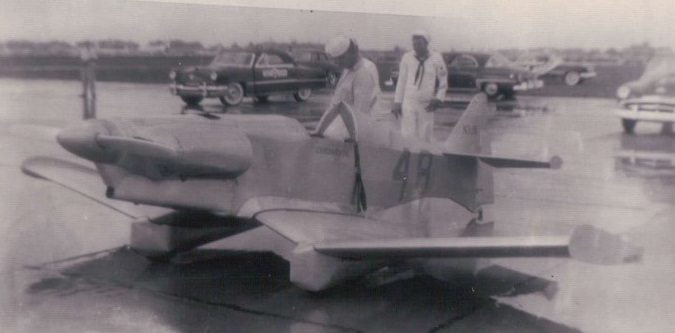
The Northrop Special was built by Russ Northrop in 1952. Powered by an 85hp Continental C-85, he inverted gull-wing midget racer was competed into 1955, then was sold as N33N.
Courtesy Don Stits
It is sometimes credited to Northrop Aviation, but there was no connection, and the spelling of Russell’s name is seen both ways.
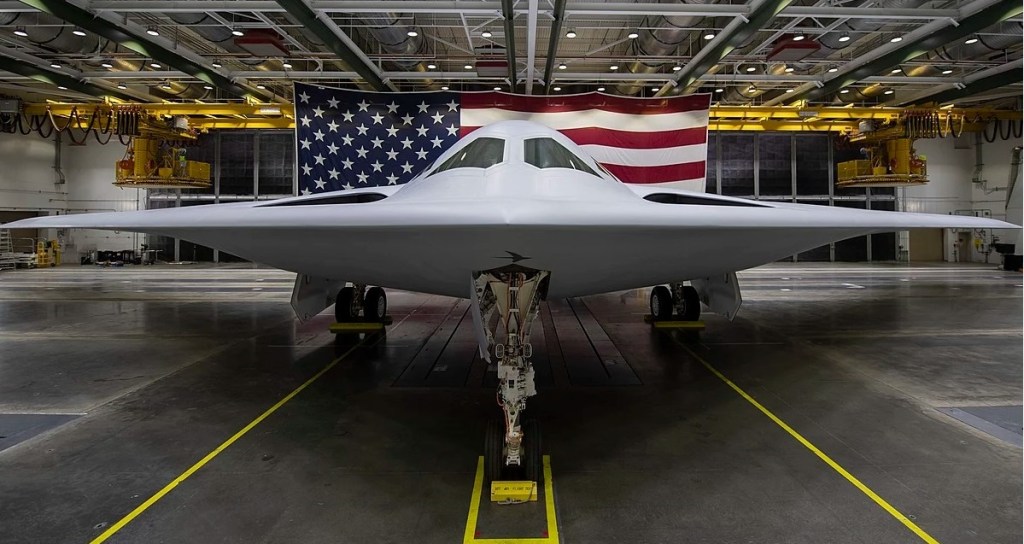
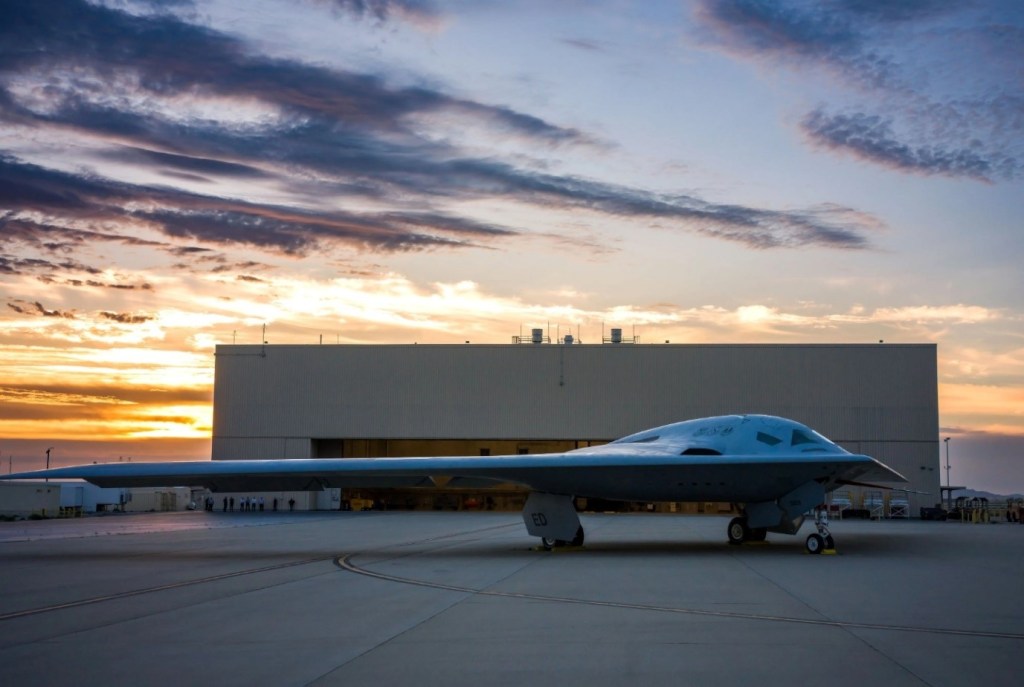
B-21 in a hangar at Plant 42 in Palmdale, California
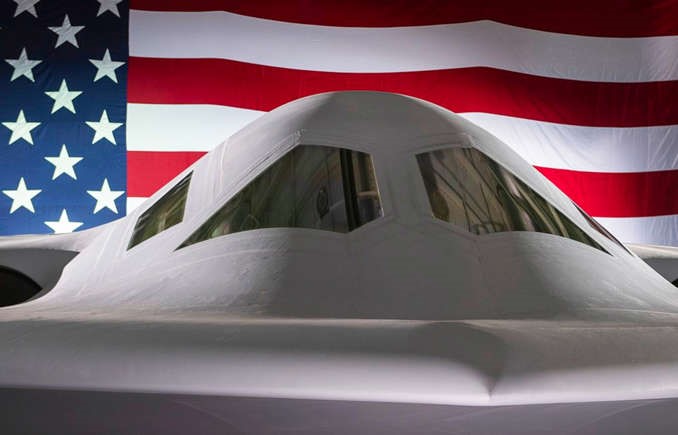
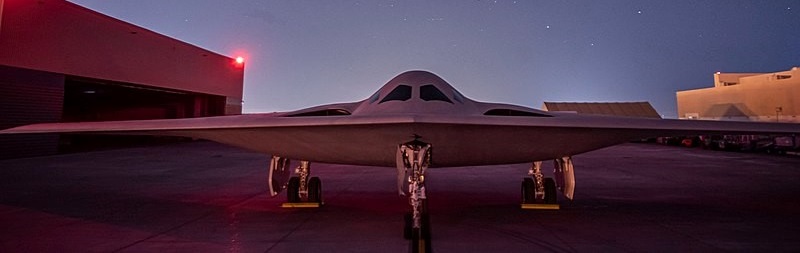
The Northrop Grumman B-21 Raider is an American strategic bomber under developed for the United States Air Force (USAF) by Northrop Grumman. As part of the Long Range Strike Bomber (LRS-B) program, it is a long-range, stealth intercontinental strategic bomber for the USAF, able to deliver conventional and thermonuclear weapons.
The classified Long Range Strike Bomber (LRS-B) program began in 2011, and the Air Force issued a request for proposal to develop a LRS-B aircraft in July 2014. A development contract was awarded to Northrop Grumman in October 2015. Boeing and Lockheed Martin, who submitted losing bids for the project, filed bid protests; in October 2016, the Government Accountability Office (GAO) rejected the challenges and sustained the USAF’s decision to award the LRS-B contract to Northrop Grumman. The GAO report revealed that cost was the deciding factor in selecting Northrop Grumman over the Boeing-Lockheed Martin team.
In March 2016, the USAF announced seven tier-one suppliers for the program: Pratt & Whitney, BAE Systems, Spirit AeroSystems, Orbital ATK, Rockwell Collins, GKN Aerospace, and Janicki Industries.
Many aspects of the B-21 program are highly classified; the program is designated as a special access program. The Congressional Research Service noted in a report that the B-21’s technical details and specifications, such as speed, enabling systems, “size, required stealth, structure, number and type of engines, projected weapons, and onboard sensors remain classified” although some information about various other aspects of the program have been made public since 2015. A 2015 media report said that the Air Force wanted the bomber to also function as an intelligence collection platform, battle manager, and interceptor aircraft. In 2016, then–Secretary of the Air Force Deborah Lee James said that the B-21 would be a “fifth-generation global precision attack platform” with networked sensor-shoot capability. Northrop Grumman described the B-21 at its 2022 “unveiling” as “the world’s first sixth-generation aircraft.”
The F-35 program manager Chris Bogdan said the B-21’s engines would be similar enough to the F-35’s Pratt & Whitney F135 engine to reduce its cost.
In January 2020, Air Force officials released new B-21 renderings and Northrop Grumman, showing the distinctive flush and blended inlets and the two-wheel main landing gear design. The drawing appeared to show a smaller, lighter aircraft than the B-2.
The program completed its critical design review in December 2018.
In September 2022, the USAF announced that the B-21 was to be unveiled in early December 2022 in Palmdale, California. The bomber was first shown to the public at a 2 December 2022 ceremony at Northrop Grumman’s production facilities in Palmdale, California. At the unveiling, Northrop CEO Kathy Warden said that the B-21 is designed with modular, open systems architecture to allow easy upgrades, and potentially, the ability to export components to foreign buyers. Warden said that the B-21’s internal operations were “extremely advanced compared to the B-2” and that the B-21 was slightly smaller than the B-2, with a longer range.
While the potential for an uncrewed flight was not mentioned during the ceremony, a US Air Force spokeswoman said the aircraft was “provisioned for the possibility, but there has been no decision to fly without a crew”.
At the 2016 Air Warfare Symposium, Air Force officials announced that the LRS-B would be formally designated “B-21” because the aircraft would be the 21st century’s first bomber. In September 2016, Air Force officials announced that the B-21 would be named “Raider” in honor of the Doolittle Raiders. The then-remaining survivor of the Doolittle Raiders, retired Lt. Col. Richard E. Cole, was present at the naming ceremony at the Air Force Association conference.
The head of the Air Force Global Strike Command said he expected the service would place an initial order for 100 B-21s and build up to a full fleet of 175 to 200. Two USAF studies suggested that Air Force could increase its initial purchase from 80-to-100 to 145 aircraft. Initial operating capability (IOC) was expected to be reached by 2030.
Assembly of the B-21 takes place at the United States Air Force Plant 42 near Palmdale, California, at the same facility Northrop Grumman used during the 1980s and 1990s to build B-2 bombers. In January 2017, Northrop Grumman was awarded a $35.8 million contract modification for a large coatings facility at Plant 42, to be completed by the end of 2019; the contract announcement did not specifically mention B-21, but the facility was likely meant for B-21 stealth coating. Because the program is classified, officials released very little information about it. By the summer of 2019 it was reported that construction of the first unit was underway. In early 2021, several media outlets reported that as completion of the first B-21 approached, construction on the second unit had begun.
By February 2022, six B-21s were under construction. The first B-21 was moved to a calibration facility the following month. About 5,000 Northrop Grumman employees worked on the program as of December 2022.
As of 2022, the B-21 was expected to enter service by 2026 or 2027. It is to complement and eventually replace the Northrop Grumman B-2 Spirit, but not the Boeing B-52 Stratofortress bombers.
In December 2022, the cost of a B-21 aircraft was estimated to be US$700 million; at the time, Air Force officials estimated that the cost to develop, purchase, and operate a fleet of 100 B-21s over a 30-year period would be at least $203 billion.
The first B-21 at Northrop’s Plant 42 in Palmdale, California, 29 November 2022.
Maintenance and sustainment of the B-21 will be coordinated by Tinker Air Force Base, Oklahoma, while Edwards Air Force Base, California, will lead testing and evaluation. In March 2019, Ellsworth was selected as the base to host the first operational B-21 unit and the first training unit.
In May 2022, the USAF announced that they expected first flight of the B-21 to take place in 2023.
The new bomber has stayed on cost and on schedule. The Air Force has set a $500 million ceiling for the unit cost in 2010 dollars; in 2019, Northrop said the Air Force’s target cost would be just over $600 million, accounting for inflation.
The first new B-21s will be based out of Ellsworth Air Force Base in South Dakota, and formal training will be conducted there as well. Maintenance and sustainment will be handled at Tinker Air Force Base in Oklahoma, while testing and evaluation is being performed at Edwards Air Force Base in California.
B-21, also known as Cerberus, achieved its first flight to Edwards Air Force Base on November 10, 2023.
The consortium of Northrop Grumman and its subsidiary, Scaled Composites, along with BAE Systems, was among the most favoured teams to win the competition to replace hundreds of T-38 Talon trainers for the USAF under the T-X program.
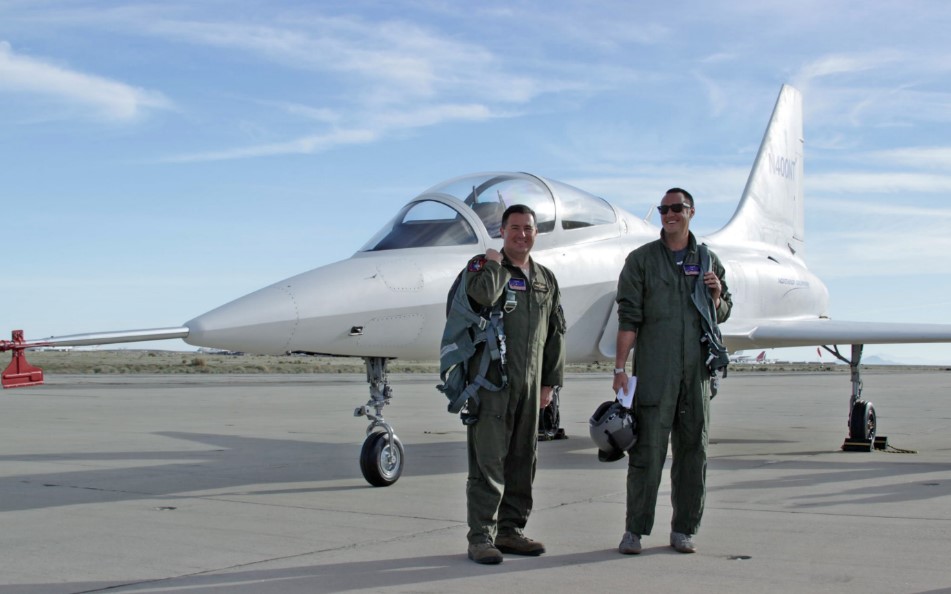
The Northrop Grumman and their teammates were progressing well with their T-X entrant, which received the in-house name Model 400. The jet was first spotted at Mojave Air And Space Port, where Scaled Composites calls home, in late August of 2016. The company made no comment on the prototype even as low quality photos of it taxiing hit the web. Not too long after it took to the skies, but still the only indication from Northrop Grumman that it existed was them stating that the Model 400 prototype would be officially unveiled in early 2017.
Originally, Northrop Grumman intended to run with an updated version of BAE System’s Hawk T2 trainer, but that idea was axed when it was clear that the 40-plus-year-old design would not meet the USAF’s performance requirements. Following this change in strategy, Northrop Grumman’s design process became especially secretive—although it was widely known that Scaled Composites, acquired by Northrop Grumman in 2007, would be heavily involved.
Dubbed the Model 400, the aircraft looks like a modernized, composite hybrid of the T-38 Talon and the F-20 Tigershark. It packs a single F404-GE-102D engine, a derivative of the same engine used in the F/A-18A/D, the JAS-39A/D (Volvo RM12), the F-117A, and India’s Tejas light fighter—as well as Lockheed’s T-X competitor, the T-50A.
The engine/airframe appears to lack an expanding nozzle usually indicative of an afterburning capability. Ultimately, this design can potentially be pitched as an entirely new aircraft while still leveraging Northrop’s hugely successful T-38 Talon lineage.
Just around the time that the company was supposed to officially unveil their exciting new T-X contender, one that had been flying for some time at that, the company canned its participation in the T-X program entirely. The move was startling to say the least, with Northrop Grumman not only giving up the possible opportunity to build at least 350 new tactical jets—an opportunity that is becoming increasingly rare—but also giving up on 50 plus years of pilot training heritage.
Model 400 test pilots. Note the rear main landing appear to be borrowed from the T-38
A statement by Northrop Grumman reads: “Northrop Grumman and its principal teammate BAE Systems have carefully examined the U.S. Air Force’s T-X Trainer requirements and acquisition strategy as stated in the final request for proposals issued on Dec. 30, 2016. The companies have decided not to submit a proposal for the T-X Trainer program, as it would not be in the best interest of the companies and their shareholders.”
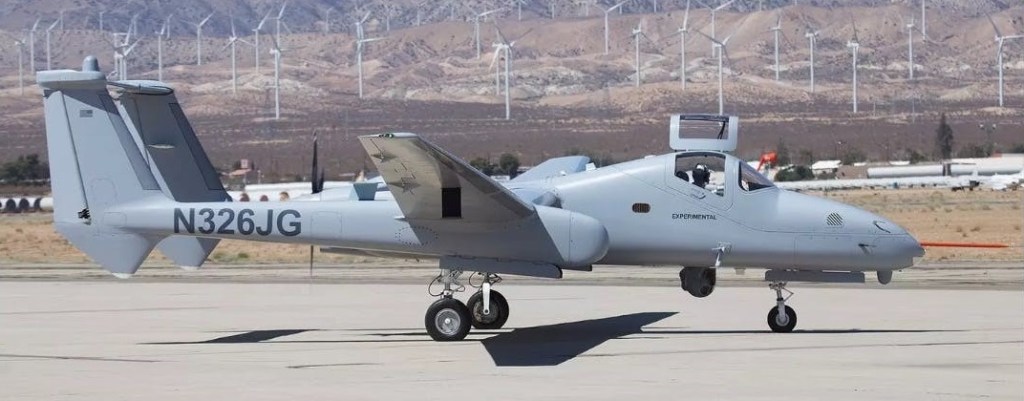
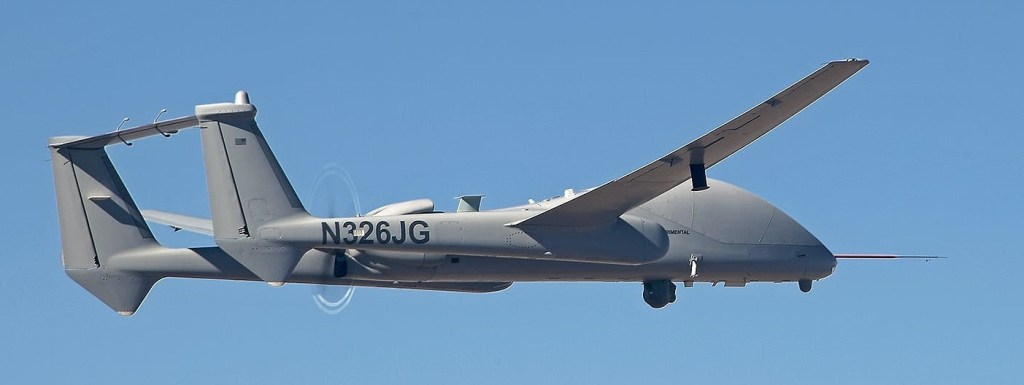
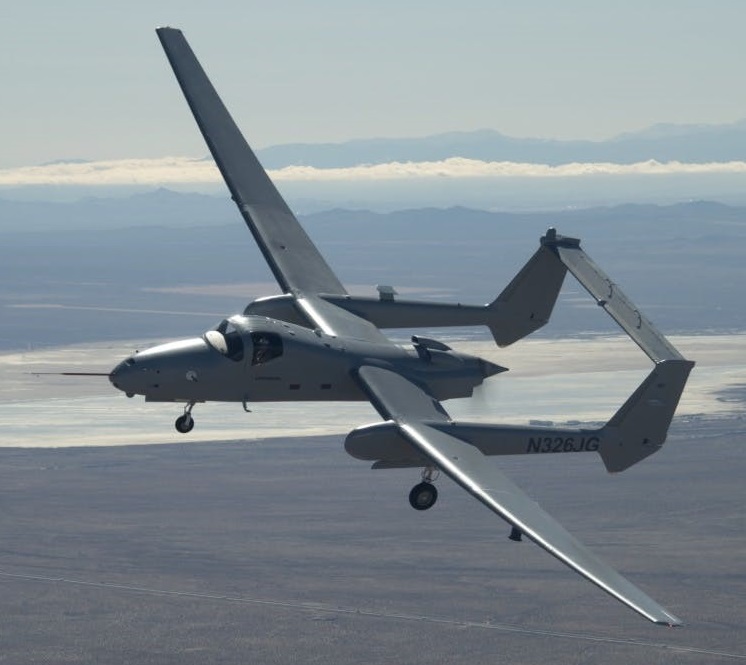
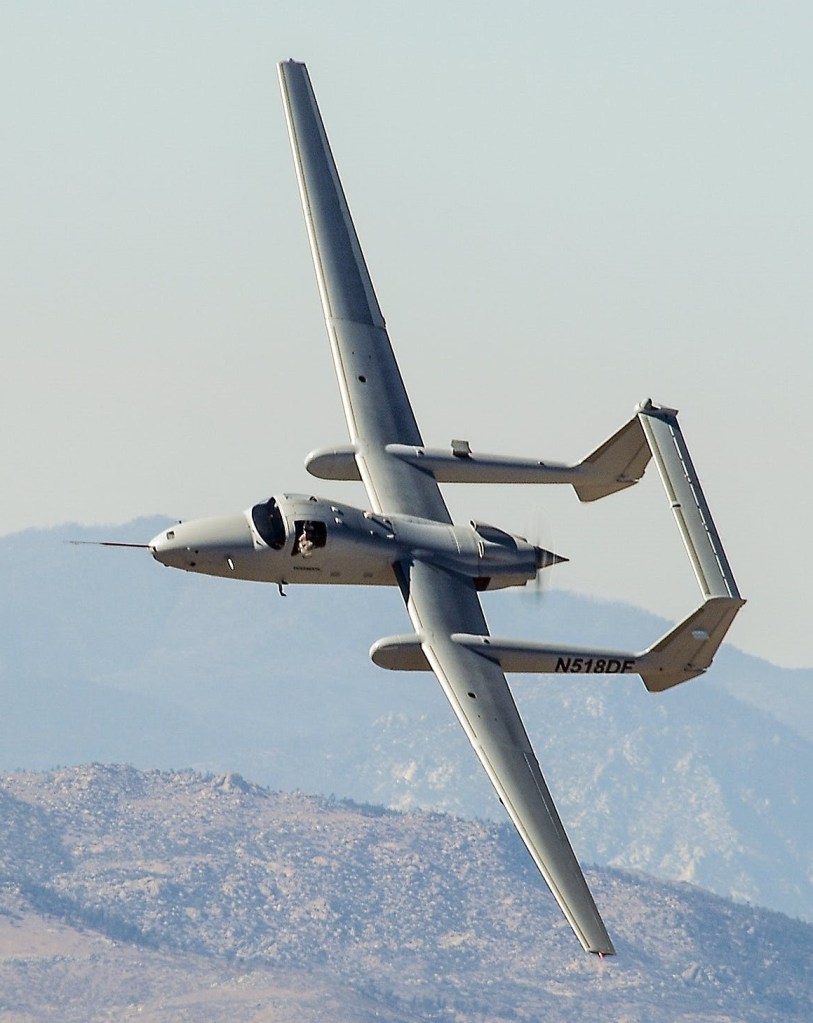
The Firebird concept actually dates the back to the latter half of the 2000s, with Scaled Composites, Northrop Grumman’s storied subsidiary, eventually building a technology demonstrator. That highly experimental aircraft was a forerunner to the current Northrop Grumman designed Firebird, which is a clean-sheet, production-ready aircraft. Scaled Composites’ Firebird demonstrator first flew in 2010 and proved that an optionally manned, highly flexible surveillance aircraft could not only work, but it could compete for missions with both unmanned and manned platforms at the same time.
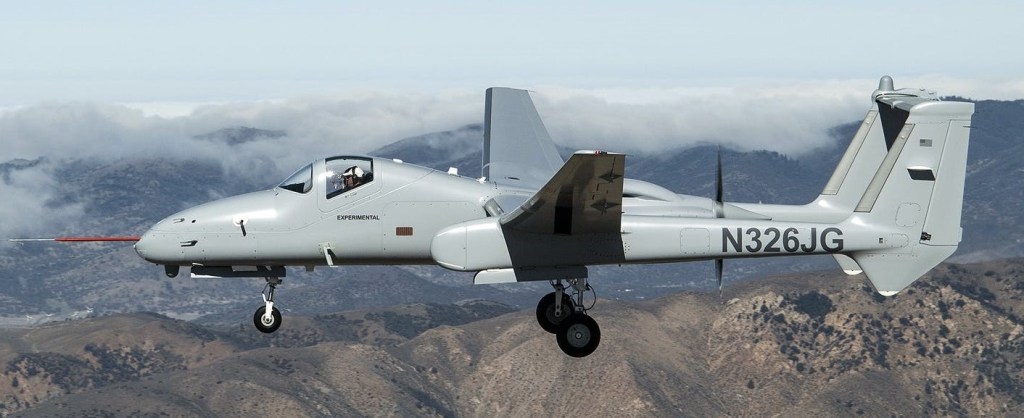
Firebird in manned configuration. It can be flown by one or two pilots and uses open architecture Garmin 3000 avionics.
Firebird is that it can self-deploy anywhere in the world with a pilot at its controls and even work out of small, rough airfields. Once forward deployed, it can then be converted into unmanned configuration and fly missions lasting over 30 hours. It single six-cylinder Lycoming TEO-540 engine runs on avgas.
Firebird in unmanned mode.
Being able to tailor payloads to the operating environment and mission, some operations and operating areas benefit from or even necessitate a human in the cockpit, while others largely benefit from long-duration missions run from a ground station. Being able to provide both in one airframe is revolutionary, at least in terms of a purpose-built aircraft being sold and sustained by an American aerospace-defense prime contractor.
The Firebird can be easily broken down and flown on a transport. Its modular carbon fiber design made this nearly a default capability.
Firebird was into the back half of its flight test program circa 2019.
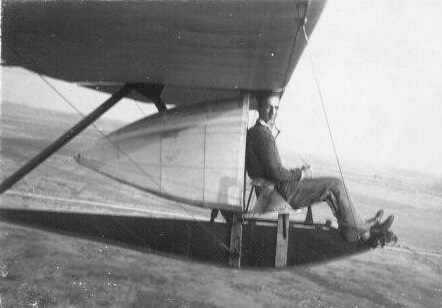
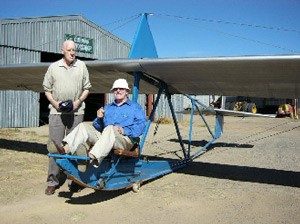
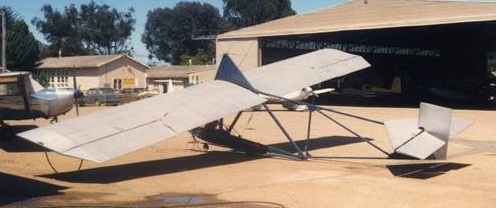
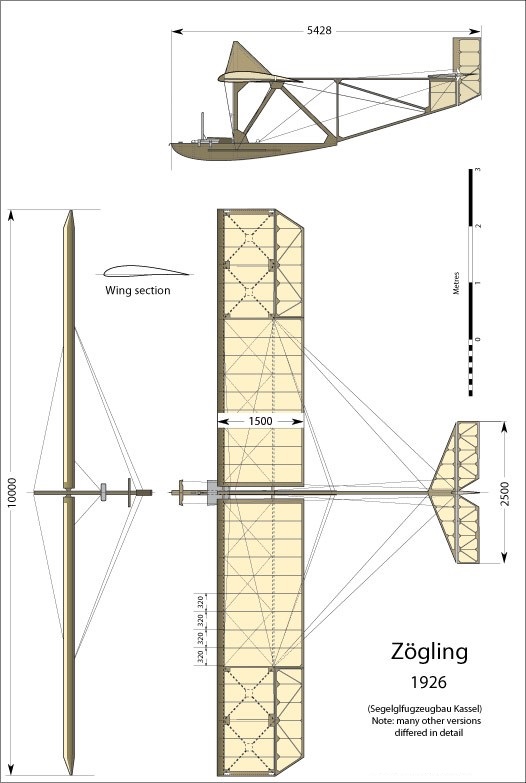
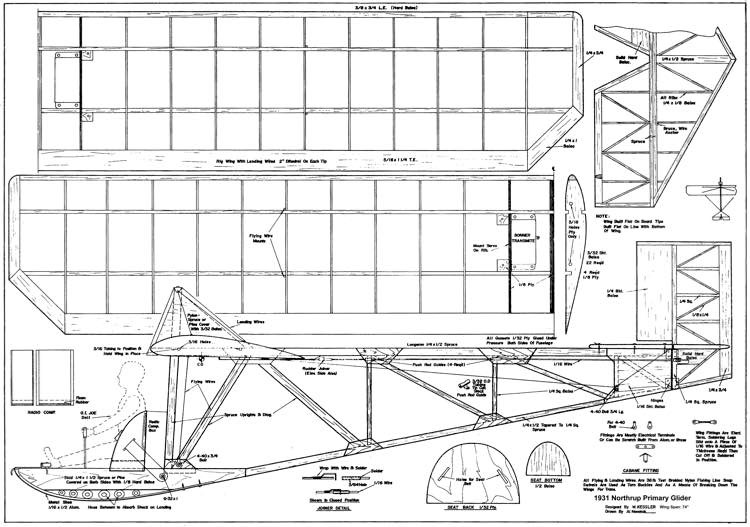
The “Northrop” is an American copy of the “Zogling” which was designed in Germany in the 1920s as a training glider. Apparently, the Northrop primary glider takes its name from a Marvin Northrop of Minneapolis who imported a Zogling from Germany and from that glider had plans drawn and published in Modern Mechanics in 1930.
Thousands of Primaries were built all over the world starting with the Grunau 9 by Edmund Schneider. The Zogling was copied and modified by many. In Britain Slingsby got started with a copy called the “Dagling”
Wingspan: 10 m Wing area: 15 sq.m Wing chord: 1.5 m Length: 5.428 m Empty weight: 86 kg Takeoff weight: 170 kg Aspect ratio: 6.7
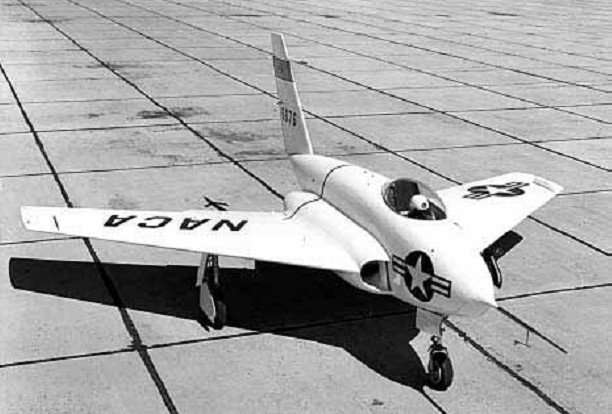
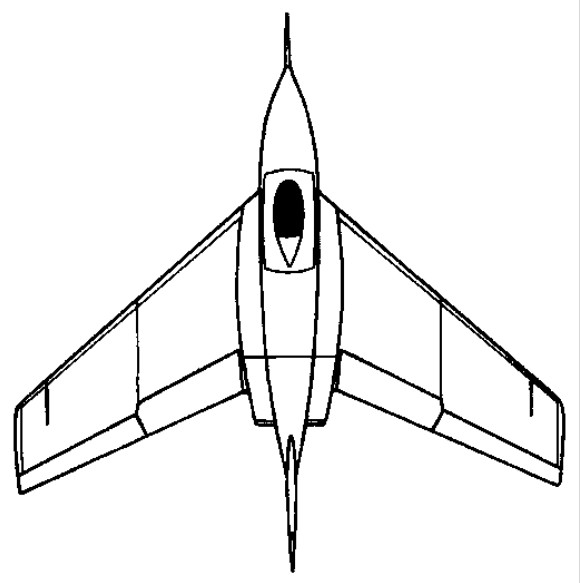
The Northrop X-4 was the first example of an X-vehicle intended to research something besides supersonic flight. The jet-powered X-4 was designed to evaluate the characteristics of a tailless aircraft at high subsonic speeds, a configuration believed to hold a great deal of promise for future aircraft.
The final Northrop flying wing design, although it could more accurately be described as a tailless aircraft, was the XS-4 Skylancer, a transonic research vehicle with two 726kg thrust Westinghouse turbojets. Later redesignated X-4, the first of two aircraft flew at Muroc on 16 December 1948, followed by the second on 7 June 1949.
Although not designed for supersonic speeds, the X-4 nevertheless proved that tailless swept-wing aircraft were not well suited for high transonic or supersonic performance. Pitch, roll, and yaw instabilities were very pronounced at speeds in excess of Mach 0.88, and there was no solution to the problem using the technology available at the time. The last flight was made on 29 September 1953. After a total of 102 flights, the highest achieved was 42,300 feet (approx) and fastest Mach 0.90 (630 mph) (approx).
Both aircraft survived the flight test program, and there were no serious accidents during the 102 flights. The first X-4 was on display at Edwards AFB. The second aircraft, after long being displayed at Maxwell AFB, Alabama, moved to the Air Force Museum in Dayton, Ohio.
X-4 Bantam Engines: 2 x Westinghouse turbojets, 726kg each Max take-off weight: 3175 kg / 7000 lb Wingspan: 8.18 m / 26 ft 10 in Length: 7.1 m / 23 ft 4 in Wing area: 19 sq.m / 204.51 sq ft Max. speed: 1000 km/h / 621 mph Crew: 1
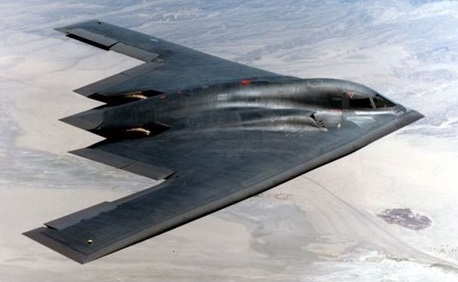
Development of the B-2 was begun in 1978, and in designing the Advanced Technology Bomber (ATB), as the B-2 project was originally known, the Northrop Company decided on an all-wing configuration from the outset. Flying-wing devotees such as Hugo Junkers and Jack Northrop argue that a flying wing will carry the same payload as a conventional aircraft while weighing less and using less fuel. The weight and drag of the tail surfaces are absent, as is the weight of the structure that supports them. The wing structure itself is far more efficient because the weight of the aircraft is spread across the wing, rather than concentrated in the centre.
The B-2 design is a flying wing with straight 40 degree sweep leading-edges and a sawtooth trailing edge. Its centrebody is smoothly contoured into the upper wing surface. The centrebody houses the two-man crew compartment and the two weapons bays, one on each side of the centreline. The cockpit compartment is accessed through a ventral hatch and has large cockpit windows to improve the pilots angular field of view, yet the nose-down view remains very limited. The engines lay outboard the weapon bays in the upper wing surface. The exhausts are positioned forward of the wing trailing edge to reduce heat signature.
Because of the big wing area and wing span, the lift needed per square foot of wing is not as high compared to other designs of the same weight. Therefor the B-2 does not need complex flaps. It operates over a smaller angle of attack.
The all-wing approach was selected because it promised to result in an exceptionally clean configuration for minimizing radar cross-section, including the elimination of vertical tail surfaces, with added benefits such as span-loading structural efficiency and high lift/drag ratio for efficient cruise. Outboard wing panels were added for longitudinal balance to increase lift/drag ratio and to provide sufficient span for pitch, roll and yaw control. Leading-edge sweep was selected for balance and trans-sonic aerodynamics, while the overall planform was designed for neutral longitudinal (pitch) static stability. Because of its short length, the aircraft had to produce stabilizing pitchdown moments beyond the stall for positive recovery. The original ATB design had elevons on the outboard wing panels only but, as the design progressed, additional elevons were added inboard, giving the B-2 its distinctive ‘double-W trailing edge. The flight-control surfaces are operated by a fly-by-wire control system to ensure optimum control responses in this design of relaxed stability intended for positive aerodynamic control at all times, throughout the airframe, emphasis is placed on completely smooth. The wing leading edge is so designed that air is channelled into the engine intakes from all directions, allowing the engines to operate at high power and zero airspeed. In trans-sonic cruise, air is slowed from supersonic speed before it enters the hidden compressor faces of the GE F118 engines.
A stores management processor is in place to handle the B-2’s 22,730kg weapons load. A separate processor controls the Hughes APQ-181 synthetic-aperture radar and its input to the display processor. The Ku-band radar has 21 operational modes, including high-resolution ground mapping. The B-2 lifts off at 260km/h, the speed independent of take-off weight. Normal operating speed is in the high subsonic range and maximum altitude around 15,240m. The aircraft is highly manoeuvrable, with fighter-like handling characteristics.
The US Air Force originally wanted 133 examples, but by 1991 successive budget cuts had reduced this to 21 aircraft.
First revealed in November 1988, the prototype flew on 17 July 1989, and the first production B-2 was delivered to the 393rd Bomb Squadron of the 509th Bomb Wing at Whiteman AFB, Missouri, on 17 December 1993. Northrop delivered 21 B-2A Spirit stealth bombers, achieving initial operational capability with the USAF in April 1997 and full capability with the 715th Bomb Squadron in 1999.
With a crew of two, it is powered by four 19,0001b thrust F 118 GE 100 engines (as used in the F 16) and has a published speed of 0.72 Mach. The multi role bomber is publicised as fuel efficient, able to carry a “substantial bomb load” and with “excellent range”. Unit cost: Approximately US$750 million
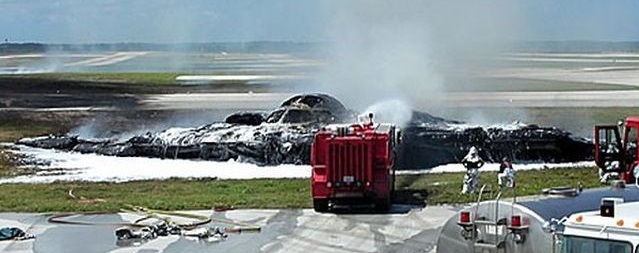
When B-2 89-0127, named the Spirit of Kansas, crashed on takeoff at Andersen Air Force Base in Guam, it immediately became the most expensive accident in USAF history. The crash was determined to have been caused by moisture in the port transducer units which resulted in the distortion of information sent to the aircraft’s air data system. The B-2’s flight control computers calculated an incorrect air speed and angle of attack, causing the nose to pitch-up 30 degrees and sending the aircraft into an unrecoverable stall. The pilots ejected safely, though the Spirit of Kansas was reduced to a $1.4 billion pile of burning wreckage.
Northrop B-2A Spirit Engines: 4 x General Electric F-118-GE-100 turbofan, 17,300 lb / 7,847 kg Length: 69 ft (20.9 m Height: 17 ft / 5.1 m Wingspan: 172 ft / 52.12 m Wing area: 3982.68 sq.ft / 370.0 sq.m Takeoff Weight (Typical): 336,500 lb / 152,635 kg MTOW: 371,000 lb / 168,286 kg Max speed: 475 mph / M0.76 Cruising speed: 516 kt / 955 km/h Ceiling: 50,000 ft / 15,152 m Op radius: 3800 mile / 6115 km Payload: 40,000 lb / 18,144 kg Crew: Two pilots, with provisions for a third crew station
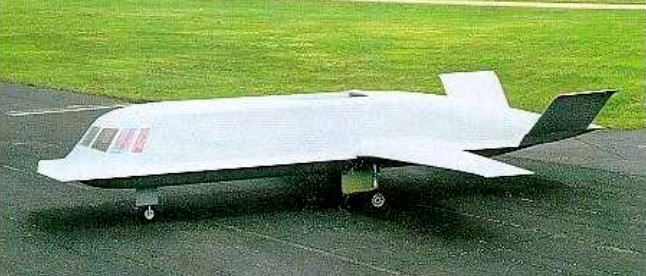
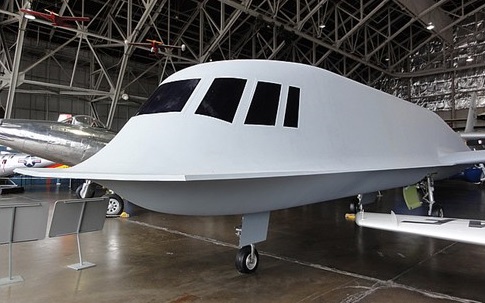
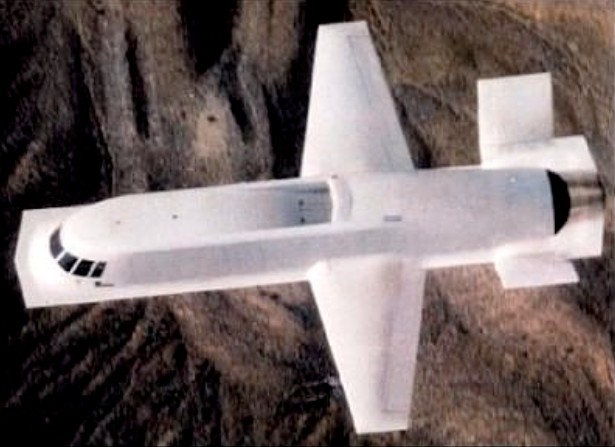
The “Tacit Blue” was built to test the advances in stealth technology. The aircraft made its first flight in February 1982 and by the conclusion of the program in 1985 had flown 135 times.
The entire program cost $165 million and Northrop, as the main contractor, received $136 million. The data collected from the Tacit Blue project was later used on the B-2 Spirit, also made by Northrop.
Tacit Blue Engines: 2 x Garrett ATF3-6 Max take-off weight: 13500 kg / 29763 lb Wingspan: 14.69 m / 48 ft 2 in Length: 17.0 m / 55 ft 9 in Height: 3.23 m / 10 ft 7 in Cruise speed: 460 km/h / 286 mph Ceiling: 9000 m / 29550 ft