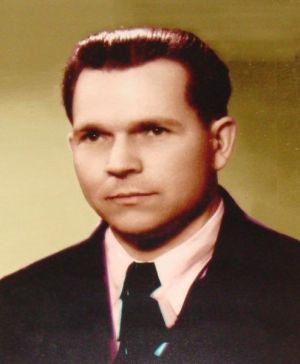
Oškinis, Bronis

Bronis Oškinis was born April 15, 1913 in Barzdai, Šakiai county, Lithuania, in the family of Jonas and Agnieška Oškiniai.

In 1920 the family moved to Kaunas. 1928–1933 Bronis Oškinis studied at Kaunas Higher Technical School (ATM). Interested in aviation, he was one of the Kaunas ATM aviation group, founded on 13 December 1931.

After completing aviation courses, he led the construction of gliders in ATM workshops.

Reconstructed the German training glider RRG-23 “Zoegling” and in August 1932 developed the Lithuanian T-1 (“Technikas-1”) glider. In Pažaislis, this glider was tested by military pilot Gregorius Radvenis. The first flight was performed by B. Oškinis himself.

In 1933, with others, in Nida set up a gliding school. He later constructed the BRO-2 and BRO-3 gliders. He learned to fly not only gliders but also airplanes. In 1936 appointed Deputy Chief of the Zokniai Military Aviation Workshop. He later served as a military pilot in the 3rd Squadron.

Oškinis tested the BRO-4 “Rūta” glider for acrobatic flying in 1937. Jonas Pyragius and Bronius Oškinis participated in the 1937 world meeting in Elmyra (USA), where B. Oškinis flew the LAK glider “Biržietis”, and J. Pyragius – BRO-5 “Rūta”.

In 1938 he graduated from the Lithuanian Military Pilot School and 1938–1940 studied aeronautics at the Technical University of Berlin. He returned to Lithuania in 1940 and was assigned to the workshop of the National Aviation Squadron of the 29th Territorial Rifle Corps in Pivonia (near Ukmergė). 1941–1944 worked in Kaunas aviation workshop in Freda as a production controller, repaired German Junkers Ju-88 and during 1942–1944 studied at Kaunas Vytautas Magnus University.

1944–1945 was arrested and taken to the Podolsk camp, returning to Kaunas 1947, he gave lectures at the State University and continued to develop new gliders. During 1956–1962 was Head of Kaunas Gliding Station, later headed a gliding school in Palanga.
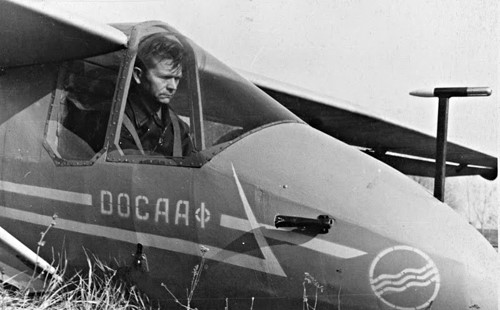
Bronius Oškinis in his design glider BrO-12

Serial production of Bronius Oškinis gliders BRO-9 “Grasshopper”, BRO-11 “Pioneer” and BRO-12 was started in Simferopol aviation workshop. They flew in all aviation sports clubs of the former USSR. 1962 An Experimental Sport Aviation Factory was established in Prienai, where B. Oškinis worked as a designer. Much attention was paid to the development of gliders for young people. They introduced many innovations, using slit wings, slit flaps and ailerons.

Bronius Oškinis developed 25 gliders of various modifications and died on April 7, 1985 in Palanga.

He was awarded by the Lithuanian government and FAI (International Aeronautics Association). The Lithuanian Children’s Aviation School and the street in Palanga are named after him.

Ošk gliders
T-1 (BrO-1) (1932)
T-2 (BrO-2)
BrO-3 “Fluff” (1936)
BrO-4 “Ruth”
BrO-5 “Ruth II” (1938)
BrO-6 “Fluff”
BrO-9 Grasshopper
BrO-10 “Fluff”
BrO-11 Pioneer
BrO-11 M Tit
BrO-12 (1957)
BrO-14
BrO-16 “Pempė” (1973) – water glider
BrO-15 “Raguva”
BrO-17S Bite (1974)
BrO-17V “Antelė” – water glider
BrO-18 Boružė (1975) the smallest glider in the world
Br0-19 “Duck”
BrO-20 “Fluff”
BrO-21 “Vyturys”
BrO-22 “Rūtelė”
BrO-23 “Herons”

Oškinio sport airplanes
BRO-7
BRO-8
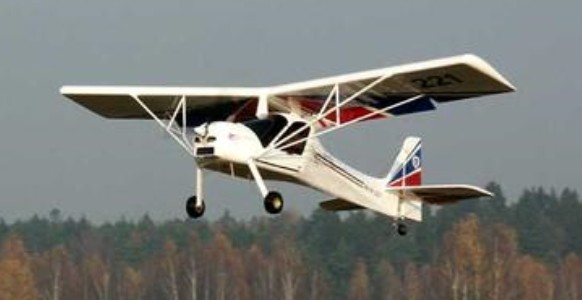
Oskbes Mai MAI-223

MAI-223 is a single-engine two seater semicantilever monoplane-parasol with non-retractable landing gear. Perfect controllability in all channels and an excellent pilot view from the cockpit make the plane extremely safe and pleasant for piloting. High thrust-to-weight ratio, high-lift device and landing gear with tail wheel allow to use airplane from short, unprepared runways. Floats and ski landing gear are enabled. Due to the folding wing airplane is very convenient for storage and transportation. 2009 Price: 27150 EURO

MAI-223
Engine Options: Rotax 912S
Stall (full flaps): 38 kt / 44 mph / 71 kmh
Cruise: 97 kt / 112 mph / 180 kmh
VNE: 105 kt / 121 mph / 195 kmh
Empty Weight: 320 kg / 705 lbs
MTOW Weight: 600 kg / 1323 lbs
Climb Rate: 800 ft/min / 4.2 m/s
Take-off distance (50ft obstacle): 1180 ft / 360 m
Landing distance (50ft obstacle): 950 ft / 290 m

Osbourn Twin Cadet

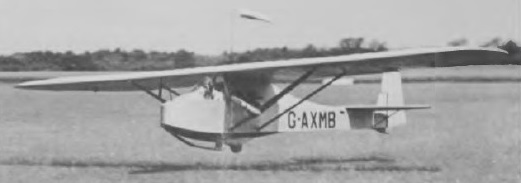
This powered converison of a T8 Tutor was made by E. W. Osbourn at Cranfield, Bedfordshire, in 1969 and was known as the Twin Cadet Mk 1. It was fitted with two 197cc Villiers 9E single-cylinder two-stroke engines mounted on the wing bracing struts and driving two small propellers just behind the pilot’s head. The prototype, G-AXMB (ex-VM590 and BGA 805) first flew with power on 20 September 1969. and received its Authorisation to Fly on 2 July 1970. It was later re-engined with a single 500cc Triumph T100 motorcycle engine mounted in the nose and first flew in this form as the Cadet Mk 2 at Cranfield on 22 January 1972, receiving its Authorisation to Fly on 6 June that year.

Twin Cadet Mk 1
Span: 38 ft 6 in
Length: 20 ft 10.5 in
Tare weight: 455 lb
All-up weight: 657 lb
Max speed: 60 mph (power on)
Cruising speed: 40 mph (power on)
Range: 100 miles

Orme 1908 biplane

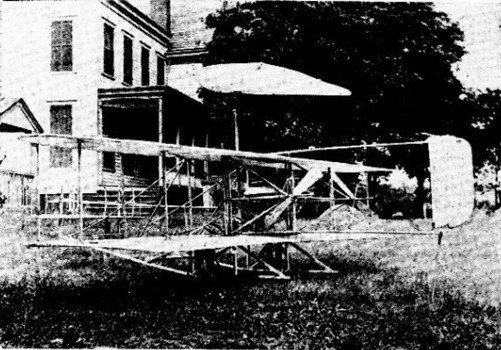
Washington DC man Harry Orme’s machine was generally similar to a Wright biplane, but differed in several respects. It was powered by an 8 hp 45 lb Belgian-made motor driving two propellers, with variable pitch. Over the top wing was a smaller “mushroom-shaped” wing on springs, capable of being distorted, and “intended to act as a bird’s tail does”, which Orme claimed would “prevent the sudden plunging of the aerial craft to the earth if any mishap occurs.” It didn’t help in December of 1908 when a loose wire got in the way of the propellers, breaking them, and ruining many support wires. The plane probably never flew again

Orlican VT-16 Orlik / VT-116 Orlik II / Let VT-16 Orlik

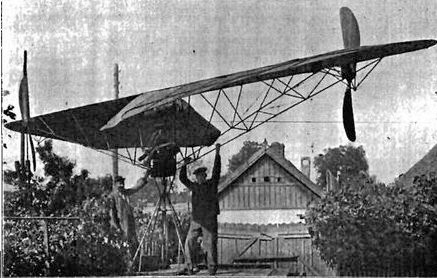
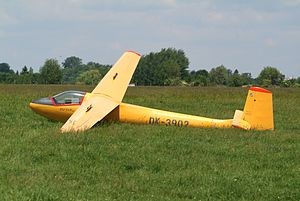
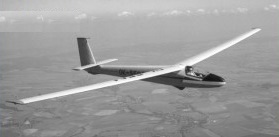
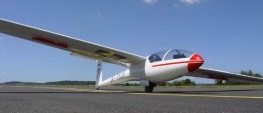
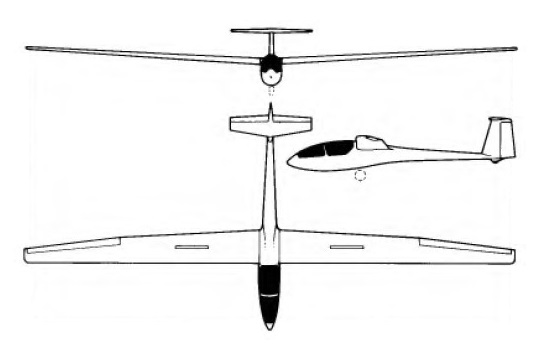
The VT-16 Orlik was designed by Jiri Matejček and is a high-wing monoplane of all-wood construction, except that the skin is stabilized with Umakol high-smoothness polystyrene foam. Its wing has a single spar structure with a forward torsion box; the whole wing is plywood skinned and foam filled, allowing the ribs to be comparatively widely spaced. In plan it is straight-tapered with blunt tips; there are 3° of dihedral. It has conventional plain ailerons and spoilers at mid-chord, which extend both above and below the wing.

The pilot sits under a detachable one-piece canopy, with oxygen and radio equipment as optional. The landing gear consists of a non-retractable monowheel and a tailskid. The wooden fin and rudder are both fabric-covered and the all-moving tailplane has a leading edge structurally similar to the wing, with fabric covering aft of the spar, and an anti-servo tab fitted.

The VT-16 Orlik prototype was built by some of the design staff of the Czech Republic Orlican National Works.
At the time of its first flight in August 1959 it was a Standard Class glider with a 15 m (49 ft 3 in) span. Later aircraft had 16 m (52 ft 6 in) and 18 m (59 ft 1 in) spans but it was the 16 m version that went into series production at the Orlican National Works at Chocen.

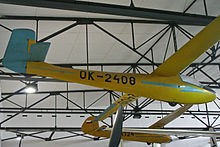
Orlik I on display at the Prague Aviation Museum, Kbely

25 VT-16 Orliks were produced in the first series production run, going to Czech gliding clubs. The Orlik also set several new Czech national gliding records during 1962.

15 VT-16s and 48 VT-116s remain on the Czech civil aircraft register in 2010, though some are disassembled.

VT-16
Span: 52 ft 6 in / 16 m
Length: 24 ft 3 in / 7.40 m
Height: 4 ft 7 in
Wing area: 137.8 sq.ft / 12.80 m2
Aspect ratio: 20.0
Airfoil: NACA 64-818
Empty weight: 474 lb / 215 kg
Max weight: 705 lb / 320 kg
Wing loading: 25.0 kg/m2 (5.1 lb/sq ft)
Max speed: 140 mph / 220 km/h / 120 kn (in smooth air)
Stall speed: 61 km/h / 38 mph / 33 kn
Min sinking speed: 0.56 m/s / 110 ft/min at 63 km/h / 39 mph / 34 kn
Best glide ratio: 32.6:1 at 44 mph / 71 km/h / 38 kn
Seats: 1
about 85 built

VT-116 Orlik II
about 220 built.

Orlican VSO 10

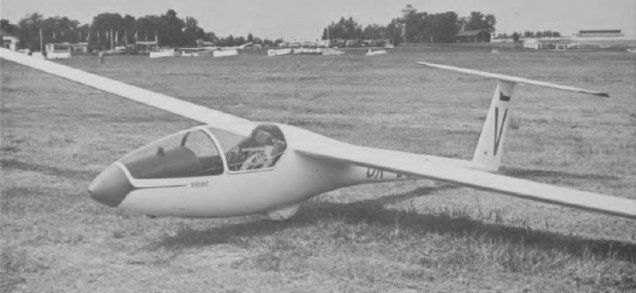
This Czech high performance single-seater was created by the Vyvojova Skupina Orlican – VSO group, whose chief designer is Dipl-lng Jan Janovec and which was formed by members of the former VSB (the Aircraft Faculty of Brno Military Academy) and some of the design staff of the Orlican National Works, which had built the VT-16 Orlik; VSB had produced the VSB-66-S Orlice V-tailed single-seat Standard Class design which first flew on 17 September 1970.

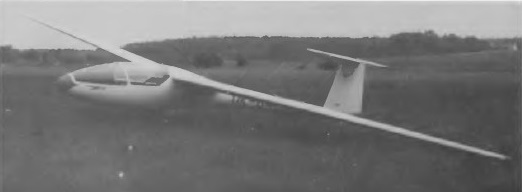
The VSO 10 is the VSO group’s first design and is of mixed construction, employing wood, glassfibre and metal. Design work began in March 1972 and construction of three prototypes, one a static test airframe, began in 1975.

The cantilever single-spar shoulder wings have slight forward sweep and are all-wood structures with a sandwich skin; the slotted ailerons are also of wood and there are metal DFS air brakes in the upper surfaces. The front and centre fuselage sections are glassfibre monocoque structures, the centre portion being reinforced by a steel tube frame on which the wings are mounted. The rear fuselage is a monocoque made of aluminium alloy sheet. The metal T-tail has a fixed-incidence tailplane and fabric-covered rudder and elevators. There is a retractable rubber-sprung monowheel with a drum brake, and a semi-recessed unsprung tailwheel. The pilot sits under a detachable canopy.

The first flight took place on 26 October 1976 and series production began in December 1978.

The VSO-10G took first and second places at the first International Club Class competition held in Sweden in the summer of 1979. To comply with Club Class rules the retractable monowheel was locked down and covered with a glassfibre fairing, this variant being known as the VSO-10C.

VSO 10
Span: 15.0 m / 49 ft 2.5 in
Length: 7.0 m / 22 ft 11.75 in
Height: 1.20 m / 3 ft 11.25 in
Wing area: 12.0 sq.m / 129.2 sq.ft
Aspect ratio: 18.75
Wing section: Wortmann FX-61-163/FX-60-126
Empty weight: 234.4 kg / 516.75 lb
Max weight: 380 kg / 837 lb
Water ballast: None
Max wing loading: 31.67 kg/sq.m / 6.49 lb/sq ft
Max speed: 161 mph / 140 kt / 260 km/h (in smooth air)
Max aero-tow / rough air speed: 99 mph / 88 kt / 163 km/h
Stalling speed: 37 kt / 68 km/h
Min sinking speed: 2.07 ft/sec / 0.63 m/sec at 45 mph / 39 kt / 72 km/h
Best glide ratio: 36.2:1 at 58.5 mph / 51 kt / 94 km/h

Orlandi Hybrid hot-air/hydrogen Balloon

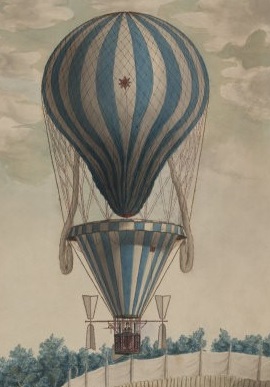
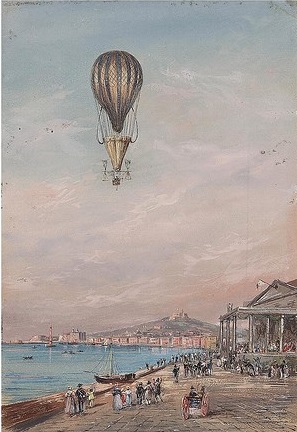
Francesco Orlandi, the most successful with hybrid hot-air/hydrogen type of aerostat, published a treatise on ballooning, suggesting this new design, in 1800. His first flight did not occur until August 30, 1825 after which he made 40 flights. Despite the death in June 1785 of Pilatre de Rozier and Jules Romain in their combination hot-air and hydrogen balloon, experimenters continued to build balloons that combined these elements. The aeronaut Francis Olivari lost his life in one on November 25, 1802, at Orleans, as did Francesco Zambeccari on September 21, 1812, near Boulogne.