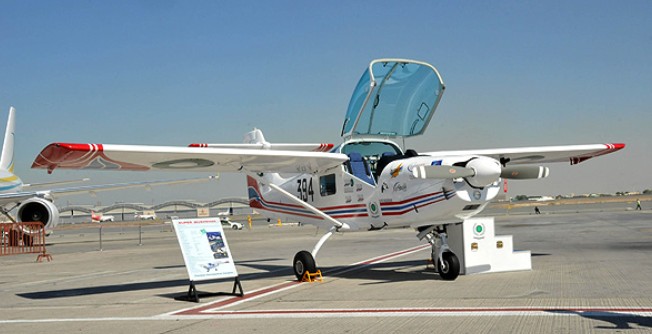
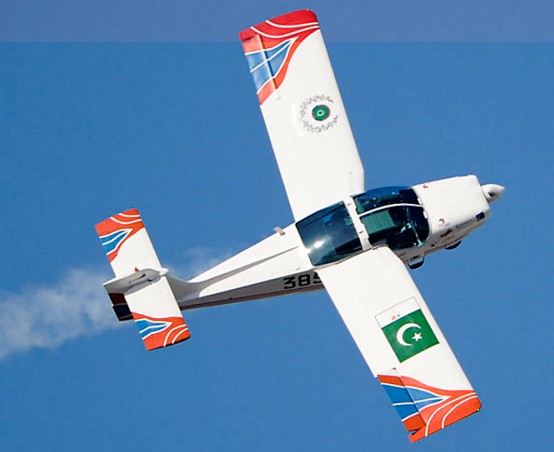
The MFI-395 Super Mushshak is a military trainer / light attack aircraft designed and manufactured by the Pakistan Aeronautical Complex (PAC) for the Pakistan Air Force (PAF) and the Royal Saudi Air Force (RSAF).
The development of the MFI-395 started in 1995. The aircraft was built by upgrading the MFI-17 with an advanced 260hp engine, electrical instruments, dual flight control systems and a Bendix RSA fuel injection system. PAC rolled out the improved version, the MFI-395 Super Mushshak aircraft in 1995.
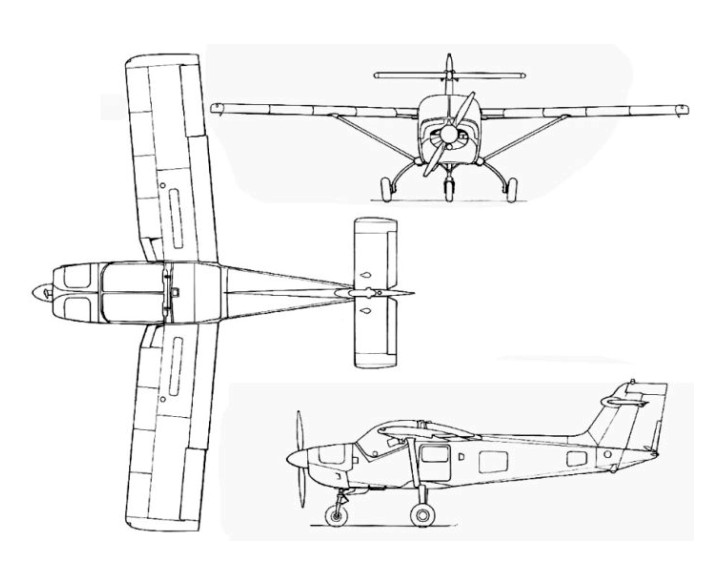
The MFI-395 features a high wing monoplane design. It boasts two integral fuel tanks which carry 47 gallons of fuel. The large baggage compartment located aft of the cockpit can be easily accessed through a door on the rear side of the fuselage.
The Super Mushshak is equipped with a blind screen, which allows the aircraft to carry out instrument flying missions.
The spacious glass cockpit of the MFI-395 accommodates two flight crew members, a student pilot and a flight instructor. It is integrated with two ejection seats adjacent to each other, with an option for third seat at the rear side. It is enclosed by an oval shaped glass canopy which opens upwards to meliorate the visibility.
The cockpit is equipped with two multifunctional displays to exhibit data related to navigation, flight instrumentation, fuel and the engine. It is also equipped with an Enviro R-134 air conditioning system to sustain constant temperature.
The avionics suite incorporated in the MFI-395 includes instrument flight rules (IFR) capable electronic flight instrumentation system (EFIS), a global positioning system, instrument landing system, voice over recorder, UHF radio, automatic direction finder, distance measuring equipment and information friend or foe transponder.
The MFI-395 is fitted with six hardpoints under the wing pylons. The inner two stressed hardpoints can carry up to 150kg each. The remaining four carry rockets, gunpods and Bofor Bantam anti-tank missiles.
The MFI-395 was designed to provide primary flight training to the pilots of the PAF Academy situated at Risalpur. It was designed to suit both military and civilian missions. The aircraft’s design is compliant with the US FAR 23 certification standards in aerobatics and utility classes.
The tricycle type undercarriage allows the aircraft to operate from unprepared airstrips and rough airfields.
The maiden flight of the Super Mushshak took place in August 1996. The production aircraft was rolled out in November 2000. It entered service in May 2001 and was certified by the Pakistan Civil Aviation Authority in 2002.
It was displayed at the Dubai Air Show held in November 2011.
Approximately 300 MFI-395s were operational at the academies of the Pakistan Armed Forces.
Customer orders for the MFI-395 included: PAF (50), RSAF (20) and Royal Air Force of Oman (five).
The PAF received its first Super Mushshak in May 2001. Deliveries to the Royal Air Force of Oman were concluded in 2004.
Pakistan signed an agreement with Iraq for the supply of trainer aircraft to Iraqi Air Force, in what is billed as “major milestone” in the export of aviation products from the country.
The contract of sales of Super Mushshak Aircraft to Iraq was signed by General Anwer Hamad Ameen Ahmed, Commander Iraqi Air Force and Air Marshal Sohail Gul Khan, Chairman of the Pakistan Aeronautical Complex (PAC) Kamra.
In total two agreements were signed including the one for sale of the trainer aircraft. According to the first agreement Pakistan Air Force will provide Training, to Iraq Air Defence Force personnel, in all sphere of Modern Air Force concept pertaining to different field special Air Defence, and Air Crew.
Pakistan Aeronautical Complex MFI-395 Super Mushshak
Engine: Lycoming IO-540 V4A5, 194kW (260hp)
Time between overhaul: 2,000 hours
Propeller: two-bladed Hartzell
Climb rate: 8.6m/s
Never exceed speed: 363km/h
Maximum speed: 268km/h
Cruise speed: 240km/h
Stall speed: 96km/h
Maximum range: 814km
Service ceiling: 6700m
Maximum endurance: 4 hr 15 min