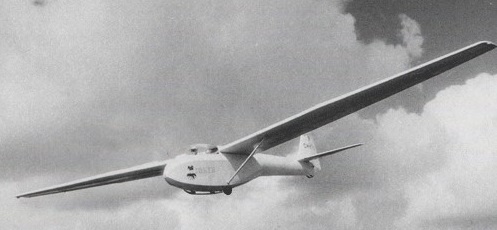
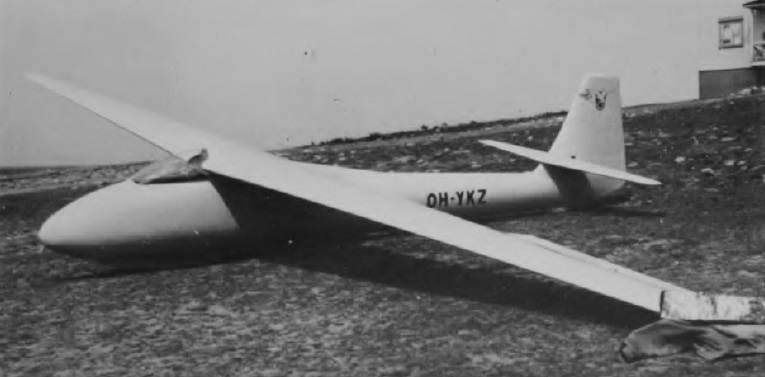
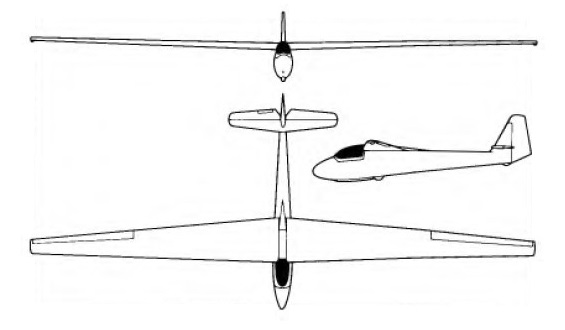
Designed by Antti Koskinen, the PIK-13 was a sailplane constructed in Finland by Polyteknikkojen Ilmailukerho to compete in the 1954 World Gliding Championships, held at Camphill Farm, Great Hucklow, UK.
It was a conventional mid-wing design of “workmanlike” construction and underwent five test flights in the course of 1954 before its entry in the competition.
In the championships, the PIK-13 was flown by Antti Koskisen, who was placed 16th with 931 points. The PIK-13 was destroyed in an accident on 26 March 1956 when the control stick broke in flight. Pilot Jorma Jalkanen parachuted to safety.
Wingspan: 17.6 m (57 ft 9 in) Wing area: 14.6 m2 (157 sq ft) Aspect ratio: 21 Airfoil: root:Göttingen 549, tip:Göttingen 693 Length: 7.3 m (23 ft 11 in) Height: 1.55 m (5 ft 1 in) Empty weight: 197 kg (434 lb) Gross weight: 300 kg (661 lb) Never exceed speed: 250 km/h (160 mph, 130 kn) Auto-tow maximum speed: 115 km/h (71 mph; 62 kn) Aero-tow maximum speed: 130 km/h (81 mph; 70 kn) g limits: +8 Maximum glide ratio: 33:1 at 85 km/h (53 mph; 46 kn) Rate of sink: 0.7 m/s (140 ft/min) at 62 km/h (39 mph; 33 kn) Wing loading: 20.5 kg/m2 (4.2 lb/sq ft)
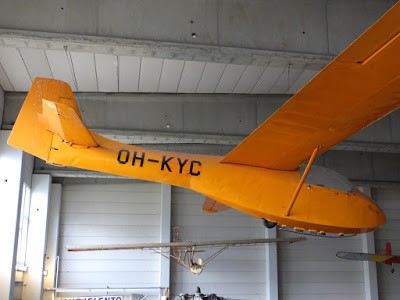
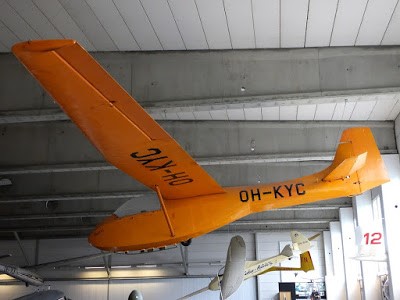
PIK-12 is a two seater primary and intermediate training sailplane. It was only two seater in the PIK-range. It started with design competition in the year 1952. The competition was won by Ilkka Lounamaa. The model’s fuselage was designed to resemble PIK-5 and the basic structure of the wings was copied also from PIK-5. Only major difference being forward pointing arrow shape which also caused models nickname ‘Gabriel’. Model collected several nicknames of which most used was ‘bus with 12 seats’. That was caused by an upright sitting position and extremely high fuselage.
The model was built and it was in flight on 27 May 1956. The machine was type-approved in 1959 and three were built between 1957 and 1965 in addition to the prototype.
OH-318 / OH-KYC
The machine had many nicknames. One of them was “Gabriel”, which came in the form of a wing that brought to mind an angel (the archangel Gabriel). The nickname “twelve-seater” and its longer form “the world’s only standing two-seater mail glider” were also used.
Designed by Ilkka Lounamaa, the Pik-12 used the same wing shape/profile as the PIK-5c but 1.0 m more span.
PIK has also built several low-wing single-engine monoplanes, including the Pik-11 in 1953.
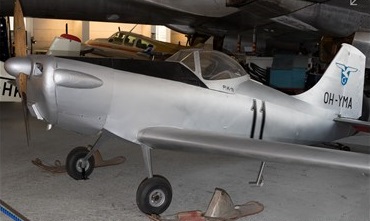
The PIK-11 Tumppu is a single seat, sports aircraft, capable of aerobatics. It was designed in the 1950’s by two students and members of the student flying club of the Helsinki University of Technology (PIK or Polyteknikkojen Ilmailukerho), Kai Mellén and Ilkka Lounamaa.
Four aircraft of this type were built, one of which was still in operation in 2006.
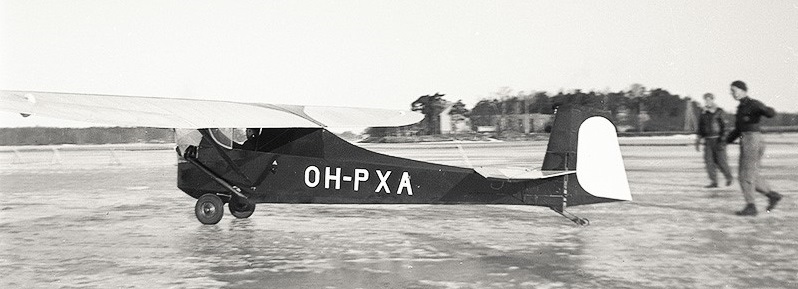
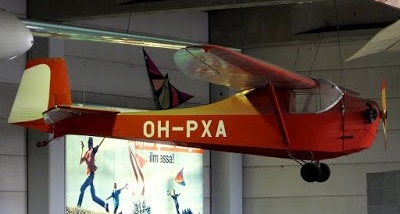
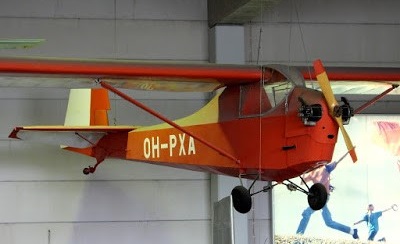
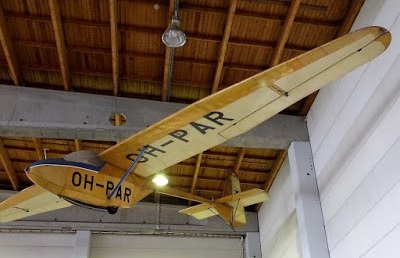
Mr. Carl Stude designed and Polyteknikkojen Ilmailukerho built the PIK-10 variant of the Grunau Baby II and the first single-seater powered sailplane designed in Finland. The basis of the project was Grunau Baby II glider OH-BAB. The machine was built with a BMW motorcycle engine, later re-powered by an Aubier & Dunne V2D 17-hp (a French 540 cc 2-cyl inline motorcycle engine, and finely re-engined with a 28 hp Pincard engine.
Nicknamed “Paukkulauta” (“Bang Board”), the sole PIK-10 (OH-PXA) flew first time in 1949.
The aircraft had seven owners during the next 20 years. The Korso Flying Club with the help of the Finnair Flying Club restored it in 1969. Before that the aircraft has got the wings of another Grunau Baby (OH-BAF).
OH-PXA
The restored aircraft is on the show at the Finnish Aviation Museum.
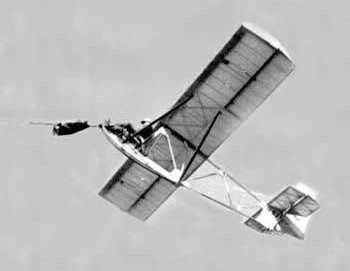
With origins coming from World War II, when Finnish forces took control of the Russian occupied city of Äänislinna. There they noticed a glider pilot school with planes called UC-3s’. They were brought back to Finland and used as a display at the Victory fair.
The gliders were then examined and found to be inferior in many ways. One of these UC-3’s was tested and found to be good flier, despite of the inferior build quality and several shortcomings.
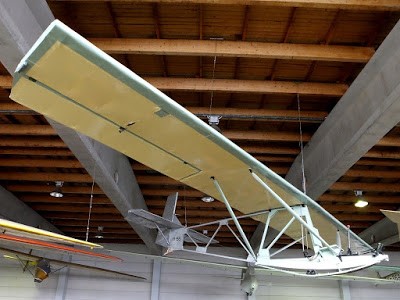
This UC-3 inspired the building of a similar type of primary glider. The key idea was to make it extremely simple, light and easy to build in aviation clubs around Finland, the Harakka (“European magpie”). They did not bother to make plans for the prototype, but just sort of design as you build.
When the prototype was built and it was found to be good flier and better than Grunau’s & SG’s, approx 28 were built.
First flown in February 1945, the type was built from plans by Finnish gliding clubs and soon replaced earlier primary gliders such as the Grunau 9, becoming a standard piece of equipment in the clubs. Approximately 50 were built.
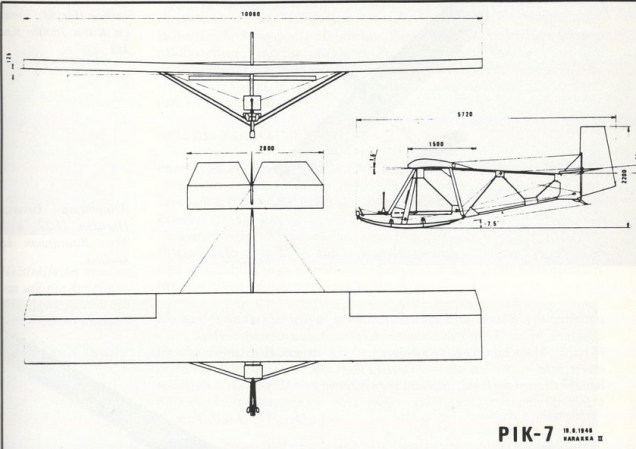
In 1946, booming aviation clubs needed more primary gliders, but the Harakka needed further development and some upgrades to strengthen it. The Local FAA ordered this further development from PIK whose key designers were Juhani Heinonen, J. Nurmi and Raimo Häkkinen. The new plane was called Harakka II and given the PIK-serial number of 7. Twenty-seven were built.
Harakka II
In 1948, a single example of a more radically redesigned version designated Harakka III flew. This had the framework that supported the tail replaced by a single boom.
Harakka III
All in all, 57 Harakka’s were built (or started, some were not completed). The last Harakka was a replica built from original plans with designation of H-60.
Harakka III
The Moottori-Harakka was a motor glider development of the PIK-7.
Harakka Span: 10.56 m Length: 5.60 m Empty weight: 92kg Start weight: 182 kg Normal speed: 45 km / h
PIK-7 Harakka II (H-57) Wingspan: 10.60 m (34 ft 9 in) Wing area: 15 sq.m (161 sq.ft) Length: 5.72 m (18 ft 9 in) Height: 1.30 m (4 ft 3 in) Empty weight: 92 kg (200 lb) Gross weight: 200 kg (440 lb) Maximum speed: 117 km/h (73 mph) Maximum glide ratio: 10.5:1 Rate of sink: 1.2 m/s (236 ft/min) Crew: One pilot
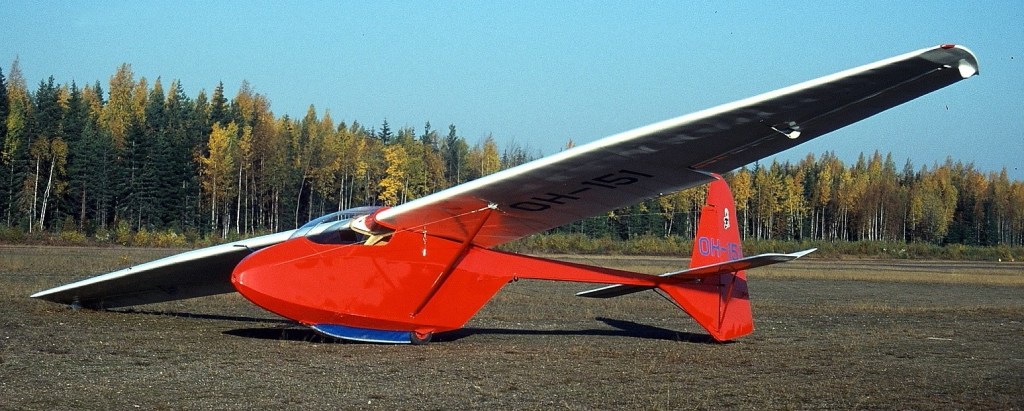
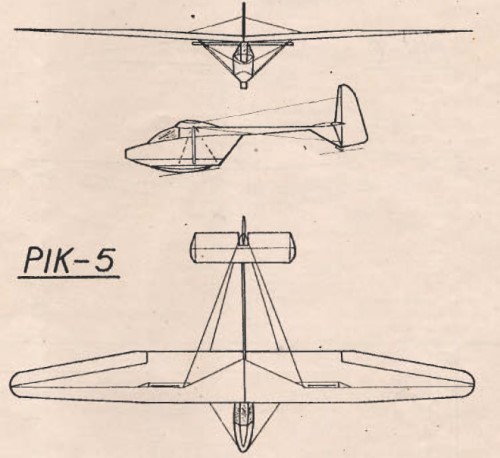
The PIK-5 was a training glider produced in Finland in the 1940s, and 1950s, equipping the country’s gliding clubs with an aircraft greater in performance than primary gliders but less than competition sailplanes. The aircraft had a pod-and-boom configuration, with a high, strut-braced monoplane wing and a cruciform tail carried at the end of a tailboom that extended from a position high on the aft end of the pod.
Designed by Kaarlo J. Temmes, the prototype was built by Polyteknikkojen Ilmailukerho and first flew in September 1946, and testing continued until it was badly damaged in a crash in summer 1948.
Over the subsequent months, the wings were repaired, and a new fuselage constructed to a revised design. This was completed the following winter, and flights recommenced. However, this aircraft, now known as the PIK-5B, was destroyed in a crash in summer 1951.
PIK 5b
Again, it was rebuilt with modifications, particularly to the wing structure, resulting in the PIK-5C version. This version first flew on 5 July 1952, and went on to become the pattern for 34 similar machines that would be built over the ensuing years.
The PIK series of sailplanes designed and produced in Finland gets its name from the Polyteknikkojen llmailukerho, the flying club of the Student Union formed at Helsinki University of Technology in 1931; this series started in 1945 and the PIK-3 singleseater, intended for use by and for construction by gliding clubs, was the first to go into series production. It was followed by the PIK-5A, B and C intermediate training sailplanes and the PIK-7 primary glider which, together with the PIK-3, became standard types in the Finnish clubs, and the first two-seater in the series, the PIK-12 trainer.
The PIK-3 was 1942 designed by Lars H ‘Pappa’ Norrmen and Ilkka Lounama, originaly designated LHN-3, the first prototype making its maiden flight in the summer of 1950, and was of conventional wooden construction.
PIK 3a Kanttikolmonen
It was followed by 20 PIK-3A and PIK-3B variants, the 3B, developed by Aush Koskinen, featuring air brakes instead of the 3A’s wing flaps, and both these versions had a 13m (42 ft 7.25 in) span wing.
The PIK-3C Kajava is a high performance version of the 3B incorporating modifications, in particular a wing span increased to 15m (49 ft 2.5 in), to comply with Standard Class rules. The wing structure was completely redesigned and a new cockpit canopy fitted, the fuselage remaining otherwise unchanged from the 3B’s. The prototype PIK-3C first flew on 20 May 1958 and the 3C was modified for series production by Tuomo Tervo at the Suomen llmailuliito (the Finnish Aeronautical Association); 20 had been built by the beginning of 1970. Resembling the EoN Olympia, but with a more angular fin and rudder, the PIK-3C has high-set single-spar wooden wings and an oval-section wooden fuselage with diagonal ply covering, the fin and tailplane also being ply covered.
The PIK-3c combine features of PIK-3b and the PIK-13, and the PIK-3c Kajava (Kittiwake) was a revised high-performance version of the PIK-3Bwith a span of 15 m and a new cockpit canopy.
PIK-3C Kajava Span: 15.0 m / 49 ft 2.5 in Length: 6.6 m / 21 ft 7.75 in Height: 1.0 m / 3 ft 3 in Wing area: 13.1 sq.m / 141 sq ft Aspect ratio: 17.1 Wing section: Gottingen 549/693 Empty weight: 165 kg / 364 lb Max weight: 280 kg / 617 lb Water ballast: None Max speed: 155 mph / 135 kt / 250 km/h Stalling speed: 30 kt / 55 km/h Max rough air speed: 78 kt / 145 km/h Min sinking speed: 0.61 m/sec / 2 ft/sec at 40.5 mph / 35 kt / 65 km/h Best glide ratio: 30:1 at 46.5 mph / 40.5 kt / 75 km/h
Polyteknikkojen llmailukerho Finland The Flying Club of the Finnish Institute of Technology was founded in 1932 and built a series of gliders; the PIK-20 high-performance sailplane was still in production through the 1990s. PIK has also built several low-wing single-engine monoplanes, the PIK-11 in 1953, the PIK-15 glider tug in 1964, and the PIK-19 glider tug and two-seat trainer in 1972.
Two subsequent Pigeon aircraft were the I and much larger II, a three bladed prop biplane of which only three were made. They were used by N.A.T. in the early 1930’s.
Two subsequent Pigeon aircraft were the I and much larger II, a three bladed prop biplane of which only three were made. They were used by N.A.T. in the early 1930’s.