Pobjoy Niagara / Cataract / Cascade

Pobjoy Niagara

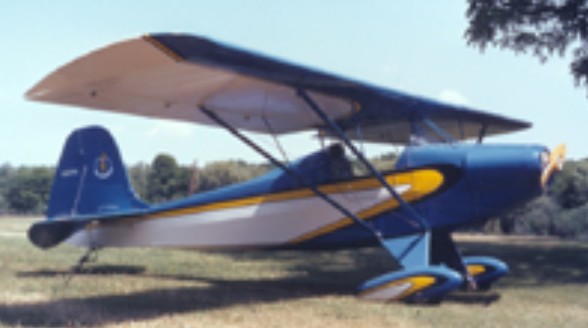
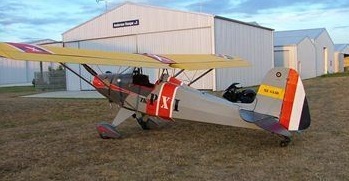
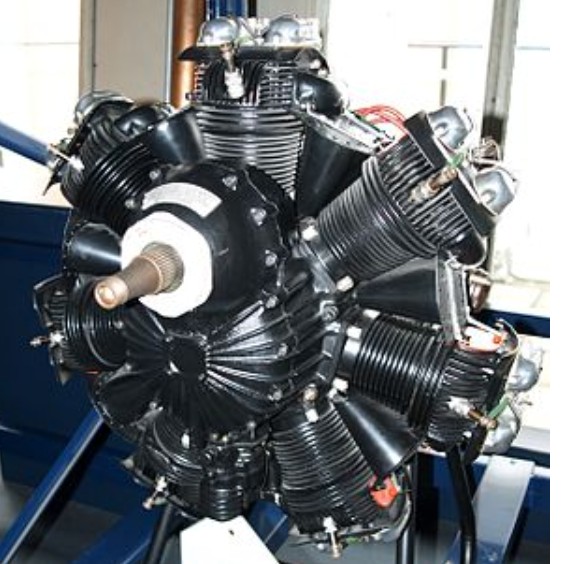
The Pobjoy Niagara is a British seven-cylinder, air-cooled, radial, aero-engine first produced in 1934. The design ran at higher speeds than conventional engines, and used reduction gearing to lower the speed of the propeller. This led to a noticeable off-centre mounting for the propeller. The Niagara was a popular engine for light and experimental aircraft, well regarded due to their small diameter, smooth operation, low noise and innovative engineering.

Variants:
Niagara I
Bore/stroke 77 x 87 mm (3.03 x 3.43 in)
Swept volume 2,835 cc (173 cu in)
Compression 6.25:1
Gearing 0.47:1
Normal continuous power 84 hp (63 kW) at 3,200 rpm at sea level.

Niagara II
Bore/stroke 77 x 87 mm (3.03×3.43 in)
Swept volume 2,835 cc (173 cu in)
Compression 6.0:1
Gearing 0.39:1
Normal continuous power 84 hp (63 kW) at 3,200 rpm at sea level.

Niagara III
Bore/stroke 77 x 87 mm (3.03×3.43 in)
Swept volume 2,835 cc (173 cu in)
Gearing 0.47:1
Normal continuous power 88 hp (66 kW) at 3,300 rpm at sea level.

Niagara IV
Similar to Niagara III but with a higher operating rpm.
Normal continuous power 98 hp (73 kW) at 3,500 rpm at sea level.

Niagara V
Larger version of the basic Niagara.
Bore/stroke 81 x 87 mm (3.19 x 3.43 in)
Swept volume 3,138 cc (192.5 cu in).
Compression 8.0:1
Gearing 0.47:1
Normal continuous power 125 hp (93 kW) at 4,000 rpm at sea level.

Cataract I-III
De-rated, uncowled versions of Niagara I-III with simple inter-cylinder baffles for cooling and trickle-down lubrication for lower exhaust rockers.
Compression 5.7:1
Gearing 0.47:1

Cascade
Direct drive version of Cataract I.
Normal continuous power 66 hp (49 kW) at 2,100 rpm.

Applications:
Niagara –
Aeroput MMS-3
Airspeed Fleet Shadower
CLW Curlew
Comper Kite
Comper Swift
General Aircraft Monospar ST-25
General Aircraft Fleet Shadower
Lambach HL.I
Pobjoy Pirate
Saro Shrimp
Shapley Kittiwake
Short Scion Senior
Short Scion
Short Stirling (half scale prototype)
Spartan Clipper

Cataract –
British Klemm Swallow
Hafner A.R.III Gyroplane
Hendy Hobo

Cascade –
Autogiro AC-35

Specifications:
Pobjoy Niagara IV
Type: 7-cylinder, air-cooled, radial engine
Bore: 3.03 in (77 mm)
Stroke: 3.43 in (87 mm)
Displacement: 173 cu in (2.8 lt)
Diameter: 26.5 in (673 mm)
Dry weight: 130 lb (59 kg)
Valvetrain: 1 inlet and 1 exhaust valve per cylinder
Fuel system: 1 Claudel-Hobson carburettor
Fuel type: 70 octane
Cooling system: Air-cooled
Power output: 98 hp at 3,625 rpm max at sea level
Compression ratio: 6:1
Power-to-weight ratio: 0.75 hp/lb
Pobjoy R

Pobjoy R

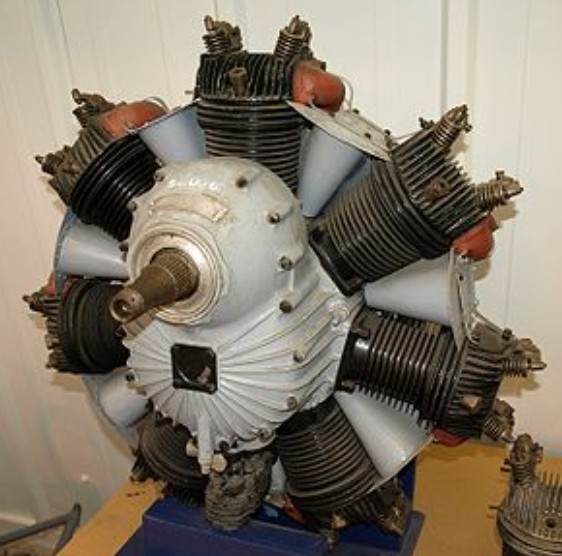
The Pobjoy R was a British seven-cylinder, air-cooled, aircraft engine designed and built by Pobjoy Airmotors. Introduced in 1926 it was a popular engine for ultralight and small aircraft in the 1930s. A notable feature of the Pobjoy R was the propeller reduction gear which allowed the engine to operate at high RPM.

Applications:
British Aircraft Swallow
Comper Swift
Cosmopolitan Light Plane
Couzinet 101
General Aircraft Monospar
Hendy Hobo
Kay Gyroplane
Lippisch Delta IV
Mauboussin M.121P Corsaire Major
Miles Satyr
Pander Multipro
Pobjoy Special
Short Scion
Short Scion Senior
Spartan Clipper

Pobjoy R
Type: 7-cylinder air-cooled, radial, left-hand tractor
Bore: 3.03 in (77 mm)
Stroke: 3.43 in (87 mm)
Displacement: 173.05 cu in (2.84 L)
Diameter: 25.5 in (647.7 mm)
Dry weight: 135 lb
Oil system: Dry sump
Cooling system: Air-cooled
Power output: 85 hp
Specific power: 0.5 hp/cu in
Fuel consumption: 4.9 imp. gallons per hour
Power-to-weight ratio: 0.63 hp/lb

Pobjoy Pirate

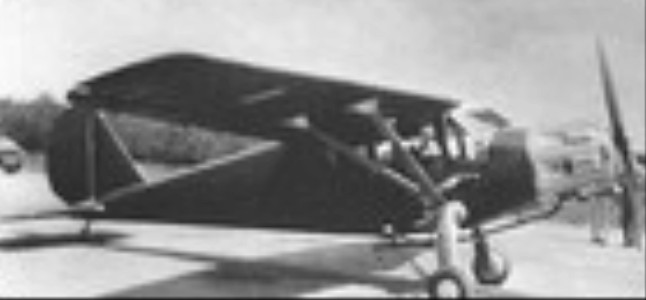
Until 1935 Pobjoy Airmotors Ltd had not previously built an aircraft, but concentrated successfully on engines. In June 1935 the company name was changed to Pobjoy Airmotors and Aircraft Ltd and at the same moment they introduced their only original aircraft design, the Pobjoy Pirate, aimed at the Leopard Moth market. They chose to power it with one of their own seven cylinder radial engines. At the time, the most powerful variant was the 90 hp (67 kW) Niagara III, much less powerful than the 145 hp (108 kW) Gipsy Major 10 of the Leopard Moth. The Pobjoy, though was less than half the weight of the de Havilland engine and Pobjoy believed that with the advantage of this weight saving (about 160 lb or 73 kg) they could build a lighter and smaller aircraft that would perform as well.

The designer of the Pirate was the experienced Harold Boultbee, who had recently produced the Civilian Coupé, and construction began early in 1935. The high wings were straight edged, but tapered, slightly swept on the leading edge and fully slotted. The trailing edge carried differential ailerons and interacting flaps. A pair of V shaped lift struts ran from the two wing spars down to the lower fuselage side where there was a universal joint to facilitate wing folding. The folding mechanism was unusual: unlocked, the wings slid forward and tipped leading edge down, so that when the front spar was released from its fitting the wings could fold rearwards and downwards about the rear spar. Because of the initial forward movement, the folded length was less than it would have been with conventional geometries.

The fuselage was of wooden construction, plywood covered and tapering strongly in elevation to the tail. The fin was triangular and carried a semicircular rudder moving above the tailplane and elevators. The main undercarriage oleo legs were attached close to the fuselage end of the lift struts. A glazed cabin placed the pilot ahead of the two side-by-side seated passengers. Ahead of them, the Niagara, under a characteristically neat Pobjoy cowling with “helmet” exhaust ports drove a two-bladed propeller.

In mid-1935 Pobjoy were collaborating with Shorts over the Pobjoy powered Short Scion, so Short’s test pilot, John Lankester Parker was available to try the Pirate. It first flew on 25 June and by 10 July had been in the air for a total of 70 minutes. Parker reported that the machine was underpowered and uncompetitive and it was never flown again. It was registered as G-ADEY but never carried these letters; it was broken up the following summer.

The Pirate was lighter and smaller than the Leopard Moth: the span was 3 ft 6 in (1.07 m) or 10% smaller and the all up weight 624 lb (283 kg, 28%) lighter, but this did not make up for the 38% decease in power.

Engine: 1 × Pobjoy Niagara III, 90 hp (67 kW)
Wingspan: 34 ft 0 in (10.36 m)
Wing area: 180 sq ft (17 sq.m) estimate
Gross weight: 1,600 lb (726 kg)
Maximum speed: 125 mph (201 km/h; 109 kn)

Pobjoy Airmotors Ltd

UK
Founded 1930 as Pobjoy Airmotors Ltd., engine manufacturer. In 1935 became public company and enlarged scope to include aircraft manufacture. Chairman Oswald Short, managing director Arthur Gouge. Built Pirate high-wing monoplane 1935, but performance disappointing. Acquired license to build Short Scion and Scion Senior light transports. Short Bros took over all Pobjoy’s issued shares in 1938. Company was subcontractor for aircraft parts in Second World War.

Pober P-9 Pixie / Acro Sport Inc Pober Pixie

The single-seat Pober Pixie is another homebuilt designed by Paul Poberezny. It originally started as an effort to help pilots beat high operational costs and was designated Project Econoplane in 1974. Inspired by a Heath Parasol LN, the Pixie is a parasol monoplane powered by a Limbach VW engine rated at 50 to 75 hp. Full-span ailerons give excellent roll with little yaw on entry and recovery. This is a beginner’s project for construction, with highly detailed plans, and the cost level is low. Can be powered with a VW conversion or Continental A-65.

Pober P-9 Pixie Article

The fuselage is 4130 steel tube, wings are Sitka spruce, covering is with Stits Poly-fiber.

Gallery

Engine: VW, 55 hp
HP range: 50-75
Speed max: 133 mph
Cruise: 83 mph
Range: 290 sm
Stall: 30 mph
ROC: 500 fpm
Take-off dist: 300 ft
Landing dist: 300 ft
Service ceiling: 13,500 ft
Fuel cap: 12.3 USG
Weight empty: 543 lbs
Gross: 900 lbs
Height: 6.2 ft
Length: 17.25 ft
Wing span: 29.83 ft
Wing area: 134.2 sq.ft
Seats: 1
Landing gear: tail wheel

Acro Sport Inc Pober Pixie
Top speed: 130 mph
Cruise: 83 mph
Stall: 30 mph
Range: 290 nm
Rate of climb: 500 fpm
Takeoff dist: 300 ft
Landing dist: 300 ft
Service ceiling: 13,000 ft
Engine: Continental A-65, 65 hp
HP range: 50-75
Fuel capacity: 12.3 USG
Empty weight: 543 lb
Gross weight: 900 lb
Height: 6.2 ft
Length: 17.3 ft
Wing span: 29.8 ft
Wing area: 134.2 sq.ft
Seats: 1
Landing gear: tailwheel

P.M. & T. Honeybird

Single seat single engined high wing monoplane with conventional three axis control. Wing has unswept leading and trailing edges, and constant chord; conventional tail. Pitch control by elevator on tail; yaw control by fin mounted rudder; roll control by quarter-span spoilerons; control inputs through stick for pitch/roll and pedals for yaw. Wing braced from below by struts; wing profile NACA 23015; 100% double surface. Undercarriage has three wheels in tail dragger formation; suspension on tailwheel and axle flex/ rubber suspension on main wheels. Push right go right tailwheel steering connected to yaw control. Aluminium tube framework, with pod. Engine mounted below wing driving pusher propeller.

Pod made from Keviar/Carbon fibre. Composite construction wing uses aluminium tubing to British HT30TF specification, Styrofoam, and wood veneer covering.

The Honeybird is a sophisticated pod: it is non structural and is attached to an aluminium framework.

Although the Honeybird is a microlight by definition, it is being built under the aegis of the British homebuilders association, the PFA, whose engineering requirements insist on gravity rather than pumped fuel feed. The main fuel tank is therefore in the wing, with a reserve situated aft of the pilot.

The Honeybird is basically a homebuilt, which in 1982 had yet to make its first flight.

Engine: NGL WAE 342, 30hp at 6800rpm
Micro V belt reduction
Power per unit area 0.23 hp/sq.ft, 2.5 hp/sq.m
Fuel capacity 3.6 US gal, 3.0 Imp gal, 13.6 litre in main tank; 4.8 US gal, 4.0 Imp gal, 18.2 litre in reserve
Length overall 18.5 ft, 5.64 m
Height overall 6.5ft, 1.98m
Wing span 32.5ft, 9.91m
Constant chord 4.0ft, 1.22m
Dihedral 3 deg
Sweepback 0 deg
Tailplane span 7.0ft, 2.13 m
Fin height 4.0ft, 1.22m
Total wing area 130 sq.ft, 12.1 sq.m
Total spoileron area 3.0 sq.ft, 0.28 sq.m
Wing aspect ratio 8.1/1
Wheel track 7.0ft, 2.13m
Tailwheel diameter overall 4 inch, 10 cm
Main wheels diameter overall 12 inch, 30 cm
Empty weight 2601b, 118kg
Max take off weight 510 lb, 231kg
Payload 250 lb, 113kg
Max wing loading 3.92 lb/sq.ft, 19.1 kg/sq.m
Max power loading 17.0 lb/hp, 7.7kg/hp
Load factors +6.0 design
Never exceed speed 109mph, 175kph
Max cruising speed 68mph, 109kph
Stalling speed 34mph, 55 kph
Best glide ratio with power off 15/1