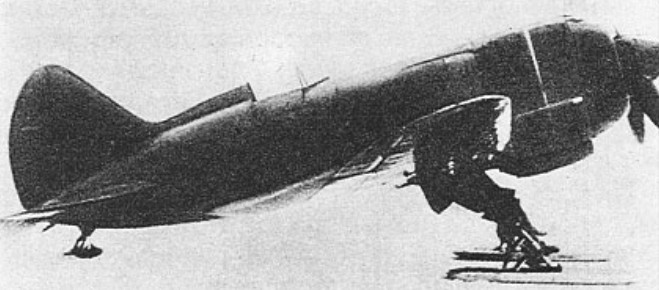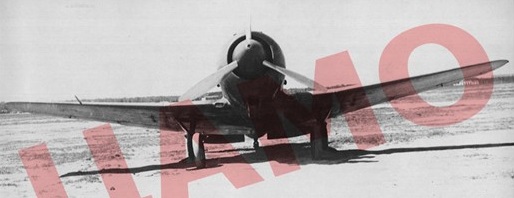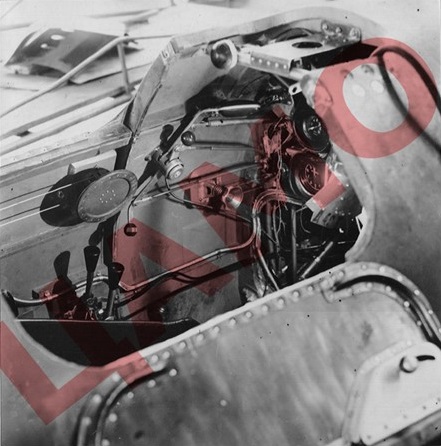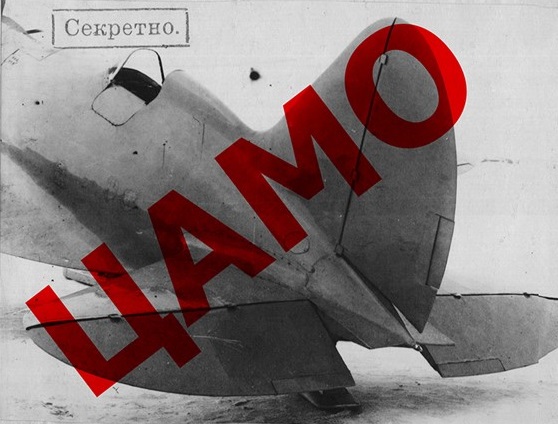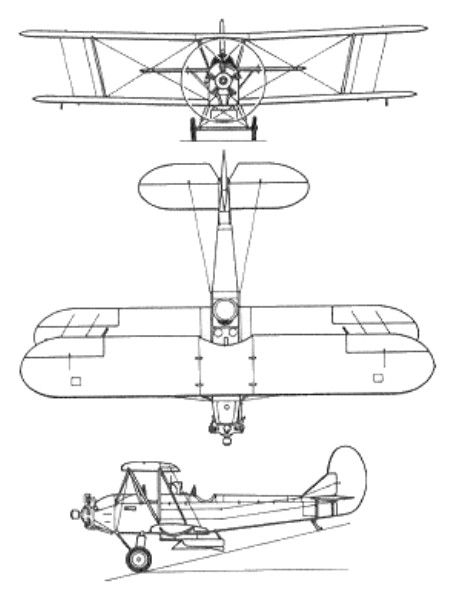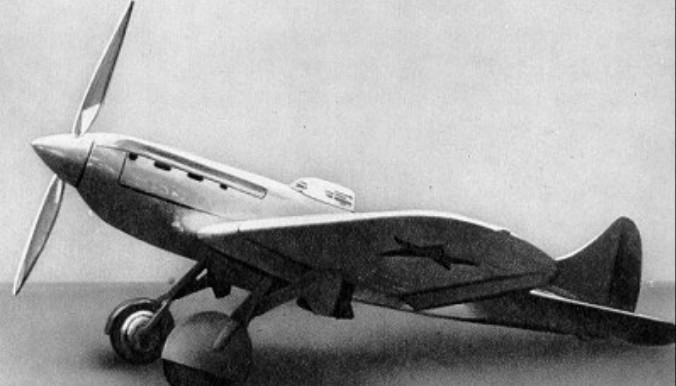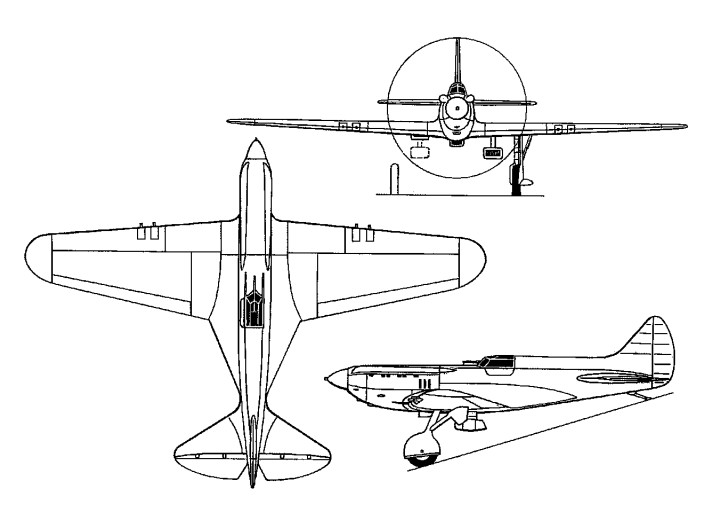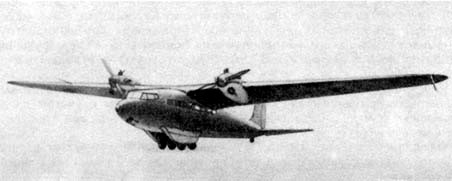
Polikarpov MP

The excellent results obtained during Aeroflot’s experimental use of the BDP-2 prototype as cargo transport made Polikarpov think about the possibility of developing a motorized model, especially that there was talk of the possibility of producing a small series.

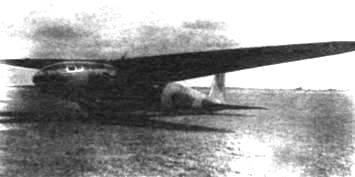
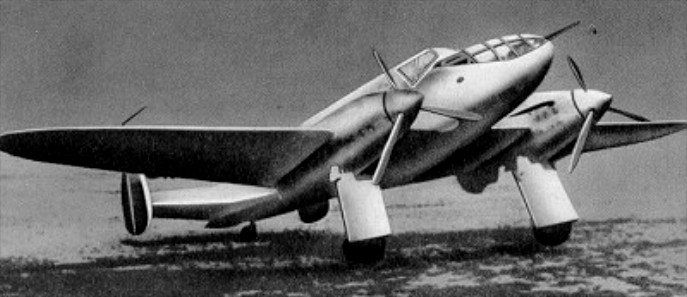
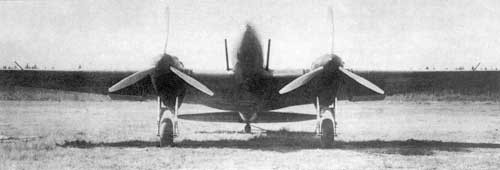
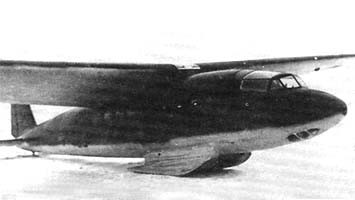
To achieve this goal, two cowled 145 hp M-11F engines were installed on the wing leading edge. The new model was called MP (Russian: Поликарпов М П), short for Motoplanior (motor glider).

In the MP operation, the autonomous take-off variant was envisaged, but with the full load capacity the low power of the engines was unable to guarantee take-off. Generally, the MP had to take off and even arrive at the site of operations dragged by a tow plane, but after dropping its load, unlike conventional gliders, it could return to its airfield using the installed motive power.
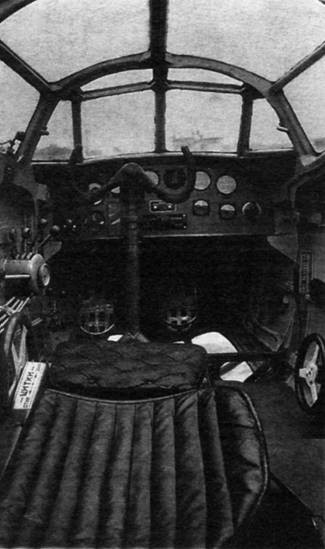
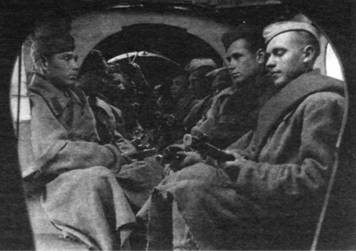
As a small capacity transport aircraft, the MP could carry 12 equipped soldiers or a similar weight capacity.

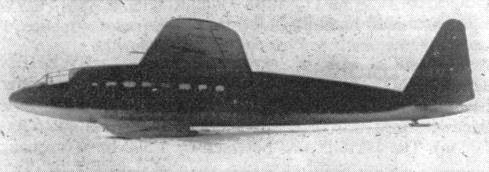
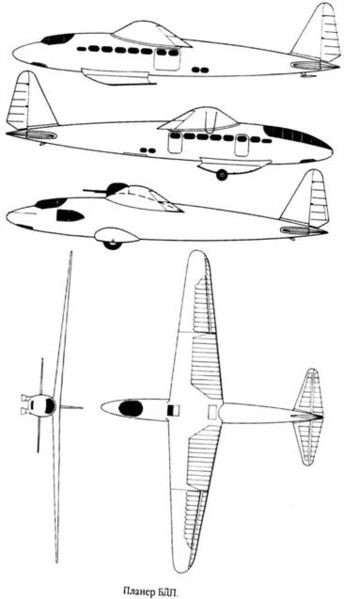
The MP motor glider generally maintained the constructive characteristics of the BDP glider. It was designed as a monoplane with a high wing of 20 meters of wingspan and a fuselage with an aerodynamic design. The entire construction was made of wood.

The fuselage was entirely made of wood and featured monocoque construction.

The exit of personnel and cargo was carried out through two doors of 860 x 900 and 850 x 950 mm, one located in the front region on the right and the other in the rear on the left. In the lower part of the fuselage, behind the cargo area, a hatch was prepared to leave the parachute glider.

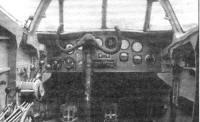
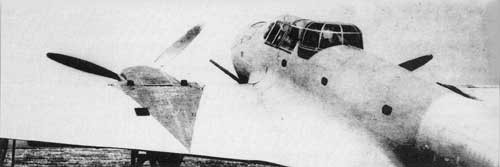
The pilot had an emergency cover with a structure also in wood. To improve visibility during landing, the lower area of the cabin was glazed. People sat on benches located on the sides of the glider, attached to the fuselage frame. Between the two benches there was a 600 mm wide corridor.

The wing of the BDP was made of wood and featured a double-spar centre and single-spar consoles. The coating of the leading edge and the force points was done with plywood. The rest of the wing was covered with fabric. The wing profile used was the NACA 230. In order to reduce the landing speed in the section between the ailerons and the fuselage, Shrenk-type flaps were installed.

The tail was monoplane and cantilever, constructed of wood covered with plywood and fabric.

The landing gear on this model was modified with the addition of wheels to the basic glider ski gear. These wheels were installed in two rows under the fuselage and featured rubber cushioning.

The powerplant consisted of two 145-hp M-111M-11F engines located on the wing leading edge and cowled, moving 2.35-meter propellers from Polikarpov U-2 training aircraft. The fuel capacity allowed for 7 hours.

The glider did not have its own weapons, but did have attachment points for seven DP-type infantry machine guns. Two machine guns could be installed in special hatches located in the area of the leading and exit edges of the wing to defend the upper hemisphere. To defend the tail a section of the upper rear fuselage could be raised and become a firing point for the gunner. Two other positions were located to the sides.

Inside the fuselage were 12 5.5 mm armored plates of 480 x 550 mm. The pilot had armor on the back of the seat. All this armor added 127 kg to the weight of the glider.

The motor glider was built ay the Novosibirsk Factory No.51 in the summer of 1943. The acceptance tests were carried out at the Moscow Central Airfield with flights to the Air Landing Forces (VDV) airfield at Medvied Lake and to the LII airfield in Ramenskoye. These flights were developed by the chief of flights and test pilot of the OIAE VDV Captain SA Anojin.
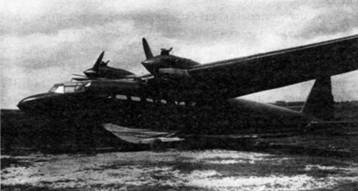
Between July 12 and September 10 of 1943 70 flights with a total duration of 40 hours and 10 min were performed. In flights towed by an SB bomber, heights of 4500 meters and speeds of 270 km / h were reached.

As a conclusion of the tests the pilots VN Yuganov, VL Rastorguyev, GM Shiyanov, AN Grinchik, PF Fedrova, PM Stefanovski, VV Shevchenko, AK Dolgov, PG Savtsov, Gavrilov, Romanov and Borodin wrote that the MP had good stability, it was simple in the piloting, accessible to pilots of low qualification. With a single engine and a flight weight of 3000 kg the aircraft was easily controllable, keeping its flight horizontal and responding to turns.

Between September 10 and 13, 1943 the MP was tested by the VDVs. Load tests were carried out with 4000 kg in different variants:
11 armed infantry soldiers with light weapons;
A group of anti-tank artillery made up of 6 soldiers with a 45 mm piece and two shell boxes (40 units). Assembly of the barrel to its operational state took 8-10 minutes;
A DShK antiaircraft battery with its 5 servers and ammunition;
A light anti-tank group with 10 soldiers and three anti-tank weapons;
Two or three motorcycles (3 of the Velosiet type or 2 Indiana).
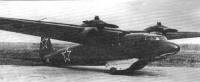
The excellent layout of the motor glider for these configurations was highlighted and its use was recommended for VDV units and transport aviation. Series production of the model was also proposed.

Despite these results, the MP was never produced. By that time the Red Army had liberated a large part of the territory occupied by the Germans and the supply needs of the guerrilla groups had diminished.

Only the prototype was produced.

Polikarpov MP
Engines: Two 145 hp M-11F
Wingspan: 20.00 m
Wing area: 44.72 m²
Length: 13.60 m
Height: 3.20 m
Empty weight: 2420 kg
Normal loaded weight: 3500 kg
Payload capacity: 1280 kg
Wing loading: 78.5 kg / m²
Maximum speed at sea level: 185 km / h
Maximum speed at 1000 m: 179 km / h
Range: 390 – 700 km
Endurance: 7 h
Time to 1000 m: 12.5 min
Service ceiling: 2,700 m
Take-off run with 3500 kg: 480 m
Crew: 1
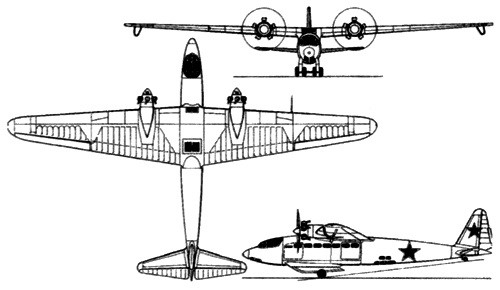
Polikarpov BDP

The 23 of January of 1940 the Commissariat of Aviation Industry created the Directorate for creating landing gliders. In the autumn of that year, in an extraordinary meeting, with the presence of Stalin, the decision was made to launch a competition for the development of airplanes of this type and their series production. The best would be mass-produced and used successfully in operations during the Great Patriotic War.

Nikolai Polikarpov had no experience in glider design, so he did not participate in the competition. Despite this, at the beginning of June 1941 its construction bureau, unexpectedly for many, presented a project for a landing glider. The production of gliders was carried out not in aviation factories, but in carpentry and furniture factories.

The Polikarpov glider was designed as an aircraft to support penetration units. After analyzing the losses of the Germans during the landing operations, the Soviet aircraft manufacturer came to the conclusion that it was possible to reduce them by using well-protected and armed means of landing. To achieve this objective, he designed a glider from which the landing troops, before launching themselves, could direct fire against enemy positions, using their light weapons. The protection of the device was obtained through the use of removable armoured plates, which once landed the glider allowed to create a defensive barrier for the soldiers.

The new glider was named BDP (Russian: Поликарпов БДП), after Boyevoi Disantni Planior or Military Landing Glider.

The BDP landing glider was desiigned as a high-wing monoplane with a 20-meter wingspan and an aerodynamically designed fuselage. The entire construction was made of wood.

Designers put special emphasis on making an airplane cheap and easy to produce. Due to its dimensions, the BDP was capable of transporting 16 soldiers with their equipment and its towing had to be carried out by Túpolev SB or Ilyushin DB-3 bombers. The fuselage was entirely made of wood. The pilot had an emergency cover with a structure also in wood. To improve visibility during landing, the lower part of the cab was glazed.

The landing troops sat on benches located on the sides of the fuselage, forming part of the structure. Between the two rows of benches there was a 600mm corridor. The exit of personnel and cargo was carried out through two 900 x 950 mm doors, one located in the front region on the right and the other in the rear on the left. In the first BDP copy there were two small doors on the right and two on the left.

In the lower part of the fuselage, behind the cargo area, a hatch was prepared to parachute from the glider.

The wing of the BDP was made of wood and had a single spar. The coating of the leading edge and the force points was done with plywood. The rest of the wing was covered with fabric. The wing profile used was the NACA 230. In order to reduce the landing speed in the section between the ailerons and the fuselage, Shrenk-type flaps were installed.

In the area of the leading and trailing edges of the wing, special hatches were located to allow firing with light weapons, covering the upper hemisphere. To defend the tail a section of the upper rear fuselage could be raised and become a firing point for the gunner.

The tail was monoplane and cantilever, constructed of wood covered with plywood and fabric.

The landing gear consisted of two ash skis placed on leaf springs to absorb the impact. The junction of the skis and the fuselage was covered by fabric covered fairings. For landing the BDP used a 400 x 150 mm four-wheel detachable wheelbarrow.

The glider did not have its own weapons, but did have attachment points for seven DP-type infantry machine guns. Two machine guns could be installed to defend the upper hemisphere, one in the lower hatch and two on the sides.

Inside the fuselage were 12 5.5 mm armored plates with dimensions of 480 x 550 mm. The pilot had armor on the back of the seat. All this protection added 127 kg to the weight of the glider.

The development of the BDP project was carried out by Polikarpov and his collective during the month of June 1941.

The project was approved by the NKAP management and it was decided to carry out the construction of the prototype at Factory No.51.

By the end of the summer of 1941 the glider was finished and ready for flight tests. The first flights were carried out in September and took place from the LII airfield in the Moscow suburbs. As a tug, an SB bomber with M-103 engines was used. The glider was piloted by VP Fyodorov.

Only 14 flights were made, which were interrupted on October 14 due to the advance of the Germans and the beginning of the evacuation.

First BDP copy during tests near Moscow in September 1941.

As a result of the tests, defined as inconclusive, it was concluded that the BDP was stable in flight and that it could be maintained with free controls. The effectiveness of the rudders was acceptable, both during flight and on landing. The piloting technique was simple and did not demand a great qualification from its pilot, which ensured its control by pilots who had flown training gliders.

The negative aspects were the lack of structural strength at various points on the wing and fuselage. This caused that during the tests the flight weight was limited to only 2200 kg and the speed up to 220 km / h (the glider having been calculated for 3200 kg and 320 km / h respectively). The pilot pointed out that the curved glass in the windshield distorted the vision and proposed to replace it with a normal one made of straight pieces. When the aerodynamic brakes were extended, there was creaking in the tail area.

It was recommended to work on solving these problems and then present the model for series production. In relation to this process, there were no difficulties, since the construction could be carried out in carpentry with basic equipment. TsAGI specialists warned that the production cost of the Polikarpov model exceeded that of other similar gliders.

This first specimen was evacuated by air in October 1941 to the west. Curiously, during the flight of this unknown aircraft towed by an SB bomber, a group of fighters from Moscow’s anti-aircraft forces (PVO) went out to intercept, forcing the glider to land near Kashira. The glider was looted by the local inhabitants and in that condition it was returned to Moscow shortly thereafter.

The second specimen, called BDP-2, was built in Novosibirsk, where Factory No. 51 in Moscow and the KB in Polikarpov were evacuated.

The glider was delivered for testing to the LII affiliate on February 6, 1942 and flown by II Shelest.

The BDP-2 presented a reinforced construction in relation to the original model, which brought with it a certain increase in weight. Externally it was also something different. The pilot’s windshield featured flat glass pieces and various elements were simplified. The trailing edge of the height and steering rudders was made by means of a steel cable as was the style in the first Soviet aircraft.

The tests of the BDP-2 with ski landing gear lasted until March 14, 1942. During this time several attempts were made to lessen the problem of tail creaking. The results improved after drilling a series of holes in the aerodynamic brakes, thus reducing the turbulence of the airflow.

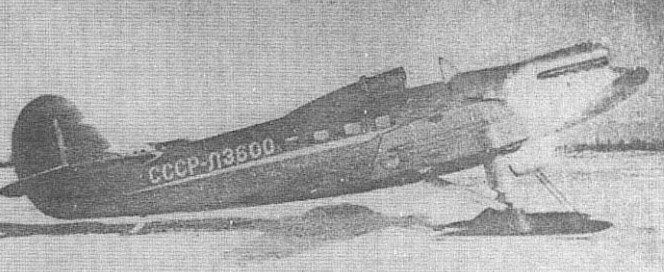
Second BDP-2 prototype tested in Novosibirsk in the winter of 1941 – 1942.

The test conclusions again emphasized the simplicity of the piloting, the high payload capacity, good manoeuvrability and stability in different centering regimes. Serial production of the model was recommended.

Interior layout in the cabin of the BDP-2 glider.

Almost in parallel with the flight tests, the search began for a possible production base to develop series production. After reviewing various factories and companies in the region near Novosibirsk, it was decided to select the Siberian Military Region Workshops. These facilities had previously functioned as auxiliary production capacity for Factory No.153, dedicated to the manufacture of skis.

The first figures showed a number of 100 gliders with a unit cost of 41,125 rubles.

While negotiations were taking place, a new production site was defined. It was the Stalingrad Factory No. 490. In the middle of the summer of 1942 the plans and all the technical documentation were transferred there from Novosibirsk. Soon the military situation changed and the arrival of the Germans in Stalingrad thwarted production plans.

Along with the inability to produce in Stalingrad the opinion of the VVS was a lack of need to produce the BDP. The course of the war had shown little chance of success and there were already produced successful models A-7 of Antonov and G-11 of Gribovski.

In July 1942 the BDP-2 was destined to serve as a transport in the direction of the Moscow – Irkutsk air force. Several flights were carried out towed by a PS-40 (postal Ant-40) on the Novosibirsk – Omsk – Sverdlovsk route and vice versa. This route was also covered by several Antonov A-7s . The results of these experimental flights were impressive and it was proposed to build several examples of transport gliders for civil use with Aeroflot.

In 1943, at Factory No.51, the assembly of 10 copies of the BDP began. It is known that until the end of the year only two copies had been delivered. A third and fourth specimens were 98% complete, the fifth at 80%, the sixth at 28%, and the seventh only at 10%. No evidence has been found after that date.

Polikarpov, in an attempt to achieve full autonomy for the BDP, decided to develop a motorized model that was named MP. A prototype was successfully built and flown, but it was not mass-produced either.

Polikarpov BDP
Wingspan: 20.00 m
Length: 13.60 m
Wing area: 44.72 m²
Empty weight: 1470 kg
Normal weight: 3408 kg
Crew: 1
Payload Capacity: 16 Soldiers Equipped

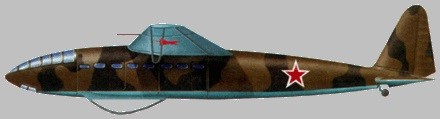
Color scheme of the first BDP prototype without the ski train fairings.
Color scheme of the second BDP-2 prototype.

Polikarpov TIS

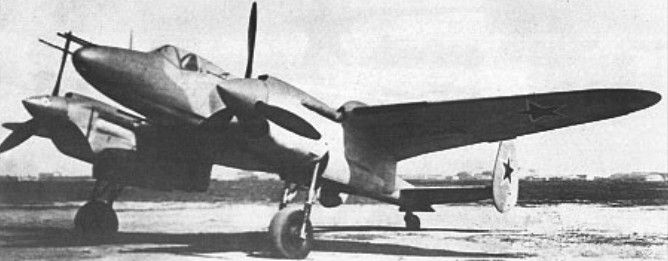
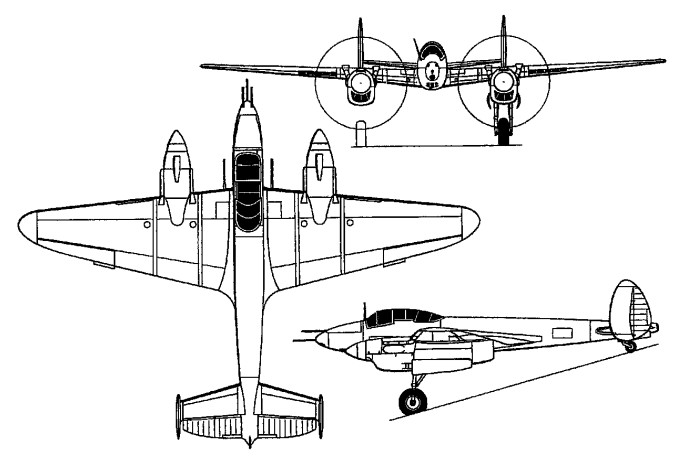
To meet a requirement for a heavy escort fighter, or TIS (Tyazhely istrebitel soprovozhdeniya), formulated in the autumn of 1938, the Polikarpov OKB designed a low-wing monoplane of all-metal construction powered by two 1,400hp Mikulin AM-37 engines. Fixed forward-firing armament comprised four 7.62mm and two 20mm guns, rear protection being provided by single flexible 7.62mm guns fired from dorsal and ventral positions by the second crew member. The first prototype, Samolet A, was flown in September 1941, but evacuation of the Polikarpov facilities to Novosibirsk delayed the programme, and an improved second prototype, Samolet MA, was not flown until 13 June 1944. The MA was intended to be powered by 1,700hp Mikulin AM-39 engines, but their non-availability dictated installation of 1,665hp AM-38 engines. Fixed forward-firing armament was changed to two 37mm cannon and two 12.7mm machine guns. The flight testing of the MA was in its early stages when, on 30 July 1944, Polikarpov died and his OKB was almost immediately disbanded, the TIS programme being abandoned.

Max take-off weight: 7840 kg / 17284 lb
Empty weight: 5800 kg / 12787 lb
Wingspan: 15.50 m / 51 ft 10 in
Length: 11.70 m / 38 ft 5 in
Height: 4.35 m / 14 ft 3 in
Wing area: 34.85 sq.m / 375.12 sq ft
Max. speed: 555 km/h / 345 mph
Range: 1070 km / 665 miles

Polikarpov TIS

Polikarpov ITP

In 1941, the Polikarpov OKB began work on an Istrebitel’ Tyazhely Pushechny – heavy cannon fighter – which was to mount a 37mm cannon between the cylinder banks of a 1,650hp Klimov M-107P 12- cylinder liquid-cooled Vee engine, and also carry two synchronised 20mm cannon. The aircraft was of mixed construction, the fuselage being a wooden monocoque and the wing of steel and dural. The first prototype, referred to as the M-1, was completed in October 1941, but difficulties with the engine delayed the initiation of flight testing until 23 February 1942. An M-107A replaced the M-107P late in 1942, but engine difficulties were still experienced, and a second prototype, the M-2, was completed with an AM-37 engine of 1,400hp with which it flew on 23 November 1943. The M-2 had an armament of three 20mm cannon and eight RS-82 unguided rocket projectiles, the engine eventually being replaced by an AM-39 of 1,700hp. Factory flight testing continued until June 1944 when the programme was abandoned.

M-1
Max take-off weight: 3570 kg / 7871 lb
Empty weight: 2960 kg / 6526 lb
Wingspan: 10.00 m / 33 ft 10 in
Length: 8.95 m / 29 ft 4 in
Wing area: 16.45 sq.m / 177.07 sq ft
Max. speed: 655 km/h / 407 mph
Range: 1280 km / 795 miles

Polikarpov ITP

Polikarpov I-185

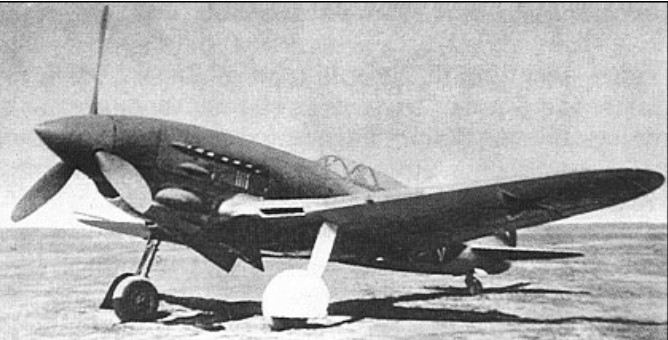
Acceptance that the concept of the I-180 was outmoded coupled with the prospect of the availability of powerful 18-cylinder radial engines led the Polikarpov OKB to design the I-185 within an extraordinarily short period of time (25 January to 10 March 1940). Intended for the 1,750hp Shvetsov M-90 engine, the I-185 was of mixed construction, having a wooden monocoque fuselage mated with metal wings featuring automatic leadingedge slats a la Bf 109. Armament consisted of twin 12.7mm and twin 7.62mm guns, all fuselage-mounted. Development delays with the M-90 – which, by December 1940, was cleared only for restricted flight testing – resulted in dismantling of the first prototype unflown, this having been known as Samolet (Aircraft) R.

A second prototype. Samolet RM, was completed with a Shvetsov M-81 18-cylinder two-row radial and a ducted propeller spinner. This was flown on 11 January 1941, but the M-81 was found to develop insufficient power and was replaced by the Shvetsov M-71 of 1,900hp in May 1941. A third prototype, Samolet I, was completed with a 14-cylinder Shvetsov M-82 engine rated at 1,330hp (later 1,400hp), the fuselage being lengthened for CG reasons from 7.68m to 8.10m, and fuselage-mounted armament being changed to three 20mm cannon. State Acceptance Tests were conducted successfully between 13 April and 5 July 1942. A fourth prototype reverted to the M-71 engine and this underwent operational evaluation on the Kalinin Front alongside Samolet I. A redesigned wing (of single- in place of two-spar construction) was featured by this aircraft, which was tested with both the four-machine gun and three-cannon armament arrangements. A pre-production prototype, the so-called I-185 Etalon (Standard), was flown on 10 June 1942. Regarded as the forerunner of the intended production derivative, the I-186, this standardised on the M-71 engine and three-cannon armament, and had a similarly lengthened fuselage to that of Samolet I. State Acceptance Testing was conducted between November 1942 and January 1943, the NIl VVS evaluation reports describing the I-185 Etalon as “superior to all contemporary fighters.” In the event, it was found impracticable to manufacture the M-71 in large numbers and airframe production capacity was unavailable.

Max take-off weight: 3735 kg / 8234 lb
Empty weight: 3130 kg / 6901 lb
Wingspan: 9.80 m / 32 ft 2 in
Length: 8.05 m / 26 ft 5 in
Wing area: 15.53 sq.m / 167.16 sq ft
Max. speed: 680 km/h / 423 mph

Polikarpov I-185

Polikarpov I-180

The preliminary design for the I-165 fighter was created in late 1937 and became the basis for the I-180 project design in March 1938. It was supposed to become a further evolution of the I-16 fighter with a slightly increased size and the M-88 engine. Developed by Dmitrii L Tomashevich (one of Polikarpov’s deputies), the I-180 was originally conceived with an all-metal structure. Limited all-metal construction experience, however, led the Polikarpov OKB to adopt an essentially similar structure to that of the earlier I-16, with a wooden monocoque fuselage and a fabric-skinned metal wing.

Polikarpov I-180 Article

The machine took final form in its third prototype, and the first prototype was constructed in summer 1938. The first prototype, the I-180.1, was powered by a 1,100hp Tumansky M-88 14-cylinder two-row radial, intended armament being four 7.62mm guns. This aircraft was lost as a result of engine failure during its first flight on 15 December 1938 piloted by Valeriy Chkalov. Chkalov did not survive the accident. The second prototype, the I-180.2, differed primarily in having a 1,000hp Tumansky M-87A (later M-87B) 14-cylinder two-row radial and lengthened wing outer panels. These increased wing span from 9.00m to 10.05m and area from 14.68sq.m to 16.11sq.m. First flown on 19 April 1939, the I-180.2 was lost on its 53rd flight and the demise of another test pilot, Tomas Suzy.

Construction of the third prototype was started in mid-1939, the I-180.3 flown on 10 February 1940 with E. Ulyakhin as a test pilot, and featured a redesigned and more advanced wing structure, a 1,100hp M-88R engine, a cockpit canopy and an armament of two 12.7mm and two 7.62mm guns concentrated in the fuselage.

The I-180-3 was powered by an air-cooled M-88 engine that was not yet finished and proved to be quite problematic at the time of the aircraft’s testing. The motor passed the government testing only in December 1940, after the destiny of the I-180 project had already been decided. The aircraft strongly resembled the I-16 in its behaviour in the air, but had advantages over its predecessor in higher speed and faster climb times. It was also easier to control and more stable in manoeuvres, as well as during landing and take-off. Among the main drawbacks of the project were the lack of a canopy, various mechanical defects and poor plane surface finishing. Flown with both wheel and ski undercarriages, a lot of problems were fixed eventually but, on 6 July 1940 the third prototype was lost due to a pilot error accident during State Acceptance Trials.

In the meantime, a pre-series of 10 aircraft based on the I-180.2 had been under construction as the I-180S (Seriyny or Series), the first three of these having been completed in December 1939. Several I-180S machines took part in a May Day parade in Moscow. The I-180S was powered by the M-88R and carried an armament of two 12.7mm and two 7.62mm fuselage-mounted guns, and, like the I-180.3, featured an enclosed cockpit. The I-180S was cleared for service trials, but the results of these were academic as this fighter had been overtaken by the more advanced I-185.

As a part of the I-185 development programme, one pre-series I-180S fighter had the dated triangulated pattern mainwheel legs replaced with legs of cantilever type, this aircraft being referred to as the I-180Sh, the suffix indicating Shassi (chassis). In the event, it was not completed and flown.

A plethora of issues with the aircraft caused the work on its preparation for production to be stopped in late 1940 and the entire I-180 programme abandoned.

Max take-off weight: 2456 kg / 5415 lb
Empty weight: 2046 kg / 4511 lb
Wingspan: 10.09 m / 33 ft 1 in
Length: 6.88 m / 23 ft 7 in
Wing area: 16.11 sq.m / 173.41 sq ft
Max. speed: 585 km/h / 364 mph

Polikarpov I-180

Polikarpov VIT-1 / VIT-2 / BSB / MPI

VIT-1 2M-103

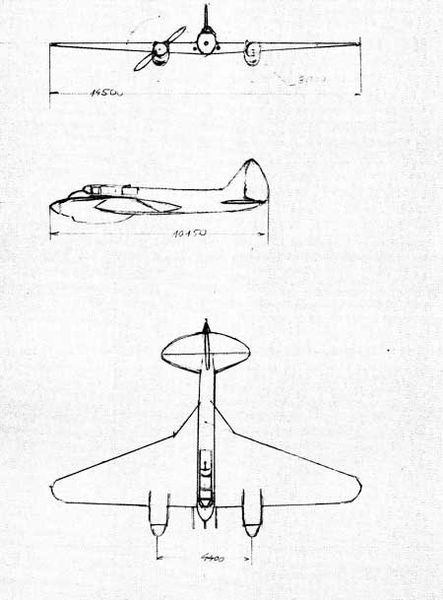
The first reference to a Polikarpov twin-engine model capable of executing bomber actions comes from the first half of 1936. This sketch would originally receive the name VT or Vozduzhni Tank (Flying Tank), which would later become MPI (Mnogomiestni Puchechni Isterbitiel or Multiseat Gunship Fighter) and SVB (Samoliot Vozduzhnovo Buoy or Air Combat Plane).

At the beginning of February, at one of the government meetings, Polikarpov learned that the OKB-2 collective, under the direction of Shpitalni, had developed a powerful 37 mm automatic cannon with a high muzzle velocity. Unfortunately, this weapon had not been tested due to the absence of an aircraft capable of using it.

In turn, Polikarpov reported that his group had developed a development of the TsKB-44 model with excellent technical specifications that could be ideally used as an aerial gunship intended to combat armored formations.

In this way, the idea of creating the new model according to Shpitalni himself constituted “…the synthesis of the achievements of the OKB-2 in automatic weapons, Polikarpov ‘s research in aviation aerodynamics and Polikarpov’s group of colleagues in the direction of automatic weapons”.

Shortly after this meeting, at Factory No.39 Polikarpov would develop three versions of the new aircraft that Polikarpov began to call VIT (Vozduzhni Isterbitiel Tankov or Aerial Tank Fighter (Russian: Поликарпов ВИТ-1)). Unfortunately, Factory No.39 soon began producing the DB-3 bomber and Polikarpov with his group was transferred to Factory No.21. This fact, together with the non-inclusion of these works in the experimental construction plan, led to the closure of work on the VIT as of July 5, 1936.

Faced with this situation, Shpitalni, at the beginning of 1936, sent a document to the secretary of the STO before the SNK USSR, GD Basilievich, in which he requested authorization to build the new VIT model in Factory No.22. This document was accompanied by M-100- powered and M-34FRN- powered VIT variants. The conceptual ideas were signed by Locev (drawings), Sigayev (brigade head) and Polikarpov (constructor). The designs were also signed by Shpitalni.

This model was presented as an all-metal monoplane with a low wing and a twin-engine power plant, with excellent aerodynamic shapes. On both sides of the fuselage were located the two 37 mm cannons with a total reserve of 100 projectiles. The magazines with 5 projectiles each were located in an elevator powered by an electrical system.

In the bow area, in front of the pilot, there was a fixed 20 mm ShVAK cannon with 100 – 200 projectiles and a belt feed. A ShKAS machine gun with 540 rounds was located in the gunner’s cabin to defend the rear hemisphere. This machine gun was installed on a mobile mount that guaranteed firing to the right or left.

The gunner’s cockpit had a glass cover that could be raised above the fuselage, which guaranteed a shooting angle of 65º upwards, 15º downwards and 45º horizontally to the sides.

The model was capable of carrying 200 kg (2 FAB-100 or 20 AO-10 bombs). In case of elimination of the 37 mm guns, the bomb load reached 1000 kg (2 FAB-500 or 4 FAB-250).

In the descriptive memory it was explained:
“ – To judge the power of this aircraft it is enough to say, for example, that only the power of the weapons installed in the nose exceeds by more than 10 times the firepower of the most powerful fighter in service with our VVS.
… To date, neither in the USSR nor in foreign armies there is a combat vehicle designed for active action against large groups of tanks. “This task is solved by our aerial tank fighter (VIT).”

The reaction to this Shpitalni document was instantaneous. State funding was provided and a resolution was prepared to include the model in the experimental construction plan.

On the other hand, the basis for production in Factory No.22 was not delivered. In its place for the development of the VIT at the end of August 1936 Factory No.84 in Khimki was made available. This factory, formerly part of the civil aviation scheme, had outdated equipment and lacked qualified personnel. Under these conditions, construction work on Polikarpov ‘s two-seat anti-tank aircraft began.

Unfortunately, the idea of this type of aircraft did not find the necessary support within military circles at that time.

It is noteworthy that from its conception the VIT was conceived as a technological demonstrator designed to study construction and technological methods. On its basis, a family of seven aircraft models with different tasks would be developed, capable of sharing a large percentage of common elements. This family included:

  1. – Fast medium bomber with capacity for 800 kg of bombs inside the fuselage;
  2. – Dive bomber with 900 kg of bombs on external supports;
  3. – Long-range reconnaissance aircraft with a powerful armament of 4 20 mm cannons;
  4. – Ground attack aircraft armed with six cannons, two machine guns and 300 kg of bombs;
  5. – Fighter for large ground targets with two K-37 guns and two ShVAK;
  6. – Escort aircraft for heavy bombers;
  7. – Naval aircraft with floats with torpedo boat capacity.

By the end of 1936, the plans for the SVB version (Skorostnoi Visotni Bombardirovchik or High Altitude Fast Bomber) were practically finished. The word “visotni” represented a trend of the time, but in reality the model lacked a sealed cabin and turbochargers for high-altitude operations. In practice it was simply a high-speed medium bomber.

Based on this model, the plans for the model armed with VIT-1 2M-103 cannons would be developed. It is noteworthy that the “VIT” stamp appears on most of the SVB plans, but in that same period new plans were designed for the new model.

As weapons for destroying tanks, the use of two 37 mm ShFK-37 cannons of the OKB-15 NKV (as the Shpitalni construction bureau was now called) located in the wing roots was maintained. The name of these guns comes from the acronym Shpitalnovo Fyuselyazhno-krylevaya Pushka or Shpitalni Wing and Fuselage Gun.

Polikarpov presented the design of the aircraft in two variants: multiseat gunfighter or MPI and anti-tank aircraft or VIT. On January 31, 1937 the evaluation commission reviewed the model of the MPI-1 version with two M-103 engines and on July 25, by government decision, the experimental construction plan was approved for the current year in which it was considered. the construction of two examples of the multiseat gunfighter with two M-103 960 hp engines with a maximum flight speed of 500 – 550 km at an altitude of 5000 meters.

The VIT-1 was designed as a low-wing two-seat monoplane with beautiful aerodynamic shapes and smooth skin on a thin fuselage. The landing gear was of a retractable type and a monoplane tail with a single empennage.

The fuselage, built entirely of metal, had an oval cross section. The construction was semi-monocoque.

The central section constituted a combination of closed duralumin profiles and skeletal structures of welded steel tubes.

The wing, with a double spar, had a trapezoidal shape in the plane with rounded ends and ended at the junction with the fuselage, presenting the characteristic extensions of many Polikarpov models. The wing profile used was the Clark Y with a relative thickness of 14% at the root and 6.35% at the ends.

The wing spars were constructed of welded chrome-molybdenum steel tubes. The ribs were built with duralumin profiles, except for the engine area, where they were replaced by welded steel tubes. The ailerons featured aerodynamic and weight compensation.

The tail section was all metal. The stabilizer was fixed to the fuselage structure. The empennage was constructed of duralumin.

The entire cell was calculated according to resistance standards for fighters, supporting overloads of up to 13g.

The landing gear was of the conventional tailwheel type. The landers with the wheels were retracted backwards, inserting into the lower area of the power nacelles. The retraction system was pneumatic. The main wheels had brakes. The tail wheel was not retractable.

The 860 hp M-103 engines were selected as the power plant. The composition of the cooling radiators was somewhat unusual for a twin-engine aircraft. The radiators were located in retractable structures equipped with tunnels for the entry of air. These structures were located on the wing extrados on the outer sides of the power nacelles and depending on the flight regime, they extended or were practically hidden in the wing. Control was carried out with the help of a thermostat.

The VIT-1’s armament was the most powerful installed on any Soviet fighter up to that time and consisted of two 37 mm ShFK-37 cannons located in the wing roots.

The defensive armament consisted of a TUR-10 turret with a ShKAS machine gun on the rear fuselage, which would later be replaced by one of the SUDB-3 type, similar to that used in the Ilyushin DB-3 bomber, which was produced in the Factory No. 32.

The normal bomb capacity reached 600 kg on internal supports and up to 1000 kg of bombs (two FAB-500) could be installed outside.

The crew was made up of two people: pilot and gunner. Both crew members were located in a cabin on the wing spars. No shielding was provided.

On October 14, 1937, the assembly of the first flying example of the MPI-1 gunfighter was completed. The prototype was built in the Moscow factory No.84, where Polikarpov had been transferred with his team in the second half of 1936. Some time later this would begin to be called VIT-1 (Vozduzhni Isterbitiel Tankov or Aerial Tank Fighter No.1). This would be the definitive name used from now on to refer to the plane.

The first flight with Valeri Pavlovich Chkalov at the controls took place on October 31. On November 16, during the third test flight, the navigator’s cockpit would be occupied by designer Nikolai Polikarpov.

The VIT managed to reach a fairly high maximum speed for its time, of 494 km/h at 3000 meters altitude. The range recorded at 90% of maximum speed was about 1000 km.

The factory tests, carried out until February 1938, would never be completed due to the impossibility of achieving the specified performance. The plane did not manage to exceed 500 km/h and some problems related to longitudinal and transverse stability were evident.

Despite this, the model proved to have development prospects and only the lack of support from the GUAP prevented its presentation to the state acceptance tests. The VIT-1 incorporated powerful weapons for the time: two 37 mm ShFK-37 (K-37) cannons in the wings, so the VVS decided to receive the model to develop range tests, basically aimed at fine-tuning the cannons.

In these exercises, held at the weapons range near Noginski between July 13, 1938 and July 31, 1939, the guns received an excellent rating and the pilots appreciated the excellent diving qualities of the model. GF Baidukov and MM Gromov participated as pilots for the NII VVS in these tests. Unfortunately, the plane was not yet “polished” and had problems characteristic of any plane under development. On the other hand, firing both cannons in unison practically stopped the plane in flight, while firing just one of them forced the plane to turn to that side, slightly diverting the shot from the desired trajectory.

Testing was stopped after NIP AV VVS test pilot Major Anshitkov refused to continue flying the VIT-1 prototype. This was mainly due to the fact that he was a weapons test pilot and not an airplane test pilot, so flights in an unfinished airplane became especially difficult for him.

In the summer of 1937, in parallel with the military version VIT-1, the project of a civil model was developed, designed to participate in a Paris – New York competition, flying over the Atlantic. This race was scheduled for 1938, but finally it did not take place and the project was abandoned.

  1. A total of five VIT-2 were built.

VIT-1
Powerplant: 2 x 960 hp М-103
Wingspan: 16.50 m
Wing area: 40.40 m²
Length: 12.70 m
Height: 3.40 m
Empty weight: 4013 kg
Normal takeoff weight: 6453 kg
Wing loading: 159 kg/m²
Power load: 3.3 kg/hp
Maximum speed at sea level: 450 km/h
Cruising speed: 417 km/h
Practical range: 1000 km
Maximum climbing speed: 595 m/min
Practical ceiling: 8000 m
Time to 5000 m: 8.4 min
Takeoff run: 390 m
Landing run: 460 m
Accommodation: 2
Armament: A ShVAK cannon in nose / two 37 mm cannons in wings / 1 x ShKAS machine gun in turret.
Bombload: 600 kg internal / 1000 kg external.

Initial conception of the VIT tank destroyer with M-100 engines
Polikarpov VIT-1/VIT-2

Polikarpov Po-2 / U-2 / RV-23 / E-23 / PZL Mielec CSS-13

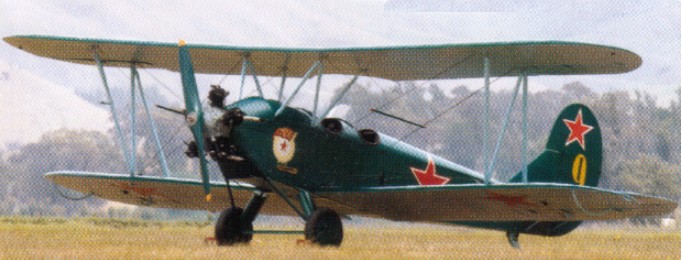
The U-2TPK prototype, which appeared in early 1927 was designed by N.N.Pellyakov, had been built to achieve economy in repair and maintenance, the wings comprising four identical thick-section interchangeable rectangular panels with square tips. Similarly, a common control surface was used for ailerons, elevators and rudder. The result was a biplane with very poor flight characteristics. It had thus to be redesigned, appearing as a neat, manoeuvrable biplane having staggered single-bay wing with rounded tips, conventional cross-axle landing gear, and tandem open cockpits for instructor and pupil. Powered by a 75kW radial engine, the new prototype made its first flight on 7 January 1928. An immediate success, it was placed in quantity production, deliveries starting in 1928, and by the time of the German invasion of the Soviet Union in mid-1941 over 13,000 had been completed.

Polikarpov Po-2 Article

Though its principle role was primary training, the U-2 was soon modified as a light passenger transport, air ambulance and agricultural aircraft. Production continued on a massive scale during World War II, and the U-2 took on an even wider range of duties, including liaison, light attack, night nuisance raider and propaganda aircraft complete with microphone and loudspeaker.

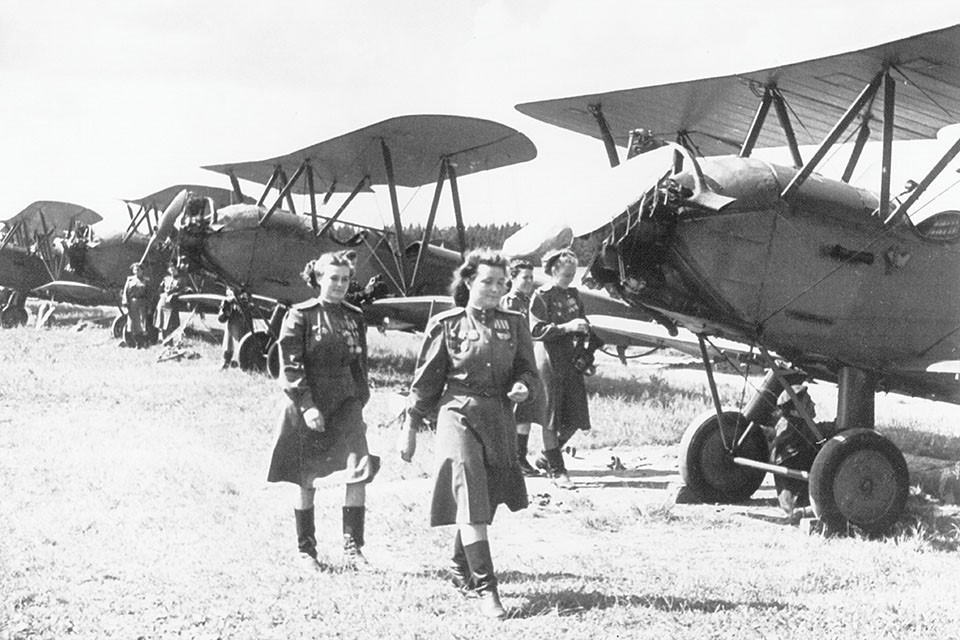
The Russians organized an entire regiment of women pilots to attack German targets at night. Called Nächthexen, or “Night Witches,” by the Germans, they operated Po-2s.

Pilots of the 588th Night Bomber Regiment, aka the “Night Witches,” in 1944

On 3 March 1944 the German 1st Easrwen Squadron ( I.Ostfliegerstaffel) was transferred to Lida airfield near Vilna (Lithuania). This unit consisted of Russian volunteers who flew captured Soviet U-3 biplanes, they called ‘sewing machines’. The unit had been set up in Daugavpils (Latvia) in December 1943, and now its members flew operations in the zone of Luftflotte 6 under General Ritter von Greim. The observers on board he U-2s dropped small-calibre bombs by hand. The aircraft flew every night when visibility permitted, crossing over the Soviet lines with nuisance raids.

In time, the Po-2 set a record for a basic design: A grand total of some 40,000 were produced. The Soviet Union built Po-2s from 1928 to 1951, and Poland turned them out under license from 1948 to 1955. But that was not the end of it. Numerous aeroclubs and enthusiasts kept constructing them in Russia until 1959.

After Polikarpov’s death, on 30 July 1944, the U-2 was redesignated Po-2 in his honour, and post-war it continued in production in the USSR for several years. Trainer and ambulance variants were built on a large scale in Poland from 1948 to 1953, Po-2s served with many Soviet allies and a small number still remain in flying condition in the USSR and several other countries. The total built is credibly reported to be in excess of 40,000.

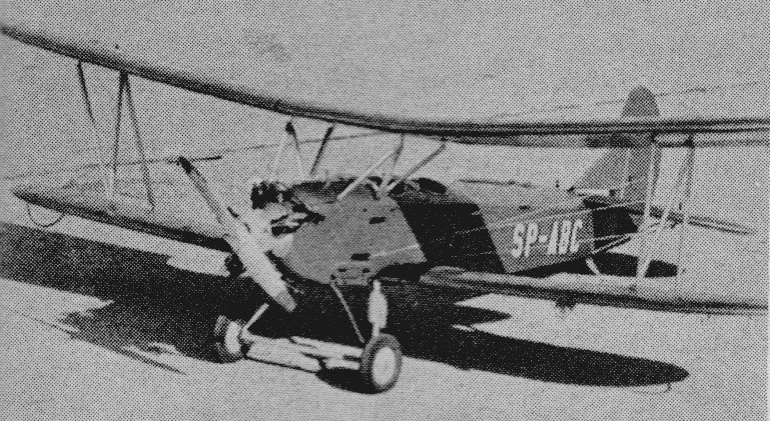
In 1947, the aviation of the People’s Army of Poland turned to the Polish aviation industry with an order to start serial production of the Soviet Po-2 training and liaison aircraft. In the USSR, it was agreed to sell its license and in 1948, the Central Aircraft Study in Warsaw, under the direction of Stanisław Lassota, the licensing documentation for the aircraft was prepared. The license version of the aircraft differed from the Po-2 prototype in a different type of ailerons, had a trim on the elevator, different shock absorber fairings and some on-board instruments, minor improvements in the airframe design, as well as an improved engine, so the designation was changed to CSS-13.

The production of the aircraft began at WSK-Mielec in December 1948. The prototype of the aircraft, SP-AKZ, made its first flight on December 18, 1948 and the pilots were Ludwik Lech and Kazimierz Tyrlik. In the following year, its testing was carried out at the Institute of Aviation in Warsaw. During the tests, it was found that the aircraft has good handling characteristics and behaved safely at take-off and landing.

In 1999, the first serial model was flown. Serial production of the aircraft lasted at PZL Mielec from 1949 to 1950, and then 1952-1956 at WSK Okęcie in Warsaw. In total, 560 CSS-13 aircraft were produced in the years 1949–1956, of which 180 at PZL Mielec and 380 at WSK Okęcie. Airplanes of this type, popularly known as “Pociaki” or “Papayas”, were used by military, agricultural aviation as well as by flying clubs.

The first new aircraft were directed to aviation units and military schools as early as 1949. In the first half of the 1950s, CSS-13 aircraft were the basic aircraft in squadrons and liaison keys of the air forces. The following versions were used: liaison equipped with a double control system, bomber with a sight glass in the lower right wing for targeting with a gunsight and bomb locks under the wing and placed on the top of the fuselage, behind the second cabin on a rack, a movable aircraft machine gun. In addition to the air force, CSS-13 aircraft were used in the aviation units of the Navy and in the Border Protection Forces to patrol the state border.

During 1953–1955, LOT Polish Airlines operated 20 CSS-13 aircraft adapted for agricultural purposes (dusting crops and forests). In the flying clubs, CSS-13 aircraft were used in the 1960s for pilot training, training flights, glider towing, and parachute jumpers transport.

CSS-13

In 1953, a prototype of the version of the CSS-13 aircraft was built and flown at the Okęcie airport in Warsaw, marked as CSS S-13, designed by Tadeusz Sołtyk, M.Sc. A total of 59 aircraft of this type were produced.

CSS-13 (serial number 8-0511), Museum of Polish Arms in Kołobrzeg

Dozens of them have been exported, e.g. to Romania and Hungary. The last copy was withdrawn from use in 1978.

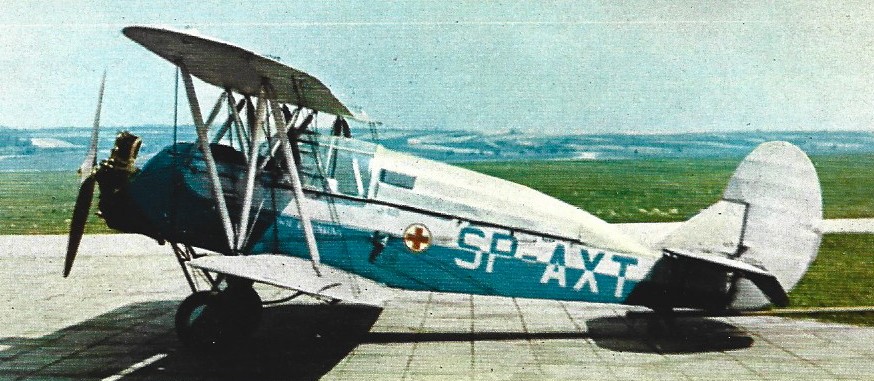
A Polish-built ambulance version has a raised rear decking.

Gallery

Replica:
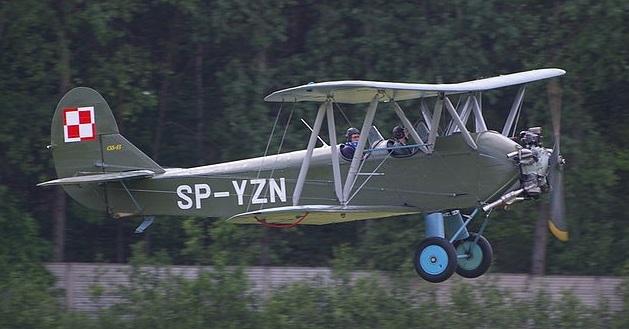
Rusavia Polikarpov U-2

Variants:

U-2: Basic model, built in large numbers as a two-seat primary trainer. It was also built in many different versions, both as civil and military aircraft. The U-2 variants also included a light transport, utility, reconnaissance and training aircraft. Power plant was the M-11 radial piston engine of 75 kW (100 hp). Later models were also equipped with uprated M-11 engines of 111 kW (150 hp). Some aircraft were fitted with a rear closed cabin, other were fitted with sledges or floats.

U-2A: Two-seat agricultural crop dusting aircraft, powered by an 86 kW (115 hp) M-11K radial piston engine. Later redesignated Po-2A after 1944.

U-2AO: Two-seat agricultural aircraft.

U-2AP: Agricultural aircraft, with a rear cab replaced with a container for 200–250 kg (441-551 lb) of chemicals. 1,235 were built in 1930–1940.

U-2G: This experimental aircraft had all the controls linked to the control column. One aircraft only.

U-2KL: Two aircraft fitted with a bulged canopy over the rear cabin.

U-2LSh: Two-seat ground-attack, close-support aircraft. The aircraft were armed with one 7.62 mm (0.30 in) ShKAS machine-gun in the rear cockpit. It could also carry up to 120 kg (265 lb) of bombs and four RS-82 rockets. Also known as the U-2VOM-1.

U-2LPL: Experimental prone-pilot research aircraft.

U-2M: This floatplane version was fitted with a large central float and two small stabilizing floats. Not built in large numbers. Also known as the MU-2.

U-2P: Floatplane version, built only in limited numbers, in several variants with different designations.

U-2S: Air ambulance version, built from 1934. It could take a physician and an injured on a stretcher on a rear fuselage, under a cover. Variant U-2S-1 from 1939 had a raised fuselage top upon the stretcher. From 1941 there were also used two containers for stretchers, that could be fitted over lower wings or two containers for two seating injured each, fitted under lower wings.

U-2SS: Air ambulance aircraft.

U-2ShS: Staff liaison version, built from 1943. It had a wider fuselage and a closed 4-place rear cab.

U-2SP: Civil transport version, could carry two passengers in open individual cabs, built from 1933. Other roles included aerial survey, and aerial photography. A total of 861 were built between 1934 and 1939.

U-2SPL: This limousine version was fitted with rear cabin for two passengers.

U-2UT: Two-seat training aircraft, powered by an 86 kW (115 hp) M-11D radial piston engine. Built in limited numbers.

U-2LNB: Somewhat like the earlier -LSh version, a Soviet Air Force two-seat night attack version, built from 1942. Armed with one 7.62 mm (0.30 in) ShKAS for rear defense, plus up to 250 kg of bombs under the wings for land support. Earlier aircraft were converted to improvised bombers from 1941.

U-2VS: Two-seat training and utility aircraft. Later redesignated Po-2VS after 1944.

U-2NAK: Two-seat night artillery observation, reconnaissance aircraft. Built from 1943.

U-3: Improved flying training model, fitted a 149 kW (200 hp) seven cylinder M-48 radial engine.

U-4: Cleaned-up version with slimmer fuselage; not built in large numbers.

  • (Total U-2 manufacture: 33,000)

Po-2: Postwar basic trainer variant.

Po-2A: Postwar agricultural variant.

Po-2GN: “Voice from the sky” propaganda aircraft, fitted with a loud speaker.

Po-2L: Limousine version with an enclosed passenger cabin.

Po-2P: Postwar floatplane version; built in small numbers.

Po-2S: Postwar air ambulance variant, with a closed rear cab.

Po-2S-1: Postwar ambulance version, similar to the pre-war U-2S.

Po-2S-2: Postwar ambulance version, powered by a M-11D radial piston engine.

Po-2S-3: Postwar ambulance version, which had two underwing containers, each one was designed to transport one stretcher patient. Also known as the Po-2SKF.

Po-2ShS: Staff communications aircraft, fitted with an enclosed cabin for the pilot and two or three passengers.

Po-2SP: Postwar aerial photography, geographic survey aircraft.

RV-23: This floatplane version of the U-2 was built in 1937. It was used in a number of seaplane altitude record attempts. The RV-23 was powered by a 529 kW (710 hp) Wright R-1820-F3 Cyclone radial piston engine.

CSS-13: Polish licence version, built in Poland in WSK-Okęcie and WSK-Mielec after World War II (about 500 built in 1948–1956).

CSS S-13: Polish ambulance version with a closed rear cab and cockpit and Townend ring (53 built in WSK-Okęcie in 1954–1955, 38 converted to S-13).

E-23: Research version, built in the Soviet Union in 1934, for research into inverted flight.

Engine: 1 x Schvetsov M-11, 74-118kW
Max take-off weight: 983 kg / 2167 lb
Empty weight: 740 kg / 1631 lb
Wingspan: 11.4 m / 37 ft 5 in
Length: 8.2 m / 27 ft 11 in
Height: 3.1 m / 10 ft 2 in
Max. speed: 146 km/h / 91 mph
Cruise speed: 100-130 km/h / 62 – 81 mph
Ceiling: 5000 m / 16400 ft
Range w/max.payload: 430 km / 267 miles
Crew: 1
Passengers: 1-2

CSS-13
Engine: M-11D, 125 hp (92 kW)
Wing span: 11,4 m
Wing area: 33,15 m2
Length: 8,17 m
Height: 3,1 m
Empty weight: 723 kg
MTOW: 1057 kg
Maximum speed: 150 km/h
Stall: 70 kph
Ceiling: 3000 m
ROC: 2.0 m/s
Range: 650 km
Armament: 1 x 7.62 mm ShKAS machine gun
Bombload: 300 kg

Polikarpov Po-2

Polikarpov TsKB-15 / TsBK-19 / I-17

The TsKB-15 single-seat fighter prototype was a diminutive low-wing monoplane of slim configuration, powered by an imported 626kW Hispano-Suiza 12Y inline engine. With an inward-retracting undercarriage, it flew in September 1934 and was followed by the TsKB-19 with the M-100 (Soviet version of the Hispano engine). Armament comprised a 20mm cannon and four 7.62mm machine-guns. Production of a small number as the I-17-2 was reported, but it is not known if the type was used by first-line units. A third prototype (the TsKB-33) had reduced armament in an attempt to cut down weight and increase performance. The projected use of this version as a parasite fighter to be launched from a multiengined ‘mother ship’ was subsequently abandoned.

Polikarpov TsKB-15 / TsBK-19 / I-17 Article

Engine: 1 x M-100, 550kW
Max take-off weight: 1915 kg / 4222 lb
Empty weight: 1710 kg / 3770 lb
Wingspan: 10.1 m / 33 ft 2 in
Length: 7.4 m / 24 ft 3 in
Wing area: 17.7 sq.m / 190.52 sq ft
Max. speed: 490 km/h / 304 mph
Cruise speed: 440 km/h / 273 mph
Ceiling: 9700 m / 31800 ft
Range w/max.fuel: 800 km / 497 miles
Armament: 1 x 20mm machine-guns, 4 x 7.62mm machine-guns
Bomb load: 100kg of bombs
Crew: 1

Polikarpov I-17