Rex Smith Aeroplane Co

The founder of Rex Smith Aeroplane Company, Rex Smith (1862–1923), was an inventor and a patent attorney. He placed his offices in Washington D.C., and operations at College Park Airport, Maryland. The company was capitalized with $500,000 in 1910 with Victor J Evans as president and Rex Smith as Vice president.

(Rexford) Rex Smith Aeroplane Co,
College Park MD.
USA

In 1911, Rex Smith moved his hangar to line up with the Army Aviation School, and hired Frank Kastory from Anzani, and Abraham Whalomie Raygorodsky from Russia. He test flew Smith aircraft alongside Fox engine powered Curtiss aircraft. Rex also hired Tony Jannus, and Paul Peck as test pilots. In a stroke of coincidence, flying at the same airport at the same time was another military aviator, Paul W. Beck.
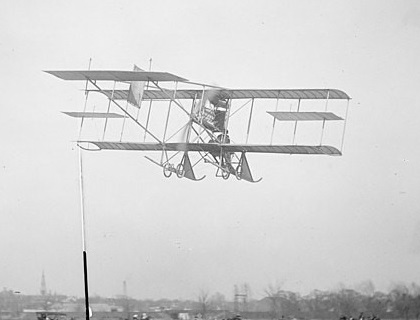
Rex Smith plane in flight

Two Rex Smith Biplane were built and used in the successful April 3, 1911 U.S. Army Signal Corps experiments in wireless communications. Potomac river pontoon experiments on April 5, were not as successful, with the aircraft plowing into the water headfirst nearly drowning the test pilot Jannus. Just two days later the machine was ready again. Janus took up actor Nat M. Wills, and later two female passengers at the same time. Marking the first time an aircraft flew with more than one passenger.

The Signal Corps did not buy any Smith Biplanes, they did however use them from time to time to train pilots to fly the Curtiss aircraft at the same field.

Operations continued until 1916 in building several other Curtiss-type biplanes.
Rex Composites / Moniot

Philippe Moniot having previously designed for Wassmer, formed Avions Philippe Moniot.

In 1986 the joint stock company Rex Composites was created by Philippe Moniot with 300m² of workshop space.

In 1999 was the certification of the APM Lionceau, the first “all carbon” aircraft in the world.

2011 was the creation of the REXIAA Group and launch of a new strategic development project.
Commercialization of the APM 40, an “all carbon” 4-seater plane, designed and produced by all the companies in the REXIAA Group.

Revolution Voyager 500

The two seat Voyager 500 was launched at the Sn ‘n Fun show in Florida in 1998. Still only in kit form, it featured a three cylinder two stroke engine.

Engine: US Airpower, 138 hp
Rotor span: 6.80 m
Blade area: 0.2 sq.m
MAUW: 515 kg
Empty weight: 276 kg
Fuel capacity: 76 lt
Max speed: 193 kph
Cruise speed: 152 kph
Minimum speed: 0 kph
Climb rate: 6 m/s
Seats: 2
Fuel consumption: 30 lt/hr
Kit price (1998): $48,500

Revolution Mini 500

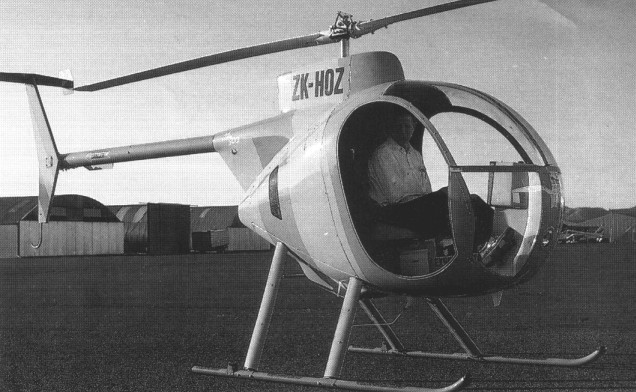
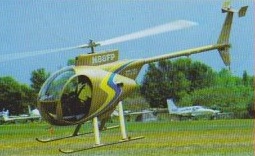
Designed by Augusto Cicare, the Mini 500 was developed by Dennis Fetters, and utilises a single, semi-rigid, teetering, underslung main rotor and free-teetering, rigid in-plane tail rotor, and first flew in 1992. A single seat fully enclosed helicopter. Steel tube frame covered with a composite body enclosure. Tail boom is aluminium.

By 1998 around 400 examples had been sold.

Engine: Rotax 582, 67 hp
Rotor blades: Composite 19’2”
Height: 8.3 ft
Length: 22.6 ft
Disk span: 19.2 ft
Tail rotor: aluminium 3’10”.
Fuel cap: 14.7 USG
Weight empty: 485 lb
Gross: 840 lb
Speed max: 115 mph
Cruise: 65-83 kt
Range: 225 sm
ROC: 1100 fpm
Service ceiling: 10,000 ft
Seats: 1
Landing gear: skids

Engine: Rotax 582, 64 hp
Rotor span: 6.85 m
Blade area: 0.2 sq.m
MAUW: 350 kg
Empty weight: 155 kg
Fuel capacity: 57 lt
Max speed: 155 kph
Cruise speed: 100 kph
Minimum speed: 0 kph
Climb rate: 5.5 m/s
Seats: 1
Kit price (1998): US$32,900

Revmaster R-2100

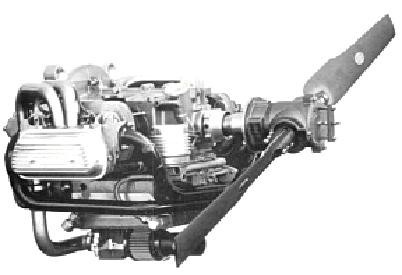
The Revmaster 2100D is a Volkswagen air-cooled engine modified for Homebuilt aircraft with dual magneto ignition. Designed by Joe Horvath the unit cost was US$1,095 in 1971

Two versions available were the R-2100 75 hp and the R-2100 turbo 80 HP. Originally, the R-2100 was equipped with POSA 28mm carburettors.

Specifications:
R-2100D
Bore: 92 mm
Stroke: 78 mm
Displacement: 2073cc
Valvetrain: Single overhead exhaust valve, single side inlet valve per cylinder
Fuel system: Single carburettor
Cooling system: Air-cooled
Tillotson Floatless Carburetor
Power output: 65hp

Requillard 1910 monoplane

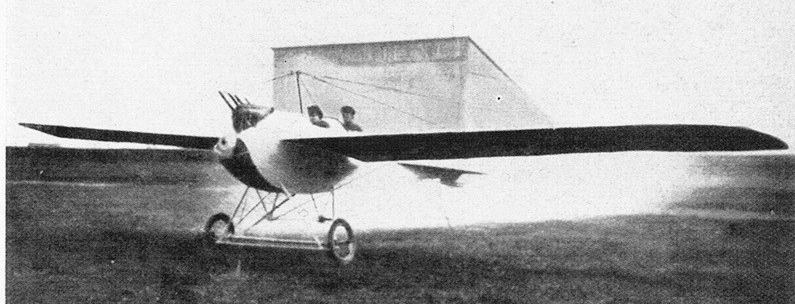
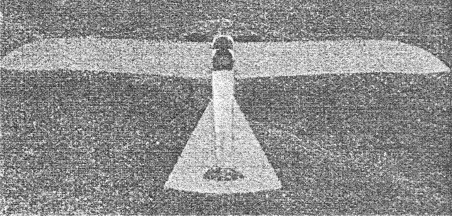
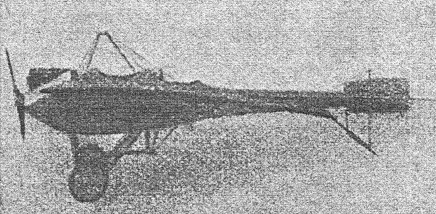
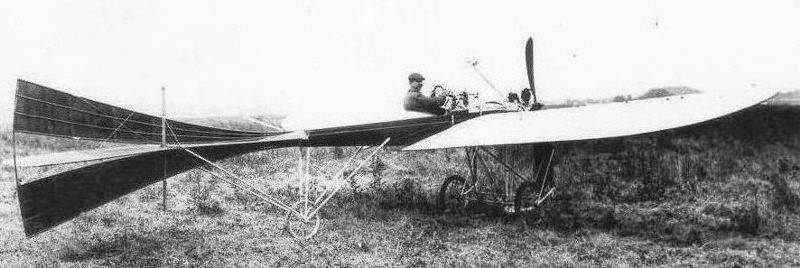
Requillard’s monoplane made its official appearance at Juvisy, France, in June 1910, flown by Marc Pourpe. The machine was very slender and streamlined, with long and triangular fixed tail surfaces, the rudder in two parts connected at the trailing edges to allow the elevator to move up and down between them. It was powered by a 50 hp Gnome. It was reported to have flipped onto its back on its first tests.

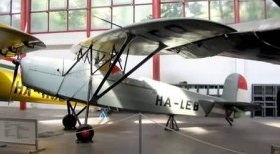
Repülögpégyàr Levente II

Training and liaison aircraft, Hungary, first flown in October 1940

Engine: Hirth HM 504 A2, 104 hp
Wingspan: 31.004 ft / 9.45 m
Wing area: 145.314 sq.ft / 13.5 sq.m
Length: 19.948 ft / 6.08 m
Height: 8.301 ft / 2.53 m
Max take off weight: 1653.8 lb / 750.0 kg
Weight empty: 1036.4 lb / 470.0 kg
Max speed: 97 kts / 180 km/h
Cruising speed: 86 kts / 160 km/h
Service ceiling: 14764 ft / 4500 m
Wing loading: 11.48 lb/sq.ft / 56.0 kg/sq.m
Range: 351 nm / 650 km
Armament: None
Crew: 1