The 1929 Rogers Sea Hawk flying boat first flew in January 1929, piloted by George Rommell.
Engine: 150hp Curtiss C-6 pusher
Wingspan: 40’0″
Length: 31’6″
Useful load: 1045 lb
Max speed: 90 mph
Cruise: 72 mph
Stall: 42 mph
Range: 500 mi
Seats: 4
The 1929 Rogers Sea Hawk flying boat first flew in January 1929, piloted by George Rommell.
Engine: 150hp Curtiss C-6 pusher
Wingspan: 40’0″
Length: 31’6″
Useful load: 1045 lb
Max speed: 90 mph
Cruise: 72 mph
Stall: 42 mph
Range: 500 mi
Seats: 4

Designed by Harry Rogers, as a close copy of the Curtiss F, the 1929 Rogers Sea Eagle RBX flying boat was first powered by a 150hp Hisso A engine, and priced at $12,500. Only the one, NX/NC9735, was built, receiving ATC 274.
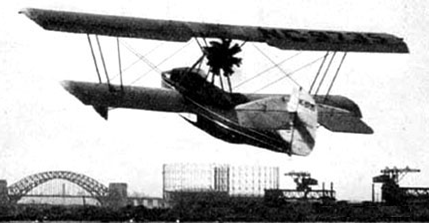
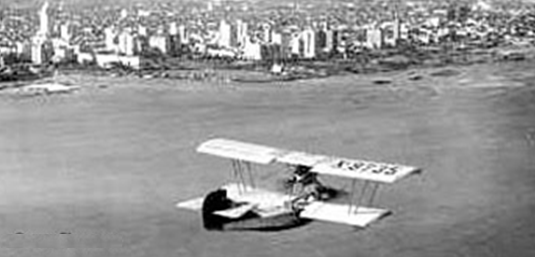
Sea Eagle RBX
Engine: 225hp Wright J-6 pusher
Wingspan: 40’0″
Length: 32’0″
Useful load: 1034 lb
Max speed: 105 mph
Cruise: 85 mph
Stall: 43 mph
Range: 270 mi
Seats: 4
Undercarriage: flying boat
c.1925 (Harry) Rogers Air Lines
Garden City NY & Miami FL.
USA
1928: Rogers Aeronautical Mfg Co
Roosevelt Field
Long Island NY.
USA
Flying boat builder
This two-place, low-wing monoplane stands on tricycle gear and is propelled by a Lycoming 125-hp engine. Building materials include tubular steel, wood and fabric.
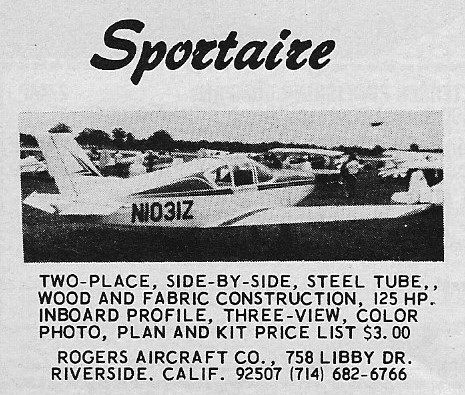
Gross Wt. 1600 lb
Empty Wt. 984 lb
Fuel capacity 22 USG
Wingspan 26’4”
Length 20’6”
Top speed 160 mph
Cruise 150 mph
Stall 55 mph
Climb rate 1000 fpm
Takeoff run 750 ft
Landing roll 500 ft
Range 400 sm
1980: 758 Libby Drive, Riverside, CA 92507, USA.
Built the Sportaire homebuilt.
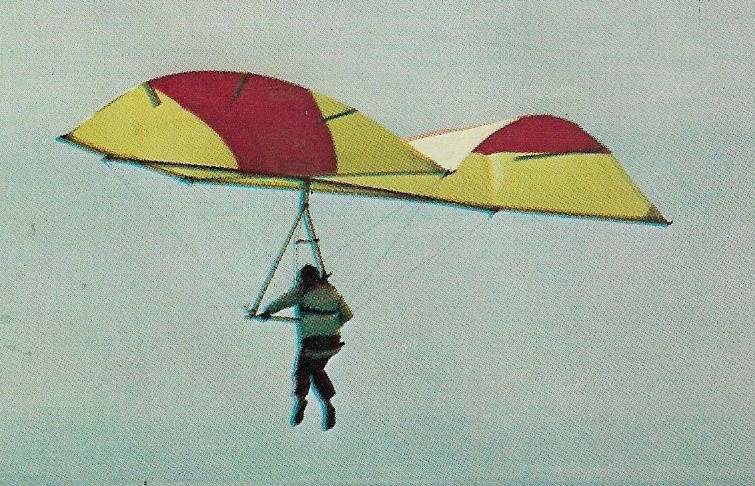
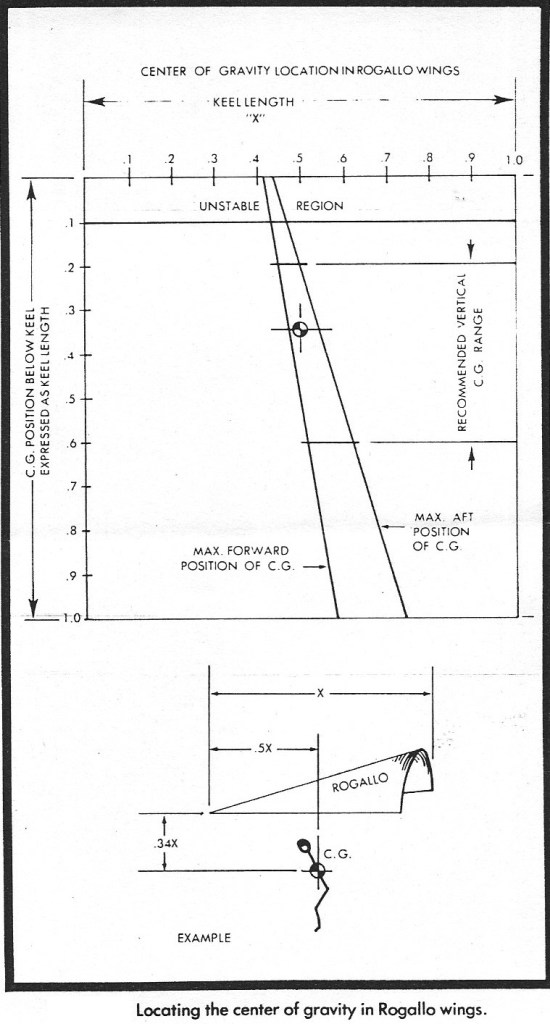
In 1948, Francis Rogallo, a NASA engineer, and his wife Gertrude Rogallo, invented a self-inflating flexible wing they called the Parawing, also known after them as the “Rogallo Wing” and flexible wing.
The term “Rogallo wing” is synonymous with one composed of two partial conic surfaces with both cones pointing forward. Slow Rogallo wings have wide, shallow cones. Fast subsonic and supersonic Rogallo wings have long, narrow cones. The Rogallo wing is a simple and inexpensive flying wing with remarkable properties.
The wing itself is not a kite, nor can it be characterized as glider or powered aircraft, until the wing is tethered or arranged in a configuration that glides or is powered. In other words, how it is attached and manipulated determines what type of aircraft it becomes. The Rogallo wing is most often seen in toy kites, but has been used to construct spacecraft parachutes, sport parachutes, ultralight powered aircraft like the trike and hang gliders. Rogallo had more than one patent concerning his finding; the due-diligence expansion of his invention involved cylindrical formats, multiple lobes, various stiffenings, various nose angles, etc. The Charles Richards design and use of the Rogallo wing in the NASA Paresev project resulted in an assemblage that became the stark template for the standard Rogallo hang-glider wing that would blanket the world of the sport in the early 1970s.
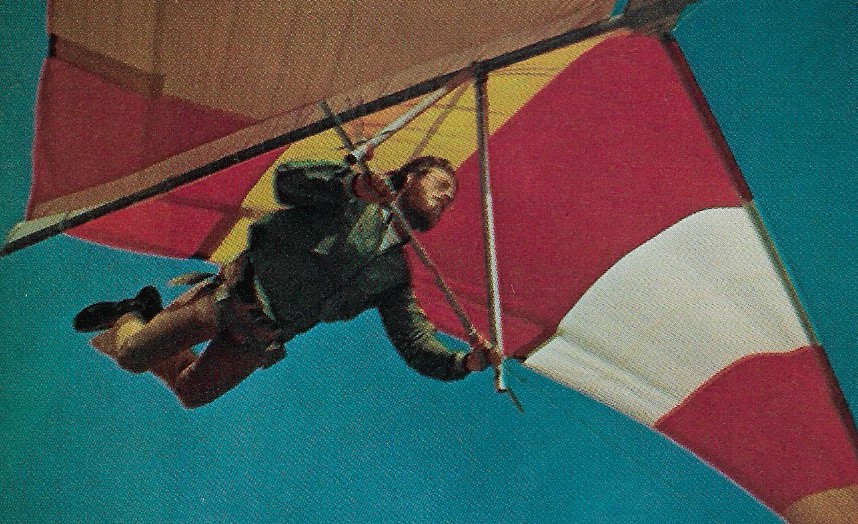
Beyond that, the wing is designed to bend and flex in the wind, and so provides favorable dynamics analogous to a spring suspension. Flexibility allows the wing to be less susceptible to turbulence and provides a gentler flying experience than a similarly sized rigid-winged aircraft. The trailing edge of the wing – which is not stiffened – allows the wing to twist, and provides aerodynamic stability without the need for a tail (empennage).
In 1961–1962, aeronautical engineer Barry Palmer foot-launched several versions of a framed Rogallo wing hang glider to continue the recreational and sporting spirit of hang gliding. Another player in the continuing evolution of the Rogallo wing hang glider was James Hobson whose “Rogallo Hang Glider” was published in 1962 in the Experimental Aircraft Association’s magazine Sport Aviation, as well as shown on national USA television in the Lawrence Welk Show.
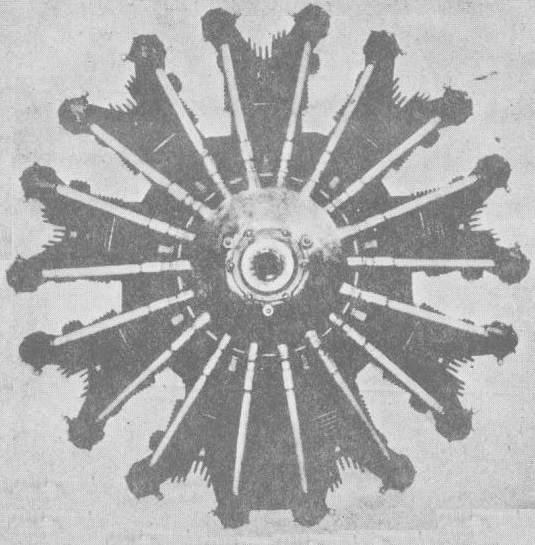
The Rocy Mountain Steel Products Pegasus featured a one piece master rod with tubular articulated rods and two pice crankshaft. Fitted was a triple integral induction system, and fully enclosed and lubricated valve gearing.
The rocker arms wre on ball bearings, and full tulip valves.
All accessories were grouped at the rear and pass through a 19 3/8 mounting ring.
Available at extra cost were starter and generator.
Type: 9 cylinder air cooled fixed radial
Commercial Rating: 225 hp at 1800 rpm
Displacement: 832 cu.in
Compression ratio: 5.25-1
Bore: 4.625 in
Stroke: 5.5 in
Length: 40 in
Diameter: 45 in
Weight: 510 lb
Fuel consumption: not more than .60 lb/hp/hr
Oil consumption: not more than .025 lb/hp/hr
Lubrication: Duplex oil pump, filter
Ignition: 2 Scintilla magnetos
Carburation: Stromberg NA T4B adjustable
Spark plugs: 2 per cylinder
1346-56 Wall St
Los Angeles
California
USA
Circa 1920s built aero engines
A single-seat powered sailplane built in 1957, with 18 hp Zink-Brandl engine.
Germany
Mainly sailplane manufacturer, but built Krahe single-seat powered sailplane in 1957, with 18 hp Zink-Brandl engine.

