Ross R-2

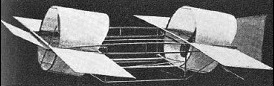
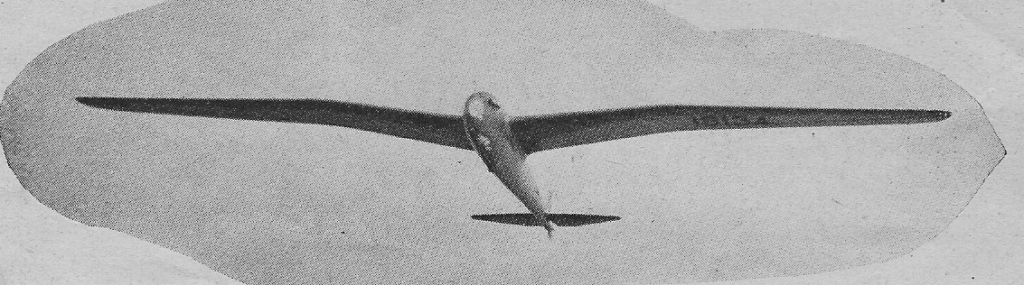
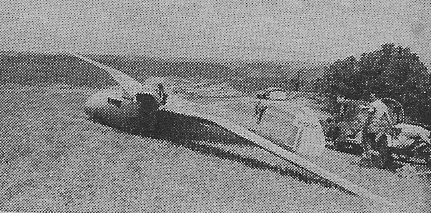
The R-2 was quite similar to the RS-1 but the gull wing had a 48 ft. span and an all-moving tail was used. It made the first wave flight I the U.S. on Oct. 25, 1938, at White Mountain, New Hampshire.

Wingspan: 46 ft
Length: 20.5 ft
Wing area: 125 sq.ft
Aspect ratio: 17
Empty weight: 280 lb
Gross weight: 470 lb
Min sink: 2.5 f/sec
Glide ratio: 23-1

Rose Parakeet / Hannaford Bee

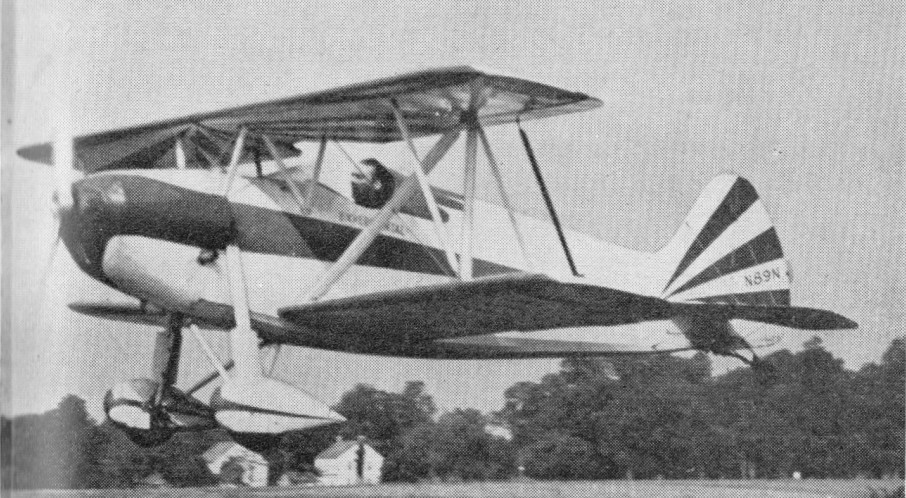
As flying began to recover from the depression, the little Rose Parakeet appeared in 1934. This was built by the Rose Aeroplane & Motor Co. of Chicago, Illinois. Powered with the new (and relatively expensive) 37-hp Continenal A.40 flat-four engine, it drew heavily on the layout of the old Lincoln Sport but incorporated welded steel-tube fuselage and tail construction and greatly modified wing rigging. The airfoil was a Rose design, nearly symmetrical. In spite of winning an ATC, only eight were built before the venture folded.

After acquiring in 1948 the manufacturing and marketing rights to the prewar Rose Parakeet single-seat sports biplane from Rose Aeroplane & Motor Company, Hannaford Aircraft Co offered production versions of the airplane with 40- 85hp engines. The design reappeared in the post-World War II homebuilt boom as the “Hannaford Bee,” the plans for which were available to the homebuilders. With 65-to 90-hp engines, the Bees, and some refurbished Parakeets became very suitable sport planes.

The design was revived in 1969 by Doug Rinehart, who used a 100-hp Continental 0-200 engine and intended to make the new Parakeet an ATC’d model for the general aviation market. The market did not accept it.

Replica:
Westphal Rose Parakeet

Gallery

Parakeet
Engine: Continental, 80-90 hp
Wingspan: 20 ft
Wing area: 116 sq.ft
Length: 17 ft
Empty weight: 550 lb
Gross weight: 860 lb
Wing load gross: 7.2 lb/sq.ft
Wing load 777lb aerobatic: 6.6 lb/sq.ft
Pwr load Gross: 9.5 lb/hp
Pwr load aerobatic: 8.5 lb/sq.ft
Top speed: 135 mph
Cruise: 120 mph

Parakeet
Engine: Lycoming, 125 hp
Wingspan: 20 ft
Length: 17 ft
Cruise: 135 mph

Rose Peregrine RP-5

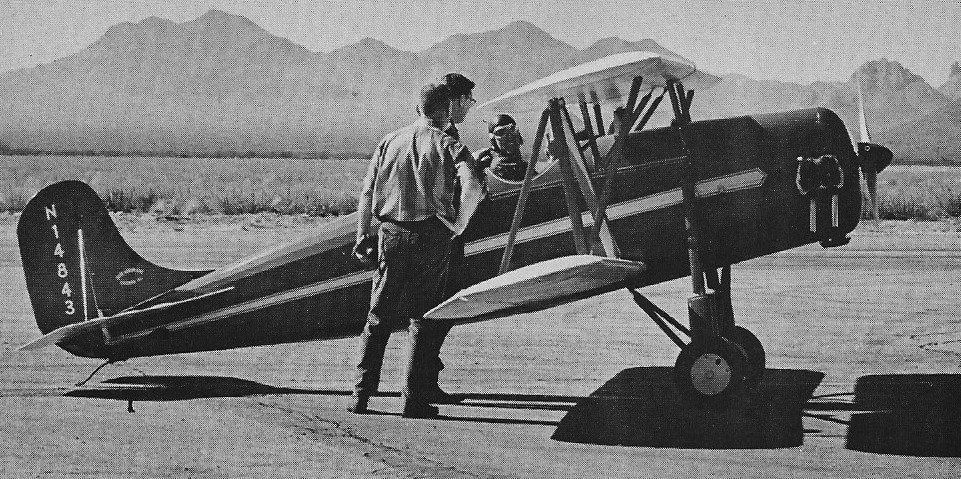
The RP-5 Peregrine N13NG c/n 101 was a 1998 biplane with a 150hp Lycoming O-320 engine.

It won the biplane class in 2003.

On 11 September 2007, the Rose Peregrine RP-5 biplane appeared to experience difficulties almost immediately after takeoff, at about 1745 local time. Witnesses say smoke billowed from plane at less than 100 feet after takeoff from Reno Stead Airport, practicing for the start of the 2007 Reno National Championship Air Races. The pilot, from Lemon Grove, Calif., was dead on impact. The Rose Peregrine was based at Montgomery Field in San Diego, and owned by David Rose. Rose was reportedly not the accident pilot.

Another example has been registered as a Peregrine 4 N111AY.

Rose RP-4

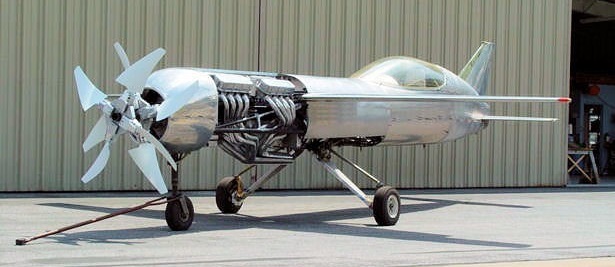
David Rose built the overpowered RP-4 for speed. The experimental counter-rotating propellers, inspired by a NASA project, run at 4800 rpm. Rose can connect both propellers directly to their engines without heavy reduction gearing. The props can change pitch for maximum efficiency at any speed. “It’s a drag-racer frame with skin on it to keep the wind out,” says Jerry Baer, a former pilot who helped Rose build RP-4.

Intended to compete in the Unlimited Class at the Reno Air Races, work began on the David Rose RP-4 project in 2005. Designed by Mr. Rose and built primarily be Eric Hereth, both of San Diego, at slightly over 4,600 pounds, 100 more than the minimum allowable, it was estimated that the racer would tour the course at upwards of 600 miles per hour, at least 100 mph faster than the then record holder.

Power is provided by two 600 cubic inch displacement V-8 engines designed originally for drag racing and, in that configuration, each is capable of producing as much as 2,500 horsepower (hp). Detuned to approximately 1200 hp. each, the engines were expected to withstand the rigors of running at full throttle for eight minutes, the time required to complete each heat at Stead Field in Reno.

The engines are mounted in tandem, each with its own independent systems, and each driving its own propeller. The engines are pressure-fed by two Pro-Charger F3-R centrifugal type superchargers with refrigerated intercoolers. The induction system is custom made from the 6” diameter throttle plate, to the attachment at the cylinder heads. The fuel is delivered by an electronic fuel injection system, also custom made for this application. Two-inch diameter stainless steel headers converge into collectors at the bottom of the fuselage exiting rearward and providing additional thrust in the process.

The contra-rotating propellers are reflective of those used in a ducted-fan experiment in the 1960s. Very efficient, but noisy, they split the job of delivering thrust and also cancel the negative torque reactions resulting from the P-factor, making such a high-power aircraft of small dimensions much more easily controlled.

The racer employs a unique engine cooling system. To eliminate any unnecessary parasitic drag on the fuselage, all scoops typically found in this type application are absent. Water from the engine cooling jackets is directed through the wings in parallel tubing, while the wings themselves are filled with water. Heat is transferred from the tubing into the water and heat from the water is transferred overboard through the wing skins. The wing will hold about 50 gallons of water adding about 400 pounds to the weight of the aircraft, which will help it reach the unlimited class weight limit.

All custom crafted by Eric Hereth, the fuselage is 31 inches in diameter with the canopy protruding 12 inches above its top line. It is constructed of welded chromoly tubing, stressed for over 10 g’s and covered in aluminum sheeting. Spinner to tail the aircraft measures 28 feet, with a wingspan of 20 feet and a cord length of four feet at the root. Wing area is 58 square feet, resulting in a wing loading of nearly 100 pounds per square foot.

A change in the rules instituted by the Reno Air Racing Association (RARA) prevented the racer from completing in the unlimited category, and as a result, work on the nearly completed aircraft was halted in 2012.
Rose, David

David Rose has more than 2,500 flight hours in his logbook. He first honed his skills in the U.S. Air Force in Vietnam, flying B-52s and the F-104 Star Fighter. After the military, he joined American Airlines as an ATP, flying 757s, 767s and MD-11s. David is also an avid air racer—he’s won four Reno Gold championships.

Roos-Bellanca Airplane Co.

USA
Established 1922 at Omaha, Nebraska, to produce aeroplanes designed by Professor G. Bellanca, first being the Bellanca C.F. high-wing monoplane of about 1924, powered by an Anzani engine. Prof. Bellanca left the partnership in 1923 and joined the Wright Aeronautical Corporation the following year. Wright built several Bellanca monoplanes, the last of which established a world endurance record, remaining in the air for more than 51 hours.