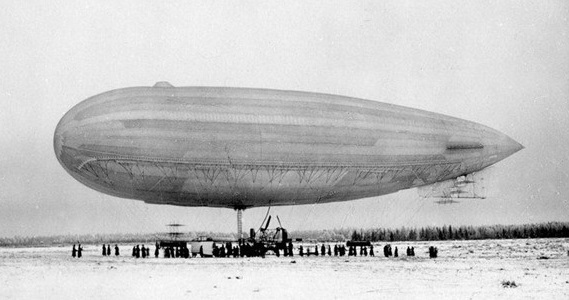
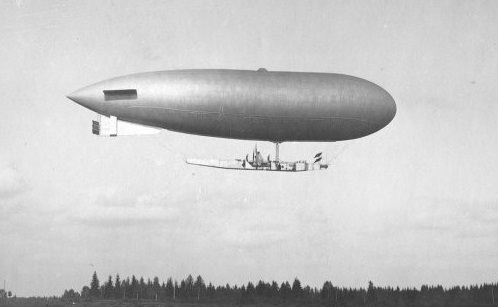
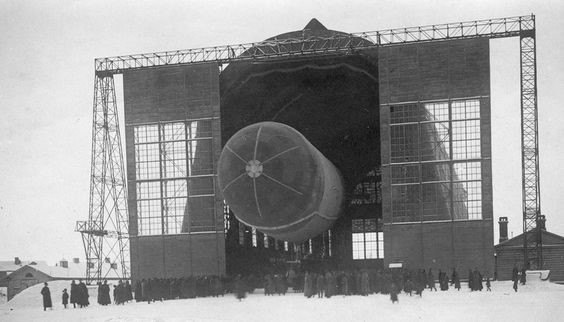
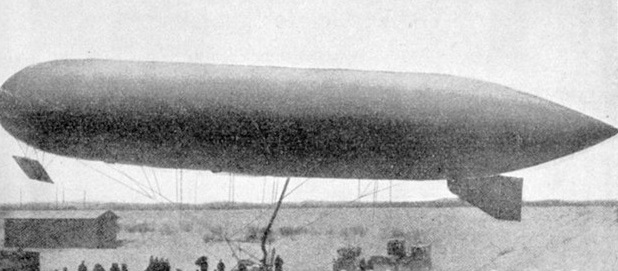
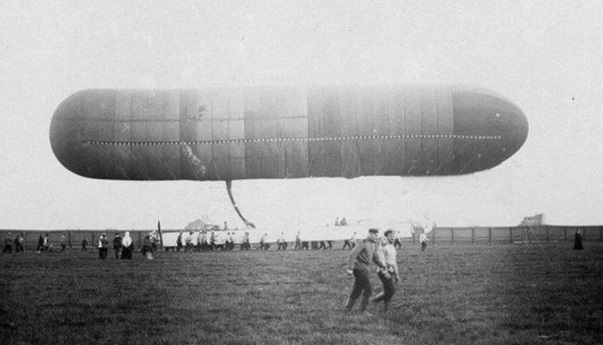
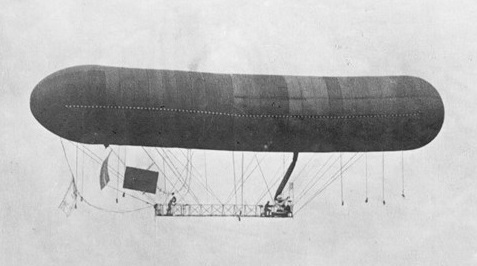
The airship “Albatross” was built on Izhorskij in 1912.
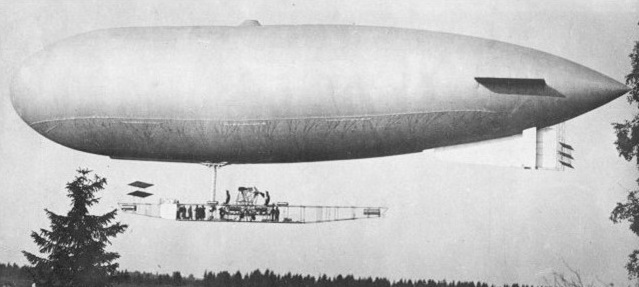
Albatross-II
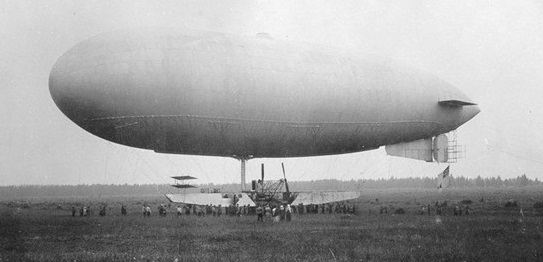
After one test flight in the hangar the “Albatross” burst. The dirigible was reassembled in Petersburg, Russia in 1913 and changed to the non-rigid “Albatross-II”.
Albatross-II
During the First World War the Albatross II made seven bombing patrols but the missions were never completed either because of low clouds, fog, or other reasons.
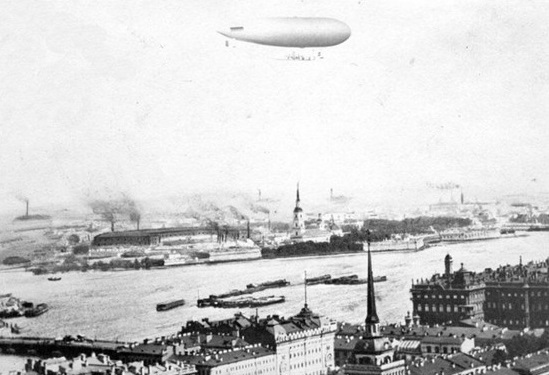
“Albatross-2” over Petrograd
When flying on October 13, 1914, the Albatross II got into a thick fog with a strong wind, and walking at low altitude, flew into a tree and crashed. The crew were not injured.
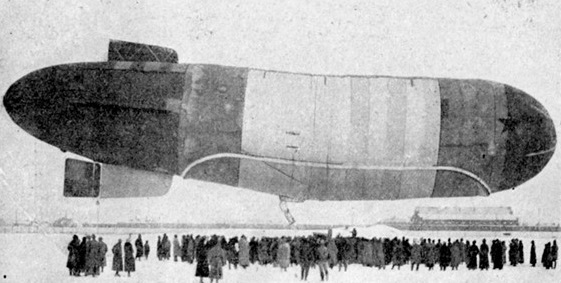
Designed by General Nobile, the second Russian airship was “VI October”, which was built of makeshift materials in 1923 by students of higher forces aeronautical school located in St. Petersburg. The envelope of 1,700 cubic meters was sewn from old tethered balloons. The total length of the airship was 39.2 m and width 8,2 m. The engine was 77 kW.
The first flight of the airship was on November 27, 1923, lasting for about 30 minutes. A second flight, on 29 November lasted 1 hour and 20 minutes and reached a height of 900 meters. After that flying was stopped because of the very high gas permeability of the membrane.
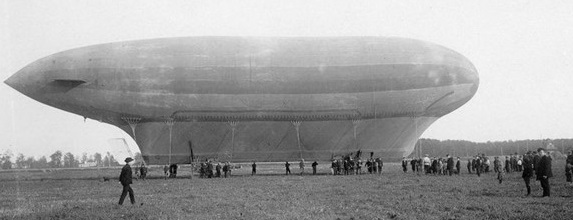
The airship “Forsman” was purchased in Sweden by order of the Russian military. This airship was the smallest in the world. Planned acquisition was for a series of small airships for the intelligence service in the Russian army.
It is unclear if the airship was delivered in Russia. Due to the small volume of the airship there was no gondola, but a board for the pilot’s seat and mechanics. The 28 hp motor weight was 38 kg.
Engine: 28 hp Length: 36 m Width: 6 m Envelope volume: 800 cu.m Maximum speed: 43 kph
Built in 1908 in Russia the very first Russian airship titled “Training.” The shell was made from two old “Parseval” airships.
This machine was a test board for airship design and operation. “Training” had a solid rate of climb, overtaking the characteristics of the “Zeppelin” and very often used for training crews.
The non-rigid airship was demolished in 1909 due to the dilapidated shell.
Length: 60 m Width: 6.55 m Envelope volume: 1200 cu.m (later 1500 cu.m) Maximum speed: 21 km / h Engine: 1 x 16 hp (later 25 hp)
In 1906 the Chief Engineer’s Office Russian Empire was specially seconded to France, with a delegation of engineers and professionals for the development of on-site experience of the most advanced airship.
In 1923, the Society for the Friends of the Air Fleet of the USSR was created special Vozduhtsentr with tasks which included the promotion of Russian airship in Russia. After a while Vozduhtsentr was renamed vozduhsektsiyu Osoaviahima USSR and in the autumn of 1924 completed the construction of another Myagenko airship under the title “Moscow chemist rezinschik” (MHR). This title pointed to the fact that it was made by means of chemical industry workers in and around Moscow. The designer of this project was N. Fomin.
At the end of 1931 at CAB CAF was created under the title “Dirizhablestroy.” This organization was to unite the efforts of various groups of professionals working in the field, as do the planned deployment of the work in designing and building the next Russian airships. Also, the organization should take the time to research on the topic of aeronautic and improve methods of exploitation airships.
Nobile worked in the USSR from 1931 until 1935. He is believed to have been responsible for the design of nine semi-rigid airships.
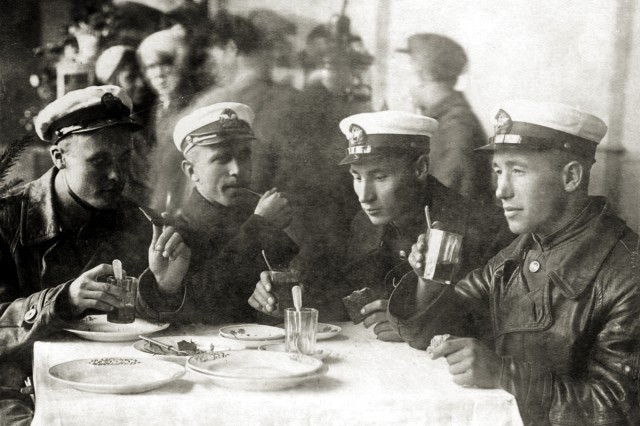
Russian airship crewmen (left to right) – Nikolai Gudovantsev, Ivan Obodzinsky, Ivan Pan’kov and Vladimir Ustinovich. 1933
The rationale for the Soviet program was to provide transport to distant rugged regions, notably Siberia, as well as such utility functions as surveying.
There were works at Leningrad, and Zagi near Moscow, the latter also the center of Tsiolkovski’s metalclad efforts. The plan was to make 92 ships but it is unknown how many were actually made.
There were also some non-rigids built in 1937 at Zagi.
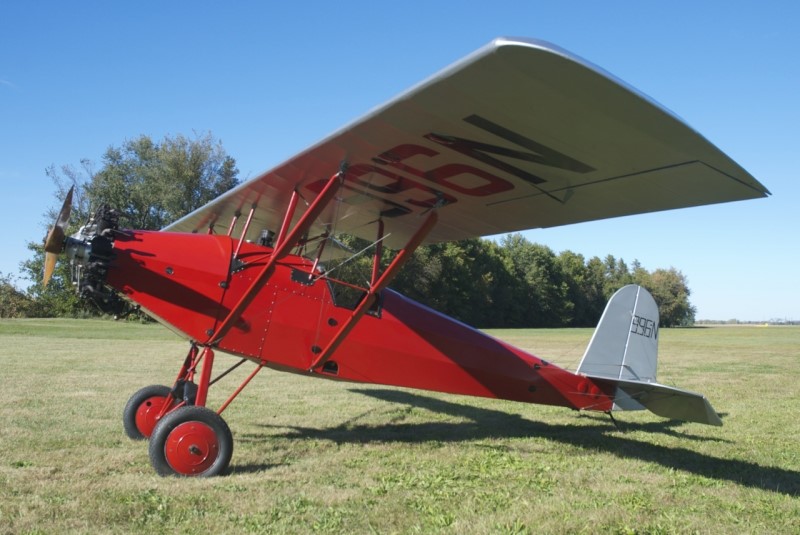
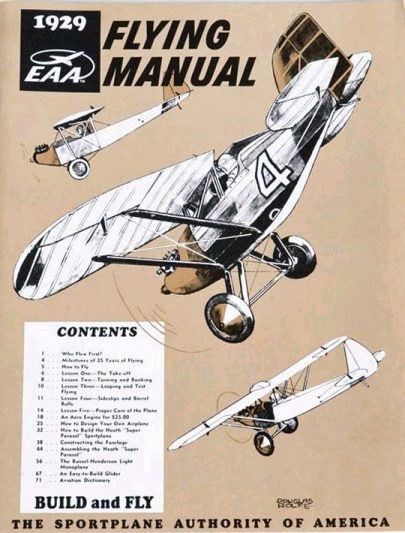
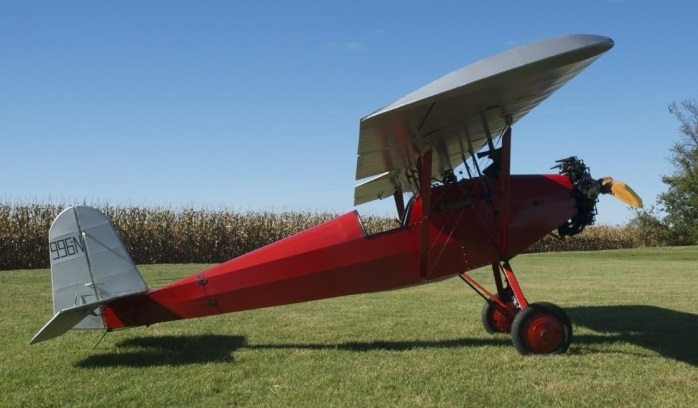
The Russell Light Monoplane is a plans-built design dating to 1929, when the plans could be obtained through Flying & Glider Manual, The Sportplane Authority of America and other publications.
Salmson powered Russell
It was intended to use a converted 4-cylinder Henderson motorcycle engine for power and built of wood with wire bracing. Covered with fabric, the Russell was relatively easy and inexpensive to build though it was never intended for tall people to fly it as it is really small.
1929 Flying & Glider Manual. The Russell-Henderson Light Monoplane is shown lower right on the cover.
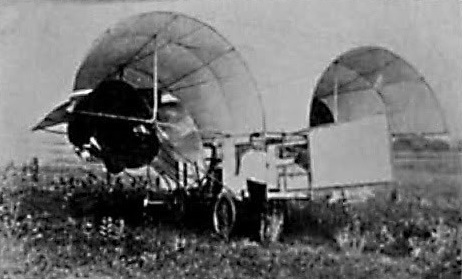
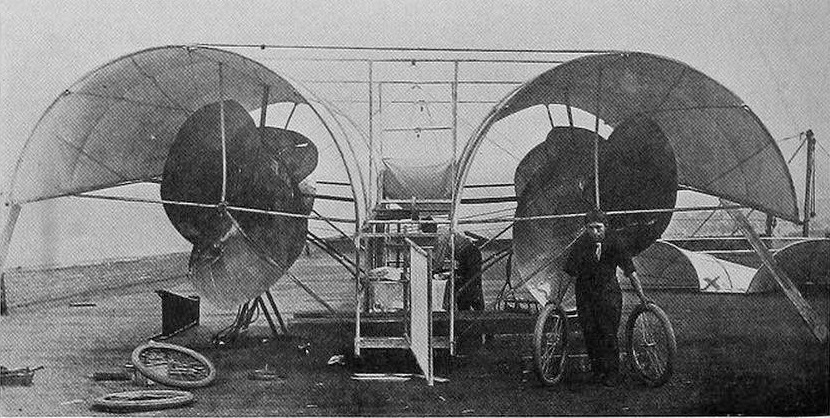
The Fritz Russ Flyer of 1910 was an American flying machine with wings in the form of half cylinders and immense helical spirals, or screws, set within them.
Aircraft” – October 1910 – page 296 “The Johnstown Aero Company, of Johnstown, Pa., have purchased the patent rights of the Fritz Russ flyer and are building men-carrying machines of that type. The ship is of novel design, being 39 feet long and 22 feet wide in rear and tapering to a point in front like a boy’s dart. It is constructed throughout of seamless steel tubing and is fitted with an Elbridge engine driving four spiral screw propellers.”
EDA VII was a monoplane with a small second wing, with which from August to the end of 1910, flew successfully several times.
With its construction, in the summer of 1910, the brothers Rusjan exhaust all their financial possibilities. Their savings and those of the father Franc were gone. They sort finance in France, Austria and Hungary but with little success.