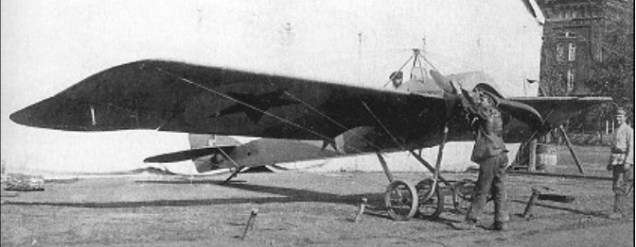
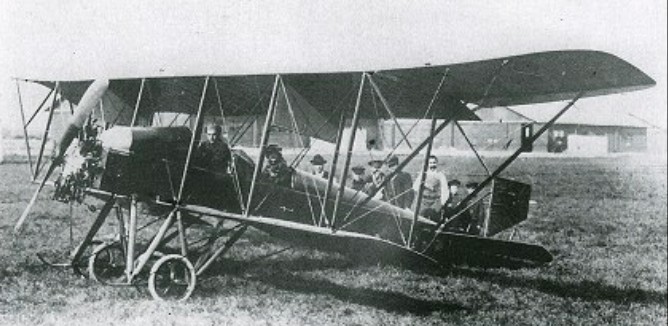
The S-12 was built at the suggestion of George Yankovsky as a lighter, single-seat version of the S-11 with an 80hp Gnome. He looped it in September 1913, the first time a Russian aircraft had performed this manoeuvre, and set a Russian height record of 3680m shortly afterwards. Most of the dozen or so S-11s that were built survived the war, and served in the earliest Soviet Air Force units during the Revolution. Several were still operational in 1922, mostly with an 80hp Le Rhone engine.
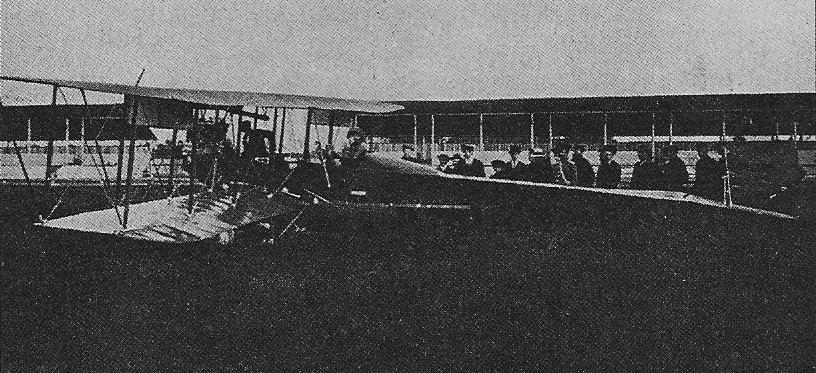
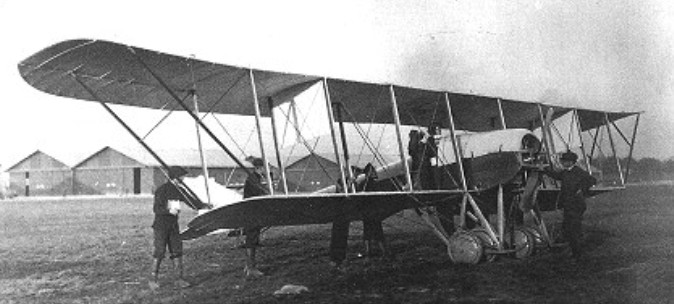
Developed from the larger and heavier S-9, the 1913 S-11 Polukroogly (half-round) had a conventional wooden fuselage and 100hp Gnome Monosoupape engine. It was initially equipped with ailerons that were operated by steel tubes inside the wing. Trials revealed that they were not efficient, so they were replaced by wing warping. The pilot and observer sat side-by-side, with controls only for the left seat. A top speed of 100km/h, stalling speed of 70km/h and take-off run of 75m were good enough to gain the S-11 second place in the 1913 military competition for a reconnaissance aircraft; but it was not ordered into production.
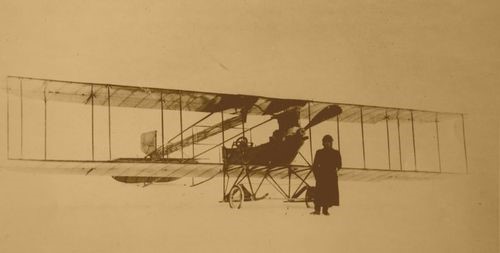
Constructed in Kiev, this 100 hp Argus-powered biplane was used by Igor Sikorsky to set new Russian flight records in November 1911, even setting a world-record with his design – a distance record with two passengers.
S-6A
S-10
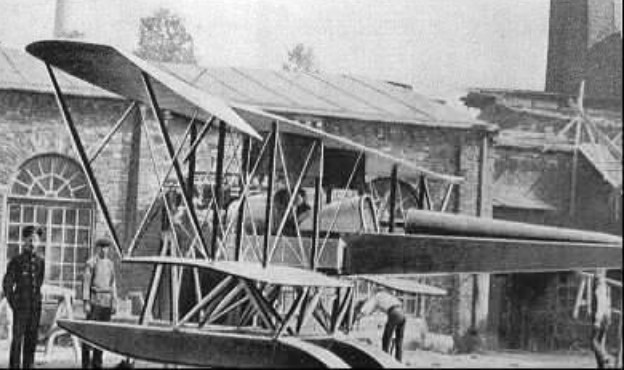
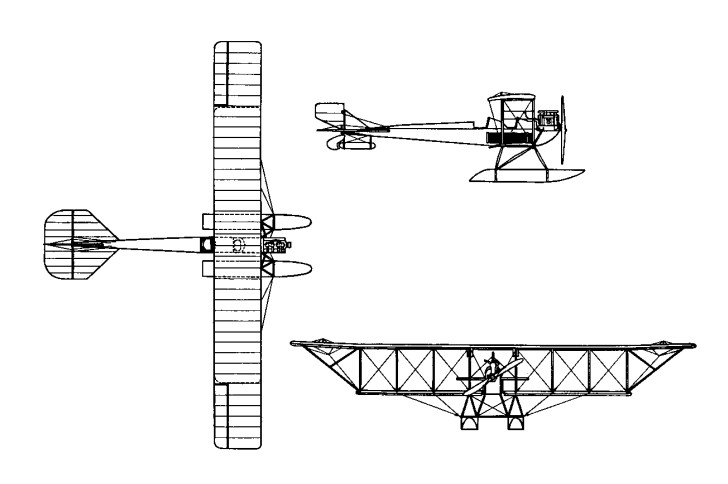
Under the designation S-10, about sixteen production versions of the S-6B were built by the RBVZ. The majority were delivered as twin-float seaplanes for service with the Baltic Fleet, from the summer of 1913 to 1915, with 100hp Argus or Gnome Monosoupape engines. Some were deployed on the world’s first operational seaplane carriers.
S-10
A special Competition S-10 landplane, with 80hp Gnome engine, was built for the 1913 military aircraft competition. The wing span was increased to 16.75m, with outer panels that could be folded for storage. The two seats were placed side-by-side, and the control wheel could be swung from pilot to co-pilot during flight. Production test pilot Alechnovich set a Russian record by flying it 500km in 4 hours 56 minutes, and it took first prize in the 1913 competition although it lacked the speed and manoeuvrability of the S-6B. After its span had been reduced to 13.70m and a 100hp Monosoupape installed, it served as a trainer with the Baltic Fleet.
S-10
The S-10A’s span of 13.7m and two seats in tandem set the standard for all S-10 seaplanes, and its 125hp (de-rated to l00hp) Anzani engine gave it better speed and rate of climb than the Competition S-10. Its flying characteristics were less good, preventing it from gaining first prize, but it set a new Russian height record of 3420m, piloted by Gleb Alechnovich. Modified to have a 100hp Monosoupape and floats, it was assigned to the Baltic Fleet.
Engine: 1 x 100hp Argus Wingspan: 16.9 m / 55 ft 5 in Length: 8.0 m / 26 ft 3 in Height: 4.1 m / 13 ft 5 in Wing area: 45.0 sq.m / 484.38 sq ft Max. speed: 90 km/h / 56 mph
Four airships designed by Myagenkoy were built in the Soviet Union including B-10, B-12 Patriot, and B-12 bis Victory.
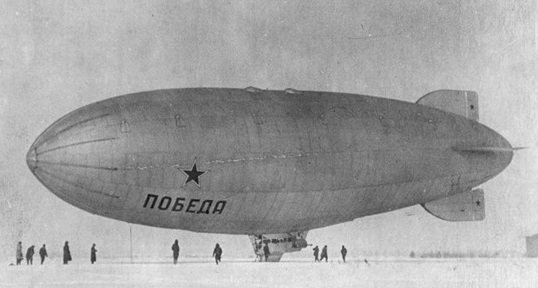
Airship Pobeda (Victory) was built in 1944 in 6 months. The volume was 5,000 cubic meters. The airship was designed to transport gas for barrage balloons and after the war it was used quite successfully to search for sunken ships. The Pobeda caught on a power line on 29 January 1947. They managed to tear off the wires by jettisoning its ballast. However, the airship was ascending so fast that the pressure inside the hull ruptured it, killing her crew of three airmen.
Assembling USSR-V10 airship, 1937
USSR-V10 first flight occurred in 1938.
USSR-V10 before its flight, 1938.
USSR-V10 crashed in August, 1938 killing 6 people. The cause of the crash was a mistake of its service crew who forgot to remove the caps from its exhaust valves which resulted in a rupture of the hull.
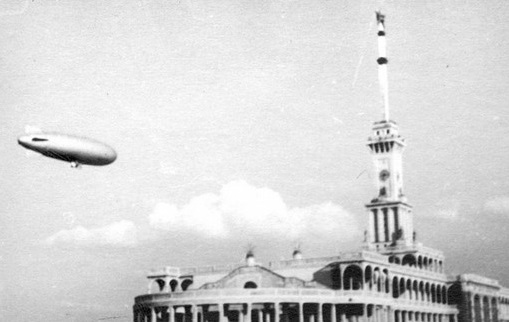
In 1946, the last passenger airship, the “Patriot”, entered service but by 1950 regular inland service had ended.
In 1943-44 the USSR V-12 airship made 969 flights. In 1945 USSR V-12 and Pobeda airships made 216 flights. 200 000 cubic meters of hydrogen and 320 tones of cargo had been delivered.
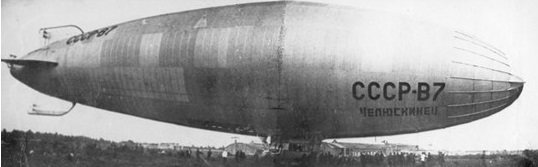
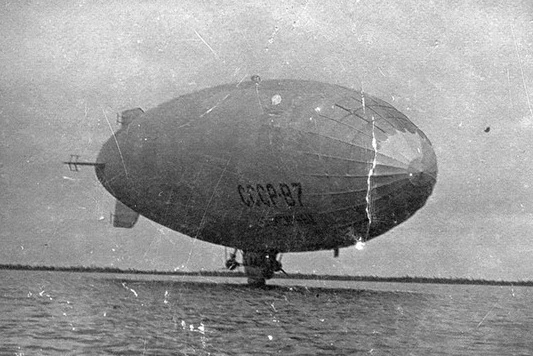
After the V-6 the Soviet Union built the Soviet B-7 airship, named “Chelyuskinets”.
The first flight was performed in 1934.
In 1935 was built a second, same airship, designated B-7 bis, after its predecessor USSR-V7 burnt in a fire.
USSR-V7bis Chelyuskinets water landing in the Leningrad Region
On the way from Petrozavodsk to Gatchina, it ran out of fuel when it was 100 m from the base so it had to waterland. However, the airship caught on powerlines and a fire broke out. Those who jumped out into the water stayed alive. The burning airship fell on a kennel killing over 100 shepherds. The commander of the airship was sentenced to two years in prison but was later released.
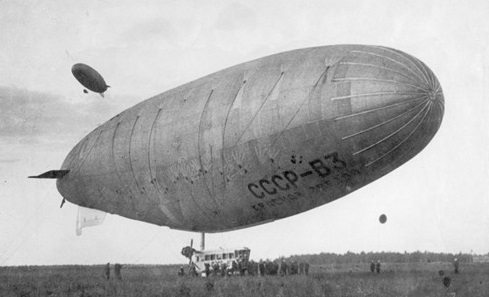
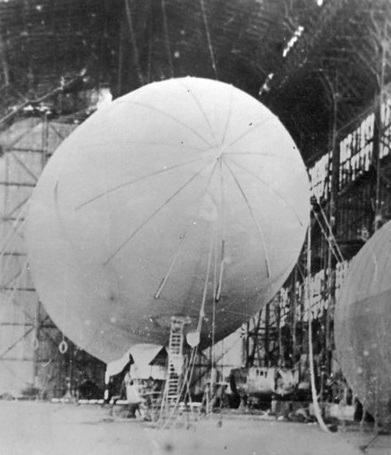
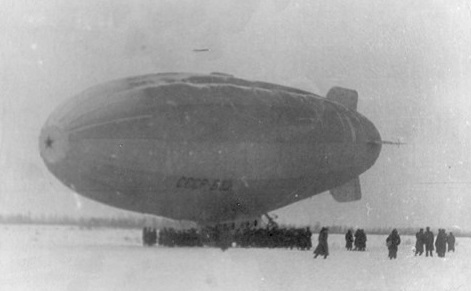
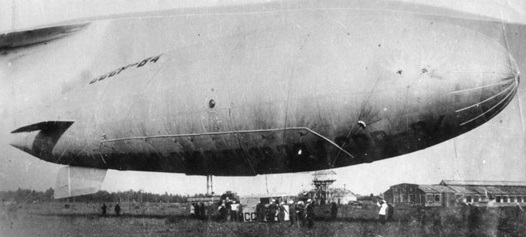
By May 1932, the Russian Empire had built three airship — the USSR B-1, B-2 USSR “Smolny” and the Soviet B-3 “Red Star”, which in the main have been set up to implement educational and propaganda operations. The B-1 envelope was 2200 cubic meters and B-2 5000 cubic meters. The airships had different engines. The envelope of all 3 airships was made of three-layer rubberized material and had an inner wall that divided the volume of the two equal parts. This partition to reduced transfusion of gas along the envelope for trim of the craft.
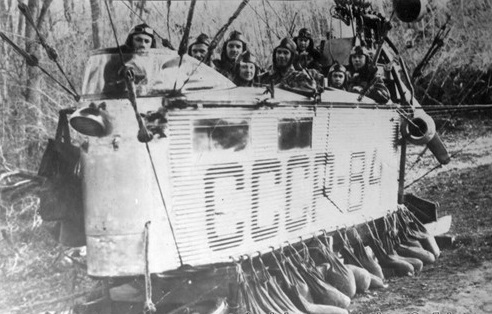
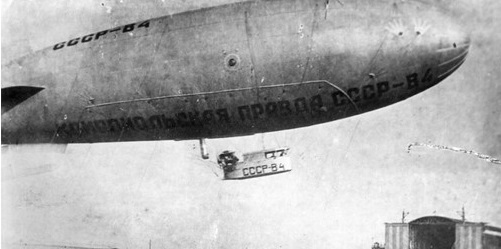
The Komsomolskaya Pravda gondola was enclosed.
These three airships performed a series of successful flights on the routes of Leningrad — Moscow — Leningrad, Moscow — Kharkov, etc. The three airship were joined by USSR-4.
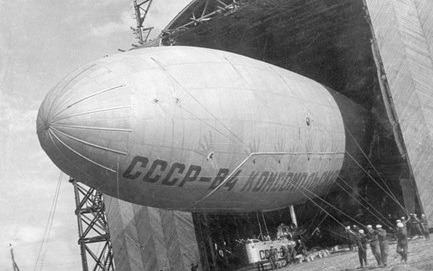
In 1934, V4 Komsomolskaya Pravda burnt after the boathouse where it was kept was struck with a lightning. However, some say that the real cause of the fire was violations of fire safety measures.