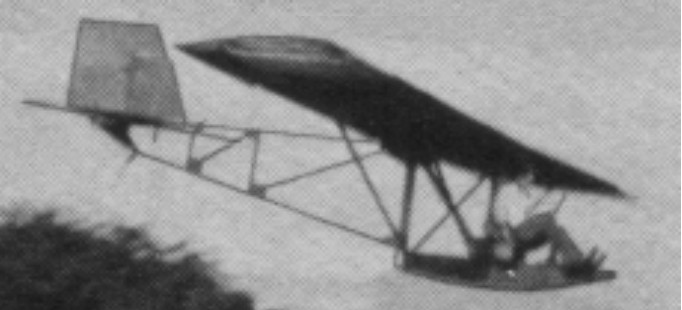
Schweizer SGP 1-1 / SGU 1-1

In 1928 J.C. Penney III, son of founder of the J. C. Penney department store chain, provided financial backing for a glider pilot training school run by the American Motorless Aviation Corporation. In order to gain publicity AMAC sponsored some soaring flights at Corn Hill, Truro, Massachusetts, Highland Light, Massachusetts and South Wellfleet, Massachusetts on Cape Cod. AMAC’s chief pilot, Peter Hesselbach made the first flight on 28 July 1928 in the Darmstadt I glider. This flight was of 57 minutes duration and bettered Orville Wright’s record duration flight by a factor of five. Hesselbach flew again on 31 July 1928 from Corn Hill, Massachusetts and flew for more than four hours, soaring in the winds that flowed up over the dunes. This flight was given front-page coverage in the New York Times.

The New York Times story greatly impressed the members of the Mercury Model Airplane Club including Atlee Hauck, Ernie Whidden, Robert Yellow and brothers Paul, Ernest and Bill Schweizer. As a result, they decided to convert the model club to a gliding club and build a primary glider. The club charged a US$5 membership fee. This rather substantial amount caused only those serious about glider flying to remain to build the aircraft, led by the Schweizer brothers.

Ernst Schweizer designed the then-unnamed primary glider, drawing inspiration from photographs of German designs then in use. The teenagers estimated that the glider would cost US$100 to complete and saved their busfare money by walking to and from school. They were not permitted to own bicycles or to hitchhike, as their father considered those methods of transportation too dangerous. They hid the glider construction project from him, even though it was built in the Schweizer’s barn.

The glider was built with a wooden structure and steel fittings. The wings and tail surfaces were covered in fabric. Typical of the primary gliders of its day, the fuselage was open and featured an open seat with stick and rudder three-axis controls. The aircraft was designed to be bungee launched with an elastic shock cord and had a single skid for landing gear.

Ernest Schweizer recognized the need to ensure that the glider was designed properly and so, even though he was still in high school, he conducted a stress analysis of the design.

The Schweizer brothers were concerned that their father might not let them fly the glider when it was completed and so they built it in secret. Their father worked in New York City during the week and would only enter his barn on weekends. The glider was constructed during weekdays and dismantled and hidden on the weekends. At the point in construction when the aircraft parts had become too large to hide, the brothers decided to assemble the aircraft as far as they could and show their father. He saw that they had done too much work to be stopped at that point and did not object to the completion of the glider.

The glider first flew on 19 June 1930, when Ernest Schweizer was 18 years old, Paul was 17 and Bill was 12. The final cost of the aircraft was US$135.

The club members taught themselves to fly using the glider launched by shock cord. They enlisted the aid of local children to pull the shock cord, but after the novelty appeal wore off, they had difficulties finding sufficient people for bungee launching. They switched to auto-tow using a Ford Model A to pull the shock cord. This method allowed higher flights.

The SGP 1-1 was flown extensively during the summer of 1930, although the total flying time for the year was less than one hour.

The SGP 1-1 has also been referred to as the SGU 1-1.

The success of the 1-1 led the Schweizer brothers to continue on to design the Schweizer SGU 1-2 and to form the Schweizer Metal Aircraft Company. The 1-1 became the first in a line of 38 glider designs that the Schweizers created and the first of over 5700 aircraft built by them.

A replica of the original 1-1 was constructed by a group of Schweizer Aircraft volunteers under the direction of Ernst Schweizer. The glider was completed, registered as N50SZ and flown in 1989 to celebrate 50 years of Schweizer sailplanes. The aircraft was flown by each of the Schweizer brothers and was donated to the National Soaring Museum where it remains on display.

Wingspan: 32 ft 0 in (9.8 m)
Aspect ratio: 8
Airfoil: Clark Y
Length: 15 ft 0 in (4.6 m)
Crew: One
Schweizer Aircraft Corp

The Schweizer Aircraft Corporation was an American manufacturer of sailplanes, agricultural aircraft and helicopters located in Horseheads, New York. The company grew out of the Mercury Glider Club which produced the first two Schweizer gliders in the Schweizers’ barn. The company was originally called the Schweizer Metal Aircraft Company. Attorney Bob McDowell indicated to the Schweizers that they should move their manufacturing operation out of their father’s barn and relocate to the Elmira, New York area. The Schweizers received the suggestion positively as they needed more space to produce gliders, but they had no money with which to make the move.

It was incorporated in 1939 by three Schweizer brothers (Paul, William, and Ernest), who built their first glider in 1930.

McDowell convinced Elmira Industries Inc, the local business development corporation, to provide space for the Schweizers on the second floor of the Elmira Knitting Mill Building in return for stock in the company. This resulted in the Schweizer Metal Aircraft Company becoming the Schweizer Aircraft Corporation in 1939, with a sale of shares to Elmira Industries, local businessmen and soaring pilots.

Schweizer primarily produced light, piston-engined helicopters for use in utility and flight-training roles. The Schweizer 300CBi, originally designed and manufactured by Hughes aircraft as the Hughes 269 for the United States Army, is one of the most widely used training helicopters in the world. In 1986, Schweizer acquired all rights to the helicopter from McDonnell Douglas, who had purchased Hughes Helicopters in 1984. After Schweizer acquired the FAA Type Certificate, the helicopter was known for a short time as the Schweizer-Hughes 300C and then simply, the Schweizer 300C.

Schweizer is perhaps known best for its popular line of gliders (sailplanes), the earliest of which (the model SGP 1-1) was produced in 1930. Although very few of the early gliders were built, later models gained popularity, such as the SGS 2-8 and 2-12, which were adopted by the U.S. Army Air Corps for training as the TG-2 and TG-3, respectively.

The Schweizer SGS 1-23 was a world class competition and record setting glider between its first flight in 1948 and the end of its production in 1967.

In the 1950s and 60s the Schweizer Aircraft Corporation designed and manufactured the very popular SGS 1-26 and SGS 2-33 gliders. They are easy to fly, with simple construction, and are quite rugged and forgiving. A powered light aircraft, the Schweizer SA 1-30 was tested, but did not go into production.

The 2-33 was adopted by the United States Air Force Academy as the TG-4, for use in introductory airmanship training. The Academy used over a dozen such gliders until 2002 when they were replaced by more modern sailplanes. The Royal Canadian Air Cadets continue to operate a fleet of over seventy 2-33As.

Other popular Schweizer gliders include the single-seat SGS 1-26 and the two or three-seat 2-32, both of which can be found in many soaring clubs and in private ownership across the United States.

Primarily designers and makers of sailplanes, one of which (SGS 2-32) fitted with piston engine was tested by Lockheed Aircraft Corporation as Q-Star for ‘quiet reconnaissance’ in Vietnam. On Q-Star was based the Lockheed YO-3A, using Schweizer wings and tail, new fuselage and muffled engine.

Company also built for Grumman the Ag-Cat agricultural biplane, later for Gulfstream, before acquiring the rights in 1981 (Ag-Cat subsequently produced by Ag-Cat Corporation).

Schweizer produced the Grumman G-164 Ag Cat, a single-engine biplane agricultural aircraft originally developed by Grumman in the 1950s. Under the contract with Grumman the airplane was built almost continuously between 1957 and 1981. During this period of time Schweizer built 2,455 of the airplanes.

In 1981 Schweizer bought the rights to the design and continued production under the name Schweizer Ag Cat. In 1995 Schweizer sold the rights to the Ag Cat to Ag-Cat Corp. of Malden, Texas. In February 2001 the design was sold to Allied Ag-Cat Productions Inc. of Walnut Ridge, Arkansas. Allied Ag-Cat is not producing new aircraft although a related company operates a large fleet of Ag-Cats.

The basic airframe incorporates many safety innovations, including a pressurized cockpit to keep pesticides out, air conditioning and a fuselage structure that is designed to progressively collapse in the event of a collision.

The basic designof Schweizer S269C remained unchanged over the years. Between Hughes and Schweizer, nearly 3,000 copies of the Model 269/300 have been built and flown over the last 50 years. Schweizer continued to develop the Model 300 by adding a turbine and redesigning the body to create the Schweizer 330, and then further developments led to the development of the Schweizer 333.

An improved version in the series, the Sikorsky S-434, was released in 2008.

In 1972 Schweizer hired David Thurston and production of his Thurston Teal was part of the agreement to work at Schweizer. The company produced three Schweizer TSC-1A1 Teals and nine TSC-1A2 Teal IIs before production was moved to Teal Aircraft in 1976.

The development of the Schweizer SGM 2-37 two-place motor glider for the United States Air Force Academy in 1982 led to a new area of expertise for the company. In the mid-1960s Lockheed had used the Schweizer SGS 2-32 sailplane as the basis for its YO-3 quiet reconnaissance aircraft. Schweizer decided to develop the SGM 2-37 into a similar concept aircraft as the YO-3. The result was the SA 2-37A and B, known as the RG-8A in military use.

The RG-8A was later developed by the company into the twin piston-engined and twin-boom SA 2-38 Condor with the US military designation of RU-38A Twin Condor. This design was further refined into the turboprop-powered RU-38B Twin Condor. The RU-38 was still in production in 2008.

It is believed the US Drug Enforcement Administration purchased aircraft designated Shadowhawk from Schweizer. The aircraft had a poor operational history. They may be designated SA 38B.
Other projects

In partnership with Northrop Grumman (formerly Ryan Aeronautical), Schweizer is developing the MQ-8 Fire Scout helicopter UAV.

Schweizer is currently participating in development of Sikorsky’s X-2 Demonstrator, a prototype aircraft using co-axial rotor blades with a pusher propeller for extra forward thrust.

Makes fuselage assemblies for Piper Aircraft Corporation and structures for Bell Helicopters. Became license-holder for Hughes 300 helicopter in 1983, producing piston-engined three-seat Model 300C from 1984 to present day and developing new 3/4-seat Model 330 turboshaft-powered helicopter (first flown June 1988); also supports Hughes Model 269s.

In 1986 flew the SA 2-37A low-noise special-missions aircraft suited to surveillance and other roles, followed in May 1995 by a radical twin-boom SA 2-37A conversion known as SA 2-38A. Two joined the U.S. Coast Guard as RU-38A Twin Condors for covert patrol and surveillance (one by conversion, one built as new).

In December 1999, Schweizer Aircraft celebrated its 60th Anniversary, and had built more than 2,160 sailplanes. Schweizer was a major U.S. aerospace contractor and no longer manufactured gliders.

Helicopter products offered by the company as of February 2009 included the 300C, 300CBi, and 333.

Previously the oldest privately owned aircraft company in the United States, Schweizer was acquired by Sikorsky Aircraft Corporation of Stratford, Connecticut, in 2004, and became a diversified aerospace company.

In 2011 and 2012 Sikorsky Aircraft Corporation laid off all the workers and closed the plant.

Schwarz No.1 / No.2

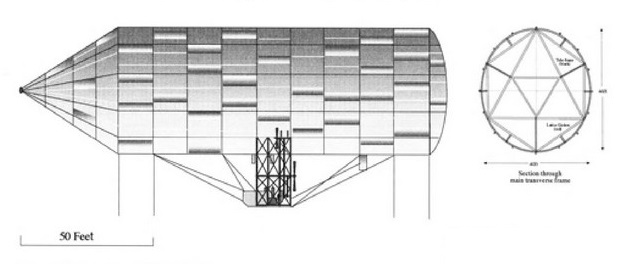
In 1895 Austrian timber merchant David Schwarz produced plans for a rigid-framed airship. It was built in St Petersburg for the Russian government but, although completed, never flew due to political complications; the Russians constantly regarding Schwartz as a spy. Schwartz was forced to leave Russia in secrecy, retuning to Germany where he built a second airship of similar design for the Prussian Airship Division in Berlin.

Schwarz died before the constuction was complete. The work was taken over by his able and practable widow until completed. The airship was a bottle-shaped craft of cylindrical form with a conical nose and shallow rounded stern, an internal framework constructed of tubular aluminium members and girders was covered by a skin of sheet aluminium .008in in thickness. The hull contained a single gas cell.

The filling of the envelope was accomplished by introducing a series of paper bags within the framework to be filled with hydrogen gas, which at the same time expelled an equal volume of air contained within the metal hull. A two-cylinder Daimeter petrol motor of 12 hp provided power, driving three airscrews through fabric transmission belts.

Two wing screws mounted above the car were assigned to drive the craft through the air, while a third larger diameter propeller mounted on the centre line, able to move through 90˚ vertically and horizontally, was supposed to control direction.

Schwarz No.2 crashed on its initial flight at Tempelhof on 4 November 1897. With the engines running, the ground crew released the ropes and the airship rose to approximately 100 ft. Maintaining its position against the breeze for some minutes, the airship was beginning to make headway against the wind when the left-hand driving belt jumped off its sheaves.

The airship continued to rise to 1300 ft as the pilot, a soldier named Ernst Jagels, struggled to maintain control, adjusting the angle of the central propeller to counter the wind. Just as he was turning into wind the right-hand driving belt also slipped off. Jagels valved gas to bring the craft down near the Tempelhof Field but the descent was too rapid, causing it to crash heavily on the ground, completely wrecking the airship. Jagels escaped unharmed but without further funding the project was abandoned.

Envelope capacity: 131,000 cu.ft
Length: 154 ft
Diameter: 46 ft
Height: 60 ft
Engine: Diamler 2 cyl, 12 hp
Speed: 17 mph
Crew: 1

Schütte-Lanz SL

Conceived from the outset with an alternative construction to rival the metal Zeppelins, the SLs with their rigid ply framework were claimed to be lighter and more flexible than met¬al-framed airships, and most of those in German military service were oper¬ated by the army.

The Navy, responsi¬ble for most of the raids against the British Isles, rightly claimed that wooden vessels were incapable of lift¬ing a sufficiently large bomb load as their weight would be increased by moisture absorbed while crossing the sea.

Wire-braced wooden structures had been used by the Schütte-Lanz company since the design stages of their initial SL 1 that had first flown on 17 October 1911.

SL 11 was accepted by the army in June 1916, and after trials was sent to its operational base at Spich in August. Armament was two 7.92-mm (0.312-in) Parabellum machine-guns on free mountings in single gun position above forward hull, plus bombs. At the end of the month its initial oper¬ational sortie proved abortive because of the weather. The attack at the beginning of September was its first and last, such a brief career resulting in the airship having only one com¬mander, Hauptmann Wilhelm Schramm, who had gained experience in charge of three earlier rigids, all of Zeppelin design.

On the night of the SLll’s destruction, when Schramm died with all his crew, both incendiary and explosive bombs were dropped. The airship’s chief claim to fame lies in that it was the first enemy aircraft of any kind to be brought down on British soil. SL11 was brought down by William Leefe Robinson on the night of 3 September 1916. In recog¬nition Robinson was awarded the Victoria Cross.

SL 11
Type: bombing airship
Engines: four l79-kW (240-hp) Maybach HSLu six-cylinder water-cooled piston
Maximum speed 95 kph (59 mph)
Service ceiling 5400 m (17,717 ft)
Range 3700 km (2,299 miles)
Useful lift 21500 kg (47,399 lb)
Diameter 20.09 m (65 ft 10.9 in)
Length 173.98 m (570 ft 9.6 in)
Volume 31900 cu.m (1,126,540 cu ft)
Armament: two 7.92-mm (0.312-in) Parabellum machine-guns

Schütte-Lanz Luftfahrzeugbau

Luftschifflan Schutte-Lanz
Schütte-Lanz Luftfahrzeugbau

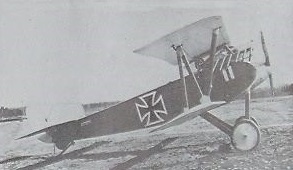
In 1909 Luftschifflan Schutte-Lanz was established to build airships. This company’s Luftfahrzeugbau was founded in 1915 at Zeesen, near Konigswusterhausen, Brandenburg, in recognition of the fact that airships must be supplemented by aeroplanes. The C-1 of 1915 had an unconventional engine installation; D-III built in 1916 was a single-seat fighter. Company built the Ago-Flugzeugwerke two-seat C.IV in quantity. Had studied ‘giant’ aircraft and was included in 1916 R-plane ‘giant’ programme. Contract awarded for six Staaken bombers. R.27-29 delivered late 1917 and became operational; three other Staaken machines (R.84- 86) unfinished at Armistice. Company also made special equipment (e.g. bomb gear and engine-room telegraphs) for other builders of giants, but own ambitious twin-boom project of 1917 remained unrealised. After aircraft work ended company remained as plywood manufacturer.

Schutte Sails MIG / Pacific Kites MIG / GygaxMIG

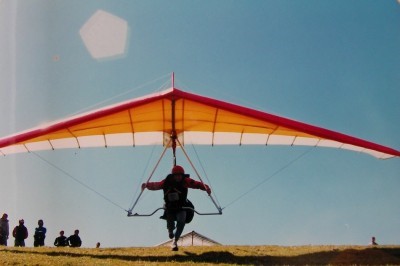
The Mig was produced by Schutte Sails in New Zealand in 1983 and 1984. It was a 70% double surface floating crosstube glider with curved fibreglass tips rather like the Moyes GT. The usual size was 172 sq.ft but there may have also been a 190 sq.ft version.

MIG 172

Not suitable for a learner pilot.

One hundred of these models were built in Europe by Hans Gygax around 1984. Gygax imported the ready made canvas of New Zealand and Gygax built the aluminum structure.

Schultz FS3 Besenstiel

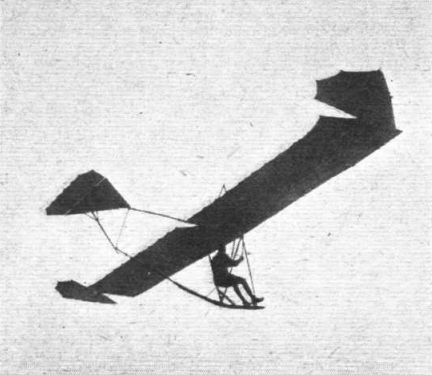
The F.S.3 sailplane was designed and built by Ferdinand Schulz, and also bore the nickname “broomstick”. The high-wing has a two-slatted wing with a modified Joukowski profile by Schulz. The roof beams are formed by two spars. The F.S.3 was exclusively made of fir and door hinges, the cover consisting of old army bed covers. The control was by two flaps at the wing tips.

Klaus Heyn built the original FS3, supported by Erich Kristan, 1924 technical assistant with F. Schulz. In 1924 the F.S.3 was not allowed by the Technical Commission (Teko) at the Rhönwettbewerb because of lack of construction strength.

Although of classic formula (horizontal and vertical empennage) the tail plates are fixed. The steering and roll controls are controlled by two triangles at the end of the wing, operated by two independent handles. The structure is wood (round section), in the form of “N”.

The glider was tested in secret. On May 11, 1924, Ferdinand Schulz remained in the air during the second German coastal flight competition on the Curonian Spit near Rossitten with his “Broomstick” 8 hours and 42 minutes by using the slope upwind, thus setting a world record.

Length: 4,8 m
Wing span: 12,5 m
Wing area: 18,4 m²
Aspect ratio: 9,8
Empty weight: 47,3 kg
TO weight: 123 kg
Maximum pilot weight: 80 kg
Wing loading: 7,2 kg/m²
Seats: 1