Scrappy UAC-200

The Scrappy is a single-place sport biplane constructed of steel tubing, wood and fabric. A 200-hp Lycoming engine provides the power.

Gross Wt. 1428 lb
Empty Wt. 981 lb
Fuel capacity, 28 USG
Wingspan 20 ft 8 in
Length 16 ft 8 in
Top speed 188 mph
Cruise 151 mph
Stall 55 mph
Climb rate 3700 fpm
Takeoff run 950 ft
Landing roll 1250 ft
Range 500 sm

Scoville JS-2 Stardust

The 1954 Stardust is a single-place Formula One sport/racer constructed from the conventional wood, fabric and tubular steel combination. It is propelled by the regulation 85-hp or the 100-hp Continental.

Registered N85N, it was involved in a nonfatal crash during races at Niagara Falls NY on 4 July 1956.

Gross Wt. 790 lb
Empty Wt. 520 lb
Fuel capacity 15 USG
Wingspan 16 ft
Length 17 ft 6 in
Vne 250 mph
Top speed 158.17 mph
Stall 58 mph
Takeoff run 1500 ft
Landing roll 1800 ft
Range 500 sm

Aviation Preservation Society of Scotland Sopwith 1½ Strutter

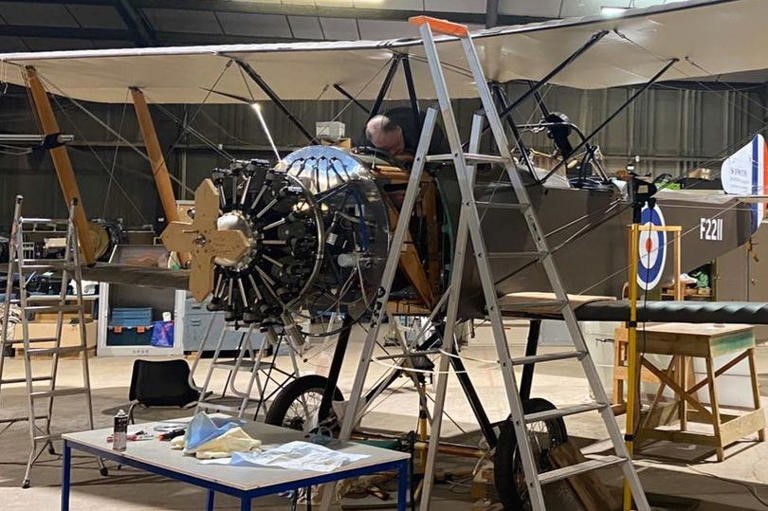
Adam Smith, former director of the National Museum of Flight, started to recruit volunteers in 2000. The group has included retired medics, teachers, civil engineers, film-makers and sign-writers – no one who knew how to build a plane.

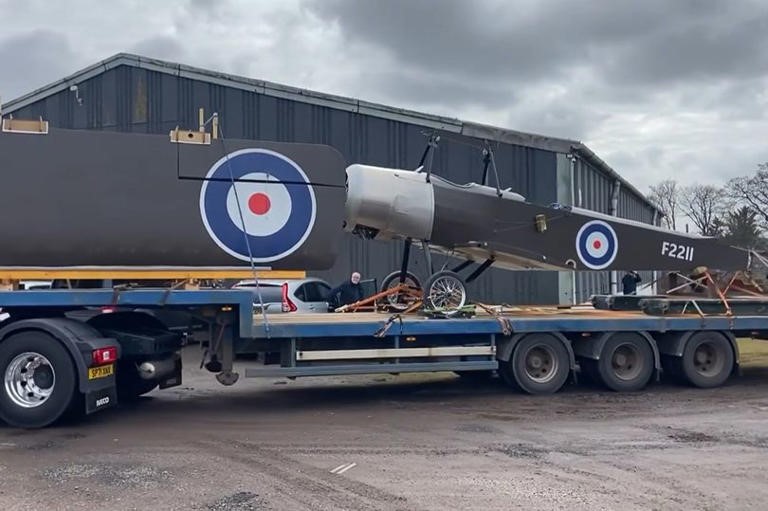
The exact working replica has been built by a team of dedicated experts and enthusiasts. The building of the plane took place over the 23 years. The Strutter was built from scratch in a big shed in East Lothian. A group of pensioners aged between 65 and 100 built the historic biplane with nine of them not living to see it finished as their names have been recorded on a plaque in the cockpit.

The plane was built by pensioners in a barn in East Lothian is set to be flown by a young female pilot, Ellie Carter, 20, for the first time.

But they have now completed a Strutter, with a working engine. The Strutter was seen leaving East Lothian on the back of a lorry to undergo testing in West Lothian.

Funding was needed to keep the Strutter in Scotland. It stands in an outsize converted fruit shed in Congalton, near Edinburgh, soon to be sold.

If the shed cannot be purchased, the plane was likely to move to England.

Mike Harper, chair of the Aviation Preservation Society of Scotland, said: “The Strutter is probably worth twice what the shed is worth, but we don’t want to see it leave Scotland, where it was designed and built.
Scottish Aviation Caledonia

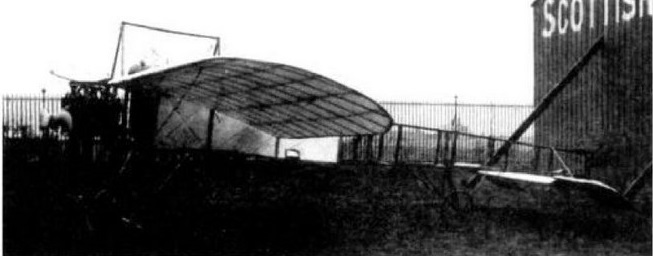
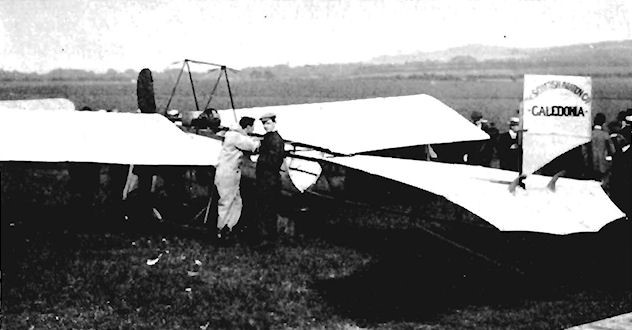
The Caledonia monoplane was built by the Scottish Aviation Co. from designs by Mr. F. Norman, the General Manager of the Company.

Mr. Norman is standing by the machine in overalls and talking across to Mr. Wilson, of the W. W. Proofing Co., a firm which is making a speciality of balloon fabrics in Glasgow.

The single-seat Caledonia was powered by a 35 hp JAP eight-cylinder engine and was fitted with a four wheel undercarriage, plus skids and flying in November 1911.

Scottish Aviation Twin Pioneer

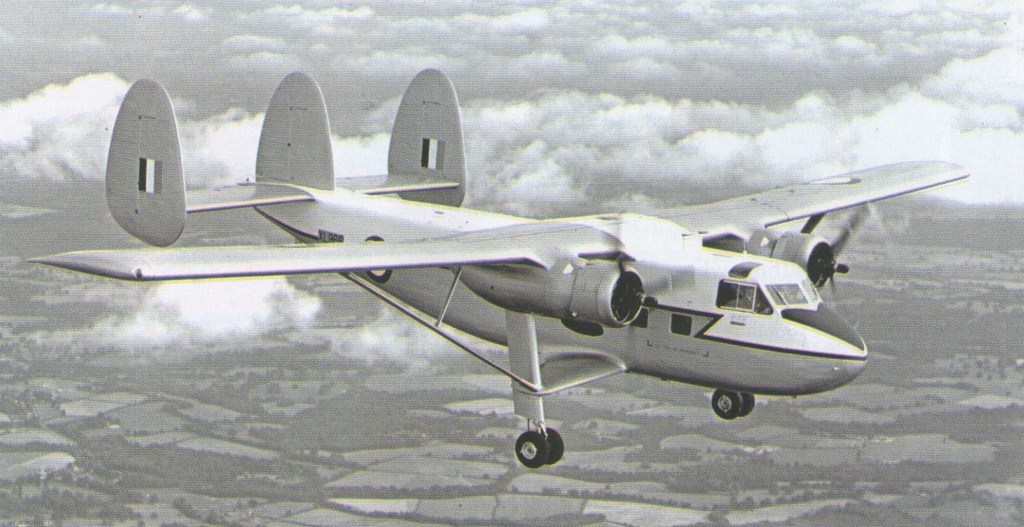
The 16-passenger civil Twin Pioneer prototype, G-ANTP, made its first flight on June 25, 1955 ass a 16-passenger civil type, powered by two 550 h.p. Alvis Leonides engines, and the first military version made its maiden flight on August 29, 1957.

Deliveries to the RAF began in early 1958, the Service making good use of the type’s impressive STOL characteristics – the aircraft only needed 300yd by 100ft to operate – while carrying out important supply and relief work in Aden, Kuwait, Kenya, Borneo and Singapore, as well as at home.

The Twin Pioneer saw considerable service in the utility role during the late fifties and through most of the sixties. 87 were built, including 39 for the RAF.

Gallery

Type: Pioneer CC Mk.2
Engines: 2 x 560hp Alvis Leonides 531/8B
Wing Span: 23.32m / 76 ft 6 in
Length: 13.79m / 45 ft 3 in
Height: 3.73m
Wing Area: 62.24sq.m
Empty Weight: 4627kg
Max.Weight: 14601.5 lb / 6622kg
Cruising speed : 137 kt / 254 km/h
Service ceiling : 20013 ft / 6100 m
Cruising altitude : 2461 ft / 750 m
Wing load : 21.73 lb/sq.ft / 106.0 kg/sq.m
Range : 637 nm / 1180 km
Load: 16 seats, 907kg
Crew: 2
Armament : 13 Sold. / 9 + 3 Verw. / 1542kg / 907kg ext.

Scottish Aviation Pioneer

Pioneer 2

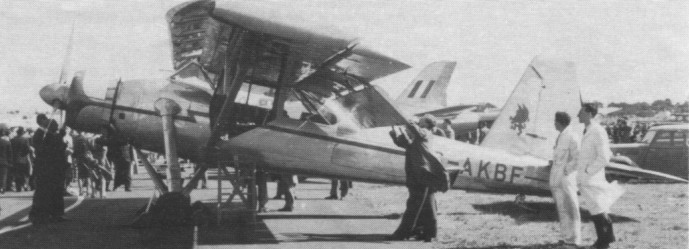
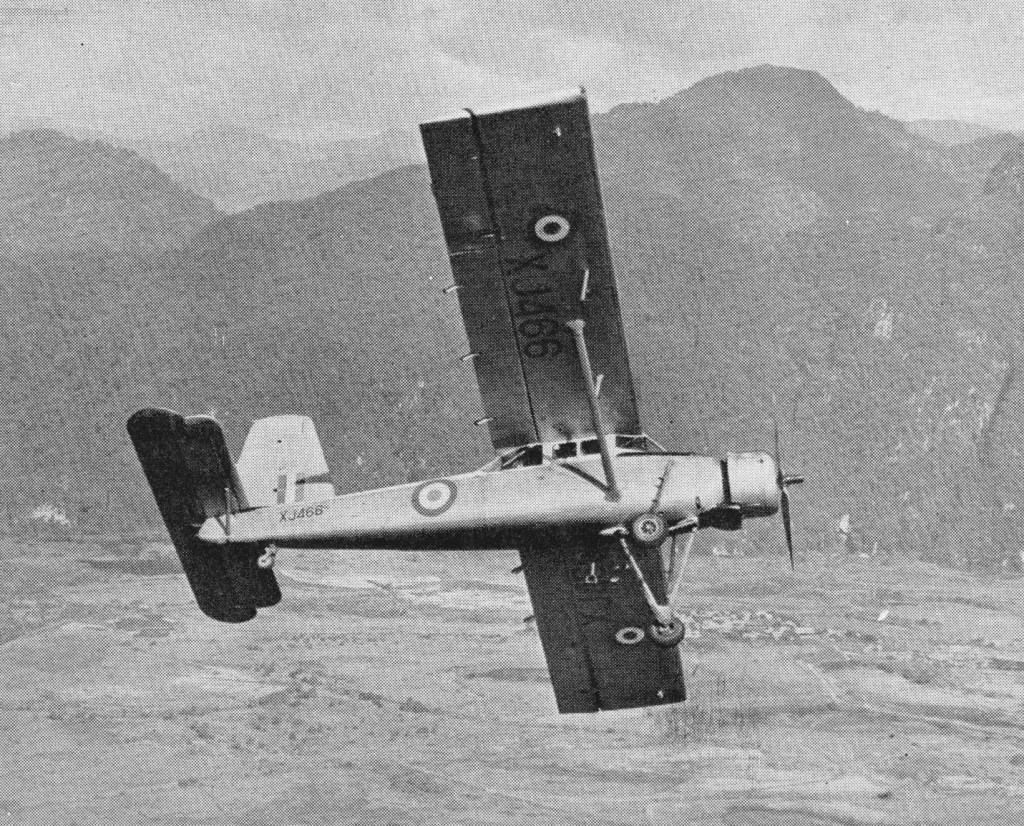
First aircraft produced by Scottish Aviation was the Prestwick Pioneer single-engined five-seat STOL monoplane, first flown 1950. For counter insurgency the Scottish Aviation A.4/45 Prestwick Pioneer 2 was to fill the niche. It came about via the Pioneer 1 and was re engined with the more powerful Alvis Leonides engine.

RAF Malaya, 1959

In service with the RAF as the CC.Mk.1, the Pioneer was in Malaya, Aden, and the UK.

Gallery

Scottish Aviation Pioneer
Engine Alvis Leonides 504/1
Span 49 ft 9 in
Length 34 ft 6 in
Mauw 5400 lb
Cruising speed 120 mph