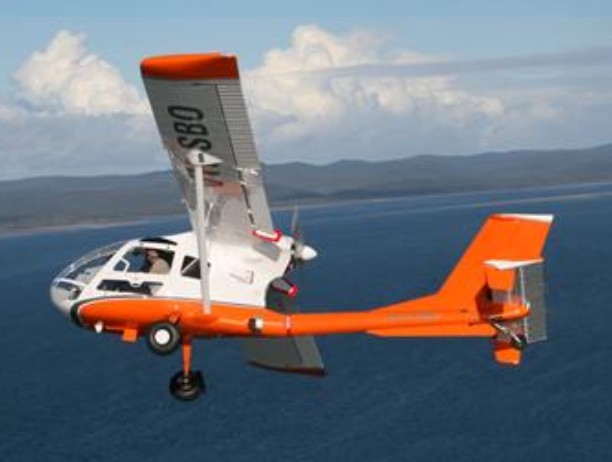
Seabird Aviation offered the Seeker SB7L two-seat monoplane (first flown October 1989), featuring a pod-and-boom fuselage with heavily glazed cabin, braced high-mounted wings with two hardpoints for attaching 264 lb (120 kg) of stores, and a piston engine with pusher propeller.
The Seeker 2 is an Australian built FAR 23 Type Certified observation aircraft, designed for forestry and crop surveys, fish spotting, wildlife tracking, border surveillance, traffic patrols, transmission power and pipeline inspection operations.
The occupants are in a tubular steel safety cell. Fire hazards are minimized with no fuel lines in cockpit area.
The SB7L-360 Seeker 2 offers helicopter visibility and slow speed handling, but with the cost efficiencies, ease of operation and lower maintenance requirements of conventional fixed wing aircraft.
Certification Basis FAR 23 up to and including Amdt 34 Noise Certification ICAO Annex 16, Volume 1, Chapter 10. FAR Part 36 Appendix G Fatigue Analysis FAR 23 Amendment 38
Seeker equipment includes: 28V Electrical system, 70A alternator Cantilever spring steel main landing gear Cleveland wheels and brakes, 8.00 x 6.00 low pressure tyres Oleo strut tail landing gear, Scott 8″ steerable tail wheel Dual primary flight controls, dual differential toe-brakes Floor and/or nose camera/sensor aperture installation, a range of high definition and FLIR cameras available (optional) Wing hard point installation (optional) Double longitudinally hinged windows and doors Baggage/cargo area with tie down points 4-point inertia-reel seatbelts Wing tip Nav/Strobe lights Ground power receptacle Windscreen demister Vacuum system (optional) Heated pitot tube (optional)
Seabird Aviation America, Inc., headquartered in New Mexico, manufactures, sells and supports the SB7L-360 Seeker Aircraft for the Western Hemisphere.
SB7L-360 seeker 2 Engine: Lycoming 0-360-B2C Fuel: minimum 80/87 Avgas, Mogas, or Autogas Prop: 2 bladed wood / composite. Wing Span 11.07 m 36 ft 4 in Overall Length 7.00 m 23 ft 0 in Height of Vertical Stabilizer 2.03 m 6 ft 7 in Wheelbase 2.04 m 6 ft 8 in Cabin Width 1.12 m 3 ft 8 in Doors – Long Axis 1.07 m 3 ft 6 in Empty weight 610kg 1342 lb Maximum T/O weight 925 kg 2040 lb Min Patrol Speed (CAS) 121 km/h 65 kts Cruise 75% Power (CAS) 208 km/h 112 kts Never Exceed (CAS) 239 km/h 129 kts Stall (40deg Flap)(IAS) 89 km/h 48 kts Fuel Capacity Usable 180 litres 47.5 US gal Endurance (inc. reserve) Min. Patrol Speed 65 kts 7 h 15 min Cruise (65% Power) 4 h 30 min Range Patrol Speed (65 kts) 880 km 476 nm Cruise (65% Power) 869 km 470 nm Fuel Flow Patrol Speed (65 kts) 22 l/h 5.80 US gal/h Cruise (65% Power) 34 l/h 9.00 US gal/h Take-off/Landing run at AUW T-O run 264 m 870 ft Landing run 198 m 654 ft Stressing Limit Load Factor +3.8 -1.52
Queensland, Australia. Seabird Aviation offered the Seeker SB7L two-seat monoplane (first flown October 1989), featuring a pod-and-boom fuselage with heavily glazed cabin, braced high-mounted wings with two hardpoints for attaching 264 lb (120 kg) of stores, and a piston engine with pusher propeller. Uses include agriculture, surveillance, patrol, photographic, search and rescue, training, media.
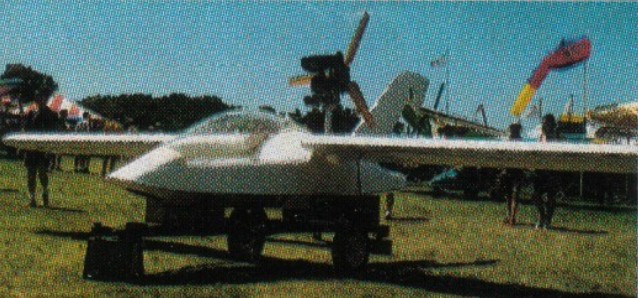
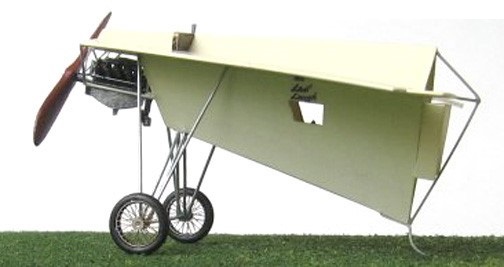
Built by Roy B Scroggs in 1930, The Last Laugh was similar to a dartlike paper airplane, with a narrow delta-wing with about a 75-degree sweepback/ Powered by a 90hp Curtiss OX-5, it had elevons and twin rudders. Registered N10648, the pilot sat in a closed cabin under the “wing”.
Scroggs prophesized that his airplane would one day revolutionize the entire air industry. The creation was test-flown successfully at an altitude of 10′, and Scroggs predicted an eventual top speed of 300mph, but he, and his airplane, eventually faded away.