1998: Schlichterstrasse 63, A-6262 Schlichter, AUSTRIA
Seedwing Europe was authorized to produce the model Sensor 510E160 and 610-144 by Seedwings Inc (USA) until July 1993. At the end of the contract, Andreas and Manfred Bangheri continued to produce the “Sensor” under the name of “Seedwings Europe” without the agreement of Bob Trampenau.
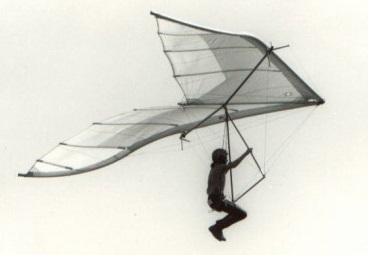
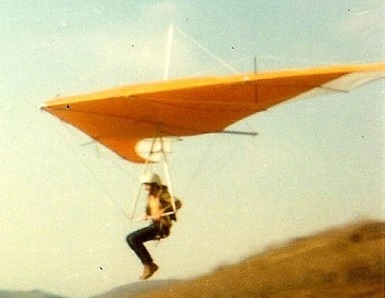
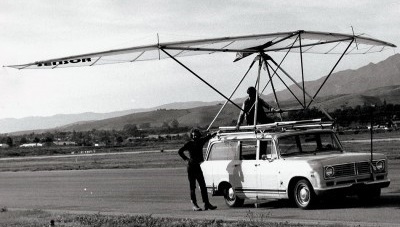
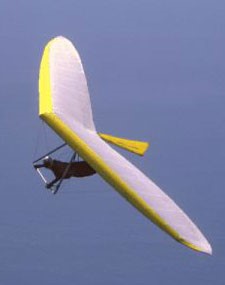
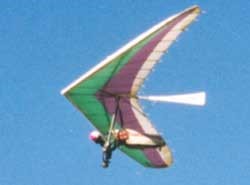
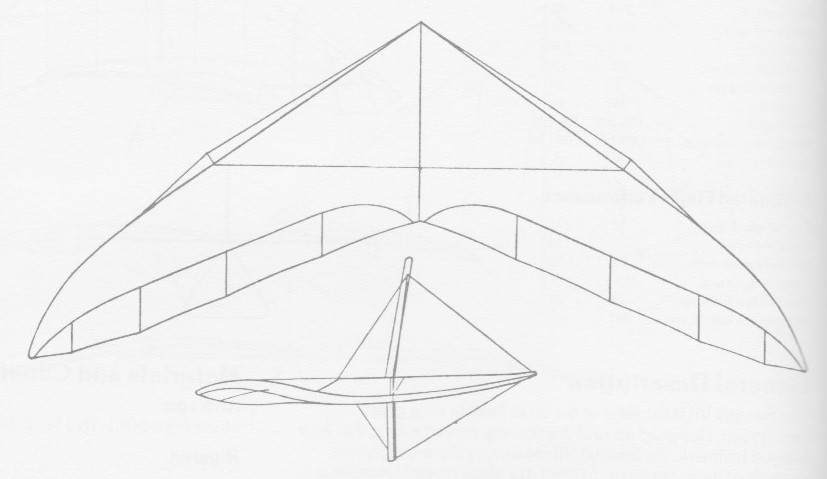
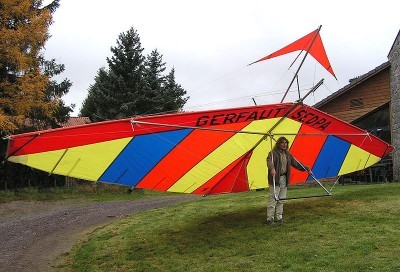
The Sensor 1 was a 1975 hang glider which featured a double surface sail and swept truncated tips. It was very stable in comparison to most high performance gliders, faster than most standards, and with good penetration. It has positive dive recovery with full sail deflation because of rigid truncated washout. This glider has been the test bed for diffusor tip theory in flex membrane wings.
Sensor I
The Sensor I airframe is made from 6061-T6 1.75in x .049 anodised aluminium tubing and all rigging cable is 3/32in 7 x 7 vinyl coated stainless steel aircraft quality. All hardware is aircraft quality, and the sail is made from 4.25oz and 3.0oz stabilised dacron, then available in white only.
There was the option of seated or prone harness.
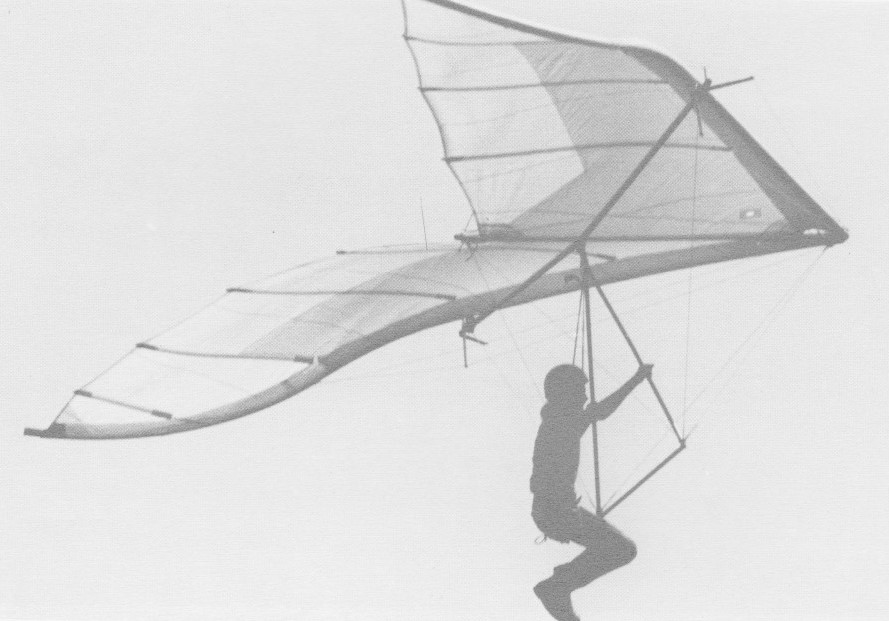
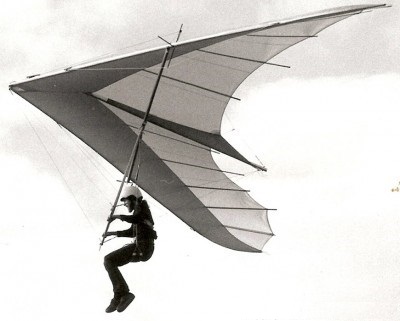
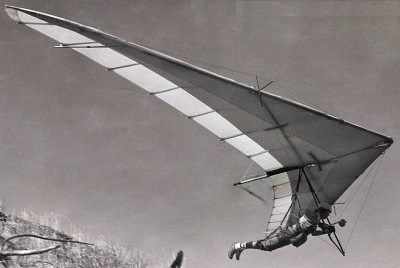
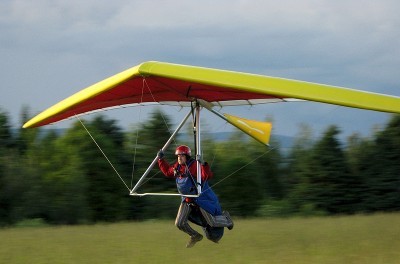
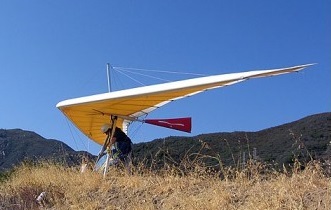
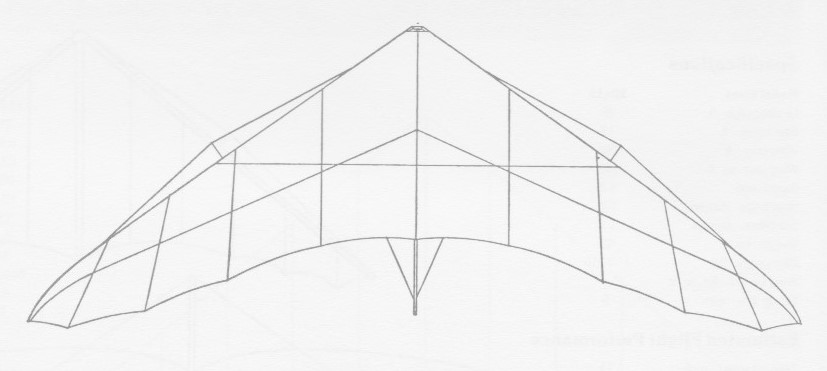
The Sensor 2 was from 1976 featured Flare Tips advanced tip design. This eliminates tip stall during steep banked turns and parachuting. The wingtips are extended with a Flare Tip Batten which allows the tip to flex in the angle of attack. The airfoil is a semi-double surface inflated type.
Sensor II
The Sensor II’s Flare Tips gives it a tip inertia that is lower than most. This is very light and flexible concept allows for rapid turn response, light tip gust effects, lower induced drag and improved washout distribution. The airfoil gives high L/D and low moment. The keel is reflexed and cambered for positive pitch moment.
The airframe is made from 6061-T6 and 2024-T3 aluminium tubing that is doweled and bushed. All rigging cable is 3/32in 7 x 7 vinyl coated stainless steel aircraft quality. All hardware is aircraft quality.
The sail is made from 3.8oz Howe & Bainbridge stabilised dacron with reinforcement in stress areas and double zig-zag stitched. The sail is fully battened. Seated or prone harness support sysems were options.
Sensor 2
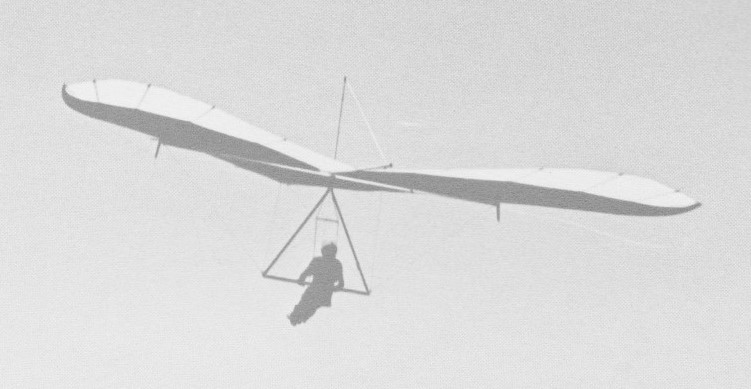
The Sensor 210B is from 1976.
Sensor 210B
The Sensor 210C is from 1977.
Sensor 210C
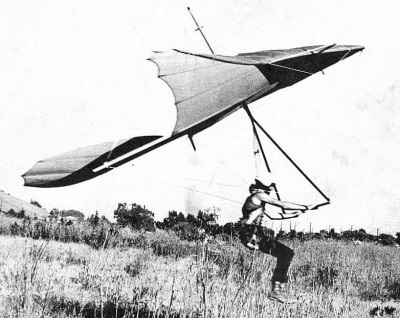
The Sensor 210E is from 1979.
Sensor 210E
Construction plans were available for the Sensor 210E, all in inches and AN standards, and available in two sizes. The Sensor at that time was “the ultimate flying machine”. Bob Trampenau has been the inventor of curved flexible wingtips. Despite the fixed crossbars (floating crossbars) and big span it was easy to roll. Now, it handles like an ocean vessel.
Both the Sensor 310A and Sensor 310B were 1977 models.
Sensor 310A
The Sensor 411A was also a 1977 hang glider, followed by the Sensor 411B in 1978.
Sensor 411A
Sensor 411B
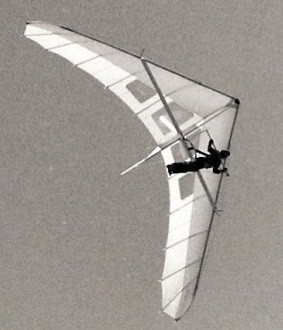
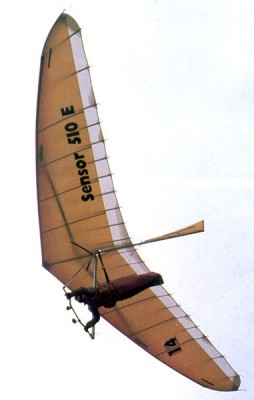
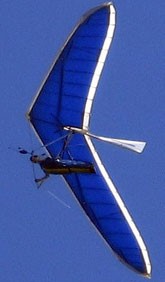
The 1985 Sensor 510 was for advanced pilots.
Sensor 510
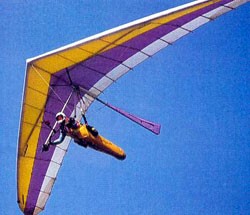
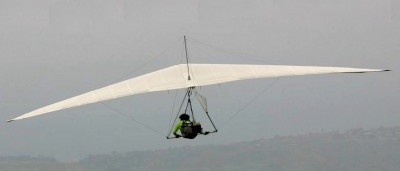
The Sensor 610 came in 1992.
Sensor 610
Seedwing Europe was authorized to produce the model “Sensor 610-144” until 1993. At the end of the contract, they continued to produce the “Sensor” under the name of “Seedwings Europe” without the agreement of Bob Trampenau.
The Sensor 610 CF3 was a 2000 version for advanced pilots.
Sensor 610 CF3
The 2005 Sensor 610 CF4 was for advanced pilots.
Sensor 610 CF4
The 2007 Sensor 610 CF5 was for advanced pilots.
Sensor 610 CF5
The 2008 Sensor 610 F5 was for advanced pilots.
Sensor 610 F5
Seedwings produced the Sensor 610 and, in 1993, the Sensor 611.
Sensor 611
The 1986 Sensor 710 was for advanced pilots.
Sensor 710
Sensor I Keel length: 7.5 ft Wing span: 29.5 ft Wing area: 145 sq,ft Aspect ratio: 6 Nose angle: 110˚ Sail billow: .025˚ Weight: 45 lb Pilot weight: 130-160 lb Takeoff speed: 15 mph Stall speed: 16 mph Max speed: 45 mph Best glide ratio (L/D): 8-1 Best L/D speed: 25 mph Min sink: 275 fpm
Sensor II Keel length: 9.2 ft Wing span: 32.8 ft Wing area: 165 sq,ft Aspect ratio: 6.5 Nose angle: 110˚ Sail billow: 0.5˚ Weight: 36 lb Pilot weight: 140-180 lb Takeoff speed: 12 mph Stall speed: 14 mph Max speed: 45 mph Best glide ratio (L/D): 9-1 Best L/D speed: 25 mph Min sink: 225 fpm
Sensor 210E 183 Wing area: 17m² Wingspan: 10,5m
Sensor 510 Wing area: 14.96 m² Wing span: 10.6 m Aspect ratio: 7.5 Hang glider weight: 30 kg Number of battens: 20
Sensor 610 Wing area: 13.5 m² Wing span: 10.4 m Aspect ratio: 8 Minimum pilot weight: 60 kg Maximum pilot weight: 85 kg Nose angle: 127°
Sensor 610 CF3 135 Wing area: 12.63 m² Wing span: 10 m Aspect ratio: 8 Hang glider weight: 30 kg Minimum speed: 32 km/h Maximum speed: 104 km/h Max glide ratio (L/H): 15 Minimum sink rate: 0.76 m/s Packed length: 5.2 m
Sensor 610 CF3 142 Wing area: 13.19 m² Wing span: 10.4 m Aspect ratio: 8.1 Hang glider weight: 32 kg Minimum speed: 32 km/h Maximum speed: 104 km/h Max glide ratio (L/H): 15 Minimum sink rate: 0.76 m/s Packed length: 5.3 m
Sensor 610 CF3 150 Wing area: 13.93 m² Wing span: 10.7 m Aspect ratio: 8.2 Hang glider weight: 33 kg Minimum speed: 32 km/h Maximum speed: 104 km/h Max glide ratio (L/H): 15 Minimum sink rate: 0.76 m/s Packed length: 5.5 m
Sensor 611 Wing area: 14.4 m² Wing span: 10.85 m Aspect ratio: 8.2 Minimum pilot weight: 75 kg Maximum pilot weight: 105 kg Nose angle: 127°
Sensor 710 145 Wing area: 10.12 m² Wing span: 13.47 m Aspect ratio: 7.6 Hang glider weight: 29 kg Minimum pilot weight: 70 kg Maximum pilot weight: 85 kg Packed length: 5 m Number of battens: 14 Nose angle: 132°
Sensor 710 152 Wing area: 10.43 m² Wing span: 14.12 m Aspect ratio: 7.7 Hang glider weight: 30 kg Minimum pilot weight: 77 kg Maximum pilot weight: 102 kg Packed length: 5.2 m Number of battens: 14 Nose angle: 132°
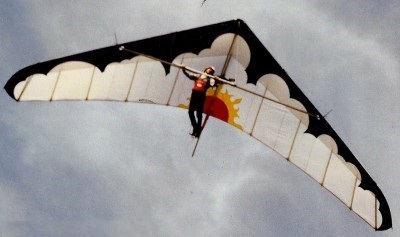
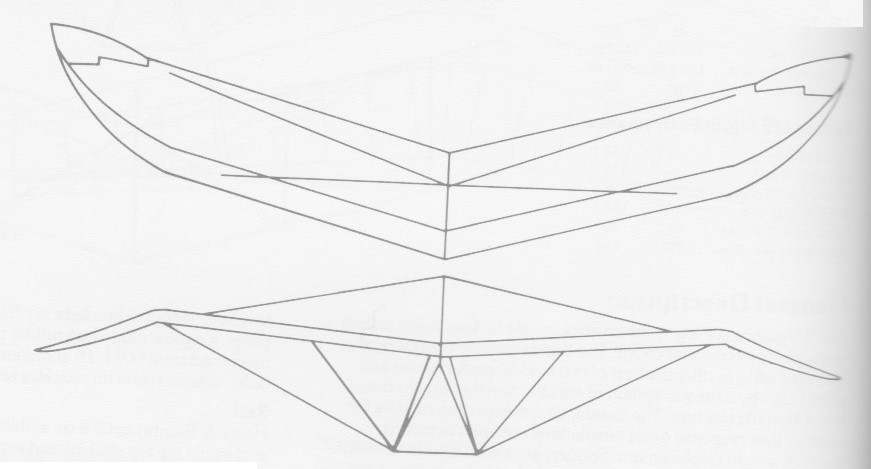
The 1975 Sunseed is a double surface, diffuser tip flying wing. It has outboard control surfaces. Canted tip wings provide self righting characteristic. It has a fibreglass leading edge with an aluminium trailing edge wedge. Draggons on the wing tips can be operated as glide path control devices to reduce glide angle from 12-1 to 5-1. The wing tip design provides induced drag and tip vortex reduction. The lower wing surface is ribless.
The airframe is made from 2024-T3 anodised aluminium. Rigging cable is 3/32in 7 x 7 stainless steel aircraft qualiy, vinyl coated. Hardware is all aircraft quality parts. The sail is 1.8oz stabilised dacron and is fitted with zippers and Velcro tapes. There was the option of seated or prone harnesses.
The Sunseed dissembles to a bundle 10 ft long and 1 ft in diameter.
The Sunseed has a stable stance even in steep turns with no tendency to dive or stall.
The run out distance before touchdown is about four times that of a Rogallo. It has a 13.7% airfoil and a load factor of 6G.
Wing span: 32.8 ft Wing area: 128.5 sq,ft Aspect ratio: 8.36 Wing sweep: 15˚ Weight: 50 lb Pilot weight: 125-180 lb Takeoff speed: 15 mph Stall speed: 16 mph Max speed: 40 mph Best glide ratio (L/D): 12-1 Best L/D speed: 25 mph Min sink: 275 fpm
Do not confuse with “Seedwing Europe” who was authorized to produce the model Sensor 510E160 and 610-144 until July 1993. At the end of the contract, Andreas and Manfred Bangheri continued to produce the “Sensor” under the name of “Seedwings Europe” without the agreement of Bob Trampenau.
A 1976 hang glider for advanced pilots. The duck design was supposed to prevent luffing dives, but according to Vol Libre, the wing was not flyable at speed.
Hang glider weight: 25 kg Packed length short: 5.30 m
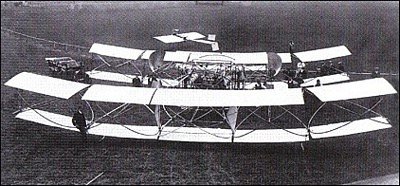
In 1908 Lieutenant John W. Seddon of the Royal Navy was inspired by a flying paper model to design a giant tandem biplane, with which he hoped to win a GBP10,000 prize for the first Manchester to London flight. Convinced that hoops of high-tensile steel tube were much more efficient than conventional wood and wire bracing, he persuaded the Navy to give him leave to work on his project and his mother largely to pay for it. The aircraft, named the ‘Mayfly’, was built in a bicycle factory and used up 610m of steel tubing.
The Seddon “Mayfly” of 1910 was a large and elliptical tube framework tandem biplane flying machine, employing Beedle aluminium sheet propellers, contracted by John W. Seddon to the English engineering company of Accles and Pollock just one year after Blériot’s Cross-Channel flight.
It was intended to take six people aloft – one pilot and five passengers. The aircraft never flew, and achieved nothing more than a high-speed ground-run. On its only high-speed run, a wheel collapsed and the aircraft was damaged. Repairs and modifications were hampered by Seddon’s return to duty and the Mayfly never did fly, eventually being dismantled by souvenir hunters. Often referred to as the Accles and Pollock aeroplane.
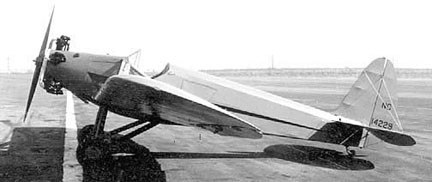
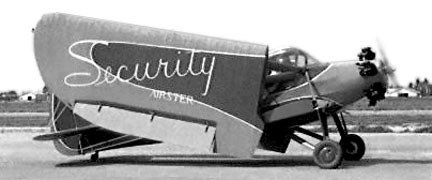
The S-1 Airster designed by Bert Kinner was a folding wing, side-by-side evolution of the Kinner Sportster. First flying on 1 May 1933 (piloted by Lee Brusse) they received ATC 521 and were priced at $1,985.
Two were built as S-1, NX217Y and NC13702, and 12 as S-1-A, NC13743, NC13746, NC13792 to 13794, NC14227 to 14232, and NC14293.
Security-National S-1-A NC14229
ATC 2-451 was received for gross weight change on prototype NX/NC217Y and NC13702.
About five 1937 S-1-B Airster were built with ATC 705, including NC15536 and NC18135, priced at $2,995. The prototype, NX/NC18967, was built as a class project at the Warren School of Aviation in Los Angeles
As Security National Aircraft Corporation was established by W. B. Kinner, founder of Kinner Airplane & Motor Corporation in 1933. Company was formed May 1933 by Kinner on acquiring the old Emsco plant in Downey. Downey and Van Nuys CA. USA
1937: Reorganized as Security Aircraft Corp, Long Beach CA. USA
1937: Reorganized as American Aircraft Corp, 2735 E Spring St, Long Beach.
New factory then built at Long Beach, California, to make Airster 2-seat monoplane and Security 5- cylinder radial.
1942: Acquired by National Airplane & Motor Co, Los Angeles.
Société d’Etudes et de Construction d’Avions de Tourisme (SECAT) had been established in the late 1930s, and in 1938 had built the two-seat, high-wing S-4 Mouette, designed by Rémy Goucher, the development of which was interrupted by the hostilities of the Second World War.
Design work on light aircraft was resumed by SECAT in 1946, resulting in the SECAT S-5, the prototype of which was first flown in that year.
The S-5 was based on the design of the S-4, and was of all-wooden construction and had side-by-side seating for two persons. The cantilever, elliptical high-set wing comprised a wooden box-spar, chordwise ribs and a stressed plywood skin. The trailing edge carried ailerons and flaps. The fuselage was a wooden semi-monocoque and dual controls were fitted. The windscreen was split. A large access door was provided on each side of the fuselage, and all fuel was carried in a 250 l (55 imp gal; 66 US gal) tank installed in the wing.
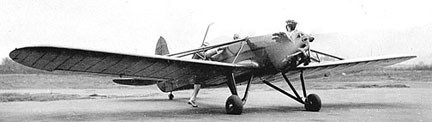
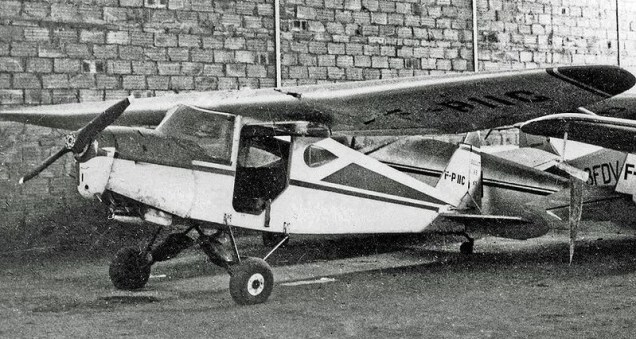
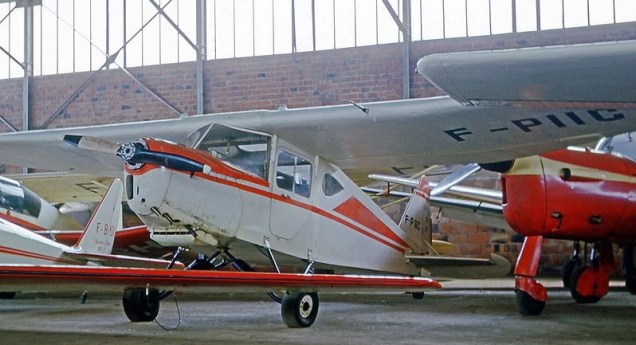
The SECAT S-5 was a light, high-wing, two-seat touring monoplane aircraft, and only one example of the type was ever built, and it flew for a variety of private owners for several decades.
SECAT S-5 F-PIIC Toussus
After the prototype, no further examples of the type were completed. The sole example of the SECAT S-5, registered F-PIIC, was initially operated from Toussus-le-Noble Airport, near Paris. By 1964, it was owned by M. Rene Dupuis, and it was hangared at Arras Roclincourt Airport. The aircraft was still extant in 1967; however, it was struck off the French civil aircraft register during the 1970s.
Engine: 1 × Regnier 4D.2, 56 kW (75 hp) Wingspan: 8.99 m (29 ft 6 in) Length: 6.15 m (20 ft 2 in) Height: 2.11 m (6 ft 11 in) Empty weight: 350 kg (772 lb) Gross weight: 570 kg (1,257 lb) Fuel capacity: 250 l (55 imp gal; 66 US gal) Maximum speed: 196 km/h (122 mph, 106 kn) Cruise speed: 150 km/h (93 mph, 81 kn) Range: 800 km (497 mi, 432 nmi) Service ceiling: 3,600 m (11,810 ft) Rate of climb: 3.0 m/s (590 ft/min) Crew: 1 Capacity: 1 passenger or student pilot