Seversky

Incorporated February 1931 by Russian-born Alexander P. Seversky (or De Seversky), First World War military pilot who became U.S. citizen 1927. A test pilot and consulting engineer, he established the Seversky Aero Corporation in 1922.

Developed novel amphibious landing gear, promoted by Seversky Aircraft Corporation for fast all metal fighter-type aircraft. Aircraft design owed much to Alexander Kartveli, who developed landplane fighters with retractable landing gear.

In 1935 Seversky established new speed record for amphibious aircraft, and land-fighter development culminated in order for 77 single-seaters for USAAC, designated P-35.

In 1939-1940, following orders for amphibians from USSR and landplanes from Japan, Sweden contracted for 120 export versions of P-35. Several fighter, multipurpose and trainer variants developed, and BT-8 (first purpose-built machine of its class) adopted in U.S.A.. Seversky Executive (2 passengers in cabin behind pilot) won 1937 Bendix Trophy race. In 1939 company offered USAAC XP-41 single-seat fighter.

In October 1939 the company was reorganized as Republic Aviation Corporation. Since de Seversky had made somewhat of a pariah of himself in the USA by selling combat aircraft to Japan, the Army ordered no more P-35s from Seversky. By early 1939, his company had gotten itself into some deep financial trouble. In Apr 1939, while de Seversky was out of the country on a business trip, the board of directors of his company voted him out of office as CEO and changed the name of the company to Republic. The newly-formed company then recapitalized itself and Alexander Kartveli was appointed as vice president and technical director. Having been forced into involuntary early retirement, de Seversky spent the rest of his life writing and consulting, and Kartveli and the Republic company went on to design and produce the famed P-47 Thunderbolt.
Special supercharger evolution for late Seversky fighters led to the famous Republic P-47 Thunderbolt long-range escort fighter/bomber.

1965: Republic Div, Fairchild-Hiller Corp.

1972: Fairchild-Republic Co.

Seversky’s method of assigning c/ns was at best enigmatic and illogical, especially to outsiders—c/n 1 shows up two years after c/n 301, and 301 changed to c/n 35 for one modification, there were found two c/n 2s, and curious large gaps between numbers.
Severo Pax

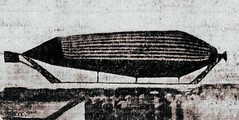
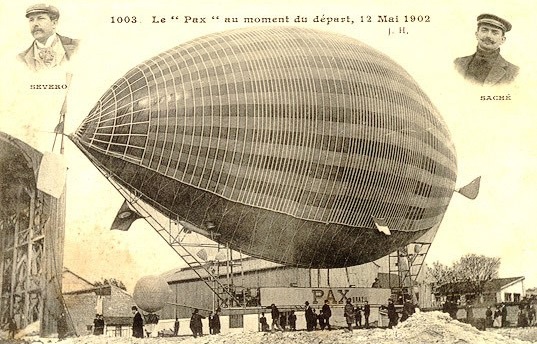
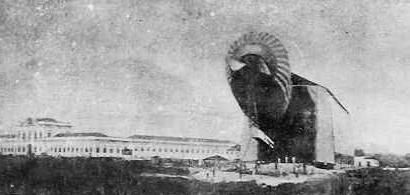
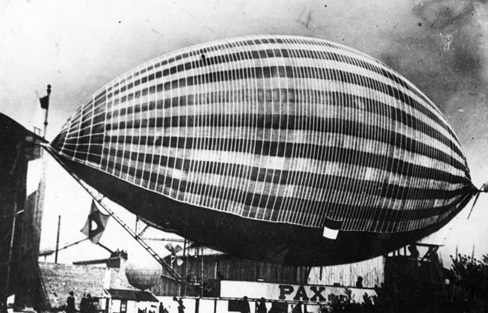
At the end of 1901 Brazilian inventor Augusto Severo de Albuquerque Maranhão travelled to France to build an airship, the semi-rigid “Pax”. It had no directional rudder but seven propellers, one at the stern, one at the bow, another at the nacelle and four at the sides. He had intended to use electric motors, but the lack of resources and time made him opt for two Buchet-type engines, one of 24 hp and the other of 16 hp. The envelope had a capacity of 2,500 cu.m, 30 m long and 12 m at the largest diameter.

Two pusher propellers set at 50 rpm drove the aircraft. The forward and aft propeller diameters were 5 and 6m, respectively. in addition, two other propellers were placed parallel to the machine’s longitudinal axis for lateral control, only. a further propeller was placed below the deck and was employed to control the pitch movement of the 30-m-long aircraft. Maranhão had some insights in designing the Pax, which were not taken into account by his predecessors. one of them was the placement of the traction line coincident with the drag one to better control and handling of the aircraft.

The trials were successfully performed on May 4 and 7, 1902. At 5 am on May 12, 1902, Severo and his mechanic, Georges Saché, set off, intending to fly from Vaugirard in Paris to Issy-les-Moulineaux. It rose quickly, but at about 400 meters’ altitude it exploded, crashing on Avenue du Maine. Both Severo and Saché were killed.

Seux 1907 Monoplane

second version

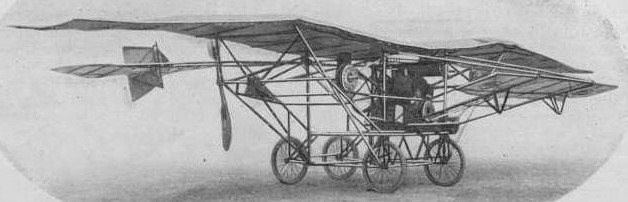
In the spring of 1907 Edmond Seux started development of a monoplane, which was tested on 15 May on a military parade ground. It first bounced on the uneven ground and one of the rear wheels broke. Later one of the two propellers hit the ground when the nose rose and damaged the wings. The plane was repaired and modified with bigger rear wheels and tested again in the end of May, but there are no reports of it flying and it was obviously abandoned. It was equipped with a 35 hp Anzani.

Seux, Edmond

Edmond Seux (1869 – 1909) was a pioneer from the Lyon area, who invented an airship in 1902 and started experimenting with models in 1904. In the spring of 1907 he started development of a monoplane.

Seux went on to design a biplane together with the Roesch brothers in 1908. Edmond Seux was found dead in the Rhône in November 1909, having committed suicide because of financial problems.

SETCA Milan

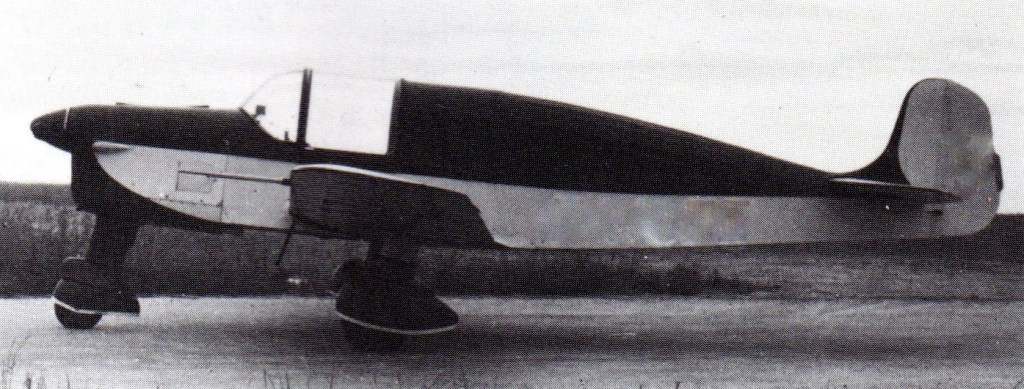
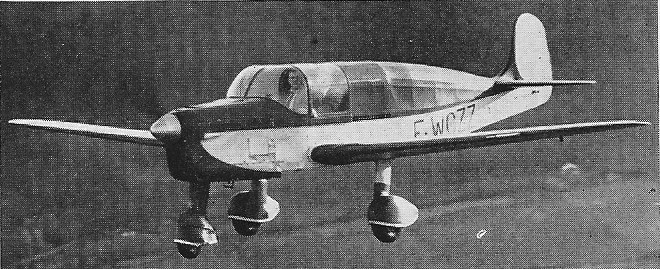
Designed and built by Laboureix and Lagrevol, the SETCA Milan was first flown in 1947, obtained its CNRA in August 1949, and in 1952 received a normal certificate de navigabilite.

A second prototype was built and flown. Of all-wood construction. The cabin seats two side-by-side, with dual controls.

The Milan was shelved since no buyers showed interest.

Engine: 90 hp Regnier 4-EO
Max speed: 122 mph
Cruise: 112 mph
Range: 434 mi
Empty weight: 1210 lb
Loaded weight: 1742 lb
Wingspan: 32 ft 9.5 in
Length: 24 ft 1.75 ln

SET XV

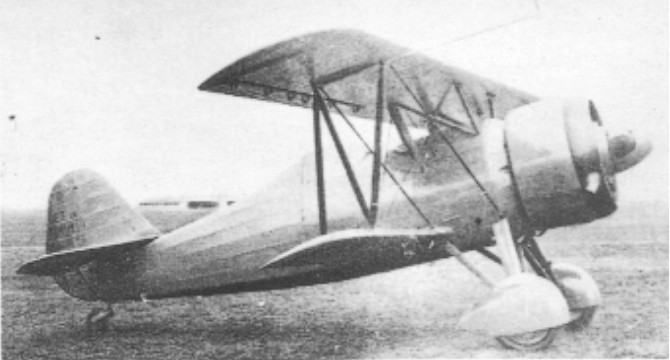
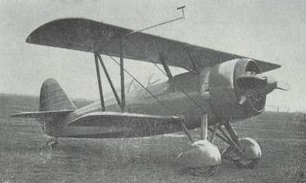
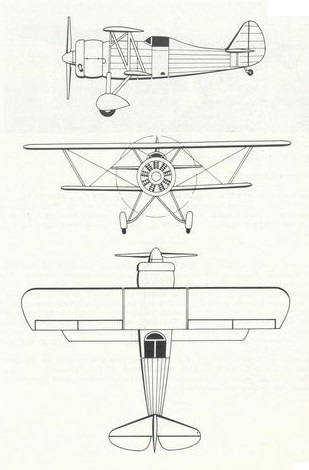
The 1934 S.E.T. XV had a metal frame. /its equipment included oxygen and a complete radio set. The wing was an original S.E.T. profile with flaps.

The armament was two fixed machine guns firing through the propeller. They were under the engine cowling.

Engine: Gnome-hone 9 Krsd, 500 hp
Wingspan: 9.40 m
Length: 7.00 m
Height: 3.05 m
Wing area: 18.65 sq.m
Empty weight: 1150 kg
Max weight: 1550 kg
Max speed: 350 kph
Stall: 113 kph
Max ceiling: 9400 m
Climb to 2000m: 3 min 10 sec
Climb to 7000m: 15 min 30 sec