2001: 50 Sycamore St, Shepherd, TX 77371, USA.
UL builder
2001: 50 Sycamore St, Shepherd, TX 77371, USA.
UL builder
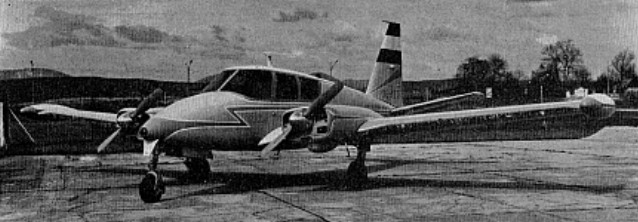
The SGP M-222 Flamingo was an Austrian twin engine, four seat light aircraft, developed with a series of prototypes into the early 1960s. There was no series production.
In the 1950s Simmering-Graz-Pauker A.G. (SGP) was a large manufacturing concern but the M-222 Flamingo was their first aircraft. Designed by Erich Meindl, it was a conventional twin engine monoplane, smaller than many but seating four in two rows.
The wings of the Flamingo had a laminar flow airfoil and were made entirely of wood. The first prototype was powered by 150 hp (112 kW) Lycoming O-320 flat-four engines but later aircraft had 200 hp (150 kW) Lycoming IO-360 flat-fours. These were conventionally mounted ahead of the leading edge in long cowlings with their propeller shafts, driving two-blade airscrews, centred above the wing upper surface. There were fuel tanks in the thin wings, with more fuel in wing tip tanks.
The Flamingo was fitted with both flaps and airbrakes. The flaps were of the camber changing type, to increase lift at low speed; they were split into three sections on each wing and slid rearwards and downwards on concealed rails. The airbrakes were wing mounted spoilers for losing speed. Like the wings the empennage was all-wood; the cantilever tailplane was set low on the fuselage.
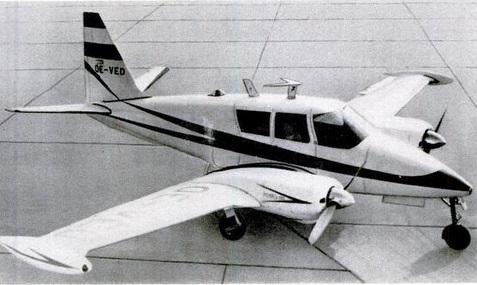
The Flamingo’s fuselage had a welded steel tube structure, skinned forward with light alloy and aft with laminated plastic. Its two rows of seats were enclosed under a three part canopy which merged at the rear into the raised fuselage. There was a wide door on either side for cabin access and a separate baggage space behind the seats. It had a retractable tricycle undercarriage with the mainwheels, fitted with brakes, behind the engines. The nosewheel was steerable. The undercarriage, like the flaps and airbrakes, were hydraulically powered. The M.222 was aerobatic when carrying a pilot and one passenger.
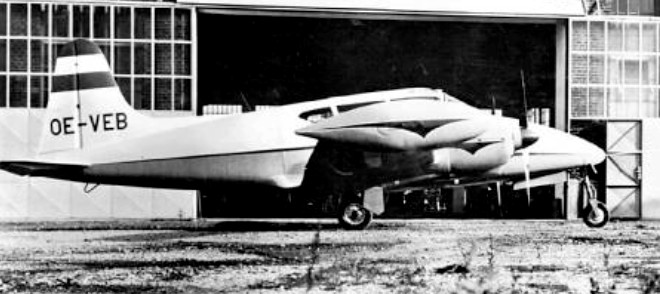
The first prototype M.222V1, registered OE-VEA c/n 1, flew for the first time on 15 May 1959 but was lost in a crash during single engine tests on 2 August 1959, the pilot Eduard Stefl and flight engineer Leopold Schwingenschlögl were killed instantly. Development work in the Rax-Werke in Wiener Neustadt continued on a second aircraft, OE-VEB, which first flew in 1960 and a third M.222V3 c/n 3, followed in 1962. The fourth aircraft, now renamed the Simmering-Graz-Pauker SGP.222 was intended as a production prototype and demonstrator and appeared at the 1964 Hamburg show, though it turned out to be the last of the line. It incorporated several changes in response to the lengthy development trials. The wing leading edges had breaker strips added and there were new fillets in this edge at the root and on the outboard side of the engine cowlings. The ailerons were mass balanced and fitted with ground adjustable trim tabs, and the upper hinge gaps sealed with fabric. The most obvious external changes were to the empennage where the horizontal tail now had positive dihedral and the previously rounded vertical tail had been enlarged and given severe straight taper, assisted by a ventral fin to improve low speed handling. Both elevators and the rudder had trim tabs. One independent report of this fourth aircraft’s handling found it well behaved, stable but responsive with a docile stall and brisk climb.
The type was redesigned by the glider designer Ruediger Kunz, in order to build the machine in compliance to USA regulations, and hence the fourth prototype was designated SGP.222VS (VS for Vereinigte Staaten, German for United States) briefly used but this was later changed to SGP.222A. Initially registered OE-VED, the aircraft was reregistered OE-FEC after it received its Austrian and FAA Type Certificates on respectively February 15 and March 3, 1964, where after it was also redesignated SGP.222A. However, at the end of 1964 the program was cancelled and the prototypes were scrapped.
Specifications:
Second prototype
Powerplant: 2 x Lycoming IO-360, 150 kW (200 hp)
Propellers: 2-bladed
Length: 8.80 m (28 ft 10 in)
Wingspan: 11.90 m (39 ft 1 in)
Height: 3.05 m (10 ft 0 in)
Wing area: 18.38 sq.m (197.8 sq ft)
Aspect ratio: 7.68
Empty weight: 1,250 kg (2,756 lb) equipped
Max takeoff weight: 1,900 kg (4,189 lb)
Fuel capacity: 380 L (100.4 US gal, 83.6 Imp gal)
Maximum speed: 330 km/h (205 mph; 178 kn) at sea level
Cruising speed: 280 km/h (174 mph; 151 kn) economical, 65% power
Range: 1,650 km (1,025 mi; 891 nmi)
Service ceiling: 6,100 m (20,013 ft) service
Rate of climb: 7.5 m/s (1,480 ft/min) at sea level
Wing loading: 103 kg/m2 (21 lb/sq ft)
Power/mass: 160 W/kg (0.096 hp/lb)
Landing speed: 105 km/h (65 mph; 57 kn)
Landing run: 135 m (443 ft) using brakes
Take-off run: 300 m (985 ft) to 15 m (50 ft)
Crew: One
Capacity: Three passengers
Austria
A well-known engineering company which, in early 1960s, planned production of its four-seat twin-engined SGP- 222, which had first flown May 1959. Plans abandoned by mid-1960s, though several prototypes built.

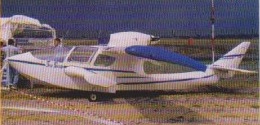
First seen in 1997 at the Bassano show, the Seastorm is aimed at the American kit plane market. Entirely composite, a 900kg MAUW four seater was under development.
Engine: Midwest 110, 115 hp
Wing span: 9.27 m
Wing area: 12.24 sq.m
MAUW: 500 kg
Empty weight: 300 kg
Fuel capacity: 120 lt
Max speed: 270 kph
Cruise speed: 210-240 kph
Minimum speed: 62-73 kph
Climb rate: 4.5 m/s
Seats: 2
Fuel consumption: 18-32 lt/hr
Price (1998): $89,000
Kit price (1998): $45,000
Engine: Midwest 105, 105 hp
HP range: 105-115
Top speed: 171 mph
Cruise: 148 mph
Stall: 44 mph
Range: 1040 sm
ROC: 1200 fpm
TO dist land/water: 400 ft / 820 ft
Ldg dist land/water: 425 ft / 620 ft
Service ceiling: 13,700 ft
Fuel cap: 26.5 USG
Empty wt: 682 lb
Gross wt: 1340 lb
Height: 6 ft
Length: 24.6 ft
Wing span: 30 ft
Wing area: 131 sq.ft
Seats: 2
Undercarriage: tail
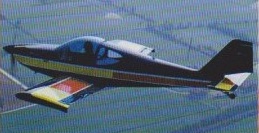
The Storm is derived from the P 220 Pottier, using pop-riveted sheet dural.
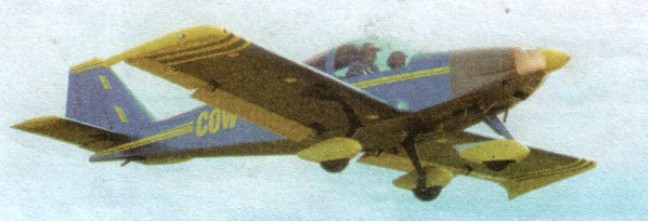
The Storm 400Ti is a three seat version of the Storm 280, designed specifically for the US kitplane market.
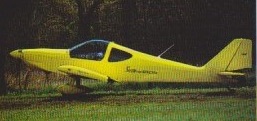
Storm 280
Engine: Rotax 912, 80 hp
Wing span: 8.6 m
Wing area: 11.6 sq.m
MAUW: 450 kg
Empty weight: 262 kg
Fuel capacity: 90 lt
Max speed: 225 kph
Cruise speed: 200 kph
Minimum speed: 65 kph
Climb rate: 5 m/s
Certification: vVZ
Seats: 2
Fuel consumption: 13 lt/hr
Price (1998): 88,328 DM
Kit price (1998): 33,335 DM
Storm 300
Engine: Jabiru, 120hp
Fuel cap: 55 lt main + 2 x 28 lt wing.
Storm 300
Engine: Rotax 912
Fuel cap: 90 lt.
Storm 300
Engine: Midwest 105, 105 hp
HP range: 80-120
Top speed: 200 mph
Cruise: 171 mph
Stall: 35 mph
Range: 650 sm
ROC: 1500 fpm
TO dist: 450 ft
Ldg dist: 360 ft
Service ceiling: 12,000 ft
Fuel cap: 23 USG
Empty wt: 617 lb
Gross wt: 992 lb
Height: 6.4 ft
Length: 20.9 ft
Wing span: 26 ft
Wing area: 119 sq.ft
Seats: 2
Undercarriage: nose or tail.
Storm 300 Special
Engine: Midwest 105, 105 hp
HP range: 80-120
Top speed: 200 mph
Cruise: 171 mph
Stall: 42 mph
Range: 650 sm
ROC: 1500 fpm
TO dist: 450 ft
Ldg dist: 360 ft
Service ceiling: 12,000 ft
Fuel cap: 38 USG
Empty wt: 710 lb
Gross wt: 1155 lb
Height: 6.4 ft
Length: 20.9 ft
Wing span: 26 ft
Wing area: 119 sq.ft
Seats: 2
Undercarriage: nose or tail
Storm 400Ti
Engine: Lycoming O-235, 116 hp
Wing span: 7.20 m
Wing area: 11.06 sq.m
MAUW: 720 kg
Empty weight: 400 kg
Fuel capacity: 90 lt
Max speed: 242 kph
Cruise speed: 220 kph
Minimum speed: 81 kph
Climb rate: 5.5 m/s
Seats: 3
Fuel consumption: 20 lt/hr
Kit price (1998): 65 000 000 L
SG Aviation (Industria Aeronautica Italiana)
1997: Zona industriale 04016 Sabaudia LT Italy
1998:
Via degli Artigleri SNC
I-4016 Sabaudia (LT)
Italy
LSA builder
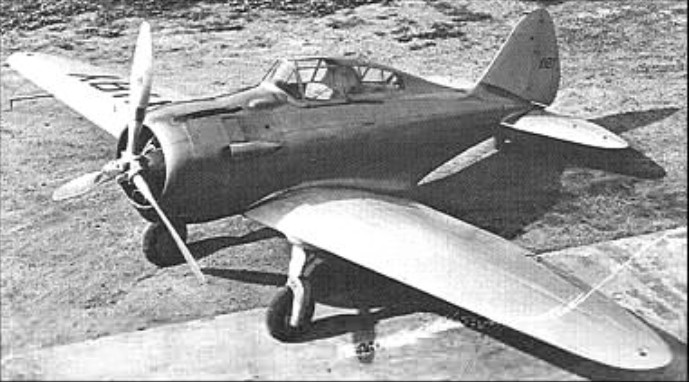
The SEV-2XP with an 800hp Wright XR-1670 engine, was damaged enroute to Wright Field and hurriedly converted into the single-place SEV-1XP with an 850hp Wright R-1820-G4 Cyclone engine
First flying as the NX18Y c/n 2 still, in August 1935 piloted by de Seversky, the SEV-1XP initially retained the R-1670 engine. By now featuring a semi-retractable undercarriage, the prototype was reengined with an ungeared nine-cylinder Wright R-1820 Cyclone. This engine failed to produce its rated power, however, the predicted 483km/h maximum speed proving unobtainable in consequence.
The USAAC Materiel Division’s decision to defer fighter choice pending further evaluation to be held in March 1936 enabled the SEV-1XP to be re-engined once more, this time with an 850hp 14-cylinder Pratt & Whitney R-1830-9 Twin Wasp. This was succeeded, in turn, by a geared R-1820-G5 offering 950hp for take-off, but the Twin Wasp was subsequently re-installed.
With this last engine and an armament of one 7.62mm and one 12.7mm gun, the SEV-1XP was selected on 16 June 1936, approval being given for production of 77 fighters against a contract confirmed early in 1937, with the designation P-35.
Repowered with a P&W R-1830B as the SEV-S1, and with a new tail and cowling, NX18Y raced at the 1935 Nationals, piloted by Frank Sinclair) to fourth place.
It was scrapped in 1937.
Sev-1XP
Engine: 850hp Wright R-1820-G4 Cyclone
Wingspan: 10.97 m / 36 ft 0 in
Length: 7.59 m / 25 ft 11 in
Height: 2.69 m / 9 ft 10 in
Wing area: 20.44 sq.m / 220.01 sq ft
Max take-off weight: 2274 kg / 5013 lb
Empty weight: 1681 kg / 3706 lb
Max. speed: 465 km/h / 289 mph
Range: 1918 km / 1192 miles
Seats: 1
Sev-1XP
Engine: P&W R-1830B
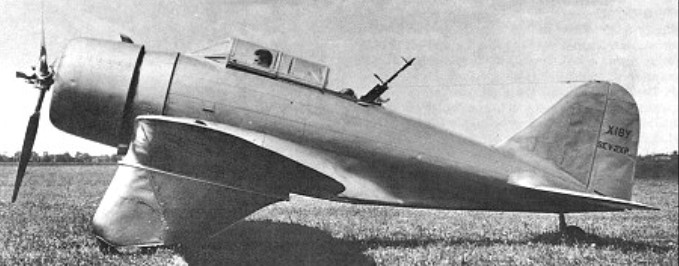
The SEV-2XP (the designation indicating 2-seat experimental Pursuit) designed by Alexander Kartveli was a derivative of the first product of the Seversky Aircraft Corporation, the commercial SEV-3 three-seat monoplane.
An all-metal semi-monocoque aircraft with a fixed spatted undercarriage, the SEV-2XP NX18Y c/n 2 was flown in May 1935 by pioted by de Seversky with the unsatisfactory Wright R-1670 14-cylinder radial offering 735hp for take-off. Provision was made for an armament of two synchronised machine guns, one of 7.62mm and the other of 12.7mm, and one 7.62mm gun on a flexible mount in the rear cockpit.
The USAAC Material Division initiated a contest for a new single-seat fighter. Maj Alexander P de Seversky, believing the SEV-2XP capable of out-performing any single-seat fighter, entered this aircraft as a contender. In the event, the SEV-2XP was damaged in an accident on 18 June while en route to the contest. It was then returned to the manufacturer and reworked as the single-seat SEV-1XP.
Engine: 800hp Wright XR-1670
Max take-off weight: 2404 kg / 5300 lb
Empty weight: 1633 kg / 3600 lb
Wingspan: 10.97 m / 36 ft 0 in
Length: 7.49 m / 25 ft 7 in
Height: 2.62 m / 9 ft 7 in
Wing area: 20.44 sq.m / 220.01 sq ft
Max. speed: 441 km/h / 274 mph
Range: 1529 km / 950 miles
Seats: 2
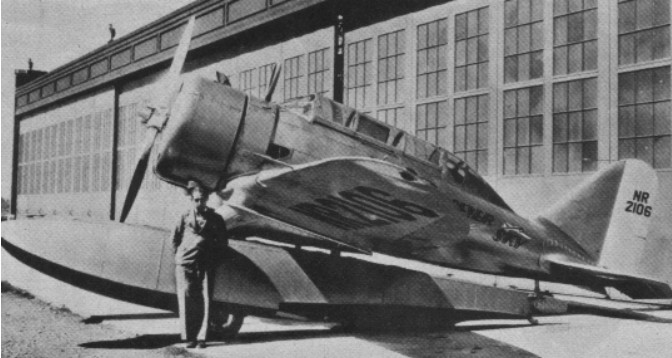
Built by EDO for refugee Russian WWI pilot Alexander de Seversky, the SEV 3 set several speed records in 1933. Seversky and fellow Russkies had formed an American corporation in 1931 but since they didn’t have a factory of their own at the time, the first airplane was built by EDO and given the SEV 3 classification, with the “3” standing for its three seat configuration. Seversky set amphibian speed records in the plane, powered by a 420 hp Wright Whirlwind, and then went after military business.
Designed by Michael Gregor and Alexander de Seversky, it was first flown in June 1933 as SEV-3, registered NX/NR2106 c/n 301, first with EDO wheeled floats for 1935 Thompson race, in which Lee Miles managed to place fifth at 196 mph.
The Army tested the Seversky but since it had no need for an amphibian at the time, the builder converted it into a landplane in 1934. Powered by a 350hp Wright R-975E with a faired landing gear it was re-designated SEV-3L
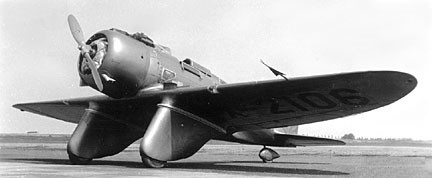
This was the Army’s first monoplane training aircraft and its first all metal trainer built using modern construction techniques.
It became the SEV-3XAR to win the Air Corps’ 1935 BT-8 contract, then back to amphibious SEV-3M in 1935 with a 710hp Wright R-1820, to set a world speed record of 230.4 mph.
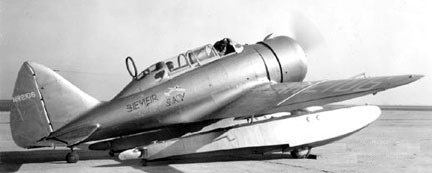
The design, with wheels, became an Army BT-8 with 450hp P&W R-985. The basic aircraft evolved into the P 43, later, with a stretch of the fuselage and a 2,000 hp Pratt & Whitney R 2800 engine, it became the P 47 Thunderbolt.
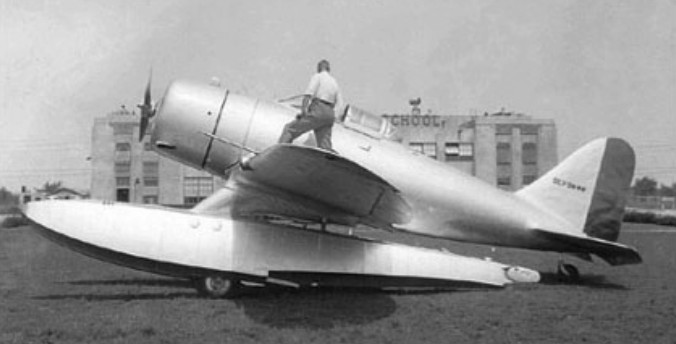
Seversky went on to build other versions of the plane. Six of the 1934 SEV-3M-WW export version (NX15391, NX15689, NX15928 c/ns 37 to 39, plus three unlicensed).
“In Sever the Sky we find [NX15391, NX15689, NX15928]; US Register shows c/ns as 1, 2, and 3, but were actually c/ns 3, 4, and 5 aircraft by factory.’ This seems logical since [X2106] was c/n 1 and [X18Y] c/n 2. Then came [X189M] as c/n 6, 30 BT-8s as c/ns 7/36, and 3 SEV-3M-WWs for Columbia’s second order as c/ns 37/39.”
The 1937 SEV-DS NX1291 c/n 42 was built for the Shell Oil Co and piloted by James Doolittle.
The 1934 BT-8 Basic trainer was the AAC’s first monoplane trainer and was based on the SEV-3XAR, with faired landing gear. Thirty were built.
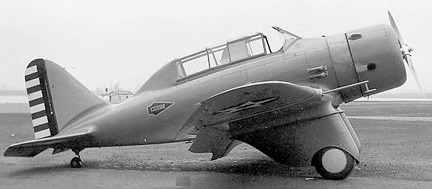
SEV-3
Engine: 420hp Wright J-6
Undercarriage: floats
SEV-3L
Engine: 350hp Wright R-975E
Wingspan: 36’0″
Length: 24’4″
Max speed: 210 mph
Cruise: 185 mph
Undercarriage: wheels
SEV-3XAR
SEV-3M
Amphibious
Engine: 710hp Wright R-1820
Max speed: 230.4 mph
BT-8
450hp P&W R-985
Wingspan: 36’0″
Length: 24’4″
Useful load: 1033 lb
Speed: 175 mph
Undercarriage: wheels
Seats: 2
SEV-DS
Engine: 850hp Wright R-1820 Cyclone
Seats: 2
Undercarriage: retractable wheels
In 1926 Alexander de Seversky modified a Curtiss JN-4D with a combination roller-and-ski landing gear.
The spelling of de Seversky’s name was deliberate to play up the ski angle.
It was damaged in landing tests on 10 February 1927 and scrapped.

