The 1925 S-30 design for a light transport and mail aircraft was advertised as a ten place cabin biplane, powered by two 200hp Wright J-4. The useful load was to be 1800lb, range 500 miles, at 100 mph. The airplane was never built.
Era
Sikorsky S-29-A
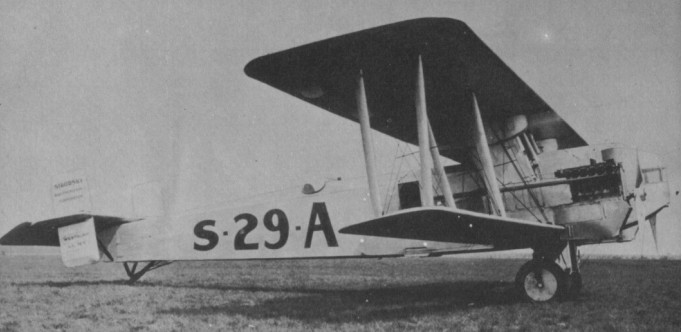
In New York, Sikorsky formed a small company and started to build the S-29-A, a twin-engined 14 passenger and freight carrier. With $5,000 finance from the great pianist and composer Sergei Rachmaninoff the S-29-A was completed. The suffix “-A” denoted “Made in America,” as 28 previous S-numbers were all built and utilized in Russia. First Sikorsky built in the US, originally had 220hp Hispano-Suizas
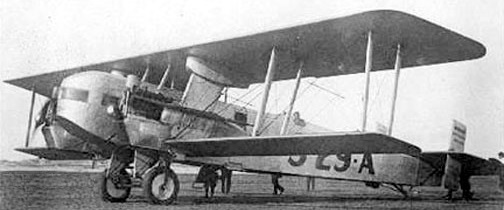
Rachmaninoff accepted the position of first vice-president of the struggling corporation. The engines were old, some of the parts from junkyards. On 4 May 1924 a take-off was attempted. With too many loyal passengers the aircraft flew, but crashed. The aircraft was rebuilt repowered with Liberty 12 engines.
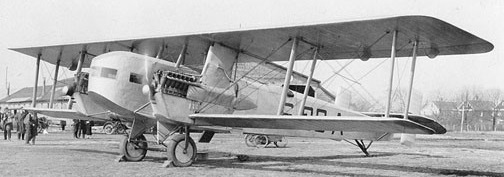
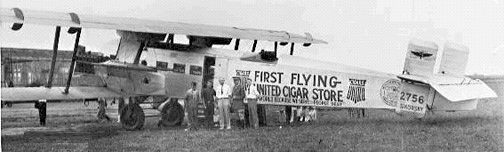
It was owned by Roscoe Turner and made many long-distance flights in the East and Midwest 1925-27, was even used to deliver two grand pianos.
In 1928, Howard Hughes bought the S-29A for use in his epic film “Hell’s Angels”. To simulate a First World War German Gotha bomber, he painted it black, with Maltese cross insignia and with machine-guns above the mid-fuselage cockpit, at side hatches and above and below the nose. In the film, the aircraft is seen to spin down and crash. Few of the viewers realized that the pilot had parachuted to safety, but that the man releasing the smoke trail from the rear fuselage had not known that the S-29A was out of control and died when it slammed into the ground.
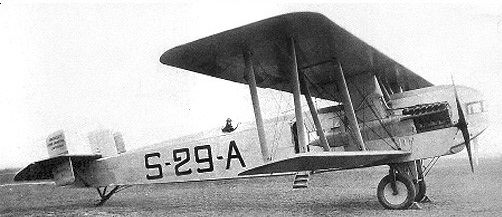
S-29-A
Engines two 400hp Liberty 12
Wingspan: 69’0″
Length: 49’10”
Useful load: 4225 lb
Max speed: 115 mph
Cruise: 100 mph
Stall: 56 mph
Ceiling: 12,300 ft
Seats: 16
Sikorsky S-22 Ilya Mourometz

In August 1913 a military Voisin biplane broke up in the air over the airfield and its engine fell onto the Grand. Sikorsky subsequently redesigned the aircraft as the Ilya Muromets which was even bigger. Its wing span was 10 ft greater than that of Le Grand and it weighed 10,000 lb.
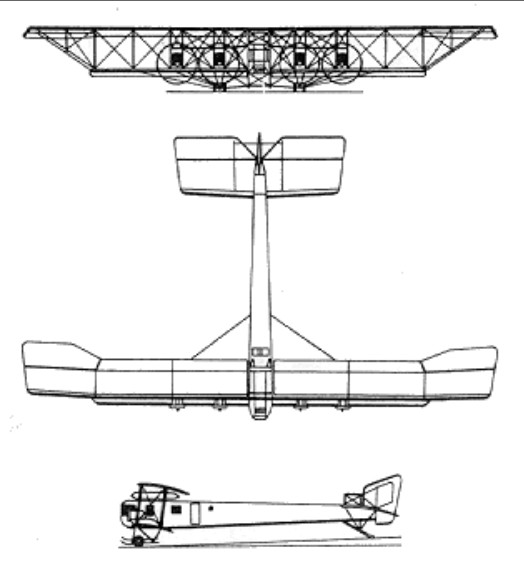
A four bay biplane with braced extensions of upper wings. With two spar wooden wings and wooden fuselage, all fabric covered, ailerons were fitted to the top wings.
The first flight of Ilya Mourometz No. 1, in January 1914, was made with a skid undercarriage. On 11 February 1914 this machine set a new world record by carrying aloft 16 people and a dog. A familiar picture of it shows the big biplane landing with two fur-coated passengers taking a stroll along its fuselage top promenade. Five months after the first flight, it flew several times as a seaplane.
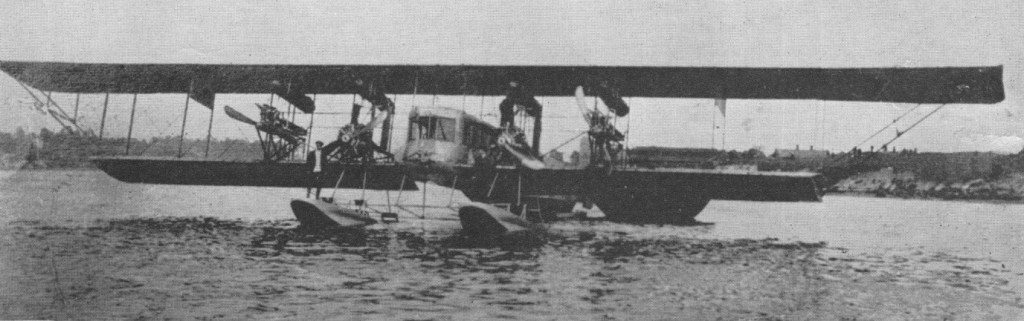
With the threatened outbreak of hostilities ten were purchased by the Russian Army for military trials.
The Ilya Muromets went into production as a heavy bomber for the Imperial Russian Air Service Eskadra Vozdushnykh Korablei (Squadron of Flying Ships) built at the Russo-Baltic Wagon Works. Seventy three were built, and few of these production aircraft were identical, improvement and developing being continuous, and short engines meant they were flown with a variety of powerplant which, in some cases, involved a mix of engines on one aircraft.
The first version used in combat was the Type B, with Salmson engines of 135-200 hp and an armament of only two machine guns. The largest of the series was the Type IMYe2, with a wingspan of 34.50m and a gross weight of 7,000kg.
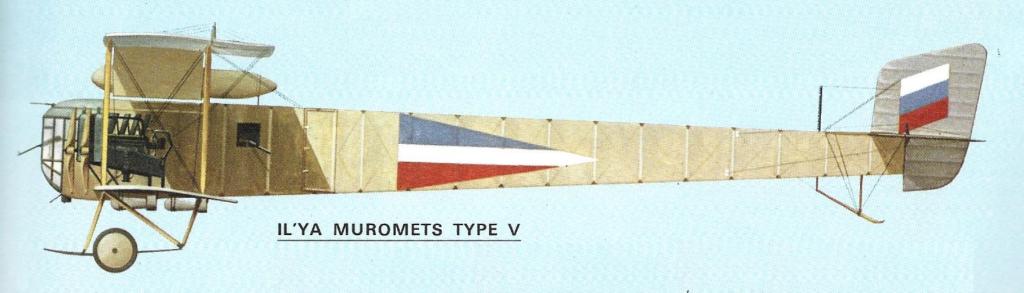
After experimenting with various types of armament and bomb racks it was found to be too slow and with limited altitude for offensive purposes. Sikorsky designed a lighter version, the Il’ya Muromets Type V, and deliveries of these began in early 1915.

Sikorsky S-22 Il’ya Murometz Article
They were so effective on more than 400 bombing raids against Germany and Lithua¬nia in 1915 that Great Britain and France sought permission from Czar Nicholas II to produce the design under licence, though nothing came of the scheme before the 1917 Russian Revolution sent Sikorsky fleeing to the United States.
They made 400 successful raids for the loss of only one aircraft, shot down by German fighters after it destroyed three of the enemy aircraft.
Engines: 4 x Argus, 100 hp
Wingspan: 30.9/22.0 m / 101 ft 5 in / 72 ft 2 in
Length: 17.1 m / 56 ft 1 in
Wing area: 148.0 sq.m / 1593.06 sq ft
Max take-off weight: 5100 kg / 11244 lb
Max. speed: 110 km/h / 68 mph
Range: 600 km / 373 miles
Armament: 8 machine-guns, bombs
Crew: 10
Ilya Muromets E
Engines: 4 x Renault, 200 hp
Props: 2 blade
Wingspan: 102 ft 8 in
Wing area: 20050 sq.ft
Length: 59 ft 8 in
Empty weight: 10,600 lb
MTOW: 17,600 lb
Max speed: 85 mph at 5000 ft’
Endurance: 4 hr
Armament: up to 7 mg
Bombload: 1000-1500 lb
Sikorsky IM-W Ilya Muromet
Engine: 4 x Argus, 138 hp
Length: 56.102 ft / 17.1 m
Wingspan: 97.769 ft / 29.8 m
Wing area: 1345.5 sq.ft / 125.0 sq.m
Max take off weight: 9812.3 lb / 4450.0 kg
Max. speed: 67 kts / 125 km/h
Service ceiling: 12139 ft / 3700 m
Wing loading: 7.38 lb/sq.ft / 36.00 kg/sq.m
Endurance: 5 h
Crew: 5
Armament: 3-7x MG, 700kg Bomb.
Sikorsky Le Grand / Russkii Vitiaz (Russian Knight)
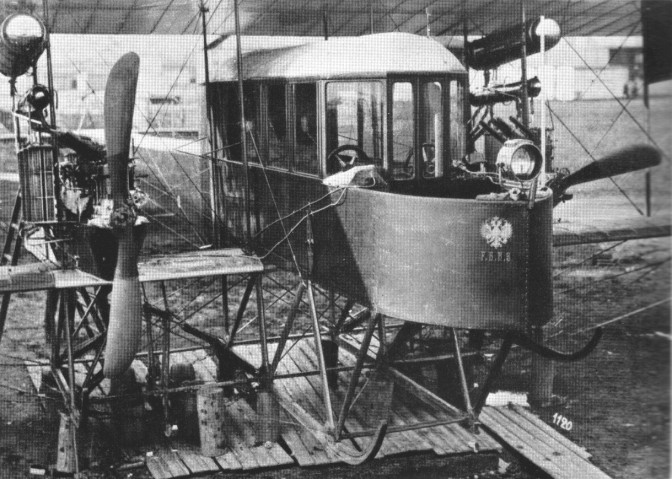
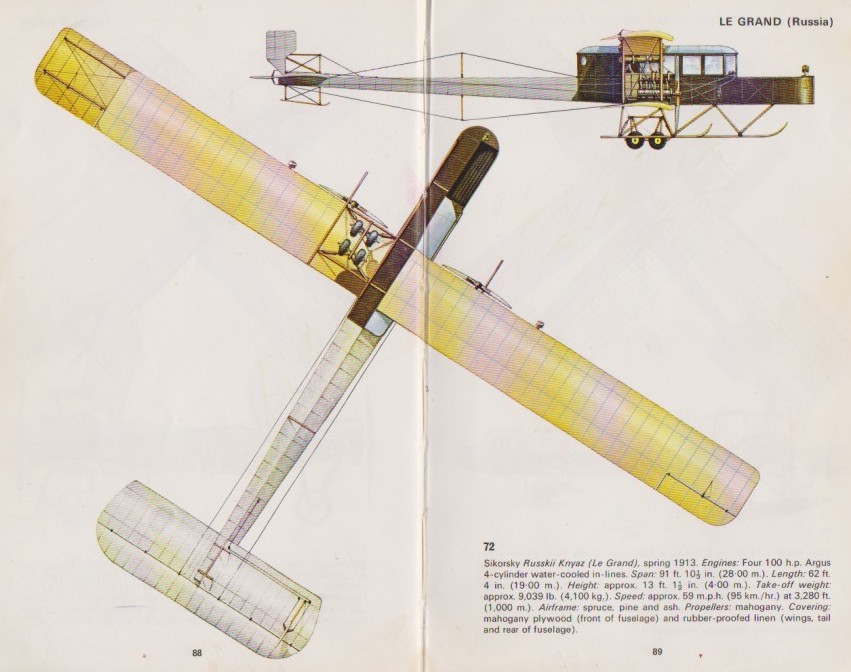
In 1912 Igor Sikorsky began construction of an aircraft with a wingspan of 28 m (92 ft) it was at that time by far the largest heavier than air craft to fly; the first to have four engines; the first with a fully enclosed passenger cabin; and the first designed specifically as an airliner.

Officially known as Russkii Vitiaz (Russian Knight), the big biplane was dubbed the Grand or Bolshoi before its first flight on 13 May 1913. The Grand weighed 4080 kg (8000 lb) and was powered by four 100 hp water cooled Argus engines arranged initially in tandem pairs, but after the first ten minute test flight the two rear mounted engines were moved outboard on the wings. In June 1914, Sikorsky piloted the 10,000-1b. S-22 named Ilia Mourotz on a 1,600mi. round trip from St. Petersburg to Kiev.

Numerous difficulties were encountered in the design and construction; there were no wheels of adequate size to support the Grand, so a 16 wheel bogie undercarriage had to be built. The cabin incorporated some novelties. At the front was a large open balcony with a searchlight mounted on a gimbal; next came the cockpit with dual controls for two pilots; behind this was the passenger cabin, luxuriously appointed with four seats, sofa, table, washroom and wardrobe.
The Grand flew well and subsequently made 53 flights including a record breaking duration flight of 1 hour 53 minutes with eight people aboard on 2 August 1913. Later that month a military Voisin biplane broke up in the air over the airfield and its engine fell onto the Grand. Sikorsky subsequently redesigned the aircraft as the Ilya Muromets.
Engines: 4 x 100 hp Argus four cylinder in line piston
Wing span: 91 ft 10.25 in (28.00 m)
Length: 62 ft 4 in (19.00 m)
Gross weight: approx. 9,039 lb (4,100 kg)
Max. speed: approx. 59 mph (95 km/h) at 3,280 ft (1,000 m)
Accommodation: Crew of 2 + 8 passengers
Typical endurance: 1 hr 45 min
1913 Sikorsky “Grand”
Span: upper 89′ lower: 66′
Length: 66′
Weight: 8800 lb gross
Speed: 56 mph
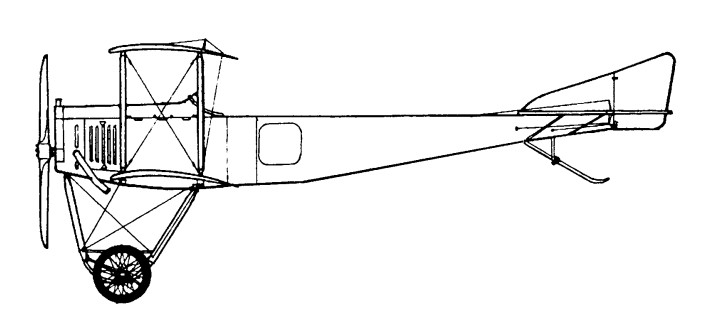
Sikorsky S-17

1916
Engine: 1 x 150hp Sunbeam Crusader
Sikorsky S-5
The S-3, S-4, and S-5 followed in quick succession, each a refinement of its predecessor, and each adding to Sikorskys’ piloting experience.
Finally, by the summer of 1911, in an S-5 with a 50-horsepower engine, Sikorsky was able to remain in the air for more than an hour, attain altitudes of 1,500 feet (450 metres), and make short cross-country flights. This success earned him International Pilot’s License Number 64.
Span: top 39’4″ bottom 29’6″ or 27’11”
Length: 27’11” or 26’3″
Weight loaded: 970 lb
Speed: 78 mph
Sikorsky S-3 / S-4
The S-3, S-4, and S-5 followed in quick succession, each a refinement of its predecessor, and each adding to Sikorskys’ piloting experience.
Sikorsky S-1 / S-2

For the time being Sikorsky decided to enter the field of fixed-wing design and began construction of his first airplane. His S-1 biplane was tested early in 1910, and, although its 15-horsepower engine proved inadequate, a redesigned airframe with a larger engine (S-2) carried him on his first short flight. On 16 June 1910 it flew about 800 ft at 2 to 3 feet altitude. It crashed a few days later after a 49 second flight.

S-2
Engine: Anzani, 25 hp
Top speed: 50 mph
Sikorsky 1909 Helicopter
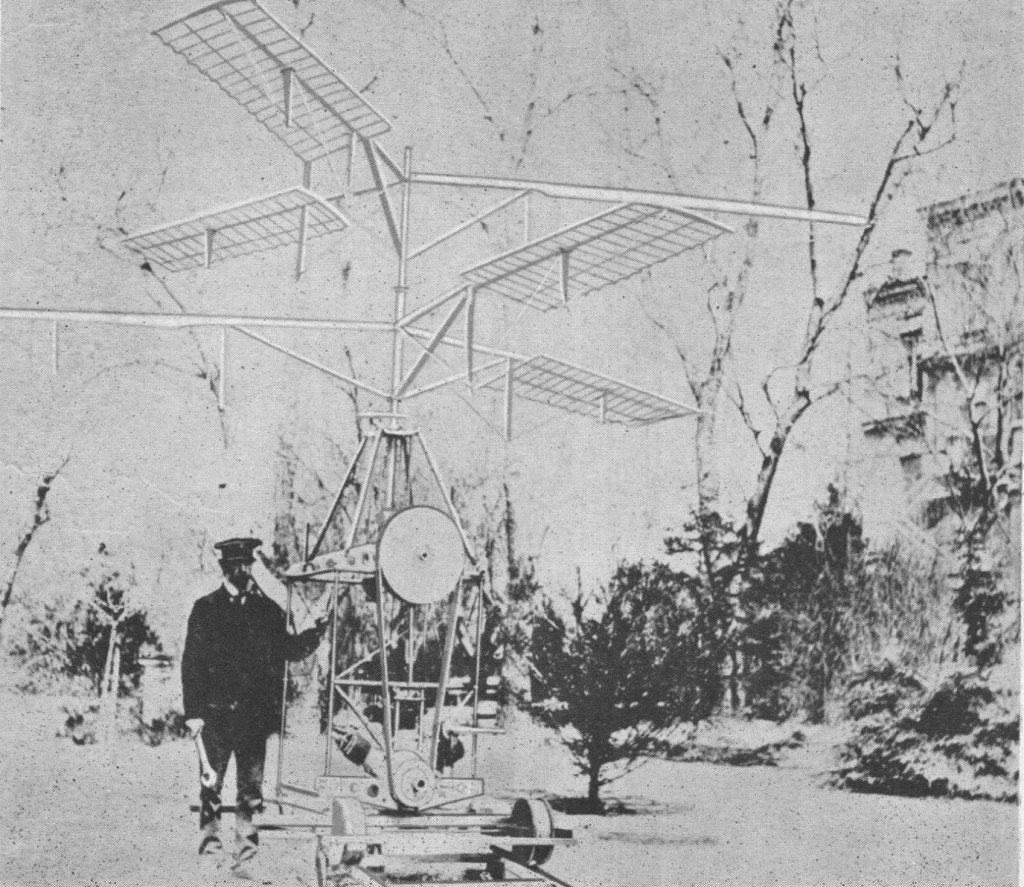
In Kiev in May of 1909 Igor Sikorsky began construction of a helicopter. Its failure revealed some of the practical obstacles. Powered by a three-cylinder, 25-hp Anzani engine that drove coaxial, twin blade rotors, the H-1 shook wildly but did not have enough power to lift itself off of the ground. A second machine with a larger engine was tested in 1910, but also failed to fly. He then made a major decision: “I had learned enough to recognize that with the existing state of the art, engines, materials, and-most of all-the shortage of money and lack of experience … I would not be able to produce a successful helicopter at that time.” In fact, he had to wait 30 years before all conditions could be met.
Sikorsky
Igor Sikorsky
Sikorsky Aero Engineering Corporation
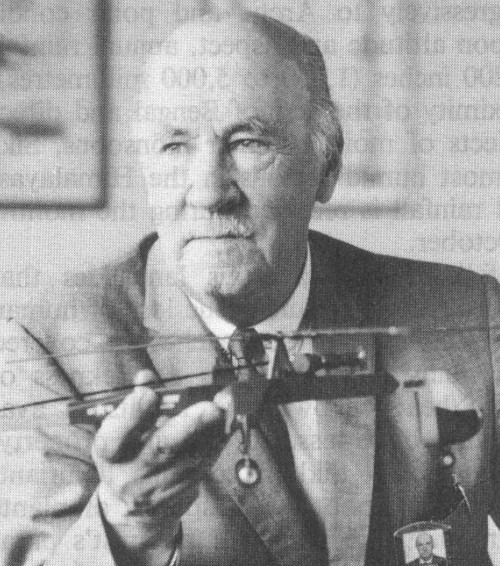
lgor Ivan Sikorsky was born in Kiev, Ukraine, on May 25, 1889. His father was a graduate physician and professor of psychology. His mother also was a physician but never practiced professionally. Her interest in art and in the life and work of Leonardo da Vinci stimulated her son’s early interest in model flying machines; when he was 12 years old he made a small rubber-powered helicopter that could rise in the air.
In 1903 Sikorsky entered the Naval Academy in St. Petersburg, with the intention of becoming a career officer, but his interest in engineering led to his resignation from the service in 1906. After a brief period of engineering study in Paris, he returned to Kiev and entered the Kiev Polytechnic Institute. Following a reasonably successful academic year, however, he concluded that the abstract sciences and higher mathematics as then taught had little relationship to the solution of practical problems, and he left the school, preferring to spend his time in his own shop and laboratory.
A trip through Europe in the summer of 1908 brought him into contact with the accomplishments of the Wright brothers and the group of European inventors who were trying to match their progress in flight. Returning to Kiev, Sikorsky came to the conclusion that the way to fly was “straight up,” as Leonardo da Vinci had proposed, a concept that called for a horizontal rotor. Assisted financially by his sister Olga, he returned to Paris in January 1909 for further study and to purchase a light-weight engine.
Back in Kiev in May of 1909 he began construction of a helicopter, the H-1. Its failure revealed some of the practical obstacles. Powered by a three-cylinder, 25-hp Anzani engine that drove coaxial, twin blade rotors, the H-1 shook wildly but did not have enough power to lift itself off of the ground. A second machine with a larger engine was tested in 1910, but also failed to fly. He then made a major decision: “I had learned enough to recognize that with the existing state of the art, engines, materials, and-most of all-the shortage of money and lack of experience … I would not be able to produce a successful helicopter at that time.” In fact, he had to wait 30 years before all conditions could be met.
For the time being Sikorsky decided to enter the field of fixed-wing design and began construction of his first airplane. His S-1 biplane was tested early in 1910, and, although its 15-horsepower engine proved inadequate, a redesigned airframe with a larger engine (S-2) carried him on his first short flight. The S-3, S-4, and S-5 followed in quick succession, each a refinement of its predecessor, and each adding to his piloting experience. Finally, by the summer of 1911, in an S-5 with a 50-horsepower engine, he was able to remain in the air for more than an hour, attain altitudes of 1,500 feet (450 metres), and make short cross-country flights. This success earned him International Pilot’s License Number 64.
The subsequent S-6 series established Sikorsky as a serious competitor for supplying aircraft to the Russian Army. Characteristically, he soon took a giant step: the first four-engined airplane, called “Le Grand,” the precursor of many modern bombers and commercial transports, which he built and flew successfully by 1913. Among its innovative features, not adopted elsewhere until the middle 1920s, was a completely enclosed cabin for pilots and passengers.
Although he was now an internationally known aircraft designer and pilot, Sikorsky decided to leave Russia for France in 1918 following the Bolshevik Revolution. On Mar. 30, 1919, Sikorsky came to New York City to begin his career anew. Initially unable to land a job with a U.S. airplane manufacturer, Sikorsky supported himself by teaching mathematics to Russian emigees in New York and giving lectures on aviation and astronomy until Mar. 5, 1923, when he received enough financing to launch the Sikorsky Aero Engineering Corp.
They set up shop in an old barn on a farm near Roosevelt Field on Long Island. Sikorsky became a U.S. citizen in 1928. From 1925 to 1926, the company produced one-of-a-kind, fixed-wing designs built to customer needs. In 1924, using junkyard parts and war-surplus materials, Sikorsky constructed his first S-29A, a twin-engine, 14 passenger design. By 1929 the company, having become a division of United Aircraft Corporation, occupied a large modern plant at Bridgeport, Connecticut, and was producing S-38 twin-engined amphibians in considerable numbers. In 1931 the first S-40, the “American Clipper,” pioneered Pan American World Airways mail and passenger routes around the Caribbean and to South America. By the summer of 1937 Pan American began transpacific and transatlantic service with the first four-engined S-42 “Clipper III” the last of the Sikorsky series, the ancestor of which had been “Le Grand” of 1913.
As the era of flying boats faded, lgor Sikorsky revived the idea of developing the helicopter. Once again he was involved in “advanced pioneering work . . . where extremely little reliable information and no piloting experience whatever were available.” By the late 1930s changing requirements for military and commercial air transport forecast the termination of the large flying boat, and Sikorsky returned to his first love, the helicopter. The essential aerodynamic theory and construction techniques that had been lacking in 1910, however, were now available. In a memo to the general manager of Vought-Sikorsky (the new name of the company) dated Aug. 10, 1938, he wrote:
“Besides having considerable possibilities as a privately owned aircraft, the direct-lift ship [helicopter] will be a very important service type for the army and navy. For the army, this type of ship would render excellent services for communication, fire control, short-range reconnoitering and bombing operations. For the navy, the ship would be extremely useful as the only aircraft that could take off and land without catapulting from any surface vessel….”
Even though an official manufacturing order had not been issued to begin work on a “new” type of aircraft, helicopter development continued throughout the fall of 1938. lgor Sikorsky and a handful of engineers and production personnel spent lunch breaks and off hours sketching, designing, fabricating and testing various components and systems for what would become known as the VS-300 (“V’ for Vought, “S” for Sikorsky and “300” for Sikorsky’s third helicopter design).
Rotor tests were encouraging enough for Sikorsky to request a meeting with Eugene Wilson, a senior vice president of United Aircraft, at which he received the go-ahead to construct a prototype helicopter. Sikorsky’s argument for building the rotorcraft had been compelling.
“So important is this development to the future of society that it becomes our responsibility to undertake it. While admittedly radical, and possibly ‘impossible,’ the helicopter is wholly rational. Like no other vehicle, it will operate without regard to prepared landing surfaces. Thus, it will free us of the serious handicap to progress imposed by fixed-wing aircraft-airport limitations. It is not competitive with the airplane, but complementary to it. If Sikorsky does not create this craft of the future, another [company] will. By training and expedence, we are best equipped to do it. And finally, unlike the airplane, the helicopter will be used not to destroy but to save lives!”
Early in 1939, with a well trained engineering group at his disposal, he started the construction of the VS-300 helicopter. As he said later, “There was a great satisfaction in knowing that, within a short period of time, good engineering along a novel line produced encouraging results.” On September 14, 1939, the plane lifted off the ground on its first flight. Its designer was at the controls; during his entire career Sikorsky always insisted on making the first trial flight of any new design himself. On May 6, 1941, in an improved machine, he established an international endurance record of 1 hour, 32.4 seconds.
Sikorsky regarded it as a useful tool for industry and air commerce but primarily as an effective device for rescue and relief of human beings caught in natural disasters, such as fire, flood, or famine. He estimated that over 50,000 lives had been saved by helicopters.
lgor Sikorsky only complained that of all his past predictions, those that he lived to regret were on the “too conservative” side.
Sikorsky retired as engineering manager tor his company in 1957 but remained active as a consultant until his death on October 26, 1972, at Easton, Connecticut. In addition to his wife (married in 1924), he left one daughter and four sons, all of whom have professional careers. Sikorsky received many honorary doctorates in science and engineering, honorary fellowships in leading scientific and technical societies in the United States and Europe, and the highest medals and awards in aviation, including the Cross of St. V1adimir from Russia; the Sylvanus Albert Reed Award for 1942 from the Institute of Aeronautical Sciences in New York; the United States Presidential Certificate of Merit in 1948; the Daniel Guggenheim Medal and Certificate for 1951; the Elmer A. Sperry Award for 1964; and the National Defense Award in 1971.
Apparently, when he checked in for a Sabena S-58 flight, Igor Sikorsky was asked if his name was spelt like the helicopter’s.
Dean C. Borgrnan, who took over as president and CEO of Sikorsky Aircraft in October 1998, said: “As we approach a new millennium, a new generation of helicopter pioneers is designing and building aircraft that will revolutionize the industry. The S-92 and the RAH-66 represent two of the most advanced helicopters in the world today. Technical achievements from these two programs are being incorporated on the Black Hawk and its derivatives.”
Sikorsky also was retooling its design and engineering computers. Sikorsky selected IBM and Dassault Systemes to provide the Enovia PM (Product Manager) solution as its enterprise~wide computer system.
1923: (Igor I) Sikorsky Aero Engr Corp.
1925: Sikorsky Mfg Co, Bridgeport CT (company funded in part by composer-pianist Sergei Rachmaninoff).
1926: Leased former L-W-F plant, College Point, Long Island NY.
1928: Sikorsky Aviation Div, United Aircraft & Transport Corp, Bridgeport.
1939: (Chance) Vought-Sikorsky Div, United Aircraft Corp.
1943: Sikorsky Aircraft Div, United Aircraft Corp.
1975: Sikorsky Aircraft Div, United Technologies Corp, Stratford CT.
199?: Sikorsky Aircraft Corp, United Technologies Corp
Sikorsky was sold to Lockheed Martin in 2015

