Skonkworks 24bis

AirVenture Oshkosh 2017

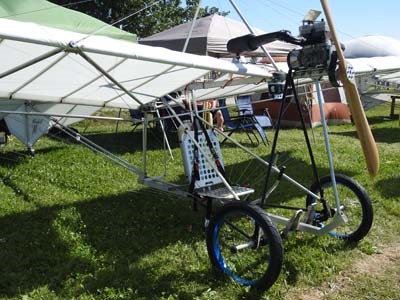
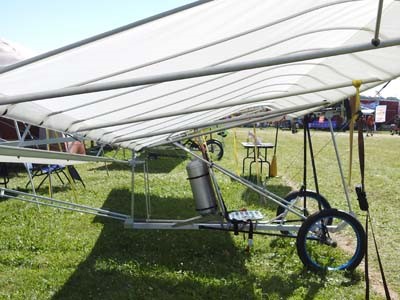
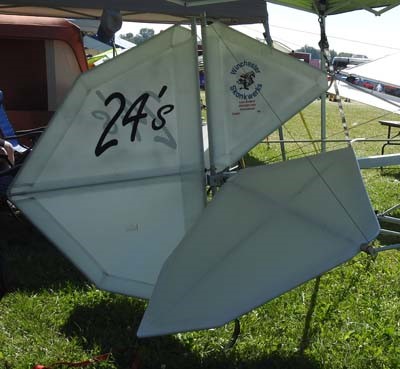
The 24 Bis (that’s what they call the example you see in the images) is a tribute to Alberto Santos Dumont.

The Winchester Skonkwerks Ultralight Research and Development Facility —shortened to Skonkwerks — represents a team from Larsen, Wisconsin. Skonkwerks honored Alberto by first building a 23 Bis and later the 24 Bis. The group describes itself as a “loosely knit organization of friends, flyers, and fanatics… tinkerers, builders, and bullsh###rs. We are engineers, designers, and dreamers hanging out in a little hangar screwing stuff together and making it fly.”
AirVenture Oshkosh 2017

Lee Fischer was the founder of this group of tinkerers that formed after he first showed a highly modified Robertson B1-RD. So much interest was shown in the Demoiselle style of aircraft that he decided to build a 23 Bis. At AirVenture 2015, his friend Mark Solper hinted that it would be “great project to build a pair of ‘evolved’ Demoiselles for a subsequent AirVenture.” This suggestion led to the 24 Bis.

Mark, Lee, and the whole merry band machined and welded the airframe and sewed Dacron wings, all the while learning both new skills and an appreciation for what Santos Dumont and his associates had done more than a hundred years earlier.

The aircraft was flown into Oshkosh.
AirVenture Oshkosh 2017

Weight — 240 pounds
Wing Span — 32 feet
Wing Area — 192 square feet
Never Exceed Speed — 45-50 mph
Stall Speed — 14-16
Engine — Rotax 447
Build Time — December 21, 2014 through June 21, 2015
Skonkworks 23bis

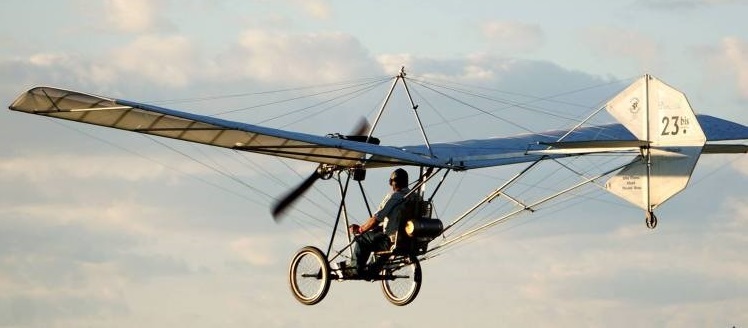
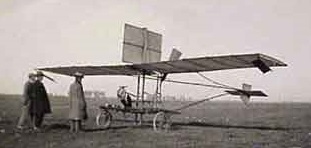
The Winchester Skonkwerks Ultralight Research and Development Facility — let’s shorten that to Skonkwerks — represents a team from Larsen, Wisconsin. Skonkwerks honored Alberto Santos Dumont by first building a 23 Bis and later the 24 Bis. The group describes itself as a “loosely knit organization of friends, flyers, and fanatics… tinkerers, builders, and bullsh###rs. We are engineers, designers, and dreamers hanging out in a little hangar screwing stuff together and making it fly.”

Lee Fischer was the founder of this group of tinkerers that formed after he first showed a highly modified Robertson B1-RD. So much interest was shown in the Demoiselle style of aircraft that he decided to build a 23 Bis. At AirVenture 2015, his friend Mark Solper hinted that it would be “great project to build a pair of ‘evolved’ Demoiselles for a subsequent AirVenture.” This suggestion led to the 24 Bis

Weight: 240#
Wing Span: 32′
Length: 19′
Wing Area @ Chord: 176 sq. ft.
Wing Area @ Camber: 192 sq. ft.
Wing Construction: Tube and Sewn Dacron

Skonkworks / Winchester Skonkwerks Ultralight Research and Development Facility

The original spelling is currently being used in Winchester Township Wi. Where a hanger was dubbed “The Skonkworks” by a neighbor in the early years. Used by a loosely knit informal organization of like-minded engineers/designers/tinkerers/builders/neighbors and fliers known as the “Lone Buzzerds” an ultralight club, operating out of the “Winchester Skonkworks” or sometimes “Squirrelworks” hanger in Larsen, Wi.
To avoid copyright infringement “Kelly Johnson’s” serious looking “skunk” was changed to a comical, whimsical black and white squirrel looking mascot wearing a red crash helmet and giving a smiling “thumbs up.”

The designation “skunk works”, or “skunkworks”, is widely used in business, engineering, and technical fields to describe a group within an organization given a high degree of autonomy, unhampered by bureaucracy; tasked with working on advanced or secret projects. In this case the spelling “Skonkworks” but in most cases; “Skonkwerks” is being used in jest to project an aura of something outside of the norm being worked on, developed or flown; while staying in touch with meager roots. The term fits well within the ultralight community as there is no direct oversight by any government organization, in addition ultralighters generally operate at the bottom of the aviation financial food chain. Not unlike “Li’lAbner” making “moonshine” from an odd variety of items, or whatever they had on hand.

Skoda-Kauba SK V4 / SK 257

SK V4

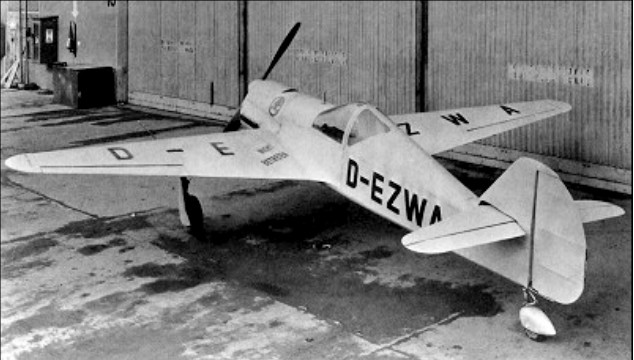
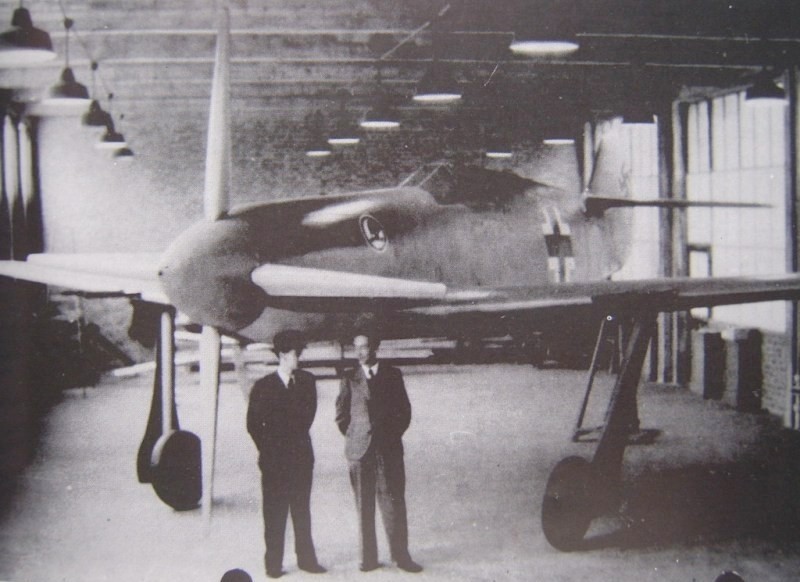
The Škoda-Kauba Flugzeugbau produced the Škoda-Kauba V4 as a single-seat low-wing cantilever monoplane powered by a 240 hp (179 kW) Argus As 10C-3 engine with a retractable tailwheel landing gear. First flying in 1943, the first prototype proved very fast for its low power. The second included a number of changes and, despite increased power, was not as fast. A third was also completed.

The SK V4 fighter trainer was the only Otto Kauba design put in to production as the SK 227. The production was somewhat limited though.

The potential for development was recognized and the German Reichsluftfahrtministerium ordered four prototypes of an enlarged aircraft with a more powerful 485 hp Argus As 410 engine and allocated the designation Sk 257. The four prototypes performed well and the type was ordered into production but the build quality of the prototypes did not pass the Luftwaffe quality control inspections and after only five production aircraft had been built the order was cancelled.

The SK257 development received a German production order and five were completed before the Russians captured the factory.

SK V4
Engine: 1 x 240hp Argus As 10C-3
Max take-off weight: 1250 kg / 2756 lb
Wingspan: 7.60 m / 24 ft 11 in
Length: 5.60 m / 18 ft 4 in
Height: 2.90 m / 9 ft 6 in
Max. speed: 420 km/h / 261 mph
Ceiling: 7500 m / 24600 ft
Range: 900 km / 559 miles
Crew: 1

SK 257
Engine: 1 × Argus As 410 362 kW (485 hp)
Wingspan: 7.6 m (24 ft 11 in)
Wing area: 8.4 m2 (90 sq ft)
Length: 7.1 m (23 ft 4 in)
Maximum speed: 350 km/h (217 mph, 189 kn)
Crew: 1