Air Leader Airplane Co
Floral Park NY.
USA
Circa 1926 Air Leader Airplane Co rebuilt a surplus Curtiss JN-4D as a parasol monoplane. Registered NX3742, it was powered by a 90hp Curtiss OX-5 and had three seats.
Air Leader Airplane Co
Floral Park NY.
USA
Circa 1926 Air Leader Airplane Co rebuilt a surplus Curtiss JN-4D as a parasol monoplane. Registered NX3742, it was powered by a 90hp Curtiss OX-5 and had three seats.
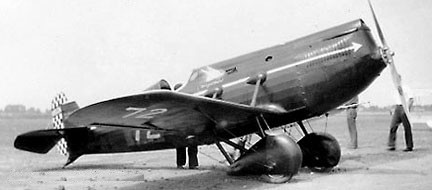
The 1929 Air-istocrat SR-5 NR860W was a single-place, 95hp Cirrus powered Cirrus Derby entry.
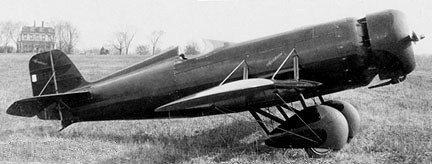
The 1929 SR-4 was built for Willard van Buren King to compete in the 1930 Miami All-American Air Meet. Registered N283V, it was priced at $9,500.
Engine: 110hp Warner Scarab
Wingspan: 24’0″
Max speed: 158 mph
Cruise: 140 mph
Stall: 55 mph
Range: 500 mi
Seats: 1
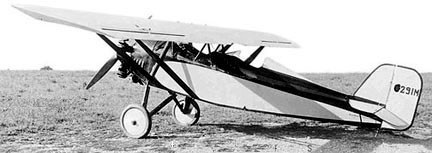
The 1929 Air-istocrat SP-7, designed by Leo Mohme, was based on his own 1928 aircraft. It featured a plywood-covered parasol wing and forward fuselage. Priced at $3,945, at least seven were built including; prototype NX217H, N291M, NX336V, NX402E, NX10079, and NX870H wth a 65hp Velie M-5 engine.
Engine: 100hp Kinner K-5
Wingspan: 28’3″
Length: 20’0″
Useful load: 550 lb
Max speed: 122 mph
Cruise: 102 mph
Stall: 38 mph
Range: 600 mi
Seats: 2
United States Aircraft Corp
76 Nelson St
New Brunswick NJ.
USA
Built the SP-7 and SR- series of aircraft circa 1929.

The Electra STOL (short take-off and landing) aircraft features eight electric props along the front edge of its wings. To help achieve the blown lift effect – which results in lift off at relatively low speeds of 35 mph (56 km/h) along a short runway – the aircraft sports large flaps at the rear edge of the wings.
The eight small-diameter, five-bladed propellers along its wing run on quiet electric motors, fed by a big enough lithium battery pack to allow fully-electric takeoff and landing, and quiet flight over populated areas. Electra promises just 75 decibels at a distance of 300 ft (91 m).
In August 2025 Electra demonstrated at Virginia Tech take off and land using an airfield that’s one-tenth the size of a standard runway demonstrating “blown lift” aero and hybrid-electric propulsion capabilities. Power for take-off is provided by onboard batteries, with the system switching to a small turbogenerator for cruising or topping up the batteries while in the air.
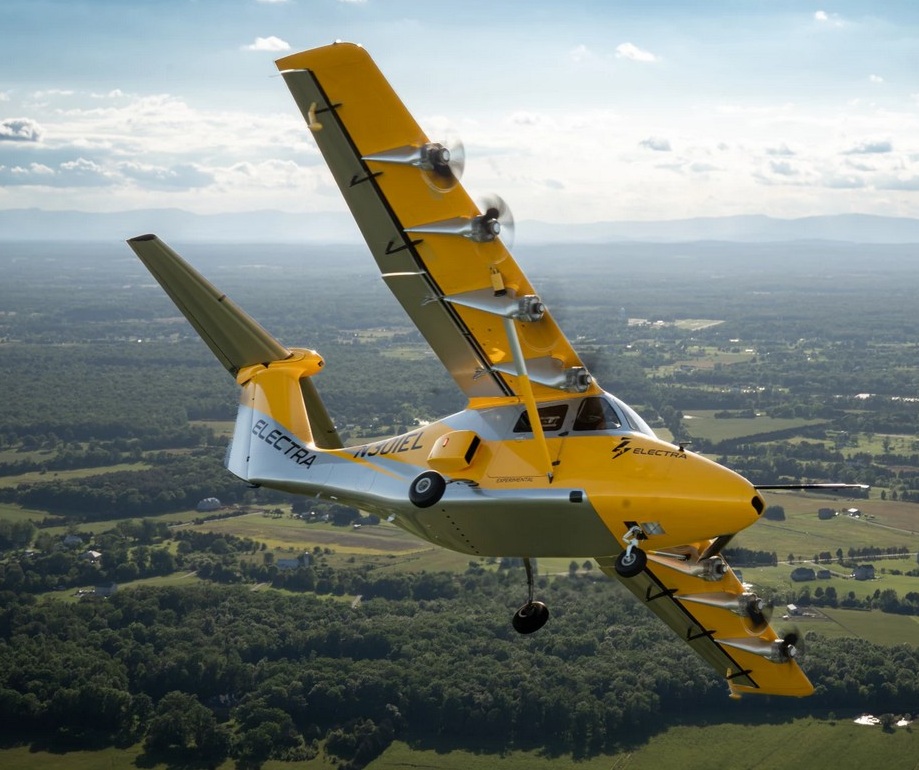
The company has been test flying the two-seat EL2 prototype since at least May 2024, but the flights at Virginia Tech – in partnership with Surf Air Mobility – represent the first series of public demonstrations.
Though the prototype did take-off and land utilizing a 300 x 75-ft (91 x 23-m) paved surface at the expansive Blacksburg campus, the EL2 showed off its flexibility by tackling other surfaces too. These included an access road in cooperation with Virginia’s Department of Transportation, and a grass field at the university’s Corporate Research Center.

The company has notched up more than 2,200 orders from over 60 operators around the globe, and is looking to start commercial flights of the EL9 Ultra Short nine-passenger aircraft by 2029.

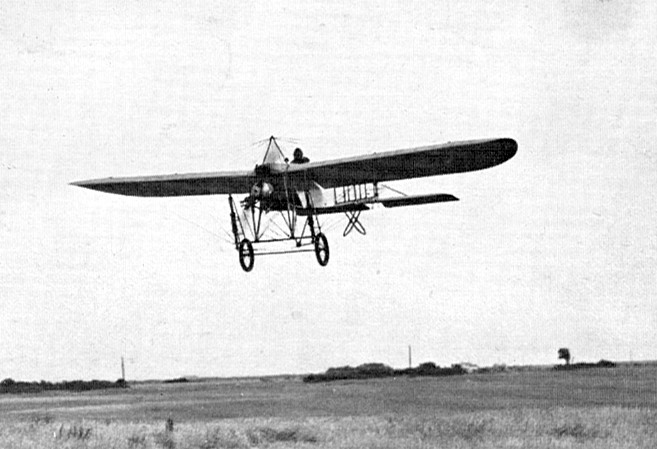
Jean Salis built one Bleriot XI replica to commemorate 46 years after the first cross channel flight.
Antique Aero built a Sopwith Pup replica in 1977 powered by a Warner engine. It was sold to Ed Doyle.
Antique Aero built a Sopwith Camel replica in 1977 powered by a Warner engine. It was sold to Champlin Fighter Museum.
Antique Aero built a Sopwith 1-1/2 Strutter replica in 1980 powered by a 100 hp Warner engine. It was sold to Javier Arango.
 All Aero