Southern Aeronautical Renegade

This Formula-V sport racer features a straight-line midwing design. The design was largely based on the Cassutt Special III, but was made suitable to accept VW or VW-based engines. Its designer, Charles Lasher, has chosen steel-tube construction for the fuselage and tail because of its ability to withstand the shock of a crash better than other materials

The wings are a wood-frame structure with fabric covering. The ship is made to handle any Volkswagen from 35 to 65 hp.

The first aircraft was built by M. Ricketts and after eighteen months of construction it was first flown in 1974, registered N73RL (c/n B15). Of conventional construction with all-wood wings and fabric-covered fuselage, the single-seat aircraft was powered by one 55 hp Volkswagen VW1600 motor car engine.

N73RL took second and third places in the Formula V competition at the 1978 and 1979 Cleveland National Air Races respectively, and was used for aerobatic displays.

Plans for amateur construction were marketed via Southern Aero Corporation of Miami Lakes, Florida, after 1983 via Charles Lasher.
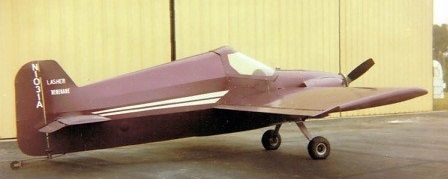
Lasher Renegade I (N1031A c/n B96)

At least four Renegade I aircraft were completed in the USA:
N73RL, N1031A, N35DE, and N64JM (designated Michalak R-1).

Biplane Racer Andrew Buehler has set up an LLC and negotiated to acquire the design and manufacturing rights for the Renegade from Creighton King in 2014. Initial planning was for Ed Fisher of Raceair Designs to help with the development and construction of a new Renegade airframe, to use in the promotion of the design. Several minor improvements, and a new wing design were in the works.

Engine: VW 40-hp
Wingspan 16 ft
Length 14 ft
Gross Wt. 652 lb
Empty Wt. 400 lb
Fuel capacity 7.5 USG
Top speed 130 mph
Cruise 120 mph
Stall 49 mph
Climb rate 1000 fpm
Takeoff run 560 ft
Landing roll 400 ft
Range 375 sm

Span: 17 ft 0 in (5.18 m)
Wing chord, constant: 5 ft 0 in (1.52 m)
Length: 15 ft 0 in (4.57 m)
Height: 4 ft 3 in (1.30 m)
Empty weight: 451 lb (205 kg)
Max takeoff weight: 670 lb (304 kg)
Max speed: over 170 mph (273 kmh)
Max cruise speed: 145 mph (233 kmh)
Landing speed: 50 mph (81 kmh)
Max climb at sea level: 850 ft (259 m)/min
Service ceiling: 12,000 ft (3,660 m)
Range: 225 mls (362 km)
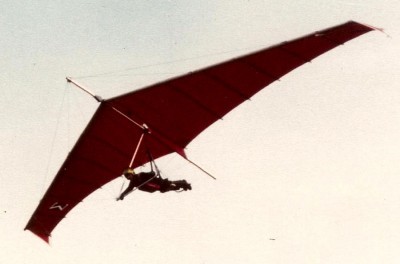
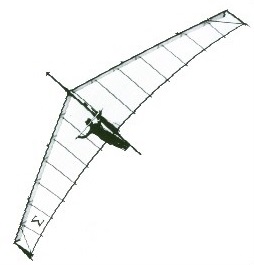
Southdown Sailwings Sigma

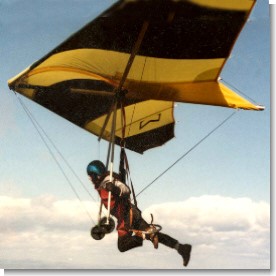
The 1980 Sigma was the first offering from Southdown Sailwings. It follows the basic concept of the Chargus Cyclone by appealing to the more experienced pilot for use in competition and cross country flying.

Sigma

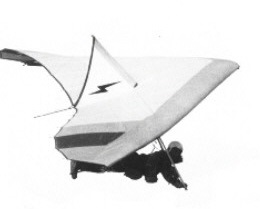
The Sigma is a crosstube-less bowsprit design. The machine has a high aspect ratio with a tight sail and drooped tips which lock up at the minimum desired angle of attack to aid pitch stability. Rigging is straightforward and quick, the longest operation being fitting the flexible battens. The Sigma came in two sizes, 11 sq m and 12 sq m.

The 1979 Southdown Sailwings Sigma had to be flown all the time, and if you did not get the push out right in turns, then don’t bother with light ridge lift. The nose would drop on landing.

In 1979 Southdown Sailwings made the first 12 Sigma 12m. Alan Garard and Rod Stuart from NZ test flew all 12 gliders and loved them. Stuart’s Sigma hangs in the transport museum in Wanaka, New Zealand.
The Sigma was followed by the 1981 Sigma Floater.

Sigma Floater

The Sigma Floater is an open cross boom design glider, this is different from the first Sigma which used a bowsprit design. This type of glider was more appealing to novice or intermediate pilots for use in coastal flying. Rigging is straightforward but slower than the Sigma.

The Sigma Floater was priced at £937.00.

Sigma 12 m
Span 38 ft
Sail area 188 sq ft
Aspect ratio 7.5
Nose angle 140 deg

Southdown Sailwings Puma

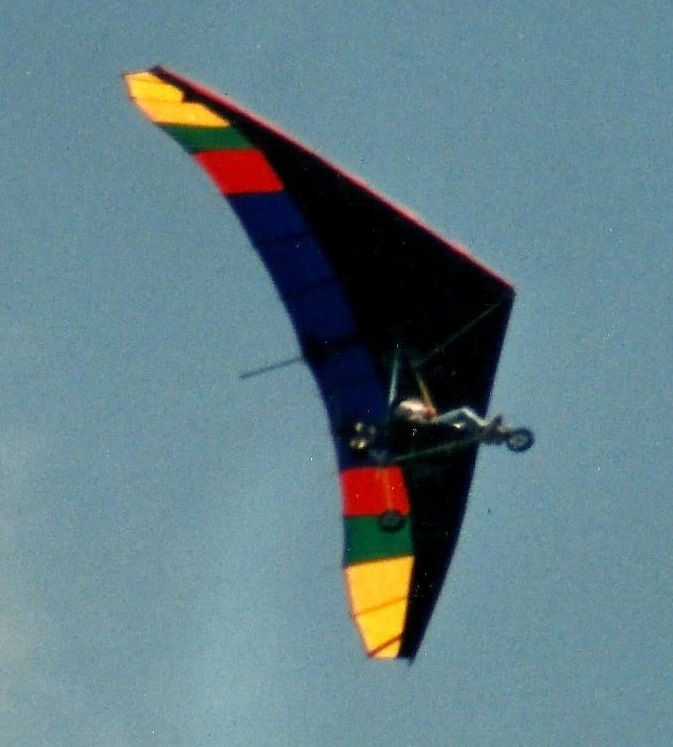
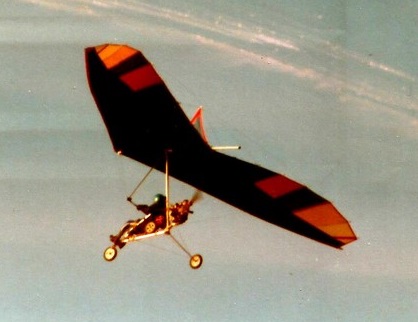
A Puma is a combination of the South¬down Sailwings Lightning DS wing and a Southdown Sailwings approved two seat trike unit. The first such combination used an Ultra Sports trike unit and is known simply as the Puma. Later combinations carry a suffix to show the trike unit manufacturer, viz: Puma MS (Mainair Tri Flyer Two Seater trike unit) and Puma SS (Southdown Sailwings’ own trike unit).

A Puma Sprint is a combination of the Southdown Sailwings Sprint wing and a Southdown Sailwings approved two seat trike unit. The first such combination used Southdown Sailwings’ own trike unit and is known simply as the Puma Sprint. Later combinations carry a suffix to show the trike unit manufacturer. One such combination uses the Mainair Tri Flyer Two Seater trike unit and is called the Puma Sprint Ms.

The Sea Puma is a combination of the modified Southdown Sailwings Lightning DS wing and a modified version of Southdown Sailwings’ own two seater trike unit.

Thus there is no such thing as a single seat Puma.

Puma MS

Puma Sprint MS

Southdown Sailwings Lightning

The 1980 Lightning was a new double surface glider from Southdown Sailwings, with superior sink rate, glide and penetration, plus high stability and superb handling. It could be distinguished from other clones of the Comet by its shark fin which stretches from king post to trailing edge. The Lightning came in two sizes, L 170 and L 195 to cover pilot weight ranges from 9-15 st. The recommended change over weight was 11 st.

Southdown Sailwing Lightning 190 Wing and Stainless Steel Trike (Courtesy Job Chithalan)

The 1981 Lightning double surface wing hang glider was recognizable for its aileron. The finishing touch not too great and mounting the wing a bit long.

Southdown Sailwings Lightning 190

Gallery

Lightning 195
Sail area: 195 sq ft
Nose angle: 130 deg
Span: 32 ft
Aspect ratio: 6.3
Weight: 60 lb

Lightning DS

Southampton University MPA / SUMPAC

Built specially to compete for the Kremer prize of £5,000 for man-powered flight, design started in July 1960 and actual construction in January 1961. It was finished in September 1961.

First flown on 9 November 1961 at Lasham, the first flight was about 50 yds at a height of about six feet over level ground and in still air. A single seat, fixed wing monoplane with the propellor driven by pedalling.

By 1962 SUMPAC was flying up to 650 yds and executing turns.

In 1964 it was modified in various details and given a different belt drive mechanism. In flight test it was damaged after a stall at about 30 ft.

The machine was donated to the Shuttleworth Trust where it was displayed at Old Warden. It was allocated BAPC.7.

Wingspan: 80.00 ft
Wing area: 300 sq.ft
Aspect ratio: 21:1
Empty weight: 128 sq.ft

Šoštarko Monoplane

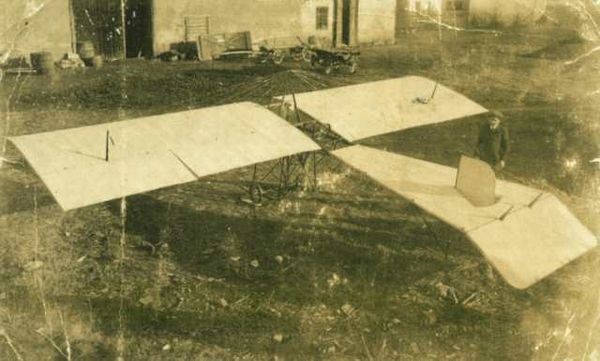
1911-12 monoplane of Austro-Hungarian/Croatian origin built by Slavoljub Šoštarko in Zagreb (Agram), Croatia – then part of the Austro-Hungarian Empire. Šoštarko was probably an automobile racer who crossed over to airplane design and flying, but when his monoplane was exhibited in Zagreb in 1912, it was destroyed during his very first attempt at flight. There is no evidence that Šoštarko flew after this. As one of a few others who were experimenting right next to the sheds of Mihajlo Mercep at the gates of Zagreb, to be expected, the Šoštarko monoplane shows some resemblance to the Mercep Rusjan-Novak monoplanes; i.e. wing-posts, tail assembly with rudder running through the stabilizer, etc.

Šoštarić Vrabac / UTAV Vrabac

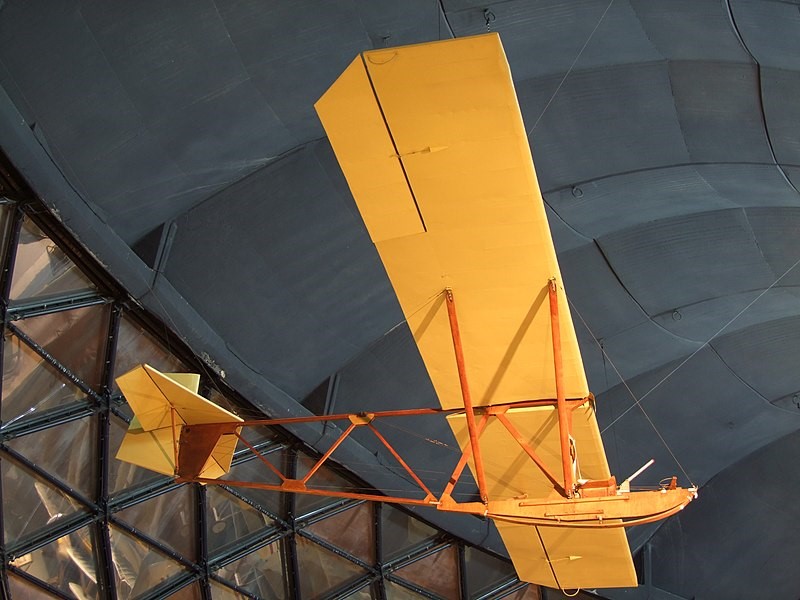
Utva Vrabac A, on display at the Aviation Museum – Belgrade

The Soštarić Vrabac, (Serbian: Врабац / Vrabac – sparrow), was a primary glider for basic pilot training designed and built in the Kingdom of Yugoslavia.

Of mixed composition, mostly wood and canvas, with undercarriage skis for landing, the Vrabac was designed by engineer Ivo Šoštarić in 1939, inspired by the success of the Zögling, a German primary glider. Unlike the Zögling, the Vrabac was not wire-braced, lacking a kingpost and using struts to brace the wings to the lower fuselage.

During tests at Vršac the Vrabac showed far better flight characteristics than not only its German exemplar, but also from the Polish Kocjan Wrona.

Production of 15 aircraft in two versions – A manufactured in the factory at Pančevo, and B began in 1939, as the first serially built glider in Serbia. Production continued after World War II and more than 150 were made. Due to the simple design of this glider, it was also made in local aeroclubs’ workshops during the winter, so that they could be used for training during the summer.

Vrabac A
Wingspan: 10 m (32 ft 10 in)
Wing area: 15 m2 (160 sq ft)
Aspect ratio: 11.7
Length: 6.03 m (19 ft 9 in)
Height: 2.15 m (7 ft 1 in)
Empty weight: 90 kg (198 lb)
Gross weight: 170 kg (375 lb)
Stall speed: 42.5 km/h (26.4 mph, 22.9 kn)
Never exceed speed: 70 km/h (43 mph, 38 kn)
Rate of sink: 1.17 m/s (230 ft/min) at a speed of 47.1 km/h (25 kn)