Dothan
Alabama
USA
Circa 1950 built aircraft
Dothan
Alabama
USA
Circa 1950 built aircraft
One prototype of the Southernaire XC-1 was built in 1947. A two place, high wing, cabin monoplane.
Engine: 130hp Franklin
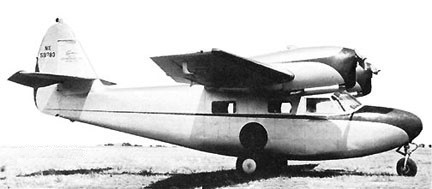
The 1940 Southernaire BM-11 was a six place, high wing, cabin monoplane. One was built, NX59783.
Engines: two 200hp Ranger 6-440
Wingspan: 42’0″
Length: 29’3″
Loaded weight: 1921 lb
Max speed: 175 mph
Cruise speed: 166 mph
Stall speed: 61 mph
Range: 760 miles

The 1940 Southernaire BM-10 was a 2 place, open cockpit biplane. Metal-framed fuselage, metal and fabric covered, wood and fabric wings and tail group. NX17670 was refitted with 225hp Jacobs L-4.
Engine: 220hp Continental R-670
Wingspan: (upper): 34’1″
Wingspan (lower): 33’0″
Length: 25’2″
Loaded wight: 720 lb
Max speed: 123 mph
Cruise speed: 105 mph
Stall speed: 50 mph
Range: 355 miles
Ceiling: 15,000′
The Aerocar was a roadable aircraft with demountable wing and twin-boom, twin-tail unit, a development by Hall of his twin-boom auto-plane concepts. A high wing, cabin monoplane, it is uncertain if this was ever specifically produced under the Southern banner, or if it was one of Hall’s projects in the works, as it was first flown at San Diego CA in 1939. Only one was built, NX59711, which made several test flights, but proved to be underpowered and the project was abandoned in the post-war slump.
Engine: 130hp Franklin 6AC
Wingspan: 30’0″
Max speed(est): 128 mph
Range (est): 310mph
Seats: 2
Southern Aircraft was formed by a group of former Luscombe Airplane Corporation employees in the late 1930s. Their first president was Willis C. Brown. Garland, Texas donated 27 acres of land to SAC and the Garland facility opened its doors in 1939.
In May 1939 the Southern Aircraft Corporation was formed in Houston, and in July 1940 this plant completed its first plane, a biplane designed for use as an army trainer. In December 1940 Southern Aircraft began excavation for a plant near Garland and in February 1941 moved from Houston and began production of military primary-training planes. In the new works made components for Consolidated B-24, Grumman Hellcat, and Avenger. The number of employees grew to 3,000 during WWII.
1940: Southern Aircraft Div, Portable Products Corp (pres: Willis C Brown), Garland and Greenville TX
In the late 1940s and early 1950s, the company’s focus shifted to commercial products such as school bus bodies, tractors, livestock trailers farm implements, and a short-lived Franklin-powered flying car called the Aerocar (1946). During the Korean conflict and the Vietnam War, aircraft and munitions were the primary products.
In 1949, the company’s name changed to IMCO, and over the years workers produced a variety of products, including farm tractors, flamethrowers, soft drink machines and school buses.
Even so, its major emphasis has always been products that support the defense and aerospace industries.
From 1955 through 1969 under the name Intercontinental Manufacturing it had a variety of owners which included Lionel Toy.
In 1968 Bergman Forging moved from their California operations to the Garland facility.
The Garland plant employs about 625 people, who develop and manufacture the steel bodies used in almost all 500-, 1,000- and 2,000-pound bombs in U.S. Navy and Air Force arsenals. The company also forges aluminum and magnesium components used in airplane and ordnance.
From 1988 through 2003 the company was owned by Datron Inc. who sold the firm to General Dynamics in 2003.
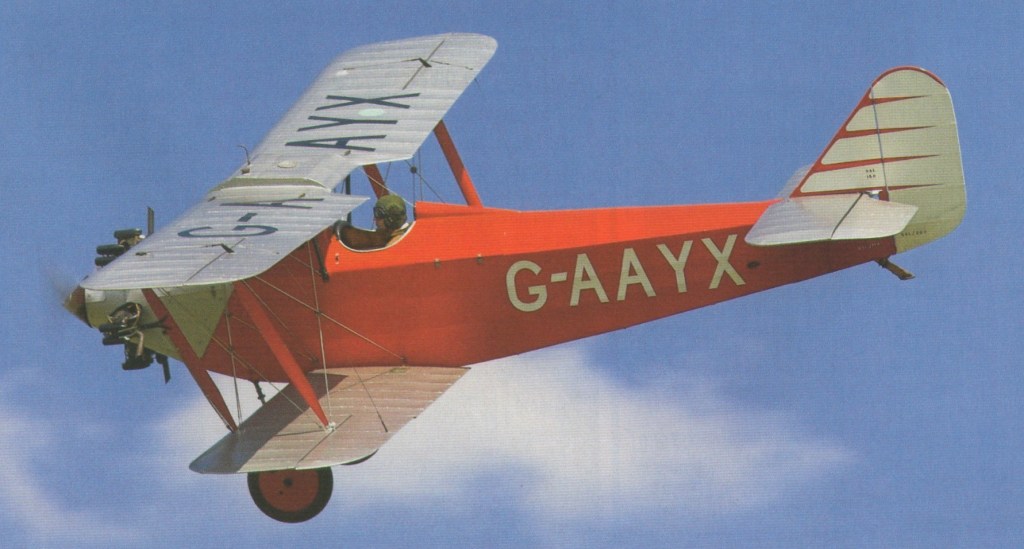
F. G. Miles developed the Avro Baby into Martlet and Metal Martlet light aerobatic and sporting types. Last example flew 1931.
Southern Aircraft Martlet Article
The first Martlet G-AAII was a modified Avro Baby powered by an 85 hp ABC Hornet. Development of the type was by the Miles Brothers, D L Brown and H Hull at Shoreham and it was first flown in August 1929. During the following two years five Martletts were built; G-AAVD, G-AAYX, G-AAYZ and G-ABIF, all with different specifications and various powerplants. It was to have been succeeded by the Metal Martlett in 1931 but this machine was scrapped after a limited amount of flying.
UK
Associated with Shoreham Aerodrome, Sussex, and F. G. Miles, who developed the Avro Baby into Martlet and Metal Martlet light aerobatic and sporting types. Last example flew 1931.
The Scorpion was grounded by the UK Civil Aviation Authority. This followed a series of three in flight structural failures, two on single seaters and one on a two seater, which resulted in three deaths and one serious injury. Subsequent investigation by the Accident Investigation Branch revealed a lack of torsional stiffness in the main structural components, as well as a poor standard of detail engineering. The company went into liquidation shortly after the accidents. By 1982 were no longer trading.
Between 30 and 40 Scorpions were made, in various guises, all using Robin engines of either 330 or 440 cc.
1982: Southern Aero Sports Ltd, 145 Punchcroft, New Ash Green, Kent DA3 8HS, Great Britain.
Trike builder.
The company went into liquidation shortly after the Scorpion accidents. By 1982 were no longer trading.

