A two seat tandem partially enclosed autogyro. A high-low tandem with pilot only controls. Engine: 2180cc VW or similiar. Prop: St.Croix 56” x 60” wood or 66” Warp Drive. Rotor blades: 29’ x 9” Vancraft wood core, steel spar, aluminium skins.
The 1929 Vance V-S-1 Baby Lark was a single place, open cockpit biplane powered by a 27hp Kemp-Henderson. All-wood with fabric-covered wings, it was priced at $935, oe $1,180 with a 40hp Szekely engine.
Advertisements appear for a home-builders’ Vance project as either biplane or monoplane, with a complete kit offered for $180 less motor and dope, which is most likely a version of this model. It is unknown is if any were ever built and flown, but ads like these, catering to the flying craze of the late 1920s, were common in periodicals.
One M-1 Golden Arrow was built in 1929, priced at $895. It was a single place, open cockpit, low wing monoplane of wooden construction with fabric-covered wings.
The V-1 Golden Arrow of 1929 was a single place, open cockpit, biplane, priced at $895. All-wood with fabric-covered wings, those built include N365H c/n 5.
M-1 Golden Arrow Engine: 27hp Kemp-Henderson Wingspan: 24’6″ Length: 15’9″ Useful load: 225 lb Max speed: 80 mph Cruise speed: 70 mph Stall: 28 mph Range: 250 mi Seats: 1
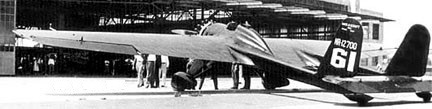
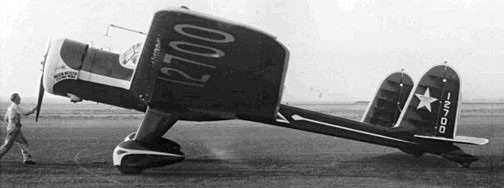
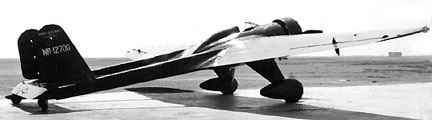
The 1932 Flying Wing, or Viking Cargo Plane, NR12700 was designed by Charles Rocheville and Clare Vance. A flying wing design with twin booms and twin tails, fuel (1200 USgallons) and cargo were carried in the wing.
Its extent in competition is unclear, but is seen in some photos wearing race numbers. Also unresolved is the name “Mason Meteor” on its cowling in the lower picture—possibly Monty Mason was pilot, which would clear up some of the confusion with Mason Greater Meteor type.
Vance Flying Wing Mason Meteor NR12700
The Flying Wing transport was flown in the 1932 Bendix Air Race by Clare Vance from Union Air Terminal (Burbank CA). Winners were Jimmy Haizlip, Roscoe Turner and Lee Gehlback. Wings Feb 2000 shows the flying wing, but IDs it as Vance Viking (NR12700), stating Clyde Pangborn used this plane to better his 41-hour west-to-east flight (in Miss Veedol) and planned to make a global flight in it. It is possible the Flying Wing Transport was race #61 and later became the Viking. They both have the same tail number.
Built circa 1930, the open cockpit biplane Van Camp-Murray Sport was built as a high school project by Murray-Yarton under the guidance of Van Camp, a wood shop teacher and cousin of designer Murray.
Reportedly three were built but only N406W c/n 103 found in registers, but Van Camp’s daughter says one went to Alaska.