USA
Founded 1997 and developing the Phoenix Jet-TJ tandem two-seat military primary jet and electronic warfare trainer, also suited to other military tasks and for use as a civil sporting aircraft. Developed from the Bede Jet Corporation BD-10 prototype first flown July 1992, via the later Peregrine Flight International Peregrine PJ-2. Major design review undertaken, with original supersonic wing replaced by subsonic and simpler wing of greater strength and carrying more fuel.
Era
Vortech Kestrel

The Kestrel is a single-seat ultralight helicopter powered by small jet engines mounted on the tips of the rotorblades. This form of power eliminates the need for a tail rotor, simplifying and reducing the cost of construction.
If ordered separately, the jet-helicopter construction package is available for $23.95 (+$3 postage US, $8 foreign). This package includes the Vortech Catalog. The Kestrel was available as a kit, in 2001.
Length: 12 ft
Height: 7 ft
Empty wt: 180 lbs
Gross wt: 440 lbs
Payload (max) 260 lbs
Engines (2): G8-2-20 jets
Fuel: propane
Fuel consump: 12+ USgal/hr
Rotor dia: 25 ft
Speed (max): 95 mph (63 as ultralight)
Altitude (max): 12,500 ft
Vortech Shadow
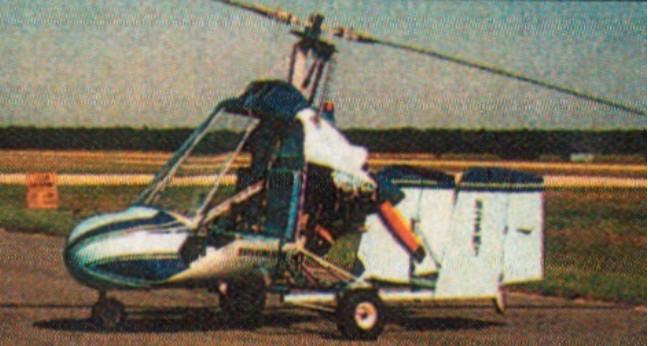
The Shadow Two-Seat Gyroplane’s features are: a durable, high-strength airframe, dependable, FAA-certified Lycoming engine, certified disc brakes for superb ground handling, rugged gearbox-driven prerotator, large, expandable instrument panel, and a full electrical system for avionics and lights. It also takes off and lands in very short distances and operates exceptionally well at high altitudes. It’s size is easily reduced for storage in a garage or transported by trailer. It’s maximum speed is 100 mph.and its cruising speed is 75 mph. Shadow kit minus engine and instruments in 2001: $15,750
Engine: Lycoming O-320, 150 hp
Disk span: 29 ft
Disk area: 660 sq.ft
Height: 8.5 ft
Length: 13 ft
Empty wt: 750 lbs
Gross wt: 1290 lbs
Fuel cap: 12 USG
Max speed: 100 mph
Cruise speed: 75 mph
Range: 100+ sm
ROC: 1500 fpm
Take-off dist: 125 ft
Landing dist: 25 ft
Service ceiling: 18,000 ft
Seats: 2
Vortech Skylark 1

Developed from the G-1 design, pilots have expressed amazement at this craft’s stability and manoeuvrability. The Skylark can be flown in the Experimental Aircraft category. Although this is one of the more affordable homebuilts, the airframe and all of its major components have been designed for quality, dependability and durability.
Full instrumentation Skylark kit minus engine and instruments: $19,995 in 2001.
Skylark construction plans in 2001:
Reduced-size prints (11″ x 17″ format): $75 (add $6 postage U.S. or $16 foreign)
Full size prints (18″ x 24″ format): $175 (add $7 postage U.S. or $22 foreign)
Features of the Skylark:
- Full helicopter flight: vertical take-offs & landings; forward, backward & sideward flight; hovering.
- Standard helicopter control system
-All-aluminum main- & tail-rotor blades - Aircraft-grade steel & aluminum airframe & major components, plus all AN hardware
- Full instrumentation

Engine Rotax 582, 65 hp
Main Rotor Diameter 19 ft
Disk area: 283 sq.ft
Tail Rotor Diameter 3 ft 6 in
Height 7 ft
Length 17 ft 6 in
Empty Weight 350 lbs
Gross Weight 725 lbs
Payload Weight 375 lbs
Fuel cap: 10 USG
Power Loading 10.8 lbs/hp
Disc Loading 2.5 lbs/sq ft
Maximum Speed 95 mph
Cruise Speed 70 mph
Rate Of Climb 1,000 fpm
Maximum Altitude 12,500 ft
Range: 120 sm
Seats: 1
Vortech G-1
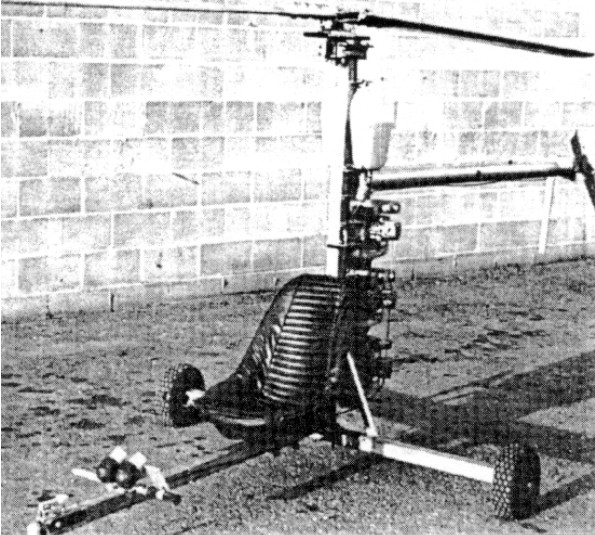
The G-1 Ultrtalight Helicopter, created in the early 1970s by Art Weilage, was tested and sold as low-cost kits by Compcop, Inc. Vortech offers the original construction prints to hobbyists curious about this design, or who want to study the concept as inspiration for a design of their own.
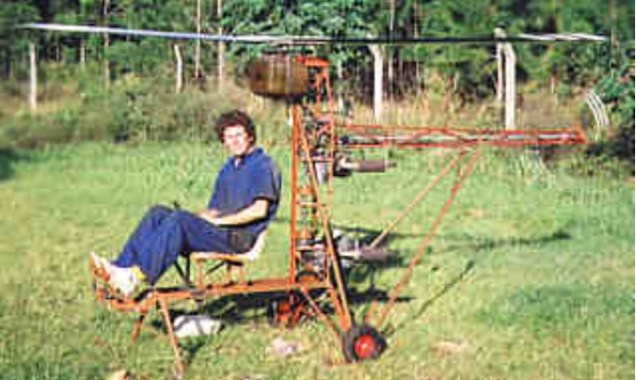
Developed, tested and sold in the 1970’s by Compcop, the G-1 was designed to fill the need for an affordable, easy-to-build ultralight helicopter. The entire helicopter can be built at home with ordinary tools at a low cost. No license is required to fly the G-1 because it is in the license-free “Ultralight Aircraft” category (see FAR Part 103). The construction manual provides all the details needed to build the G-1 with an engine of 40 h.p. or higher. The three McCulloch go-cart engines can be replaced with a single engine such as the Rotax 447. Aluminium construction.
Carries one person. Takes off and lands vertically. Flies forward, backward, sideward, & hovers.

Engines: 3 x McCulloch MC101 42 hp
Empty wt: 150 lb
Max wt: 420 lb
Rotor span: 12ft
Height: 5.5ft
Length: 12ft
Max speed: 80 mph
Cruise: 55 mph
Climb rate: 1,000 fpm
Range: 120 sm
Service ceiling: 10,000 ft
Seats: 1
Engine (typical) Kawasaki or Rotax, 40+ hp
Length 12 ft
Width 5.7 ft
Height 5 ft 6 in
Main rotor diameter 12 ft
Tail rotor diameter 2 ft
Empty weight 150 lbs
Gross weight 420 lbs
Useful payload 270 lbs
Fuel capacity 5 USgals
Fuel consumption 4 USgals/hour
Speed (max.) 80 mph
Altitude (max.) 10,000 ft asl
Engine: 3 x McCulloch, 9.5 hp
Rotor span: 3.66 m
MAUW: 190 kg
Empty weight: 66 kg
Fuel capacity: 19 lt
Max speed: 128 kph
Cruise speed: 80 kph
Fuel consumption: 12 lt/hr
Seats: 1
Plan price (1998): $34.95
Vortech
Offered the G-1B single-seat ultralight helicopter (plans or kit), Kestrel single-seat pressure-jet helicopter (plans or kit), MEG-2XH strap-on pressure-jet helicopter (plans or kit), Shadow two-seat autogyro (kit), and Skylark I single-seat helicopter (kit).
1996-7: PO Box 511-KD, Fallston, MD 21047, USA.
Vorta Vorta
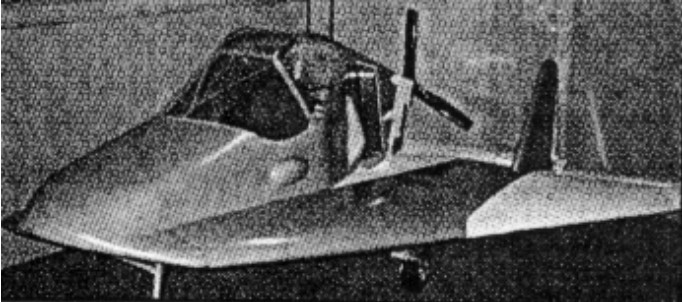
Composite construction.
Speed max: 110 mph
Cruise: 100 mph
Range: 300 sm
ROC: 800 fpm
Take-off dist: 400 ft
Landing dist: 75 ft
Service ceiling: 12,000 ft
Engine: Rotax 532, 42 hp
Fuel cap: 11 USG
Weight empty: 330 lbs
Gross: 600 lbs
Height: 5 ft
Length: 14.3 ft
Wing span: 13.7 ft
Wing area: 115 sq.ft
Seats: 1
Landing gear: nose wheel
Vorta
1995: PO Box 642, Batavia, NY 14021, USA.
Airplane builder
Vorauer Monoplan
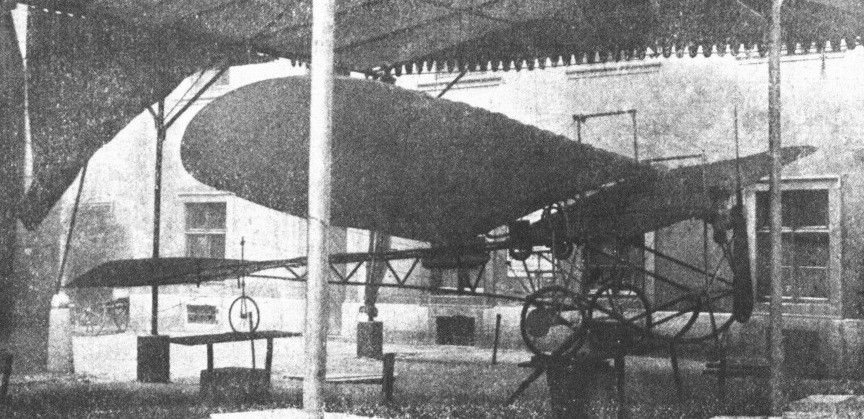
A monoplane with a variable geometry wing, designed by Hauptmann Rudolf Vorauer from Graz, in what is now Austria, in 1910. Vorauer had the rank of Artilleriehauptmann in the k.u.k. Armee.
Von Hoffman TP
In 1929 the Von Hoffman Aircraft Co of St Louis MO. Built the sole model TP, registered NX575E.
Designed by Von Hoffman and Gordon Israel, the TP was a two place open-cockpit biplane, powered by a 120hp Siemens-Halske engine.
The basic trainer project that fell victim to the stock market crash that year.

