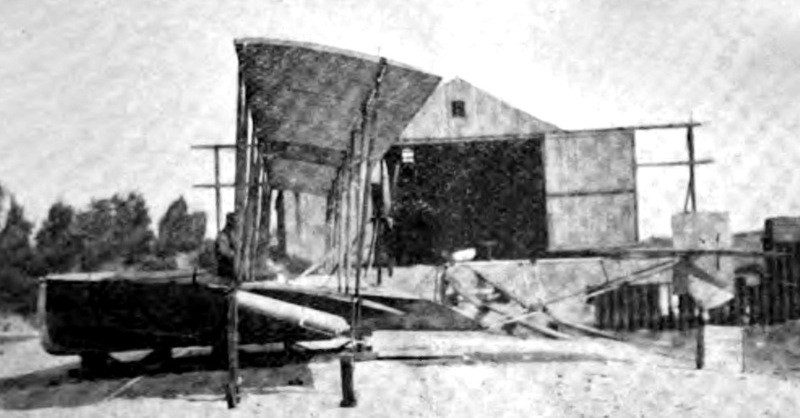
Max Lillie (1881-1913, born in Sweden as Maximillian Theo Liljestrand) announced the formation in Chicago of the Weckler-Armstrong Lillie Corporation [WALCO] in February 1913, with the aim to manufacture airplanes and airboats. Adam F. Weckler was a racing boat builder and E. R. Armstrong was an airplane builder and expert on aerodynamics. Max Lillie was the driving force in the new firm.
The exact identity of the plane is either a modification of the earlier unsuccessful “Airboat” tandem monoplane design or a second follow-up design.
Two WALCO planes were entered for the 1913 Chicago-Detroit Aero and Hydro Great Lakes cruise, but none actually started.
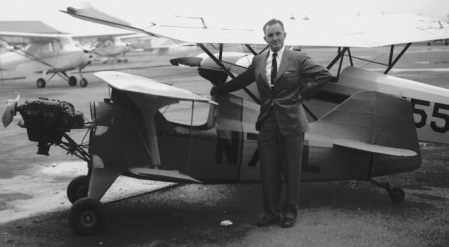
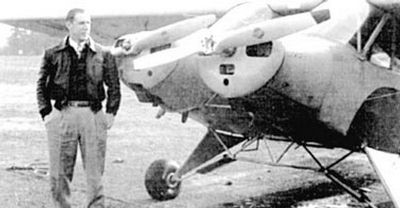
The aircraft was a design of Lee Wainscott and appeared during the 1930s and the construction was started by a gentleman named Case. Initial plans called for the use of a (modified) Heath Henderson motorcycle engine, but by the time the aircraft was completed a 35hp Lawrence radial was installed. The aircraft was rumoured to have a movable (pivoting) lower wing for the lateral control thus eliminating the need of ailerons.
For several reasons the aircraft never flew prior to WW II and it was later acquired by brothers P.E (Pat) and R.L. Day who made several modifications (the lower wing became fixed and ailerons were added to the upper wing) and also installed a 65 hp Lycoming O-145-B2 engine. The aircraft finally first flew during 1962, registered N72L, and in 1969 it was sold to Howard C. Cagle. It was reported that the aircraft flew no more than 5 times in total and then went into storage.
Over the years this extremely small aircraft was reported under various names including Case Special and Wainscott Li’l Twister.
Span: 13 ft 4 in (4.06 m) Length: 12 ft 3 in (3.73 m) Height: 4 ft 4 in (1.32 m) Max speed: 155 mph (249 kmh) Cruise speed: 140 mph (225 kmh)
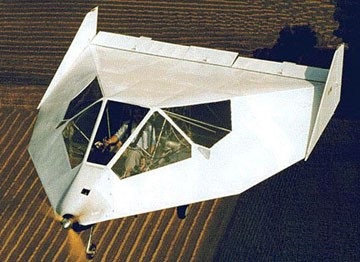
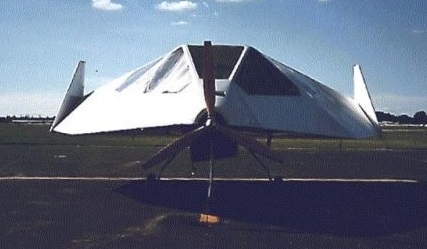
An “experimental lifting-body sportplane,” creation of Barnaby and Lynne Wainfan, and Rick Dean, took 2.5 years to develop and build. First flown on 22 April 1993, after 130 hours flight time, registered N117WD, it was damaged in a forced landing after the 2-stroke 46 horsepower engine malfunctioned at 500 agl. The plane landed at 28 mph and Barnaby walked away.
It was in reconstruction in 1999 with a Jabiru 4-cylinder replacement engine.
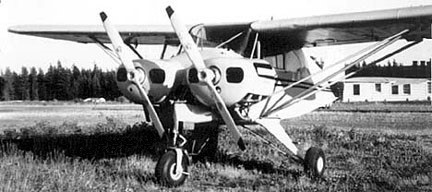
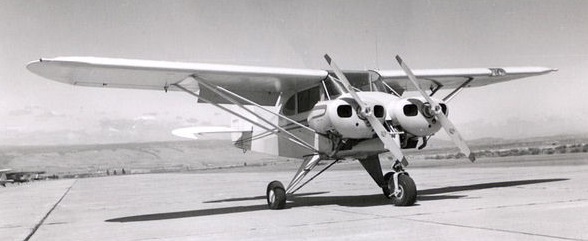
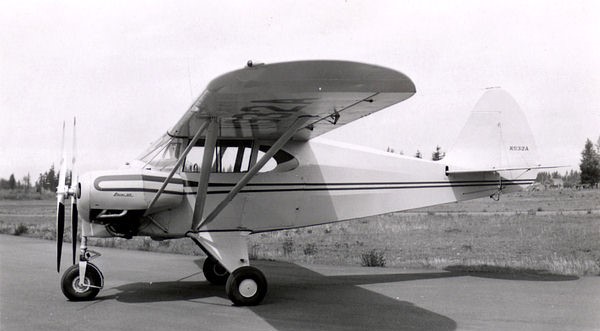
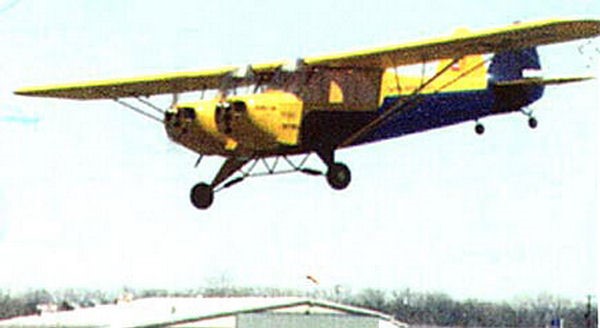
Built in 1952 by Harold A Wagner, the Twin 3 was a Piper PA-18 with a second 125hp Lycoming O-290 mounted in a nacelle above the cabin. Although it flew acceptably, there were vibration problems with the tail and the project was dropped. The one built was restored to single-engine after 10 hrs, then sold.
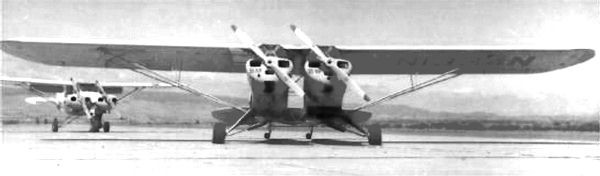
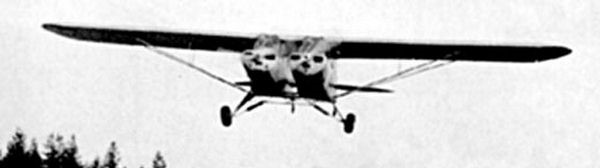
In 1951 Harold A Wagner built a 1946 Piper J-3C and 1947 PA-11 fuselages mounted side-by-side for twin performance. Built in five days, despite having unequal motors and props (42″ wood and 45″ metal), it demonstrated negligible balance problems, the motors were later matched as 85hp with metal props. The overlapping prop clearance came from a 4.75″ spacer on the left motor’s propeller shaft. Flown from the right fuselage only, the added horsepower would in theory support four passengers, but the increased wing loading in reality wouldn’t.
The outer wing panels and tailplane were standard components. The resulting aircraft looked so odd that even Mr.Wagner called it “The Thing”. Because of the close proximity of the fuselages, only the righthand one could be occupied by a pilot and passenger, the lefthand fuselage serving only the purpose of engine mounting. No propeller synchronizing was envisaged, the props rotating in different planes instead. This was accomplished by a ‘distance piece’ on the lefthand engine/prop combination.
First flown on 6 December 1951, it had STOL take-off, 1500fpm climb rate and would take-off and fly on one motor. It is claimed that flight qualities were just great, even with one engine out. The one built, NX1334N, was dismantled after 150hrs of flight.
Engines: 65hp Continental C-65 and 85hp C-85 Max speed: 160 mph Cruise speed: 120 mph Stall: 35 mph
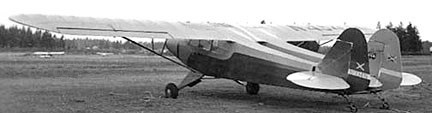
In 1932 Harold A Wagner built a single place open cockpit high wing monoplane powered by a 30hp Szekely and registered N12738 c/n 1.
It was sold to Marvin Wright (Beaverton) for $200 on 16 November 1936, sold then to L S Wilson (Beaverton) on 13 February 1937, then to C M Smock & N E Day (Portland) on 8 June 1938, who wrote CAA on 22 August 1939 that “it was necessary to discontinue flying our aircraft due to natural depreciation of materials used in its construction.” It was dismantled and the registration canceled on 15 June 1939.