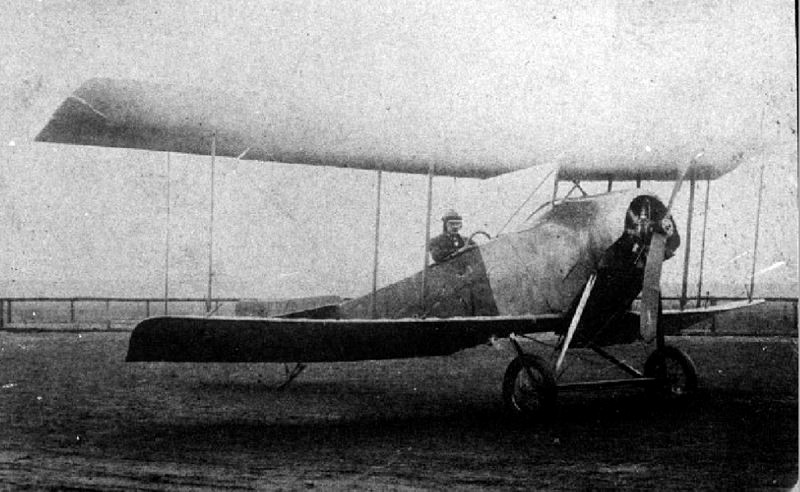
This little biplane with a 50 hp Gnôme rotary was built by Carl Belz Flugzeugbau und Fliegerschule in Berlin-Treptow, Germany, in 1913.
This little biplane with a 50 hp Gnôme rotary was built by Carl Belz Flugzeugbau und Fliegerschule in Berlin-Treptow, Germany, in 1913.
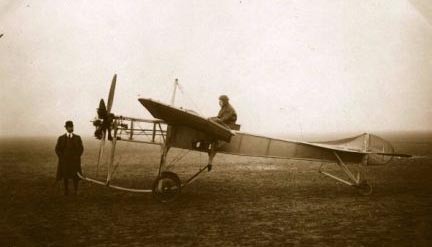
The 1910 Carid monoplane was designed and built by Carid in France.
Puerto Rico
Acquired assets of Doman Helicopters Inc. in August 1965. Tooling began in January 1966 to produce Doman D-10B helicopter; however, rights repurchased by parent company in late 1967, emerging as Berlin Doman Helicopters Inc.
The 1999 CargoLifter Joey Prototype is the one person prototype for the giant CargoLifter semi-rigid cargo transport airship. It was registered D-LJOE to Mats Backlin, CargoLifter, Brand, Germany.
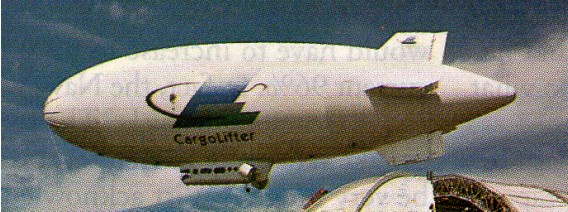
A reduced-scale model of the CL 160 was serving to evaluate airship aerodynamics and flight handling characteristics.
German airship manufacturer.
CargoLifter AG had completed in 2000, work on a giant hangar for assembly of prototypes and series variants of its CL 160 beavy-lift dirigible.
Work on the first full-scale prototype is expected to begin at year’s end, 2000.
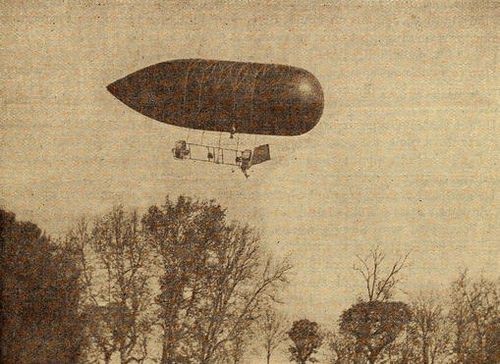
Arguably the first navigable airship system invented in Italy. Designed by Comte Jules Carelli and realized by Evaristo Vialardi. Tethered ascension using spring-wound motors were made in November 1899; possibly followed by later trials.
The Carden-Ford was a British aero-engine modified from a Ford motor car engine by Carden Aero Engines, first run in 1935. The company saw a need for a cheap low-powered propulsion unit for ultralight aircraft and the engine was an adaptation of the well-proven and reliable Ford 10 Model C motor car engine. The engine was reversed, and a thrust bearing fitted to what was now the front of the engine. The chain drive was replaced by lightweight fibre gears, an Elektron aluminium alloy sump fitted, and dual ignition if requested. There were two cylinder head variants, one with an ‘L’ shape, the other with a low-profile flat head which required a separate header tank. This latter design was adapted for the Chilton Aircraft Ltd Chilton D.W.1 Monoplane of 1936.
Variants:
Carden-Ford 31 hp 4-cyl
A much modified Ford 10 car engine.
Carden-Ford S.P.1
Further development of the 31 hp engine, with a centric supercharger, 1.1:1 gear ratio, splined propeller shaft extension and horizontal mounting for flush wing mounting. Used exclusively on the Carden-Baynes Bee.
Application:
Broughton-Blayney Brawney
B.A.C. Drone
Chilton D.W.1 monoplane
Carden-Baynes Bee
Kronfeld Monoplane
Mignet HM.14 (Flying Flea)
Perman Parasol
Taylor Watkinson Dingbat
Specifications:
Carden-Ford 31hp 4-cyl.
Type: 4-cyl, upright, in-line,
Bore: 63.5 mm
Stroke: 92.5 mm
Displacement: 1.17 l
Designer: Sir John Carden
Righthand rotation, direct-drive tractor, Poppet valve
Cooling system: Liquid
Dual magnetos
Power output: 31 hp
Compression ratio: 6.6:1
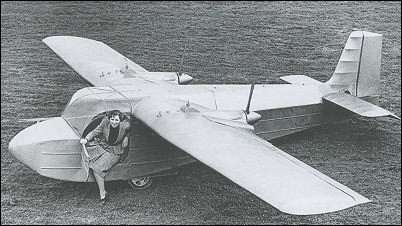
The Carden Baynes Air¬craft Company Ltd built the twin pusher, side by side two-seater, designed by L.E. Baynes, at Heston, Middlesex, UK. It was fitted with two totally-enclosed pusher Carden Ford S.P.1 modified car engines.
Of all wooden construction, the wings pivoted about the centre-line of the aircraft, the aft fuselage top decking folded down to enable the wings to pass over the top.
The undercarriage had twin mainwheels of fixed centre, mounted inside the fuselage, and a tail skid.
Only one Bee was built, c/n 1 G-AEWC. First flown on 3 April 1937, at Heston.
It was broken up and scrapped in 1939.
Engines: 2 x Carden Ford S.P.1, 10 hp
Wingspan: 9.09 m / 29 ft 10 in
Wing area: 13.10 sq.m / 141 sq.ft
Length: 7.01 m / 23 ft 0 in
Empty weight: 400 kg / 880 lb
AUW: 612.35 kg / 1350 lb
Wing loading: 46.62 kg/sq.m / 9.55 lb/sq.ft
Max speed: 177 kph / 110 mph
Cruise: 161 kph / 100 mph
Stall: 64 kph / 40 mph
ROC: 213 m/min / 700 fpm
Endurance: 3 hr
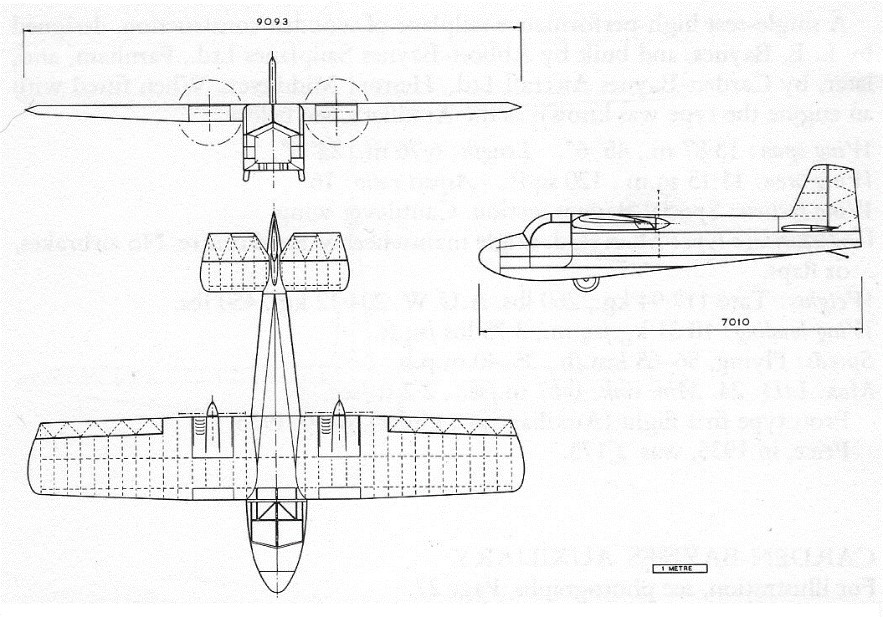
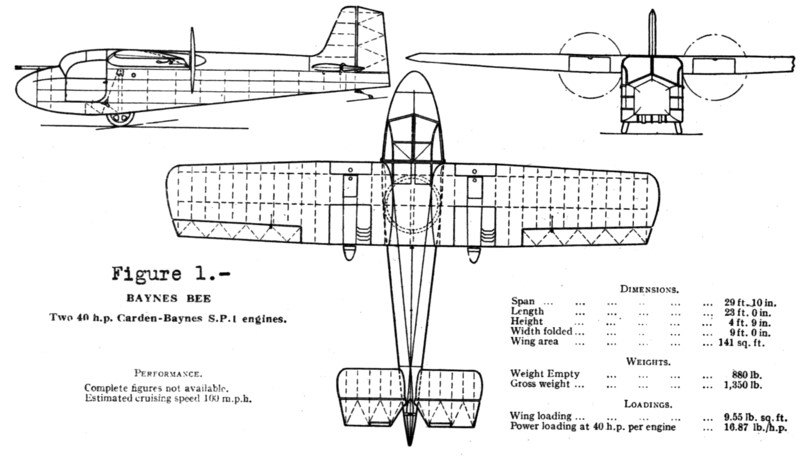
Sir John Carden was associated with British light aviation after designing the 750 cc ultralight engine for the Gloucestershire Gannet in the early 1920s. Went into partnership with L. E. Baynes in 1930 to produce a one-off single-seat powered glider.
Baynes and Carden then planned a two-seat twin-enged light aircraft and decided to set up a new company to produce this aircraft which was known as the Bee. In spite of the death of Carden in an air crash near Croyden, the new company Carden-Baynes Aircraft Ltd was formed in 1936 at Heston Airport, Middlesex. However, three successive partners, including the Duke of Grafton, also died one after the other but the Bee eventually flew at Heston on 3 April 1937 as a small two- seat high-wing monoplane with two Carden Ford S.P.1 modified car engines.
Development of three-seat B-3 halted by war.
Financial difficulties followed. An agreement was eventually reached with Major Shaw for a development of the Bee to be manufactured by Slingsby Sailplanes Ltd.

