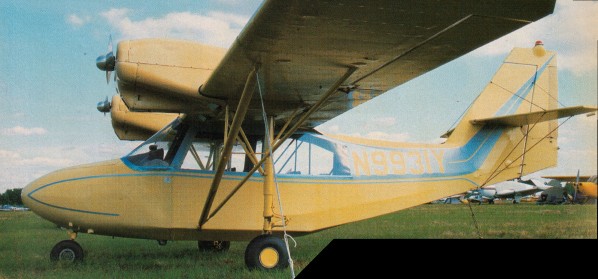
The J-1 Juptier was an all original design of Kenneth R. Champion and Horace Sackett in 1959 using wooden construction methods based on the Pietenpol Air Camper and new applications of fiberglass layups.
The J-1 is a low wing aircraft with conventional landing gear and a large bubble canopy. The wings are configured without dihedral. The fuselage uses a wooden geodesic airframe construction with steel secondary wing spars. The wing panels are covered with single seamless flat fiberglass panels that are bonded to the wooden wing ribs and spars. The leading edge is formed with fiberglass layered up in place. The same process is used on the elevators.
The J-1 Jupiter won the Outstanding Design award at the Experimental Aircraft Association airshow in 1959.
Variants Jupiter K-2
Specifications:
Jupiter J-1 Engine: 1 × Continental A65, 65 hp Propellers: 2-bladed MacCauley 65-60 Length: 17 ft 4 in (5.28 m) Wingspan: 21 ft (6.4 m) Wing area: 88 sq ft (8.2 m2) Airfoil: NACA 4412 Empty weight: 627 lb (284 kg) Gross weight: 910 lb (413 kg) Fuel capacity: 16 U.S. gallons (61 L; 13 imp gal) Max speed: 160 mph Cruise speed: 96 kn; 177 km/h (110 mph) Stall speed: 48 kn; 89 km/h (55 mph) Rate of climb: 400 ft/min (2.0 m/s) Range: 300 miles Crew: 1
Manufactured by Champion Aircraft, the Lancer 402 was a multi-engine trainer from 1963.
With a fabric covered airframe and tandem seating, the Lancer had heel brakes and oleo-spring gear.
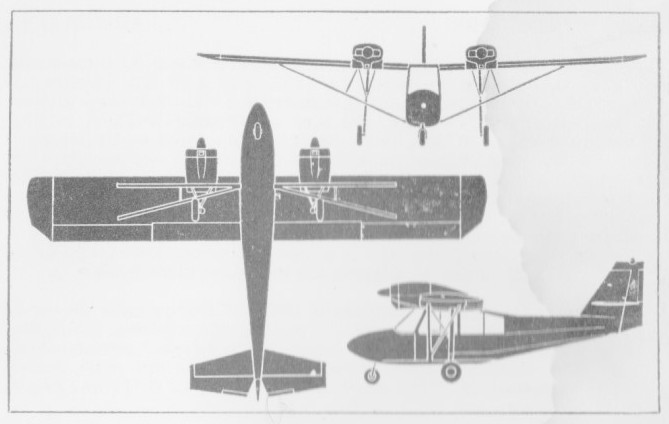
Powered by two Continential O-200A engines of 100 hp each, it sold for around US$12,500. The wing span was just over 34 feet, a wing area slightly over 170 sq.ft and an overall length of around 22 feet.
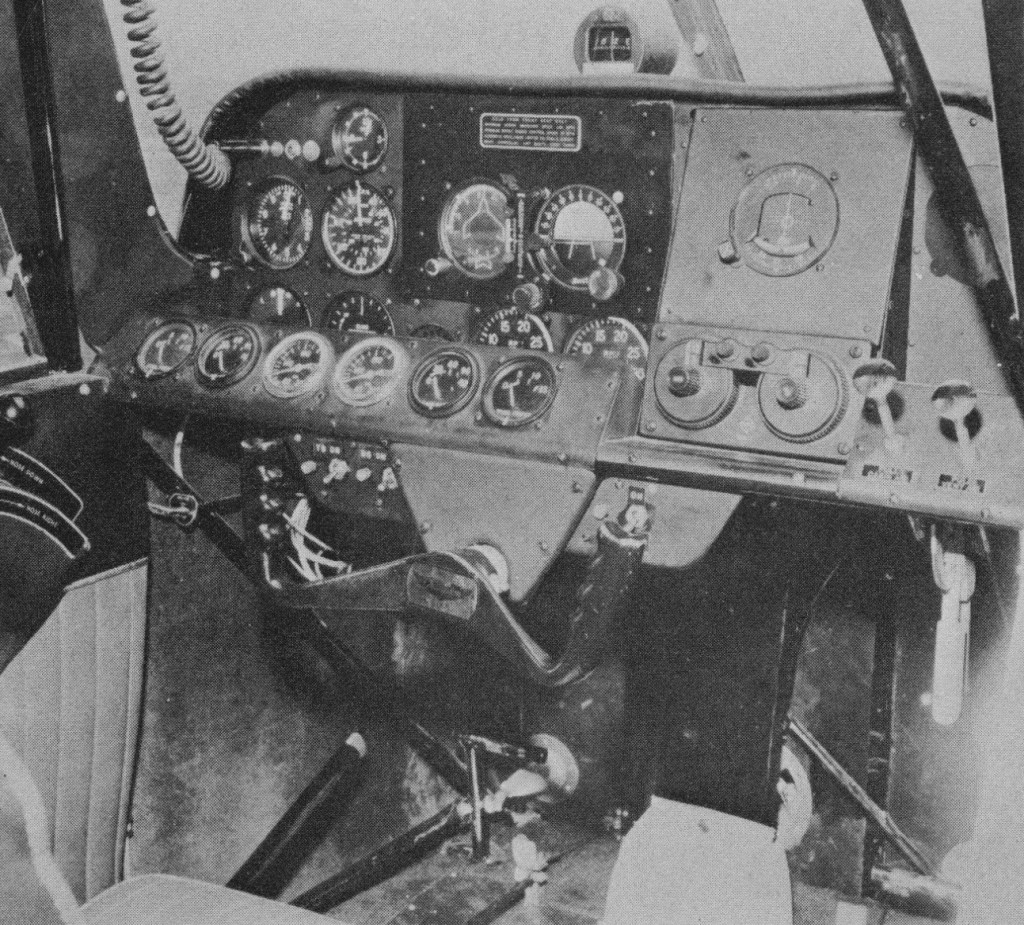
Landing gear tread is 9 ft 8 in. Steerable nose wheel is aluminium casting. Fuselage nose piece, top and cowl noses are fibreglass. Ground clearance of 44in at tail allows full stall landings. Cockpit with control wheel in front, stick in rear, is 28in wide. Rudder and stabiliser trim is via levers at the left of front and rear seats. Vertical trim tab on high, wire-braced tail provides for hands-off trim, even with the loss of one engine. Mixture and throttle controls are duplicated and located high on the cockpit left, with carb heat controls opposite back of front seat. Located at left wing root are fuel tank gauges selector switch for left tank, ignition switch, left engine starter and cockpit lights. Right wing root contains similar units for right engine plus two ammeters and electrical switches. Throttle mix controls hang from left side of cockpit.
The Lancer first flew in October 1961 and a number of changes were made, including the raising of the engine nacalles above the wing, and the first production model flew on 10 March 1963.
FAA certification was obtained in the spring of 1963, and the first production deliveries were made during the following summer, 36 being delivered by years end.
American Champion Aircraft Corporation held the Type Certificate Number A3CE for the Model 402.
Useable fuel is held in two 26 US gallon tanks. Climb and approach speeds are both 80 mph. Up to 100 lb of baggage can be carried in a compartment behind the rear seat. With two seats in tandem, Champion only manufactured 24 Lancers, featuring a control yoke for the front seat and a floor mounted stick in the rear.
Engines: 2 x Continental O-200A, 100 hp Propellers: 69 in fixed pitch Wingspan: 34 ft 5.5 in Length: 22 ft 3 in Height: 8 ft 1.5 in Wing area: 170.22 sq.ft MAUW: 2450 lb Empty weight: 1790 lb Useful load: 660 lb Baggage capacity: 100 lb Max structural cruise: 130 mph at 7500 ft Cruise 75%: 120 mph Cruise 65%: 115 mph Range: 710 miles Service ceiling; 12,000 ft SL ROC: 642 fpm Landing speed: 48 mph SE min control speed: 73 mph Stall clean: 64 mph Seats: 2
Bellanca also produces the Scout, an aircraft very similar to the Citabria. Two versions were offered, the Model 7GCBC with a 150 hp Lycoming O 320 A2B engine and a slightly larger Model 8GCBC, with a 180 hp Lycoming O 360 C2A, two feet more span, and Hoerner wing tips.
Bellanca 8GCBC
ACA 8KCAB Super Decathlon
From the manufacturing line at Bellanca’s Osceola, Wisconsin plant. The Champion Model 8KCAB Decathlon is a close cousin to the Bellanca Citabria, the principle difference being its symmetrical NACA 1412 wing section, 2.5 foot shorter span, reinforced front spar, stronger, more closely spaced ribs and constant speed prop. The Decathlon semi-symetrical NACA 1412 wing makes the plane a vastly superior aerobatic ship compared to the Citabria, particularly in rolls, where the Decathlon’s shorter span and larger ailerons offer a noticeable difference. The all metal Decathlon does not have flaps.
Both planes come with 150 hp Lycoming IO 320 engines capable of prolonged inverted flight, but the Citabria also can be purchased with a 115 hp Lycoming 0 235 powerplant and a 150 hp Lycoming not specifically outfitted for viewing the world upside down. The Decathlon is designed for loads of +6 Gs and 5 Gs, whereas the Citabria is approved for + 5 Gs and 2 Gs. The initial 14 Champion Decathlons were hand built, but they sold so well that the model soon became this country’s first production aerobatic plane.
Champion Aircraft Corp was formed by Robert Brown after acquiring rights in the Aeronca Model 7 Champion two-seat training/ touring monoplane in June 1954. Aeronca Aircraft Corporation ceased manufacture of the Champion in 1951. Production began at Osceola, Wisconsin, in late 1954; subsequent models included the 7EC Traveler, 7FC Tri-Traveler, Sky-Trac, Challenger and Citabria. By mid-1960s the Citabria had become the main production version. In 1961 Champion Aircraft Corporation produced the single-seat parasol-wing Model 8 Citabria Pro for professional aerobatic pilots. Bellanca Sales Company acquired the company’s assets on September 30,1970, by which time some 1,500 Citabrias had been built. In 1982 B & B Aviation purchased rights to Champion lightplanes from Bellanca, then founding Champion Aircraft Company Inc. to build Citabria, Decathlon and Scout until 1985.
Designed by Ken Champion, the Self-Lauching Freedom Falcon, which first flew in 1982, uses a Wankel type rotary engine with variable pitch propeller. Approach control is with spoilers.
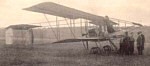
In 1913 Frank Champion spent 4,000 dollars to build the “Long Beach Flyer” monoplane, with local merchants putting up much of the money. The plane, which was similar to contemporary Caudron designs, apparently flew well. Champion was killed when his plane broke up during a display in Kochi, Japan on November 1, 1917.
Frank Champion, born 1884 in Sherman, Texas, learned to fly in 1910 and was one the pilots of Moisant International Aviators. In 1913 he spent 4,000 dollars to build the “Long Beach Flyer” monoplane, with local merchants putting up much of the money.