Starting with an open-cockpit primary type glider first flown in November 1950, the Technical Centre built two Model PT-G open cockpit primary single-seaters based on the ESG design, six Model IT-G intermediate trainers based on the Grunau Baby.
Era
Civil Aviation Department of India
Technical Centre, Civil Aviation Department
Civil Aviation Directorate,
Talkatora Road,
New Delhi
Seven types of glider have been developed at this Technical Centre, which is the research and development establishment of the Indian Civil Aviation Department, since 1950.
Some are based on well-known designs such as the Grunau Baby and Olympia; but the three latest types, the Ashvini, Rohini and Bharani, are of original design and are intended to use indigenous materials wherever possible. The Technical Centre does not undertake quantitymanufacture of sailplanes, but supplies sets of drawings to private concerns such as Aeronautical Services Ltd, which is producing the Ashvini and Rohini.
The RG-1 Rohini-1 side-by-side two-seater trainer was the first type designed at the Technical Centre of India’s Civil Aviation Department to go into production in more than small quantities. Starting with an open-cockpit primary type glider first flown in November 1950, the Technical Centre built two Model PT-G open cockpit primary single-seaters based on the ESG design, six Model IT-G intermediate trainers based on the Grunau Baby, two Model AS-1 high performance sailplanes based on the Olympia and five Ashvini tandem two-seater trainers resembling the DPS Kranich; 11 more Ashvinis were built by Aeronautical Services Ltd of Calcutta.
Civilian Coupe
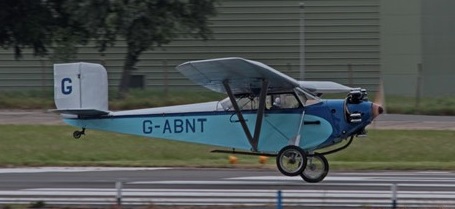
Designed by H.D.Boultbee in 1928 the C.A.C. Mk I Coupe, a two-seat, high-wing cabin monoplane tourer, was built at Burton-on-Trent, near Hull. Initially powered by an 85 hp ABC Hornet engine, the prototype G-AAIL was first flown in July 1929 and was demonstrated publicly at Heston that same month.
A factory was set up at Hedon to produce the improved Coupe II powered by a 100 hp Genet major radial engine. Two aircraft were built in 1930, G-ABFI and G-ABFJ, and two more, G-ABNT and G-ABPW, in 1931. Customers were hard to find and a sixth was never completed.
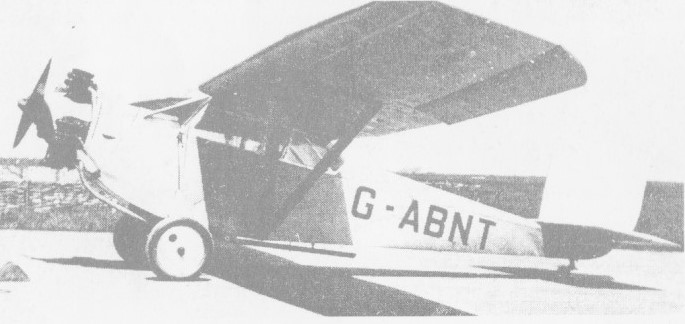
G-ABNT cn 0.2.3 was first registered to Civilian Aircraft on 10 September 1931. It was not sold until February 1933 when it was delivered to S.B.Cliff at Woodley. After moving to Whitchurch it was re-sold to G.O.Rees at Pengham, Cardiff in October 1933. G-ABNT was stored at Carmarthan from 1939 until early 1978 when it was purchased by P.A.Mann, who moved it to Biggin Hill for restoration.
Coupe II
Engine: Armstrong Siddeley Genet Major I, 100 hp
Wingspan: 35 ft 6.5 in
Length: 19 ft 4 in
AUW: 1500 lb
Max speed: 110 mph
Civilian Aircraft Co
UK
The Civilian Aircraft Company Ltd was formed at Burtonon- Trent by Harold D. Boultbee, formerly assistant chief designer of Handley Page Ltd. Its sole product was the C.A.C. Mk I Coupe, a two-seat, high-wing cabin monoplane tourer built at Hedon, near Hull, and flown July 1929. A novel design for its time, there were initial difficulties and only five were built. Last four designated Mk II Coupe (uprated Armstrong Siddeley Genet Major engine); company closed in 1933.
Citroen RE-2

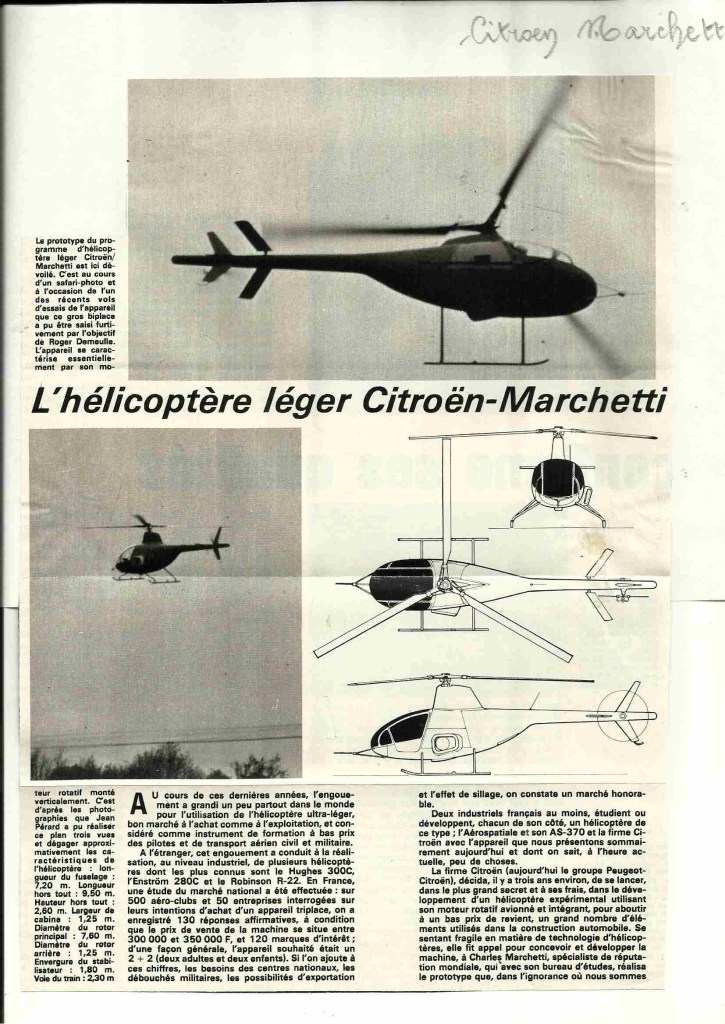
In the 1970’s Citroen experimented with a small light helicopter, powered by a Wankel engine developed in a joint venture with NSU (Comotor), as part of their investigation into alternative engine development.
All started with Comotor, a joint-venture between NSU and Citroën for the development and marketing of rotary motors. The small Citroën M35 preceded the Citroën GS Birotor, which, despite of their good performance and exclusive image, always suffered from high fuel consumption and low reliability. The last attempt to save Comotor was the RE-2 helicopter.
French helicopter engineer Charles Marcetti was commissioned to design and build a small helicopter, which would be powered by a Comotor 624 twin-rotor (170hp) engine. A development of the engine used in the prototype GS Birotor. Charles Marchetti had designed the successful helicopter Alouette.
The damage to Comotor was already done. Sales of the Citroën GS Birotor were disastrous, and the Board of Directors of the brand I wanted to put point and end to the project. Clutching at straws, Citroën looked at the sky: “we will produce a helicopter, and we’ll use our thrusters rotating to make it fly”.
The engine was a Comotor 624 of two rotors, a capacity of 1,990 cc and 101 HP fitted with Solex carburetor by a system of mechanical fuel injection, developed by Citroën. The fuel feed and cooling were modified.
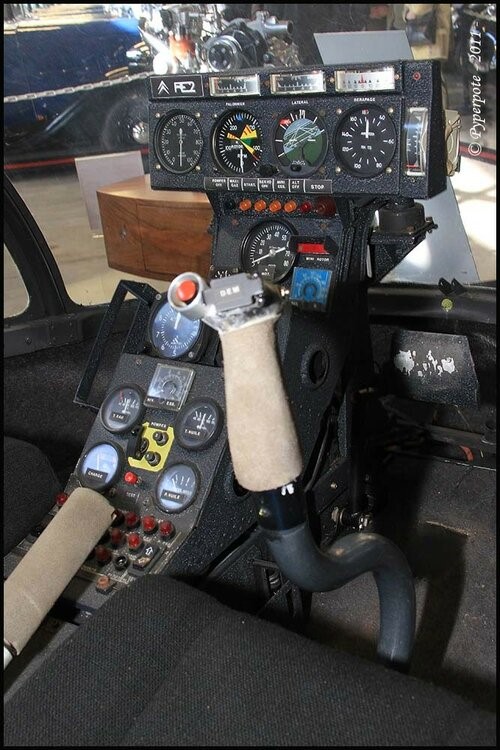
After months of rushed development, the first prototype would rise from the ground, the Christmas Eve of the year 1975. It was a helicopter designed for two occupants, for recreational use. Citroën wanted to have his helicopter ready as soon as possible, and with the rush even had difficulties to find a test pilot.
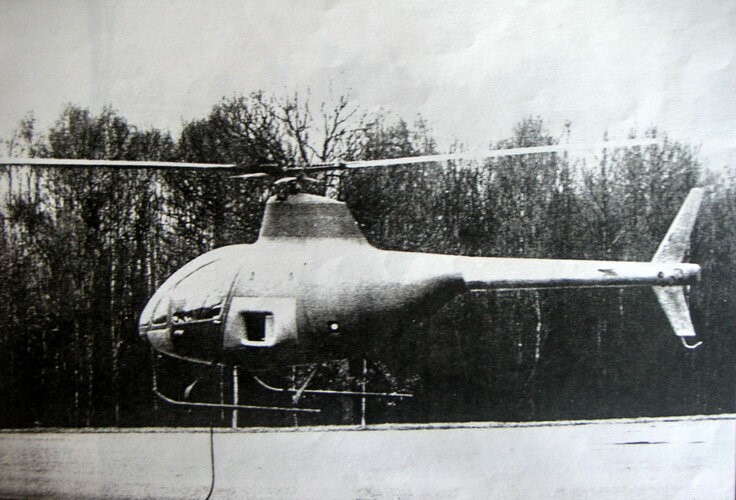
This engine was capable of to propel the aircraft to a cruise speed of 173 km/h and on the paper, could climb to a ceiling of 3,500 meters altitude. Citroën had been flown successfully with its RE-2, but did not yet have the government certification to sell it to the public. During the processes of approval, it was discovered that the engine overheated after a time running at high-rate.
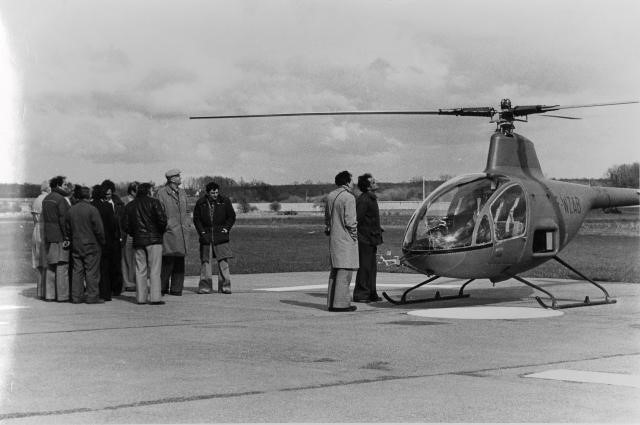
Although the tests were successful, over-heating problems with the engine and pending bankruptcy brought the project to an end. The lack of funds and technical problems delayed the certification of the aircraft, that it would never be completed.
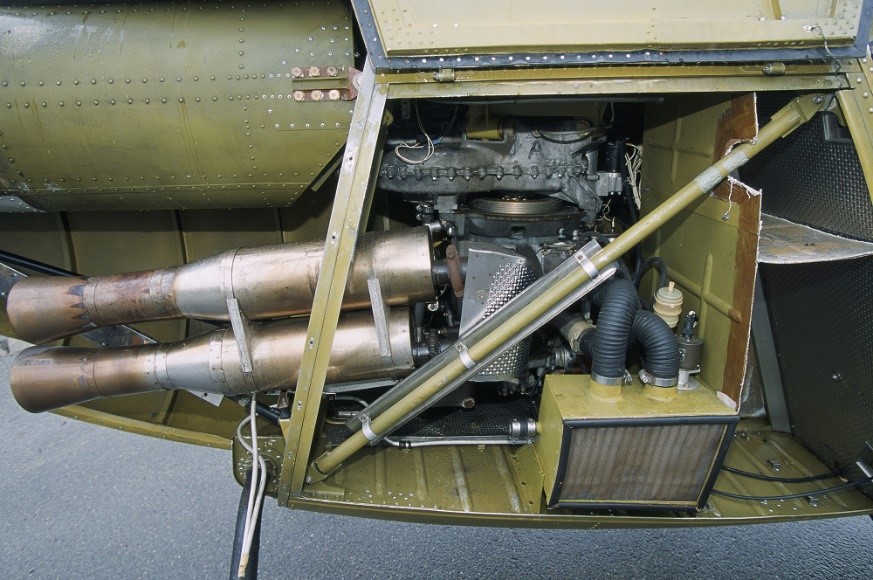
While the engineers solved the engine problems, Citroen came under Peugeot, in the recently formed PSA Group. Although the RE-2 solved their problems and got a permit of flight six months in 1977 for the final adjustments, in Peugeot were fed up.
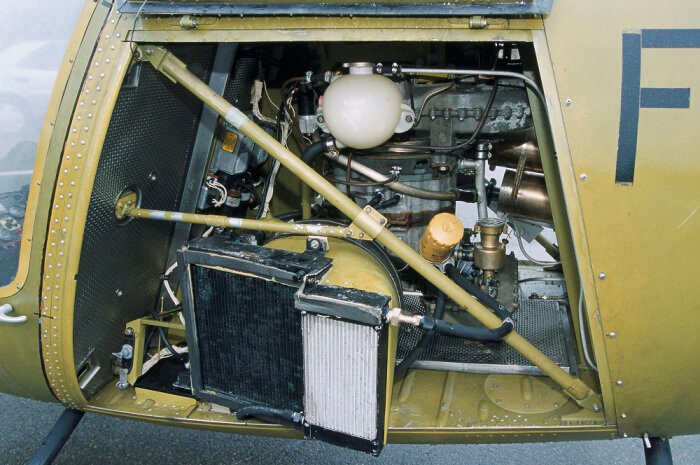
On May 5, 1979, Peugeot ordered to Citroën the immediate cancellation of the project after only 38 hours of flight.
The RE-2 went to the Musée Citroën in France.
RE-2
Engine: 1 x Citroën Comotor 624 rotary (Wankel), 160-190hp
Length: 7,18 m
Height: 2,59 m
Weight: 700 kg
Cirrus Designs ST50
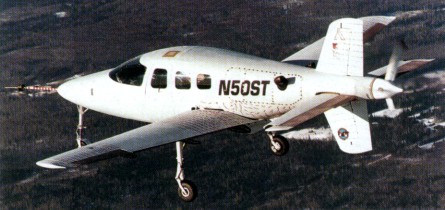
Contracted by Israviation to develop, design and build the “proof of concept” prototype of the turboprop ST50, the Cirrus ST50 engineering prototype first flew on December 7, 1994. The all new five seater is being developed by Cirrus Designs in the US and Israviation in Israel. Cirrus is responsible for the design while Israviation will manufacture the aircraft.
Engine: Pratt & Whitney PT6.
Seats: 5.
Cirrus Designs SR22
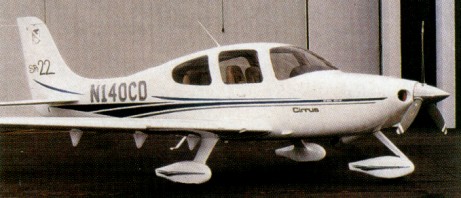
The product line was expanded in 2000 with certification of the SR22, a growth product of the SR20, with a more powerful engine and longer range.
A new aircraft, the Cirrus SR22-G2 (Generation 2), replacing the SR22, features all leather seats, feather wrapped side yoke, throttle and grab handles, as well as new large gull wing doors. The type also has a full colour 10.4 inch primary flight display (PFD), and a 10.4¬inch colour display displaying engine monitoring, checklists, weather, terrain, and route flight planning information.
The first Australian-assembled Cirrus SR22 was handed over to its owner at Archerfield, Queensland, in May 2006. The aircraft are assembled from knocked-down kits from Cirrus in the USA.
In April 2007, Cirrus Design introduced its third generation of aircraft – the SR22-G3. The G3 is a continuing evolution to refine the aircraft structure and systems, and reduce unnecessary weight using the best new materials and engineering methods available. Cirrus introduced the SR22-G3 with a lighter wing thanks to a new carbon fibre spar with increased dihedral, increased fuel capacity, improved ice protection, expanded centre of gravity envelope and taller undercarriage for greater prop clearance. Without adding to the aircraft’s weight, Cirrus has increased new equipment options, payload, safety features, and aircraft usefulness.
With nearly 700 changes and systems improvements, the SR22-G3 represents the culmination of virtually everything Cirrus has learned about engineering and design.
2001 Cirrus SR22
Base price: $276,000
Engine: TCM IO-550-N, 310 hp@SL
TBO: 2000 hrs.
Fuel type: 100/100LL
Propeller type/diameter: Hartzell CS / 78 in
Landing gear type: Tri/Fixed
Max ramp weight (lbs.): 3400
Gross weight (lbs.): 3400
Landing weight (lbs.):3400
Empty weight, std. (lbs.): 2250
Useful load, std. (lbs.): 1150
Payload, full std. fuel (lbs.): 664
Usable fuel (USgals.): 81
Oil capacity (qts.): 8
Wingspan: 38 ft. 3 in.
Overall length: 26 ft.
Height: 8 ft. 9 in.
Wing area (sq. ft.): 144.9
Wing loading (lbs./sq. ft.): 23.5
Power loading (lbs./hp.): 11.0
Wheel track (in.): 10 ft. 9 in.
Wheel size (in.): 6.00 x 6
Seating capacity: 4
Cabin width (in.): 49
Cabin height (in.): 50
Baggage capacity (lbs.): 130
Cruise speed (kts) 75% power @ 10,000 ft.: 180
Cruise speed (kts) 65% power @ 10,000 ft.: 175
Cruise speed (kts) 55% power @ 12,000 ft.: 171
Max range (w/ reserve) (nm) 75% power at 17.000 ft: 744
Max range (w/ reserve) (nm) 65% power at 17.000 ft: 827
Max range (w/ reserve) (nm) 55% power at 17.000 ft: 939
Fuel consumption (USgph) 75% power: 16.4
Fuel consumption (USgph) 65% power: 15.0
Fuel consumption (USgph) 55% power: 13.9
Stall speed (flaps up) (knots) :69
Stall speed (flaps down) (knots): 59
Best rate of climb (fpm): 1400
Best rate of climb, 8000 ft. (fpm): 843
Service ceiling (ft.): 17,500
Takeoff ground roll (ft.): 1058
Takeoff over 50-ft. obstacle (ft.): 1629
Landing ground roll (ft.): 1161
Landing over 50-ft. obstacle (ft.): 2352
2007 Cirrus SR22 Turbo
Base price: $544,295
Engine: TCM IO-550N
TBO (hrs.): 2000
Horsepower@altitude: 310@SL
Fuel type: 100LL
Propeller type: Hartzell ACSII/3-blade
Landing gear type: Fixed/Tri.
Max ramp weight (lbs): 3400
Gross weight (lbs.): 3400
Landing weight (lbs.): 3400
Empty weight, std. (lbs.): 2418
Useful load, std. (lbs.): 982
Useful fuel (USgals.): 81
Wingspan: 38 ft. 6 in.
Cabin doors: 2
Cruise Speed, 75% power (KTAS): 203
Fuel Consumption, 75% power (gph): 17.5
Vso (kts.): 61
Best rate of climb SL (fpm.): 1304
Takeoff ground roll (ft.): 1574
Landing ground roll (ft.): 1141
Landing over 50 ft. obstacle (ft.): 2325
2004 Cirrus SR22-G2
Base price: $334,700
Engine: TCM IO-550-N
Horsepower@rpm@altitude: 310@2700@SL
Horsepower for takeoff:310
TBO hrs.: 2000
Fuel type:100/100LL
Propeller type/diameter (in.): Hartzell CS/78
Landing gear type: Tri./Fixed
Max ramp weight (lbs.): 3400
Gross weight (lbs.): 3400
Landing weight (lbs.): 3400
Empty weight, std. (lbs.): 2250
Useful load, std. (lbs.): 1150
Payload, full std. fuel (lbs.): 664
Usable fuel (USgals.): 81
Oil capacity (qts.): 8
Wingspan: 38 ft. 6 in.
Overall length: 26 ft.
Height: 8 ft. 7 in.
Wing area (sq. ft.): 144.9
Wing loading (lbs./sq. ft.): 23.5
Power loading (lbs./hp.): 11
Wheel track: 10 ft. 9 in.
Wheel size (in.): 6.00 x 6
Seating capacity: 4
Cabin doors: 2
Cabin width (in.): 49
Cabin height (in.): 50
Baggage capacity (lbs.): 130
Cruise speed, best economy (kts.) 75% power: 180
Cruise speed, best economy (kts.) 65% power: 175
Cruise speed, best economy (kts.) 55% power: 171
Max range (w/ 45-min. reserve) (nm) 75% power: 720
Max range (w/ 45-min. reserve) (nm) 65% power: 770
Max range (w/ 45-min. reserve) (nm) 55% power: 821
Fuel consumption, best economy (USgph) 75% power: 16.4
Fuel consumption, best economy (USgph) 65% power: 15.0
Fuel consumption, best economy (USgph) 55% power: 13.9
Vs (knots) :69
Vso (knots): 59
Best rate of climb (SL fpm): 1400
Best rate of climb,8,000 ft. (fpm): 842
Service ceiling (ft.): 17,500
Takeoff ground roll (ft.): 1020
Takeoff over 50-ft. obstacle (ft.):1575
Landing ground roll (ft.): 1140
Landing over 50-ft. obstacle (ft.): 2325
Cirrus SR22-G3
Engine: Continental IO-550-N, 310 hp@SL
Gross weight (lbs.): 3400
Landing weight (lbs.): 3400
Empty weight, std. (lbs.): 2230
Useful load, std. (lbs.): 1170
Useable fuel, std. (gals.): 92
Wingspan: 38 ft. 4 in.
Overall length: 26 ft.
Height: 8 ft. 9 in.
Cabin width (in.): 49
Cabin height (in.): 50
Max cruise speed (kts.): 185
Range, 65% power (nm): 1049
Range, 55% power (nm):1170
Vso (kts.): 60
Best rate of climb, SL (fpm): 1400
Service ceiling (ft.): 17,500
Takeoff ground roll (ft.): 1028
Takeoff over 50-ft. obstacle (ft.): 1594
Landing ground roll (ft.): 1141
Landing over 50 ft. obstacle (ft.): 2344
2009 CIRRUS SR22 X EDITION
Engine: Continental IO-550-N
Turbonormalizing system: Tornado Alley
Horsepower 310@SL
Gross weight (lbs.): 3400
Empty weight, std. (lbs.): 2517
Useful load, std. (lbs.): 883
Usable fuel, std. (USgals./lbs.): 92/552
Wingspan: 38 ft. 4 in.
Overall length: 26 ft.
Overall length: 8 ft. 11 in.
Cabin width (in.): 49
Cabin height (in.): 50
Vso (kts.): 60
Best rate of climb (fpm): 1400
Service ceiling (ft.): 25,000
Max cruise speed (KTAS): 219
Cruise range with reserve, 75% power (nm): 925
Max range with reserves, 55% power (nm): 1000
Takeoff ground roll (ft.): 1028
Takeoff over 50 ft. obstacle (ft.): 1594
Landing ground roll (ft.): 1141
Landing over 50 ft. obstacle (ft.): 2344
SR22 GTS
SR22 GS
SR22 S
Cirrus Designs SR21
SR21tdi – Engine: Diesel.
Cirrus Designs SR20

In the summer of 1994, Cirrus Design introduced the SR20 at the Experimental Aircraft Association (EAA) Convention in Oshkosh, Wisconsin. Cirrus Design continued development and testing of the SR20 and received FAA certification in October 1998.
The Cirrus SR20 is constructed with strong, composite materials. It delivers a 160 knot cruise speed and sips only 10.5 gallons of fuel per hour as it covers an 800 nautical mile range. It is powered by a Teledyne Continental IO 360 ES 200 hp engine and the propeller from Hartzell, and fitted with a side-stick controller.
The first customer delivery was on 20 July 1999. At that point, Cirrus has orders for 324 SR20s.
Shortly after delivering their 200th SR20, Cirrus Design unveiled thew SR20A, with an increase of 45 kg in take-off weight, a redesigned engine cowling and other minor refinements.
SR20
Engine: Teledyne Continental IO-360ES, 200 hp.
TBO hrs.: 2000
Propeller: Const. spd.
Landing gear type: Tri/Fixed
Length 26 ft 7.92 m
Height 8 ft 11 in 2.71 m
Wingspan 38 ft 4 in 11.68 m
Cabin Length 130 in 330 cm
Cabin Width 49 in 124 cm
Cabin Height 50 in 127 cm
Maximum Gross Weight 3050 lbs 1386 kg
Standard Empty Weight 2080 lbs 945 kg
Useful Load 970 lbs 441 kg
Usable Fuel Capacity 56 gal/336 lbs 212 litre/153 kg
Full Fuel Payload 634 lbs 288 kg
Takeoff 1478 ft 450 m
Takeoff Over 50 ft Object 2221 ft 677 m
Climb Rate 828 ft/min 252 m/min
Stall Speed with Flaps 56 KCAS 56 KCAS
Max cruise: 160 kt
Cruise Speed (75% Power) 155 KTAS
Cruise Range with Reserve 627 nm 1161 km
Maximum Range with Reserve (55% pwr) 785 nm 1454 km
Landing Ground Roll 853 ft 260 m
Landing Over 50 ft Object 2636 ft 803 m
SR20
Engine: Teledyne Continental IO-360ES, 200 hp.
TBO hrs.: 2000
Propeller: Const. spd.
Gross weight (lbs.): 2900
Empty weight, std. (lbs.): 1875
Useful load, std. (lbs.): 1025
Fuel (gals.): 60
Wingspan: 35 ft. 7 in.
Overall length: 28 ft. 3 in.
Height: 9 ft. 3 in.
Wing area (sq. ft.): 135
Seating capacity: 4
Cabin width (in.): 49
Cabin height (in.): 50
Baggage capacity (lbs.): 120
Cruise speed (kts.) 75% power: 160
Cruise speed (kts.) 65% power: 155
Max range (w/ reserve) (nm) 75% power: 686
Max range (w/ reserve) (nm) 65% power: 801
Fuel consumption (USgph) 75% power: 10.4
Fuel consumption (USgph) 65% power: 9.4
Stall speed (gear, flaps down) (knots): 57
Best rate of climb (fpm): 961
Service ceiling (ft.): 16,000
Takeoff ground roll (ft.): 1310
Landing ground roll (ft.): 1000
Cirrus SR20
Engine: Continental IO-360-ES, 200 hp@SL
TBO hrs.: 2000
Fuel type:100/100LL
Propeller type/diameter: Hartzell CS / 76 in
Landing gear type: Tri/Fixed
Gross weight (lbs.): 2900
Empty weight, std. (lbs.): 1875
Useful load, std. (lbs.): 1025
Payload, full std. fuel (lbs.): 665
Usable fuel, std. (USgals.): 60
Oil capacity (qts.): 8
Wingspan: 35 ft. 7 in.
Overall length: 28 ft. 3 in.
Height: 9 ft. 3 in.
Wing area (sq. ft.): 135
Wing loading (lbs./sq. ft.): 21.5
Power loading (lbs./hp.): 14.5
Wheel size (in.): 6.00 x 6
Seating capacity: 4
Cabin doors: 2
Cabin width (in.): 49
Cabin height (in.): 50
Baggage capacity (lbs.): 120
Cruise speed (kts.) 75% power @ 6,500 ft.: 160
Cruise speed (kts.) 65% power @ 10,000 ft.: 155
Cruise speed (kts.) 55% power @ 14,000 ft.: 149
Max range (w/ reserve) (nm) 75% power: 686
Max range (w/ reserve) (nm) 65% power: 801
Max range (w/ reserve) (nm) 55% power: 878
Fuel consumption (USgph) 75% power:10.4
Fuel consumption (USgph) 65% power:9.4
Fuel consumption (USgph) 55% power: 8.1
Stall speed (gear, flaps up) (knots):63
Stall speed (gear, flaps down) (knots):57
Best rate of climb (fpm): 961
Service ceiling (ft.): 16,000
Takeoff ground roll (ft.): 1310
Takeoff over 50-ft. obstacle (ft.): 1865
Landing ground roll (ft.): 1000
Landing over 50-ft. obstacle (ft.): 1960
2008 Cirrus SR20-G3
Base price: $276,690
Engine:Continental IO-360-ES, 200 hp
Max gross weight (lbs.): 3050
Landing weight (lbs.): 3050
Empty weight, std. (lbs.): 2080
Useful load, std. (lbs.): 970
Usable fuel, std. (gals.): 56
Wingspan: 38 ft. 4 in.
Overall length (ft.): 26
Overall height: 8 ft. 11 in.
Cabin width (in.): 49
Cabin height (in.): 50
Vso (KIAS): 61
Service ceiling (ft.): 17,500
Climb rate (fpm):828
Max cruise speed, 75% power (KTAS): 155
Range, 75% power (nm): 627
Range, 55% power (nm): 785
Takeoff roll@3050 pounds, SL (ft.): 1478
Takeoff over 50 ft. obstacle (ft.): 2221
Landing ground roll (ft.): 853
Landing over 50 ft. obstacle (ft.): 2636
SR20 GTS
SR20 GS
SR20 S
Cirrus Designs VK30

Alan and Dale Klapmeier offered the VK30 kit aircraft in 1987. The five-seater was powered by a 300-hp Continental pusher engine and had a cruise speed of over 200 mph. The Klapmeiers sold the rights to an Israeli company with intentions to certify the design, but the plan never moved forward. The kit is no longer available and only 5 models were ever built. A pusher designed to cruise at 250 mph, the VK30 is a four place, long range cross country aeroplane first flown in 1988.

