The company was formed at Hooton Park, Cheshire, on March 14,1929 by Fit. Lt. Nicholas Comper and others. Formerly with Airco, Comper had also been responsible for the Cranwell Light Aeroplane Club series of amateur built lightplanes, the C.L.A. 2, 3, and 4A. The company’s first product was the C.L.A. 7 Swift, a single-seat high-wing sporting aircraft, which was first flown in spring 1930 and built between 1930 and 1934 (one was owned by the Prince of Wales, later Edward VIII). The company moved to Heston, Middlesex, in 1933; the one-off three-seat Mouse and single-seat Streak monoplanes were built in that year, followed by a single Kite two-seat tourer developed from the Streak.
When the company folded in March 1934, Heston Aircraft Company Ltd was formed from its assets.
Era
Compagnie d’Aérostiers L’Intrépide / Hercule
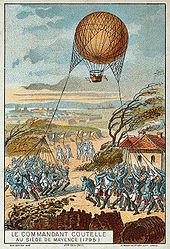
L’Intrépide was the larger of two observation balloons, the other being Hercule (“Hercules”), issued to the Aerostatic Corps in June 1795, twelve years after the pioneering hydrogen balloon flights of Professor Jacques Charles and the Robert brothers in Paris. These balloons were used by the Corps’s first company attached to General Jourdan’s Army of Sambre-et-Meuse in 1796. When that army was defeated by Austrian forces at the Battle of Würzburg on 3 September 1796, the balloon was captured and taken to Vienna, where it is now on display at the Heeresgeschichtliches Museum.
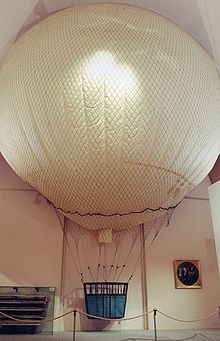
The actual preserved envelope is the sole survivor of the world’s first military air fleet – and possibly the world’s oldest surviving aircraft.
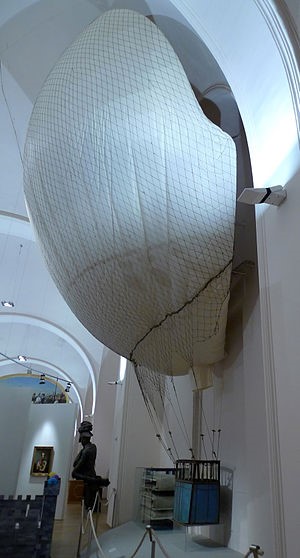
The balloon’s silk envelope is roughly spherical and has a diameter of 9.8 metres (32 ft). Its wooden gondola is very small, measuring 1.14 metres (45 in) by 0.75 metres (30 in) and its railing has a height of 1.05 metres (41 in). The hull displayed in the museum is a replica, with the original displayed in a glass box nearby.
Compañia Universal de Navegación Aérea Multíptero / Flugilarillo
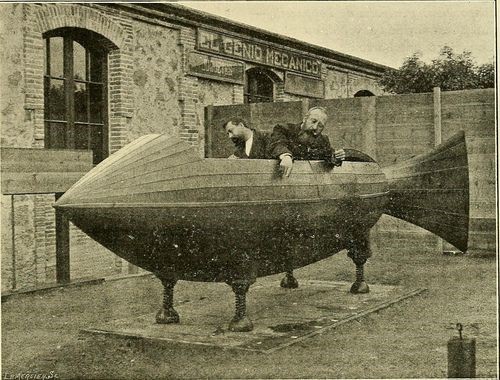
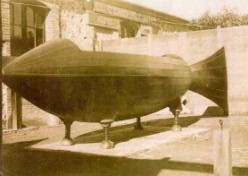
Part of a central section of the “Multíptero” or “Flugilarillo” of the Catalonian inventor Cristóbal Juandó y Rafecas, dated circa 1901/1902
Commonwealth Aircraft Inc
USA
Formed in Kansas City October 1942, after the acquisition of Rearwin Aircraft & Engines Inc. by New York interests. In 1943 it received substantial orders for Waco CG-3A and -4A troop-carrying gliders for the USAAF. It obtained manufacturing rights in 1945 for the Trimmer three-seat twin-engined light amphibian (prototype only), formerly built by Allied Aviation. In 1946 Commonwealth Aircraft Inc. began producing Model 185, a development of the prewar Rearwin Model 175. Early that year the company took over the Columbia Aircraft Corporation, all manufacturing being transferred to the letter’s Valley Stream factory. In March 1946 it acquired a non-aircraft company at Port Washington as a manufacturing base for the Trimmer, which did not go into series production. The Skyranger model was built in small numbers in 1946-1948.
As the anticipated post-war boom in civil aviation had not started, Commonwealth went bankrupt in 1947.
Commonwealth Aircraft Corp / CAC R795 Cicada
CAC designed the R795 Cicada which was intended to be used in the Winjeel. The Cicada was designed to be built using existing tooling that CAC had previously used to produce Pratt & Whitney R-1830 engines. The Cicada was a 7-cylinder geared radial engine of 795 cubic inch (13 litre) capacity; like the Pratt & Whitney R-985 that was eventually fitted to all Winjeels it developed 450 horsepower (340 kW). Because of its lower cubic capacity the Cicada was more complex (and thus significantly heavier) than the R-985 and also had higher fuel consumption. Only two development examples of the Cicada were ever built, one of which was actually fitted to Winjeel prototype (RAAF serial) A85-364. The two engines accumulated about 650 hours before the programme was terminated in September 1953.
Commonwealth Aircraft Corp / CAC CA-28 Ceres
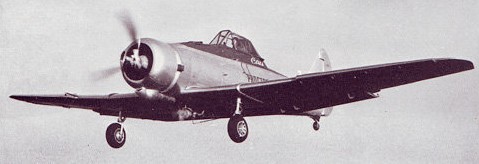
The CA-28 agricultural aircraft was designed around components of the wartime Wirraway. It first flew in the southern summer of 1958. Basically a single-seater, it also had a rear-facing seat behind the pilot for ferrying. There was a 40 cu.ft. hopper forward of the pilot. No hydraulic or electrical systems were fitted. The Ceres did have leading edge slats and manually operated flaps.
Commonwealth Aircraft CA-28 Ceres Article

Fourteen were registered in Australia and five in New Zealand in the early 1960’s.
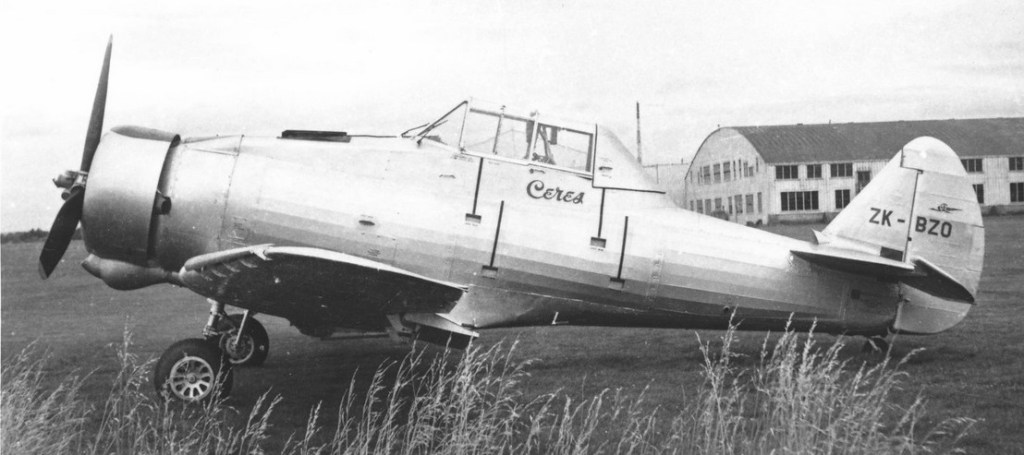
Engine: Pratt & Whitney R-1340-AN-1, 600 hp.
Wingspan: 14.30 m / 47 ft 11 in
Length: 9.36 m / 31 ft 9 in
Height: 2.74 m / 9 ft 0 in
Wing area: 29.0 sq.m / 312.15 sq ft
Take-off weight: 3048 kg / 6720 lb
Empty weight: 1995 kg / 4398 lb
Cruise speed: 179 km/h / 111 mph
Accommodation: 1-2

Commonwealth Aircraft Corp / CAC CA-26 / CA-27 Sabre
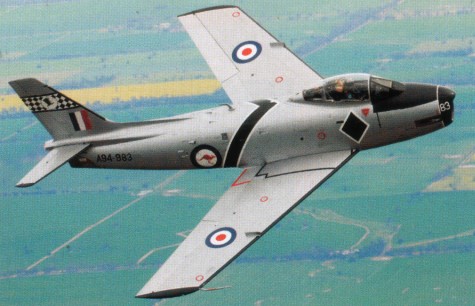
As early as 1949 the RAAF began planning a replacement jet fighter for the locally-built CAC Mustang and DHA Vampire. Gloster Meteors were obtained in 1951 for service with No 77 Squadron in the Korean War. In May of 1951, plans were finalised for CAC to build a locally-redesigned version of the North American F-86F Sabre swept-wing fighter.
Due in part to the technical investigations initiated by CAC Manager, L. J. Wackett, the RAAF decided to install the 7,500 lb thrust Rolls-Royce Avon RA.7 turbojet in place of the 6,100 lb thrust General Electric J-47 engine. Major modifications included a larger nose-intake, positioning the Avon further aft than the J-47, and moving the engine servicing break-point. Other improvements called for increased fuel capacity, a revised cockpit layout, and replacement of the six 0.50″ machine guns with two 30mm Aden cannons. Consequently, CAC had to redesign 60 per cent of the airframe. The resultant aircraft was sometimes called the Avon-Sabre.
The prototype CAC CA-26 Sabre Mk 30 first flew on 3 August 1953, with an imported Avon engine, piloted by Flight Lieutenant W. Scott. As A94-101 it went to Aircraft Research and Development Unit (ARDU) in 1955 and in latter years resided at Wagga as an instructional airframe; in 1960 it was used for ejection seat trials following three fatal Sabre accidents.
The first production CA-27 Sabre, A94-901, flew on 13 July 1954 and was followed by 21 Mk 30s, A94-902/922, with imported Avons, and leading-edge slats. From 1955, the next 20 Sabre Mk 31s, A94-923/942, were powered with the CAC Avon Mk 20, had an extended leading-edge, additional fuel cells, and fitments for drop-tanks, bombs, and rockets. The earlier Mk 30s were then modified to Mk 31 standard. The final version of the CAC Sabre was the Mk 32 of which 69 were built, A94-943/990 and A94-351/371. They carried additional drop-tanks and rockets and, as from 1960, Sidewinder air-to-air missiles. All earlier Sabres were similarly modified, and retrospectively fitted with the CAC Avon Mk 26 engine which was first installed in A94-973. The last CAC Sabre, A94-371, completed acceptance trials on 19 December 1961.
The first production Sabre, A94-901, went to ARDU on 19 August 1954. A Sabre Trials Flight was established at No 2 (Fighter) Operational Training Unit, RAAF Williamtown, on 1 November 1954 and No 75 Squadron became the first Sabre squadron after it reformed on 4 April 1955. No 3 Squadron received its first Sabres on 1 March 1956 and No 77 Squadron on 19 November 1956. In October 1958, No 3 Squadron deployed to RAAF Butterworth and was followed by No 77 Squadron in February 1959. As No 78 (Fighter) Wing, both squadrons used their Sabres against the Communist guerillas until 31 July 1960. No 76 Squadron reformed in January 1960 and joined No 2 (Fighter) Operational Conversion Unit and No 75 Squadron as the Sabre equipped No 81 Wing, RAAF Williamtown. On 1 June 1962, eight Sabres deployed from Butterworth to Ubon, Thailand, to counter communist activity. This detachment became No 79 Squadron until it withdrew and disbanded in August 1968.
From 1964-5, the Mirage III began to replace the Sabre and, on 31 July 1971, the RAAF officially retired the Sabre from service.
CAC Sabre CA-27 Mk 32
Engine: One CAC RA.7 Avon Mk.26 turbojet, 3402 kg (7500 lb)
Wingspan: 11.30 m (37 ft 1 in)
Wing Area: 302.3sq.ft. / 28.1 sq.m
Length 11.43 m (37 ft 6 in)
Height 4.37 m (14 ft 4 in).
Empty weight: 5443 kg (12 000 lb)
Loaded weight: 8038 kg (17 720 lb)
Maximum Takeoff weight: 21,210 lbs 9,621 kg
Max speed 1126 km/h (608 kt, 700 mph) SL
Cruise speed 885 km/h (478 kt, 550 mph)
Range 1850 km (1000 nm)
Service ceiling 52,000 ft (15,850 m)
Rate of climb: 12,000 fpm at SL
Armament: 2 x 30 mm Aden cannon 162 rounds per gun
External load can include two AIM-9B Sidewinder missiles, up to 24 ground rockets, two 500 or 1,000lb bombs or eight practice bombs.
Total internal fuel: 412 imp gal (1,873 litres) in two fuselage tanks, two outer wing panel tanks and tanks in the leading edges.
Commonwealth Aircraft Corp / CAC CA-22 / CA-25 Winjeel

In 1948, the RAAF issued a specification for a new training aircraft to replace both the Tiger Moth and Wirraway. The new trainer was to seat three, and was to be of simple but robust construction. Economy of operation and ease of maintenance were other requirements. And, above all, it was to have safe handling characteristics. The CAC answer to meet this specification was the CA-22, for which the Aboriginal word for “young eagle” was selected, Winjeel. CAC designed a simple, fixed undercarriage, tailwheel machine with aluminium clad tubular steel fuselage, stressed skin wings and fabric covered flying controls.
Two CA-22 prototypes were built, A85-618 and A85-364, each with a 450 hp (335kW) Pratt and Whitney, R-985-AN-2 Wasp Junior engine. It was planned to develop the CAC-designed 450 hp Cicada engine for production aircraft but, in the event, all Winjeels were powered by Wasp Juniors. The first prototype, A85-618, was test flown on 3 February 1951 by CAC test pilot John Miles. It was soon joined by A85-364 and the two aircraft were used for a prolonged series of trials. These tests showed that CAC had met the requirements for a safe aircraft, because it was found that the Winjeel had a reluctance to spin – an excellent feature for most aircraft, but not for a trainer. Consequently, the rear-positioned fin was fitted with a dorsal fairing and a larger rudder. A later modification resulted in a taller fin without the dorsal fairing, and with the rudder moved forward. A revised engine cowling was also designed and these later features were incorporated in the production Winjeels.
The CA-25 first production version, A85-401, first flew on February 23, 1955. On 16 September 1955, the CAC Managing Director, Sir Lawrence Wackett, officially handed over the log-books of this aircraft to Air Marshal Sir John McCauley. During this ceremony, Flight Lieutenant L. Evans of the RAAF’s Aircraft Research and Development Unit (ARDU) gave a spirited demonstration of the Winjeel’s capabilities.
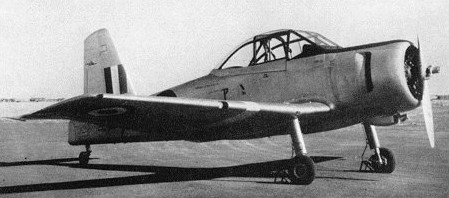
62 Winjeels were ordered, production taking place between February 1955 and August 1957. The last Winjeel, A85-462, was delivered to the RAAF early in 1958.
The trainers operated with No 1 Basic Flying Training School (later renamed No 1 Flying Training School) at RAAF Uranquinty until the unit was transferred to RAAF Point Cook in December 1958. The Winjeel was eventually replaced at No 1 Flying Training School in 1975 by the CT-4 Airtrainer.
A few remaining Winjeels were used as hacks, a half dozen examples became instructional airframes at Wagga, NSW for apprentice engineer training and four FAC machines remained at Williamtown with No 4 Flight, later as part of No 76 Squadron, until these aircraft were replaced by the PC-9/A in 1994. A number of off surplus machines found their way into the hands of nostalgic civilian owners to be used for recreational flying and air display work.

Initially the Australian CAA would not permit the operation of the type on the civil register however, with a relaxation of the rules, eleven were registered in the warbird category. Operated by the RAAF as a three seater, a number have been modified to four seat by civil owners. The radial engined taildragger features a 165 mph cruise with a five hour 30 minute endurance.
Gallery
Engine: 1 x Pratt & Whitney R-985-AN-2 Wasp junior 9-cyliner radial, 450 hp.
Wingspan: 11.77 m / 39 ft 7 in
Wing area: 249 sq.ft (23.13 sq.m)
Length: 8.55 m / 28 ft 1 in
Height: 2.77 m / 9 ft 1 in
Take-off weight: 1970 kg / 4343 lb
Empty Weight: 3,400lbs (1,542kg)
Maximum Take-Off Weight: 4,341lbs (1,969kg)
Max. speed: 299 km/h / 186 mph
Cruise speed: 265 km/h / 165 mph at 8,500 ft (2 590 m)
Ceiling: 5490 m / 18000 ft
Rate-of-Climb: 1,500ft/min (457m/min)
Service Ceiling: 15,000ft (4,572m)
Maximum Range: 551miles (886km)
Endurance: 5.5 hr
Armament: None
Accommodation: 2-3

Commonwealth Aircraft Corp / CAC CA-17 / CA-18 / CA-21 Mustang
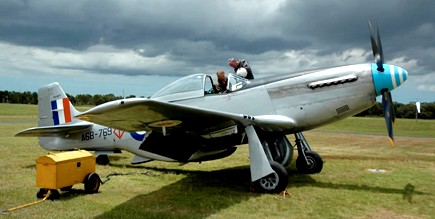
In 1943, the Australian government arranged for the Commonwealth Aircraft Corporation (CAC) to manufacture the Mustang Mk IV (P-51D) under licence from North American Aviation. The RAAF urgently needed a new fighter, and so the first CAC Mustangs were built mainly from imported semi-finished parts. A prototype Mustang, A68-1001, was used for development trials and the first Australian production Mustang, A68-1, flew on 29 April 1945. This aircraft was handed over to the RAAF on 4 June 1945 and was used for trials by No 1 Aircraft Performance Unit until October 1946. It was placed in storage until 1953 when it was delivered to the Department of Supply at Woomera.
The first 80 Mustang 20s (A68-1/80) were delivered with Packard Merlin V-1650-3 engines, under the CA-17 designation. A second contract called for 170 improved Mustangs, but only 120 were completed. Known as CA-18, the first 40 were built as Mustang 21s (A68-81/120) with Packard Merlin V-1650-7 engines. The remaining CA-18s comprised 14 Mustang 22s (A68-187/200) with Packard Merlin V-1650-7 engines. A CA-21 contract for a further 250 Mustangs was cancelled and, in lieu of the remaining CA-18s and CA-21s, 298 lend-lease P-51Ds and Ks were taken on strength (A68-500/583 and A68-600/813). In addition, the RAAF also accepted Mustangs for the Netherlands East Indies Air Force (N3-600/640).

Produced too late for World War II, RAAF Mustangs were assigned to Japan for occupation duties and, early in 1946, Nos 76, 77 and 82 Squadrons flew into Iwakuni. In 1949 Nos 76 and 82 Squadrons withdrew to Australian and the Mustangs of No 77 Squadron remained to take part in the Korean War from June 1950 until April 1951, when they were replaced by Gloster Meteors.
In Australia, Mustangs remained in service with Citizen’s Air Force Squadrons until they were withdrawn from service in 1959.
CAC CA 18 Mustang Mk 21
Engine: One Packard Merlin V1650-7, 1490 hp at sea level, 1720 hp at 6300ft & 1565 hp at 17250 ft.
Propellor: Hamilton Standard 4 Bladed Constant Speed
Propellor diameter: 11ft 2in (3·4m).
Span 11.28 m (37 ft)
Length 9,83 m (32 ft 3 in)
Height: 3.71 m (12 ft 2 in).
Empty weight: 3567 kg (7863 lb)
Maximum Take Off Weight: 10,500 pounds or 4763kg.
Internal Fuel Capacity 224 Imp Gallons / 1018 litres
External drop tanks of 75 US Gals (284 litres) & 110 US Gals (416 litres).
Max IAS/Mach all altitudes: 438 kts IAS/Mach 0.77
Vne at 9,000ft: 500 kts TAS / 925 km/h
Max speed straight and level 10,000ft: 348kts TAS / 643 km/h
Max speed straight and level 25,000ft: 380kts TAS / 703 km/h
Maximum Rate of Climb: 3475ft/min at 5000ft
Service ceiling: 41900 ft / 12771 metres.
Time to 20000ft: 7·3 mins
Time to 30000ft: 12·6 mins.
Maximum Range 25000 ft internal fuel: 840 nm / 1530 km.
Maximum Range 25000 ft external fuel: 1435 nm / 2655 km.
Armament: Six 0.50 in Colt Browning machine guns; two 454 kg (1000 lb) bombs or up to 10 rockets
Inboard guns contained 400 rounds per gun & the rest – 270 rounds per gun.
Underwing hardpoints for six, 5 inch rockets or two 500lb (227kg) bombs.
Commonwealth Aircraft Corp / CAC CA-1 / CA-3 / CA-5 / CA-7 / CA-8 / CA-9 / CA-16 / CA-20 Wirraway

The Wirraway had been the first product of the Commonwealth Aircraft Corporation formed in 1936 by several of the largest industrial concerns in Australia. To gain manufacturing experience, it had been decided to acquire a licence to produce an aircraft suitable for advanced training and as a replacement for RAAF Hawker Demons.
An Australian Air Board Technical Commission visited the USA and evaluated the North American NA-16, ordered into production for the USAAC as the BT-9 (NA-19) basic trainer.
At the time of the Australian Commission’s visit, North American was working on a development of the BT-9 with a 600 hp Pratt & Whitney R-1340, retractable undercarriage and armament provision as a basic combat trainer. Designated NA-26, this aircraft fulfilled the Australian requirements, although there was disagreement over the need for retractable undercarriage. As a result, two versions of the A-26 were offered to the Australians, the NA-32 (NA-16-1A) with fixed undercarriage, and the NA-33 (NA-16-2K) with a retractable undercarriage, and in 1937, negotiations for manufacturing rights in both the NA-32 and NA-33 were completed, and an order placed for one of each.
The NA-32 was completed in July 1937, although it was not taken on charge by the RAAF until 8 November 1938, and by that time, the NA-33, which had been completed in September 1937 and taken on charge by the RAAF on 2 February 1938, had already been selected for Australian production. With minor changes to suit it more closely to RAAF requirements and Australian operating conditions, the NA-33 was ordered into production for the RAAF as the A20, the Commonwealth Aircraft Corporation applying the designation CA-1 to the type, and the name Wirraway being adopted.
The NA-16-2K changes including a reinforced sub-structure consistent with the rigors of the bombing role and improved offensive/defensive capabilities by the inclusion of 2 x 7.7mm machine guns as opposed to the NA-16’s sole gun.
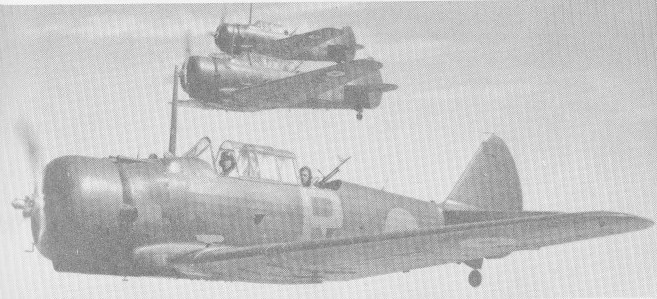
Production of the initial aircraft was handled out of the Commonwealth Aircraft Corporation (CAC) facility at Fisherman’s Bend in Victoria.
CAC designations for Wirraway orders included CA-1, -3, -5, -7, -8, -9, -10 (a bomber version which was cancelled), -10A (dive bomber), and -16. The designation CA-20 covered the conversion of Wirraways for the RAN.

The Wirraway was a low-wing monoplane assemblies with sweep back and curved wingtips, mounted well forward of amidships. Wings were attached to the oblong, rounded airframe. The engine was held in the forward most compartment and was of an air-fed radial type. The cockpit was held aft of the wings with adequate views from under the heavily framed “greenhouse-style canopy. The empennage was conventional and tapered off to form the base of the rounded vertical tail fin. Horizontal tailplanes were situated at the forward base of this single vertical fin. The undercarriage was of the “tail-dragging” arrangement dominated by the two single-wheeled main landing gear legs. While these twin assemblies retracted into the aircraft, the diminutive single-wheeled tail wheel did not and remained exposed whilst the aircraft was in flight. Crew accommodations amounted to two personnel made up of the pilot and an observer.
The Wirraway’s structure comprised a welded chrome-molybdenum steel-tube fuselage with light metal-covered decking and underside, the sides having fabric covered light-alloy frames; a single-spar wing with spaced ribs and metal stressed-skin covering, and fabric-covered dynamically-balanced ailerons and split trailing-edge flaps, and a tail assembly consisting of metal-covered fixed surfaces and fabric covered moveable surfaces.
All fuel was housed in two 46 Imp.gal tanks in the wing centre section. The main undercarriage members were hydraulically operated, retracting into wells forming extensions of the leading-edge roots. The tandem cockpits were enclosed by sliding canopies, full dual controls were installed, the rear seat could be folded and rotated, and a prone bombing position was provided in the floor. Racks beneath the wing centre section could carry 8.5 lb or 11.5 lb bombs and marker flares, and provision was made for mounting two 0.303-in Vickers Mk.V machine guns in the forward upper decking, the pilot being provided with a ring-and-bead sight, and a Vickers Mk.1 0.303-in could be mounted in the rear cockpit.
Early Wirraways were powered by imported Wasp S1H1-G engines, but this engine was subsequently licence-built by CAC (680 single row Wasps eventually being produced), and the three-bladed Curtiss electric controllable pitch airscrews were produced from 1940 by de Havilland Aircraft at Alexandria, NSW.
Top speed was roughly 220 miles per hour with a cruise speed of just 155 miles per hour. Fuel was limited to 116-US gallons in wing fuel tanks with a pair of 11-US gallon reserve fuel tanks. Dimensionally, the aircraft sported a wingspan of 43-feet even with a length of 27 feet, 10 inches. Her height was 8 feet, 8 3/4 inches. When empty, the Wirraway displaced at 3,992 lbs and 6,595lbs for a maximum take-off weight.
The Wirraway was produced in seven major marks beginning with the CA-1. The initial contract called for 40 CA-1 Wirraways (A20-3 to -42) powered by the Wasp R-1340 S1H1-G of 600 hp, and the first aircraft of this contract (A20-3) was flown on 27 March 1939 at Fisherman’s Bend by Flt.Lt. L.H. ‘Boss’ Walker. Production of the initial aircraft was handled out of the Commonwealth Aircraft Corporation (CAC) facility at Fisherman’s Bend in Melbourne, Victoria. The first three RAAF Wirraways were accepted in July 1939. By December 1940, seven aircraft were being delivered weekly, and by September 1941, 45 Wirraways per month were coming off the production line.
The initial contract had been supplemented by the spring of 1940 by orders for 60 CA-3 Wirraways (A20-43 to -102) which differed externally from the CA-1 in having an enlarged oil cooler beneath the engine. The CA-3 was wholly similar to the CA-1, just assigned a different designation due to the nature of the Australian government production contract. This mark numbered 60 examples in all. In fact, the CA-5, CA-7, CA-8 and CA-9 were all also similar in scope to the original CA-1. The CA-5 was produced in a further 32 examples (A20-103 to -143) embodying minor instrumentation and equipment changes.

The CA-7, CA-8 and CA-9 marks were produced in totals numbering 100 (A20-135 to -234), 200 and 188 examples respectively. CA-7 Wirraway production attaining a rate of seven per week by the end of 1940. By this time further orders had been placed with the CAC calling for 200 CA-8 Wirraways (A20-436 to – 635) and 188 CA-9 Wirraways (A20-636 to -823), these each introducing small changes, such a the repositioning of the carburettor air intake, additional wing racks, etc. The CA-10A was an uncompleted bomber proposal, fitted with dive bomber wings but the CA-3, CA-5, CA-7 and CA-9 models were ultimately modified with such wings to become the CA-20 mark. CA-16, the last production Wirraway, was built to the tune of 135 examples before the last rolled off of the Commonwealth assembly lines and these represented the largest modification since the inception of the CA-1.
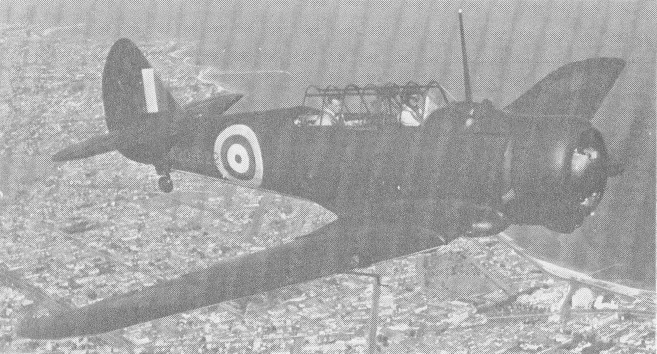
The initial orders for 620 aircraft, production rate attaining 45 aircraft per month in September 1941, and was completed by June 1942, but limited production continued until 1946 when the 755th Wirraway, A20-757, was delivered. The exigencies of the times had resulted in an order for a further 150 Wirraways of the modified CA-16 version (A20-1075 to -1224) intended for the dve-bombing role, although only 135 of these were to be delivered to the RAAF.
Earlier proposals for dive-bombing versins of the Wirraway, the CA-10 and CA-10A, had been cancelled, and the CA-16 differed from the standard Wirraway primarily in making provision for larger external bomb loads, racks being fitted immediately outboard of the wing centre section for two 500 lb and two 250 lb bombs which could be carried in addition to the six 8.5 lb or 11.5 lb anti-personnel bombs and eight target-markers. The 1500 lb increase in offensive load necessitated a conmitant reduction in weight elsewhere, and the twin Vickers guns in the forward fuselage decking and the flexible rear-firing gun were removed, and the aircraft was normally flown as a single-seater when maximum bomb load was carried, although the second seat was retained. The CA-16 fitted a pair of dive brakes for dive bombing sorties. The last was delivered on 30 November 1953.

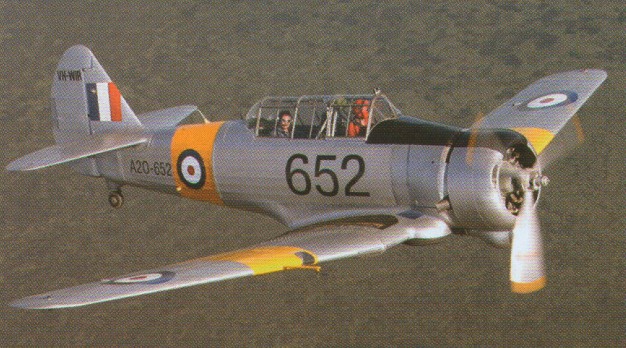
Australia maintained the largest collection of Wirraways and these served with the Australian Air Force squadrons No.4, No.5, No.12, No.21, No.22, No.23, No.24 and No.25. The Australian Navy Fleet Air Arm utilized 17 of the type with squadrons No.723 and No.724. The RAN first aircraft was delivered on 24 November 1948. The United Kingdom’s Royal Air Force fielded one squadron (Y Squadron) of Wirraways in Malaya from 1941 to 1942, this being formerly the No.21 Squadron of the RAAF. The United States operated the Wirraway in limited numbers and only for a brief time with its HQ Flight as part of the 5th Air Force.
In 1940-41, camouflaged Wirraways were deployed to forward bases in Malaya (No 21 Squadron) Rabaul (No 24 Squadron), and Darwin (No 12 Squadron). On 6 January 1942, Flight Lieutenant B. Anderson of No 24 Squadron became the first RAAF pilot to engage in air-to-air combat in the South-West Pacific, when his Wirraway intercepted a Kawanishi (Mavis) flying-boat over Rabaul on January 6th, 1942 with no confirmed kill.
Two weeks later, on 20 January 1942, the Rabaul Wirraways achieved fame when eight aircraft, including A20-177, piloted by Sergeant W. Hewett, engaged a force of over 100 Japanese fighters and bombers. Although hopelessly outclassed by enemy aircraft, the Wirraway remained in the front line as a stop-gap fighter, and on 26 December 1942, Wirraway history was made when Pilot Officer J. Archer, in A20-103, succeeded in shooting down a Mitsubishi A6M Zero fighter near Gona.
Additional actions placed Wirraways over the skies of New Guinea but these were primarily used as ground attack platforms in support of ground forces in the region. The Wirraway continued in this respect until Curtiss P-40 Warhawks could be delivered in sufficient numbers from America and CAC could bring online its “Boomerang” dedicated fighter platform.
A Wirraway was used in 1947-48 by No 81 Wing while on duty with the British Commonwealth Occupation Forces in Japan.
The total production run was 755 and despite her early-war origins, the Wirraway continued on in the post-war world, primarily back in form with her dedicated trainer roots. The Royal Australian Navy would retire their Wirraways in 1957, replaced by the jet-powered de Havilland Vampires from Britain, while the Royal Australian Air Force continued Wirraway use up until 1958 – her last flight being formally recognized on April 27th, 1959.
After WW2 a number of Wirraways were converted to agricultural use, leading to development of the CA-28 Ceres agricultural aircraft.
CAC CA-16 Wirraway
Engine: One 600 hp (448 kW) Pratt & Whitney R-1340-S1H1-G Wasp 9-cylinder radial
Weight loaded: 2991 kg / 6,595 lb
Propeller: Hamilton Standard Constant Speed, All metal, three blade
Fuel: Aviation Gasoline 100 Octane
Wing Span: 13.11 m / 43 ft 0 in
Wing Area: 255.75 sq. ft / 23.76 sq. m
Length: 8.48 m / 27 ft 10 in
Height: 2.66 m / 8 ft 8 in
Empty weight: 3,992 lb / 1,811 kg
Maximum Takeoff weight: 6,595 lb / 2,991 kg
Wing Tank Capacity: 97 Imp Gal / 441 Ltr / 116 U.S. Gallons
Reserve Tank Capacity (2): 9 Imp Gal / 41 Litres / 11 U.S. Gallons
Initial Rate of Climb: 1,950 ft per minute
Max. speed: 354 km/h / 220 mph / 191 knots
Cruise Speed: 135 knots / 155 mph / 250 km/h
Ceiling: 7010 m / 23000 ft
Range: 1159 km / 720 miles
Armament: 2 x 0.303 Vickers machine guns, 2 x 500 lbs and 2 x 250 lbs if no observer carried
Crew 2
Hardpoints: 2
Wirraway 3
Engine: CAC-Pratt & Whitney R-1340-S1H1-G Wasp, 600 hp
Wingspan: 43 ft
Length: 27 ft 9 in
Wing area: 255.75 sq.ft
Empty weight: 3980 lb
Loaded weight: 6353 lb
Max speed: 210 mph
Cruise: 186 mph
ROC: 1350 fpm
Range: 735 mi


