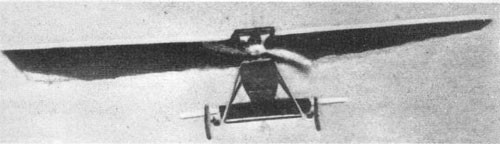
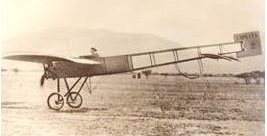
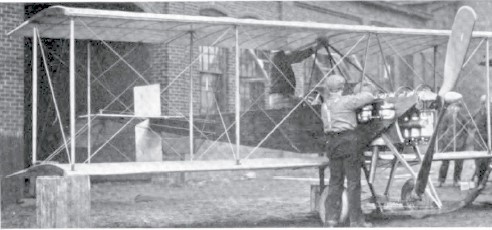
The first four airplanes constructed in Chile, were designed and built by the Copetta brothers. The first of them flew in 1911 and its name was “El Burrito” (young donkey). This airplane followed the lines of the Blériot IX in some way and was built in the necessity to fly after the irreparable destruction of their Voisin biplane, brought originally from France. Regardless of it being the first, “El Burrito” bore on its tail the inscription “Copetta 2”, since in those years it was common to put the name of the pilot and constructor; in this case Copetta and Copetta.
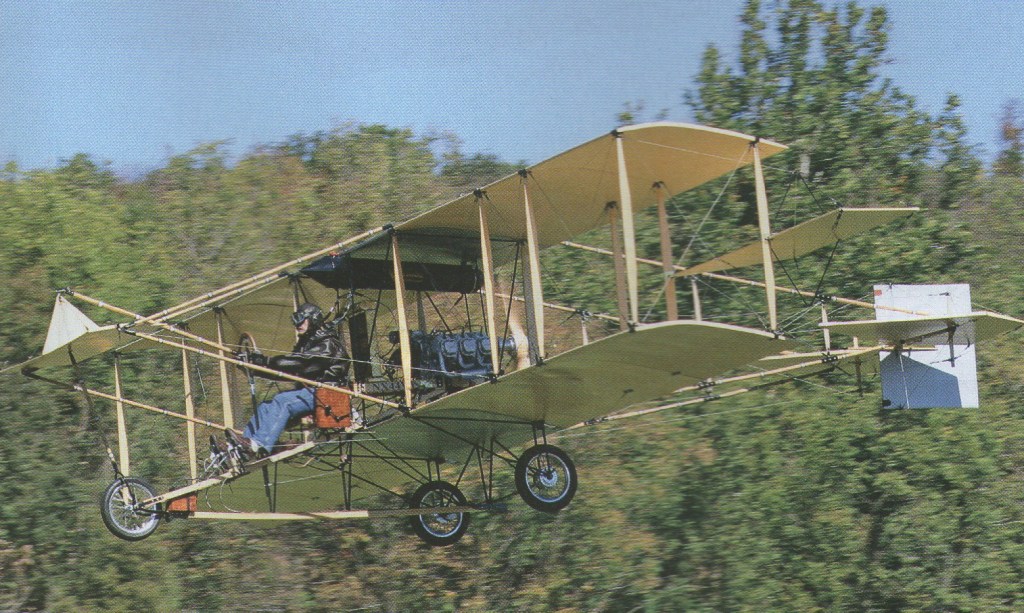
On 8 October 2010 Dave Coolbaugh first flew his replica Curtiss-Ely 1911 Pusher for the first time. The retired Navy/airline pilot spent more than 6000 hs building the craft since beginning in the Summer of 2008.
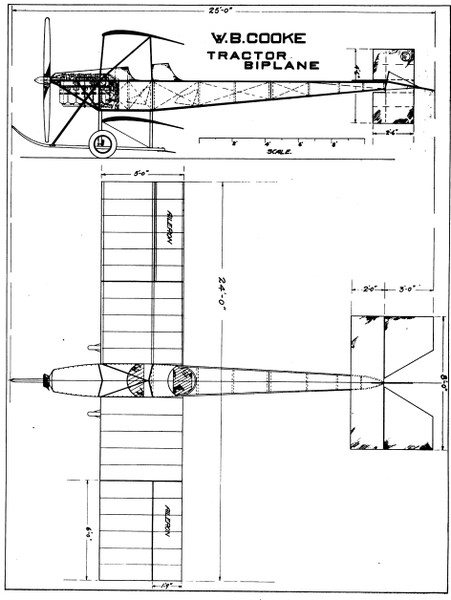
Weldon B. Cooke from Pittsburgh – Sandusky designed and built this tandem biplane aircraft in the winter of 1912-1913. Cooke, who was a well-known exhibition pilot, designed this aircraft with racing and exhibition flying in mind.
Cooke designed the aircraft for a 75 mph (121 km/h) top speed. For the time it was designed, it was a very modern aircraft, incorporating features that wouldn’t become commonplace on aircraft until towards the end of the Great War. The layout of the aircraft itself, a tandem two seat biplane with a tractor motor, was very unusual in 1912. Most of the aircraft being built and flying in North America at the time being some variation of a Curtiss type pusher biplane where the pilot and passengers would sit exposed in front of the leading edge of the lower wing.
Another unusual feature of the aircraft was the inverted installation of the Roberts inline 6 cylinder engine. When the early direct drive inline motors were mounted upright in a tractor installation, the cylinders would be almost completely exposed above fuselage deck. This type of mount would add aerodynamic drag to the aircraft, as well as presenting a substantial visual barrier for the pilot. By inverting the motor, the engine could be contained within the fuselage profile and the pilot had an unobstructed forward view. This may have been the first recorded inverted motor installation in an aircraft. The undercarriage consisted of a central skid with two flexible wheels at right / left with no connection to the fuselage (only to the central skid).
Cooke biplane on a take off run on ice, Sandusky Bay,1913
Because of the inability of period aircraft to be able to fly to and from the exhibition, the logistics of flying in the 1910s involved shipping the aircraft by train from one event to the next. To facilitate this, Cooke designed the aircraft to be quick and easy to take apart and re-assemble. The wings, which have a span of 24 feet, are made up of four detachable six foot sections. The fuselage is built in three detachable sections. The front section contains the engine and the passenger’s seat with all controls and their connections. The second section contains the pilot’s seat and the third, the tail and the square rudder. The skin of the fuselage was made up of a thin ply veneer to give it additional stiffness.
Used for exhibition flying and air racing, this biplane is sometimes identified as the ‘Sandusky Biplane’. Only the one was built.
Engine: 1 × Roberts two-stroke 6 cylinder, 75 hp (56 kW) Propeller: 2-blade Wingspan: 24 ft (7.3 m) Length: 25 ft (7.6 m)
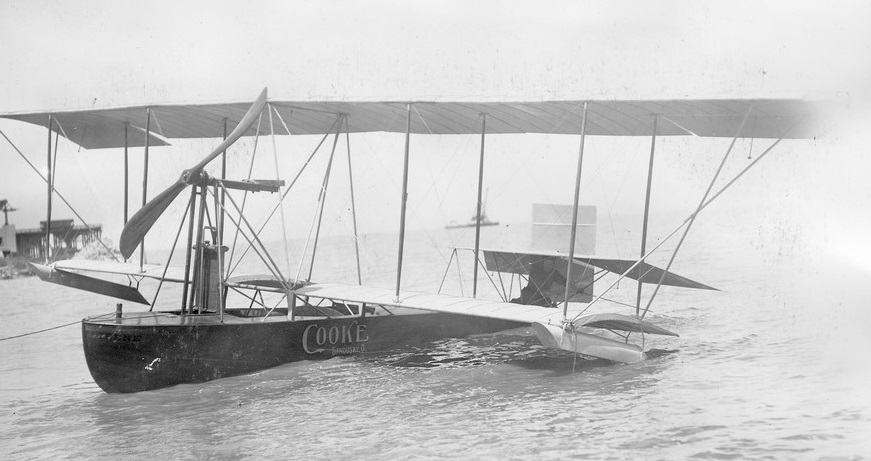
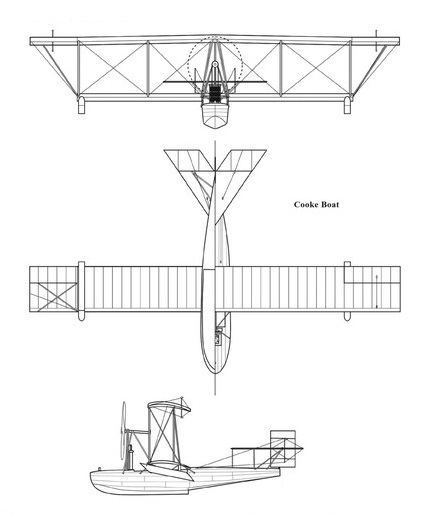
Weldon B. Cooke, an early pioneer who taught himself to fly in a Curtiss pusher, started construction of a flying boat project in California.
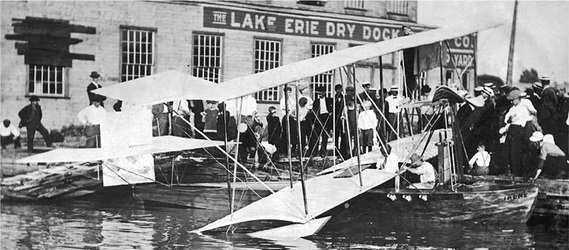
The craft’s biplane wings rested on a full length boat hull that ended in a tail group supported by struts. Its single tractor propeller, mounted forward of the wing, was driven by a belt running from a 75-hp Roberts engine. Sometime in 1913, Cooke shipped the parts by rail to Sandusky, Ohio, where the aircraft was completed and flown.
Although the “Irene,” depicted in this image, suffered from design and construction flaws, she became famous locally when Cooke raced her against C. B. Lockwood’s motorboat “Chinook.” Cooke attained speeds of 35 miles per hour in the water and 50 miles per hour in the air. Lockwood’s fast motor boat reached a speed of 23 miles per hour.
California aviator Weldon B. Cooke teamed up with E. W. Roberts of the Roberts Motor Company, Frank Frey, James Flynn, Sr., and James Flynn, Jr. to found the Cooke Aeroplane Company.
Weldon B. Cooke, an early pioneer who taught himself to fly in a Curtiss pusher, started construction of a flying boat project in California.
After he left Sandusky to assist Benoist with the St.Petersburg-Tampa Air Boat Line, Cooke was killed during an exhibition flight in 1914.
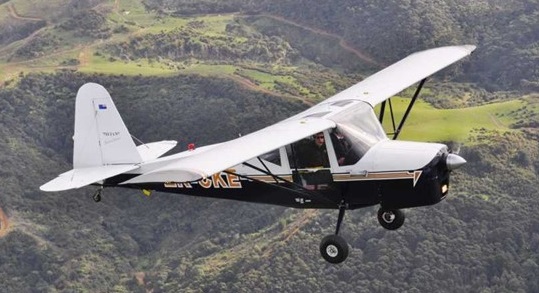
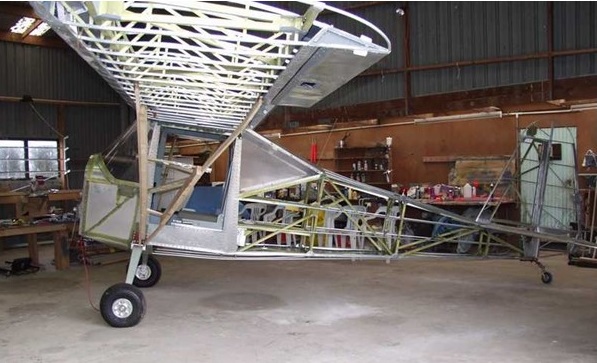
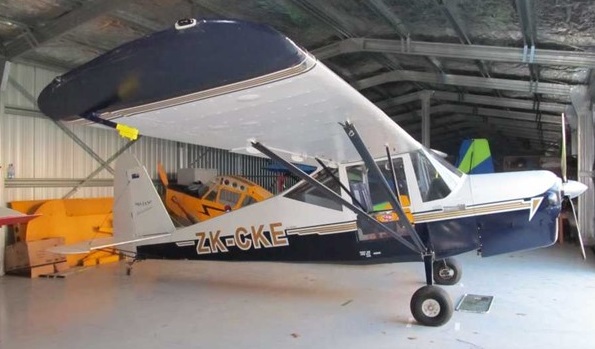
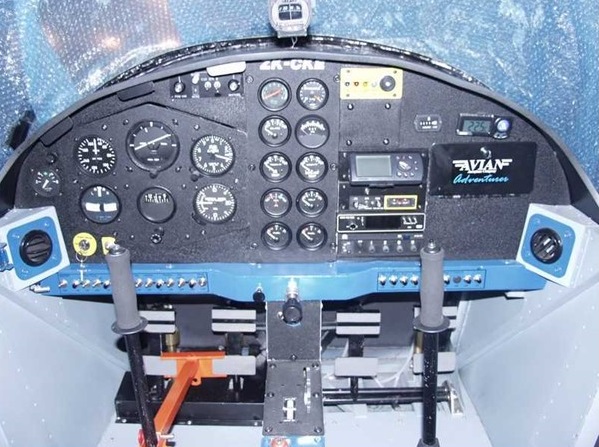
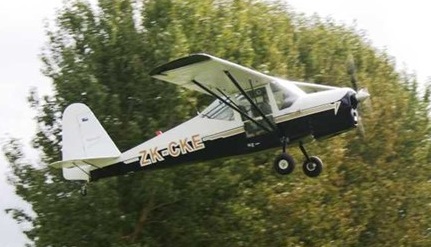
The Cooke Avian Adventurer is a one-off design constructed of riveted alloy extrusions, and fabric covered. Design and built by Bruce Cooke of Cambridge, New Zealand, construction was over 10 years and the approximate cost to build was NZ$10000-$20000. A two seat side by side plus large baggage bay, ultralight, there are full dual controls.
The aircraft is influenced by the classic taildraggers such as the Piper Cub, Cessna Bird Dog and the Auster series. Construction is of rivetted interlocking aluminium extrusions. This construction method results in a high component count but it avoids the necessity for expensive sheetmetal tooling. The outward sloping cabin sides reduce the amount of bending required for the bottom longerons while allowing very generous shoulder room for the two side by side occupants and giving an almost directly down view through the fully glazed upward opening doors. The airframe is covered with Stits Polyfiber fabric.
The engine is Subaru EJ 20 “Matariki” (Subaru and Matariki both refer to the cluster of 6 stars in the Taurus constellation named Pleiades by the ancient Greeks), which produces 140 HP Nominal and drives a 3 bladed electrically variable Ivoprop through a Neil Hintz gearbox.
Bruce Cooke’s Avian Adventurer ZK-CKE c/n AV08-1 was first registered on 19/11/08, although it did not fly until March 2011.
The first flight in March 2011 was at Hamilton with test pilot Bob Monds.
John Cook was trained in England and emigrated to the US to work on aircraft when the UK industry imploded in the 60’s. After stints at several companies including Helio, he went to work for Northrop on the 747 (Northrop designed and built the center and aft fuselage) and after work in the evenings and on weekends, several co-workers went down to Torrance and helped production design this plane in return for stock in the company. They built a prototype and a static test article, intending to obtain an FAA Type Certificate. The aircraft first flew in May 1969 and performed well; it passed static tests with very minor fixes. During a spin test, the FAA pilot kept the power on during the first turn of the spin – we had always closed the throttle as it stalled – and the plane entered an unrecoverable spin mode. John and the FAA pilot parachuted to safety, but the plane N21CA fell into the LA Harbor.
They built a second prototype, N72CA first flying in November 1971, and John Cook and John Parker test flew it to determine a safe aft CG limit. During one of these tests in January 1972 they got into the same situation and bailed out. JP was fine but Cook’s parachute was hit by the spinning plane and he was killed.
The company continued for a while and a third prototype was first flown in 1972 (N123CA) and an attempt was made to market the project as a homebuilt. This was not successful, the company folded and the plane was sold.
Founded by John A. Cook in 1968 at Torrance, California, to market JC-1 Challenger four-seat cabin monoplane. Two prototypes built (first flight May 1969). Third prototype flew November 1971, but crashed January 1972, killing Cook. Company continued, hoping for certification with a fourth (modified) aircraft, first flown 1972, but activities ceased in mid-1970s.
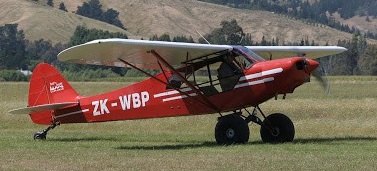
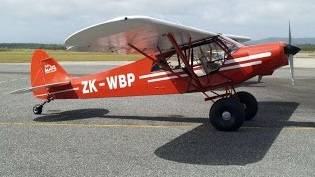
The Westland Bush Plane was built by Russell Cook of Kaihinu, north of Hokitika, New Zealand, around 2008. It may look like a Cub, but the only original bit of a Cub is one wing. The dimensions are all bigger than the standard PA-18, and the whole lot is built from scratch. The tundra tyres are for landing in the West Coast river beds.
Registered ZK-WBP (c/n 0017251) the Westland Bush Plane has an extra side door to the luggage area behind the rear seat.
It received some minor damage on 23 July 2011 whilst landing on a river bed.
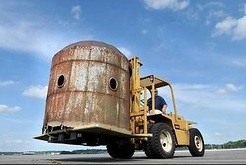
This “Flying Machine”, apparently also called the “Queen of the Air” was built in Mansfield, Ohio, by Daniel McFarland Cook an inventor who was granted some patents but died in poverty, known locally as “Crazy Cook”. Built in 1859, it was to “navigate the air at will with an inconceivable velocity”, “elevated, propelled and directed solely by the force of the electric engine, without hydrogen gas, steam fans or rudders”. It never did, it ended it’s days as a corn crib, a chicken coop and a smokehouse, and was found again in the 1960s. It has now finally landed at the North Central Ohio Industrial Museum.